Dark Sky South Iceland: Where and When to See the Stars
Dark Sky South Iceland: Where and When to See the Stars

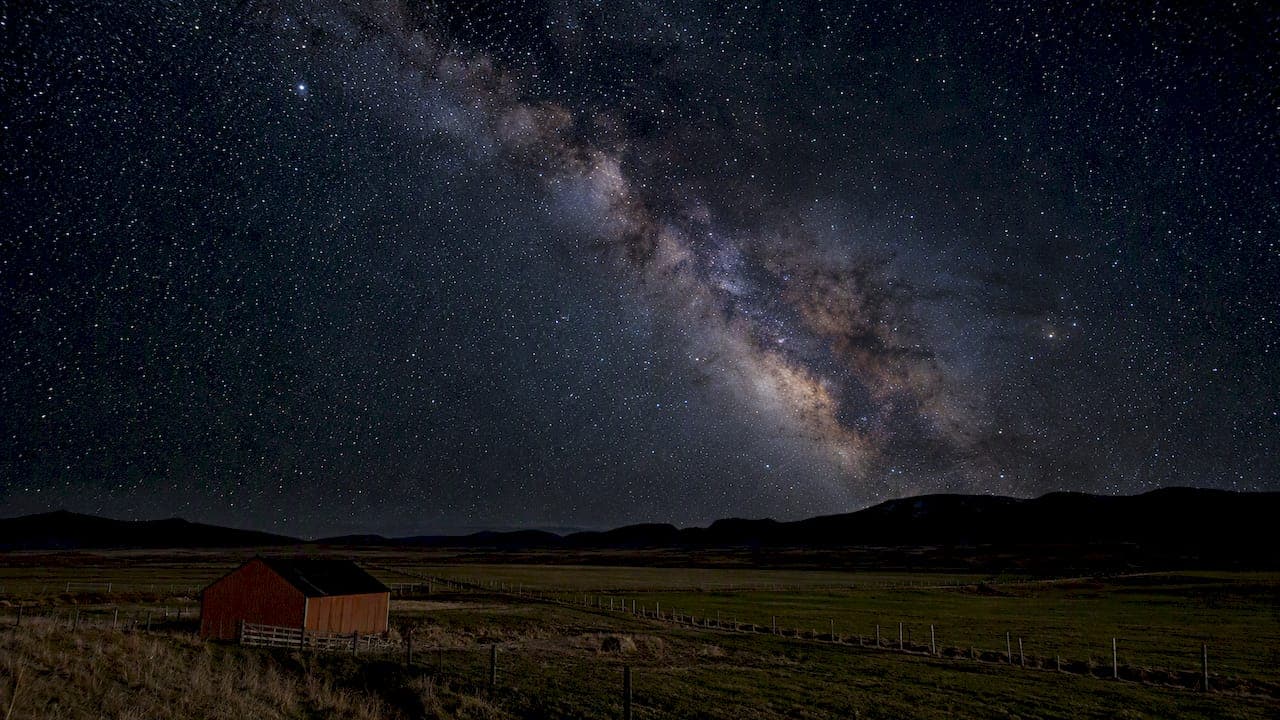
South Iceland has real darkness from September through April, and the open farmland, black sand plains and coastline near Vík give you wide horizons with very little light around. From May through August the sky does not get dark enough for conventional stargazing, so timing matters more than any other choice you make. After timing comes the weather: clouds, not darkness, are what usually ruin a night.
This guide covers when the sky is dark enough, which parts of the South Coast work best, how to read the forecasts, and how to stay safe on dark roads and beaches. We run a hostel in a converted barn near Vík, and we see guests plan these nights every week.
TL;DR
- Dark skies in South Iceland run from September through April. In May through August the sky stays too bright for conventional stargazing.
- The darkest part of each night is roughly 10:30 PM to 1:00 AM.
- Clouds are the main obstacle. Check the Icelandic Met Office cloud and aurora forecasts and be ready to drive to a clearer spot.
- Open ground near Vík, such as Mýrdalssandur and the Reynisfjara area, gives wide horizons. Keep well back from the water at the beach.
- Sleep close to where you will watch, so a clear gap in the clouds is a short drive away, not an hour behind you.
Table of Contents
- When South Iceland is actually dark
- Where to go: dark spots near Vík and along the South Coast
- Clouds, moon and light: what really decides the night
- Can you see the northern lights while stargazing?
- What to bring and check before you go out
- Staying safe on dark roads and beaches
- Our perspective: why a base near Vík beats a long night drive
- A base for your night-sky trip
- A sample plan for a dark-season day
- Who this trip suits
- FAQ
- Sources
When South Iceland is actually dark
Iceland sits close to the Arctic Circle, so summer nights are short or nonexistent in terms of true darkness. According to Visit Iceland’s guide to astrotourism, South Iceland has enough darkness for stargazing from September through April, while from May through August the sky does not get dark enough for conventional stargazing.
There is a useful nuance about what “dark” means. Astronomical night, when the sun is 18 degrees below the horizon, is what you need for the faintest objects, such as the Milky Way’s dust lanes. Nautical twilight is already enough for brighter aurora displays, as Aurora Iceland explains. The same source puts the first usable dark window on the south coast in 2026 at 13 August, with true astronomical night arriving on 31 August. Those dates shift a little each year, but the pattern repeats: late August is when the sky starts coming back.

Which months are best
Visit Iceland names September through April as the best period, with December and January offering the longest nights. Longest does not always mean best. Midwinter brings the most unstable weather, and a guide to the Jökulsárlón area notes that September and March can offer a better chance of clear skies. If your dates are flexible, the shoulder months give you dark skies without as many storms and with easier driving.
| Period | Darkness | What to expect |
|---|---|---|
| May to August | Too bright for conventional stargazing | Skip the star plans, enjoy long daylight |
| Late August to September | Dark returns, astronomical night begins | Mild nights, a good chance of clear spells |
| October to February | Long dark nights | The core of aurora season, more storms and ice |
| March to April | Still dark, nights shortening | Often steadier weather, last chances before the bright season |
The best hours of the night
The sky is darkest late in the evening. Visit Iceland points to roughly 10:30 PM to 1:00 AM as the best window for observation. That is good news if you are staying nearby: you can have dinner, wait for the forecast to confirm, and step out afterward without losing sleep. In midwinter, you may be out much earlier, since darkness falls in the afternoon, but the late-evening window is still the one to aim for if you want a deep, black sky.
Where to go: dark spots near Vík and along the South Coast
The South Coast suits stargazing because it is open. Visit Iceland describes wide stretches of farmland and coastal fields with uninterrupted views, including around Jökulsárlón. There are no big cities nearby, and the villages along Route 1 are small.
For a sense of how dark it gets, the community-run Darkskyas listing shows sky brightness readings of 21.89 mag/arcsec² at Fjaðrárgljúfur, 21.90 at Jökulsárlón, and 21.89 at Katla and Hekla. Higher numbers mean darker skies, and readings near 22 are what you would expect from a genuinely dark rural site. These are listings, not guarantees for any given night, but they show the whole region is in the same excellent range.
From Vík itself
Vík is a small village, and its few lights are not the main issue. Geography is. A local guide to seeing the northern lights from Vík points out that mountains and a glacier to the north can block your view. The advice is to drive east to Mýrdalssandur, the wide outwash plain, or west toward Reynisfjara, where the horizon opens out.
That is useful if you are looking for aurora, which tends to appear low in the northern sky. For stars overhead, the mountains matter less, but an open horizon in every direction still makes a night more memorable.
Reynisfjara and the coast
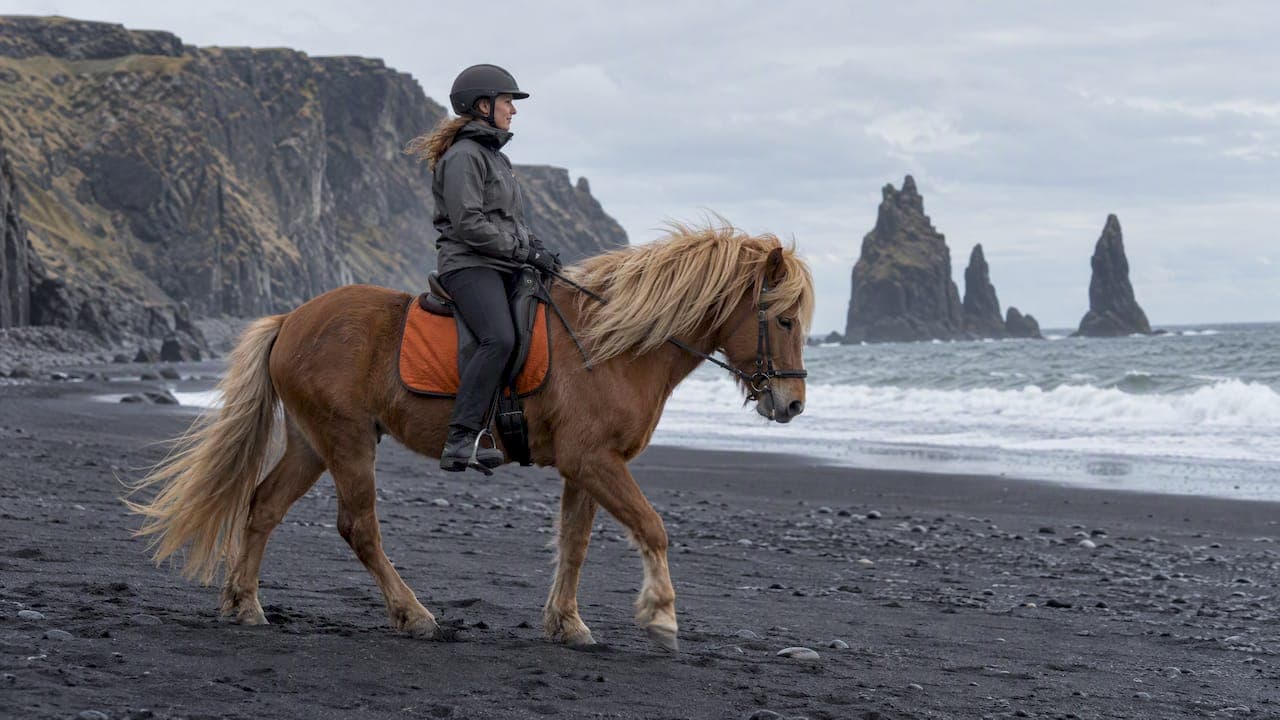
Reynisfjara black sand beach is listed as a spot with minimal light pollution and an open horizon. It is also a place where the sea has killed people, so plan it with care. We cover this in the safety section below and in more detail in our guide to Reynisfjara safety for visitors.
Farther east: Fjaðrárgljúfur and Jökulsárlón
If you are willing to drive, the east side of the South Coast adds more options. Both Fjaðrárgljúfur and Jökulsárlón have measured dark-sky readings in the Darkskyas listing above. Remember that driving at night in winter is the riskiest part of the trip. A long drive after dark to chase a clearing is only worth it if the roads are in good shape.
Clouds, moon and light: what really decides the night
Darkness in the season is a given. Clear skies are not. A guide to the Jökulsárlón area is blunt about it: clouds are the primary obstacle, even in the darkest winter months, and you have to chase clear skies with forecasts. Visit Iceland adds that conditions in Iceland can change quickly, so you should check the weather and cloud forecast before heading out.
How to read the forecasts
The Icelandic Meteorological Office publishes an aurora forecast with a map of forecast cloud cover, which is the tool most visitors need. Use it in two steps:
- In the afternoon, look at the cloud map for the evening and the night. Find the gaps, which are often a short drive away along the coast.
- Check again in the evening before you commit to driving. Visit South Iceland recommends treating skywatching as flexible: check forecasts in the afternoon and evening, and be prepared to drive for clearer skies.
If you also want to see what the sky is doing right now, a webcam can help. Our northern lights webcam guide explains how to use one before you step outside.
Moonlight and your own lights
A bright moon washes out faint stars and the Milky Way, though it does light the landscape beautifully for photographs. For the deepest sky, look at a moon calendar and pick nights around the new moon. Once you are outside, turn off your car headlights and any bright lights nearby, and let your eyes adjust. Use a red light so you keep your night vision.
Can you see the northern lights while stargazing?
Often, yes, in the same season. Visit South Iceland says northern lights viewing is most promising from September to April, when nights are dark. Solar activity matters too: one local guide notes that the solar maximum through 2024 and 2025 raised the base probability of sightings. Nobody can promise an aurora on a particular night, so treat it as a bonus on top of a good stargazing night. Our own aurora season guide goes deeper into timing.
If you would rather not drive on dark roads yourself, organized options exist. A northern lights bus tour with a driver means someone else watches the road while you watch the sky, which is a real advantage for groups.
What to bring and check before you go out
Visit Iceland’s advice is simple: bring warm layered clothing, a red-light torch, binoculars and spare camera batteries. Cold drains batteries fast, so keep spares in an inner pocket.
Our own additions, from watching guests head out:
- A hat, gloves and an insulated layer you can put on over everything else. Standing still in the dark feels far colder than walking.
- A warm drink in a flask.
- A tripod, if you want to photograph stars.
- A charged phone with the forecast pages already loaded, since coverage can be patchy on open ground.
- A plan for the way back: who is driving, and where you are parking.
Staying safe on dark roads and beaches
The highest-risk parts of a stargazing night are the drive and the shoreline, not the cold.
Roads. The South Coast’s mapping guide advises you to check umferdin.is before driving after dark, because Route 1 can ice over. If a forecast clearing is far away and the roads look bad, stay put. A clear sky an hour away is not worth a crash.
Reynisfjara. The same page advises staying 30 meters from the water, as sneaker waves are fatal. At night you cannot see waves coming, so we suggest you stay well up on the dry sand or in the car park area and keep your back to the cliffs, not the sea. Read our Reynisfjara safety guide and note that 112 is Iceland’s emergency number.
Parking. Pull fully off the road. Do not stop on Route 1 to look at the sky, since other drivers may not expect you there.

Our perspective: why a base near Vík beats a long night drive
Most people planning a stargazing trip think first about the spot. We think the better question is where you sleep. Clouds move, and the gap you want might open at 9 PM or at midnight. If you sleep an hour from the dark sky, you will either give up early or drive tired on icy roads.
From our barn near Vík, a guest can have breakfast, spend the day at the waterfalls and the black sand beaches, eat dinner at Hrífunes Pizzeria on site, check the cloud map over a drink in the shared space, and step out when the sky clears. Shared spaces also help in practice: someone else has usually checked the forecast, or has seen the aurora the night before and knows where to go. That is the part of hostel life that no hotel room can offer.
We would also say this plainly: do not plan a single night and hope. Give yourself at least two or three nights on the South Coast in the dark season. The odds improve a lot when you can wait for the weather instead of chasing it. Our guide to where to stay in South Iceland explains how we think about road-trip bases.
— Siggi
A base for your night-sky trip
If you are planning dark-sky nights in South Iceland, you can book a bed in a shared or private dormitory at Fox Hostel, in a renovated barn in the South Iceland countryside near Vík. Traveling with friends or family? We also take group bookings for whole rooms. Breakfast is served at the hostel and dinner is at Hrífunes Pizzeria on site. Check the website for current availability and rates.
A sample plan for a dark-season day
Here is how a typical day could run if you are staying near Vík between autumn and early spring. It is a template, not a promise, because the sky decides the final step.
- Morning. Breakfast at the hostel. Look at the Met Office forecasts and the road conditions on umferdin.is before you decide on the day’s route.
- Daytime. Visit the sights that depend on daylight, such as waterfalls, the black sand beaches and the glacier areas. Winter days are short, so start early.
- Late afternoon. Check the cloud map again. If the evening looks clear nearby, rest and eat early. If it looks cloudy, note which direction shows gaps.
- Evening. Dinner on site. Dress warm and charge your camera batteries.
- 10:30 PM to 1:00 AM. Go out to your chosen open spot, turn off lights, let your eyes adjust for around twenty minutes and look up.
- Back to bed. Drive slowly, and stop only in proper pull-offs.
If you have two or three nights, repeat the pattern. The first night often tells you what the local weather is doing, and the second or third is when many travelers get their clear sky.
Who this trip suits
Stargazing on the South Coast works for many kinds of travelers, but the experience differs.
- Solo travelers benefit from sharing a ride and a forecast. Going out into the dark alone on a cold beach is not ideal, so find someone at the hostel to go with.
- Couples often like a quiet pull-off on open farmland, away from the busier beach stops.
- Groups can split driving, and bring a thermos and chairs. A bus tour can also make sense so everyone looks up at once.
- Photographers should plan more nights, since long exposures need a steady sky and patience.
FAQ
Does it get dark in South Iceland in summer?
Not enough for conventional stargazing. From May through August the sky does not get dark enough, according to Visit Iceland. The dark window returns in late August and builds through September. If stars are the point of your trip, plan for autumn through early spring.
What is the best time of night to see the stars?
Late evening, roughly 10:30 PM to 1:00 AM, is when the sky is usually darkest. In winter you can go out earlier because the sun sets early, but the late window gives the deepest sky. Always check the cloud forecast first.
Can I see the northern lights from Vík?
It is possible in the dark season, but mountains and a glacier to the north can block part of the view from the village. A local guide suggests driving east to Mýrdalssandur or west toward Reynisfjara for a more open horizon. No one can guarantee a sighting on a given night.
What should I check before driving out at night?
Check the Icelandic Met Office cloud and aurora forecast and the road conditions on umferdin.is. Route 1 can ice over, so if the roads look poor, stay close to your lodging. Keep well away from the surf at Reynisfjara, and do not stop on the main road.
Sources
- Astrotourism in Iceland: A Guide to the Night Sky, Visit Iceland
- When Does Aurora Season Actually Start in Iceland?, Aurora Iceland
- Northern Lights at Jökulsárlón and Diamond Beach
- Dark skies and stargazing in Iceland, Darkskyas
- How to see the Northern Lights from Vík in south Iceland
- Northern Lights South Coast: Live Kp and Cloud Cover
- Aurora forecast for Iceland, Icelandic Meteorological Office
- Northern Lights, Visit South Iceland
- Northern lights bus tours in Iceland