Stock Reykjavík First: 5 Gluten Free Essentials for Iceland Road Trips
Stock Reykjavík First: 5 Gluten Free Essentials for Iceland Road Trips
Yes, eating gluten-free in Iceland is realistic, but it takes planning. Reykjavík has enough labeled menus, dedicated kitchens, and specialty grocery sections to eat well without stress, while rural stretches of the Ring Road offer far less. Buy your staples in the capital first, load Find Me Gluten Free onto your phone, and carry a short Icelandic translation card before you drive out of town.
TL;DR:
- Reykjavík offers multiple gluten-free restaurants with clear labeling, but outside the city, options are limited and often require prior confirmation.
- Stock up on gluten-free staples in Reykjavík’s supermarkets, where brands marked “glútenfrí” are now widely available, supporting rural road trips.
- Carry a translation card and ask detailed questions about fryer usage, sauces, and preparation methods to avoid cross-contact at local eateries.
- Self-catering accommodations with kitchens, like Fox Hostel, enable travelers to prepare safe meals and reduce reliance on limited rural restaurant options.
- Rural food supplies diminish quickly beyond larger towns, so packing shelf-stable snacks, sealed proteins, and condiments is essential for safe travel on the Ring Road.
Table of Contents
- How Gluten-Free Friendly Is Iceland, Really?
- Gluten-Free Restaurants and Cafés to Try in Reykjavík
- Where to Buy Gluten-Free Groceries in Reykjavík
- Surviving Rural Iceland: Your Road-Trip Food Kit
- How to Order Safely: Phrases and Questions That Actually Help
- Naturally Gluten-Free Icelandic Foods (and What to Watch For)
- Apps and Local Groups to Check Before You Eat
- Why a Kitchen Changes the Gluten-Free Equation
- What Experienced Gluten-Free Travelers Do Differently
- Stay Somewhere You Can Actually Cook
- Sources
- FAQ
How Gluten-Free Friendly Is Iceland, Really?
Reykjavík punches above its weight for a city its size. Restaurants across the capital have caught up with celiac and gluten-sensitive demand, and many kitchens will happily swap a starch or skip a sauce without much fuss. Guides focused on gluten-free travel in Iceland point out that the country’s food culture already leans on naturally gluten-free ingredients like fish, lamb, and skyr, so adapting a dish is often a matter of removing the bread crumb or the flour-thickened gravy rather than rebuilding the whole plate.
Outside the capital, the picture changes fast. Small towns along the South Coast might have one gas station, one guesthouse restaurant, and a convenience store with a shelf of skyr and not much else. Few Icelandic restaurants anywhere are fully dedicated gluten-free kitchens, and local wedding and travel planning sources note that most places can modify a dish rather than guarantee a completely gluten-free environment. That distinction matters for anyone with celiac disease, not just a sensitivity.
The practical takeaway: treat Reykjavík as your supply base and your safest dining zone, and treat everywhere else as a place where you bring backup food and ask more questions before you order.
Gluten-Free Restaurants and Cafés to Try in Reykjavík
A handful of Reykjavík spots have built real reputations among gluten-free diners, based on menu labeling and repeated positive reports on apps like Find Me Gluten Free.
- Gló marks gluten-free items clearly on its menu and builds much of its concept around whole-food, allergy-conscious bowls, making it one of the easiest lunch stops for a quick, low-risk meal.
- Mama Reykjavik runs a plant-based menu with many naturally gluten-free bowls and soups, though you should still confirm which sauces use wheat-based thickeners.
- Reykjavik Chips is worth calling ahead about, since fried food lives or dies on whether the fryer is dedicated. Ask directly if they cook gluten-free items separately from battered fish.
- Olifa - La Madre Pizza offers a gluten-free crust option, which is rare for pizza in Iceland; user notes on Find Me Gluten Free mention specific safety tips for this venue, so check recent reviews before you go.
- Messinn specializes in fish, and a simple grilled or pan-seared fillet is about as low-risk as Icelandic dining gets, provided the sauce or butter isn’t flour-thickened.
- Seabaron (Sægreifinn), the harbor-side lobster soup spot, is worth a visit if you ask about the soup base, since seafood soups sometimes carry flour as a thickener.
For every venue on this list, the same rule applies: a “GF” label on a menu is a starting point, not a guarantee. Call ahead when you can, ask whether the kitchen uses a dedicated fryer or separate prep surface, and check the date on any online review, since staff and suppliers change.
Where to Buy Gluten-Free Groceries in Reykjavík
Stocking up before you leave the capital solves most of your rural food problems in one stop. Three supermarket chains cover almost everything you’ll need.
- Bónus, Iceland’s discount chain, stocks a basic but reliable gluten-free bread, pasta, and cracker selection at low prices.
- Krónan tends to have a stronger health-food and organic section, often with a wider range of gluten-free snack bars and baking mixes.
- Hagkaup carries the broadest international selection, including imported gluten-free brands you might already recognize from home.
Look for the word “glútenfrí” on packaging, along with the crossed-grain symbol used across Europe to mark certified gluten-free products. Guides to gluten-free eating in Iceland confirm that Iceland’s larger grocery stores now carry these staples consistently, which is a notable shift from just a few years ago when travelers reported near-empty shelves outside Reykjavík.
Pro Tip: Buy shelf-stable bread and pasta in Reykjavík even if you don’t plan to cook right away. Freeze-friendly gluten-free bread holds up far better in a car cooler over several days than fresh loaves, which dry out fast.
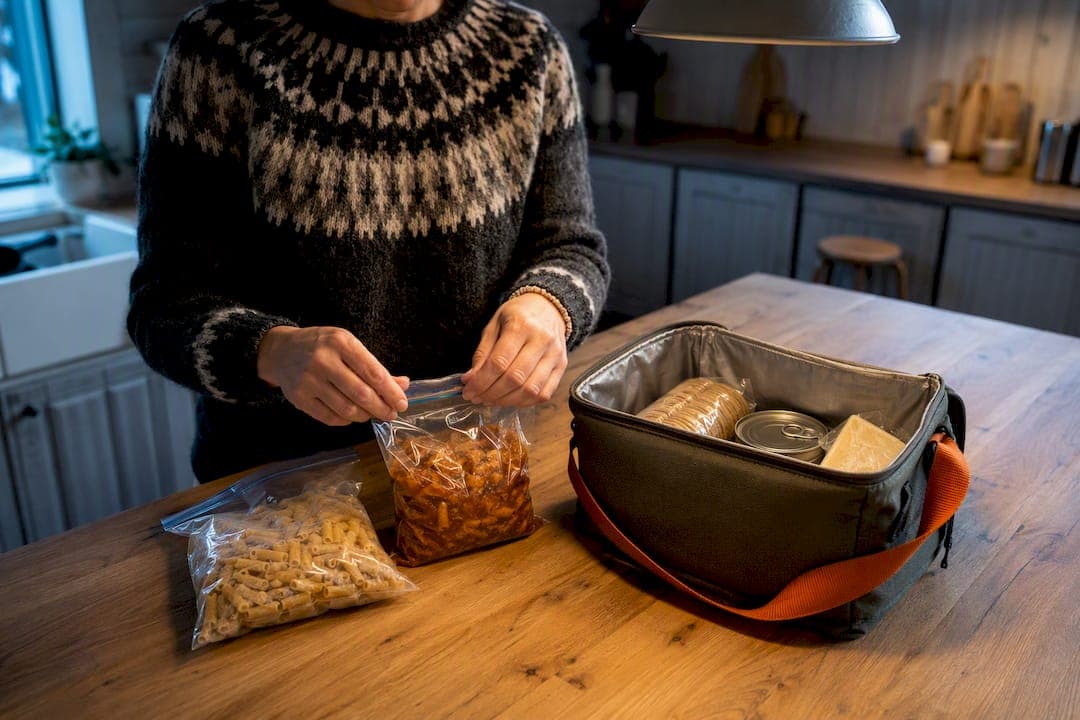
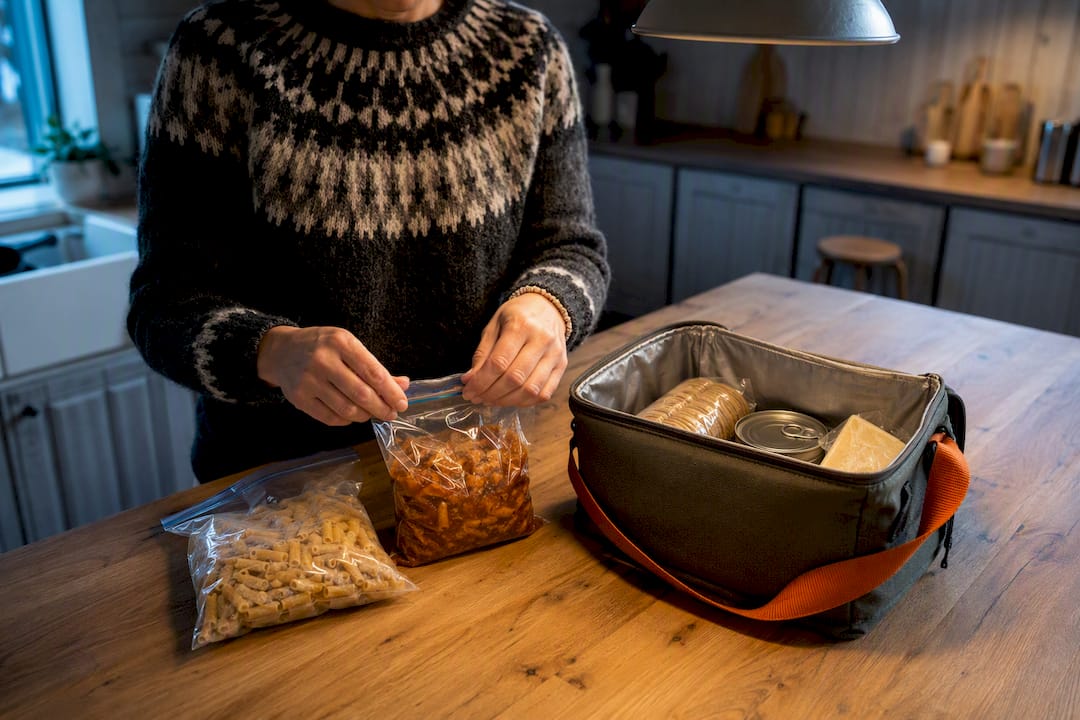
Pack a soft cooler bag for anything perishable. A block of hard cheese, cured meats, and skyr travel well for a day or two in a cool car, especially outside summer.
Surviving Rural Iceland: Your Road-Trip Food Kit
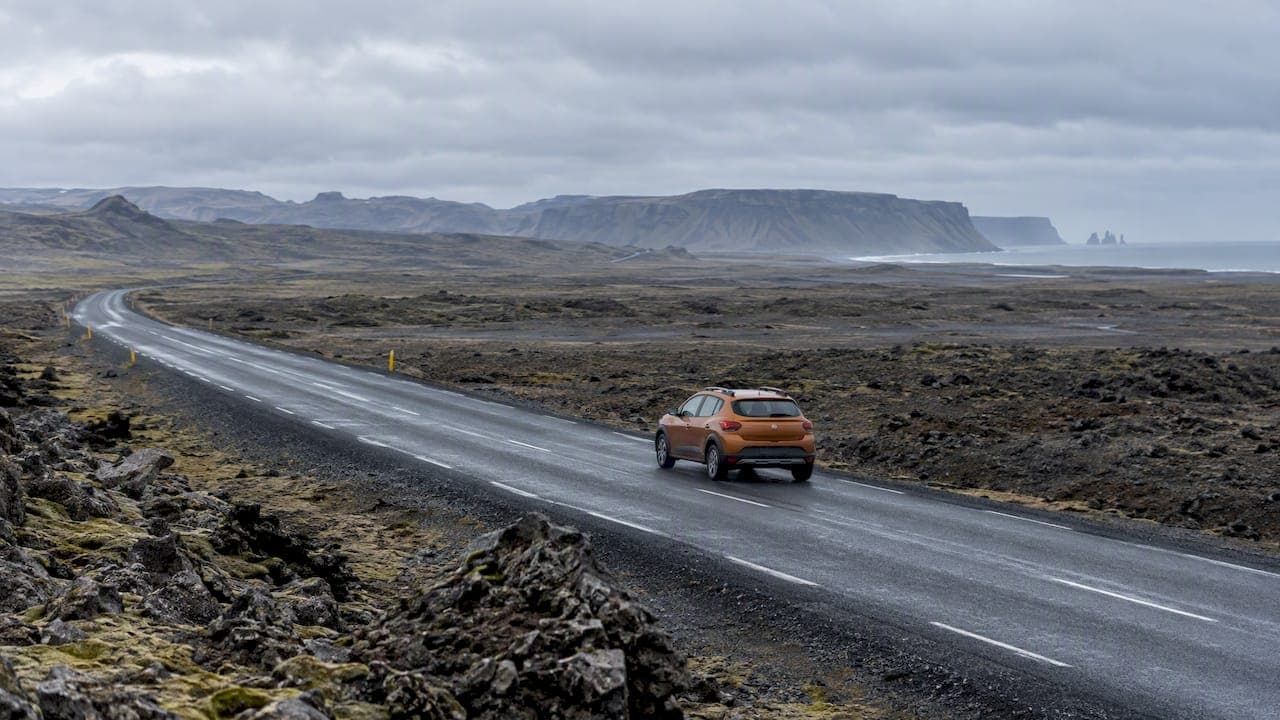
Once you leave Reykjavík, availability drops fast. Small towns on the South Coast and in the Highlands often have one shop with a limited selection, and you can’t count on finding gluten-free bread or pasta on demand.
- Bread and crackers you already bought in Reykjavík, since rural shops rarely stock them.
- Sealed snacks like nut bars, rice cakes, and dried fruit that survive heat and jostling.
- Ready-to-eat protein such as canned fish, cured meat, or pre-cooked chicken.
- Condiments like a small bottle of gluten-free soy sauce or mustard, since sauce packets at gas stations are a gamble.
- Electrolyte drink mix for long hiking days, since dehydration hits harder on glacier walks and black sand beach hikes than most travelers expect.
Larger towns like Selfoss, Vík, and Höfn are your resupply points. Stop there rather than gambling on a tiny village store having what you need. If your accommodation has a kitchen, use it. Cooking your own breakfast and packing your own lunch for the day’s excursions removes most of the guesswork that comes with rural restaurant menus.
Pro Tip: Prepare two days’ worth of sealed, shelf-stable meals before a multi-day South Coast drive. Small towns between Vík and Jökulsárlón often lack gluten-free bread or pasta entirely, and you don’t want your dinner plan riding on one gas station shelf.
How to Order Safely: Phrases and Questions That Actually Help
A short translation card does more work than you’d expect. Handing a server a written note in Icelandic avoids the confusion that happens when “gluten-free” gets lost in a fast conversation during a busy dinner rush. Experienced gluten-free travelers to Iceland consistently recommend carrying one and calling restaurants ahead of time, especially for dinner reservations at popular spots.
A basic card can say: “Ég er með glútenóþol. Get ég fengið mat án glútens?” (“I have gluten intolerance. Can I get food without gluten?”) Add a line asking about cross-contact specifically, since Icelandic staff may assume gluten-free just means skipping bread.
Ask these questions directly, in person or on the phone:
- Do you use a dedicated fryer, or does gluten-containing food go through the same oil?
- Are utensils and cutting boards separated for gluten-free orders?
- Does the sauce, gravy, or soup base contain flour, malt, or barley as a thickener?
- Can the dish be made without breading or a roux, with sauce served on the side?
Call ahead for dinner reservations at popular restaurants, and mention celiac disease specifically rather than just saying “gluten-free,” since the two get treated with different levels of care in busy kitchens.
Naturally Gluten-Free Icelandic Foods (and What to Watch For)
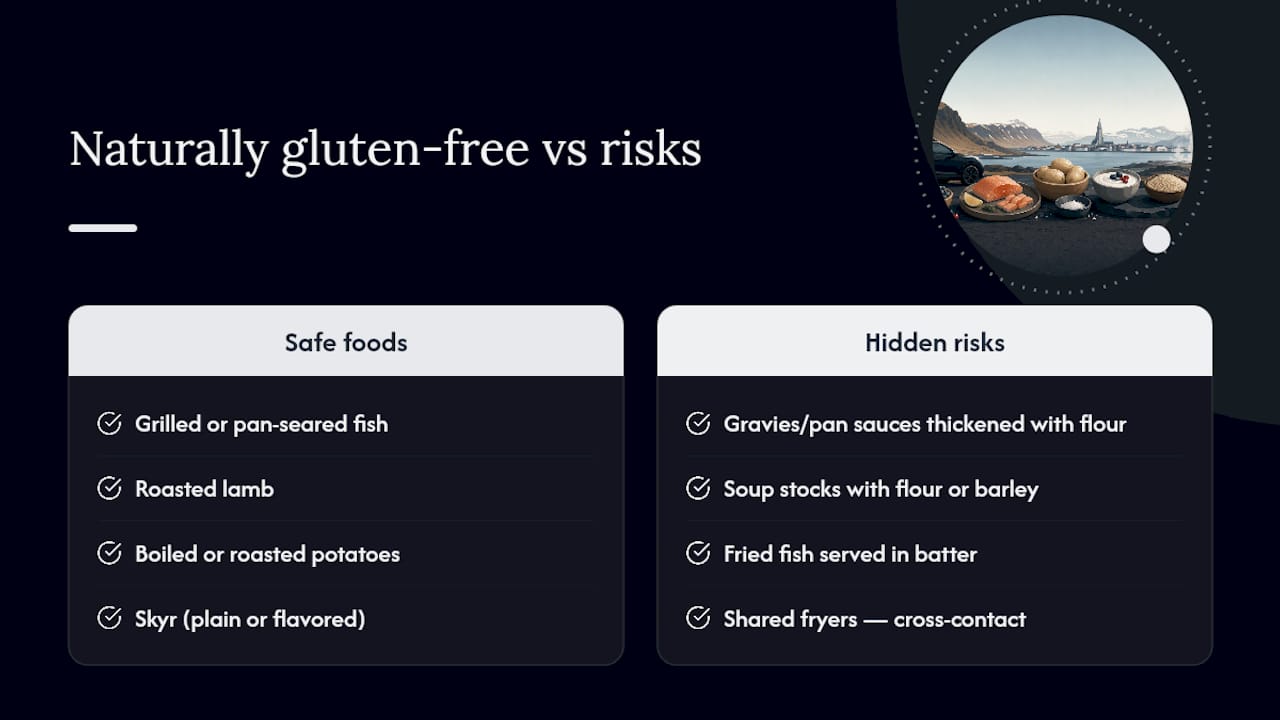
Iceland’s traditional plate is friendlier than you might expect. Grilled or pan-seared fish, roasted lamb, boiled or roasted potatoes, and skyr are all naturally gluten-free when prepared simply, and skyr in particular is a dependable, widely available snack whether you buy it plain or flavored.
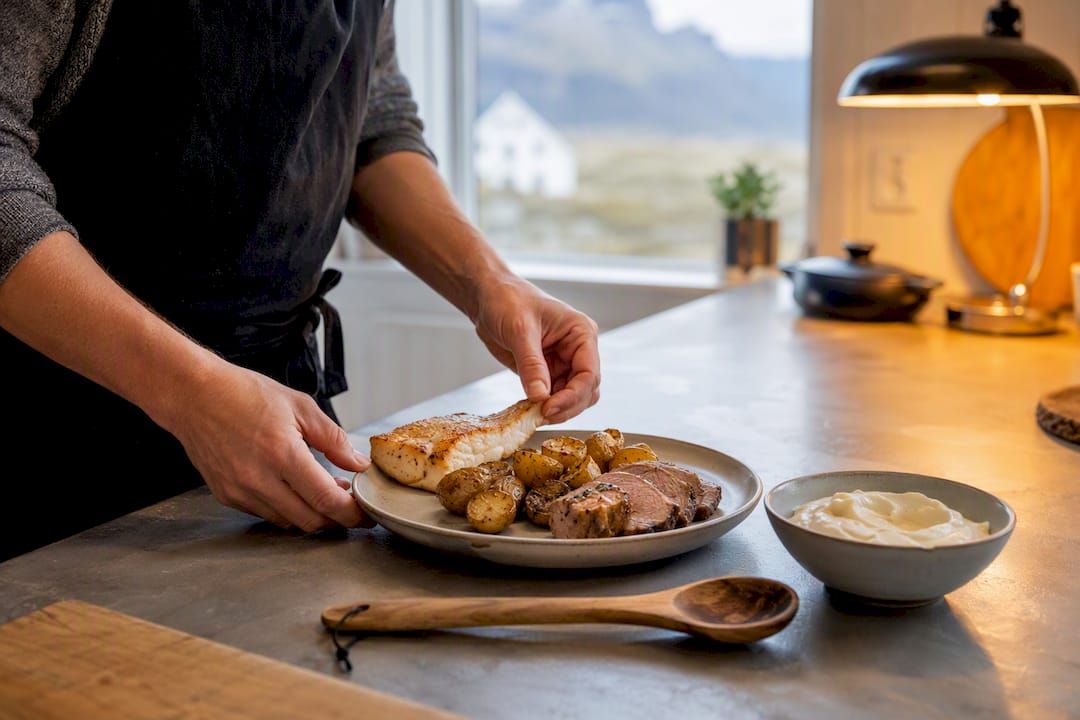
The risk hides in the extras. Gravies and pan sauces are frequently thickened with flour. Soup stocks, especially the lamb and fish soups tourists love, sometimes carry hidden flour or barley. Fried fish almost always means a batter, and shared fryers mean cross-contact even when the fish itself would otherwise be safe. Shared ovens can also transfer gluten from bread onto anything baked alongside it.
A few phrases fix most of this. Ask for the sauce on the side instead of over the dish. Ask if the fish can be grilled instead of fried. Ask whether the soup uses a roux, and if the kitchen can leave it out for your bowl. Small requests like these turn a risky-looking menu into something you can actually eat.
Apps and Local Groups to Check Before You Eat
Menus change, staff turn over, and a restaurant that was celiac-safe last year might not be this year. Checking live sources before you commit to a reservation catches most of that drift.
- Find Me Gluten Free remains the strongest single tool for Reykjavík, combining venue-specific notes, user safety ratings, and photos of actual menus.
- Local Facebook groups for Iceland travel and celiac travelers often carry fresher reports than blog posts, especially for closures or menu changes.
- When reading any review, favor ones with a recent date, a photo of the actual gluten-free menu item, and an explicit mention of celiac safety rather than just “gluten-free friendly.”
- If you’re flying Icelandair, request a gluten-free meal when you book, not at the gate. Special meals typically need advance notice to guarantee availability on board.
Why a Kitchen Changes the Gluten-Free Equation
The single biggest risk reduction for a celiac traveler isn’t a better restaurant. It’s not eating at a restaurant at all for some meals. A proper communal kitchen means you control every ingredient, every surface, and every pan.
Fox Hostel, set in a converted barn in Hrífunes Nature Park between Vík and Kirkjubæjarklaustur, gives guests exactly that. The large communal kitchen lets you cook breakfast and pack a gluten-free lunch before heading out to Reynisfjara Black Sand Beach or Dyrhólaey, instead of hoping a small-town café has something safe. Guests can book a bed or take over an entire room depending on group size, and the on-site pizzeria is worth asking about directly if you want a gluten-free crust confirmed before ordering. Requesting early check-in gives you time to unload groceries and get organized before your next day on the road.
What Experienced Gluten-Free Travelers Do Differently
Plan the meal before you’re hungry. That’s the real difference between travelers who eat well in Iceland and those who end up eating gas-station skyr for the third day running. Carry a translation card, ask the dedicated-fryer question every single time, and never assume a “GF” tag on a menu means celiac-safe without confirming it verbally.
The trade-off is real: strict caution sometimes means skipping a dish everyone else at the table is having. That’s a fair price for avoiding a ruined week of travel. Log your restaurant experiences on apps like Find Me Gluten Free when you get the chance. Every accurate report you leave helps the next celiac traveler make a faster, safer call.
— Siggi
Stay Somewhere You Can Actually Cook
Restaurants along the South Coast can accommodate gluten-free requests, but a self-catering base cuts out the guesswork entirely. Fox Hostel gives you a full communal kitchen in Hrífunes Nature Park, roughly 35 minutes from Vík, so you can prepare your own breakfast and pack a gluten-free lunch before a day at Reynisfjara or Dyrhólaey.

Solo travelers can book a single bed, while couples, families, or small groups can take over a whole room for privacy, all with kitchen access included. The location sits between Vík and Kirkjubæjarklaustur, which makes it a solid staging point before heading further east toward Vatnajökull National Park and Jökulsárlón Glacier Lagoon. If you plan to use the on-site pizzeria, ask staff about gluten-free crust handling when you arrive rather than assuming. For self-catering best practices before your trip, this self-catering travel guide covers useful packing habits. Check dates and book a room at Fox Hostel before your South Coast leg, and request early check-in if you need time to unload groceries first.
Sources
- Eating Gluten-Free in Iceland: Expert Tips, Restaurants & More
- The Best Gluten-Free Restaurants and Bakeries in Reykjavik, Iceland
- Iceland Gluten Free & Celiac Safe Restaurants | Iceland Wedding Planner
- Icelandair — Saga kitchen / on-board dining
- Skyr — Wikipedia
FAQ
Does Iceland Have Gluten-Free Options?
Yes. Reykjavík has multiple restaurants with labeled gluten-free menu items, and major supermarkets like Bónus, Krónan, and Hagkaup carry gluten-free bread, pasta, and snacks marked “glútenfrí.”
Is Iceland Good for Gluten-Free Travelers?
Iceland works well for gluten-free travelers who plan ahead, especially in Reykjavík, but rural areas have limited options, so stocking up before road trips matters more than in most European countries.
How Do You Eat Gluten-Free in Iceland?
Buy gluten-free staples in Reykjavík before heading out, use Find Me Gluten Free to find checked restaurants, call ahead to ask about dedicated fryers and separate prep, and choose accommodation with a kitchen for self-catering flexibility.
Which Supermarket Has the Best Gluten-Free Section?
Hagkaup tends to carry the widest international gluten-free selection, while Krónan often has a stronger health-food section, and Bónus offers reliable basics at the lowest prices.
Are Traditional Icelandic Dishes Gluten-Free?
Many are, when prepared simply. Grilled fish, roasted lamb, plain potatoes, and skyr are naturally gluten-free, but gravies, soup stocks, and fried batters frequently contain hidden gluten.