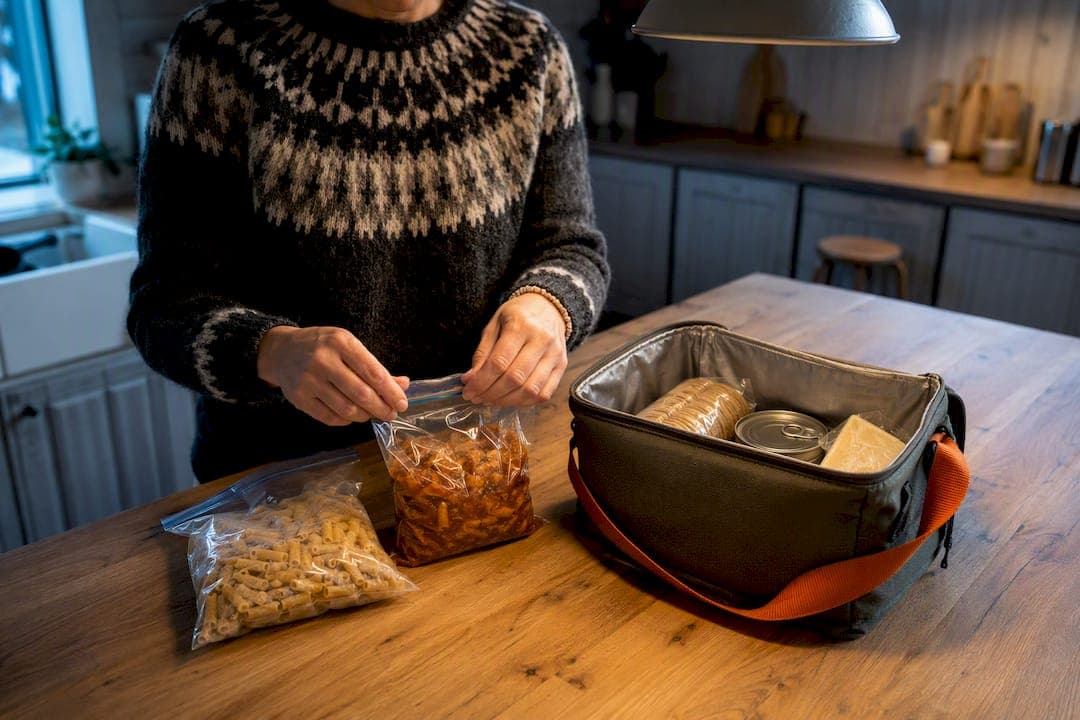
What Is Hostel Etiquette? A Friendly Traveler's Guide
What Is Hostel Etiquette? A Friendly Traveler’s Guide

TL;DR:
- Hostel etiquette fosters social connection, safety, and comfort for all guests.
- Key rules include respecting quiet hours, tidiness, shared resources, and appropriate use of communal spaces.
- Empathy and genuine kindness are the foundation for a memorable hostel experience.
Over 93% of hostel guests say they choose hostels specifically to meet other travelers, yet almost nobody talks about the unwritten rules that make that experience actually work. You show up, throw your bag on a bunk, and suddenly realize you have no idea whether you can turn on the light at 7am or eat your leftover pasta in the kitchen without someone shooting you a look. Hostel etiquette is the invisible glue that holds shared spaces together. This guide breaks it all down with practical, no-nonsense advice for solo travelers, groups, and couples who want to connect, have fun, and leave a good impression.
Table of Contents
- Why etiquette matters in hostels
- Core rules every hostel guest should know
- How to socialize (and not be awkward): Solo, groups, couples
- Advanced etiquette: digital space, resource sharing, and conflict resolution
- Our take: The true heart of hostel etiquette
- Ready to experience hostel life?
- Frequently asked questions
Key Takeaways
| Point | Details |
|---|---|
| Respect shared spaces | Following basic etiquette in dorms, kitchens, and common areas makes hostel life comfortable for everyone. |
| Be social, but mindful | Introduce yourself and make connections while respecting other guests’ privacy and routines. |
| Stay flexible and empathetic | Adapting to different cultures and situations is the real secret to positive hostel experiences. |
| Use technology thoughtfully | Coordinate quietly, share resources digitally, and keep communication considerate of others. |
Why etiquette matters in hostels
Hostels are one of the most deliberately social lodging formats on the planet. They are designed around the idea that strangers share space, share meals, and sometimes share some of the best travel memories of their lives. But that only works when everyone plays by roughly the same set of standards.
The numbers make the social intent obvious. According to hostel industry data, around 70% of hostel guests are between 18 and 35 years old, over 55% travel solo, and a remarkable 93% say meeting other people is a primary reason they book a hostel over a hotel. That is not a coincidence. Hostel architecture, from bunk beds to communal kitchens to shared bathrooms, is built for interaction.
| Statistic | Figure |
|---|---|
| Guests aged 18-35 | 70% |
| Solo travelers | 55% |
| Guests seeking social connection | 93% |
| Guests preferring shared dorms over private rooms | 60%+ |
When everyone respects the shared environment, the benefits multiply fast. You sleep better, you feel more comfortable borrowing a can opener, and you are far more likely to strike up a conversation that turns into a hiking partner for tomorrow. When etiquette breaks down, even small things like a flashlight at midnight or someone’s unwashed dishes become genuine irritants that poison the atmosphere for everyone.
Here is what good etiquette actually delivers:
- Better sleep quality for the whole room when noise and light rules are followed
- Stronger social bonds because respectful guests are approachable guests
- Conflict prevention so you spend your energy exploring, not mediating
- A safer environment where everyone looks out for communal gear and personal space
- More authentic experiences in shared hostel spaces that feel welcoming rather than tense
“Etiquette in shared spaces is not about rigid politeness. It is about creating the conditions where spontaneous, genuine connection can happen at all.”
Think of hostel etiquette less like a rulebook and more like a shared agreement. Nobody hands you a pamphlet at check-in listing every do and don’t. Instead, you read the room, you watch how experienced hostel guests behave, and you adjust. The basics are simple enough that once you know them, they become second nature within your first day.
Core rules every hostel guest should know
Etiquette in a hostel is not mysterious, but it does require you to be deliberate about habits that you might not even notice at home. At home, you can walk into the kitchen at 3am with the lights blazing. In a 10-bed dorm, that same move ruins three people’s sleep schedules.
According to etiquette guidance from experienced travelers, the core rules fall into a handful of clear categories: noise discipline, lighting awareness, personal tidiness, food etiquette, shared resource use, and keeping belongings organized. Here is how to handle each one.
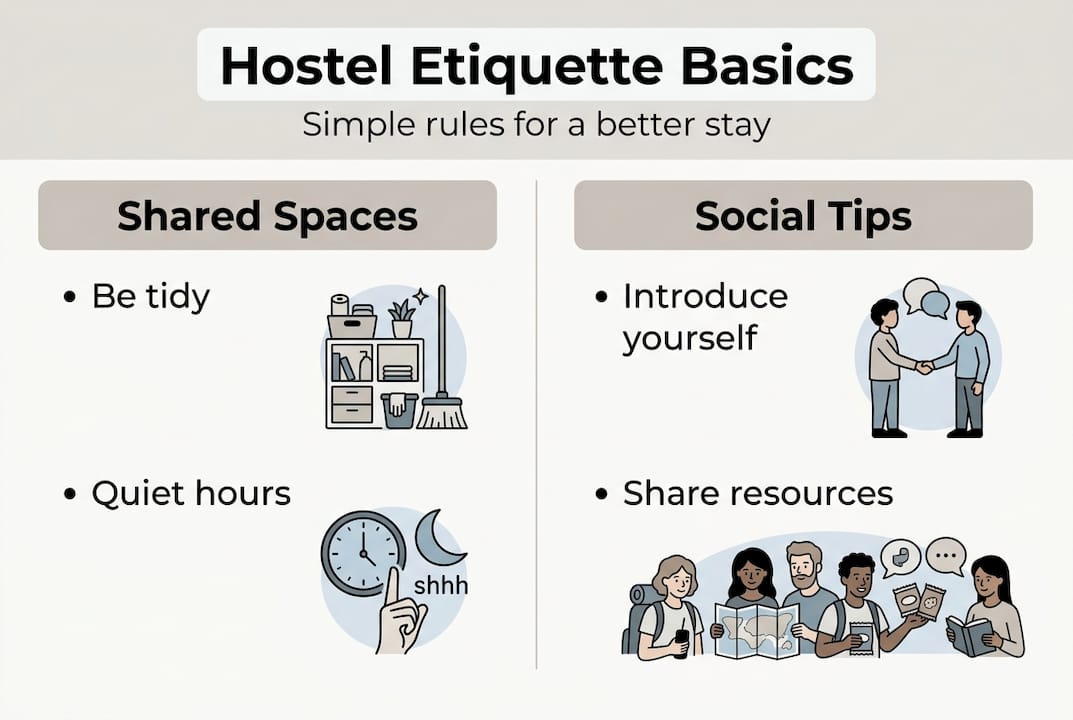
- Respect quiet hours. Most hostels enforce quiet hours from around 10 or 11pm through to 8 or 9am. Lower your voice, switch to earbuds, and use your phone flashlight instead of turning on overhead lights.
- Pack your bag the night before. Rummaging through a 70-liter backpack at 6am while your roommates are sleeping is one of the single most disruptive things you can do. Lay out tomorrow’s essentials before bed.
- Keep your bunk area clean. You are sharing a room with strangers who deserve a tidy space. Stuff your dirty clothes in your bag, not spread across the floor.
- Label your food or use what is communal. Most kitchen conflicts start with someone eating food that was not theirs. Label anything you store in the fridge and respect items left for sharing.
- Take turns with outlets and bathroom time. Charging spots and showers are limited. Set an alarm, be efficient, and do not monopolize shared resources for hours at a stretch.
- Use headphones. For music, videos, calls, and late-night streaming, headphones are non-negotiable. Your bunkmates did not sign up to hear your podcast recommendations at 11pm.
| Situation | Polite approach | What to avoid |
|---|---|---|
| Early alarm | Vibrate mode, pack the night before | Multiple snooze alarms |
| Lights out | Use phone flashlight | Overhead lights after 10pm |
| Bathroom | Keep it under 10 minutes | Long showers during peak morning hours |
| Kitchen | Clean up immediately | Leaving dishes in the sink overnight |
| Phone calls | Hallway or common room | Calls inside the dorm |
Pro Tip: Learn about hostel kitchen sharing before you arrive. A quick read on communal kitchen norms can save you from some genuinely awkward moments over a frying pan.
The full range of hostel amenities varies from place to place, but these core rules apply almost universally. Master them and you will fit in effortlessly from day one, regardless of which country you are in or how big the dorm is.
How to socialize (and not be awkward): Solo, groups, couples
Now for the fun part. The whole reason most people book a hostel is to connect with other travelers, yet a lot of guests freeze up once they actually get there. The trick is understanding that socializing in a hostel has its own rhythm, and that rhythm looks different depending on whether you are traveling solo, with a group, or as a couple.

Solo travelers
As a solo traveler in Iceland or anywhere else, you have the biggest social advantage of any guest type. You are visibly available for conversation, and experienced hostel travelers know it. Use it.
- Start in the common areas. Sitting in the kitchen or lounge with your laptop open signals that you are approachable. A simple “where are you heading next?” opens most conversations.
- Introduce yourself when you enter the dorm. It takes five seconds and transforms a room full of strangers into a room full of potential friends.
- Join activities. Many hostels organize tours, group dinners, or evening events. These are structured opportunities to connect without the pressure of cold-approaching someone.
- Use the booking momentum. If you overhear someone mention a destination you are heading to, ask if they want to share a ride or split a rental car. Half of the best hostel friendships start exactly this way.
Groups
Groups have the opposite challenge. You already have your social world traveling with you, which makes it easy to accidentally close yourselves off from everyone else. Traveling in a group does not mean you have to be a clique.
- Actively include solo travelers in conversations and dinner plans.
- Spread out in common areas rather than commandeering a single big table.
- Keep group noise levels in check, especially in dorm rooms. A group of four laughing at midnight feels like an event to you and a nightmare to everyone else.
- Designate one person to handle logistics so you are not having loud group debates in the corridor about where to eat.
Couples
Couples in hostels walk a specific tightrope. You want privacy, but you are in a shared space. The golden rule here is simple: if you want intimacy, book a private room or a room buyout. Do not make your dorm roommates uncomfortable with PDA in a bunk bed.
- In common areas, socialize as individuals as well as a pair. It is far easier for others to approach one of you than both of you locked in a private conversation.
- Keep physical affection appropriate for the setting.
- Be genuinely curious about other travelers. Some of the best couples we have met at hostels became the social hub of the whole building because they treated every common area interaction as a chance to include someone new.
Pro Tip: Create a group chat with new hostel friends for coordinating day trips or dinner plans. It keeps logistics out of the dorm room and gives people an easy way to opt in without social pressure.
Advanced etiquette: digital space, resource sharing, and conflict resolution
Once you have the basics down, a few more subtle situations will inevitably come up. Modern hostel life involves phones, apps, shared chargers, group coordination, and the occasional genuine conflict. Knowing how to handle these gracefully separates a good hostel guest from a great one.
According to experienced hostel travelers, pre-packing, digital coordination through app chats, thoughtful resource sharing, and knowing when to involve staff are all central to navigating modern hostel community life with confidence.
Digital coordination without disturbing others:
- Coordinate plans through a WhatsApp or Signal group rather than having conversations in the dorm room.
- Set phone notifications to silent during quiet hours, not just vibrate. Repeated buzzing on a wooden bunk platform is louder than you think.
- Use your phone screen brightness at its lowest setting when others are sleeping.
Resource sharing done right:
- If you have a portable charger, offer it around. Small gestures build goodwill fast.
- Leave kitchen staples you are not going to finish, like oil, spices, or half a loaf of bread, on a clearly marked “free to use” shelf.
- Keep shared living spaces in the condition you found them or better. Wipe down surfaces after cooking. Return equipment to where you found it.
Handling conflict without drama:
- If someone is being loud or inconsiderate, wait for a calm moment and address it quietly and directly. Most people respond well to a polite heads-up and had no idea they were bothering anyone.
“If a direct conversation feels uncomfortable or the situation repeats, that is exactly what hostel staff are there for. They handle these edge cases all the time without judgment.”
- Never escalate publicly. A quiet word is almost always more effective than a confrontation in front of the group.
- If you are on the receiving end of a complaint, respond with a genuine apology and change the behavior. Defensiveness solves nothing and makes the rest of your stay awkward.
The key insight here is that digital habits and physical habits follow the same logic. Both are about minimizing your footprint in shared living spaces so that others can enjoy them fully too.
Our take: The true heart of hostel etiquette
Here is the part most etiquette guides get wrong. They present hostel rules as a checklist, as if the goal is technical compliance. Follow the noise rules, label your food, done. But the guests who genuinely thrive in hostels, who leave with new friends, unexpected adventures, and stories they tell for years, are not the ones who memorized the most rules. They are the ones who learned to read the room.
The actual foundation of hostel etiquette is empathy. It means noticing when someone looks lost and offering help, even when you are exhausted. It means realizing that the person who just arrived after a 14-hour bus ride needs quiet more than you need to finish your phone call in the dorm. It means understanding that people come from different cultures with genuinely different norms around noise, personal space, and socializing, and being curious about that rather than irritated.
We have seen guests who broke a rule here and there but were so warm and considerate in spirit that nobody minded. And we have seen guests who followed every rule perfectly but created tension through coldness and inflexibility. The difference was empathy, not compliance.
The most memorable hostel moments we know of came from small, spontaneous acts of genuine human consideration. A shared meal someone cooked for the whole kitchen. A tip about a hidden waterfall passed between strangers who ended up hiking it together. These things do not happen because someone followed a rulebook. They happen because a person decided to show up with an open, generous attitude. That is the real etiquette. Everything else is just the scaffolding.
Ready to experience hostel life?
Now that you know how to navigate shared spaces with confidence, there is one thing left to do: put it all into practice.

Fox Hostel, set in a converted Icelandic barn in Hrífunes Nature Park just 35 minutes east of Vík, is built for exactly the kind of travel this guide describes. Solo travelers can book a single bed and meet other travelers in the fully-equipped communal kitchen or out under the dark skies watching the Northern Lights. Groups and couples can reserve private and shared rooms with a full room buyout for complete flexibility. The social atmosphere here is genuine, the location puts Iceland’s South Coast within easy reach, and the community is exactly the kind you came to hostels to find.
Frequently asked questions
What are quiet hours in a hostel?
Quiet hours are typically from 10-11pm to 8-9am, when you should minimize noise and avoid using bright overhead lights; most hostels enforce this as a firm standard across all dorm rooms.
Can couples stay in shared hostel dorms?
Yes, but couples should keep physical affection appropriate and consider the comfort of roommates; if you want real privacy, booking a private room is always the better call.
Are solo travelers common in hostels?
Absolutely. Over 55% of hostel bookings are made by solo travelers, which means you are far from alone and connecting with fellow guests is easier than you might expect.
What’s the best way to make friends in a hostel?
Introduce yourself in common areas, join activities the hostel organizes, and use a group chat to coordinate plans so that meetups happen naturally without dorm-room disruptions.
How should I handle a conflict with another guest?
Start with a calm, private conversation; if that feels awkward or the issue keeps happening, hostel staff are always available to help resolve edge cases without making things worse.
Recommended
- Cuisine commune en hostel : guide pratique pour en profiter | Fox Hostel – South Iceland
- Hostel amenities in Iceland: what budget travelers need to know | Fox Hostel – South Iceland
- What Is a Modern Hostel? Features, Trends & Benefits | Fox Hostel – South Iceland
- Shared hostel spaces: affordable adventure & community | Fox Hostel – South Iceland