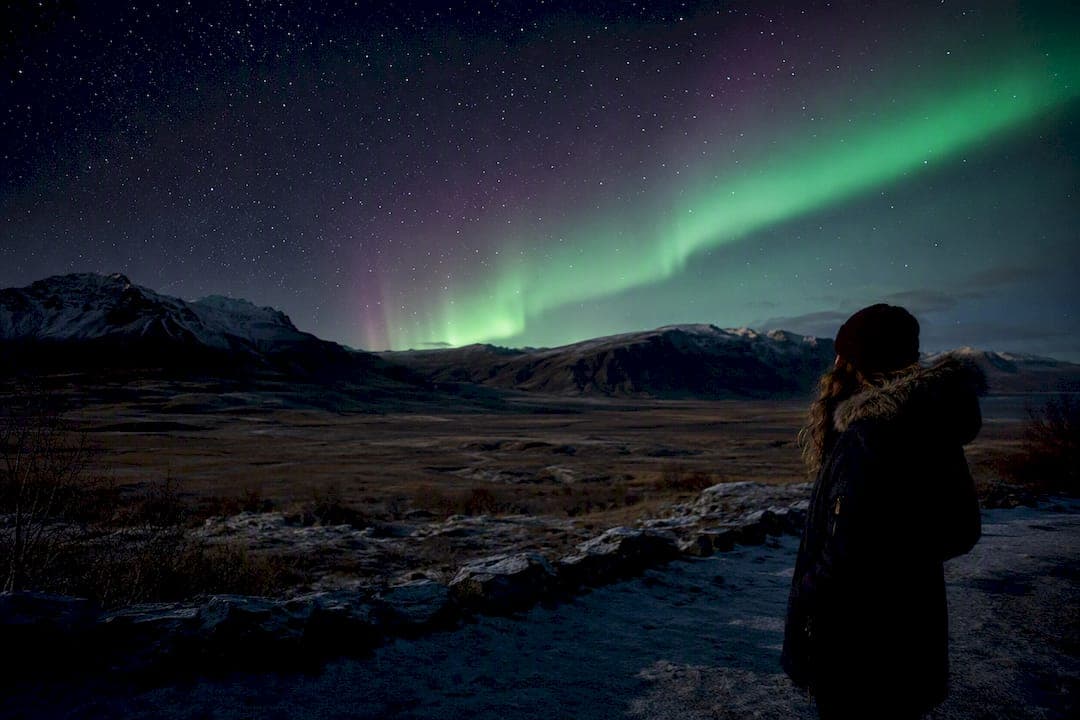
When to Chase the Northern Lights: Iceland's Aurora Season
When to Chase the Northern Lights: Iceland’s Aurora Season
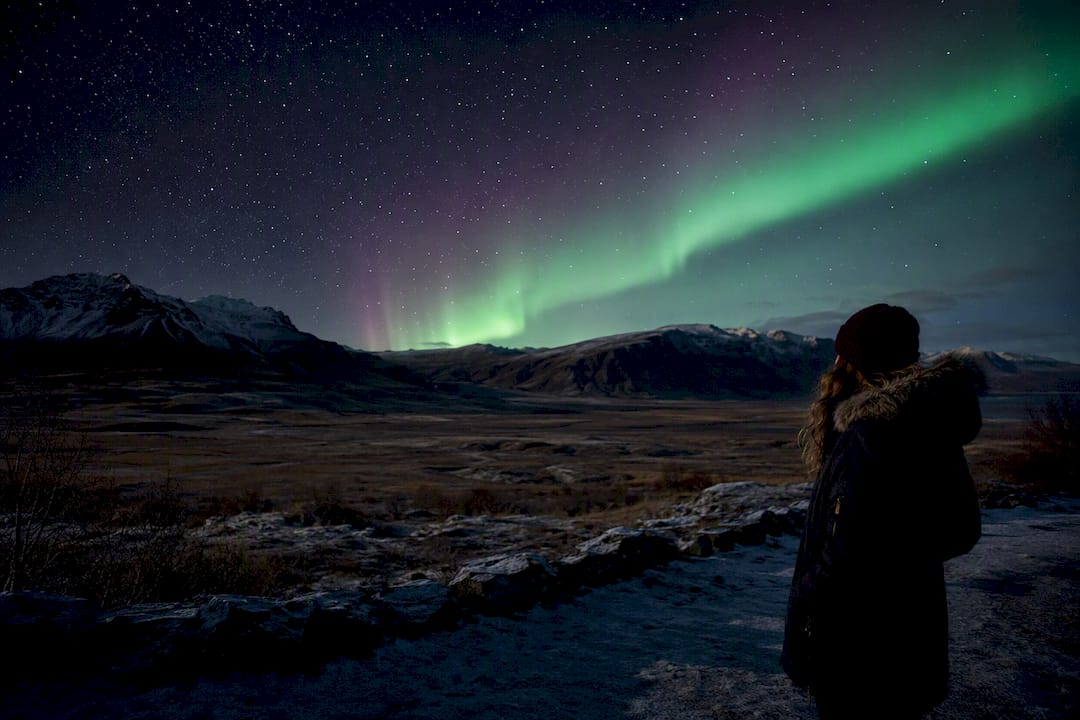
Aurora season in Iceland runs from mid-August through mid-April, and for the best mix of darkness, weather, and road access, aim for either the early autumn or late winter shoulder-season months. Elevated solar output during Solar Cycle 25 is keeping activity strong into 2026, which stacks the odds in your favor no matter which shoulder-season window you pick.
TL;DR:
- Aurora viewing in Iceland is most reliable between mid-August and mid-April, with late September and February offering the best balance of darkness and manageable weather.
- Clear skies, five or more hours of true night, and minimal artificial light are essential conditions for visibility, regardless of the calendar month.
- The best time for aurora activity on clear nights is generally between 9:00 PM and 2:00 AM, peaking around 11:00 PM, with KP 2-3 typically producing strong displays in Iceland.
- Cloud cover and weather conditions are the primary factors disrupting sightings, making real-time forecasts and local webcams crucial for planning each night.
- A multi-night trip (at least four to seven nights) increases chances of seeing the aurora, especially if travel is flexible and includes guided tours or self-driving options for chasing clear skies.
Table of Contents
- Aurora Season in Iceland: Exact Dates and Why Darkness Matters
- Which Month Should You Actually Book?
- What’s the Best Time of Night to See the Aurora?
- How Do You Read an Aurora Forecast Before Heading Out?
- Where in Iceland Should You Go for Dark Skies?
- Your Practical Aurora-Hunting Checklist
- How Does Iceland’s Weather Change Your Odds by Season?
- Does the Moon Affect How Well You Can See the Aurora?
- Why Do the Northern Lights Matter So Much to Icelandic Culture?
- What I’ve Learned Watching Skies Over the South Coast
- Make Fox Hostel Your Aurora-Hunting Base
- Sources
Aurora Season in Iceland: Exact Dates and Why Darkness Matters
The window is fixed by physics, not tourism marketing. Iceland’s aurora season officially runs from mid-August through mid-April, and outside those dates, the Midnight Sun keeps the sky too bright for the lights to register at all. Between May and early August, Iceland barely gets dark, and any aurora activity happening overhead is invisible against the glow.
“Season” gets used two different ways, and mixing them up causes confusion. Astronomically, darkness starts creeping back as early as late July. Practically, you need several consecutive hours of true night sky, which doesn’t arrive reliably until mid-August and starts fading again by mid-April as the days stretch out.
Before you book anything, run through this quick feasibility check for your travel dates:
- Are you traveling between mid-August and mid-April? If not, skip the aurora hunt entirely.
- Does your destination get at least 4-5 hours of real darkness that night?
- Is the forecast showing clear or partly clear skies (cloud cover is the actual dealbreaker, not the season)?
- Are you somewhere with minimal artificial light, ideally 20+ minutes from a town center?
Miss any of those four and your odds drop fast, regardless of how “peak” the calendar month looks on paper.
Which Month Should You Actually Book?
Every month inside the season trades something for something else. Milder weather usually means shorter nights. Maximum darkness usually means brutal wind and icy roads. Here’s how the tradeoffs actually break down:
- Late August to September gives you the gentlest entry into the season. Nights are still relatively short, but temperatures are mild, roads are dry, and early tours often start running from mid-August. Late September also carries a bonus: the autumn equinox tends to boost geomagnetic activity through the Russell-McPherron effect, so displays can run stronger than the calendar date alone would suggest.
- October and November hand you longer nights and steadily improving darkness without the deep-winter extremes. Roads are still mostly manageable, and this stretch is a solid pick if you want a genuine balance between comfort and viewing time.
- December and January deliver the longest nights of the year, but that darkness comes at a cost. Storm systems roll through constantly, cloud cover spikes, and road closures on routes like the Ring Road become common. This is the highest-risk, highest-reward window.
- February and March are the months many repeat visitors quietly prefer. Nights are still long, weather tends to stabilize compared to midwinter, and the March equinox brings the same geomagnetic bump that September gets. It’s often the sweet spot for serious aurora hunters.
- April closes out the season fast. Nights shorten by several minutes a day, so your usable window each evening keeps shrinking. Early April can still work, but by the third week, you’re fighting the clock.
If you can only pick one window, September–October and February–March consistently outperform the deep winter months on the comfort-to-visibility ratio.
What’s the Best Time of Night to See the Aurora?
Your best odds fall between 9:00 PM and 2:00 AM, with activity most frequently peaking around 11:00 PM. That’s not a hard rule. The aurora can appear at 7:30 PM or flare up at 3:00 AM, but if you only have energy for one focused watch window, that five-hour stretch centered on 11:00 PM is where you should be outside, eyes on the sky.
Understanding the KP index helps you set realistic expectations before you even step outside:
- KP 0-1: Minimal activity. Possible in far northern areas but unlikely to be visible or photogenic.
- KP 2-3: Often enough on its own in Iceland, since the country sits directly under the auroral oval, and a moderate KP frequently produces genuinely strong displays here without needing a high number.
- KP 4 and above: Indicates a stronger geomagnetic storm, meaning brighter, more colorful, and more widespread activity, sometimes visible even through thin cloud or light pollution.
Peak viewing statistic: Iceland’s most active aurora hours cluster between 9:00 PM and 2:00 AM, with 11:00 PM as the most common peak, which is exactly when you want dinner finished and your car parked somewhere dark.
Because weather, not season, is the real variable working against you, plan for multiple nights, ideally four to seven, rather than pinning your entire trip on one evening. One cloudy night shouldn’t sink the whole trip if you’ve built in room to try again.
How Do You Read an Aurora Forecast Before Heading Out?
The workflow that actually works is simple, and it takes about five minutes each evening. Check the Icelandic Meteorological Office’s aurora forecast between 6:00 PM and 10:00 PM. This overlays predicted KP activity directly onto a real-time cloud cover map, refreshed every three hours, so you can see at a glance whether your region will be clear around midnight.
Here’s the practical sequence:
- Open the Vedur aurora page and note the predicted KP number for your evening.
- Look at the cloud overlay for your specific region, not just the national average.
- If your area shows heavy cloud but a KP number worth chasing, check nearby regions on the same map.
- Cross-reference with NOAA’s Space Weather Prediction Center for a second opinion on solar wind conditions, and glance at local webcams to confirm actual sky conditions in real time.
- If your location is socked in, be ready to drive 30 to 60 minutes toward a clearer patch. Iceland’s weather shifts fast, and a short drive often solves the problem entirely.
Chasers who take this seriously also watch the Bz value, the orientation of the interplanetary magnetic field. A sustained southward Bz can trigger dramatic activity even when the KP number looks unremarkable, which is why two nights with identical KP forecasts can produce wildly different shows.
Pro Tip: Bookmark Vedur’s aurora page on your phone and check it every single evening of your trip, even on nights you don’t plan to go out. Patterns emerge fast, and you’ll start reading the cloud map like a local within two or three days.
Where in Iceland Should You Go for Dark Skies?
Location matters almost as much as timing, and the good news is that most of Iceland outside Reykjavík qualifies as genuinely dark. The South Coast near Vík offers some of the most reliable access in the country, combining low light pollution with paved roads that stay passable through most of the season. The Eastfjords, Snæfellsnes Peninsula, and Westfjords all offer excellent dark-sky potential too, though they demand longer drives and, in winter, more caution around weather-dependent road closures.
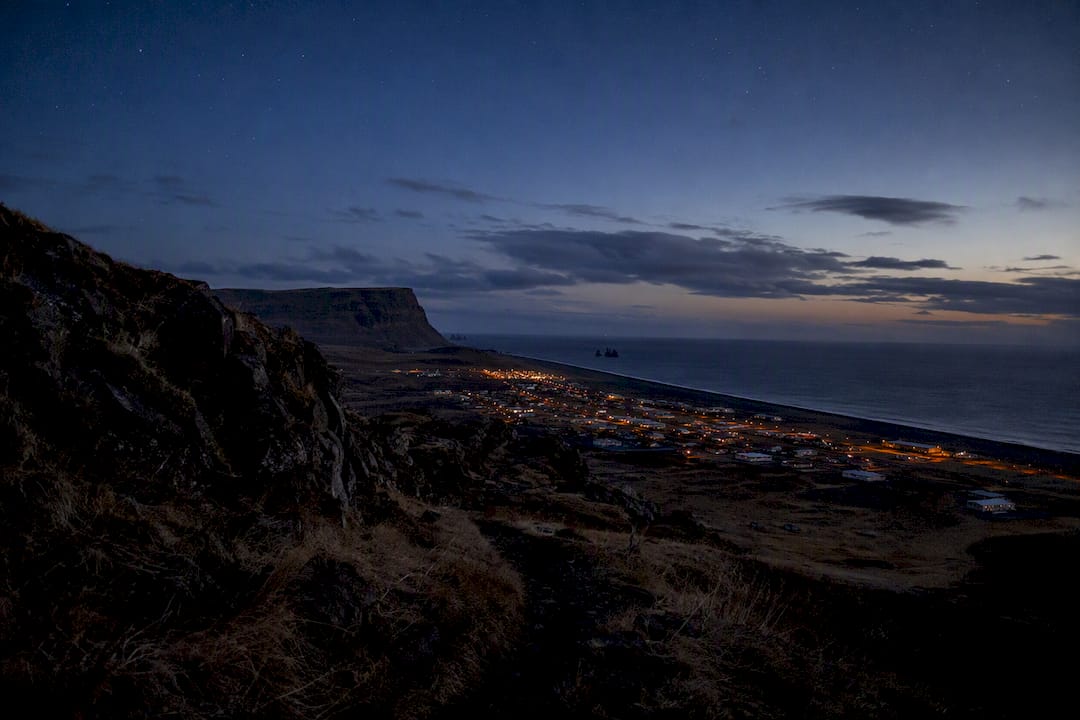
If you’re staying near a town, you don’t need to travel far to escape the glow. Find any elevated spot a few minutes outside the settlement, and simply face away from the town lights rather than toward them. That alone can make the difference between a washed-out sky and a clear view of a faint band overhead.
Winter driving deserves real respect here. Before heading out after dark, check road.is for closures and conditions, and never assume a route that was clear that morning will still be clear at midnight. Allow daylight hours for any long-distance travel, and if you’re visiting during December or January specifically, a guided tour with a driver who knows the roads is a safer bet than a self-drive rental. Fox Hostel’s guide to the best Northern Lights spots in Iceland breaks down specific viewpoints near the South Coast if you want a head start on where to park.
Your Practical Aurora-Hunting Checklist
Getting the timing right is only half the job. Here’s how to structure the trip itself:
- Spread your nights across 3-7 days rather than cramming everything into a single overnight stop. Cluster your evening aurora hunts around daytime sightseeing at the same base so you’re not driving hours in both directions.
- Decide between a guided tour and self-driving. Tours bring forecast expertise, warm transport, and a driver who already knows where the clear patches are. Self-driving gives you total flexibility and the freedom to chase a clear sky the moment you spot one, but it requires genuine winter driving experience.
- Pack for standing still in the cold, not walking. Thermal base layers, a windproof outer shell, insulated boots, and a hat that covers your ears matter more than how many layers you’re wearing.
- Set your camera manually before you leave the car: wide aperture, ISO 800-3200 depending on brightness, and a shutter speed of 5-15 seconds on a stable tripod. Fox Hostel’s step-by-step aurora photography guide walks through the exact settings if you’re shooting for the first time.
Pro Tip: Book your accommodation for the shoulder months (September or March) a few months ahead if your travel dates overlap with a solar eclipse or major astronomical event, since those weekends fill up faster than a normal aurora-season weekend.
If flexible flight timing matters to your budget, planning airfare around shoulder-season aurora windows can also save you meaningfully compared to booking peak winter dates.
How Does Iceland’s Weather Change Your Odds by Season?
Cloud cover, not darkness, is the variable that actually ruins most aurora hunts. Late summer and early fall bring the mildest conditions of the season: temperatures hover in the 40s to low 50s Fahrenheit, and while rain is common, extended clear stretches happen often enough to make September a genuinely pleasant time to be outside at night.
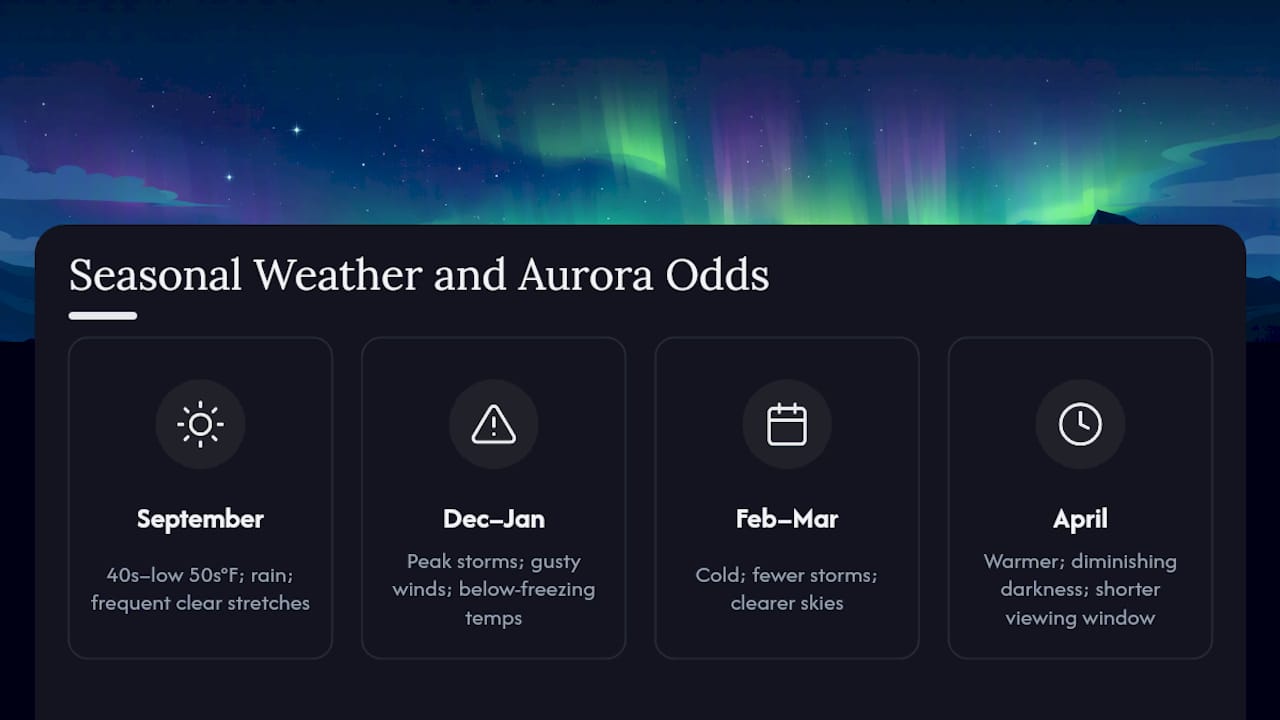
Midwinter is where things get harsh. December and January bring the highest storm frequency of the year, with wind gusts that can make standing outside for an hour genuinely uncomfortable, and temperatures that regularly drop below freezing across the South Coast and further north. Cloud cover during this stretch is inconsistent and can shift by region within a single evening, which is exactly why checking Vedur’s regional cloud map matters more in January than in September.
Late winter tends to even out. February and March still bring cold, but storm systems are typically less relentless than the December peak, and clear-sky stretches become more predictable. By April, temperatures climb again, but the shrinking dark window means you’re racing against daylight even on a perfectly clear night.
The takeaway across every season is the same: temperature is a comfort issue, but cloud cover is the actual go/no-go decision. A cold, clear February night will always beat a mild, overcast September one for actually seeing anything overhead.
Does the Moon Affect How Well You Can See the Aurora?
A bright full moon washes out faint aurora activity the same way city lights do, just from above instead of the horizon. On strong nights with a high KP number, the moon barely matters. Vivid green and purple bands will cut through moonlight without much trouble. On fainter nights, though, a full moon can turn a subtle, pale display into something you’d walk right past without noticing.
New moon periods, or nights when the moon has already set before your viewing window starts, give you the deepest possible sky contrast. If you’re planning around specific dates and want to stack every advantage, checking the lunar calendar alongside your KP forecast is worth the extra two minutes. It won’t override a strong geomagnetic storm, but on a marginal night, a dark moon phase can be the difference between seeing something and seeing nothing at all.
This isn’t a reason to avoid traveling around a full moon. It’s simply one more variable to factor in alongside cloud cover and KP when you’re deciding which specific night, out of your multi-night trip, to prioritize for the longest outdoor watch.
Why Do the Northern Lights Matter So Much to Icelandic Culture?
Long before satellites and KP forecasts, Icelanders built their own explanations for the lights overhead. Old folk belief connected the aurora to the spirits of the dead, and some traditions held that the lights could ease the pain of childbirth, while others warned pregnant women against looking directly at them for fear of birth complications. Fishermen and farmers read the sky for practical signs too, treating unusually active displays as a signal of coming weather shifts.
That relationship with the sky hasn’t faded with modern life. Iceland’s sparse population and minimal light pollution outside Reykjavík mean the aurora remains a genuinely everyday part of winter life for people living along the South Coast and in rural fishing villages, not a rare tourist spectacle. Local guides often grew up watching the lights from their own front yard long before it became a bucket-list trip for visitors, and that first-hand familiarity is part of why locally run tours and hostels tend to give more grounded, realistic forecasts than a generic booking site ever could.
What I’ve Learned Watching Skies Over the South Coast
Checking a webcam before stepping outside sounds almost too simple to matter, but it changes how you plan an entire evening. Watching live conditions update in real time, rather than trusting a forecast made six hours earlier, tells you immediately whether tonight is a watch-and-wait night or a drive-somewhere-else night.
Fox Hostel’s position on the South Coast, roughly midway between Vík and Kirkjubæjarklaustur, sits far enough from major towns that the sky darkens properly, but close enough to good roads that chasing a clear patch doesn’t mean a two-hour drive into the unknown. Pairing a local webcam with the Vedur cloud map turns aurora hunting from guesswork into something closer to a routine. Check before dinner, check again before bed, and let the sky tell you whether it’s worth stepping outside.
— Siggi
Make Fox Hostel Your Aurora-Hunting Base
Location decides more of your aurora trip than most travelers realize, and Fox Hostel sits exactly where the South Coast’s darkest, most accessible skies meet a genuinely comfortable place to wait out a cloudy night. Set in a converted barn just 35 minutes east of Vík, it puts you close enough to Reynisfjara and Dyrhólaey for daytime sightseeing, but far enough from town lights that stepping outside after dinner is often enough.

Because aurora hunting works best across several nights rather than one, Fox Hostel’s flexible booking (a single bed for solo travelers, or a full room buyout for couples and groups) means you can plan a realistic multi-night stay without paying for space you don’t need. The communal kitchen and on-site pizzeria keep evenings social while you wait for the KP number to climb, and the Northern Lights webcam and local guides give you the same real-time read on the sky that staff use themselves. Check current dates and book your room at Fox Hostel to lock in a base for your next aurora season trip.
Sources
- The Auroras — Visit Iceland
- Aurora forecast for Iceland — Icelandic Meteorological Office (Vedur)
- Iceland aurora viewing guide — Vetrarakstur
- Northern Lights Season 2026 Starts August 15 — Aurora Reykjavík