Iceland Moss Rules: What You Can and Can't Do
Iceland Moss Rules: What You Can and Can’t Do

The short version: don’t step on, pick or dig up moss in Iceland, and stay on marked trails and roads. The moss that carpets lava fields grows very slowly and scars for decades. Some species are protected by law, and damage in protected areas is enforceable. “Iceland moss” is also the common name of a specific lichen sold as a herbal remedy, and the rules for that are different. This guide covers both, with the official sources, so you know where the line sits before you arrive.
TL;DR
- Don’t walk on, pick or pull up the green moss on lava fields. Damage to moss in protected areas is forbidden under the Nature Conservation Act, and regrowth takes decades.
- Stay on marked paths. Off-road driving is illegal across the country, and offenders face fines or imprisonment.
- “Iceland moss” (Cetraria islandica) is technically a lichen. Buy it in shops as tea, lozenges or syrup instead of taking it from the ground.
- Rules differ by area, so check the protection terms for each place you visit, and ask for permission before flying a drone in protected areas.
- Photograph moss from the trail. Never lie on it, sit on it or take a piece home.
Table of Contents
- Why Iceland’s moss gets its own rules
- What the law says about stepping on moss
- Picking Iceland moss: the rules for the lichen itself
- Driving and moss: why off-road is the biggest threat
- A field guide to behaving well around moss
- Our perspective
- Plan a South Coast stay that keeps you on the path
- What the rules mean at a glance
- FAQ
- Sources
Why Iceland’s moss gets its own rules
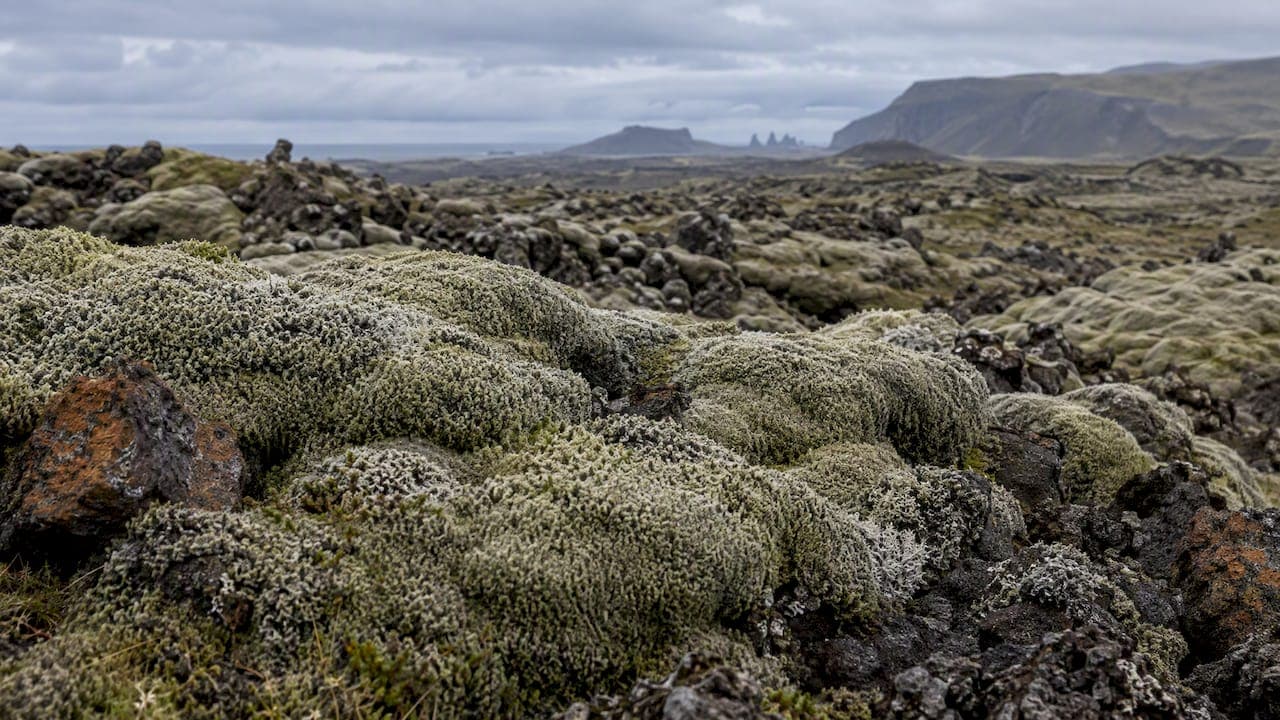
Much of Iceland’s landscape is young volcanic ground with thin soil. Moss is often the first thing to colonize cooled lava, and over time it builds the soft, grey-green blanket you see on the South Coast. It looks like a cushion. It behaves like a thin skin.
The Environment Agency of Iceland (Umhverfisstofnun) says the strict rules on walking and driving exist because volcanic soil and vegetation are extremely fragile and can be permanently scarred by simple actions, such as walking off-trail or driving over unmarked ground. Iceland’s short growing season means a single footprint can take decades to heal. A tour group of twenty people stepping aside for a photo can leave a visible path that lasts far longer than the trip.
That is why “leave no trace” in Iceland is closer to a legal and ecological requirement than a polite request.
What the law says about stepping on moss
Iceland’s right to roam is generous. The Nature Conservation Act gives everyone the right to travel around the country, and it also sets standards of conduct. Those standards come with obligations, and they are stricter in protected areas.
Here is how it breaks down in practice:
- Protected areas: stepping on, picking or damaging moss is forbidden, and some species are protected against any physical disturbance, including trampling. Damage to moss and geological formations can be enforced under article 61 of the Act.
- Nature reserves and natural monuments: the rules are set area by area. For example, the Fjallabak reserve is protected under regulation no. 354/1979, which prohibits disturbing geological formations, vegetation and wild animal life.
- Everywhere else: the Act asks you to avoid spoiling vegetation, and it names moss specifically in its wording on travel. The practical rule is the same: stay on paths where they exist.
The agency’s own FAQ makes the key point: the rules vary by area, and you can read the protection terms for individual areas on its website. Check the page for any reserve or monument on your route before you go.
A real example: the lava at Geldingadalir
After the 2021 eruption, the agency published a notice on protecting the lava in Geldingadalir. It addressed climbing and walking on the lava, throwing stones at it and making inscriptions. Fresh lava is not moss, but the logic carries over: even new, hard-looking ground is treated as something to protect, not to use.
Picking Iceland moss: the rules for the lichen itself
This is where the keyword gets confusing. Iceland moss, Cetraria islandica, is a lichen, not a true moss. In Icelandic it is fjallagrös. It grows in highland heath and lava fields, and people have gathered it for centuries.
The Nature Conservation Act has a specific article on this. Article 27 covers picking berries, mushrooms, Iceland moss, herbs and beach vegetation. On privately owned land, picking generally depends on the landowner’s permission, though picking for your own consumption is addressed separately. The Act also lets the minister regulate commercial picking, and lets the Environment Agency prohibit or limit picking of individual species or in designated areas.
What that means for a visitor:
- Don’t treat it as a free souvenir. Even where small-scale picking for personal use is allowed, protected areas override it. Lichen and moss in a reserve are off limits.
- Ask the landowner. If you are on farmland, the permission question is real. Farms along the South Coast are working land.
- Never pick commercially. Commercial harvest is regulated, and it is not something a tourist can do.
- Skip the wild stuff if unsure. If you can’t tell which area you are in, leave it where it is.
This is a general summary of a long legal text, not legal advice. If you have a specific plan, such as a guided foraging trip, ask the operator which permissions they hold, or contact the Environment Agency of Iceland.
Iceland moss as a remedy
A 2022 review of the genus Cetraria describes its traditional use in herbal preparations for respiratory and digestive complaints such as coughs and hoarseness, and notes that commercial products come as syrups, lozenges and oral gums. It reports lichen acids including fumaroprotocetraric acid and usnic acid as the active constituents.
Two cautions belong here. First, traditional use is not proof that something works for you. If you have a persistent cough, see a doctor or pharmacist rather than a souvenir shop. Second, the review’s context is controlled supply: the products used for health come from legal, controlled harvesting. That is the opposite of pulling a handful off a lava field. Wild moss on the lava must stay undisturbed, whatever its medicinal history.

If you want to try it, buy tea or lozenges in a shop and check the label. Pregnant women, children and anyone taking medication should ask a pharmacist first.
Driving and moss: why off-road is the biggest threat
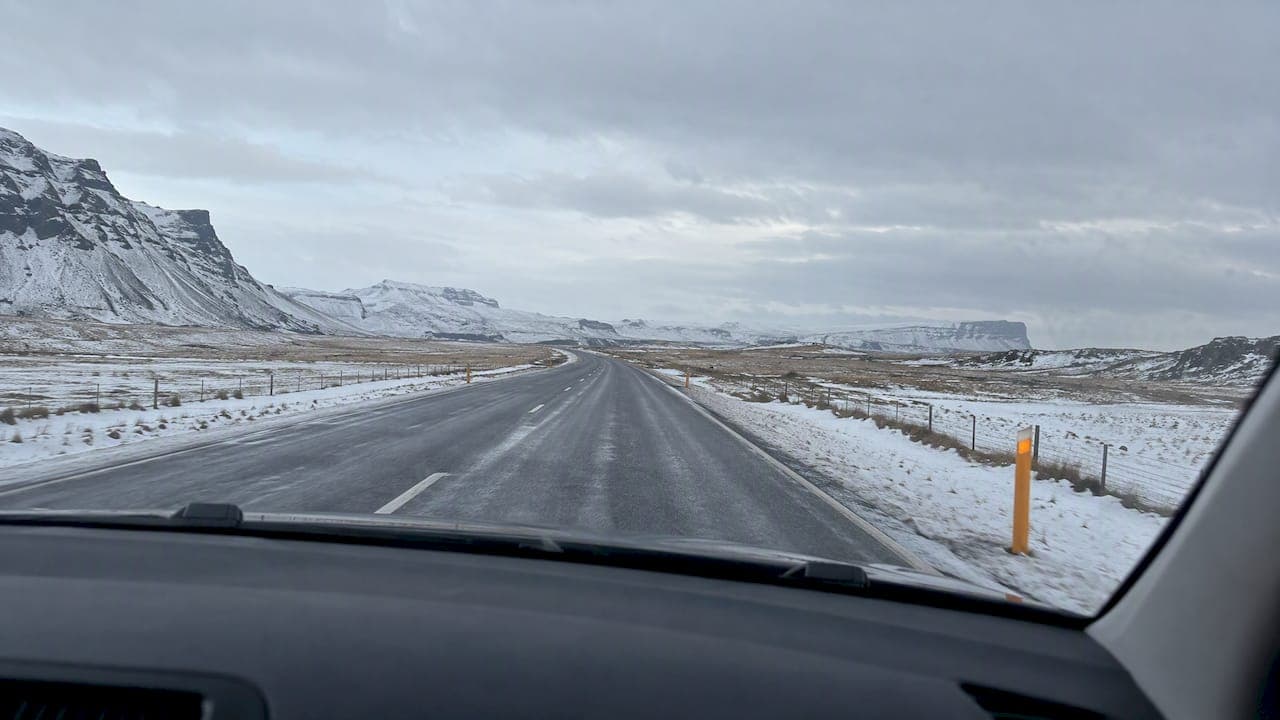
Foot traffic damages moss, but wheels do it faster. Tire tracks across a lava field can stay visible for many years.
The agency’s leaflet is blunt: off-road and off-track driving is illegal in Iceland, and drivers will be fined. Vehicles belong on marked roads and trails. The only exception is when the ground is frozen and covered with a solid layer of snow. The leaflet also asks you to report illegal activity to the police on 112 or to rangers.
For most visitors, this comes up in three ways:
- Pulling over for photos. Use designated parking areas, not the soft verge. Our guide to parking near Iceland’s attractions covers South Coast pull-offs.
- Following a tire track. A track in the moss does not make a road. Other drivers made a mistake, so don’t repeat it.
- F-roads. Highland roads are for suitable 4x4 vehicles on the marked route. Read about how to avoid voiding rental insurance on F-roads before you plan one.
A field guide to behaving well around moss
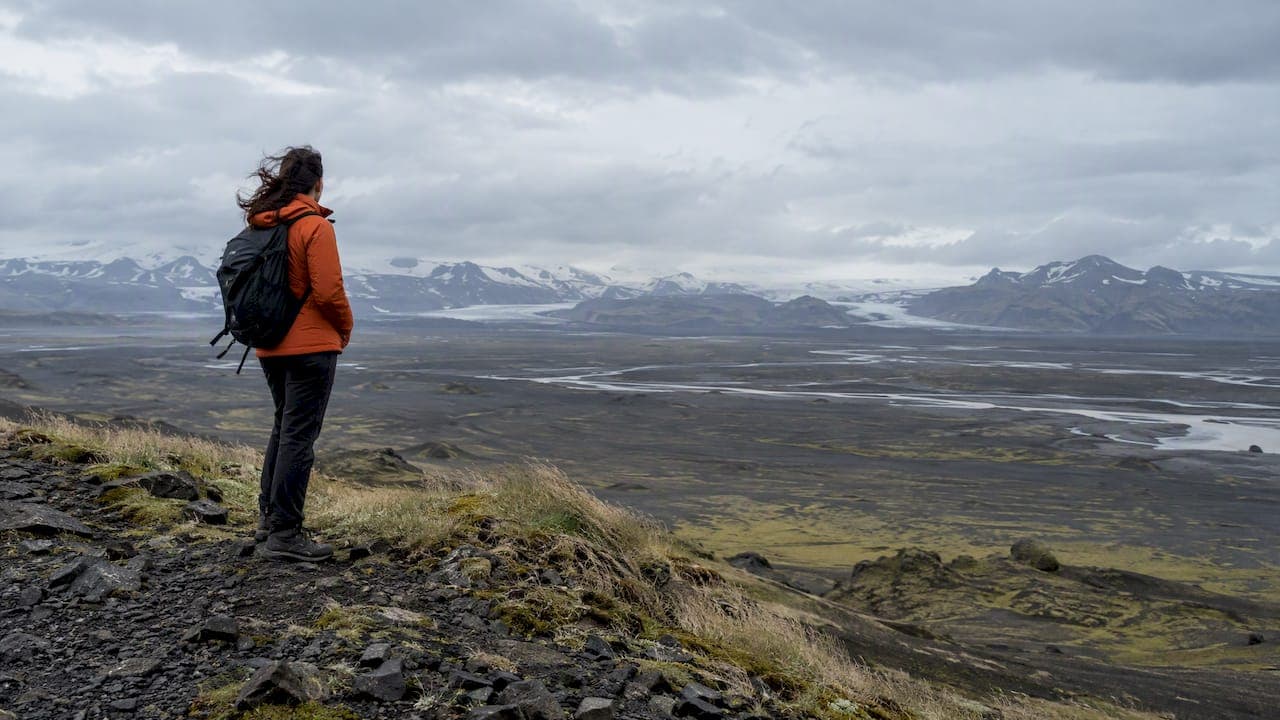
The rules sound simple on paper. On a windy ridge with a perfect view, they get harder. These habits keep you on the right side of them.
On the trail
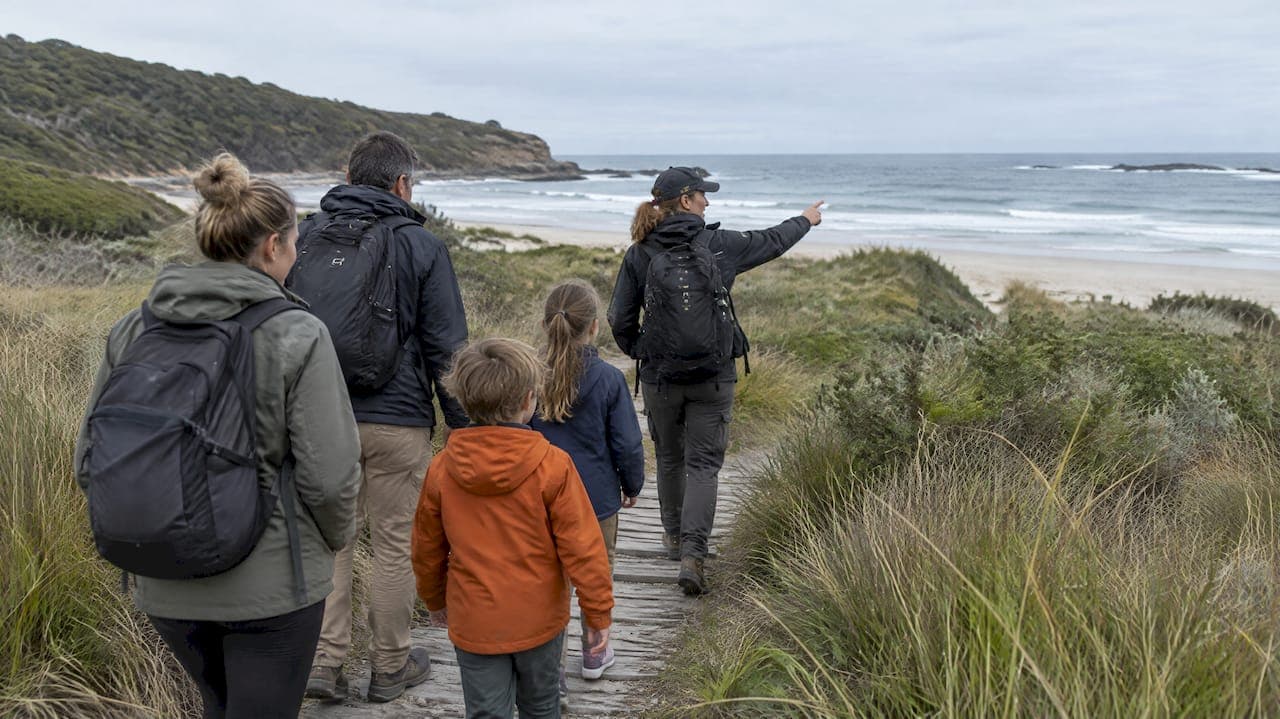
- Walk single file on marked paths, even when the path is muddy. Walking around mud widens the trail and tramples the edges.
- Stop on rock, gravel or boardwalk, not on moss, when you take photos.
- Don’t step off the path to let others pass. Wait for a wide spot.
- Keep children and dogs on the path. A running toddler can do a lot of damage in ten seconds.
With a camera or drone
Drones are heavily regulated inside protected areas. Flying one needs explicit permission from the Environment Agency. For example, the permit for Hjálparfoss, Gjáin, Háifoss and Granni notes that disturbance to vegetation and wildlife in the protected area is prohibited and that permission must be obtained. Check the official maps before you pack one.
With a group
Groups cause the most damage because people follow each other. Appoint one person who watches for strays. If you travel with a guide, follow their lead on where to stand.
Leave it where it is
Don’t take moss, stones or lichen home. Customs and conservation rules aside, a piece of moss on a shelf is a dead souvenir that took decades to grow.
For a broader view on traveling lightly, see this primer on responsible tourism, and our own guide to sustainable travel in Iceland.
Our perspective
We are a hostel in a converted barn near Vík, and the South Coast is our backyard. We see the same thing most weeks: guests arrive excited, wanting the photo, and nobody means to do harm. The damage comes from small, well-meant steps, one person stepping onto the green for a better angle and the next person following.
So we talk about it at check-in, and we think hosts should. A traveler who knows that one footprint takes decades to recover usually steps back. We would rather you hear it from us than from a ranger.
Our advice is plain. Plan a day with fewer stops and more time at each. Pick the viewpoint with a boardwalk. Eat a proper breakfast so you aren’t rushing. Ask us if you aren’t sure whether a path is open. And if you want something to take home, buy it from a local shop.
— Siggi
Plan a South Coast stay that keeps you on the path
A good base makes it easier to follow the rules, because you aren’t rushing to cover everything in one day. At Fox Hostel you can book shared or private dormitory rooms, and groups can reserve rooms together. Breakfast is served at the hostel, and in the evening you can eat at the on-site Hrífunes Pizzeria, so you don’t have to drive after dark in unfamiliar territory. If you want an activity that doesn’t involve walking across fragile ground, we also offer rafting through partner operators. For ideas on where to go, see our guide to scenic spots near Vík.
What the rules mean at a glance
| Action | Allowed? | Why |
|---|---|---|
| Walking on marked trails | Yes | Paths concentrate the wear |
| Stepping on moss in a protected area | No | Forbidden under the Nature Conservation Act |
| Picking moss or lichen in a reserve | No | Disturbing vegetation is prohibited |
| Picking on farmland | Only with landowner permission | Article 27 of the Act |
| Driving off marked roads | No, except on frozen, snow-covered ground | Illegal throughout Iceland |
| Flying a drone in a protected area | Only with permission | Environment Agency permit needed |
| Buying Iceland moss tea or lozenges | Yes | Sourced through controlled harvest |
FAQ
Can you step on moss in Iceland?
No. In protected areas, stepping on moss is forbidden under the Nature Conservation Act, and elsewhere you should treat it the same way. Moss recovers over decades because of Iceland’s short growing season, so one footprint can last far longer than your trip.
What is the green mossy stuff on top of lava fields in Iceland?
It is mostly moss, often a thick woolly type that colonizes cooled lava and builds soil over time. Lichens grow among it. The whole layer is fragile, which is why rangers ask visitors to stay on the trail and view it from a distance.
Can I pick Iceland moss as a souvenir?
Not from protected areas, and on private land you need the landowner’s permission under article 27 of the Act. Commercial picking is regulated. The simplest route is to buy tea or lozenges in a shop, where the lichen comes from controlled harvest.
Is Iceland moss good for a cough?
It has a long traditional use for coughs and hoarseness, and shops sell it as syrup and lozenges. Traditional use is not proof of effect, though. If your cough lasts more than a few days, see a doctor or pharmacist.
Sources
- Umhverfisstofnun: Access Rights
- Umhverfisstofnun: Driving in uninhabited areas
- Umhverfisstofnun: Driving off-road/track in Iceland is illegal (leaflet)
- Umhverfisstofnun: FAQ
- Umhverfisstofnun: Protecting the lava in Geldingadalir
- Umhverfisstofnun: Permit to fly a drone within protected areas
- Umhverfisstofnun: Fjallabak research permit and protection terms
- Náttúrufræðistofnun: Red Lists and protection
- Icelandic Nature Conservation Act no. 60/2013 (English text)
- The Genus Cetraria s. str.: A Review (PMC, 2022)