Reykjavik to Vik in Winter: 2 Stops Beat 5 in Short Daylight
Reykjavik to Vik in Winter: 2 Stops Beat 5 in Short Daylight

Reykjavík to Vík in winter is doable with precautions: drive only if you are experienced and well equipped, otherwise choose a bus or guided tour. Prioritize Seljalandsfoss, Skógafoss and Reynisfjara, and check road.is, vedur.is and Safetravel the morning you leave. Daylight is short, so two good stops beat five rushed ones.
TL;DR:
- The 187 km drive takes 2.5 to 3 hours nonstop in normal conditions, but winter stops can stretch it to 4 to 6 hours.
- Choose a bus or guided tour if ice or wind driving feels unfamiliar, or a storm is forecast; winter departures are limited.
- Late December brings only four to five daylight hours, so pair one waterfall with Reynisfjara and add another stop only if conditions allow.
- At Reynisfjara, stay at least 25 meters from the water, never turn your back on the ocean, and obey closure signs.
- An overnight stay near Vík avoids a return drive in darkness and gives you room to wait for a safer weather window.
Table of Contents
- How long does the Reykjavik to Vik drive take in winter?
- Should you take the bus or a guided tour instead?
- Which stops fit into a short winter day?
- What should you pack and how do you stay safe?
- Why does staying near Vik make winter travel easier?
- Our take: favor simplicity and safety
- Where can you stay near Vik this winter?
- FAQ
- Sources
How long does the Reykjavik to Vik drive take in winter?
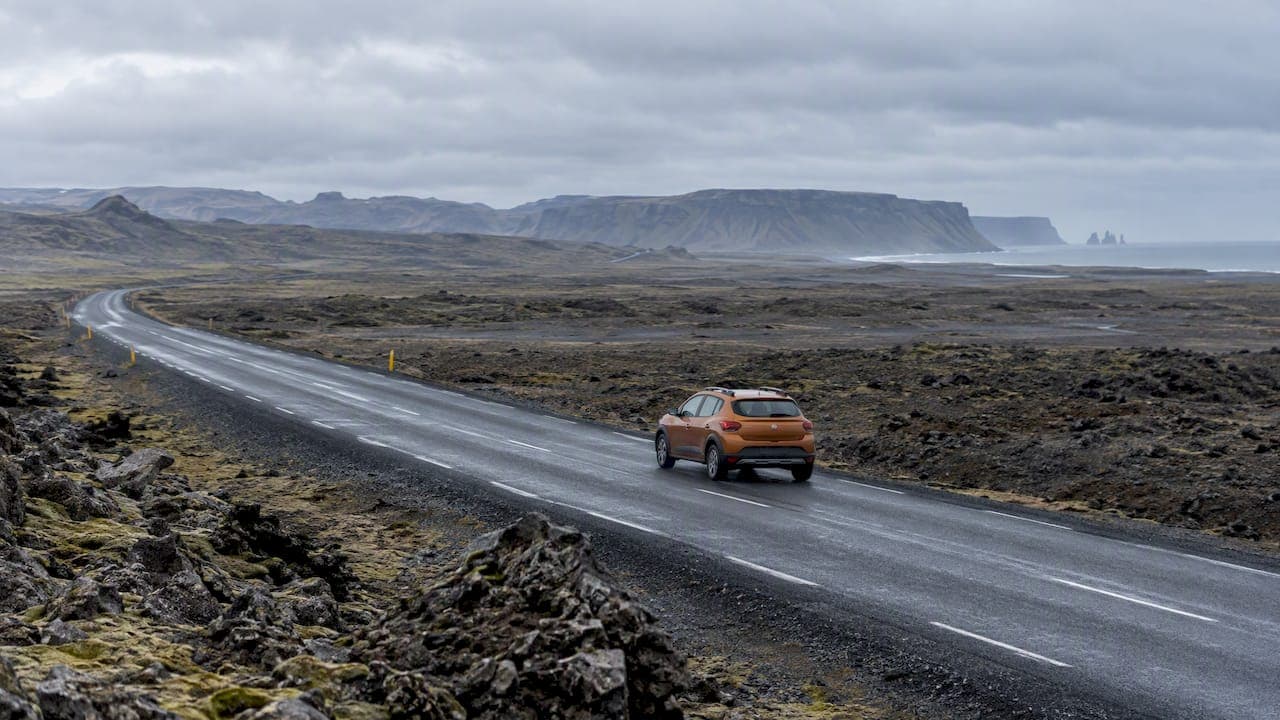
The route follows Route 1 for about 187 km (116 mi). Nonstop in normal conditions it takes 2.5 to 3 hours, but wind, ice, photo stops and short daylight can stretch a winter day to 4 to 6 hours with stops. For a closer look at distances and stops, see our Reykjavik to Vik drive guide.
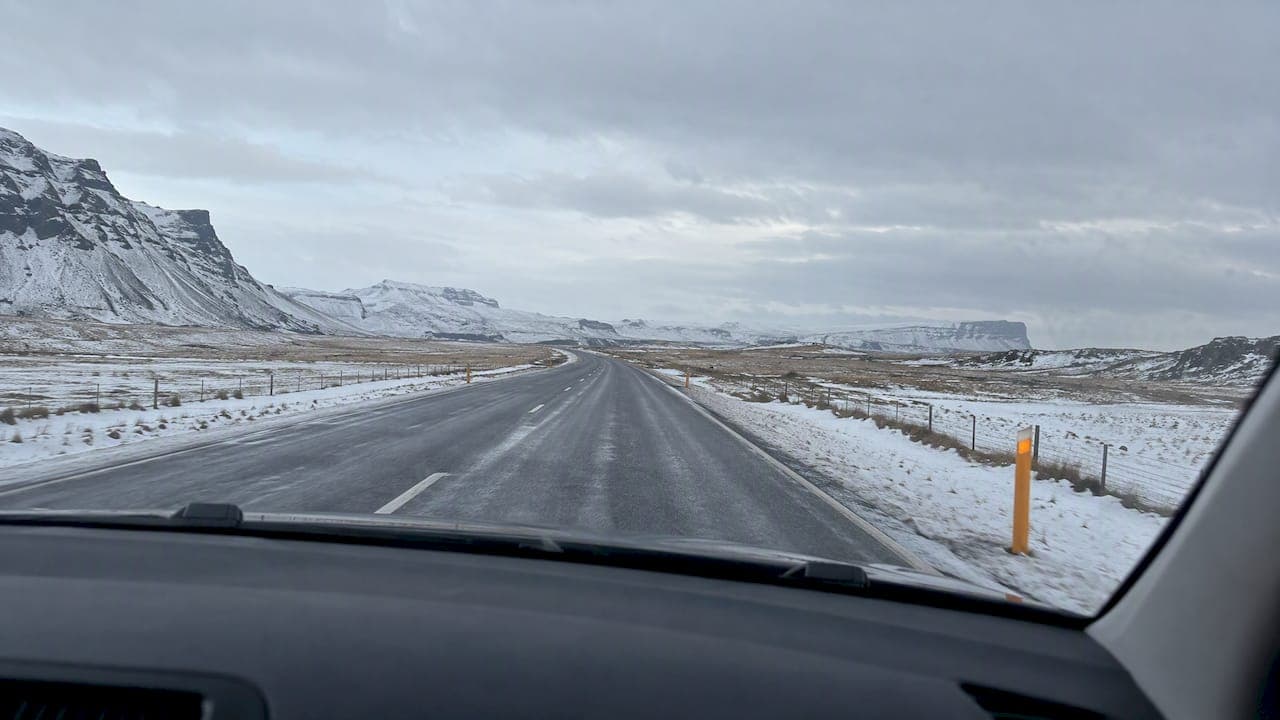
Two stretches deserve respect. The Hellisheiði plateau is the most frequent closure point in winter storms, and closures can come with little notice. The flat Mýrdalssandur section is exposed to crosswinds. If Hellisheiði is closed, wait it out rather than hunting for a risky workaround.
Before and during the drive:
- Check road.is for live road status and vedur.is for weather, once in the morning and again before key sections.
- Fit winter tires. A 4×4 adds confidence but is not a guarantee.
- Clear snow and ice from windows, mirrors and the roof before you move.
- Use headlights, slow down to match conditions, and keep a long following distance.
- Skip photo stops in exposed spots with no safe pull-off.
Pro Tip: Treat your departure time as flexible. Leaving an hour later for a clear road beats leaving on schedule into a closure.
Should you take the bus or a guided tour instead?
Buses run in winter, but not often. The Strætó Route 52 timetable shows limited departures serving Vík, so a bus gets you there but rarely lets you linger at waterfalls in daylight. Guided tours fill that gap with a local driver and an itinerary timed around light and weather.
Pick a bus or tour when:
- You have little or no experience driving on ice or in strong wind.
- You are traveling solo and would rather not manage conditions alone.
- Daylight is at its shortest, around late December.
- A storm is forecast along the route.
Book early in winter so you hold a seat, and check the operator’s updates the morning you travel, since schedules shift with the weather.
Which stops fit into a short winter day?

Short daylight is the real constraint. Visit Reykjavík notes only around four to five hours of daylight in late December, so choose two main stops, not five. A realistic plan pairs a waterfall with Reynisfjara, and adds Sólheimajökull or Dyrhólaey only when time and conditions are clearly safe.
Here is a sensible order, with time budgets for winter:
- Seljalandsfoss: Allow time for the walk and photos. Paths can be icy, so wear traction.
- Skógafoss: Allow time to enjoy the falls. The base is easy to reach, and the spray freezes on nearby surfaces.
- Reynisfjara: Visit only if beach access is open, and keep well away from the water.
- Optional add-on: Sólheimajökull or Dyrhólaey if you still have light.
In bad weather, drop Dyrhólaey’s viewpoints and exposed beach approaches first. Sequence your stops so the last one finishes before dusk, not after. For more planning ideas, our South Coast itinerary guide walks through sequencing.
What should you pack and how do you stay safe?
Dress for wind and wet more than for raw cold. Packing guidance based on Visit Reykjavík and Safetravel advice points to a waterproof, windproof coat, thermal base layers and insulated boots with good traction. Add a hat and gloves, and keep a spare layer in the car.
For the car:
- Start with a full tank and a charged phone.
- Carry an emergency kit, including warm layers and some food and water.
- Share your planned route with someone back home.
- Clear all snow and ice before driving, and wait in a safe place if conditions worsen.
Reynisfjara needs its own caution. Visit Iceland warns that sneaker waves make the beach dangerous, and says visitors should stay at least 25 meters from the water, never turn their backs on the ocean, and obey closure signs. Safetravel’s black beach safety page adds color-coded risk guidance and warns of falling rocks.
If the weather turns, stay flexible. Wait somewhere safe, and our South Iceland winter checklist covers more of the habits that keep a trip calm.
Why does staying near Vik make winter travel easier?
A night near Vík cuts the riskiest part of the trip: driving back toward Reykjavík in the dark or in a worsening storm. It also lets you wait for a better weather window instead of forcing a schedule. Our two-day South Coast itinerary shows how an overnight stay spares you a long day behind the wheel.
A few things we tell guests:
- Plan warm meals in advance, and fill your tank before heading out for the day, since winter days leave little slack.
- Sunrise and sunset fall inside a narrow window, so scout your photo spot in daylight the day before.
- Book rooms early in winter. Groups can use our group booking option to sort out logistics in one go.
Pro Tip: Do your sightseeing in the middle of the day, then be back at your base before the light fades.
Our take: favor simplicity and safety
Winter planning goes wrong when people try to complete a checklist instead of reading the day. If the weather and daylight say no, skip the stop. When you are unsure, pick a guided option or sleep near Vík, because a calm evening beats a rushed one every time.
— Siggi
Where can you stay near Vik this winter?
Staying close to Vík gives you more usable daylight for sightseeing and a warm place to land afterward. We run a converted barn near Vík with shared and private dormitories, breakfast before you head out, and Hrífunes Pizzeria on site for dinner. Groups can reserve whole rooms, and our journal guides help you plan each day.

Check room availability or group options at Foxhostel and make your winter drive a shorter one.
FAQ
Will it snow in Reykjavik in January?
Snow is common in Reykjavík in winter, but the weather swings between snow, rain, wind and clear spells. Visit Reykjavík’s weather guide recommends waterproof outerwear and layers rather than counting on one kind of weather.
Can you wear jeans in Iceland?
Jeans work for casual wear, but they get cold and heavy when wet. For outdoor stops, winter packing advice favors thermal base layers and waterproof outerwear instead.
Is there anything to do in Vik, Iceland?
Yes. Reynisfjara’s black sand beach, Dyrhólaey and nearby waterfalls are the headline sights, and our guide to 2 to 3 days in Vík covers more. In winter, choose stops by daylight and conditions.
What is Reykjavik like during Christmas?
It is festive and slow-paced, with shorter days and a focus on indoor experiences. Visit Reykjavík suggests packing for cold weather and expecting limited daylight.
Sources
- Reykjavik to Vik Day Trip Plan That Works
- Winter driving - Safetravel
- Icelandcarguide
- Route 52. Reykjavík → Höfn – Strætó