Travelers: Iceland's Tap Water Is Over 99% Compliant, Skip Bottled
Travelers: Iceland’s Tap Water Is Over 99% Compliant, Skip Bottled

Yes, across Iceland you can generally drink cold tap water safely, in cities and in the countryside alike. Hot taps in geothermal areas may smell faintly of sulfur, but that is harmless. The Iceland Travel Advisory confirms the water is safe and recommends a reusable bottle instead of buying bottled water, backed by routine checks from the Reykjavík Public Health Authority.
TL;DR:
- Most of Iceland’s tap water is naturally filtered groundwater, resulting in soft, low-mineral, neutral-tasting water that is safe to drink.
- Ongoing regulation and routine testing ensure high compliance with chemical and microbiological standards across the country.
- Sulfur odors in hot water are common in geothermal areas and do not affect the safety of the cold tap water used for drinking.
- Chemical contaminants like PFAS are generally below detection limits in municipal supplies, with higher levels only near specific sites such as firefighting training facilities.
- Travelers should mainly trust the cold tap and avoid bottled water unless local advisories specifically recommend otherwise.
Table of Contents
- Why Iceland’s water is unusually clean
- How Iceland monitors and regulates drinking water
- Traveler-facing practical issues and exceptions
- Contaminants and special concerns: what the evidence says
- Practical travel advice: refill, reduce plastic, and when to take precautions
- A local perspective on drinking water from Fox Hostel
- Why the real risk isn’t the water, it’s the bottled water habit
- Where to stay and refill on Iceland’s South Coast
- FAQ
- Sources
Why Iceland’s water is unusually clean
Most of Iceland’s drinking water starts as groundwater, naturally filtered through porous basalt and lava rock before it ever reaches a tap. That filtration happens slowly and over long distances, which strips out the kind of organic matter and sediment that cause problems elsewhere. In some regions, glacier melt and mountain snow feed the springs and boreholes that supply municipal systems, adding to a network that rarely needs heavy chemical treatment.

The result is water that tends to be soft, low in dissolved minerals, and close to neutral in pH. That combination is part of why so many visitors comment on the taste: it is often described as cleaner and crisper than what they get at home.
A few things make this possible:
- Porous volcanic rock acts as a natural filter, removing particulates before water reaches the supply.
- Many sources are protected groundwater, not rivers or lakes exposed to surface runoff.
- Where surface water is used, it typically gets UV treatment rather than heavy chemical disinfection, according to an audit monitoring study of Icelandic water supplies.
- Low mineral content gives the water a soft texture and a mild taste, with little of the chlorine smell common in other countries.
This geology does most of the work before any regulation or testing comes into play, which is part of why Iceland’s water quality numbers look so consistent year after year.
How Iceland monitors and regulates drinking water
Iceland’s water safety rules are built around the Icelandic Drinking Water Regulation, which adapted the EU drinking water directive into national law. Under that framework, local health authorities and competent authorities are responsible for making sure each water supply, whether it serves a city or a small rural community, meets the same chemical and microbiological standards.
An audit monitoring study found compliance very high for health-related chemical parameters across sampled Icelandic supplies, with slightly lower but still high compliance for secondary indicator parameters, according to research on the chemical quality of Icelandic drinking water. That is a strong signal for anyone wondering whether the tap water meets a consistent standard, not just in Reykjavik but nationwide.
In practice, this oversight looks like:
- Routine sampling at treatment points and within distribution networks, not just at the source.
- Reykjavík Public Health Authority running ongoing checks, including weekly sampling across the distribution network.
- Local advisories issued if a specific supply falls out of compliance, rather than a blanket national warning.
That last point matters for travelers. If an issue ever comes up, it tends to be localized and communicated through local channels, not a sign that the country’s water system as a whole has a problem.
Traveler-facing practical issues and exceptions
The rules for drinking Iceland’s tap water as a visitor are simple enough that you can follow them without thinking twice.
- Always drink from the cold tap, never the hot one.
- If a tap has not been used in a while, let it run for a few seconds before filling your bottle.
- If you notice a sulfur, or rotten-egg, smell from hot water, that is geothermal and limited to the hot-water loop, not your drinking supply.
- If you see posted notices about maintenance work or a local water advisory, follow those instructions and avoid that specific tap until it clears.
The sulfur smell catches a lot of first-time visitors off guard, especially in showers or when running a hot tap to wash dishes. It comes from dissolved compounds picked up as water passes through geothermal systems used to heat homes and buildings, and it has no connection to the cold water you drink.
Pro Tip: If your accommodation’s hot water smells strongly of sulfur, just use cold water for drinking and brushing your teeth; it will be odorless and safe.
Maintenance work on a local system is rare but does happen, usually announced through municipal channels or posted at the affected property.
Contaminants and special concerns: what the evidence says
Chemical contamination is the question most likely to worry a careful traveler, and the most recent research is reassuring. A 2025 PFAS study of Reykjavik’s water supply tested drinking water samples for a wide range of PFAS compounds and found that most were below detection limits, with totals summing to well under 0.5 nanograms per liter, far below EU guidance levels. Higher concentrations turned up only in specific hotspots, like sites near firefighting training facilities, not in the general drinking water supply.
The national picture backs this up. The same audit monitoring study that found over 99% compliance for health-based chemical parameters also flagged a caveat worth knowing: smaller, more remote supplies sometimes have gaps in sampling frequency, which means less frequent testing rather than evidence of contamination.
Put together, this evidence suggests:
- Chemical health risks from drinking Iceland’s tap water are low for the typical traveler sticking to cities, towns, and standard accommodation.
- PFAS contamination, where it exists, is tied to specific industrial or firefighting sites rather than spread through the distribution network.
- Rare exceedances in smaller systems are monitored and corrected locally, not ignored.
Practical travel advice: refill, reduce plastic, and when to take precautions
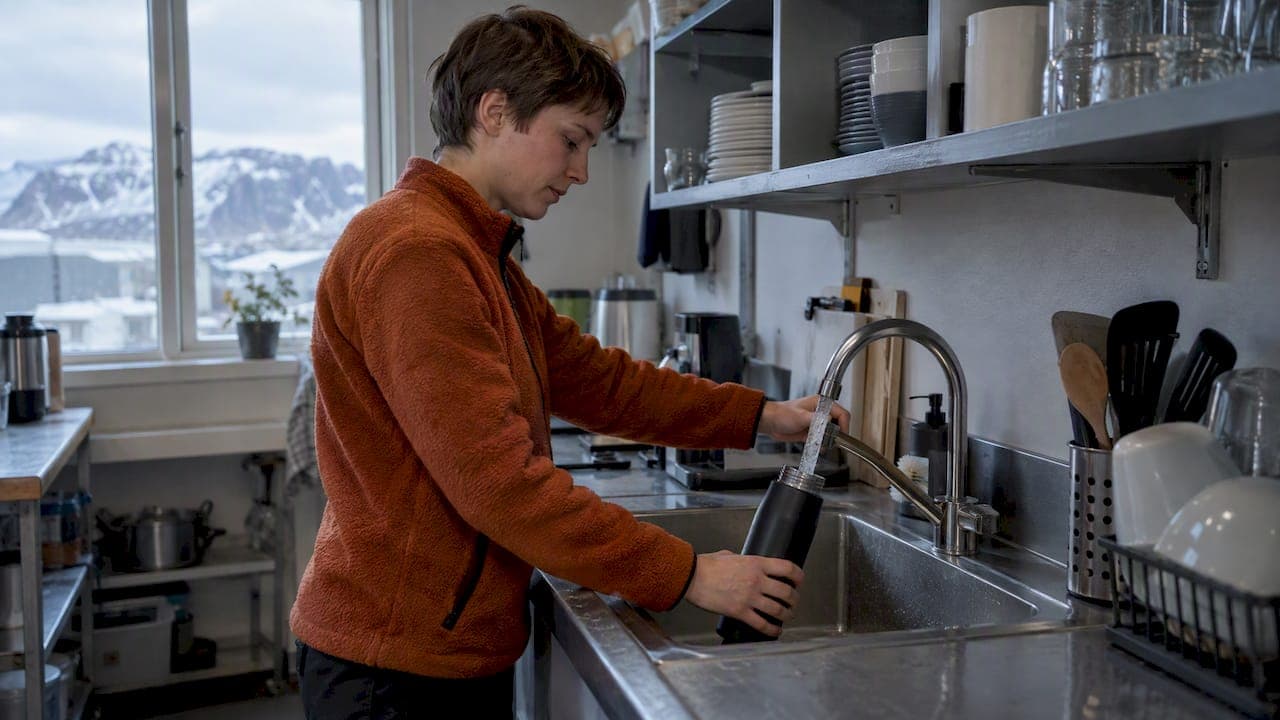
Carrying a reusable bottle is the simplest habit to adopt in Iceland. You can refill at hostels, hotels, visitor centers, cafes, and most public restrooms without hesitation.
- Fill up at your accommodation before heading out for the day, since taps are reliably safe and refill points are everywhere.
- Skip bottled water entirely: it adds cost and unnecessary plastic waste in a country where tap water already meets a high standard.
- Save bottled water or boiling for the rare case where a posted local advisory tells you to, and follow that guidance exactly as given.
This isn’t just about saving money on bottled water, since Iceland’s low-impact water system is part of what keeps it that way for the next visitor too.
A local perspective on drinking water from Fox Hostel
At Fox Hostel, guests refill their bottles from the cold tap without a second thought, and that is exactly how it should be. The water here comes from the same clean groundwater systems found across the South Coast, and it tastes noticeably different from what many international guests are used to at home.
One thing we remind guests of: if the hot water in the shower or sink smells like sulfur, that is completely normal in Iceland’s geothermal regions and has nothing to do with the cold tap used for drinking. Guests exploring nearby hot springs or waterfalls on day trips should expect the same pattern wherever they stay, whether at a hostel, guesthouse, or campsite.
For more on what to expect from hot springs in the area, see our guide to enjoying Iceland’s hot springs, and for refill-friendly stops on your road trip, check our waterfall exploration tips.
Why the real risk isn’t the water, it’s the bottled water habit
The research on Iceland’s tap water is about as reassuring as drinking water research gets, yet plenty of travelers still stock up on bottled water out of habit or caution learned elsewhere. That instinct is misplaced here. The actual risk worth paying attention to is the small, localized one: a remote guesthouse or seasonal camp on an infrequently tested supply, not the municipal water in Reykjavik or along the South Coast.

What gets overlooked is how much the sulfur smell drives unnecessary bottled water purchases. Travelers smell something off in the shower, assume the tap water is suspect, and start buying bottles they do not need. The smell is a geothermal quirk of the hot-water loop, not a signal about anything you drink.
If there is one thing to prioritize, it is simple: trust the cold tap by default, read local notices if you are staying somewhere remote, and let a reusable bottle replace the instinct to buy bottled water everywhere you go.
— Siggi
Where to stay and refill on Iceland’s South Coast
Fox Hostel offers accommodation near Vík, with shared kitchen facilities and an on-site pizzeria, providing convenient access to meals and self-catering options. Guests can refill bottles from the cold tap, and the location serves as a base for exploring nearby natural attractions.

If you are planning a South Coast stop, check rooms and dorm availability or look into group bookings if you are traveling with friends. For connectivity to check local advisories or maps on the go, a travel eSIM like Esimglobe’s Iceland plan can be useful before you land.
FAQ
Can Americans drink the tap water in Iceland?
Yes, tap water throughout Iceland is safe for American travelers and meets the national drinking water standards under the Icelandic Drinking Water Regulation. There is no need to buy bottled water, and a reusable bottle is the practical choice recommended by travel advisories.
Is tap water safe to drink in Reykjavik?
Yes, tap water in Reykjavik is clean, safe, and regularly tested, according to Visit Reykjavík. The Reykjavík Public Health Authority runs ongoing sampling of the distribution network to confirm it stays that way.
Why does the hot water smell like sulfur in Iceland?
Hot water in geothermal regions passes through systems that pick up dissolved sulfur compounds, which creates a rotten-egg smell. This is an aesthetic issue tied to geothermal heating loops, not a safety concern, and it does not affect the cold tap water used for drinking.
Is it okay to wear jeans in Iceland?
Jeans are fine for most everyday activities and sightseeing in Iceland, though they are not ideal for glacier hikes, river crossings, or wet hiking trails. Layering with waterproof outer gear over jeans works for casual exploring, but dedicated hiking pants dry faster for more demanding routes.
Are there any contaminants to worry about in Iceland’s tap water?
Recent testing of Reykjavik’s water found most PFAS compounds below detection limits and well under EU guidance levels, according to a 2025 PFAS study. Higher levels appear only near specific sites like firefighting training facilities, not in the general drinking water supply.
Sources
- Travel
- Drinking water samples — Reykjavík Public Health Authority
- Chemical quality of Icelandic drinking water (audit monitoring) — PubMed
- PFAS in drinking water, wastewater and surface water in Reykjavik, Iceland — RSC Publishing
- Icelandic tap water | Visit Reykjavík