Reykjavik to Vik Drive: Distance, Times, and Best Stops
Reykjavik to Vik Drive: Distance, Times, and Best Stops
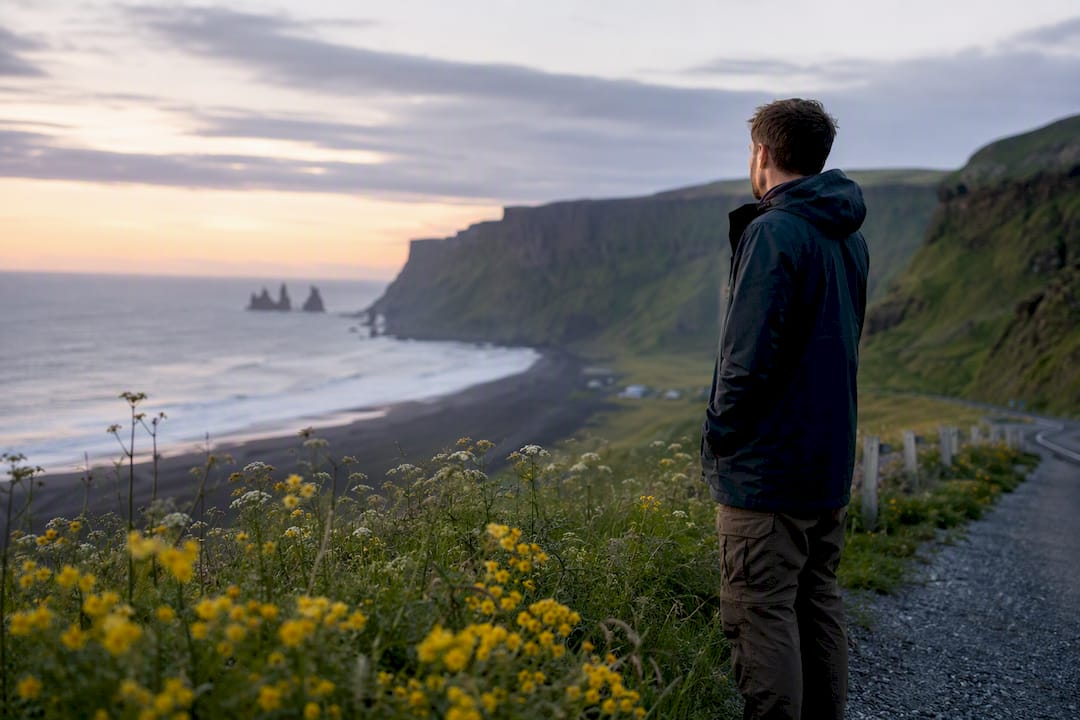
Yes, you can drive Reykjavik to Vík in a day, and the road itself is no trouble at all. Route 1 is fully paved the entire way, the distance is about 186 km (116 miles), and the raw driving time runs 2.5 to 3 hours one way in good conditions. A day trip works, but only if you commit to an early start and a short stop list. Once you add Seljalandsfoss, Skógafoss, and Reynisfjara into the mix, the realistic time budget for a Reykjavik to Vik drive stretches to 11 to 14 hours round trip, sunrise to well past sunset in winter.
- Distance: ~186 km / 116 miles one way
- Drive time (no stops): 2.5–3 hours
- Realistic day trip: 11–14 hours, door to door
Before you load the car, check the wind. The stretch beneath Eyjafjallajökull volcano is one of the gustiest sections of the entire Ring Road, and a clear morning can turn into a closure by early afternoon. Pull up Vegagerðin’s live status before you leave the driveway.
Key Takeaways
A Reykjavik to Vík drive covers roughly 186 km in 2.5 to 3 hours one way, but a realistic day trip with sightseeing stops takes 11 to 14 hours, which is why many travelers choose an overnight stop near Vík instead.
| Point | Details |
|---|---|
| Distance and drive time | The route runs about 186 km (116 miles) and takes 2.5–3 hours one way on paved road. |
| Day trip is doable, not easy | Budget 11–14 hours round trip once you add Seljalandsfoss, Skógafoss, and Reynisfjara. |
| Wind is the real hazard | Gusts beneath Eyjafjallajökull can exceed 25 m/s; check Vegagerðin before you leave. |
| Fuel in Hella or Hvolsvöllur | Top off before heading east, since stations thin out past these towns. |
| Consider an overnight near Vík | Fox Hostel sits 35 minutes east of Vík, cutting next-day drive time to Jökulsárlón and easing the whole itinerary. |
Table of Contents
- How Long Does the Reykjavik to Vik Drive Take?
- Three Ways to Plan Your Drive From Reykjavik
- What to Expect at Each Major Stop
- Staying Safe on the South Coast Route
- Practical Tips Before You Leave
- Parking at the Main Stops Along the Way
- What Actually Matters When Planning This Drive
- Where to Stay Before or After the Drive
- Sources
How Long Does the Reykjavik to Vik Drive Take?
The short answer: budget 2.5 to 3 hours of actual driving, but plan your day around 5 to 6 hours longer than that once you factor in the stops everyone actually wants to see.
That gap between “drive time” and “day trip time” trips up more travelers than anything else on this route. The 186 kilometer stretch feels deceptively short on a map, but every guide, Reddit thread, and tour operator’s own itinerary points to the same 11 to 14 hour window for a proper Reykjavik to Vik day trip that includes the headline waterfalls and the black sand beach. Here’s what shapes that number:
- Raw driving: 2.5–3 hours one way in clear weather on dry roads
- Realistic day-trip total: 11–14 hours, factoring in three or four major stops, lunch, and photo breaks
- Service towns: Hella, Hvolsvöllur, and Vík hold the reliable fuel and food stops; options thin out fast east of Vík
- Best seasons for ease: late spring through early fall, when daylight runs long and roads stay dry
- Winter caveat: the same drive demands more caution, with daylight sometimes limited to six or seven hours and snow or ice a real possibility
Fuel logistics matter more than people expect. Stations cluster in Hella and Hvolsvöllur, and topping off there before continuing east removes one variable from a day that already has enough moving parts. If your plan extends past Vík toward Jökulsárlón or Skaftafell, top off again in Vík itself, since the stretch beyond it runs long between stations.
Three Ways to Plan Your Drive From Reykjavik
Not every traveler wants the same day. Some want to check every box before dark; others would rather see three things well than seven things in a blur. Here are three itineraries built around that difference, each tested against realistic drive times and stop durations rather than wishful thinking.
1. The fast day trip (out and back in one push)
This schedule assumes you’re sleeping in Reykjavik that night and want to see the big three without burning out.
- 6:00–6:30 a.m. Depart Reykjavik. An early start matters more than any other decision you’ll make today, since it buys you slack for weather delays and buffers against afternoon crowds at Reynisfjara.
- 8:45 a.m. Arrive Seljalandsfoss. Budget 45 minutes, including the short walk behind the falls if you brought a rain jacket.
- 10:00 a.m. Arrive Skógafoss. Give it 30 to 45 minutes, more if you’re climbing the staircase for the top view.
- 11:30 a.m.–12:30 p.m. Drive to Vík, with a quick stop at a roadside viewpoint if the weather cooperates.
- 12:30 p.m. Lunch in Vík. This is also your fuel stop.
- 1:15–2:00 p.m. Reynisfjara black sand beach. Budget 45 minutes.
- 2:00 p.m. Decision point: turn around for Reykjavik, or push on toward Vik to Jokulsarlon if you started very early and daylight allows.
- 8:00 p.m. (approximate) Arrive back in Reykjavik.
Skip anything not on this list if you’re running behind. The Sólheimasandur plane wreck and Dyrhólaey are worth seeing, but they’re the first casualties of a schedule under pressure, and most travelers regret rushing Reynisfjara far more than they regret missing a detour.
2. The relaxed day (fewer stops, more time at each)
Start at 8:00 or 8:30 a.m. instead of dawn. You’ll trade one or two optional stops for longer time at Seljalandsfoss and Skógafoss, plus room for the Sólheimajökull glacier viewpoint or Dyrhólaey if puffins are in season. This version tends to land you back in Reykjavik closer to 9:00 or 9:30 p.m., and it’s the better call if you’re traveling with kids or anyone who doesn’t want to feel rushed at every stop. The tradeoff is real: you likely won’t make it past Vík, and Reynisfjara might get squeezed into 30 minutes instead of 45.
3. The overnight plan (stay near Vík)
Leave Reykjavik by late morning, hit Seljalandsfoss and Skógafoss at an easy pace, and arrive in the Vík area by late afternoon. This is where a Reykjavik to Vik road trip stops feeling like a race. You get Reynisfjara in better light, a proper dinner instead of a gas-station sandwich, and a shot at the northern lights if the season and skies cooperate. The next morning opens up options that a day-tripper never gets: sunrise at Reynisfjara with nobody else on the beach, or an early departure for Vik to Jokulsarlon that cuts hours off what a Reykjavik-based traveler would face. Staying overnight near Vík roughly halves the next-day drive to the glacier lagoon, which is exactly why so many multi-day South Coast itineraries build in a night here before continuing toward Vik to Skaftafell or further into the Vatnajökull region.
What to Expect at Each Major Stop
Every South Coast itinerary runs through the same handful of landmarks. Here’s what actually matters at each one, beyond the postcard shot.
Seljalandsfoss and Gljúfrabúi. The main falls take about 30 minutes if you just want the view, closer to 45 if you walk the path behind the curtain of water. Wear a real rain jacket, not a hoodie. A five-minute walk north brings you to Gljúfrabúi, a hidden waterfall tucked inside a narrow canyon that most day-trippers skip entirely because it’s easy to miss from the road.
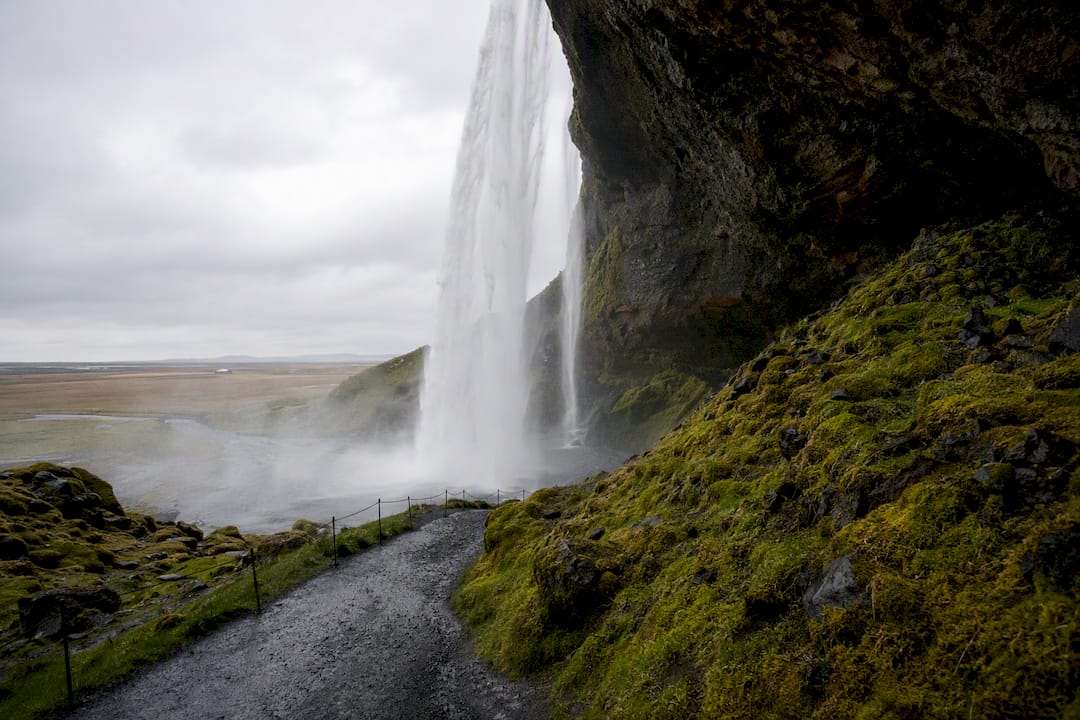
Skógafoss. Park close to the base and you’re looking at a two-minute walk to the falls themselves. The staircase up the side leads to a viewpoint over the top, roughly 400 steps, and it’s worth the climb on a clear day. Budget 30 to 45 minutes total.
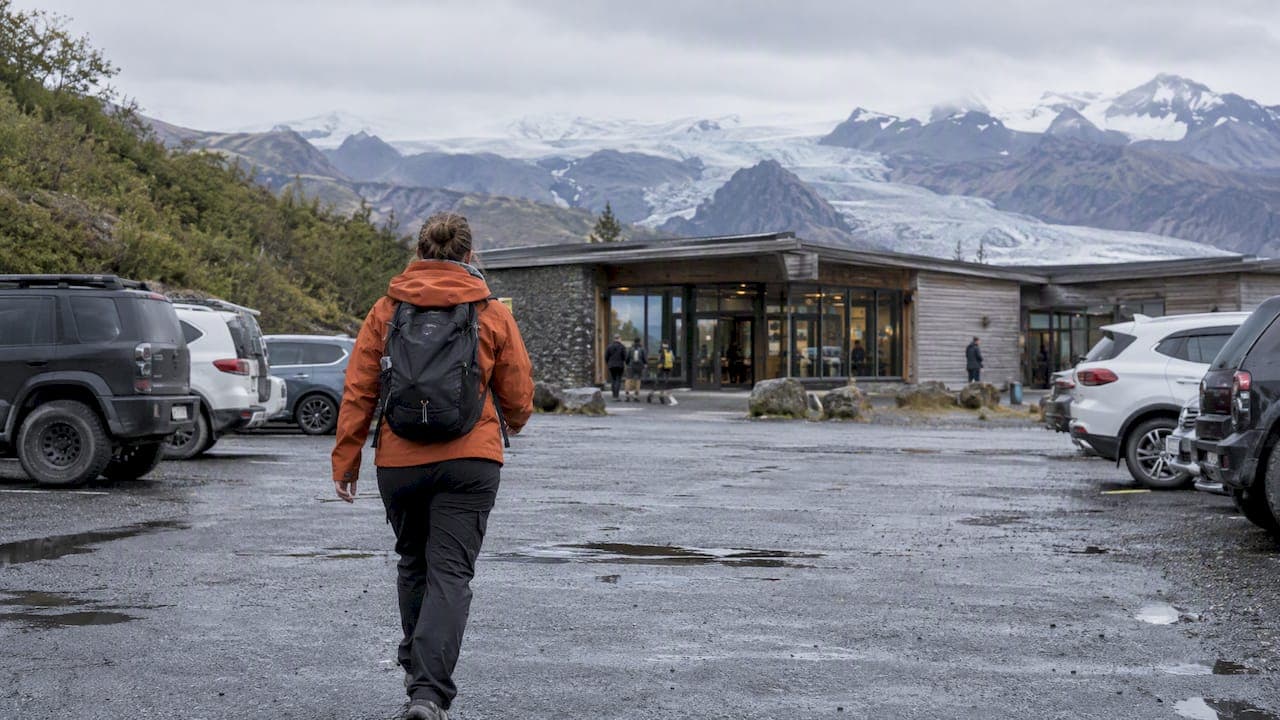
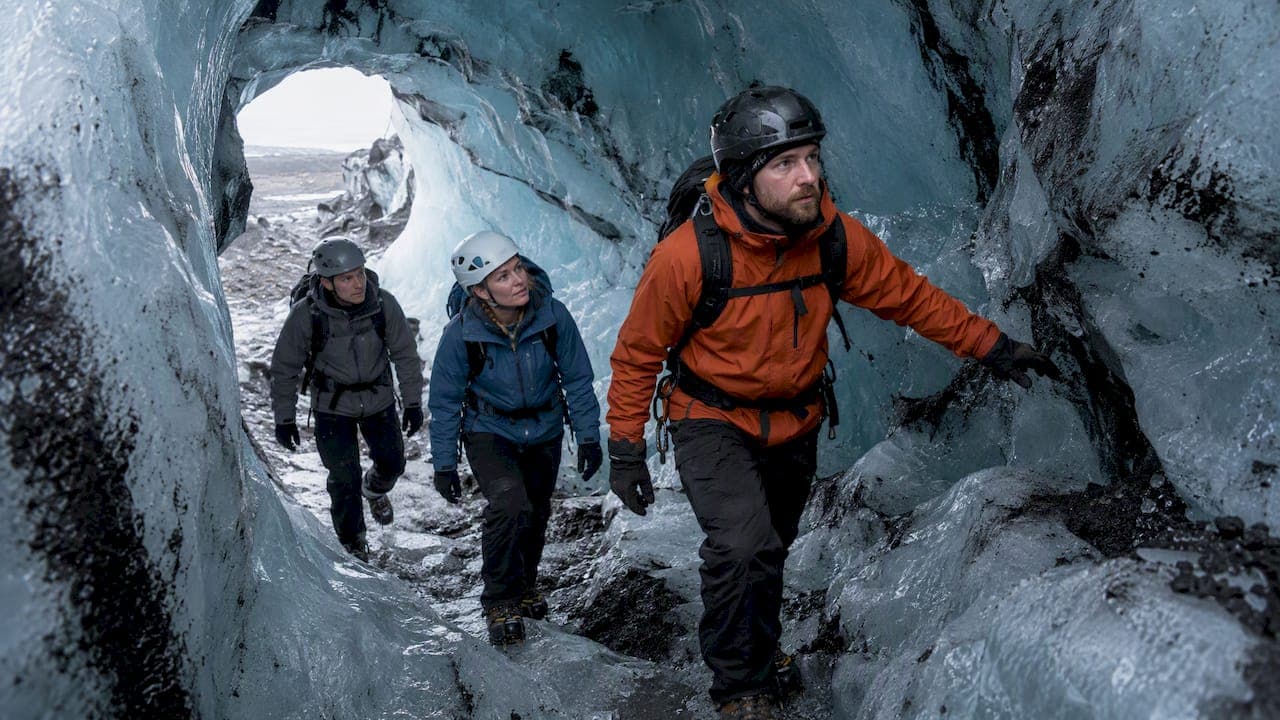
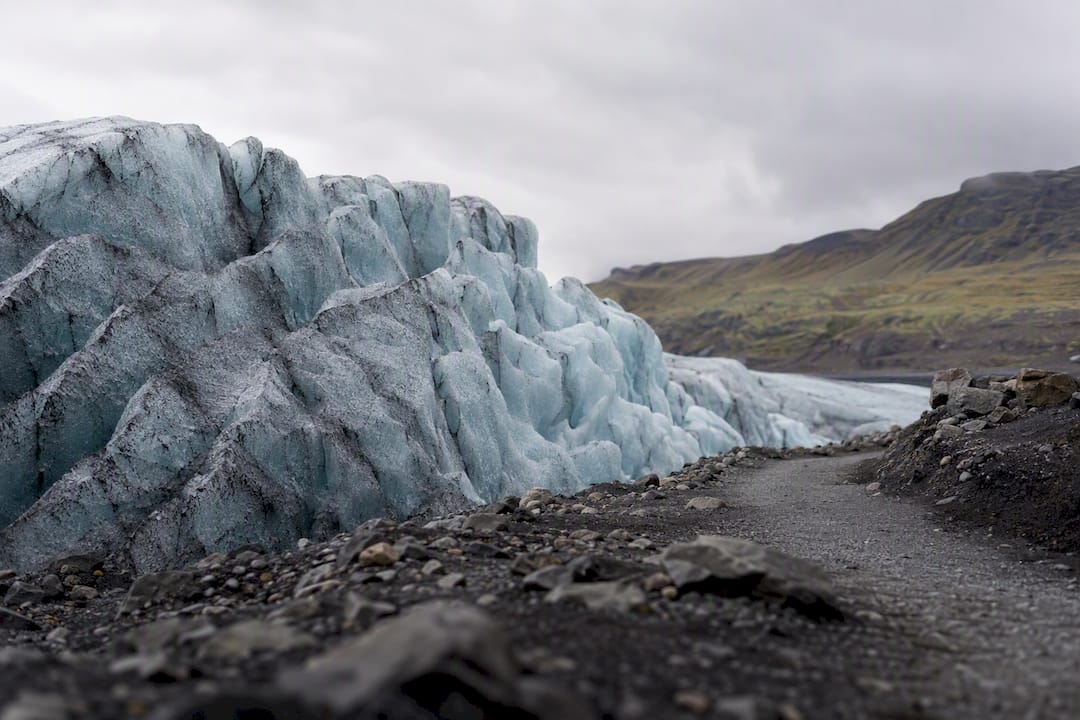
Sólheimajökull. You can view the glacier tongue from a marked parking area without a guide, but walking onto the ice itself requires a booked glacier tour with proper crampons. Don’t attempt an unguided walk here; crevasses aren’t always visible from the surface.
Sólheimasandur plane wreck. The wreck sits far enough from the road that reaching it now requires either a long walk or a paid shuttle from the parking area. Factor in an hour or more round trip if you commit to it, which is why it’s usually the first stop cut on a tight schedule.
Dyrhólaey. This clifftop viewpoint delivers puffins in early summer and a sweeping view back toward Vík. It’s exposed to wind, and the access road sometimes closes in bad weather, so treat it as a bonus stop rather than a guarantee.
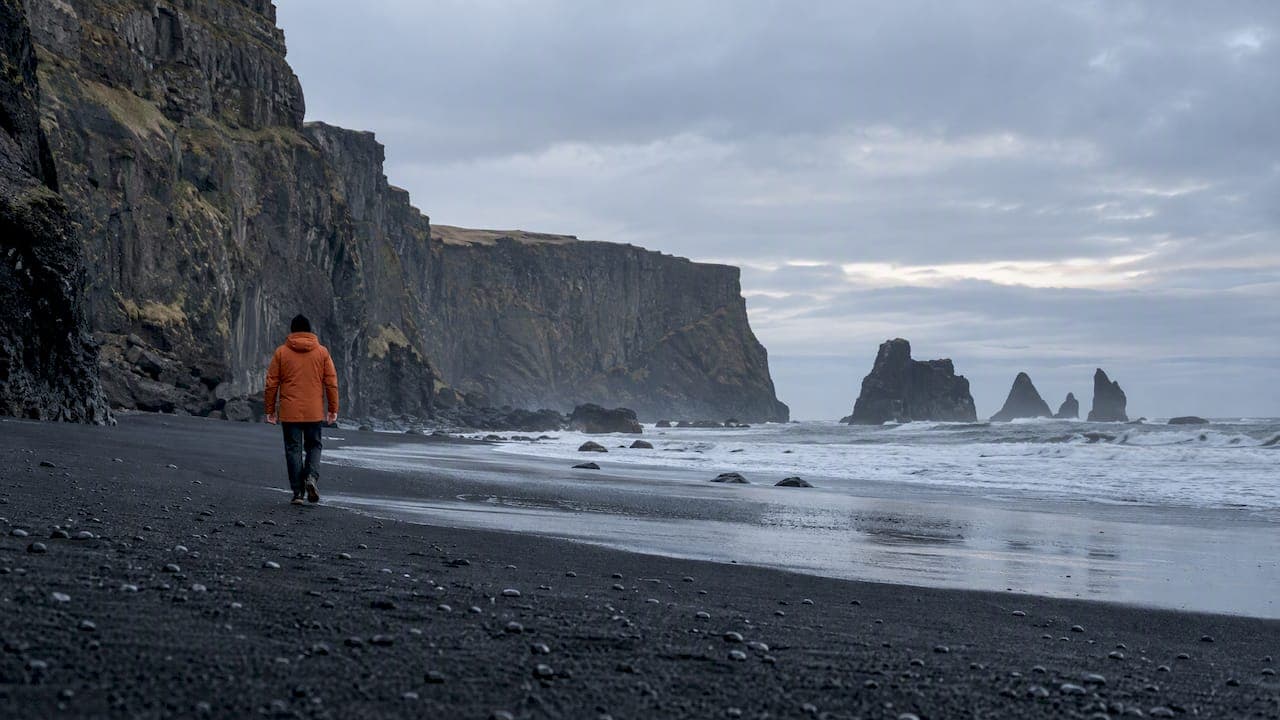
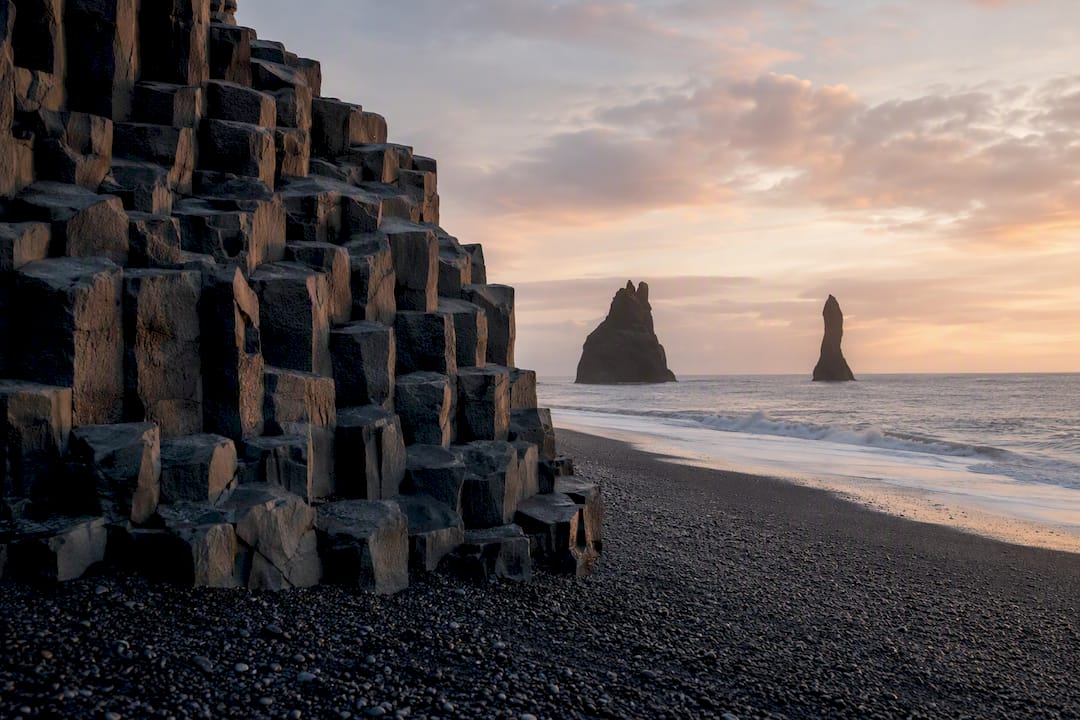
Reynisfjara. The basalt columns and sea stacks make this the most photographed beach on the entire route, and it’s also the most dangerous. Sneaker waves can surge much farther up the sand than expected, even on a calm-looking day. Stay near the rock columns, keep your back to the ocean when you’re not actively watching it, and never turn away from the water to line up a photo.
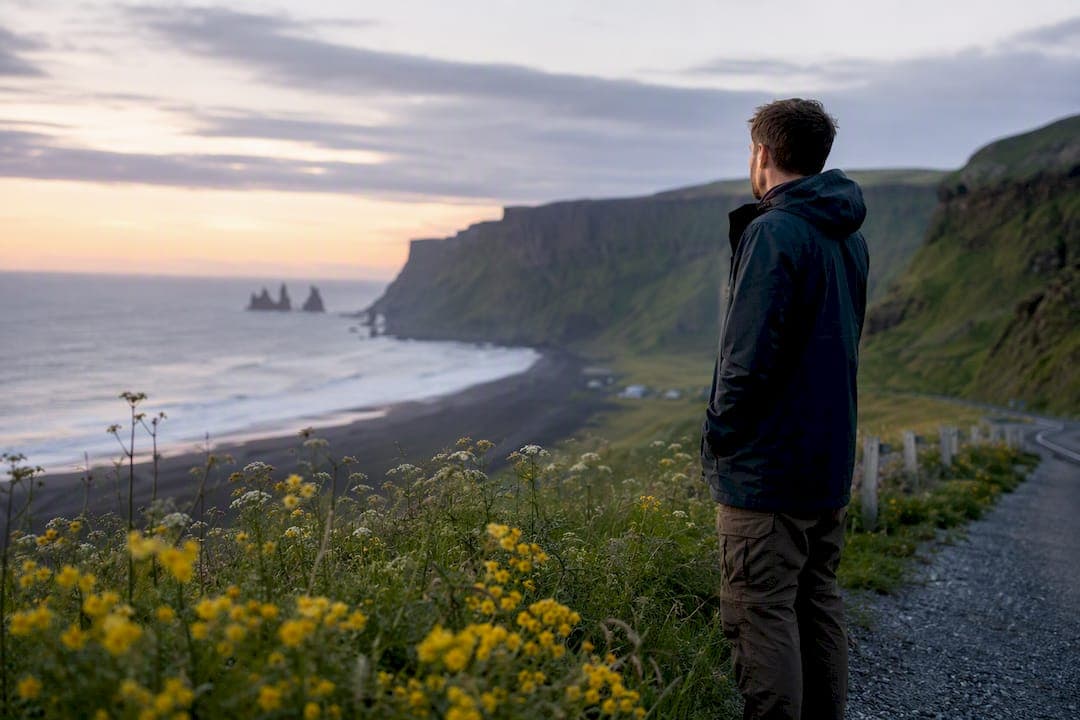
Vík. The village itself has fuel, a supermarket, and a handful of restaurants clustered along the main road. The small church on the hill above town takes ten minutes to reach on foot and gives you a clean panoramic shot of the black sand coastline and the Reynisdrangar sea stacks in the distance.
Pro Tip: Photograph Reynisfjara from the rock columns near the parking lot rather than walking toward the surf line. The best shots don’t require getting close to the water, and the columns themselves are the more interesting subject anyway.
Staying Safe on the South Coast Route
Wind is the single biggest variable on this drive, not ice, not fog, not traffic. The section beneath Eyjafjallajökull can produce gusts exceeding 25 meters per second, strong enough to push a car off line or wrench open a door if you’re not holding it. These gusts show up fast, sometimes right after a sunny, calm stretch, and the correct response is to pull into a sheltered lot and wait rather than push through.
- Check Vegagerðin’s live road and wind map immediately before departure and again mid-trip
- If you hit a sudden gust, slow down, grip the wheel with both hands, and avoid opening doors on the windward side until you’re parked somewhere sheltered
- Single-lane bridges appear regularly on Route 1; yield to whichever vehicle is closer to the bridge, and never try to beat an oncoming car to one
- Drive with headlights on at all times, a legal requirement and a genuine visibility aid in Iceland’s shifting light
- In winter, winter tires aren’t optional, and gravel or wind-damage insurance on a rental car is worth the extra cost given how exposed this route can be
Fuel discipline ties directly into safety. Top off in Hella or Hvolsvöllur before the open stretches begin, and don’t gamble on a small seasonal station having fuel or being open when you pass.
Practical Tips Before You Leave
A few small decisions make the difference between a smooth Reykjavik to Vik drive and a stressful one.
- Leave by 6:30 or 7:00 a.m. if you’re attempting the fast day trip; parking lots at Seljalandsfoss and Skógafoss fill up by mid-morning in peak summer
- Pack a real waterproof jacket, sturdy shoes with grip, a spare phone battery, and snacks, since options thin out east of Hvolsvöllur
- Download an offline map before you go; cell coverage drops in patches along the coast
- Check your rental agreement for gravel and wind-door damage coverage, both common exclusions on basic plans
- Plan a proper sit-down lunch in Vík rather than grazing on gas-station food all day. It’s the one meal break that also functions as your fuel stop and a mental reset before the return drive
Parking at the Main Stops Along the Way
Parking at Seljalandsfoss, Skógafoss, and Reynisfjara has shifted over the past several years from free and informal to paid and organized, a change that catches a lot of first-time drivers off guard.
Seljalandsfoss charges a parking fee collected through a machine or app at the lot entrance, and it applies per vehicle regardless of how long you stay. Skógafoss operates the same way, with a paid lot right at the base of the falls. Reynisfjara also runs a paid parking system, and during peak summer months the lot itself can fill, forcing latecomers to wait or park farther back.
None of these fees run high enough to change your budget for the day, but carrying a card or having a parking app installed beforehand saves you from fumbling at a machine while a line forms behind you. Cash isn’t always accepted. Dyrhólaey and the smaller pull-offs along the route generally remain free, though space is limited and fills fast when tour buses stop.
The pattern across the South Coast is consistent: the bigger and more famous the stop, the more likely it now charges for parking. Building a few dollars per stop into your day-trip budget is a smarter move than being surprised at the machine.
What Actually Matters When Planning This Drive
Most guides to this route obsess over the checklist: hit every waterfall, stop at every pull-off, squeeze in the plane wreck if you can. That’s backward. The travelers who enjoy this drive most are the ones who pick three or four stops and give each one real time, rather than the ones who treat the Ring Road like a scavenger hunt.
The overlooked variable isn’t distance or driving skill. It’s wind. Reynisfjara’s sneaker waves and the gusts under Eyjafjallajökull get mentioned in passing on most sites, but they deserve to shape your actual departure time and route decisions, not just a footnote you skim past. Checking Vegagerðin before you leave should carry the same weight as checking the weather forecast, because on this stretch, wind closes roads more often than snow does.
If there’s one adjustment worth making to the standard advice, it’s this: stop treating Vík as a lunch stop and start treating it as a legitimate overnight base. The math favors it. A short overnight near Vík turns a grueling 14 hour day into two relaxed ones, and it opens up sunrise access to Reynisfjara and a shorter run toward Jökulsárlón the next morning that a same-day Reykjavik departure simply can’t match.
— Siggi
Where to Stay Before or After the Drive
A day trip to Vík from Reykjavik works, but it asks a lot of you: an early alarm, a long drive home in the dark, and a schedule with almost no room for error if the wind kicks up. Staying near Vík removes that pressure entirely.

Fox Hostel sits about 35 minutes east of Vík, close enough to reach the village’s restaurants and Reynisfjara without living in the middle of the crowds, and perfectly placed if your route continues toward Jökulsárlón or Skaftafell the next day. Solo travelers can book a single bed in a shared dorm, while couples, families, or small groups can buy out an entire room for privacy, all inside a converted Icelandic barn with a full communal kitchen and an on-site pizzeria for the nights you don’t feel like cooking after a long day on the road. Check current availability and room options on the Fox Hostel rooms page before you finalize your South Coast dates.
Sources
- Can I Drive the South Coast to Vík Today? Live Status | Map of Iceland
- Vegagerðin — Icelandic Road and Coastal Administration
- Reykjavik to Vik day trip plan that works | Iceland Now
- Reykjavik to Vik driving logistics — Iceland Roads
Recommended
- How to Discover Scenic Spots Near Vík, Iceland | Fox Hostel – South Iceland
- Golden Circle Reykjavík: How to Plan Your Best Day Trip | Fox Hostel – South Iceland
- Qué ver en Reikiavik: guía práctica para 2–3 días | Fox Hostel – South Iceland
- Couples Guide to Exploring Vík, Iceland in 2026 | Fox Hostel – South Iceland