Avoid the Crowds: South Iceland Hidden Gems to Visit Before 9 AM
Avoid the Crowds: South Iceland Hidden Gems to Visit Before 9 AM

Skip the packed viewpoints and head for Gljúfrabúi and Kvernufoss, two waterfalls tucked out of sight from the main road, and trade the busiest hours at Reynisfjara for a calmer coastal alternative or an early slot before the coaches arrive. Going quietly also means going safely: check Safetravel before you leave and respect any posted closures.
TL;DR:
- Visiting Gljúfrabúi early in the morning or during shoulder seasons significantly reduces crowd levels and enhances lighting for photos.
- Kvernufoss is best reached with sturdy shoes and a rain jacket, as the muddy trail and spray from the falls can be challenging.
- Small hot springs require responsible behavior, including packing out trash and respecting private land, with no facilities or guaranteed water conditions.
- Alternative black sand spots like Dyrhólaey or Kirkjufjara are less crowded but share the same wave hazard, making timing and caution crucial.
- Booking guided glacier trips and staying overnight near Vík offer safer, quieter experiences away from the busy coach tours and peak hours.
Table of Contents
- 1. Gljúfrabúi: the waterfall hiding in a canyon
- 2. Kvernufoss: the secret falls near Skógar
- 3. Small hot springs and lesser bathing spots to visit responsibly
- 4. Reynisfjara alternatives for black sand without the crowds
- 5. Why Sólheimajökull’s glacier edge calls for a guide
- 6. Canyons and ridgelines beyond Fjaðrárgljúfur
- 7. Building a quiet South Coast itinerary that actually works
- 8. A safety checklist before you head out
- 9. Local insider notes from Fox Hostel near Vík
- 10. Small towns and local culture worth a slower look
- 11. The plants and birds that make these spots distinct
- 12. Getting a better photo at the quieter spots
- 13. The stories behind the stones and the falls
- 14. Why visiting quietly matters more than finding something secret
- Fox Hostel: a practical base for quiet South Coast days
- FAQ
- Sources
- Authoritative links to check before visiting
1. Gljúfrabúi: the waterfall hiding in a canyon
A few hundred meters north of Seljalandsfoss, Gljúfrabúi drops inside a narrow basalt gorge, almost entirely hidden from the road. Most visitors drive right past it on their way to the more famous falls next door, which keeps the canyon noticeably calmer even in July.
Reaching the base means wading a short stretch of shallow stream between mossy rock walls, so waterproof boots make a real difference. The short approach alone filters out a lot of casual foot traffic since many travelers in sandals or city shoes turn back at the water.
- Park in the small lot shared with Seljalandsfoss and walk north along the cliff base.
- Wear waterproof boots or old sneakers you do not mind getting wet.
- Visit early morning or in the shoulder months (May or September) for the lightest crowds and softer light inside the canyon.
2. Kvernufoss: the secret falls near Skógar
Behind the visitor center at Skógafoss, a short forested trail leads to Kvernufoss, a waterfall that stays largely out of sight from the Ring Road and therefore off most tour itineraries. The walk takes about 15 to 20 minutes along a stream through birch scrub, with no climbing gear required, and it rewards you with the option to walk behind the curtain of water for a view out through the falling spray.
Because Skógafoss already satisfies most day-trippers’ waterfall quota, Kvernufoss gets a fraction of the foot traffic, and pairing the two makes for an efficient stop on a single South Coast day.
- Allow 30 to 40 minutes round trip from the Skógafoss parking area.
- Wear sturdy walking shoes since the path can be muddy after rain.
- Bring a light rain jacket if you plan to walk behind the falls, since spray carries farther than it looks.
3. Small hot springs and lesser bathing spots to visit responsibly
Beyond the Blue Lagoon circuit, South Iceland holds a handful of smaller, undeveloped bathing spots that reward a bit of extra effort and a lot of restraint. These are not resorts: there are no changing rooms, no staff, and no guarantees about water temperature or access on any given day.
- Seljavallalaug, an old semi-abandoned pool set in a mountain valley near Skógar, offers a cooler, slightly weathered soak reached by a 20-minute walk from a small gravel parking area.
- Reykjadalur, closer to Hveragerði than the typical South Coast loop, rewards a steeper uphill hike with a warm river you can bathe in directly, no pool required.
- Smaller roadside geothermal trickles scattered along farm boundaries exist but often cross private land, so treat any unmarked spring with caution and look for signage before stepping off a public path.
Respect for these places matters more than at a staffed attraction, since there is no one to clean up after a crowd. Pack out every piece of trash, avoid bathing after dark in spots without lighting or marked trails, and skip the spot entirely if the parking area or path looks overused that day.
Pro Tip: Bring a dry bag for your phone and wallet. There is nowhere to lock valuables at any of these springs.
4. Reynisfjara alternatives for black sand without the crowds
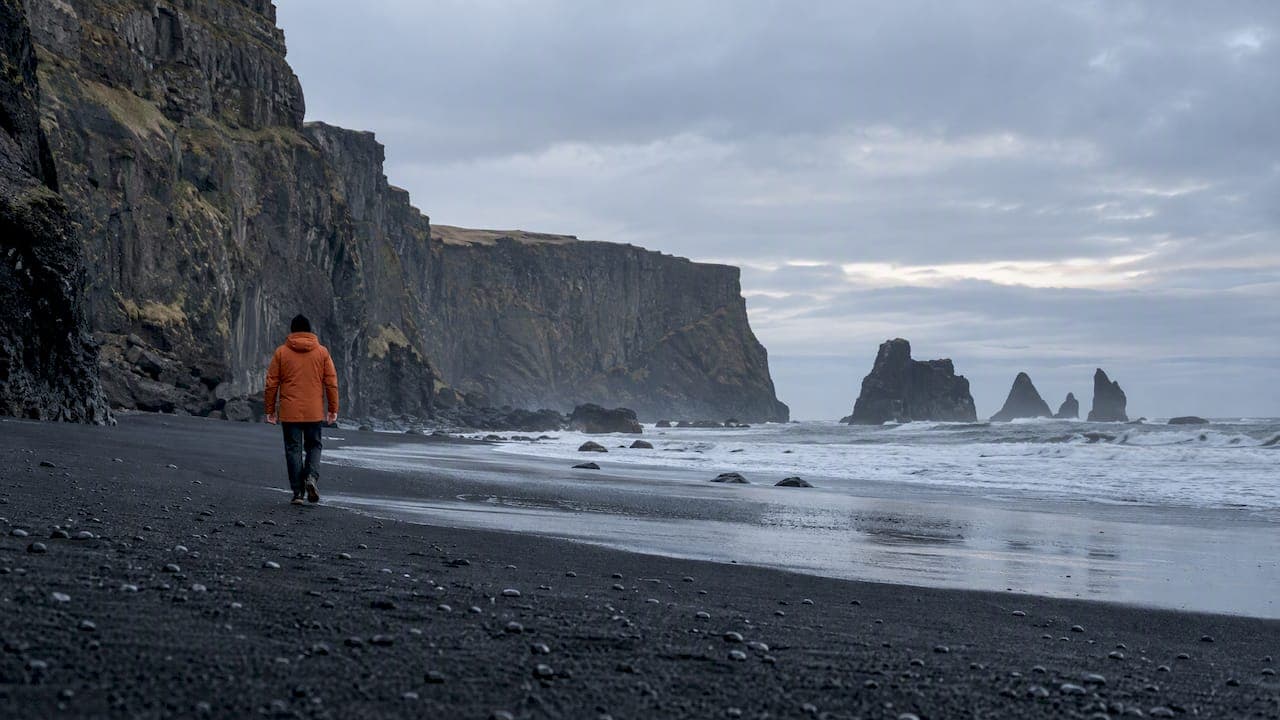
Reynisfjara earns its fame honestly: hexagonal basalt columns, the jagged Reynisdrangar sea stacks offshore, and a wide sweep of black sand make it one of the most photographed spots on the island. It also carries a persistent hazard. Sneaker waves surge far beyond the normal tideline without warning, which is why the beach runs a red, yellow, and green warning-light system, and a red light means the beach is closed, no exceptions.
The sneaker-wave risk at Reynisfjara is continuous, not seasonal, and the hazard-light system exists because the danger does not ease off outside summer.
If the crowds or the risk make you want options, a few alternatives deliver similar coastal drama with far fewer buses:
- Dyrhólaey promontory, just west of Reynisfjara, gives you a high clifftop view over black sand, sea arches, and nesting seabirds without setting foot on the exposed beach itself.
- Kirkjufjara, the beach just east of Reynisfjara, offers similar basalt scenery with a fraction of the foot traffic, though the same wave risk applies and the same caution rules.
- Quieter farm-road pullouts along the coast west of Vík give wide, uncrowded views of the sea stacks from a safe distance inland.
For timing, visiting before 9 AM or after 6 PM consistently avoids the heaviest tour-bus hours and gives you softer, more dramatic light for photos. Never turn your back on the water, never climb the columns, and treat the warning lights as a hard rule rather than a suggestion.
5. Why Sólheimajökull’s glacier edge calls for a guide
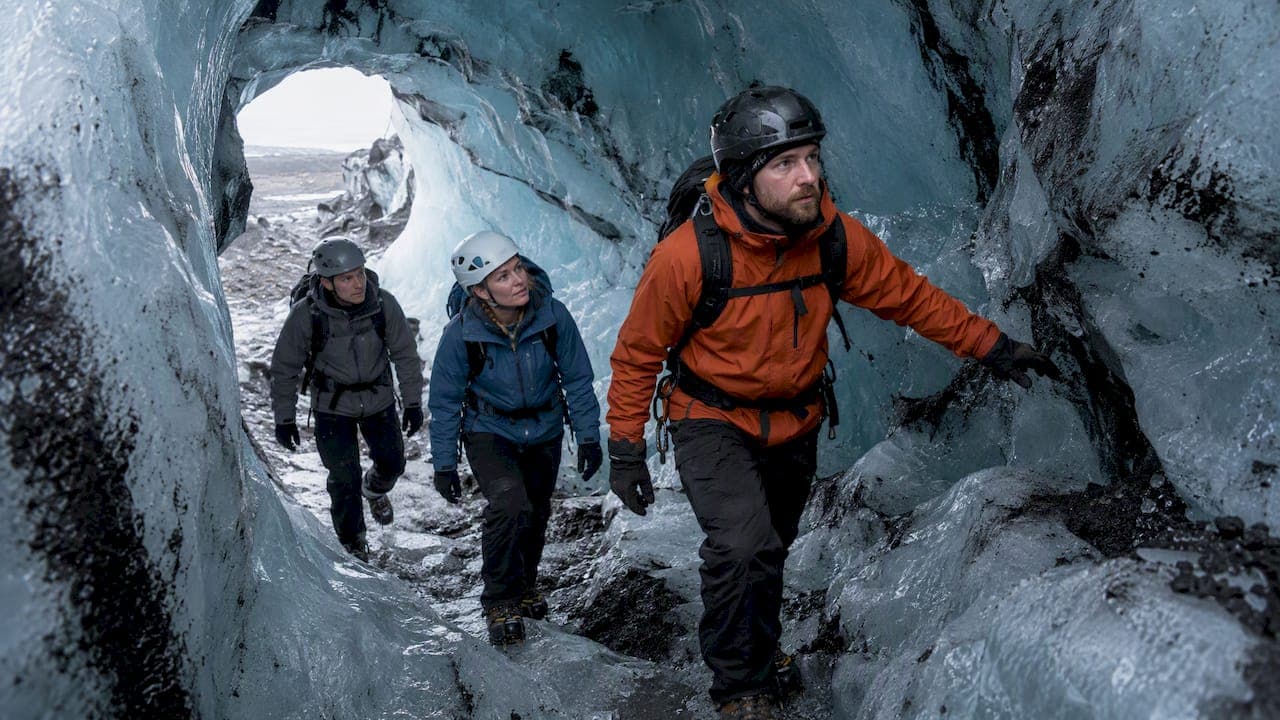
Glacier tongues like Sólheimajökull look solid from a distance, but the ice there is constantly shifting: crevasses open without visible warning, meltwater channels undercut the surface, and loose rock above the ice regularly breaks free. Tour operators have canceled trips at Sólheimajökull as conditions turned hazardous, a sign of how quickly a glacier edge can shift from walkable to dangerous.
- Book a guided glacier walk if you want to step onto the ice at all. Guides carry rescue gear and read the surface in ways casual visitors cannot.
- If you are not joining a guided trip, stay on the marked viewing path and keep well back from the ice edge and the meltwater lagoon.
- Watch for loose rock on the slopes above the glacier tongue, since rockfall is a real and ongoing hazard there.
- Treat any roped-off or signed area as closed, even if the ice beyond it looks stable.
Icelandic terrain can turn dangerous fast, and official national risk guidance stresses treating posted warnings as absolute rather than advisory, a rule that applies with particular force at glacier edges.
6. Canyons and ridgelines beyond Fjaðrárgljúfur
Fjaðrárgljúfur gets the attention, but a few less-visited canyons and ridges along the South Coast offer comparable drama with far shorter lines at the trailhead.
- Stakkholtsgjá, a narrow canyon near Þórsmörk, involves a short walk over a gravel riverbed to a hidden waterfall at the back of the gorge.
- Múlagljúfur, east toward Kálfafell, rewards a steeper uphill walk with a sweeping canyon view and a waterfall most visitors never see because the trailhead is easy to miss from the road.
- Smaller unnamed ridges along farm tracks near Vík offer wide views over the coastal plain for anyone willing to pull over and walk 10 minutes uphill.
Some canyon paths close seasonally while vegetation recovers from heavy foot traffic, so check posted signage at the trailhead before assuming a route is open. Pairing one of these canyons with a nearby waterfall or hot spring makes efficient use of a single day’s driving, since several sit within 20 to 30 minutes of each other along the Ring Road.
7. Building a quiet South Coast itinerary that actually works
Avoiding crowds on the South Coast has less to do with finding secret coordinates and more to do with timing your day against the coach schedule. Two million annual visitors concentrate heavily on this same stretch of road, which means the attractions themselves rarely change, but the hour you arrive changes everything.
- Leave before 8 AM if you are staying overnight near Vík, since most tour buses depart Reykjavík between 8 and 9 and will not reach the South Coast attractions until mid-morning.
- Hit Gljúfrabúi and Kvernufoss first, while the canyons are still nearly empty, then work east toward Skógafoss as the buses start arriving behind you.
- Save Reynisfjara or its quieter neighbors for either your early start or a late-evening return, when the warning-light status is easier to check calmly and the parking lot has emptied out.
- Reverse the typical day-trip order entirely if you are based in Vík: visit Dyrhólaey and the coastline in the evening light, then do the waterfalls the next morning before checkout.
- Build in a buffer hour for weather or road conditions rather than stacking stops back to back, since a flat tire or a closed trail can cost you an entire afternoon on this route.
Overnighting in Vík rather than commuting from Reykjavík is one of the most reliable ways to open up quiet windows, since it lets you start your day before the first coaches even leave the capital and finish after they have turned back. Fill up on fuel in Vík or Selfoss before heading to smaller stops, since gas stations thin out east of Vík, and pack snacks and water for long stretches between services. For a fuller rundown of how to sequence a day like this, our guide on planning a South Coast itinerary walks through driving times stop by stop.
If you would rather hand the planning over to someone else for part of the trip, pairing a self-driven waterfall day with a structured outing, the kind of small-group logistics used by operators like Pedal Power Galway for their city tours, can simplify a day where timing matters more than mileage.
Pro Tip: Download offline maps before you leave Reykjavík. Cell coverage drops out in several of the canyon approaches.
8. A safety checklist before you head out
A short checklist before leaving your accommodation saves most of the trouble that turns a quiet day into a stressful one.
- Check SafeTravel for live trail closures, glacier warnings, and weather alerts specific to your route.
- Check the Icelandic Met Office forecast for wind and rain, since Icelandic weather shifts fast enough to change plans within a few hours.
- Check Reynisfjara’s warning-light status if that beach or its neighbors are on your route, and treat a red light as a closed beach, not a suggestion.
- Pack waterproof boots, a windproof jacket, and layers regardless of season, since coastal wind cuts through light clothing quickly.
- Carry a charged phone and a paper map or offline map as backup, since several canyon and waterfall approaches lose signal.
If conditions look marginal, the simplest decision rule is to swap the risky stop for a safer one on your list rather than pushing ahead. A canyon hike or a hot spring soak is almost always available as a backup when a coastal or glacier stop looks unsafe.
9. Local insider notes from Fox Hostel near Vík
Based a short drive from Vík, we send guests toward these same quiet spots daily and hear back about what actually worked.
- Park at Seljalandsfoss before 9 AM if you want Gljúfrabúi’s canyon to yourself, since the lot fills with coach parking by mid-morning.
- Staying overnight near Vík rather than driving from Reykjavík cuts out two to three hours of round-trip driving and lets you catch both an early and a late quiet window in the same day.
- After a long day on the trails, a hot meal on site beats another hour in the car. We serve dinner at Hrífunes Pizzeria, a short walk from the rooms.
- Our guide to attractions near Vík covers several stops within a 20-minute drive of where you would sleep.
10. Small towns and local culture worth a slower look
The South Coast is not only waterfalls and cliffs. Vík itself, with its black-sand beach and small church on the hill, anchors a farming community that has adapted to tourism without losing its working character, and a short stop at the local bakery or wool shop gives a sense of daily life beyond the bus stops.
Smaller settlements along the Ring Road, like Hvolsvöllur and Kirkjubæjarklaustur, hold modest museums and churches tied to the region’s volcanic and farming history, worth 15 or 20 minutes even on a tight schedule. Farm shops selling skyr, lamb products, or wool goods appear along several stretches of road, and stopping at one supports the same small communities that keep this stretch of coastline livable between tour seasons.
Icelandic turf houses, still visible at a few preserved farmsteads near the coast, offer a quiet, low-key counterpoint to the natural attractions, and they rarely draw a crowd even in peak season. None of these stops demand much time, but together they round out a day that would otherwise be entirely about landscape.

11. The plants and birds that make these spots distinct
The canyon walls around Gljúfrabúi and Kvernufoss stay damp year round, which supports thick moss cover and ferns that do not survive on the more exposed, wind-scoured cliffs nearby. That moss is fragile. A single season of heavy foot traffic can strip patches bare, which is part of why staying on the worn path through these canyons matters more than it might seem.

Along the coast near Dyrhólaey and Reynisfjara, nesting seabirds, including puffins during the summer months, use the cliffs and sea stacks as breeding grounds. Puffin season generally runs from May through August, and birds nesting on exposed ledges are easily disturbed by visitors climbing too close to the cliff edge.
Inland, the hot spring valleys support hardier grasses and low shrubs adapted to warm, mineral-rich soil, a visibly different plant community than the surrounding highland moss and lava fields. None of this requires a guide to notice. A slow walk through any of these spots, rather than a rushed one, tends to reveal more of it.
12. Getting a better photo at the quieter spots
Canyon waterfalls like Gljúfrabúi reward patience more than gear. Light inside the gorge is low and shifting, so a tripod and a slower shutter speed capture the water’s motion far better than a quick handheld shot, and arriving early morning avoids both the crowd and the flat midday light that washes out the canyon’s texture.
At Kvernufoss, the option to walk behind the falls creates a natural frame for a shot looking out through the spray, though a lens cloth is worth carrying since the mist settles on glass fast. Coastal shots at Dyrhólaey or Kirkjufjara benefit from the same early or late timing suggested for crowd avoidance, since low sun angles bring out the texture of the basalt columns and sea stacks far better than overhead light.
For the hot springs, a wide shot that includes the surrounding valley often tells a better story than a close crop on the water itself, since the setting is much of the appeal. Whatever the location, checking a tripod or flash policy before shooting near nesting seabirds is worth the extra minute, since sudden movement or light can disturb a breeding colony.
13. The stories behind the stones and the falls
Icelandic folklore attaches stories to much of this coastline, and Reynisfjara’s sea stacks carry one of the best known: local tradition holds that the Reynisdrangar pillars are trolls caught by sunlight while dragging a ship to shore, turned to stone before they could finish. Whether or not a visitor puts any stock in the tale, it shapes how the rock formations get read and photographed, as frozen figures rather than simple geology.
Gljúfrabúi’s hidden canyon setting has long made it a quieter, almost private counterpart to Seljalandsfoss, and its name translates roughly to “canyon dweller,” a nod to the waterfall’s hidden position inside the cliff rather than any specific legend. Kvernufoss takes its name from the old mills, kvern in Icelandic, once powered by streams like the one feeding the falls, a small piece of the region’s farming history embedded in a place name most visitors never think to ask about.
14. Why visiting quietly matters more than finding something secret
Chasing a truly secret spot on the South Coast is mostly a myth. What works is choosing quiet windows and leaving each place the way you found it. A viral warning sign aimed at reducing crowds at one overtouristed spot ended up drawing more visitors once it spread online, proof that publicity can undo privacy faster than foot traffic ever could.
The South Coast absorbs huge numbers of visitors every year, and the places that stay calm tend to stay that way because people visit them modestly rather than broadcasting them. Pack out your trash, stay off fragile moss, and treat a quiet spot as something to enjoy rather than something to advertise.
— Siggi
Fox Hostel: a practical base for quiet South Coast days
Staying close to Vík cuts out the long commute from Reykjavík and gives you first access to Gljúfrabúi, Kvernufoss, and the coastline before the buses arrive. We offer shared and private dormitory rooms in a converted barn, so solo travelers, couples, and groups can each book accommodations that fit their needs, along with options for larger parties traveling together.

A shared kitchen and on-site Hrífunes Pizzeria mean you do not have to drive back into town after a long day on the trails, and guests looking for an extra outing can add a partnered rafting adventure to the stay. For details on shared and private room options, visit our rooms page to check availability for your dates.
FAQ
What is the most underrated place in Iceland?
Gljúfrabúi and Kvernufoss both rank among the most underrated stops on the South Coast, since their hidden canyon settings keep them far quieter than nearby headline waterfalls like Seljalandsfoss and Skógafoss. Both require only a short approach and reward visitors with dramatic, intimate settings most tourists skip entirely.
Is the south coast of Iceland worth it?
Yes. The South Coast concentrates waterfalls, black-sand beaches, glacier tongues, and canyons within a single day’s drive, which is why it draws such heavy visitor numbers along the Ring Road corridor. Timing your visits around coach-tour hours lets you experience the same landscapes with far less crowding.
What to visit in South Iceland?
Beyond the well-known stops, Gljúfrabúi, Kvernufoss, Dyrhólaey, and smaller hot springs like Seljavallalaug and Reykjadalur offer the same dramatic scenery with noticeably fewer visitors. Pairing a couple of these with an early or late visit to Reynisfjara or its neighboring beaches makes for a full, uncrowded day.
What are some hidden secrets in Iceland?
Smaller canyons like Stakkholtsgjá and Múlagljúfur, along with lesser bathing spots and farm-road viewpoints near Vík, offer dramatic scenery that rarely appears on standard tour itineraries. None of these are truly secret, but visiting during quiet timing windows keeps them feeling that way.
Sources
- Gljufrabui — Reykjavik Attractions
- Reynisfjara Black Sand Beach - Iceland Highlights
- Iceland overtourism sign backfires — Iceland Now
Authoritative links to check before visiting
Check these before you go: conditions change fast.