South Coast Travel Tips for Iceland Road Trippers
South Coast Travel Tips for Iceland Road Trippers
TL;DR:
- Iceland’s South Coast offers dramatic scenery that requires careful planning due to rapidly changing weather, long distances, and remote locations. Travelers should prioritize layered clothing, realistic itineraries, and safety precautions while choosing between self-driving and guided tours based on experience and vehicle access. Flexibility, early timing at key sites, and local insights enhance the experience, ensuring memorable exploration of waterfalls, beaches, canyons, and geothermal landscapes.
Iceland’s South Coast is one of the most dramatic stretches of road on earth, and it rewards travelers who plan smart. Whether you’re chasing waterfalls, black sand beaches, or the Northern Lights, having the right south coast travel tips before you leave home can mean the difference between a trip that feels rushed and one that feels transformative. The distances are longer than they look on a map, the weather shifts without warning, and the best spots sometimes have no cell service. Here’s what you actually need to know.
Table of Contents
- Key takeaways
- 1. South coast travel tips start with understanding the weather
- 2. Build a realistic south coast itinerary
- 3. Seljalandsfoss and Skógafoss: what to know before you go
- 4. Reynisfjara black sand beach: respect the water
- 5. Kirkjubæjarklaustur and Visit Klaustur as a strategic base
- 6. Landmanalaugar for hikers and geothermal seekers
- 7. Eldgja canyon: the geological wonder most travelers skip
- 8. Mælifellsandur for the adventurous traveler
- 9. Choosing between self-driving and guided tours
- 10. Insider tips for maximizing every stop
- 11. Safety reminders every traveler should know
- My honest take on traveling the South Coast
- Stay at Fox Hostel and explore more of the South Coast
- FAQ
Key takeaways
| Point | Details |
|---|---|
| Weather changes fast | Layer your clothing and keep rain gear accessible at all times, regardless of the season. |
| Quality beats quantity | Skipping one or two stops lets you enjoy signature sites without rushing through them. |
| Self-drive vs. guided tours | Each option has real trade-offs; your choice should depend on your experience and time available. |
| Hidden gems reward effort | Places like Eldgja and Mælifellsandur offer spectacular scenery with far fewer crowds. |
| Location of your base matters | Staying midway along the coast, near Vík, gives you the best access to both eastern and western highlights. |
1. South coast travel tips start with understanding the weather
No other single factor shapes your South Coast experience more than Iceland’s weather. Rapid condition changes are common regardless of season, which means a sunny morning at Seljalandsfoss can turn into a wind-driven rain event by the time you reach Reynisfjara. Layers are non-negotiable.
Pack a waterproof shell, a mid-layer fleece, and a moisture-wicking base layer. Wear all three when you step out of the car at coastal viewpoints. The wind near Dyrhólaey and along the black sand beaches is intense enough to make a light jacket feel useless in minutes.
Pro Tip: Check vedur.is every morning before leaving your accommodation. Iceland’s Meteorological Office updates forecasts in real time, and local conditions can differ dramatically from what a generic weather app shows.
2. Build a realistic south coast itinerary
The South Coast stretches from Selfoss in the west to the Vatnajökull glacier in the east. That is roughly 300 kilometers of Ring Road with dozens of worthy stops. Trying to fit all of them into a single day is one of the most common mistakes travelers make.
Experienced travelers recommend choosing to skip one or two attractions rather than racing through every major stop. Fewer stops done well means better photos, more meaningful moments, and far less stress. If you have two days, split your itinerary at Vík. Spend day one on the waterfalls and Reynisfjara, and use day two to push east toward Skaftafell and Jökulsárlón.
A three-day itinerary is the sweet spot for most travelers. It gives you time to explore the Highlands access roads to Landmanalaugar without sacrificing the coastal highlights entirely.
3. Seljalandsfoss and Skógafoss: what to know before you go
These two waterfalls are the most-visited sites on the South Coast, and for good reason. Seljalandsfoss drops 60 meters and has a footpath that takes you directly behind the curtain of water. Visitors will get wet, so a fully waterproof jacket and a dry bag for your camera are worth having before you step onto that trail.
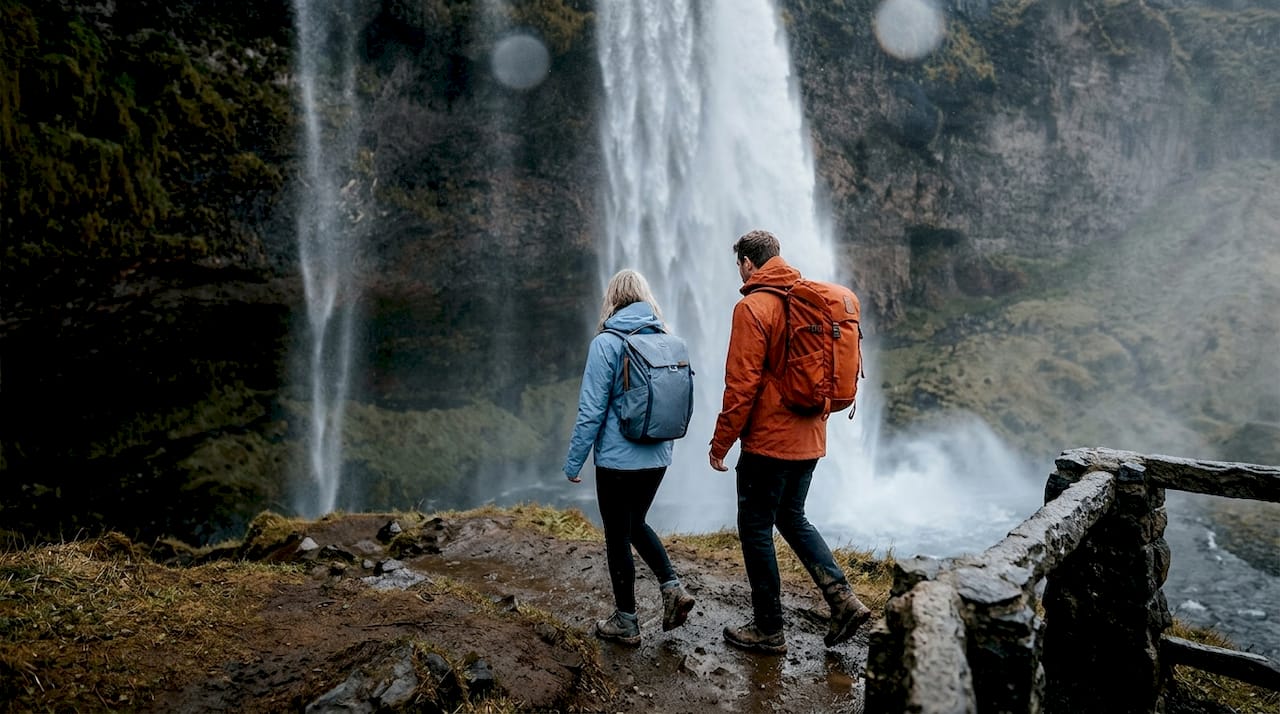
Skógafoss, about 30 minutes further east, is wider and more powerful. On sunny days, you’ll almost always see a rainbow forming in the spray. Arrive at both waterfalls before 9 a.m. if possible. The parking lots fill up quickly, and the experience at each site is far better without the crowds pressing around you.
Pro Tip: Bring waterproof phone cases or a lens cloth for Seljalandsfoss. Mist coats everything within 10 meters of the falls, and your camera glass will fog up fast.
4. Reynisfjara black sand beach: respect the water
Reynisfjara is genuinely one of the most visually striking places you will ever visit. The black basalt columns, the sea stacks called Reynisdrangar, and the roaring North Atlantic surf create a scene that looks like something from a film set. But the beach carries real danger.
Sneaker waves here have injured and killed visitors. Stay well back from the water’s edge. Never turn your back to the ocean. Warning signs on site are not decorative. The waves arrive without the gradual build you’d expect on a typical beach, and the black sand gives no traction if you’re pulled toward the surf.
Beyond the safety considerations, the beach rewards time. Walk north toward the basalt cave at Hálsanefshellir and take your time with the hexagonal columns up close. The geological detail is extraordinary.
5. Kirkjubæjarklaustur and Visit Klaustur as a strategic base
Most travelers race past Kirkjubæjarklaustur without stopping. That’s a mistake. This small town, known locally as Klaustur, sits about 270 kilometers from Reykjavík and serves as the eastern anchor of a productive South Coast itinerary. Kirkjubæjarklaustur offers comfortable lodging and unique local experiences with far less tourist pressure than Vík.
Visit Klaustur is the town’s official visitor center and tourism hub. Staff there can give you current road conditions for the F-roads to the Highlands, which is critical before heading toward Eldgja or Landmanalaugar. The town also has a good gas station, a supermarket, and a café. Stock up here before heading into more remote territory.
The Systrafoss waterfall is a five-minute walk from the town center and almost nobody talks about it. It’s genuinely beautiful and usually empty.
6. Landmanalaugar for hikers and geothermal seekers
Landmanalaugar sits in the Highlands interior and requires an F-road vehicle to reach. A regular rental car will not make it, and rental companies take damage from F-road use seriously. You’ll need a 4WD with high clearance, and river crossings are part of the route depending on the season.
The payoff is extraordinary. Landmanalaugar is renowned for its geothermal hot springs and the vivid rhyolite mountains that shift from green to gold to deep red depending on the light. The Laugavegur Trail begins here, Iceland’s most famous multi-day hiking route. Day hikers can explore the Brennisteinsalda loop for a taste of the terrain without committing to an overnight trek.
Plan to spend a full day here rather than treating it as a brief stop. The landscape earns that time.
7. Eldgja canyon: the geological wonder most travelers skip
Eldgja is the largest volcanic canyon in the world, yet the majority of Ring Road travelers have never heard of it. It stretches 40 kilometers long and up to 270 meters deep, with Ófærufoss waterfall tucked inside it as a bonus destination.
Access requires an F-road vehicle, and it’s typically accessible from late June through September. The hike to Ófærufoss takes about an hour round trip and crosses volcanic terrain that feels genuinely alien. There will be almost no one else there, which stands in stark contrast to the parking chaos at Seljalandsfoss on a summer afternoon.
If you have a proper vehicle and time for one Highland detour, Eldgja is the one.
8. Mælifellsandur for the adventurous traveler
Mælifellsandur offers rugged wilderness and genuine solitude. The black sand plains that surround the bright green Mælifell volcano create one of Iceland’s most surreal visual contrasts. The green cone rising from dark lava fields is a photographer’s dream, especially in summer when the moss is fully vibrant.
This area is remote. Access again requires an F-road vehicle and careful planning. Bring extra fuel, tell someone your route, and carry emergency supplies. The reward is a landscape that feels entirely yours. No tour buses, no guided groups, just you and one of Iceland’s most dramatic backdrops.
9. Choosing between self-driving and guided tours
This decision shapes the entire character of your trip. Here’s a clear comparison:
| Feature | Self-driving | Guided tour |
|---|---|---|
| Flexibility | Full control of stops and timing | Fixed itinerary, no detours |
| Local knowledge | Depends on your research | Built-in via guide |
| Cost | Higher (rental, fuel, insurance) | Usually more affordable per person |
| Stress level | Higher in bad weather | Lower overall |
| Accessibility | Requires driving confidence | Open to all travelers |
| F-road access | Possible with right vehicle | Rarely included |
Guided tours are highly recommended for travelers who want to avoid navigating unpredictable weather and terrain on their own. For those who want to reach Eldgja or Landmanalaugar, self-driving with the right vehicle is the only real option. Many experienced South Coast visitors do both: a guided day tour for the western highlights and a self-drive day for eastern and Highland exploration.
10. Insider tips for maximizing every stop
A few habits separate the travelers who come home with extraordinary memories from those who feel like they barely scratched the surface.
- Start driving by 7 a.m. Crowds at major sites peak between 10 a.m. and 2 p.m. Getting there early means better light for photos and a completely different atmosphere.
- Avoid overloading your itinerary. Deeper appreciation at fewer spots consistently beats a rushed checklist approach.
- Look for the American School Bus Café on long driving days. This quirky rest stop is a genuine morale boost for families and groups grinding through extended drives.
- If you want Northern Lights sightings, plan your stay away from village light pollution. Rural accommodations along the Ring Road have a significant advantage here.
- Keep cash on hand. Some remote cafés and farm stands along the South Coast still operate cash only.
Pro Tip: Golden hour on the South Coast is magical in summer and lasts for hours. Schedule your Reynisfjara visit at sunset whenever possible. The black sand, orange sky, and sea stacks together make for images you won’t replicate.
11. Safety reminders every traveler should know
The South Coast’s beauty doesn’t come without hazards. Flexible planning and adapting to conditions is the core mindset that keeps travelers safe and enjoying themselves.
Register your travel plans at safetravel.is before heading into remote areas or during winter driving. Check F-road status at road.is before attempting any Highland route. Always respect warning signs at waterfalls and beaches. The footpath behind Seljalandsfoss becomes extremely slippery in wet weather, and people do fall. At Reynisfjara, no photo is worth the risk of approaching the water’s edge.
My honest take on traveling the South Coast
I’ve watched a lot of travelers arrive on the South Coast with a perfectly optimized spreadsheet itinerary, only to spend the whole trip anxious about falling behind schedule. The South Coast doesn’t work that way.
What I’ve learned from time spent on this road is that the best days are the ones where you surrender a plan. The waterfall you stop at because the light looked interesting from the car window. The conversation with a local in Klaustur who points you toward a viewpoint that’s not in any travel guide. That’s the version of the South Coast that stays with you.
My practical take: plan your nights and your major stops, then leave the hours between them genuinely open. Weather will reroute you. That rerouting is almost always worth following.
The advice to choose quality over quantity isn’t just good itinerary management. It changes the emotional tone of the whole trip. You stop performing the itinerary and start actually being there.
— Trygve
Stay at Fox Hostel and explore more of the South Coast
Foxhostel sits in Hrífunes Nature Park, 35 minutes east of Vík, making it an ideal base for exploring both the western waterfalls and the eastern glacier lagoons from a single location.

Whether you’re a solo traveler booking a single bed in a dorm or a group taking over a full room for privacy, Foxhostel’s rooms and dorms are built for people who actually want to explore, not just sleep. The on-site pizzeria, communal kitchen, and pitch-dark skies for Northern Lights viewing make the time between adventures just as good as the adventures themselves. If you’re planning your South Coast trip for 2026, book your stay early. Spots during summer and aurora season fill up fast, and this part of Iceland is worth doing right.
FAQ
What is the best time of year for the South Coast?
June through August offers the most daylight and the most reliable road access, including F-roads to Landmanalaugar and Eldgja. September and October bring fall colors and early Northern Lights opportunities.
Is self-driving the South Coast safe for first-time Iceland visitors?
It can be, as long as you check road conditions daily, choose an appropriate vehicle, and avoid driving in unfamiliar weather at night. Guided tours are a lower-stress option for first-timers on this route.
How many days do you need to see the South Coast properly?
Two to three days is the minimum for a meaningful visit to the main attractions. Three days allows you to add at least one Highland destination without feeling rushed at the coastal highlights.
What should I pack for the South Coast?
Waterproof outerwear, sturdy waterproof boots, layering pieces for variable temperatures, a dry bag for electronics, and snacks for long drives between towns are all practical necessities.
Is Reynisfjara beach safe to visit?
Yes, with the right precautions. Stay well back from the water, never turn your back on the waves, and follow all posted warning signs. Sneaker waves on this beach are unpredictable and dangerous regardless of how calm conditions appear.
Recommended
- Come esplorare il sud dell’Islanda: guida pratica | Fox Hostel – South Iceland
- How to Meet Other Travelers in Iceland: Solo Guide | Fox Hostel – South Iceland
- Your Workflow for Iceland Adventure Planning | Fox Hostel – South Iceland
- Travel Iceland on a budget: smart tips for affordable adventure | Fox Hostel – South Iceland