Stargazing in South Iceland: Where, When and How
Stargazing in South Iceland: Where, When and How

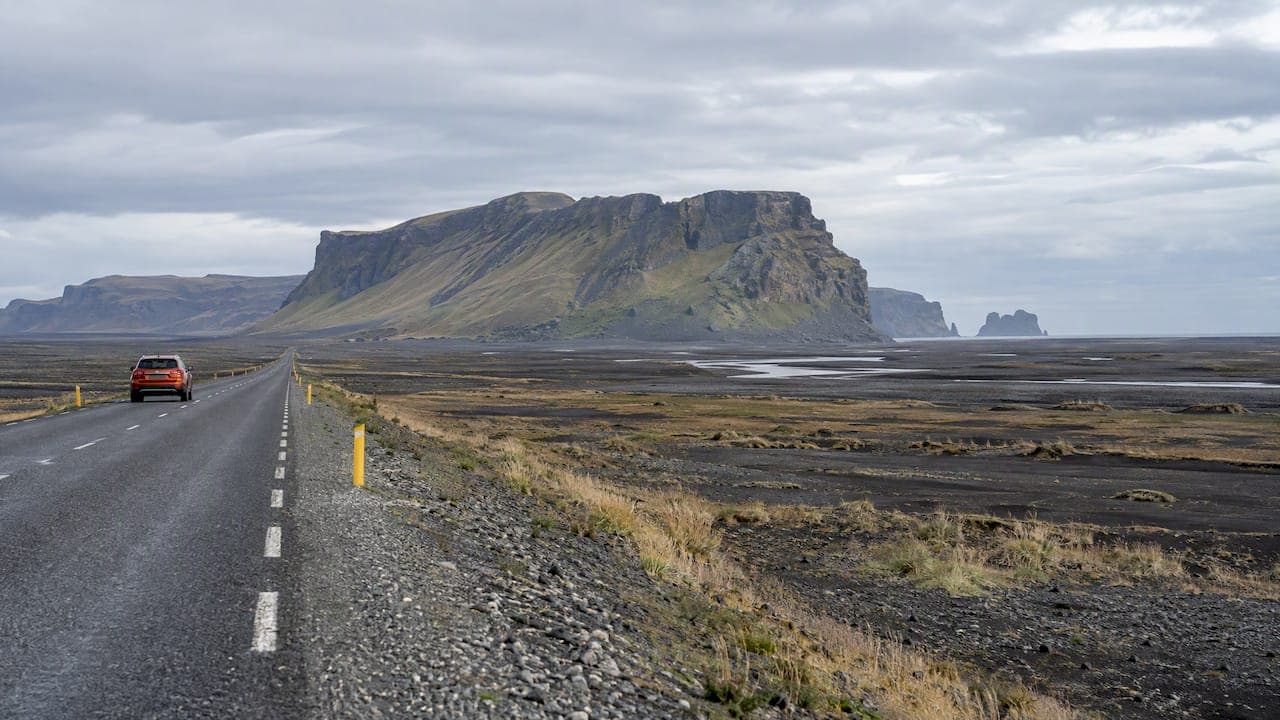
The best stargazing in South Iceland comes between September and April, on a clear, moonless night, away from town lights. The South Coast helps: roads are accessible, the landscape is open, and farmland and coast give you dark horizons within a short drive of Vík. You don’t need a tour or a telescope. You need a forecast, warm layers and a willingness to move if the clouds win.
This guide covers what you can see, when to go, where to stand, how to read the forecasts and how to stay safe. It also covers what to bring, and how to plan your nights around a base in the countryside.
TL;DR
- The stargazing season runs from September through April, when nights are properly dark. Late summer nights are too bright.
- Clouds matter more than anything else. Check the Icelandic Met Office cloud and aurora forecast in the late afternoon and again after dinner.
- Dark spots on the South Coast include farmland around Hella, the church hill in Vík and Dyrhólaey. Reynisfjara has a great sky but real wave danger.
- Pack more layers than you think you need. Wind, not just cold, is what ends most outings early.
- Staying in the countryside near Vík lets you step outside after dinner and go back to bed when you’re done.
Table of Contents
- What you can see in the South Iceland night sky
- When to go: season, month and hour
- Where to stand: dark spots on the South Coast
- Reading the forecast
- Safety: cold, wind, waves and tired drivers
- What to bring
- Perspective: why we think a base matters more than a spot
- Plan your nights with a base near Vík
- A sample three-night plan
- FAQ
- Sources
What you can see in the South Iceland night sky
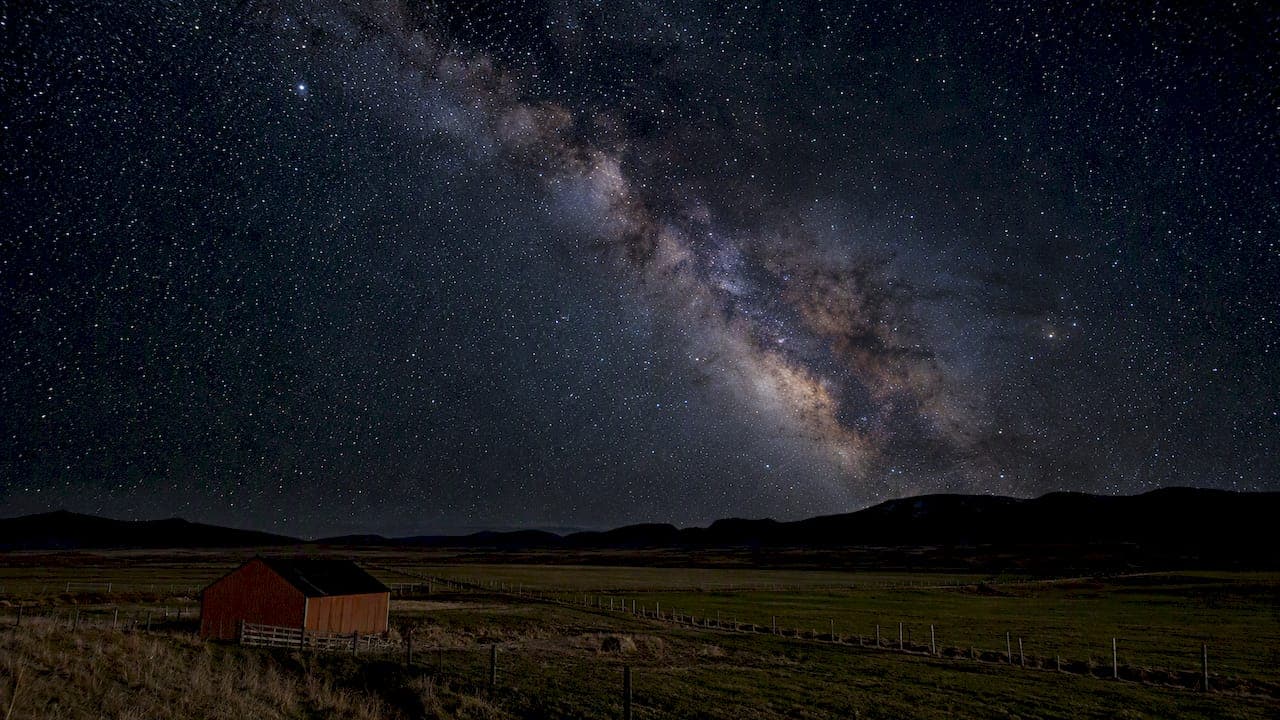
Stargazing here is more than the northern lights. According to Visit Iceland’s guide to astrotourism, travelers can see the Milky Way, bright planets, familiar constellations and meteor showers as well as the aurora. Astrotourism there also covers astrophotography, eclipses and visits to places with little artificial light.
The difference between stargazing and aurora hunting is mostly about movement. Stargazing is usually done from one fixed spot: you pick a dark place, let your eyes adjust and look up. Aurora viewing often means chasing clear patches of sky, which is why it tends to involve a vehicle and constant cloud checking. A tour operator’s 2026 comparison makes the same point: aurora chasing needs mobility, while telescope work needs a fixed dark site and heavy optics.
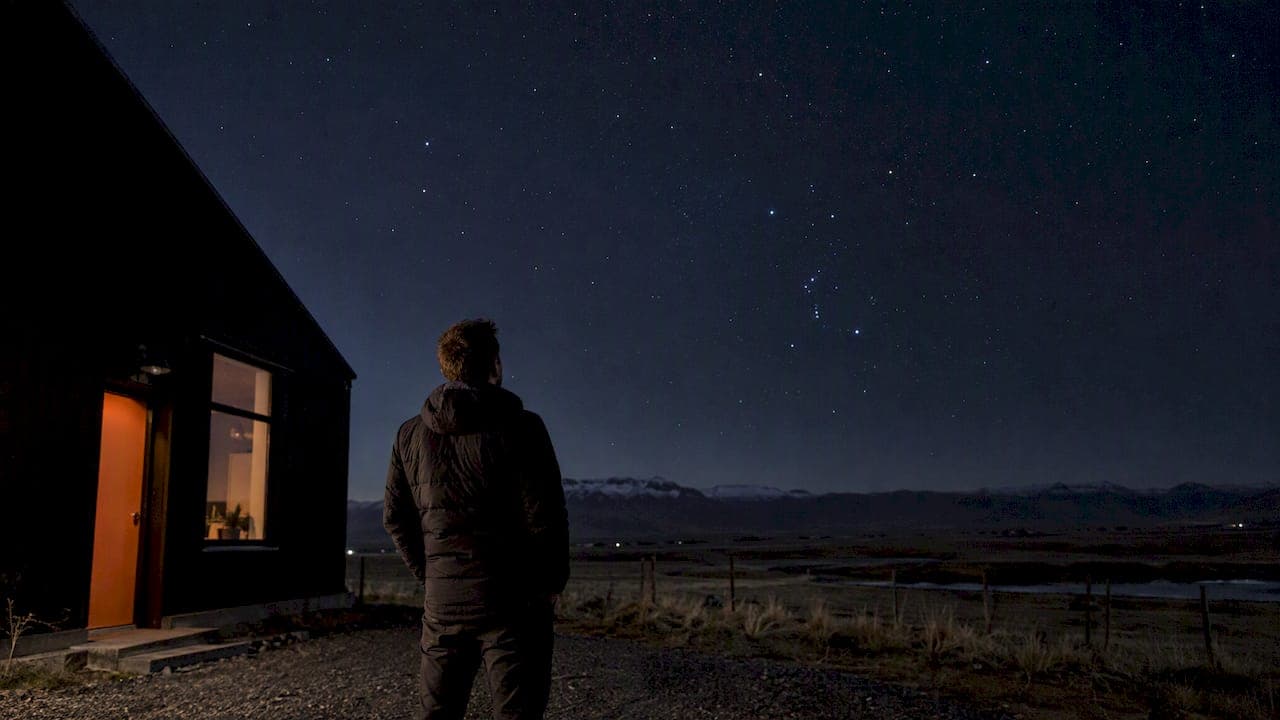
For most visitors the two overlap. On a good night in October you might see Orion rising, the Milky Way arching overhead and a faint green band over the sea, all from the same field.

Naked eye first
You don’t need equipment to enjoy this. Give your eyes 20 to 30 minutes in the dark, keep your phone brightness low, and the sky changes completely. A stargazing app on your phone, set to night or red mode, helps you name the planets and constellations you can see that night.
When to go: season, month and hour
Iceland’s summer nights never get properly dark, so stargazing is a shoulder-season to winter activity. Visit Iceland puts the best season at September through April, when darkness is long enough for night-sky viewing.
The Milky Way window
The Milky Way is visible from late August to mid-April, according to a guide from an Icelandic night-tour company. It is easiest to see in the evening from late August into October, and in the morning from February into mid-April. If you want the galaxy without a 4 a.m. alarm, aim for September or October.

The best hour for the aurora
Aurora activity is often strongest around 11:00 PM, known as magnetic midnight, but it can show up any time from sunset through the night, according to the same Icelandic guide. So the practical plan is simple: check at dusk, go out after dinner, and look again before bed.
The moon
Moonlight washes out faint objects. A bright moon is lovely for landscapes but poor for the Milky Way. Pick a few nights around the new moon if the galaxy is your goal, and treat full-moon nights as a chance to photograph the coast.
Where to stand: dark spots on the South Coast
The official regional tourism site says South Iceland is well suited to night-sky viewing, with accessible roads, wide-open landscapes and areas with little artificial light. It names Hella as a place with wide dark skies and little light pollution, and it also lists Jökulsárlón glacier lagoon and rural farmland.
Here is how that plays out near Vík.
| Spot | Why go | Watch out for |
|---|---|---|
| Farmland and quiet roadsides around Hella | Wide horizons, very little light pollution | Pull fully off the road, and don’t walk onto private land |
| Church hill in Vík (Víkurkirkja) | Easy access, a view over the village and sea | Some light from the village, plus coastal wind |
| Dyrhólaey | High viewpoint over the coast | Exposed to strong wind |
| Reynisfjara | Black sand and sea stacks under the sky | Sneaker waves, see the safety section |
| Jökulsárlón | Dark sky over ice and water | A long drive from Vík |
The church hill, Dyrhólaey and Reynisfjara are all notable South Coast viewpoints, though they are exposed to coastal wind.
The simplest dark spot: your own surroundings
You can skip the drive entirely if your lodging sits in the countryside. Fields, a barn silhouette and an open southern horizon make a better foreground than most viewpoints, and you can be in bed ten minutes after you come inside. Our guide to scenic spots near Vík lists the daytime stops worth pairing with your night plan.
Photographing the sea stacks
If you want the Reynisdrangar rising against the stars, read our notes on the best Reynisdrangar viewpoints first. They cover access and safety as well as photo angles.
Reading the forecast
Three things decide whether a night works: cloud, darkness and, for the aurora, solar activity. The Icelandic Met Office publishes a cloud-cover map alongside an aurora forecast. Its note is blunt: the aurora needs dark and partly clear skies. The activity scale runs from 0 to 9 for midnight.
Two habits help:
- Check twice. The South Iceland tourism board recommends checking weather and aurora forecasts in the late afternoon and again after dinner, and being ready to drive to clearer skies.
- Separate weather from aurora. Ground-level weather doesn’t influence the aurora. An Iceland travel blogger notes that you simply need clear skies to see it. A strong forecast under thick cloud still means no show.
For a quick look at live conditions before you head out, we keep a northern lights webcam guide that shows how to use cameras to check the sky from the common room.
If you’re deciding how to organize aurora nights and transport around a winter trip, this aurora planning guide for winter skies gives a useful picture of how to approach seasonal sky-watching.
Safety: cold, wind, waves and tired drivers
Night outings in Iceland are easy to underestimate. Keep these rules where you’d actually act on them.
On the beach
Reynisfjara is notorious for unpredictable, life-threatening sneaker waves. One aurora guide for the beach advises you never turn your back on the ocean and stay well up the beach. It puts safety ahead of photography. In the dark you can’t see a wave coming, so if you’re unsure, shoot the sea stacks from higher ground such as Dyrhólaey or from the church hill in Vík. Our guide to staying near Reynisfjara explains the area in more detail.
Cold and weather
Safetravel, Iceland’s official safety body, warns that cold, wind and rain can be dangerous without proper clothing and equipment. It adds that the weather can swing from sunny to rainy and windy within a single day. A clear dusk can turn into a gale by 10 p.m. Before you leave, check the Safetravel conditions map and tell someone your plan. South.is also suggests using the Safetravel app and sharing your travel plans with a trusted contact.
Driving
If you drive to find clear sky, treat it like any winter night drive. Wind is a particular hazard for campervans and motorhomes, which can be blown off the road. If you’re tired, Safetravel’s advice is to find a safe place away from traffic and take a 15-minute nap. Don’t stop on the road itself, and don’t leave the car without checking that your headlights and hazard lights are visible.
The practical rule: keep the outing short and close to where you sleep, and skip long chases after a full day of driving.
What to bring
- Layers. Base layer, fleece, windproof shell, hat, gloves and warm boots. Add a blanket or insulated seat pad if you plan to sit.
- A headlamp with a red mode. It keeps your night vision intact.
- A phone with a stargazing app. It helps identify planets and constellations that night, as one tour guide notes.
- A thermos. A hot drink extends every outing.
- For photos: a camera with a fast wide-angle lens and a tripod. The same guide says a fast wide-angle lens suits aurora photography, while telescope viewing needs a fixed spot and heavy optics. Heavy telescope gear is rarely worth hauling on a road trip.
Perspective: why we think a base matters more than a spot
We run a hostel in a renovated barn on the South Coast near Vík, and the guests who get the best sky aren’t the ones with the best gear. They are the ones who don’t have to decide between a night out and a night’s sleep.
Stargazing is patient. You wait for clouds to clear, step out, come in, warm up, and step out again. That rhythm is far easier when the common room is thirty steps from the door, when dinner is on site at Hrífunes Pizzeria, and when you can look at the forecast over a coffee instead of in a car park. We’d rather you spend a clear hour in the field behind the hostel than drive an hour in bad weather to a famous viewpoint.
Our advice: pick two or three nights in the same place, not one. Iceland’s weather is the real variable, and a second night doubles your chance. If you’re traveling solo, the shared spaces make it easy to find someone to go out with, which also makes night outings safer.
— Siggi
Plan your nights with a base near Vík
If you want to build stargazing into a South Coast road trip, we’d suggest this rhythm: spend the day at waterfalls and beaches, eat dinner early, check the forecast, then go out for an hour. You’ll find our shared and private dormitories on the rooms page, and our group booking page covers whole-room reservations for friends or clubs. You can eat at Hrífunes Pizzeria on site, and breakfast is served at the hostel. Book several nights if you can, so a cloudy evening doesn’t end your plans.
A sample three-night plan
Night 1: arrive and look around. Settle in, walk around in the dark before bed and note where the light pollution is. Check the cloud forecast for the next two days.
Night 2: the main attempt. Spend the day at the coast. Eat early, check the forecast at dinner, and head out around 9 or 10 p.m. If the sky is clear, stay for an hour. If it isn’t, go back in and check again before bed.
Night 3: flexible. Use the clearest of the remaining nights. If you’re lucky enough to have clear skies both nights, try a spot with a foreground, such as the church hill in Vík.
In the morning, you can decide whether to stay on or move on. Our guide on top adventure activities near Vík has ideas for the day after a late night, and we also offer a rafting experience with a partner if you want something more active.
FAQ
What is the best month for stargazing in South Iceland?
September and October are a strong choice. The season runs from September through April according to Visit Iceland, and the Milky Way is easiest to see in the evening from late August into October. You also avoid the deepest winter cold and the shortest days for driving.
Do I need a telescope?
No. The Milky Way, planets, constellations and the aurora are all visible to the naked eye on a dark, clear night. A telescope needs a fixed dark location and heavy optics, so it is better suited to a dedicated observing session than a road trip. A phone app that identifies planets and constellations is enough for most visitors.
Is stargazing the same as seeing the northern lights?
Not quite. Stargazing means looking at stars, planets and the Milky Way, usually from one spot. Aurora viewing depends on solar activity as well as clear skies, and often means moving to find a gap in the clouds. The Icelandic Met Office publishes both cloud and aurora forecasts, so check them together.
Is it safe to stargaze at Reynisfjara?
It carries real risk at night. The beach is known for sneaker waves, and in the dark you can’t see them coming. Stay well up the beach, never turn your back on the sea, or photograph the sea stacks from higher ground such as Dyrhólaey or the church hill in Vík.
Sources
- Astrotourism in Iceland: A Guide to the Night Sky (Visit Iceland)
- Northern Lights, Visit South Iceland
- Aurora forecast for Iceland (Icelandic Met Office)
- Outdoors in Iceland (Safetravel)
- Driving a camper in the winter? (Safetravel)
- Driving a car in the winter? (Safetravel)
- Northern Lights at Vík and Reynisfjara (Aurora Iceland)
- When’s the best time to see the Milky Way from Iceland?
- When’s the best time to see Northern Lights in Iceland?
- The Best Stargazing Tours in Iceland for 2026
- Looking for the Northern Lights and Stargazing in Iceland