The Role of Budget Accommodation for Adventure Travelers
The Role of Budget Accommodation for Adventure Travelers
TL;DR:
- Budget accommodation prioritizes essential comfort and affordability over luxury, providing reliable and social stays for travelers. It emphasizes personalized service, social spaces, and proximity to activities, delivering value through experiential quality rather than price alone. This segment supports diverse traveler types, offering options that foster community, convenience, and local economic impact worldwide.
Budget accommodation is lodging that prioritizes essential comfort and affordability over luxury, giving travelers reliable, clean, and socially rich stays without draining their travel fund. The role of budget accommodation goes far beyond cheap beds. Budget and midscale hotels make up roughly 61% of global hospitality and account for about 80% of new signings in high-demand regions. That share reflects a structural reality: most travelers worldwide choose value and reliability over premium amenities. For adventure seekers and road-trippers, budget lodging is not a compromise. It is a deliberate strategy that frees up money for experiences, keeps trips longer, and often delivers richer social connections than a private hotel room ever could.
What is the role of budget accommodation for travelers?
Budget accommodation, known in the hospitality industry as the economy or value lodging segment, covers hostels, bunkhouses, budget hotels, and self-catering guesthouses. The defining characteristic is not a price ceiling but a philosophy: deliver what travelers genuinely need, cut what they do not. Clean beds, reliable Wi-Fi, safe storage, and functional bathrooms are non-negotiable. A rooftop bar and a turndown service are not.
Personalization in budget hotels creates hedonic, social, and memorable value that improves guest satisfaction without requiring major price increases. This finding from UK budget hotel research dismantles the assumption that affordable lodging means generic lodging. A staff member who remembers your name, a communal kitchen stocked with local spices, or a notice board covered in hiking route recommendations can make a stay feel personal and purposeful.
Shared social spaces are a defining feature of the best budget properties. Shared spaces in budget accommodations support cultural exchange, community building, and traveler social needs that solo adventurers and backpackers actively seek. A communal lounge or a shared kitchen is not a cost-cutting measure. It is a social infrastructure that turns strangers into travel companions.
The core features travelers should expect from any quality budget property include:
- Cleanliness and safety as absolute baseline standards, not optional upgrades
- Reliable Wi-Fi and device charging access throughout common areas
- Secure storage such as lockers or lockable rooms for valuables and gear
- Communal kitchen access to reduce food costs and encourage social cooking
- Local knowledge from staff or posted resources about nearby activities and transport
Pro Tip: Before booking any budget property, search recent reviews specifically for cleanliness and staff responsiveness. A $30 bed in a well-run hostel beats a $30 bed in a neglected one every time, and recent reviews reveal which is which faster than any star rating.
How budget stays deliver value beyond the price tag
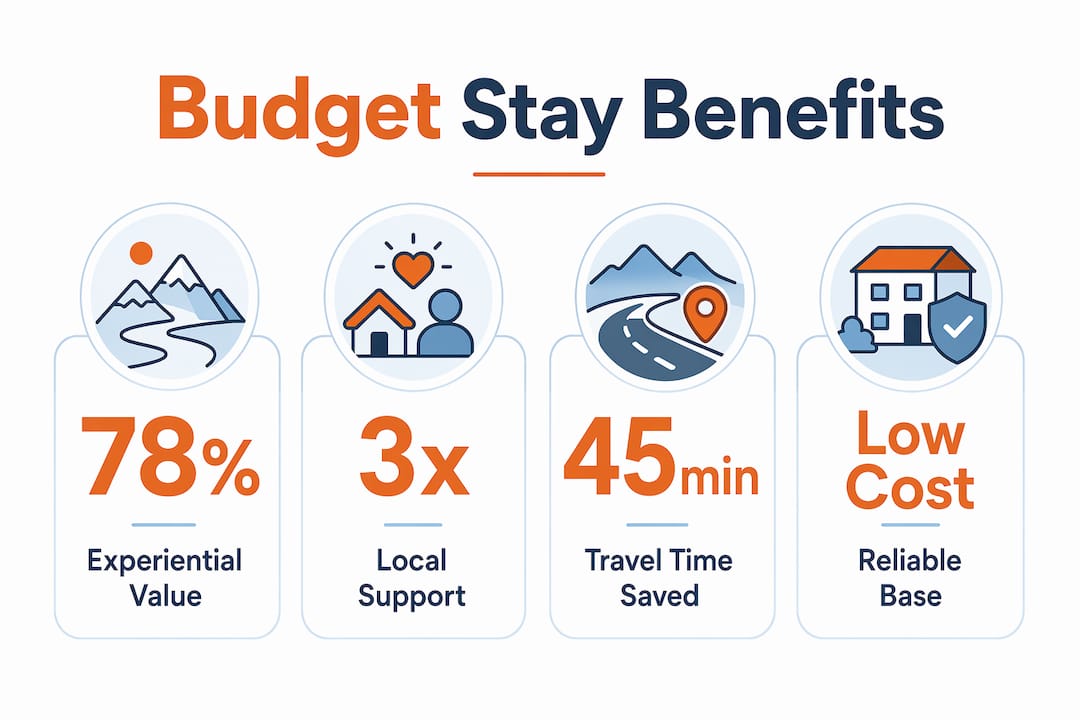
The most important finding in recent accommodation research is this: experiential quality explains roughly 78% of guest satisfaction in peer-to-peer and shared accommodations, with price contributing only marginally once experience is accounted for. That statistic reframes the entire conversation about affordable lodging options. Travelers are not satisfied because they paid less. They are satisfied because the experience delivered something memorable.
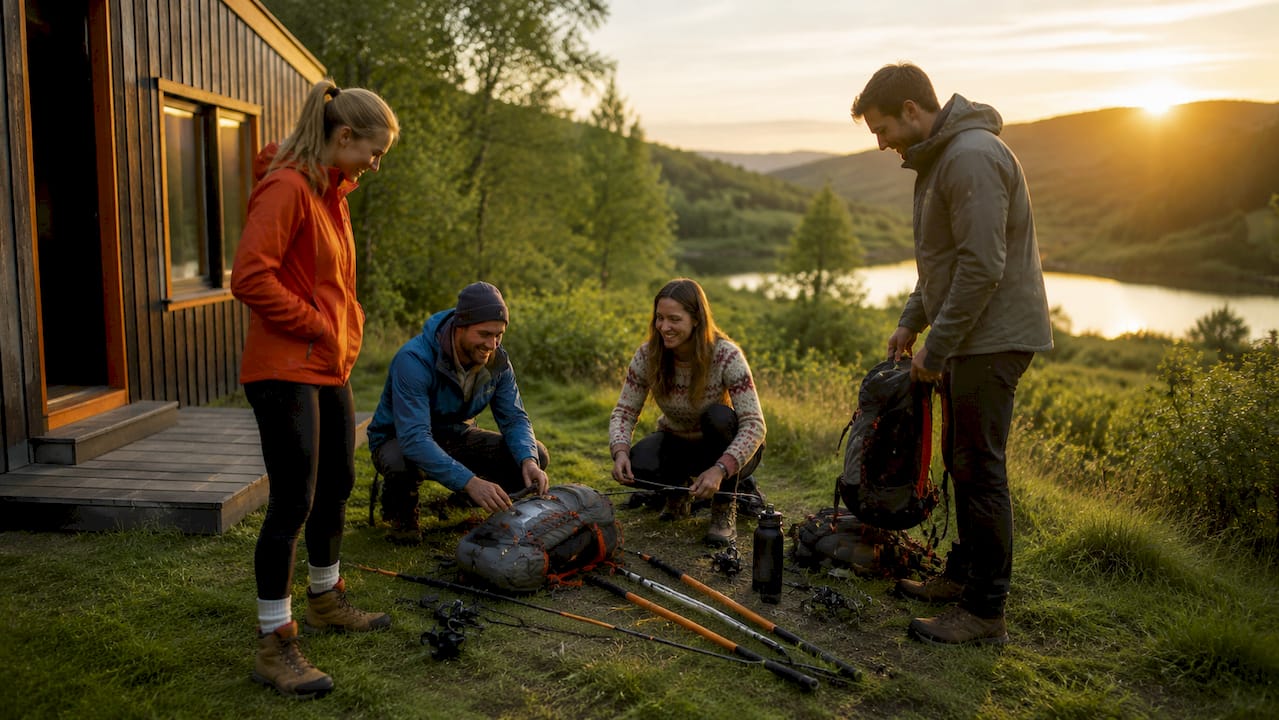
For adventure travelers, that experiential value comes from three sources: social connection, location proximity, and activity access. A hostel dorm room in the right location, surrounded by the right people, next to the right trail, delivers satisfaction that a sterile budget hotel room in a business district simply cannot match. The social dimension is especially powerful for solo travelers, who consistently report that shared spaces and organized events turn a solo trip into a group adventure.
“Budget accommodation done well doesn’t just save you money. It puts you in the same room as the person who knows the unmarked waterfall, the local chef who opens the restaurant on Thursdays, and the cyclist who just completed the route you’re about to start.”
Some budget properties take the activity-access model further. Gilboa Quarry in Ohio offers a bunkhouse with direct activity access at $25 per bed per night, including climate control, lockers, and a kitchenette, with quarry water sports immediately adjacent. The model proves that budget accommodation benefits multiply when lodging and experience are physically integrated. You are not just saving on a bed. You are eliminating the logistical gap between where you sleep and where the adventure happens.
Supporting local economies is another underappreciated advantage of budget travel accommodation. Budget properties that partner with local businesses, source food locally, and employ community members create a spending multiplier that luxury resorts, which often operate as closed ecosystems, do not. Choosing a locally owned hostel over a chain hotel keeps more of your travel dollar circulating in the destination.
Why budget lodging is a strategic base for frequent travelers
Budget accommodation serves what industry analysts call non-discretionary demand. Travelers who need to keep moving, whether for work assignments, extended road trips, or multi-country adventures, treat affordable lodging not as a luxury choice but as a logistical requirement. Reliable, low-cost stays make more trips possible. A traveler who spends $40 per night instead of $120 can fund three nights of travel for the price of one.
Europe’s budget hotel boom is driven by demand for value and predictability in shorter, more frequent trips. Operators use scale and lean staffing to keep costs consistent, which reduces decision fatigue for repeat travelers. Knowing that a property will deliver a clean bed, functional shower, and decent Wi-Fi every time removes friction from the planning process. That predictability is worth paying for, even at budget rates.
The table below shows how budget lodging supports different traveler profiles across key decision factors:
| Traveler type | Primary need | How budget lodging delivers |
|---|---|---|
| Solo adventurer | Social connection and low cost | Dorm rooms, shared kitchens, communal events |
| Road-tripper | Reliable stops along a route | Predictable quality at consistent price points |
| Traveling worker | Affordable base for extended stays | Economy properties with workspace and Wi-Fi |
| Family or group | Privacy option at budget rates | Room buyout in hostel-style properties |
| Nature enthusiast | Proximity to outdoor activity | Rural hostels and bunkhouses near trails and parks |
Location-to-activity friction is a real cost that most travelers underestimate. When your accommodation sits 45 minutes from the trailhead, you lose time, fuel money, and morning energy. Budget properties that sit inside or adjacent to national parks, coastal paths, or adventure corridors eliminate that friction entirely. For nature lovers choosing hostels, proximity to the outdoors is often the primary booking criterion, with price as a secondary filter.
Pro Tip: When planning a multi-stop trip, map your accommodations against your activity list before booking. A budget property 10 minutes from your main attraction beats a cheaper one 60 minutes away once you factor in transport costs and time lost.
Budget accommodation types compared: which fits your travel style?
The economy lodging segment covers more variety than most travelers realize. Choosing the right type of budget accommodation depends on how you balance privacy, social opportunity, cost, and amenity access.
| Accommodation type | Average cost range | Privacy level | Social environment | Best for |
|---|---|---|---|---|
| Hostel dorm | $15–$45/night | Low | High | Solo travelers, backpackers |
| Hostel private room | $50–$90/night | Medium-high | Medium | Couples, light social preference |
| Budget hotel | $50–$100/night | High | Low | Travelers prioritizing quiet |
| Bunkhouse | $20–$50/night | Low-medium | Medium-high | Adventure groups, activity-focused |
| Self-catering guesthouse | $60–$120/night | High | Low | Families, longer stays |
Hostels represent the most social end of the spectrum. The shared hostel spaces model, where communal kitchens, lounges, and organized events create organic social interaction, is the defining advantage of hostel-style budget accommodation. For solo travelers especially, this social infrastructure removes the isolation that can make solo travel feel lonely rather than liberating.
Budget hotels offer more privacy but sacrifice the community element. They suit travelers who need a reliable, quiet base and are not looking for social interaction. The tradeoff is real: you gain a private room and lose the spontaneous dinner invitation from the group in the kitchen.
Bunkhouses occupy a practical middle ground. They typically serve activity-focused travelers who want affordable group sleeping arrangements without the full hostel social program. The Gilboa Quarry model, where the bunkhouse sits inside the activity venue, represents the most efficient version of this format. Self-catering guesthouses work best for families or travelers on extended stays who need kitchen access and space but are not interested in shared facilities.
Emerging self-service hostels, where check-in is automated and staff interaction is minimal, are growing in popularity among travelers who want budget pricing with hotel-style independence. The budget travel trends for 2026 show this segment expanding rapidly, particularly in urban markets where tech-forward travelers prioritize efficiency over social programming.
Key takeaways
Budget accommodation delivers its greatest value through experiential quality and social connection, not price alone.
| Point | Details |
|---|---|
| Experience drives satisfaction | Experiential quality explains roughly 78% of guest satisfaction, making location and social environment more important than nightly rate. |
| Personalization matters at any price | UK research confirms that personalized touches in budget hotels create memorable, socially rich stays without raising costs significantly. |
| Non-discretionary demand is real | Frequent and work-related travelers rely on budget lodging as a logistical necessity, not just a cost preference. |
| Activity proximity multiplies value | Budget properties adjacent to adventure activities eliminate transport friction and reduce total trip cost beyond the bed price. |
| Type selection shapes the experience | Hostels maximize social opportunity; budget hotels maximize privacy; bunkhouses serve activity-focused groups most efficiently. |
What I’ve learned from years of budget travel in Iceland
I have stayed in everything from converted barns to city-center dorms, and the pattern is consistent: the stays I remember are never the ones with the best mattresses. They are the ones where the kitchen smelled like someone’s grandmother’s recipe, where a stranger’s trail recommendation turned into the best day of the trip, or where the view from the common room made the whole journey feel worth it.
The conventional wisdom that budget accommodation is a sacrifice misses the point entirely. The experiential economy research confirms what experienced travelers already know: price is a poor proxy for satisfaction. What actually determines whether a stay enhances your trip is whether the property puts you close to what you came for, physically and socially.
My honest observation after years of watching travelers choose accommodation in South Iceland: the ones who book the cheapest available room in Reykjavík and then drive two hours to Reynisfjara consistently report worse trips than those who book a mid-range dorm in a rural hostel 10 minutes from the beach. The math on paper favors the city room. The math on experience does not.
The other thing I have noticed is that budget properties with strong community atmospheres attract better travelers. Not wealthier or more sophisticated travelers. Better ones. People who are genuinely curious, willing to share, and interested in the place they are visiting rather than the comfort of their room. That self-selection effect is one of the most underrated advantages of budget travel accommodation, and no algorithm has figured out how to replicate it in a private hotel room.
— Trygve
Experience South Iceland without the premium price tag
If you are planning a Ring Road trip or a South Coast adventure, the question of where to sleep is also a question of how much of Iceland you actually get to see.
Fox Hostel sits in Hrífunes Nature Park, 35 minutes east of Vík, and serves as a direct launchpad for Reynisfjara Black Sand Beach, Dyrhólaey, Vatnajökull National Park, and Jökulsárlón Glacier Lagoon. The converted Icelandic barn offers dorm beds for solo travelers and full room buyouts for couples, families, and groups who want privacy without paying hotel rates. The on-site pizzeria, fully equipped communal kitchen, and dark skies for Northern Lights viewing make it a base worth returning to after a long day on the road. Explore rooms and availability and see why adventure travelers consistently choose Fox Hostel as their South Iceland home base.
FAQ
What does budget accommodation actually include?
Budget accommodation covers hostels, bunkhouses, economy hotels, and self-catering guesthouses that prioritize clean, safe, and functional stays over luxury amenities. The standard expectation includes reliable Wi-Fi, secure storage, and clean bathrooms at a price point significantly below midscale or upscale properties.
Is budget lodging worth it for adventure travelers?
Research shows that experiential quality drives 78% of accommodation satisfaction, meaning a well-located budget property near outdoor activities delivers more trip value than a comfortable hotel far from the action. For adventure travelers, proximity and social environment matter more than room quality.
How do hostels differ from budget hotels?
Hostels offer shared dorm rooms, communal kitchens, and organized social spaces that encourage interaction between travelers. Budget hotels provide private rooms with minimal shared facilities, making them better suited for travelers who prioritize quiet and privacy over community.
Can groups or couples get privacy in a hostel?
Many hostels, including Fox Hostel in South Iceland, offer full room buyout options where a group or couple books an entire dorm room for exclusive use. This delivers the social atmosphere and communal amenities of a hostel with the privacy of a private room at a fraction of standard hotel rates.
Why is budget accommodation growing so fast globally?
Budget and midscale properties account for roughly 61% of global hospitality and 80% of new openings in high-demand regions, driven by traveler demand for value, predictability, and shorter but more frequent trips. The segment serves both discretionary travelers and those with ongoing travel commitments who need reliable, affordable bases.