Rent a Car in Iceland: Freedom, Cost, and the Open Road
Rent a Car in Iceland: Freedom, Cost, and the Open Road
TL;DR:
- Renting a car in Iceland provides unmatched flexibility, safety, and cost-efficiency for exploring remote sites.
- It allows spontaneous stops, route adjustments, and avoids fixed schedules that limit access and timing control.
Renting a car is the single best decision most Iceland travelers make. Public transport outside Reykjavík rarely serves the scenic pull-offs, hidden waterfalls, or remote black sand beaches that make Iceland worth the flight. For two or more travelers splitting fuel and a daily rate, self-driving almost always beats the per-person cost of guided tours. Add Iceland’s notoriously fast-changing weather, and having your own vehicle stops being a convenience and starts being a practical safety net.
The short version:
- Flexibility: Stop anywhere, change plans when the forecast shifts, stay until the light is right.
- Cost-efficiency: Shared rental costs beat per-person tour pricing for couples, families, and small groups.
- Comfort and safety: A private, climate-controlled vehicle is your shelter, gear locker, and escape hatch when conditions turn.
Table of Contents
- Why renting a car in Iceland beats the bus
- Is renting a car in Iceland worth it for couples and families?
- How a car gives you control over timing and crowds
- Weather, comfort, and your car as a mobile basecamp
- Choosing the right vehicle: 4x4s, F-roads, and when 2WD is fine
- Insurance essentials: Gravel Protection and Sand & Ash Protection
- Budgeting your Iceland rental: daily costs and fuel planning
- Driving rules and hazards every Iceland visitor should know
- Sample itineraries that show what a rental car unlocks
- Why Fox Hostel works as a South Coast base for road-trippers
- Key Takeaways
- The case for self-driving Iceland, honestly
- Fox Hostel: your South Coast base between driving days
- Useful sources and official references
Why renting a car in Iceland beats the bus
Iceland’s bus network works reasonably well inside Reykjavík, where routes can run every 10–15 minutes at peak times. Step outside the capital and the picture changes fast. Schedules thin out, connections between towns are infrequent, and the scenic pull-offs that define an Iceland trip — a roadside waterfall, a geothermal vent, a lava field — simply aren’t on the route map.
Guided tours solve the access problem but create a different one: you’re on their clock. Fixed pickup times mean you leave a waterfall when the bus says so, not when the light gets good. A rental car removes that ceiling entirely.
- No fixed pickup windows or group waiting
- Spontaneous stops at unmarked viewpoints
- Route changes when weather or road closures demand it
- Access to remote locations that buses and tours don’t reach
Pro Tip: Before every driving day, check Vedur.is (Icelandic Meteorological Office) for weather and road.is (Umferðarstofa) for live road conditions. Both are free, updated frequently, and the two sources Icelandic drivers actually use.
Is renting a car in Iceland worth it for couples and families?
For solo travelers on a tight budget, the math is close. For two or more people, it usually isn’t. Tour pricing is per person, per activity. Rental costs are shared across everyone in the car.
| Cost item | 2-person guided tours | 2-person car rental |
|---|---|---|
| Daily transport/tour cost | higher per person | usually lower per day rental rate |
| Fuel | Included | additional cost |
| Insurance add-ons | N/A | additional cost |
| Total trip cost for tours rises by guest; rental shared cost grows slowly. |
Figures illustrate typical market patterns; confirm current rates when booking.
The gap widens with each extra traveler. A family of four sharing one rental pays the same car cost as a couple. Four separate tour tickets do not. Couples can stretch savings further by pairing a rental with hostel stays rather than hotels, keeping the accommodation line lean while the car handles the logistics.
How a car gives you control over timing and crowds
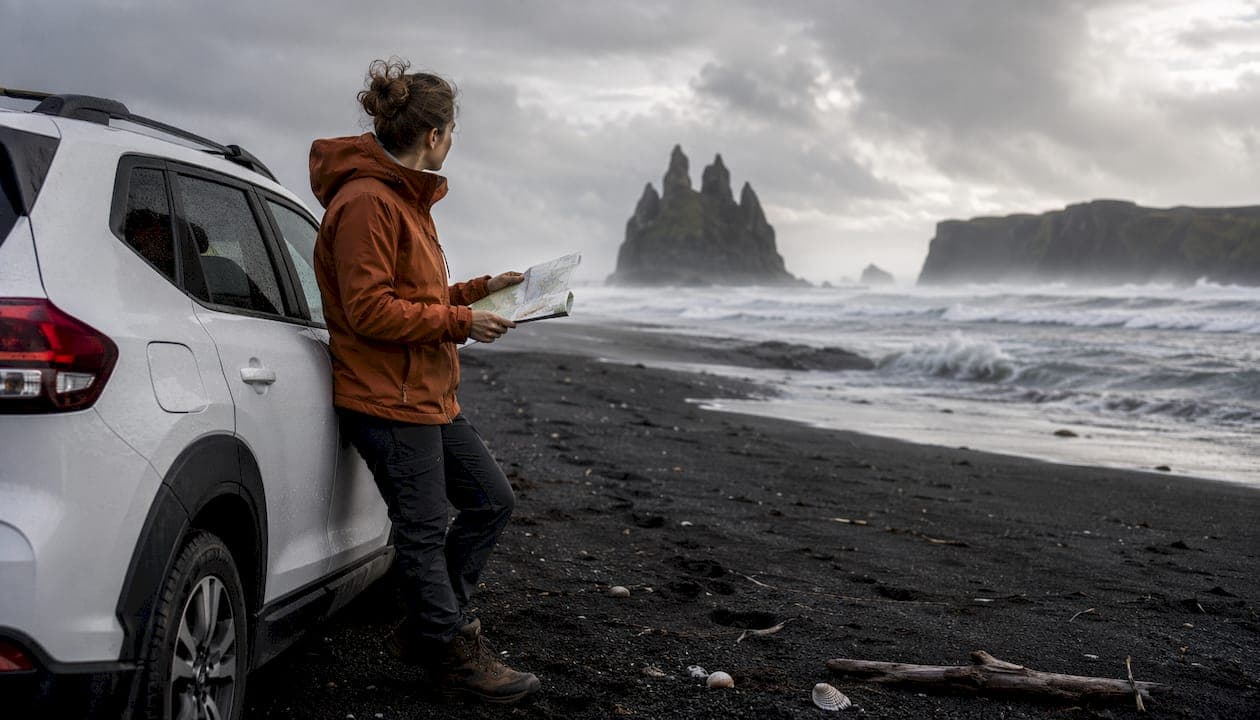
The most popular sites on the South Coast — Seljalandsfoss, Skógafoss, Reynisfjara — fill up by mid-morning when tour buses arrive. With a car, you can be there at 7 AM, before the crowds, and leave when you’re ready. That’s the experience of control that self-driving delivers: timing visits around light and crowds, not around a pickup schedule.
Practical moves that only work with a car:
- Arrive at major waterfalls before 8 AM or after 7 PM in summer
- Switch your itinerary order when one road is foggy and another is clear
- Wait an extra hour at a glacier lagoon for the light to shift
- Skip a planned stop entirely when conditions make it unpleasant
Pro Tip: Build your days with a flexible start window rather than a fixed departure time. Check the forecast the night before, then decide whether to push east or double back west. That one habit separates a great Iceland trip from a great one.
Weather, comfort, and your car as a mobile basecamp
Iceland’s weather doesn’t transition gradually. A clear morning can become a sideways-rain afternoon within the hour, and crosswinds on exposed coastal roads can be strong enough to push a vehicle. The Icelandic Meteorological Office issues color-coded wind and weather warnings; yellow means caution, orange means serious risk, red means stay put.
A rental car handles all of this better than any tour bus or public option:
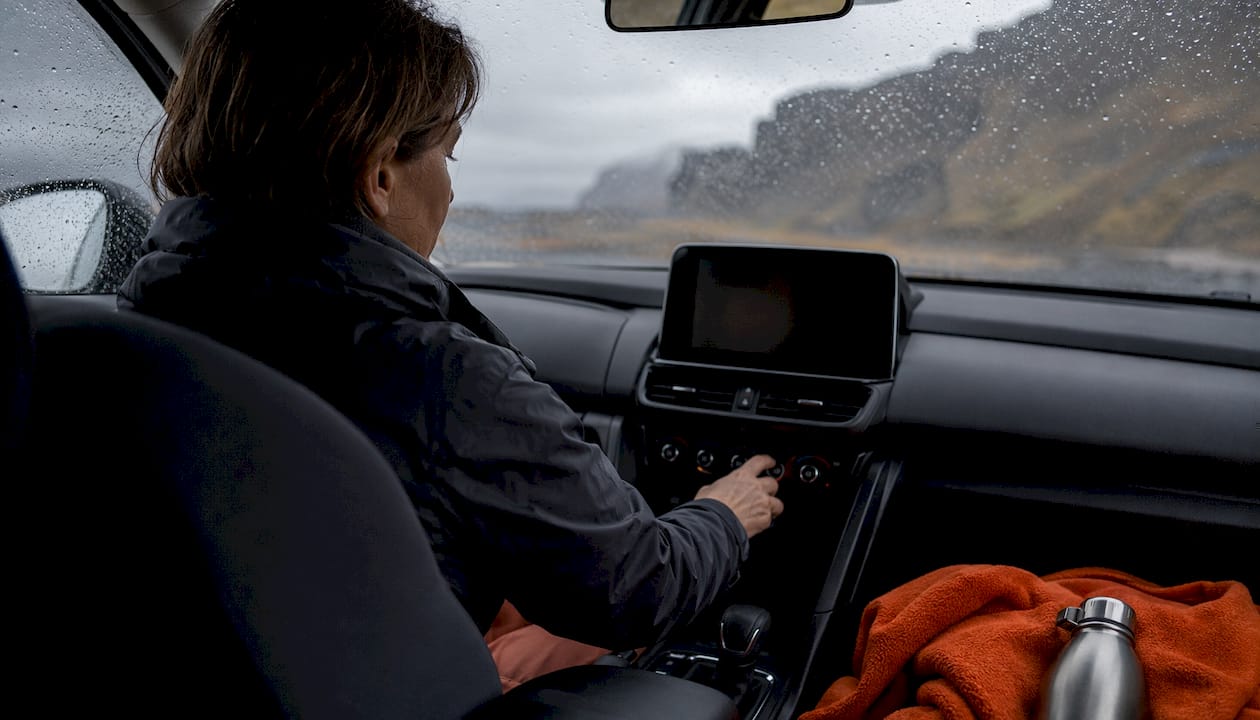
- Dry storage for wet-weather gear, camera equipment, and hiking boots
- A warm place to eat lunch without finding a café
- Shelter during sudden squalls without cutting the day short
- The ability to wait out a weather window and then move
Experts consistently recommend treating the car as a mobile basecamp for exactly this reason. If road.is shows an orange or red warning for your planned route, delay. The road will still be there tomorrow.
Choosing the right vehicle: 4x4s, F-roads, and when 2WD is fine
The Ring Road (Route 1) and all major South Coast routes are paved and fully manageable in a standard 2WD car from June through September. A Toyota Yaris or similar compact handles Seljalandsfoss, Jökulsárlón, and Reynisfjara without any issue.
F-roads are a different matter entirely. These are unpaved highland mountain tracks, and driving a 2WD on them is illegal. Getting caught voids your rental insurance completely, leaving you personally liable for recovery costs that can run into thousands of dollars. Always verify F-road status on road.is before heading inland.
| Route type | Recommended vehicle | Notes |
|---|---|---|
| Ring Road (paved) | 2WD compact | Fine June–September |
| South Coast gravel pull-offs | 2WD or small SUV | Higher clearance helps |
| Highlands / F-roads | 4x4 only | Legally required; insurance void otherwise |
| Winter driving (Oct–Apr) | 4x4 strongly advised | Snow, ice, high winds |
Pro Tip: If your itinerary includes any inland detour, check road.is the morning you plan to drive it. F-road opening dates shift year to year based on snowmelt, and a road that was open last week may not be open today.
Insurance essentials: Gravel Protection and Sand & Ash Protection
Standard CDW (Collision Damage Waiver) covers basic collision damage but leaves out the hazards Iceland is actually known for. Gravel Protection (GP) and Sand & Ash Protection (SAAP) are the two add-ons experts consistently call non-optional, not because rental companies push them, but because the terrain genuinely creates those risks.
What standard CDW typically excludes:
- Windshield and paint damage from gravel roads
- Volcanic ash and sand abrasion (common near Vík and the South Coast)
- River-crossing damage and undercarriage water damage
- Damage caused by driving on restricted roads
Insurance checklist by route:
| Add-on | South Coast | Highlands | Ring Road |
|---|---|---|---|
| CDW | ✓ Always | ✓ Always | ✓ Always |
| Gravel Protection (GP) | ✓ Recommended | ✓ Essential | ✓ Recommended |
| Sand & Ash Protection (SAAP) | ✓ Essential near Vík | ✓ Essential | ✓ Recommended |
| SCDW / Excess Reduction | Optional | ✓ Recommended | Optional |
Pro Tip: Before you drive off the lot, photograph every panel, the windshield, and the undercarriage. Send the photos to yourself with a timestamp. That 90-second habit has saved travelers from paying for pre-existing damage.
Budgeting your Iceland rental: daily costs and fuel planning
Daily costs break down into four lines: rental rate, insurance add-ons, fuel, and extras (GPS, additional driver, child seat). For a comparison of rental providers and rates, aggregator sites let you filter by vehicle class and pickup location before committing.
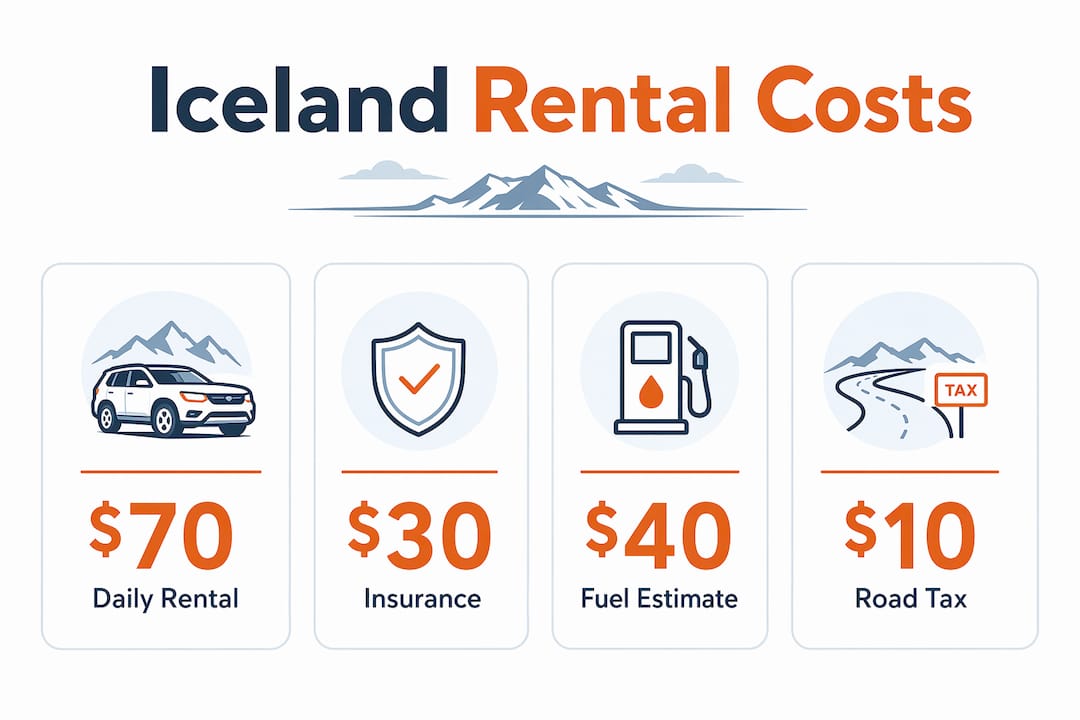
One newer cost factor: a kilometer-based road tax now applies to long-distance driving in Iceland. On a full Ring Road loop, that adds a meaningful line to the budget. Factor it in before you assume the daily rate is the total cost.
| Day | Rental rate | Insurance (CDW+GP+SAAP) | Fuel estimate | Road tax note |
|---|---|---|---|---|
| Per day (2WD, South Coast) | ~$50–$80 | ~$25–$40 | ~$20–$35 | Minimal for short routes |
| Per day (4x4, Ring Road) | ~$80–$130 | ~$35–$55 | ~$30–$50 | Factor in per-km charge |
Pick up at Keflavík Airport and start your trip immediately. Gas stations in remote areas can be more than 150 km apart, so refill at the half-tank mark rather than waiting for the low-fuel light. On extreme remote routes, a supplemental fuel container is worth considering.
Driving rules and hazards every Iceland visitor should know
- Speed limits: 50 km/h in towns, 80 km/h on gravel, 90 km/h on paved roads
- Single-lane bridges: slow down, yield to oncoming traffic, and never race across
- Sheep on roads: common from late spring through autumn; they move unpredictably
- Seatbelts: mandatory for all passengers
- Mobile phones: handheld use while driving is illegal
- F-roads: 4x4 only; 2WD entry voids insurance and risks fines
Strong crosswinds on open stretches can catch drivers off guard, especially in a high-sided vehicle. If visibility drops sharply, pull off safely and wait. Driving into a whiteout is never worth it. Gas stations in the interior can be more than 150 km apart, which makes the half-tank refill rule a practical safety measure, not just a preference.
Sample itineraries that show what a rental car unlocks
| Trip length | Route | Key stops | Car needed |
|---|---|---|---|
| 1–3 days | Golden Circle + South Coast | Þingvellir, Geysir, Gullfoss, Seljalandsfoss, Reynisfjara | 2WD |
| 4–7 days | South Coast base | Vík, Jökulsárlón, Skaftafell, Dyrhólaey | 2WD or small SUV |
| 8–14 days | Ring Road | Full loop, Eastfjords, Akureyri, Snæfellsnes | 4x4 recommended |
For a 4–7 day South Coast trip, basing yourself near Vík puts Reynisfjara and Dyrhólaey within 20 minutes and Jökulsárlón Glacier Lagoon within a 90-minute drive. You can run two major glacier sites in a single day, something no fixed tour schedule accommodates. The Ring Road loop rewards longer stays: daily mileages average 150–250 km, the Eastfjords section is where a 4x4 earns its keep, and the kilometer-based road tax becomes a real budget line on a full loop.
Why Fox Hostel works as a South Coast base for road-trippers
Fox Hostel sits in Hrífunes Nature Park, 35 minutes east of Vík, positioned exactly where South Coast road-trippers need a base. Reynisfjara Black Sand Beach and Dyrhólaey are close enough for an early-morning run before the tour buses arrive. Jökulsárlón Glacier Lagoon and Vatnajökull National Park are a manageable day trip east.
For road-trippers specifically, the practical amenities matter:
- A fully equipped communal kitchen for self-catering between driving days
- On-site pizzeria for nights when cooking isn’t happening
- Storage space for gear, wet boots, and camera bags
- Dark skies with minimal light pollution for Northern Lights viewing
Dorm beds are available for solo travelers; couples, families, and small groups can book an entire room for privacy. That flexibility pairs naturally with a shared rental car, where splitting both accommodation and driving costs keeps the overall trip budget in check. The hostel amenities are built around travelers who are out all day and need a functional, comfortable place to land at night.
Key Takeaways
Renting a car in Iceland is worth it for almost any traveler planning to explore beyond Reykjavík, and it becomes clearly cost-effective the moment two or more people share the vehicle.
| Point | Details |
|---|---|
| Public transport limits | Buses don’t serve most scenic pull-offs; a car is the only practical way to reach them. |
| Group cost advantage | Rental costs are shared; tour costs are per person, making a car cheaper for 2+ travelers. |
| Insurance gaps | Standard CDW excludes gravel and ash damage; always add Gravel Protection and Sand & Ash Protection. |
| F-road rules | Driving a 2WD on F-roads is illegal and voids rental insurance; verify status on road.is first. |
| Fox Hostel as a base | Located 35 minutes east of Vík, Fox Hostel gives road-trippers direct access to South Coast sites and a practical overnight setup. |
The case for self-driving Iceland, honestly
The conventional wisdom says renting a car in Iceland is expensive. It is, if you compare the daily rate to nothing. Compare it to two or three guided tours per day for a couple, and the math flips quickly. What people underestimate isn’t the cost — it’s the value of the timing control. Being able to show up at Reynisfjara at 7 AM, before the parking lot fills, or to wait an extra 45 minutes at Jökulsárlón because the light is about to turn golden: that’s the real return on the rental fee.
The one place I’d push back on the standard advice is insurance. Most guides mention it; few are direct enough about it. GP and SAAP aren’t upsells. They’re the coverage that actually matches Iceland’s roads. Skip them and you’re self-insuring against the most common damage types on the island. Go back to the insurance checklist above before you finalize your booking, and photograph the car before you leave the lot.
Fox Hostel: your South Coast base between driving days
The South Coast is where most Iceland road trips earn their reputation, and where you sleep between those days matters more than people expect. Fox Hostel gives road-trippers a practical, affordable base in Hrífunes Nature Park, 35 minutes east of Vík. You’re close enough to Reynisfjara for an early start, and far enough from the crowds to actually rest.

The communal kitchen cuts meal costs on multi-day drives. The on-site pizzeria handles the nights when you roll in late from Jökulsárlón. Couples and families can book a private room for full privacy; solo travelers book a single bed. Either way, you’re splitting accommodation costs the same way you’re splitting the rental, which is exactly how South Coast trips stay affordable. Check availability and book your stay at Fox Hostel before the summer slots fill.
Useful sources and official references
Road and weather conditions in Iceland change fast. Bookmark these two sources before your trip: Vedur.is for weather warnings and road.is for live road status, closures, and F-road opening dates. They are the sources Icelandic drivers actually rely on.
- Vedur.is — Icelandic Meteorological Office; color-coded weather warnings updated continuously
- road.is — Umferðarstofa (Icelandic Transport Authority); live road conditions, closures, and F-road status
- iceland.org/car-rental — Comprehensive rental guide covering vehicle classes, insurance, and seasonal advice
- Car rental comparison sites — Compare providers and rates across vehicle classes before booking
- stuckiniceland.com — Balanced pros, cons, and alternatives for different traveler types
- icelandcarrental.is — Detailed guide on when you need a car and when you don’t