Waterfall Exploration Tips for Safe, Stunning Visits
Waterfall Exploration Tips for Safe, Stunning Visits
TL;DR:
- Safety guidelines emphasize maintaining distance from hazardous areas, respecting barriers, and avoiding rescue attempts in turbulent water. Proper gear, including aggressive-soled footwear and water-resistant clothing, is essential for safe and confident waterfall hikes. Planning visits based on watershed conditions and practicing responsible photography helps ensure safe, environmentally respectful waterfall experiences.
Waterfall exploration tips are the safety and preparation practices travelers must follow to navigate wet terrain, unpredictable water flow, and unique natural hazards without incident. The most critical rules cover footwear, barrier respect, watershed conditions, and photography behavior. Skipping any one of them raises your risk significantly. Whether you are planning a trip to Iceland’s South Coast or tracking down a remote cascade, these guidelines apply everywhere waterfalls exist.
1. What are the essential waterfall safety guidelines?
Safety at waterfalls starts with understanding where the real danger zones are. The most hazardous areas sit within 20 feet of the waterfall lip and in pools beneath falls taller than 15 feet. Wet, algae-covered rocks near the rim cause slips, and hydraulic currents in plunge pools trap swimmers underwater.
Barriers exist for a reason. About 40% of fatal waterfall incidents involve visitors crossing posted barriers to get a better photo angle and slipping on slick rocks near the rim. That statistic means barriers are not suggestions. They mark the line between a safe visit and a fatal one.
- Stay at least 20 feet back from wet rocks near the waterfall lip
- Never swim in pools directly below falls taller than 15 feet
- Respect all posted barriers and fencing without exception
- Stay on marked trails even when an off-trail angle looks tempting
- Check local alerts and official park notices before you leave
In an emergency, do not enter the water to help someone. Entering turbulent water to rescue another person is one of the most common causes of multiple casualties at waterfall sites. Throw a buoyant object, call 911, and mark your location clearly for rescuers.
Pro Tip: Decide your personal risk threshold before you leave the trailhead. If conditions look worse than expected on arrival, commit to turning back. Rationalizing hazards after you are already there is how accidents happen.
2. How to prepare and gear up for waterfall hikes
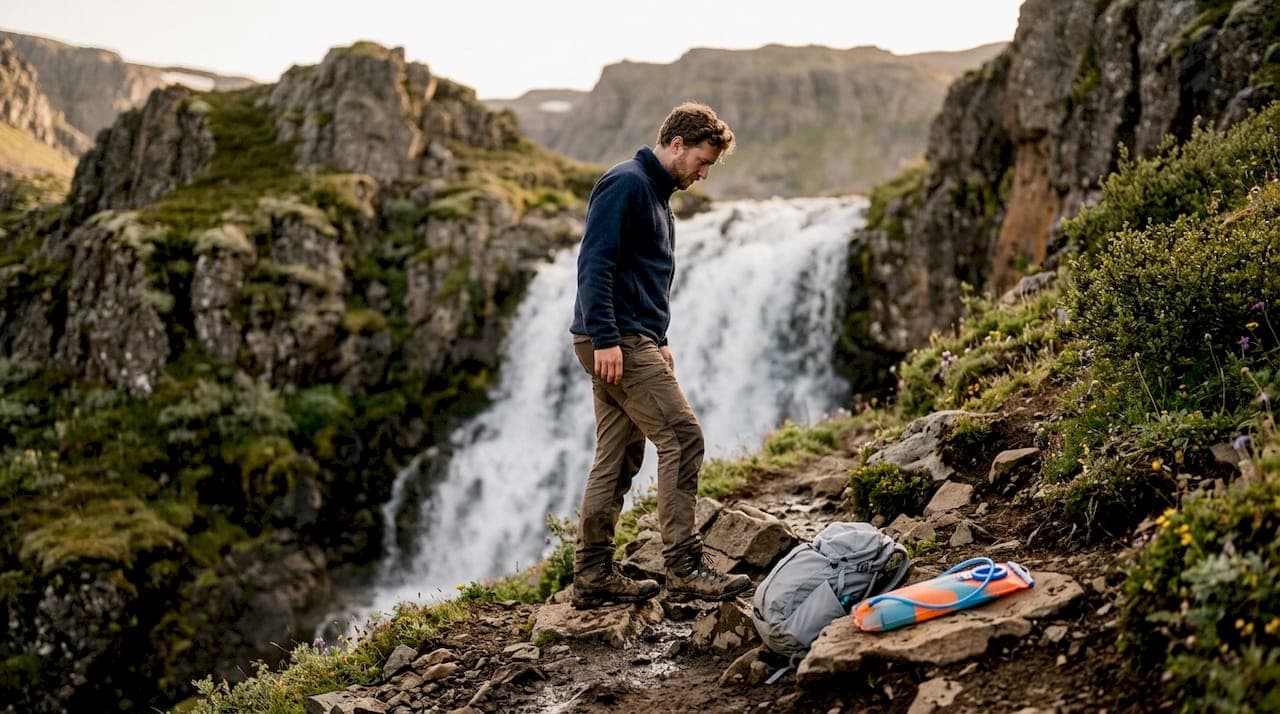
The right gear turns a miserable, slippery hike into a confident one. Footwear with aggressive rubber outsoles is the single most important piece of equipment you can bring. Trail runners, water sandals with heel straps, or approach shoes all grip wet rock far better than standard sneakers or sandals without straps.
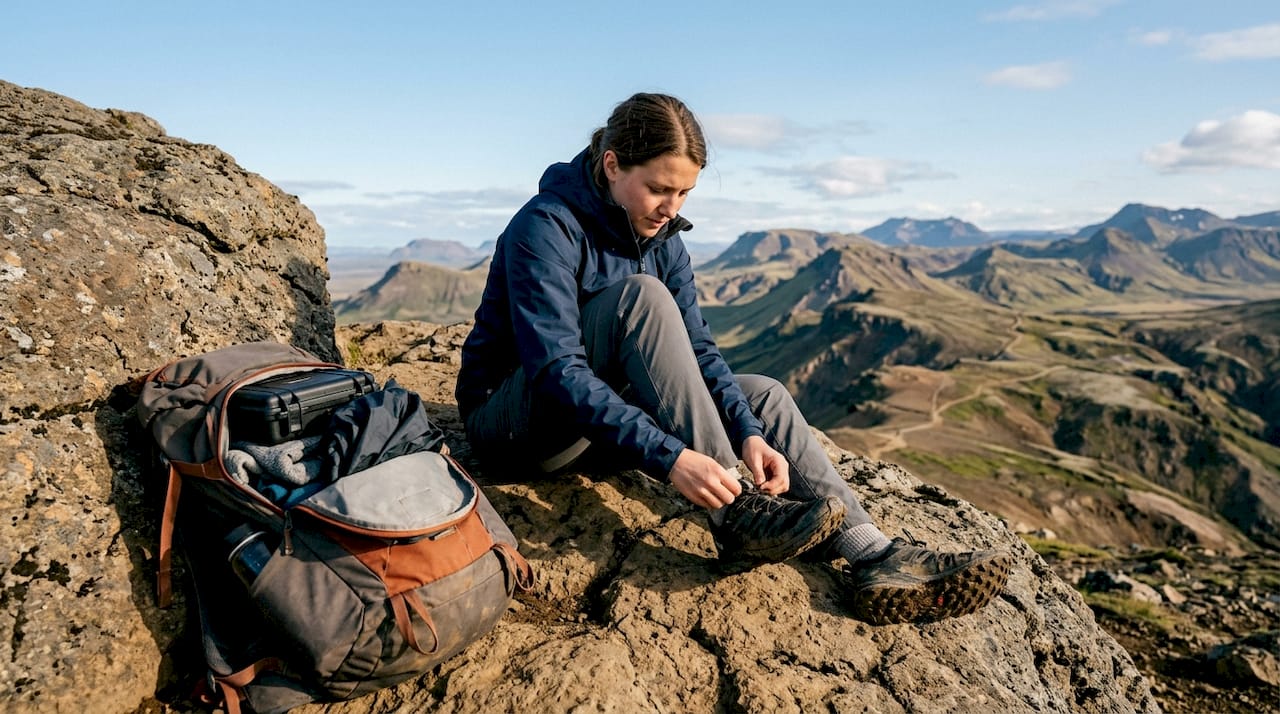
Clothing matters more at waterfalls than on dry trails. Waterfalls create their own microclimates with constant spray and wind, leaving hikers cold and damp even on warm days. A three-layer system works best: a moisture-wicking base layer, an insulating mid layer, and a breathable, water-resistant shell.
Here is a practical packing checklist for a standard waterfall hike:
- Trail runners or water sandals with heel straps
- Moisture-wicking base layer, insulating mid layer, and waterproof shell
- 2–3 liters of water per person for a half-day hike
- Waterproof dry bag or case for your phone, camera, and documents
- High-calorie snacks like nuts, energy bars, or dried fruit
- Sunscreen and insect repellent
- Basic first aid kit with blister treatment and bandages
- Offline maps downloaded to your phone before you lose signal
- Lens cloths and a small microfiber towel for gear and hands
Pro Tip: Pack your electronics in a waterproof case even on a clear day. Waterfall mist and spray soak gear at close range without warning, and a ruined phone or camera is a frustrating way to end a great hike.
For glacier terrain near waterfalls in Iceland, the glacier hiking gear guide from Fox Hostel covers additional layering and footwear specifics worth reviewing before your trip.
3. When and how to find the best waterfall viewing conditions
Timing a waterfall visit correctly separates a trickle from a thundering cascade. The key variable is not local weather. It is what happened upstream across the entire watershed in the last 24–72 hours. Checking watershed precipitation data for the full upstream area gives you a far more accurate picture of current flow than a local forecast alone.
Here is what to look for before you visit:
- Upstream rain or snowmelt: Heavy rain or rapid snowmelt 24–72 hours before your visit can spike water levels dramatically and make trails dangerous
- Seasonal peak flow: Spring snowmelt typically produces the highest and most dramatic flows in temperate and subarctic regions
- Dry season risk: Late summer and fall often bring reduced flow, which can mean less visual impact but safer conditions for swimming areas
- Storm warnings: Any active storm warning upstream is a reason to postpone, even if conditions look calm at the trailhead
- Local trip reports: Recent visitor reports on hiking forums or park websites give real-time ground truth that weather apps cannot
| Condition | What it means for your visit |
|---|---|
| Heavy rain 24–48 hrs upstream | Expect high, fast, and potentially dangerous flow |
| Spring snowmelt active | Peak visual impact, but unstable banks and cold water |
| Dry weather for 1+ week | Lower flow, safer pools, reduced visual drama |
| Active storm warning | Postpone. Flash flood risk is real and fast-moving |
| Recent trip reports available | Cross-check with watershed data for best accuracy |
Reading the waterfall itself also tells you a lot. A roaring sound from the parking lot, brown or silty water, and debris in the pool all signal high, unstable flow. Clear water and a steady sound indicate stable conditions.
4. What are the best waterfall photography techniques?
Great waterfall photography does not require crossing barriers or standing on slippery ledges. The best shots come from stable, safe positions with the right camera settings. A sturdy tripod is non-negotiable. It lets you use slow shutter speeds to create the silky, blurred water effect that defines the genre, without camera shake ruining the image.
For camera settings, a shutter speed between 1/4 and 2 seconds blurs moving water into smooth streaks. A low ISO (100–200) keeps the image clean and noise-free. A narrow aperture (f/8 to f/16) keeps the full scene sharp from foreground rocks to the falls themselves. If you shoot on a smartphone, use a slow-shutter or long-exposure app and brace the phone against a rock or use a small tripod.
- Use a tripod and a remote shutter release or timer to eliminate camera shake
- Shoot in the hour after sunrise or before sunset for warm, directional light
- Overcast days reduce harsh shadows and even out exposure across the scene
- Carry lens cloths in an accessible pocket. Spray hits the lens constantly
- Never step past a barrier or onto a wet ledge for a better angle
Pro Tip: Polarizing filters cut glare off wet rocks and deepen the color of water. They are inexpensive and make a visible difference in waterfall images, especially on bright days.
Responsible photography also means leaving the scene as you found it. Do not move rocks, trample vegetation, or disturb the natural setting for a composition. The top waterfalls guide from Fox Hostel covers specific South Iceland falls with notes on the best safe vantage points.
5. How to respect the environment at waterfall sites
Environmental ethics at waterfalls are not optional. These ecosystems are fragile, and high visitor traffic causes measurable damage to mosses, ferns, and riparian plants that take years to recover. The Leave No Trace principles apply directly: stay on marked trails, pack out all waste, and do not disturb wildlife or vegetation.
Waterfall pools are not swimming pools. Many sites prohibit swimming entirely, and for good reason. Sunscreen, insect repellent, and body oils wash off in the water and harm aquatic life. If swimming is permitted, check local rules first and rinse off before entering.
Noise matters too. Waterfalls attract wildlife, and loud groups disrupt feeding and nesting behavior. Keep group noise low, especially in the early morning hours when wildlife is most active. For a deeper look at how staying close to Iceland’s waterfalls shapes the whole experience, the Fox Hostel guide on staying near Iceland’s waterfalls covers the environmental and logistical side well.
6. How to use navigation tools and plan your route
Getting lost near a waterfall is more dangerous than getting lost on a dry trail. Wet terrain, noise from the falls, and disorienting mist make it easy to lose your bearings. Download offline maps to your phone before you leave cell range. Apps like AllTrails, Gaia GPS, and Maps.me all support offline use and include trail-specific data.
Tell someone your plan before you go. Share your trailhead location, your planned route, and your expected return time. This is not overcaution. It is the single most effective way to ensure a rescue team knows where to look if something goes wrong.
Check the South Coast waterfall guide from Fox Hostel for specific route notes on Iceland’s most visited falls. It covers trail conditions, parking, and access points that are not always clear from general mapping apps.
Key takeaways
Effective waterfall exploration combines pre-trip watershed research, proper gear, strict barrier respect, and environmental awareness to keep every visit safe and rewarding.
| Point | Details |
|---|---|
| Check watershed data first | Review 24–72 hours of upstream precipitation before visiting any waterfall. |
| Gear for wet conditions | Wear aggressive-soled footwear and a three-layer clothing system on every hike. |
| Respect barriers absolutely | Crossing posted barriers causes the majority of fatal waterfall accidents. |
| Time your visit for peak flow | Spring snowmelt delivers the most dramatic flow; dry spells reduce visual impact. |
| Photograph from safe positions | Use a tripod and stay behind barriers. The best angles do not require risky positions. |
What 15 years of waterfall visits actually taught me
The advice that changed how I approach waterfalls was not about gear or camera settings. It was about deciding my risk threshold before I arrived, not after. Setting that threshold in advance sounds obvious, but most people skip it. They show up, see the falls, and start rationalizing. “The water looks okay.” “Other people are doing it.” That mental shift is where accidents begin.
The second thing I learned is that barriers are not there because park managers are overly cautious. They mark the exact spots where the rock is most likely to be wet, sloped, and covered in algae you cannot see until you are already sliding. I have watched confident hikers step past a rope, lose their footing immediately, and only survive because they fell backward onto the trail instead of forward. The margin is that thin.
Photography is where I see the most reckless behavior. Travelers will cross a barrier, stand on a wet ledge, and hold a phone out over a 100-foot drop for a shot that looks identical to one taken from the safe side. The image is not worth it. The best waterfall photographers I know are also the most disciplined about position. They find the safe angle first, then work within it.
The environmental side matters more than most guides admit. Moss and riparian ferns around waterfalls grow slowly. A single shortcut off-trail can leave a visible scar for a decade. Treat the area like a museum floor. Look, photograph, and leave it exactly as you found it.
— Siggi
Iceland’s waterfalls are closer than you think from Fox Hostel
South Iceland holds some of the world’s most accessible and dramatic waterfalls, and Fox Hostel puts you within striking distance of all of them. Located in Hrífunes Nature Park, just 35 minutes east of Vík, Fox Hostel sits midway between the South Coast’s most visited falls and the wilder cascades further east toward Vatnajökull National Park and Jökulsárlón Glacier Lagoon.

Solo travelers can book a single bed in a dorm, while couples and groups can buy out an entire room for full privacy. The on-site pizzeria, fully equipped communal kitchen, and dark skies for Northern Lights viewing make it a practical base for multi-day waterfall itineraries. Book your stay at Fox Hostel and use the South Coast as your starting point for every waterfall on your list.
FAQ
What footwear is best for waterfall hikes?
Trail runners or water sandals with heel straps and aggressive rubber outsoles provide the best grip on wet, moss-covered rocks. Standard sneakers and open-toed sandals without straps are not suitable for waterfall terrain.
How do I know if a waterfall is safe to visit?
Check precipitation data for the entire upstream watershed for the past 24–72 hours. High recent rainfall, active storm warnings, or rapid snowmelt all signal elevated water levels and unstable conditions.
Is it safe to swim under a waterfall?
Swimming directly below falls taller than 15 feet is dangerous due to hidden hydraulic currents that can trap swimmers underwater. Always check local rules and conditions before entering any waterfall pool.
What is the best time of year to see waterfalls at peak flow?
Spring snowmelt produces the highest and most dramatic flow at most waterfalls in temperate and subarctic regions, including Iceland’s South Coast. Late summer and fall typically bring lower, calmer flow.
How do I protect my camera near a waterfall?
Carry your camera and phone in a waterproof case or dry bag at all times near a waterfall. Mist and spray reach gear even at distances that feel safe, and damage happens faster than most travelers expect.
Recommended
- Top Waterfalls to Visit: 10 Spectacular Picks | Fox Hostel – South Iceland
- How to Visit South Coast Waterfalls in Iceland | Fox Hostel – South Iceland
- Cómo explorar atracciones desde Vík con éxito | Fox Hostel – South Iceland
- How to Discover Scenic Spots Near Vík, Iceland | Fox Hostel – South Iceland