What Is Group Accommodation? A Traveler's Guide
What Is Group Accommodation? A Traveler’s Guide

TL;DR:
- Group accommodation involves booking lodging for multiple travelers under a single agreement, either as hotel room blocks or exclusive-use properties. Understanding these models influences cost, privacy, and trip experience, with exclusive rentals offering full control and privacy for groups. Properly negotiating contract terms and selecting appropriate property types ensure a smoother, more flexible group travel experience.
Group accommodation is lodging booked for multiple travelers under one agreement, either as reserved room blocks in a hotel or as an exclusive-use property where the entire space belongs to your group. The industry term for this is “group lodging,” and it covers everything from a block of hotel rooms for a family reunion to a private Icelandic farmhouse rented for a week by a group of friends. Understanding the difference between these two core models determines your cost, privacy, and overall experience before you book a single night.
What is group accommodation and how does it work?
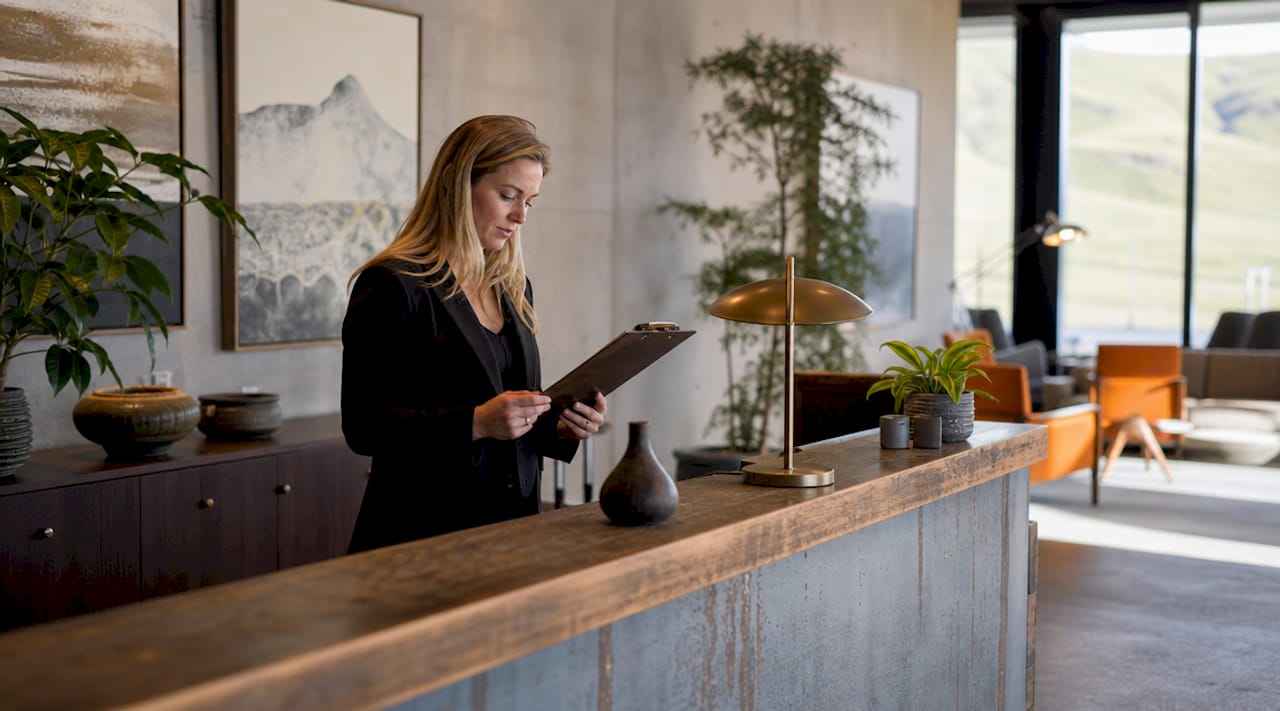
Group accommodation means lodging arranged for travelers staying together under one organizer or booking contract. That contract takes two primary forms: a room block within a larger property, or an exclusive-use rental where no other guests share the space. Both models serve groups, but they deliver very different experiences in practice.
A room block reserves a set number of rooms at a negotiated rate within a hotel or hostel. Individual travelers in your group may still check in separately, but the rooms are held under one group agreement with a single point of contact. An exclusive-use rental goes further: your group books the entire property, from the kitchen to the common areas, with no other guests present during your stay. Properties like Coruisk House on the Isle of Skye operate this way, offering private meals and full estate access to one group at a time.
The confusion between these two models is the most common mistake group travelers make. A room block in a hotel still means sharing a lobby, restaurant, and pool with strangers. An exclusive-use rental means your group owns the atmosphere entirely. Knowing which model you are booking changes everything about how you plan the trip.
What are the common types of group accommodation?
Group travel accommodation breaks down into three main property types, each suited to different group sizes, budgets, and privacy needs.
| Type | Privacy level | Typical group size | Cost profile |
|---|---|---|---|
| Hotel room block | Low to medium | 10 to 100+ | Per-room negotiated rate |
| Exclusive-use estate or hostel | High | 10 to 50 | Flat property fee |
| Large cottage or vacation rental | High | 6 to 20 | Per-night property rate |
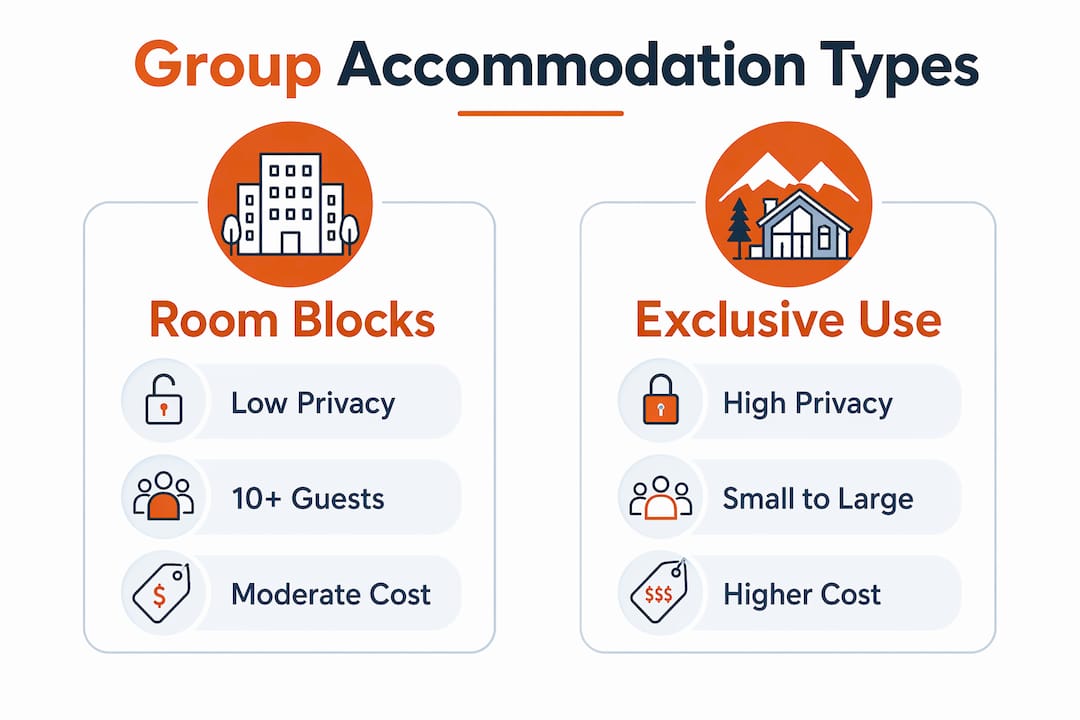
Hotel room blocks work best for conferences, weddings, or large family gatherings where guests travel from different locations. The hotel manages logistics, billing is centralized, and negotiated rates with contract terms like release dates and attrition penalties keep costs predictable. The tradeoff is that your group shares the property with other hotel guests throughout the stay.
Exclusive-use properties are the premium end of shared lodging options. You pay to lock out the world. This model suits milestone celebrations, corporate retreats, or any group that wants uninterrupted time together. The cost is higher per night, but the per-person math often surprises travelers. Splitting a property fee across 20 people can undercut a hotel room block significantly.
Large cottages and vacation rentals sit between these two extremes. They offer private shared spaces without the full-property price tag of an estate. For groups of 6 to 16 people, a well-chosen cottage in a scenic location delivers the social atmosphere of exclusive use at a fraction of the cost.
Pro Tip: When comparing property types, calculate cost per person per night rather than total property cost. A flat-fee exclusive rental that looks expensive often beats a hotel room block once you divide it across your full group.
How does group accommodation work in practice for travelers?
The booking workflow differs significantly depending on which model you choose. For hotel room blocks, the organizer negotiates directly with the property to reserve a set number of rooms. The hotel assigns a group code, and individual travelers use that code to book their own rooms within the block. Cut-off dates, attrition clauses, and billing arrangements are the three contract terms that determine whether this process stays smooth or becomes a headache.
A cut-off date is the deadline by which group members must book their rooms. After that date, unreserved rooms return to general inventory. An attrition clause holds the organizer financially responsible if the group fails to fill a minimum percentage of the reserved block. These terms exist to protect the property, but they create real financial risk for the organizer if group members are slow to commit.
For exclusive-use rentals, the workflow is simpler but the stakes are higher. One contract, one payment, one group. Minimum night requirements and exclusive-use boundaries vary widely between properties. Some define “exclusive use” as the guest rooms only, while others include dining rooms, kitchens, and outdoor spaces. Always confirm in writing exactly what your group controls during the stay.
Here are the most important steps to follow before signing any group accommodation contract:
- Confirm the exact number of rooms or beds your group needs before negotiating
- Ask for a written definition of what “exclusive use” includes if booking a private property
- Request flexibility clauses that allow you to reduce room numbers without full attrition penalties
- Set an internal booking deadline two weeks before the property’s cut-off date
- Clarify whether the property handles group billing centrally or requires individual payments
Pro Tip: Contract mechanics in group bookings often matter more than the nightly rate. A lower-cost property with rigid attrition penalties can cost more than a pricier option with flexible cancellation terms.
What are the benefits and challenges of group stays for families and friends?
Group accommodation delivers advantages that individual hotel bookings simply cannot replicate. The financial case is straightforward: groups often secure 20 to 30% savings through negotiated rates, and those savings compound when you factor in shared kitchen access that reduces restaurant spending. Beyond cost, the social dimension of staying together rather than in separate rooms across a city changes the quality of the trip entirely.
Key benefits of group travel accommodation include:
- Cost savings through negotiated rates and shared expenses like groceries and transportation
- Shared experiences that strengthen relationships, from communal dinners to spontaneous late-night conversations
- Simplified logistics because everyone sleeps in the same place, which eliminates coordination chaos each morning
- Exclusive amenities in private rentals, including full kitchens, outdoor spaces, and dining rooms your group controls
The challenges are real, though, and ignoring them leads to the most common group travel disasters.
- Preference mismatches are the biggest source of conflict. Some travelers want early mornings and long hikes; others want late nights and slow mornings. A shared property forces these preferences into the same space.
- Privacy deficits affect some travelers more than others. Introverts in particular need quiet time, and a shared property with 15 people offers little of it without deliberate planning.
- Logistical complexity grows with group size. Coordinating check-in times, dietary needs, and activity preferences for 20 people requires a designated organizer with real authority to make decisions.
- Financial disputes arise when costs are not agreed upon before booking. Establish a shared budget and payment method before anyone signs a contract.
Iceland adds a specific layer of planning complexity. Properties in South Iceland near Reynisfjara Black Sand Beach and Dyrhólaey fill up months in advance, particularly during summer and the Northern Lights season. Matching property size to group size is the core principle that prevents both overpaying and discomfort, and in Iceland, the options that fit groups of 10 to 20 people book out faster than any other category.
How to choose the right group accommodation for your trip to Iceland
Selecting the right property starts with three fixed variables: group size, trip purpose, and budget per person. Everything else follows from those three decisions.
Medium properties suit groups of 10 to 20 guests, while larger estates or multi-room hostels handle 30 to 40 people more comfortably. In Iceland, the Ring Road corridor between Vík and Kirkjubæjarklaustur concentrates some of the best large group housing options in the country, with direct access to Vatnajökull National Park and Jökulsárlón Glacier Lagoon for day trips.
Use this checklist when evaluating any group property in Iceland:
- Sleeping capacity: Does the property sleep your full group without anyone on a sofa?
- Kitchen access: A fully equipped communal kitchen cuts food costs dramatically on multi-night stays
- Common areas: Shared living space is what separates a genuine group experience from parallel solo trips
- Location relative to activities: Properties within 30 to 45 minutes of major South Coast attractions save hours of daily driving
- Booking flexibility: Can you adjust numbers without penalty if someone drops out?
- Amenities for downtime: Look for properties with dining options, outdoor spaces, or social areas for evenings
For groups traveling Iceland’s South Coast, the choice between a hotel room block in Reykjavík and a private property near Vík is not just a cost decision. It is a decision about what kind of trip you want. A property in the countryside puts you closer to the landscapes you came to see, and it keeps your group together in the evenings when the Northern Lights appear without warning.
You can also explore exclusive-use rental platforms that specialize in booking entire hostels or small hotels for one group, which gives you the social infrastructure of a hostel with the privacy of a private rental.
Key takeaways
Group accommodation is most effective when the booking model, property size, and contract terms are matched deliberately to your group’s size and travel goals.
| Point | Details |
|---|---|
| Two core booking models | Room blocks and exclusive-use rentals serve different privacy and logistics needs. |
| Contract terms determine risk | Cut-off dates and attrition clauses create financial exposure; negotiate flexibility before signing. |
| Cost savings are real | Groups can save 20 to 30% through negotiated rates compared to individual bookings. |
| Size matching matters | Medium properties work best for 10 to 20 guests; larger estates suit 30 to 40 people. |
| Iceland requires early booking | South Coast properties near Vík and Reynisfjara fill months ahead of peak season. |
Why the booking model matters more than the property itself
I have watched groups spend weeks comparing properties on photos and amenities, then sign a contract without reading the attrition clause. That is where trips go wrong. The property is the backdrop. The contract is the trip.
The most underrated move in group travel is booking a property that handles communal life well, meaning a real kitchen, a shared dining space, and enough common area that people can gather without crowding. In Iceland specifically, this matters more than almost anywhere else I know. You are not going to spend your evenings in a restaurant. You are going to be inside watching the sky, cooking together, and talking about what you saw that day. The property needs to support that.
My honest advice: stop optimizing for the lowest nightly rate and start optimizing for the flexibility clause. A property that lets you drop two rooms without penalty two weeks out is worth more than a cheaper property that locks you into every bed you reserved. Groups change. People drop out. Life happens. The contract that accounts for that reality is the one that saves your trip.
For groups heading to South Iceland, I always recommend looking at room types designed for groups before committing to a booking model. The right room configuration changes the entire social dynamic of the stay.
— Trygve
Fox Hostel: group-friendly lodging on Iceland’s South Coast
Fox Hostel sits in Hrífunes Nature Park, 35 minutes east of Vík, inside a converted traditional Icelandic barn. For groups traveling the Ring Road, it offers something most South Coast properties do not: genuine flexibility. Families or friend groups can book entire rooms for complete privacy, while the hostel’s communal kitchen, on-site pizzeria, and shared spaces give everyone a place to gather after a day at Reynisfjara Black Sand Beach or Dyrhólaey.
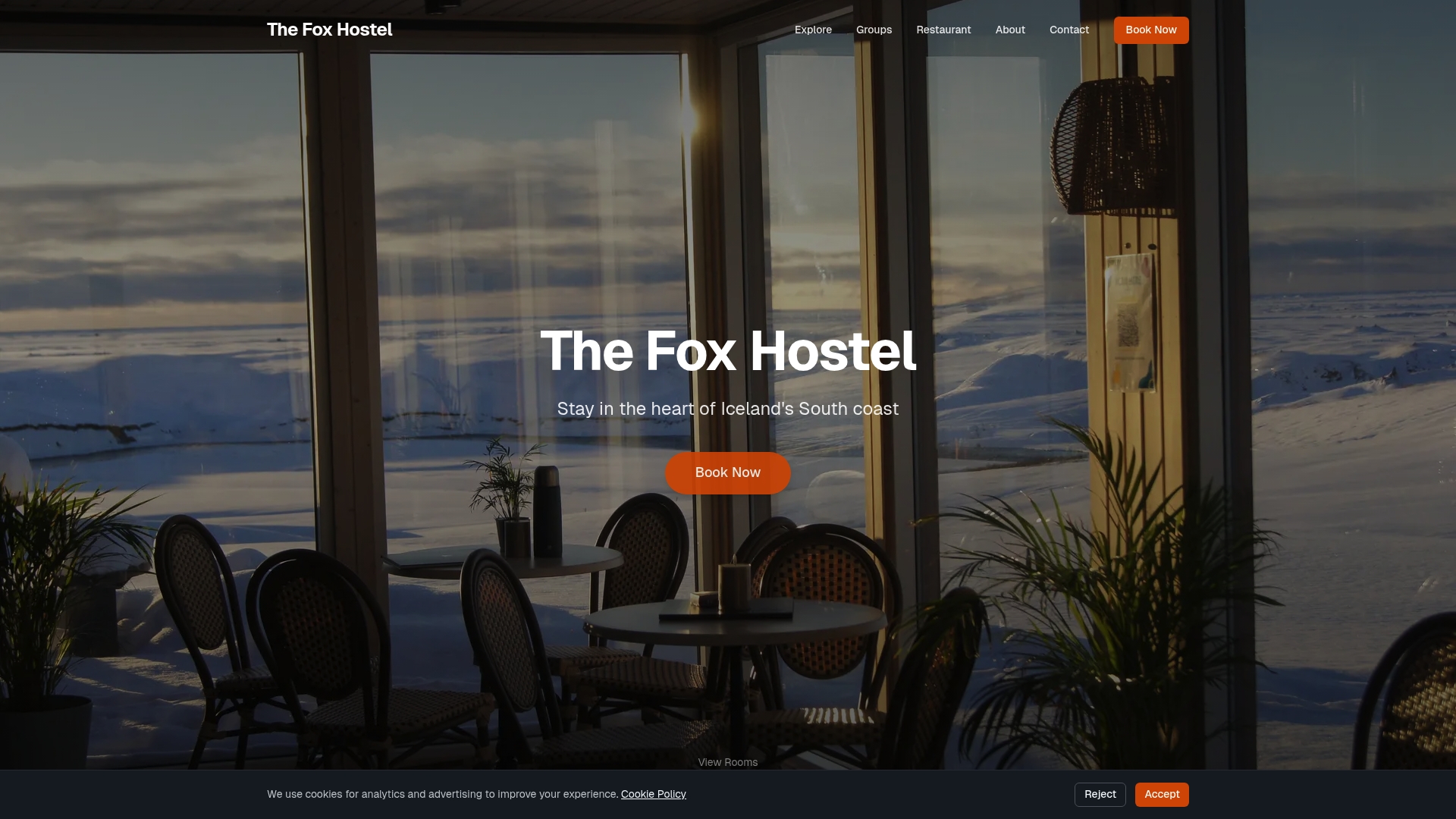
The location puts Vatnajökull National Park and Jökulsárlón Glacier Lagoon within reach for day trips east, and the dark skies above Hrífunes Nature Park make Fox Hostel one of the best places on the South Coast to watch the Northern Lights. For groups that want affordable, social, and well-located lodging in Iceland, Fox Hostel is the practical choice. Check availability and plan your group stay directly through the site.
FAQ
What is group accommodation in simple terms?
Group accommodation is lodging booked for multiple travelers under one agreement, either as reserved rooms within a hotel or as an entire property rented exclusively for the group. The two main models are hotel room blocks and exclusive-use rentals.
How many people do you need for group accommodation?
Most properties define a group as six or more travelers, though hotel room blocks typically require a minimum of 10 rooms to qualify for negotiated group rates. Smaller groups of 4 to 8 people often find better value in large vacation rentals than in formal group booking contracts.
What is the difference between a room block and exclusive use?
A room block reserves rooms within a larger property where other guests are also staying, while exclusive use means your group books the entire property with no other guests present. Exclusive-use rentals provide full control of shared spaces; room blocks do not.
Is group accommodation cheaper than booking individually?
Groups that book through formal room blocks or exclusive-use contracts typically save 20 to 30% compared to individual bookings at the same property. The savings increase further when groups use shared kitchens to reduce dining costs over multi-night stays.
How far in advance should you book group accommodation in Iceland?
Properties near Vík, Reynisfjara Black Sand Beach, and the South Coast corridor book out 3 to 6 months in advance during peak summer and Northern Lights seasons. Groups of 10 or more should begin the booking process at least 4 months before their travel dates to secure both availability and negotiated rates.
Recommended
- Gruppenunterkunft buchen: Schritt-für-Schritt Anleitung 2026 | Fox Hostel – South Iceland
- Group accommodation booking workflow for Iceland adventure groups | Fox Hostel – South Iceland
- Hébergement pour groupes en Islande : guide et conseils | Fox Hostel – South Iceland
- Discover the best room types for groups in Iceland | Fox Hostel – South Iceland