What Is Icelandic Farmhouse Living? A Real Look
What Is Icelandic Farmhouse Living? A Real Look
TL;DR:
- Icelandic farmhouse living has endured for over a thousand years, emphasizing sustainability, community, and adaptation to the environment. Traditional turf houses exemplify innovative, resource-efficient architecture, with communal spaces like the baðstofa fostering social cohesion and survival. Modern preservation efforts and farm stays allow visitors to experience this resilient lifestyle rooted in natural harmony and purposeful design.
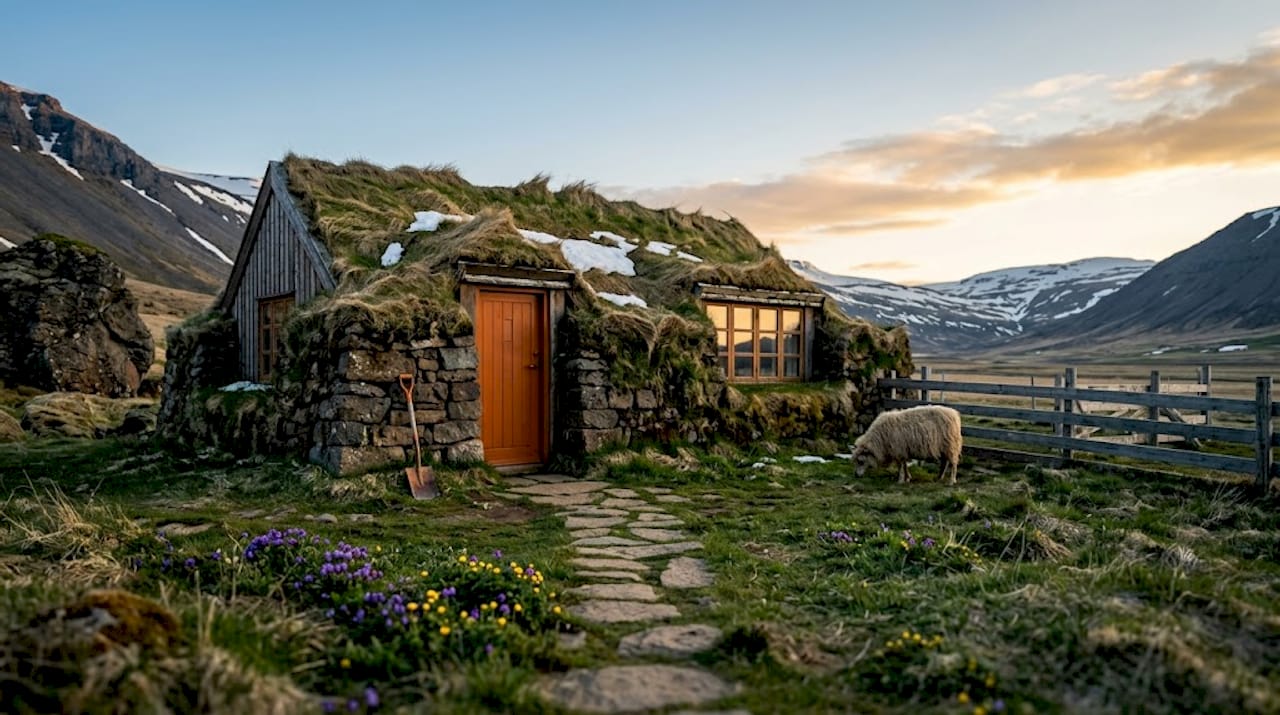
Most people picture Iceland as geysers, glaciers, and sleek Reykjavík design studios. What is Icelandic farmhouse living rarely enters the conversation, yet for over a thousand years it defined how Icelanders survived, organized families, and built a culture tough enough to outlast volcanic winters. These weren’t charming countryside retreats. They were precision-engineered shelters, communal survival systems, and early experiments in sustainable architecture that modern green builders are only beginning to catch up to.
Table of Contents
- Key takeaways
- Turf houses: history and architecture of Icelandic farmhouses
- Life inside: community, warmth, and the baðstofa
- Sustainability and the natural world in Icelandic farmhouse living
- Modern Icelandic farmhouse living today
- My perspective on what Icelandic farmhouse living really teaches
- Experience Icelandic farmhouse culture at Fox Hostel
- FAQ
Key takeaways
| Point | Details |
|---|---|
| Ancient sustainable design | Turf houses provided natural insulation for over 1,000 years before “sustainability” became a trend. |
| Communal life was intentional | The heated baðstofa served as sleeping, working, and social space to conserve warmth and build community. |
| Architecture reflected society | Room types like parlors and bridal chambers embedded social hierarchy directly into the home’s structure. |
| Geothermal energy extends tradition | Modern Icelandic farms use geothermal heat for year-round food production, continuing an eco-conscious legacy. |
| Farmhouse culture lives on | Preserved museums, working farm stays, and rural hostels let you experience this lifestyle firsthand today. |
Turf houses: history and architecture of Icelandic farmhouses
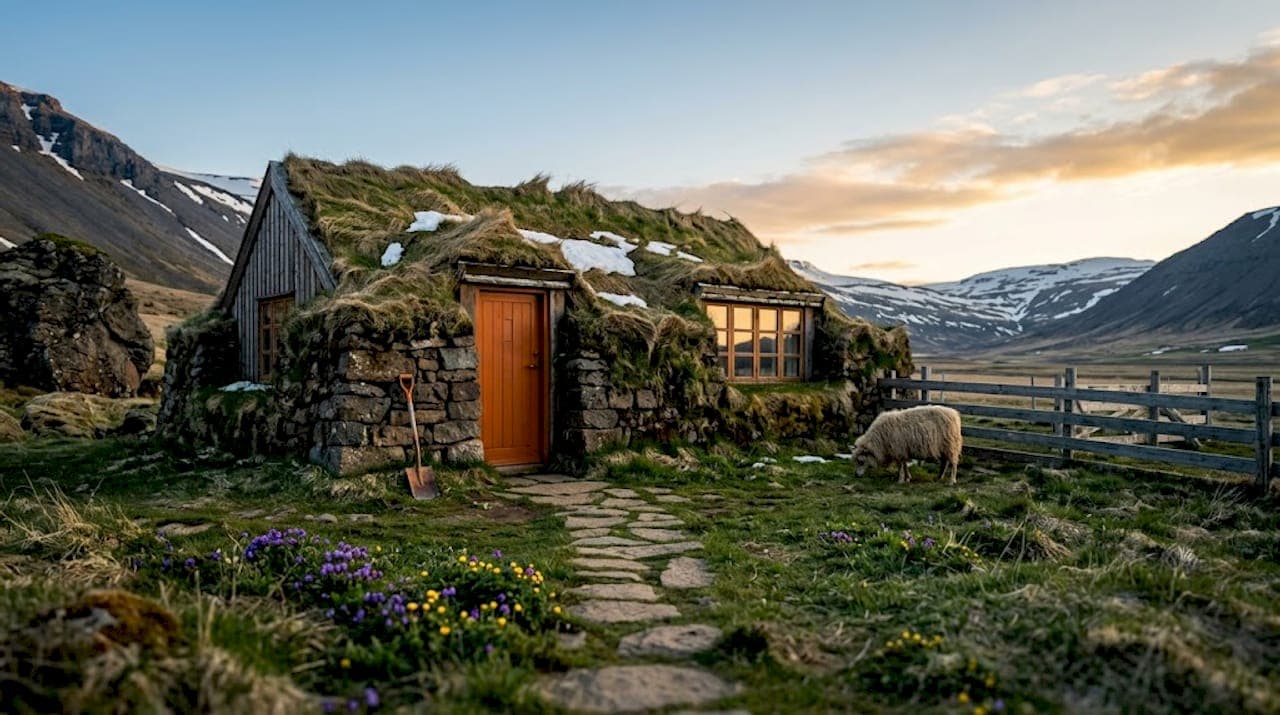
When Norse settlers arrived in Iceland around 874 AD, they faced an immediate and serious problem. The island had almost no timber. Stone was abundant but cold and difficult to work in large quantities. Their solution was the turf house, a structure built from layered blocks of earth, volcanic stone foundations, and minimal timber framing, designed to use the land itself as protection against the land’s own extremes.
The construction method was more sophisticated than it looks. Builders used herringbone layering and long turf strips for weatherproofing, combining ancient masonry techniques with local material innovation. The result was walls with extraordinary hygroscopic qualities, meaning they absorbed and released moisture in ways that stabilized interior conditions without mechanical systems. Stone and timber walls simply couldn’t match this.
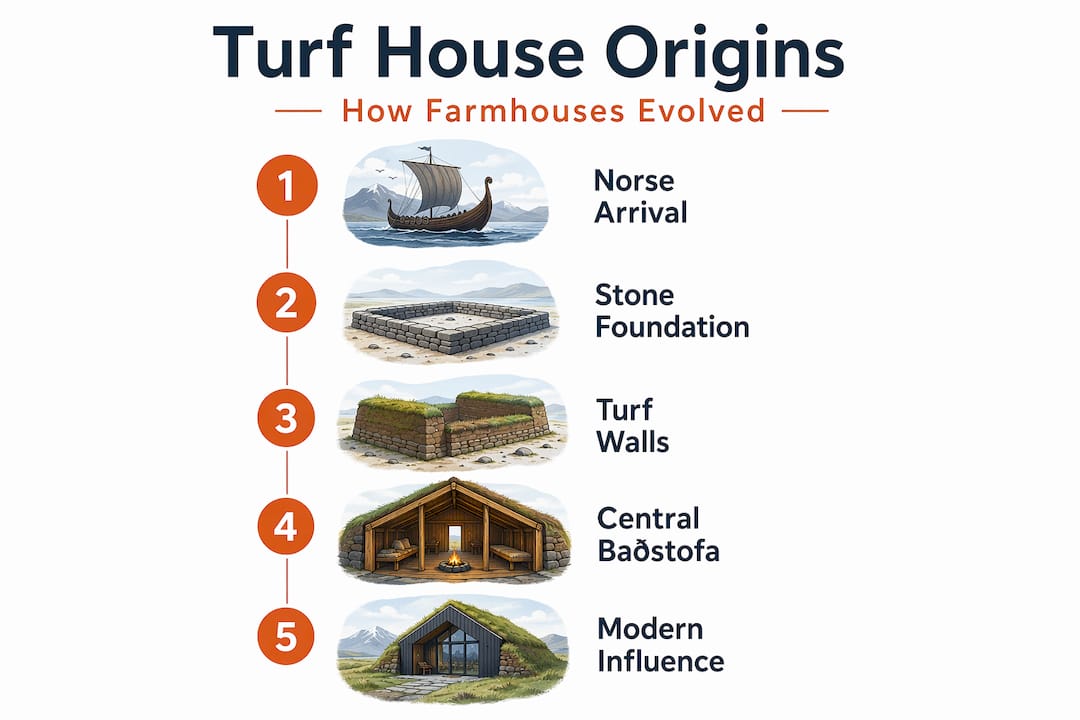
Early farmhouses were longhouses, single-room structures shared by humans and livestock. Over the following centuries, as communities grew more established, farmstead layouts evolved into interconnected clusters of separate buildings, each with a dedicated function. Glaumbær in northern Iceland preserves this evolved form beautifully. Its 13 connected buildings include a living quarters, storage rooms, a guest room, and a bridal chamber, illustrating how farmhouse architecture in Iceland grew to express both practical survival needs and social customs.
| Feature | Traditional turf house | Modern timber or concrete structure |
|---|---|---|
| Insulation source | Layered turf and earth | Manufactured insulation materials |
| Building materials | Turf, volcanic stone, minimal timber | Concrete, steel, synthetic materials |
| Climate adaptation | Designed for sub-Arctic cold and wind | Requires energy-intensive heating systems |
| Environmental footprint | Extremely low, locally sourced | High production and transport emissions |
| Maintenance requirement | Regular turf upkeep and repair | Periodic but less labor-intensive |
Pro Tip: If you want to understand Icelandic farmhouse style at its most intact, visit Glaumbær before any other site in Iceland. The preserved complex gives you a floor-level sense of scale and spatial logic that photos simply cannot convey.
Life inside: community, warmth, and the baðstofa
The interior of a traditional Icelandic farmhouse was nothing like a modern home. Space was small by design. Less room meant less heat to maintain, and in an Icelandic winter, that calculus was everything. Entire extended families shared wooden sleeping bunks with sides that trapped body warmth like insulating shells.
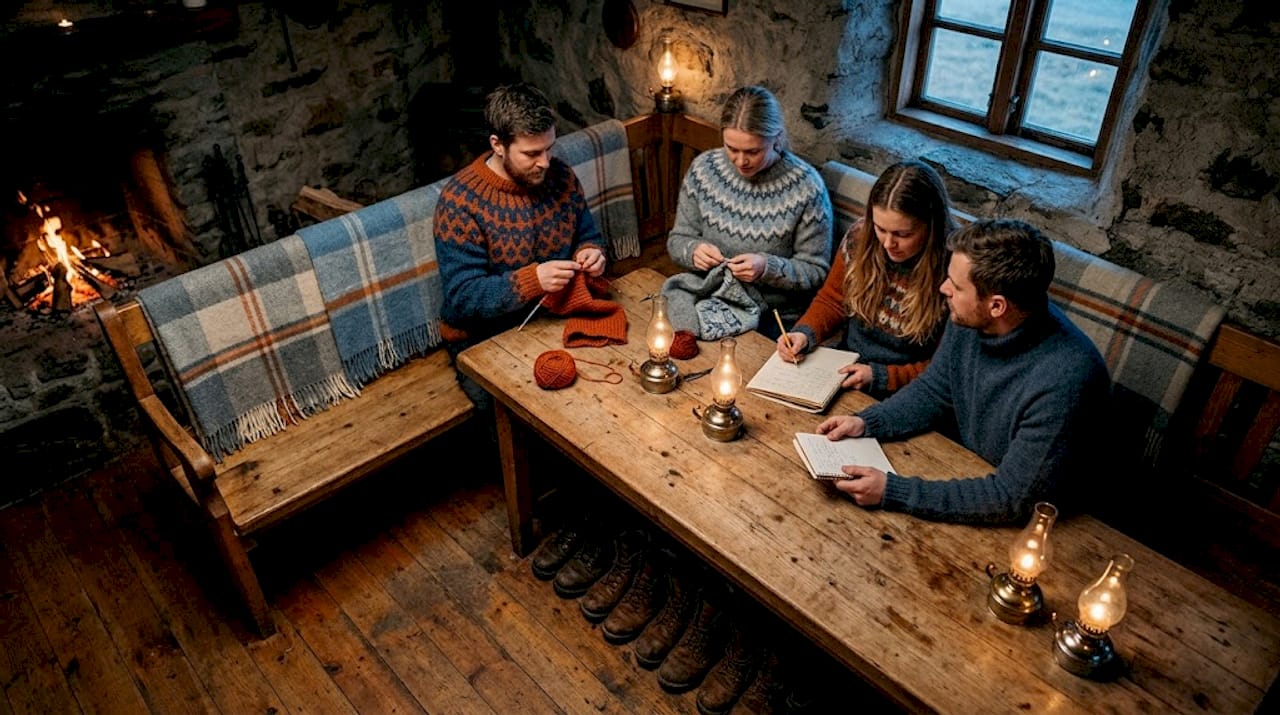
The architectural and social center of the home was the baðstofa, the communal heated room where the household lived, worked, and slept. It wasn’t a luxury. It was the warmest room in the building, and keeping everyone in one space meant fewer fires to maintain and more shared body heat.
Life in the baðstofa structured the day around collective activity:
- Evening storytelling and saga reading filled the hours after dark, keeping oral literature alive through generations
- Textile work including spinning, weaving, and knitting happened in the baðstofa, often by firelight
- Food preparation and preservation were shared tasks, with the farmstead functioning as a self-sufficient economic unit
- Sleeping arrangements in wooden bunks were organized by family hierarchy, with the household head and spouse near the warmest position
Beyond practical function, the room types told a social story. Parlors hosted visitors and marked a family’s standing. Bridal chambers signaled ceremonial life. The architecture didn’t just house people. It organized them.
Pro Tip: When reading about the baðstofa, think less “cozy rustic living” and more “deliberate engineering.” Every spatial choice was a survival calculation with cultural consequences layered on top.
Sustainability and the natural world in Icelandic farmhouse living
The advantages of farmhouse living in Iceland were never separate from the environment. They came directly from it. Turf houses are recognized as models of sustainable architecture, built from materials pulled from the surrounding land and designed to work with Iceland’s climate rather than fight it.
“Turf walls create cavity and skin constructions mimicking masonry but with superior hygroscopic qualities — they breathe, adapt, and insulate in ways no manufactured material fully replicates.”
What made this system genuinely sustainable wasn’t just the materials. It was the whole integrated approach to land use:
- Farmsteads followed seasonal rhythms including sheep roundups and horse-related activities that dictated daily life and diet, keeping communities tied to what the land could actually support
- Reuse and repurposing of building materials was standard practice. Turf from an older, decayed section of wall became fill for a new section
- Geothermal energy has been harnessed for generations. Today, farms like Friðheimar use greenhouse growing with geothermal heat to grow tomatoes year-round despite months of limited daylight, a direct continuation of that resource-smart tradition
- Land stewardship was built into the farming calendar. Overgrazing was a known threat, and managing the land for long-term productivity was understood as non-negotiable
The Icelandic rural lifestyle didn’t romanticize nature. It depended on it too directly for that. Modern sustainable living advocates talk about reducing their footprint. Icelandic farmers reduced theirs because the alternative was not surviving the winter. That’s a different and considerably more serious kind of commitment.
You can explore how these principles connect to sustainable travel in Iceland and what they mean for visitors who want their trips to mean something beyond sightseeing.
Modern Icelandic farmhouse living today
Living in Icelandic farmhouses today looks very different from the turf house era, but the cultural thread is unbroken. The tradition has adapted through preservation, tourism, and a quiet rural hospitality movement that values authenticity over Instagram polish.
Here’s how that tradition shows up in contemporary Iceland:
- Turf house museums and heritage sites like Glaumbær draw thousands of visitors each year. Sustained preservation efforts use traditional materials and techniques, maintaining historical accuracy even as turf naturally decays and requires regular replacement.
- Renovation with the house-within-a-house method solves a common problem in restoring historic structures. Builders insert modern insulated timber structures inside original stone or concrete shells, preserving the outer appearance while meeting contemporary safety and comfort standards.
- Work-exchange programs on working farms let visitors participate directly in seasonal farm life. These programs cover sheep roundups, horse riding, and land management in exchange for room and board, offering a genuine immersion in the Icelandic rural lifestyle that no guided tour can replicate.
- Rural guesthouses and converted barns bring farmhouse character into a hospitality format. These spaces often sit on or near working land, combining traditional architectural features with the comforts modern travelers expect.
- Slow travel culture has made farmhouse stays increasingly appealing to visitors who want to understand Iceland beyond its headline attractions. The rhythm of farm life, early mornings, big skies, and honest meals, offers a reset that travelers returning from glacier tours or whale-watching trips consistently describe as the most memorable part of their trip.
The appeal isn’t nostalgia. It’s the recognition that what is farmhouse living, at its core, is a way of organizing life around what actually matters: warmth, community, food, and connection to place.
My perspective on what Icelandic farmhouse living really teaches
I’ve read a lot of writing about Iceland that treats turf houses as picturesque artifacts, nice to photograph and explain in three sentences before moving on to waterfalls. That framing misses something I find genuinely important.
What strikes me most about Icelandic farmhouse living is not the architecture. It’s the decision-making logic embedded in every choice. When builders used turf instead of imported timber, they weren’t making a stylistic call. They were solving a resource problem with what was underfoot. When families crowded into a single heated baðstofa instead of spreading through separate rooms, they weren’t being primitive. They were being efficient in a way that most modern households, with their separately heated rooms and single-occupant spaces, cannot claim to be.
The social intelligence recorded in turf houses is what I keep coming back to. These structures hold a materially grounded record of everyday life that complements written history, showing how social hierarchy, domestic organization, and community survival were literally built into the walls. That’s not folklore. That’s applied anthropology you can walk through.
For anyone drawn to rustic lifestyles or sustainable living, I’d push you to spend less time reading about farmhouse aesthetics and more time thinking about the decision logic behind them. The specific lesson isn’t “build with turf.” It’s “work with what your environment offers, reduce what you need to import, and organize your household around shared function.” That principle translates directly into how you think about rural stays in Iceland and what you choose to take home from them.
— Trygve
Experience Icelandic farmhouse culture at Fox Hostel
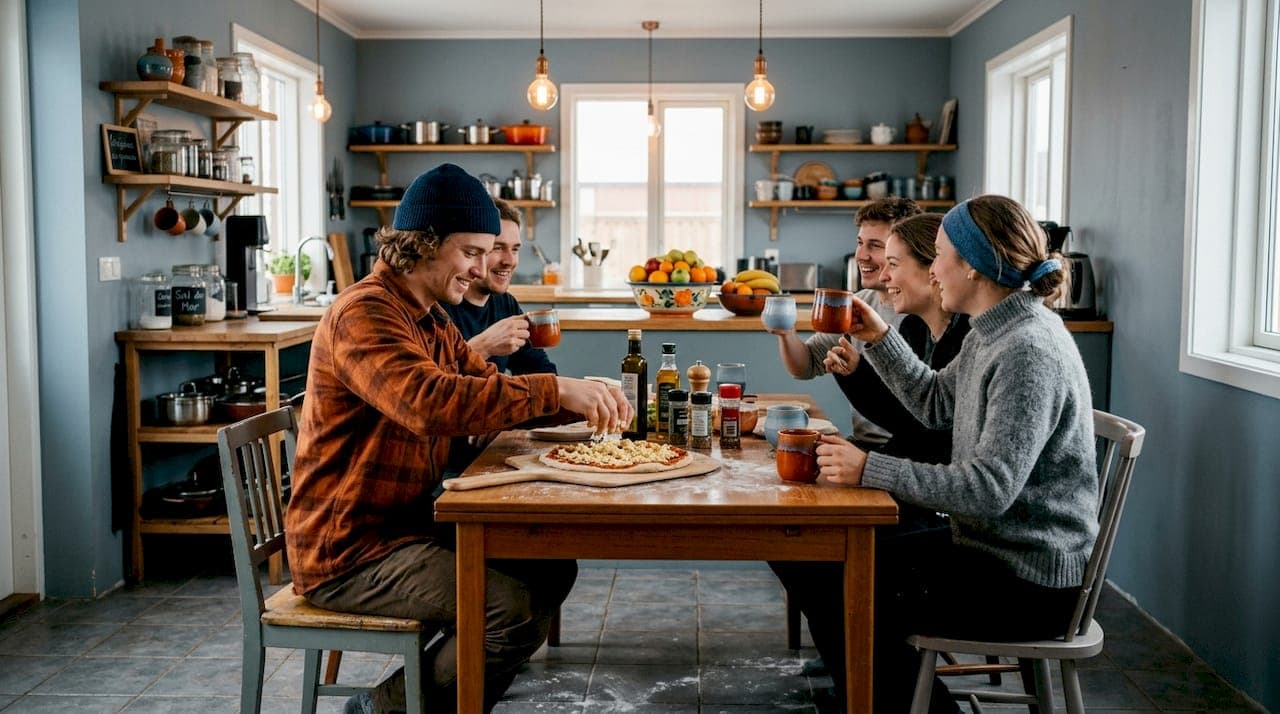
Fox Hostel sits inside a converted traditional Icelandic barn in Hrífunes Nature Park, just 35 minutes east of Vík. That’s not a design choice made for atmosphere. It’s the closest most travelers will get to genuinely living inside Icelandic farmhouse architecture while still having a real bed and a communal kitchen that actually works. The social setup, shared spaces, communal meals, and dark skies overhead, mirrors the spirit of what traditional Icelandic farmhouse living was built around: people sharing resources and making the most of where they are. Solo travelers can book a single bed; groups and couples can take a full room. Book your stay and experience South Iceland’s rural character from a place that earns it.
FAQ
What is Icelandic farmhouse living?
Icelandic farmhouse living refers to the traditional rural lifestyle built around turf farmsteads, communal household organization, and deep dependence on the natural environment. It developed over 1,000 years and shaped Icelandic culture, architecture, and social structure.
What were Icelandic turf houses made from?
Icelandic turf houses were built from layered turf blocks, volcanic stone foundations, and minimal timber frames, using locally available materials to create structures with exceptional natural insulation suited to Iceland’s harsh climate.
What was the baðstofa in an Icelandic farmhouse?
The baðstofa was the central heated room in a traditional Icelandic farmhouse, serving simultaneously as the living room, sleeping quarters, and workspace. It was the warmest area of the home and the social hub of daily life.
Can you still experience Icelandic farmhouse living today?
Yes. Options include visiting preserved sites like Glaumbær, participating in work-exchange programs on active farms, staying at rural guesthouses in converted farmsteads, and booking accommodation at places like Fox Hostel in South Iceland.
How is Icelandic farmhouse architecture sustainable?
Turf houses use entirely local materials, require no manufactured insulation, and work with Iceland’s climate rather than against it. Combined with geothermal energy use and seasonal land stewardship, they represent one of the oldest examples of genuinely sustainable residential design anywhere in the world.
Recommended
- Scopri l’autenticità rurale islandese: guida alle vere esperienze | Fox Hostel – South Iceland
- Discover the best room types for groups in Iceland | Fox Hostel – South Iceland
- What is a self-service hostel? Iceland’s smart budget stay | Fox Hostel – South Iceland
- Vivez une expérience immersive à la campagne islandaise | Fox Hostel – South Iceland