Why Book Iceland in Advance? Save Money and Stress
Why Book Iceland in Advance? Save Money and Stress
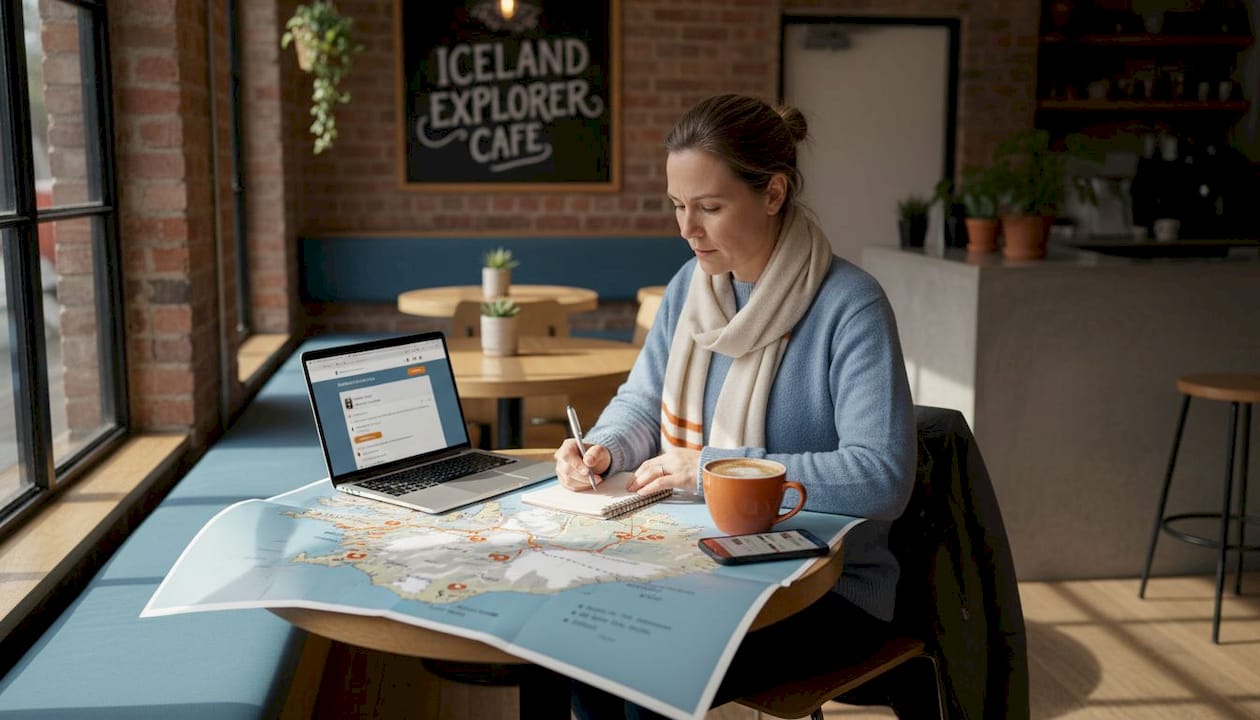
TL;DR:
- Iceland’s limited accommodation capacity and high summer demand make early booking essential to secure preferred locations and better prices. Booking months in advance ensures availability, reduces costs, and allows proper planning of activities and tours aligned with your lodging. Last-minute reservations often result in higher prices, fewer choices, and increased logistical challenges, especially during peak season and in rural areas.
Most travelers picture Iceland as a wild, open country where spontaneous road trips are the norm. That picture is partly true. But when it comes to accommodation, Iceland’s market is surprisingly tight. Peak summer demand is high enough that booking months ahead is not just smart, it’s often the only way to secure the location you want at a price that makes sense. What follows is a practical breakdown of why advance booking changes everything for solo adventurers and small groups heading to Iceland.
Table of Contents
- The reality of Iceland’s high lodging demand
- Why advance booking means better prices and choices
- How advance booking supports activity planning
- Solo travelers and small groups: unique benefits to booking early
- Exceptions and edge cases: when last-minute works (and when it doesn’t)
- Perspective: why smart travelers in Iceland always plan around their beds
- Secure your best Iceland stay now
- Frequently asked questions
Key Takeaways
| Point | Details |
|---|---|
| Peak season fills fast | Rooms in top locations sell out months ahead during Iceland’s summer. |
| Early booking saves money | Planning ahead helps travelers avoid price spikes and get better choices. |
| Base plans on lodging | Secure your lodging first to streamline tour bookings and activity pickups. |
| Safety for solo travelers | Advance reservations let solo travelers stay in central, safe, and social accommodations. |
| Last-minute rarely works | Flexibility is limited—most rural and peak period options need to be booked in advance. |
The reality of Iceland’s high lodging demand
Understanding the risks of last-minute travel requires digging into Iceland’s actual lodging supply and demand. Iceland attracted over two million visitors per year before the pandemic, yet the country’s total accommodation capacity remains modest compared to most European destinations. Outside Reykjavik, the Ring Road corridor offers clusters of guesthouses, hostels, and farm stays, with large stretches of nothing in between. That imbalance creates real bottlenecks.
Hotel occupancy in Iceland has reached historically high levels, with a recorded all-time high in July 2016, illustrating just how compressed the summer market can get. During peak months of June, July, and August, many South Coast properties run at or near full capacity for weeks on end. The math is simple: more tourists arriving, fewer beds available.
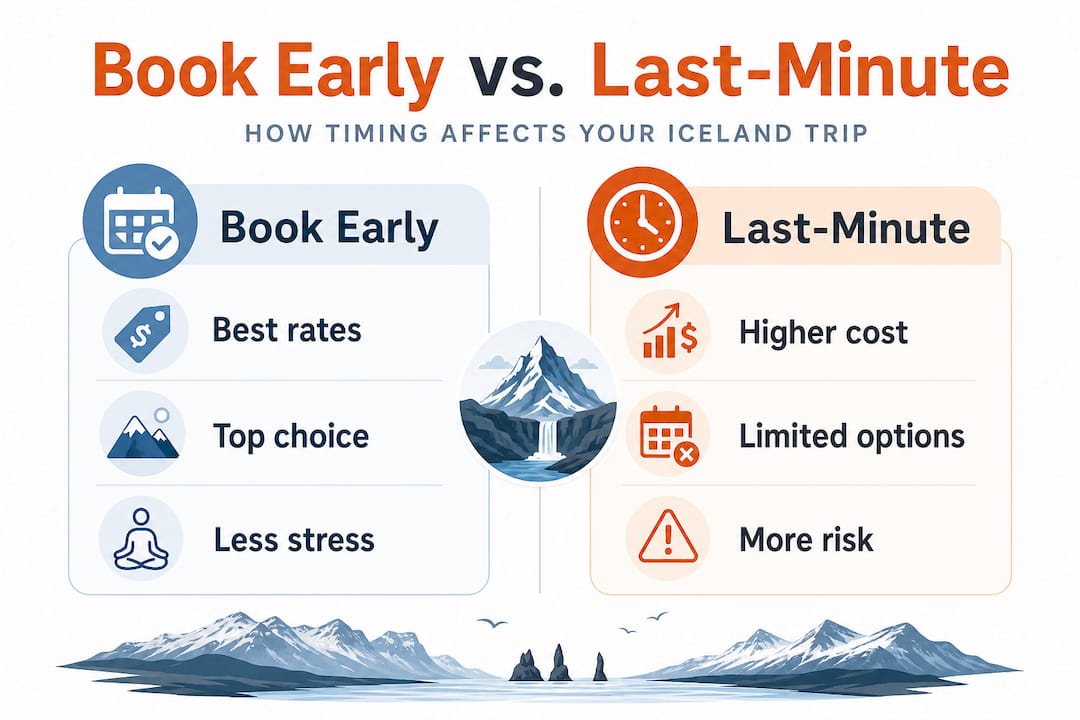
Rural areas present the biggest challenge. If you are driving the South Coast and your first-choice option is fully booked, the nearest alternative might be 40 or 50 kilometers away, sometimes in the wrong direction. That’s not a minor inconvenience on a tight itinerary. It reshapes your entire day. Before booking anything, it helps to understand shared room booking tips to know which options suit your style and budget.
Key pressure points to know:
- June through August sees the highest competition for beds across the South Coast
- Shoulder months like May and September can still see elevated demand around public holidays and local festivals
- Rural properties with 10 to 30 beds sell out far faster than city hotels with hundreds of rooms
- Last-minute cancellations exist but are unpredictable and rarely available in the exact location you need
| Season | Typical occupancy pressure | Last-minute risk |
|---|---|---|
| June–August | Very high | Very high |
| May, September | Moderate to high | Moderate |
| October–November | Low to moderate | Lower |
| December–March | Variable | Lower, but events spike demand |
The data makes one thing clear: Iceland’s accommodation market does not behave like a typical Western European country with dense hotel networks and constant vacancies. You simply cannot apply the same flexible booking logic here.
Why advance booking means better prices and choices
With bottlenecks spelled out, here’s how booking early directly impacts your wallet and your options. Price matters on any trip, and in Iceland, where overall travel costs are already above average, the difference between booking early and booking late can be significant.
Booking months ahead improves availability and consistently helps travelers avoid the price pressure that builds as beds disappear. Hostels, guesthouses, and farm stays typically list their best rates early in the booking cycle. As capacity fills, rates climb. It’s basic yield management, the same system airlines use.
The quality gap widens too. Early bookers get to choose their preferred room type, proximity to key attractions, and specific amenities. Late bookers take what’s left. That might mean a private room that costs 40% more than a dorm, a property 30 kilometers from your planned hike, or a guesthouse with no kitchen access. When lodging inventory is limited outside major towns, planning ahead is the direct path to better locations and fewer compromises.
How to approach your booking timeline:
- Lock in your travel dates and main regions at least 3 months before travel
- Start with anchor accommodations in the most popular areas: South Coast, Snæfellsnes, and the Westfjords
- Book your highest-priority nights first (weekends and nights around major attractions)
- Fill in the remaining nights around those anchors
- Only then start organizing tours, rental cars, and day trips
Pro Tip: Booking a hostel room with buyout flexibility gives you the best of both worlds. You get the lower price of dorm accommodation while still having the option to reserve the entire room for your group if privacy matters. This is a smart move for couples and small families on a budget.
Iceland budget travel tips go deeper on how to control costs throughout your trip, but accommodation timing is one of the highest-leverage decisions you’ll make before you even pack.
| Booking window | Typical benefits | Typical risks |
|---|---|---|
| 4–6 months out | Best selection, lowest early rates | Minor: plans may change |
| 2–3 months out | Good availability, slight price increase | Moderate: popular nights filling |
| 4–6 weeks out | Limited options, higher rates | High: rural spots often gone |
| Last minute | Potential deals, but rare | Very high: often no viable option |
How advance booking supports activity planning
Price aside, advance booking directly influences what you can do and when you can do it in Iceland. Many travelers don’t realize how tightly lodging and activities are connected until they’re standing at a tour desk being told the pickup doesn’t include their area.
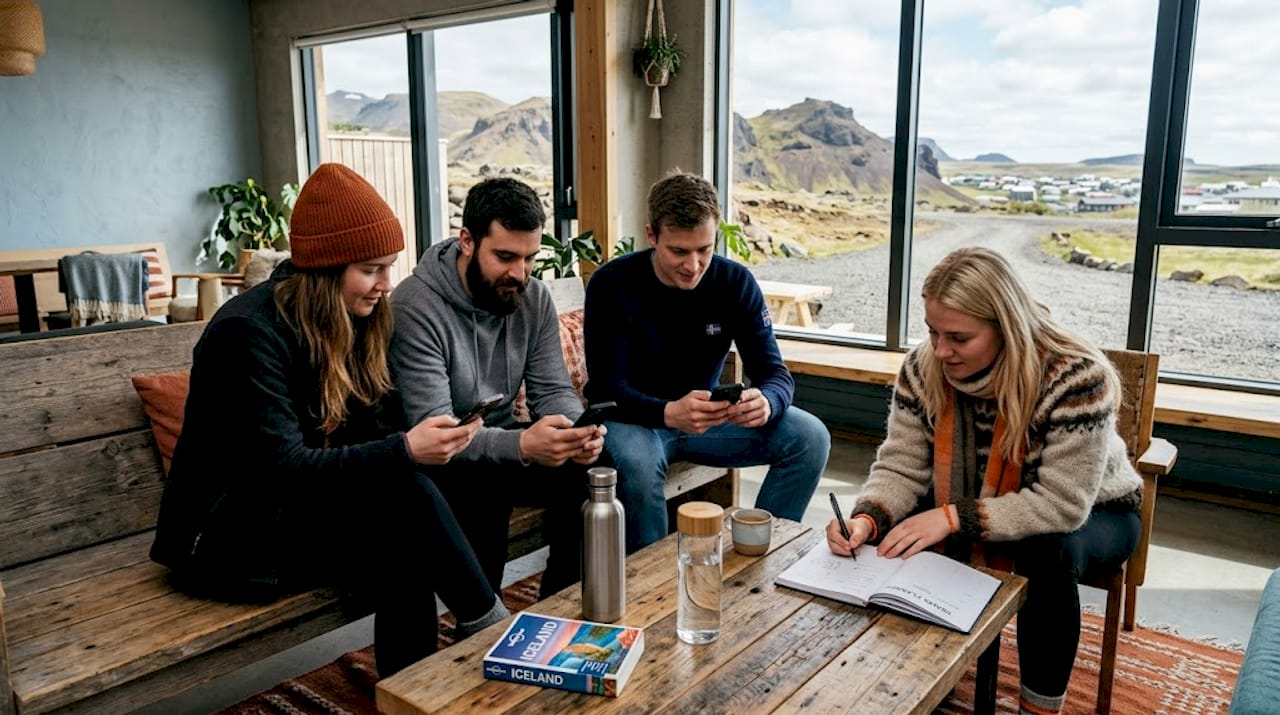
Tour times and pickup locations depend on where you are staying. A glacier hike departing from Skaftafell at 9:00 a.m. has a defined pickup radius. If your accommodation falls outside that zone, you miss the tour or pay extra for private transport. Locking in your lodging first means you can then align your tour bookings to guaranteed pickup points.
Popular Iceland experiences sell out earlier than most travelers expect:
- Jökulsárlón boat tours book weeks to months in advance in summer
- Vatnajökull ice cave tours, especially the blue ice variety, often sell out by November for January departures
- Snorkeling at Silfra in Þingvellir fills up fast on weekends
- Northern Lights tours from specific operators cap group sizes tightly
“Your accommodation is not just a place to sleep. It is the logistical anchor that determines which tours are reachable, which roads you drive each morning, and how much flexibility you actually have.”
The group hostel booking process matters here too. Groups that book their base accommodation early can stagger their activity schedule without conflict, knowing their beds are secured regardless of which day trips get shuffled.
Solo travelers and small groups: unique benefits to booking early
Beyond logistics and cost, early booking brings traveler-specific benefits, especially for solo and small group journeys. Iceland is one of the world’s most popular destinations for solo travel, and for good reason. It’s safe, organized, and stunning. But navigating it without a guaranteed bed is a different kind of stress.
Location choice for solo travelers directly reduces stress and improves safety logistics, from walkability to transit access to tour pickup timing. A solo traveler who books six weeks out may find only one viable bed left in a region, and it might be at a property far from the area they want to explore. A solo traveler who books three months out gets to actively choose a social, well-located hostel that puts them near everything.
Why solo travelers and small groups should book first, plan second:
- You choose a central, walkable base rather than accepting a remote one
- You have time to research the social atmosphere of a property, not just its price
- Hostel dorm beds in popular areas fill faster than private rooms because budget travelers move quickly
- Early booking gives you lead time to plan meetups or coordinate with other travelers you know
- Small groups can request adjoining bunks or the same dorm room, which becomes impossible last-minute
Solo travel in Iceland is genuinely rewarding, but the social experience at your hostel often makes or breaks the trip. Choosing the right property in the right location requires time and availability, both of which disappear when you wait too long.
Pro Tip: If you’re traveling solo and want to meet people, book into a hostel with shared kitchen and communal spaces. Those environments generate organic connections that private guesthouses rarely match. Hostel dorm savings for solo travelers are also substantial compared to private rooms, sometimes cutting accommodation costs in half.
Exceptions and edge cases: when last-minute works (and when it doesn’t)
Despite all the good reasons to book early, some travelers wonder about rolling the dice with last-minute stays. Here’s the honest answer: it can work, but the conditions need to align in your favor.
Last-minute lodging occasionally works in lower-demand seasons, but Iceland’s specific combination of limited rural inventory and concentrated tourism traffic means the upside is much smaller here than in countries with dense hotel networks. Off-peak months like November through February have genuine flexibility in some areas, particularly in Reykjavik where supply is greater.
But the exceptions matter too. Shoulder seasons still require advance planning when your dates overlap with popular weeks or events. Iceland Airwaves music festival in November, for example, compresses Reykjavik accommodation the same way a summer weekend would. The Aurora season draws a growing crowd from October through March. Even rural areas see spikes around Easter, Christmas, and New Year.
When last-minute might be okay:
- Off-peak weekdays in January or February in Reykjavik
- Extended stays in areas with more accommodation supply
- You have a flexible itinerary and no specific tour commitments
- You travel with only a small bag and can easily relocate
When last-minute is a bad idea:
- Any night from June through August anywhere on the South Coast
- Weekends near major natural attractions year-round
- Your dates overlap with any local event or public holiday
- You are traveling as a group of four or more and need beds together
Know where group room options in Iceland actually exist before you assume flexibility is possible. Many rural properties simply don’t have the capacity to accommodate groups who show up unannounced.
Perspective: why smart travelers in Iceland always plan around their beds
Here’s a view from people who see travelers’ biggest Iceland mistakes up close, and the clearest pattern is the one nobody wants to hear: Iceland punishes last-minute accommodation decisions harder than almost any other country in Europe.
The myth is that not booking ahead means freedom. In reality, it transfers control from you to availability. Instead of choosing where you sleep based on what matters to you, like proximity to a glacier, a quiet nature park, or a social hostel kitchen, you end up choosing based on what’s left. That’s not freedom. That’s settling.
The smarter approach is to treat your accommodation as the foundation of your itinerary, not an afterthought. Book your key nights first. Then build tours, drives, and activities around those anchored locations. When your bed is confirmed, every other decision gets easier and cheaper.
There’s also a psychological dimension. Travelers who book in advance consistently report a more relaxed, enjoyable trip. They’re not checking availability on their phones at 9 p.m. after a long drive. They’re watching the Northern Lights from the yard.
Iceland’s scale is deceptive. Yes, the landscapes are vast and open. But the accommodation network serving those landscapes is small, seasonal, and fills up fast. The best hostel selection process starts well before your departure date, not after you land at Keflavik.
The travelers who get the most out of Iceland are not the most spontaneous. They’re the most prepared.
Secure your best Iceland stay now
The guidance above only helps if you follow through before the best options disappear. At Fox Hostel South Iceland, we’ve designed our rooms for exactly the kind of traveler this article is written for: solo adventurers who want a social base, and small groups who want flexibility without paying private-room prices.
Set inside a converted Icelandic barn in Hrífunes Nature Park, just 35 minutes east of Vík, Fox Hostel puts you within easy reach of Reynisfjara Black Sand Beach, Dyrhólaey, and the eastern South Coast. Solo travelers can book a single dorm bed, while couples and groups can buy out an entire room for complete privacy. With affordable rural stays now filling fast for peak season, and a communal kitchen, on-site pizzeria, and Northern Lights skies waiting, now is exactly the right moment to secure your spot. Browse room types in Iceland and book before the beds go.
Frequently asked questions
How far in advance should I book accommodation in Iceland?
For peak summer months, book at least 3 to 6 months ahead to secure the best prices and your preferred location. Popular South Coast properties routinely sell out for July and August well before spring arrives.
Can I find last-minute deals on Iceland lodging?
Last-minute deals occasionally appear in off-peak or shoulder periods, but they are rare during peak season and nearly nonexistent in rural areas along the Ring Road.
Is advance booking important for solo travelers in Iceland?
Yes. Booking early allows solo travelers to choose safe, walkable locations that align with tour pickup points and communal hostel environments ideal for meeting other travelers.
What happens if I wait to book until arrival?
You risk higher costs, less desirable properties, and locations far from your planned activities. Limited rural inventory means the fallback options are genuinely worse, not just different.
Does booking lodging early help with Iceland tour planning?
Absolutely. Tour pickup locations are tied to your accommodation address, so confirming where you stay first gives you the flexibility to book tours around guaranteed pickup points rather than hoping for the best.
Recommended
- Travel Iceland on a budget: smart tips for affordable adventure | Fox Hostel – South Iceland
- How to book a group hostel stay in South Iceland easily | Fox Hostel – South Iceland
- Evita errores comunes al hospedarte en hostales en Islandia | Fox Hostel – South Iceland
- Why stay near Vík, Iceland: top reasons for nature & culture | Fox Hostel – South Iceland