Why Explore Beyond Reykjavik: Iceland's Best Kept Secrets
Why Explore Beyond Reykjavik: Iceland’s Best Kept Secrets
TL;DR:
- Exploring beyond Reykjavik reveals Iceland’s stunning landscapes, including glaciers, volcanic canyons, and remote bird cliffs.
- A minimum of 7 to 10 days is necessary to experience the country’s diverse terrains and hidden gems effectively.
Iceland’s most extraordinary landscapes, from the rhyolite peaks of Landmannalaugar to the volcanic canyon of Eldgjá and the sculpted walls of Fjarðárglúfur, exist entirely outside Reykjavik. The capital is a fine starting point, but it represents less than 5% of what Iceland actually offers. Travelers who stay city-bound miss glaciers, black sand beaches, geothermal wilderness, and the kind of silence that resets something deep in you. This guide explains exactly why explore beyond Reykjavik is the right question to ask, and gives you the practical knowledge to act on it.
Why explore beyond Reykjavik for real Icelandic experiences
Traveling beyond Reykjavik shifts your trip from a city break into a full Icelandic road adventure. Reykjavik delivers excellent restaurants, museums, and the famous Hallgrímskirkja church, but the country’s defining character lives in its countryside. The Ring Road, the South Coast, the Westfjords, and the Highlands each offer a fundamentally different version of Iceland that no city tour can replicate.
The core reason to venture out is scale. Iceland’s dramatic nature is spread across 103,000 square kilometers, and Reykjavik occupies a tiny corner of it. Landmannalaugar, with its multicolored rhyolite mountains and steaming geothermal pools, sits roughly four hours from the capital. Eldgjá, one of the largest volcanic canyon systems on Earth, requires even more commitment to reach. Fjarðárglúfur, a 100-meter-deep canyon carved by glacial meltwater, rewards those willing to drive east along the South Coast. These are not detours. They are the destination.
What unique natural experiences await beyond Reykjavik?
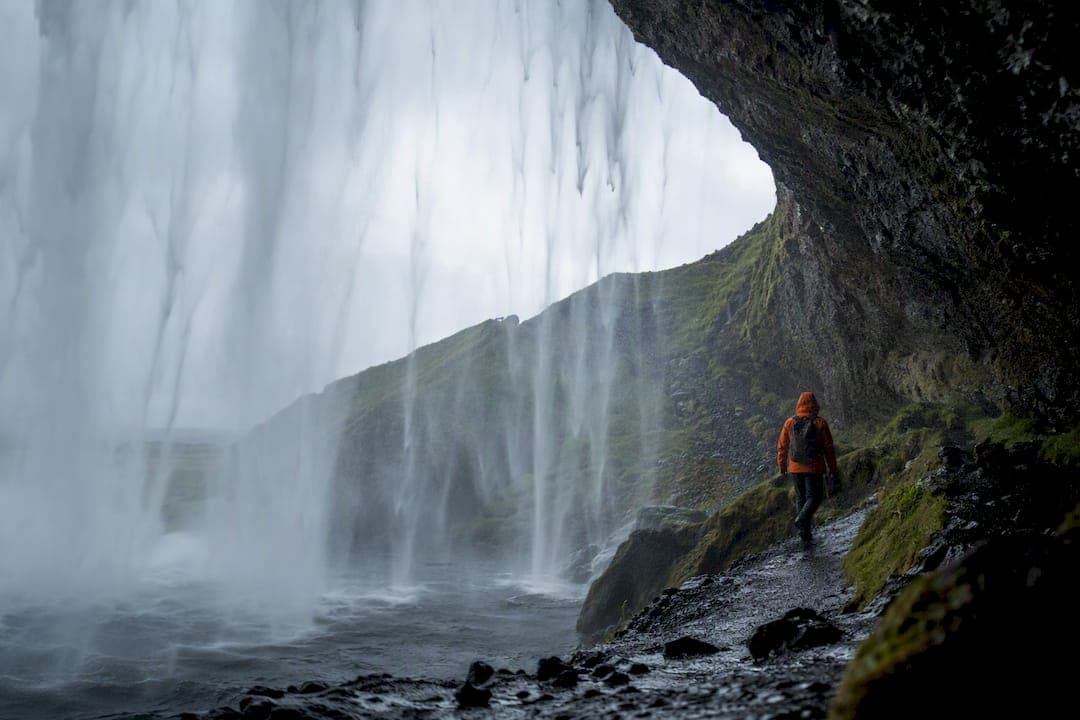
Iceland’s rural landscape delivers a range of terrain that no single region duplicates. The South Coast’s 180 km route includes Seljalandsfoss waterfall (reachable in 1.5 hours from Reykjavik), Skógafoss, Reynisfjara Black Sand Beach, and the glacier tongue of Sólheimajökull, all before you even reach Jökulsárlón Glacier Lagoon at the five-hour mark. Each stop demands time on foot, not just a windshield view.
Beyond the South Coast, the terrain shifts dramatically:
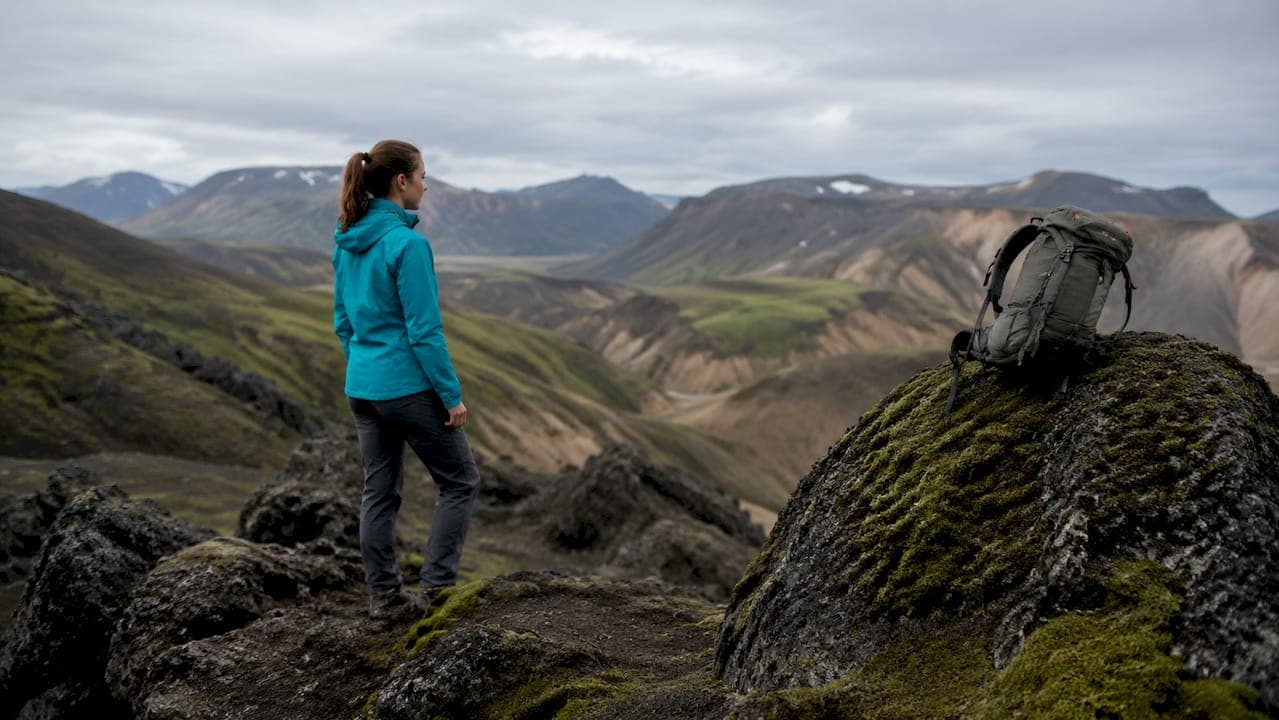
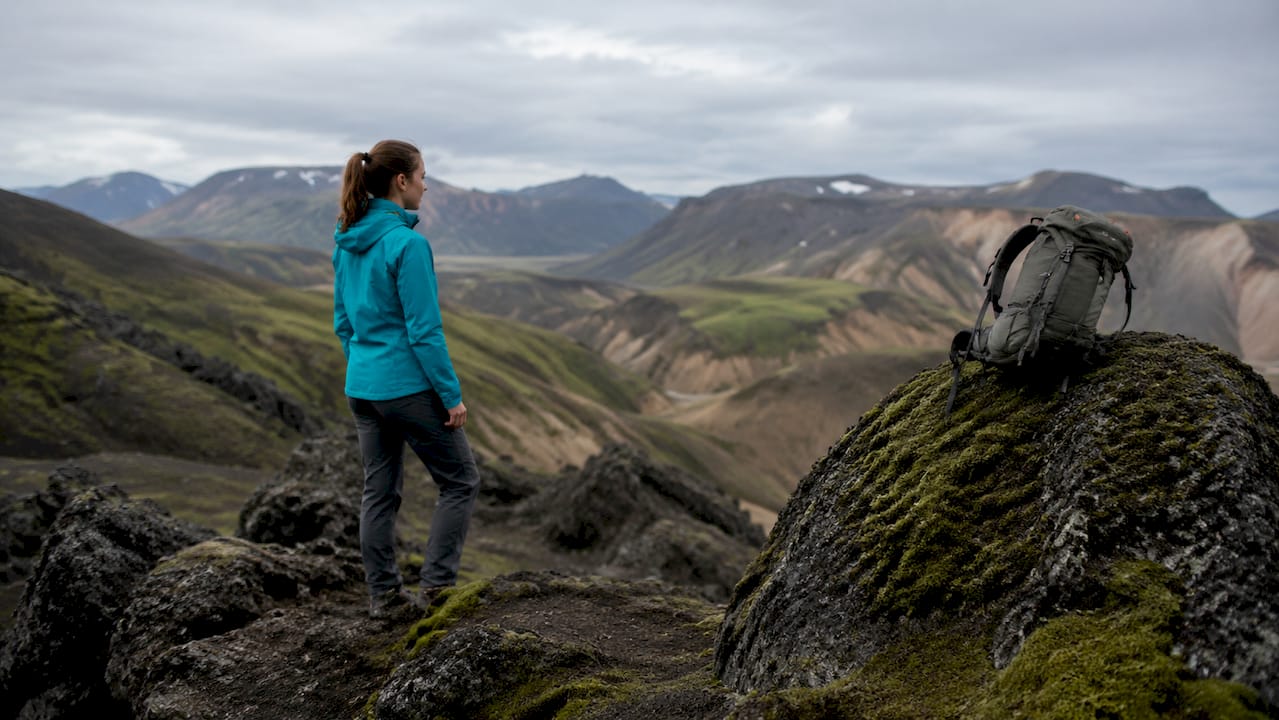
- Landmannalaugar offers multi-day hiking through obsidian lava fields, sulfur-yellow hillsides, and natural hot springs. The Laugavegur Trail, rated one of the world’s top trekking routes, starts here.
- Eldgjá is a 40-kilometer-long volcanic fissure that erupted in 939 AD, producing the largest lava flow in recorded human history. Walking its canyon floor next to Ófærufoss waterfall is a genuinely rare experience.
- Fjarðárglúfur canyon near Kirkjubæjarklaustur offers a short but steep rim hike with views that look more like New Zealand than northern Europe. Justin Bieber filmed a music video here in 2015, briefly making it famous, but crowds have since thinned.
- Vatnajökull National Park covers 14% of Iceland’s total land area and contains Europe’s largest glacier. Glacier hikes and ice cave tours here operate at a scale impossible to replicate anywhere else in Europe.
Pro Tip: Pack waterproof layers even in summer. Landmannalaugar and Eldgjá sit at elevation, and weather shifts from warm sun to driving rain within an hour.
How do travel logistics and timing influence exploring beyond Reykjavik?
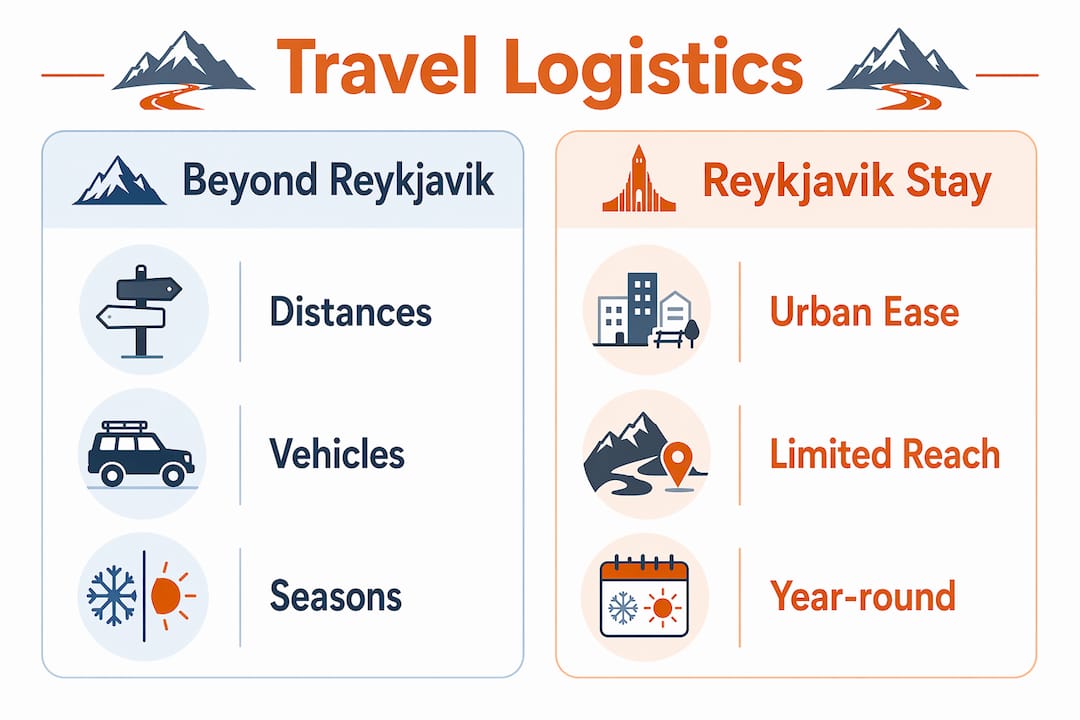
Getting the logistics right determines whether your trip feels expansive or exhausting. Most travelers underestimate driving times on Icelandic roads, particularly once they leave the Ring Road. Here is a realistic breakdown of what proper planning looks like:
- Allocate at least 7 to 10 days total. Ring Road exploration and access to remote areas like the Westfjords require a minimum of 7 days. Two to three days in Reykjavik plus four to seven days on the road is the standard structure that works.
- Rent the right vehicle. The paved Ring Road is manageable in a standard compact car. However, gravel roads in the Westfjords and F-roads leading to the Highlands require a 4x4. Booking a standard car and then attempting Highland routes is both dangerous and illegal under rental agreements.
- Budget walk time into every stop. A black sand beach walk at Reynisfjara alone takes 1.5 to 2 hours round trip when you include the basalt column formations at Hálsanef. Day trips from Reykjavik that include four or five South Coast stops consistently feel rushed.
- Check road conditions before every drive. The Icelandic Road and Coastal Administration (Vegagerðin) updates road.is daily. Seasonal closures affect Highland F-roads from October through June and some Westfjords routes into late spring.
- Plan overnight stays outside Reykjavik. Multi-day South Coast stays allow you to start each morning already positioned near the next attraction, rather than spending two hours driving from the capital before your day even begins.
| Route | Distance from Reykjavik | Recommended vehicle | Best season |
|---|---|---|---|
| South Coast to Jökulsárlón | 378 km | Standard car | Year-round |
| Landmannalaugar (F-road) | 180 km | 4x4 required | July to September |
| Westfjords | 450 km+ | 4x4 recommended | June to August |
| Eldgjá canyon | 270 km | 4x4 required | July to September |
Pro Tip: Book accommodations along the South Coast and Ring Road before you arrive, especially for July and August. Properties near Vík and Kirkjubæjarklaustur sell out weeks in advance during peak season.
Which hidden gems in Iceland offer the most authentic experiences?
The places that require the most effort to reach consistently deliver the strongest memories. Only about 10% of Iceland’s visitors travel to the Westfjords, a region covering 22,000 square kilometers with fewer than 7,000 residents. That ratio of space to people creates a traveler experience that the South Coast, for all its beauty, simply cannot match in high season.
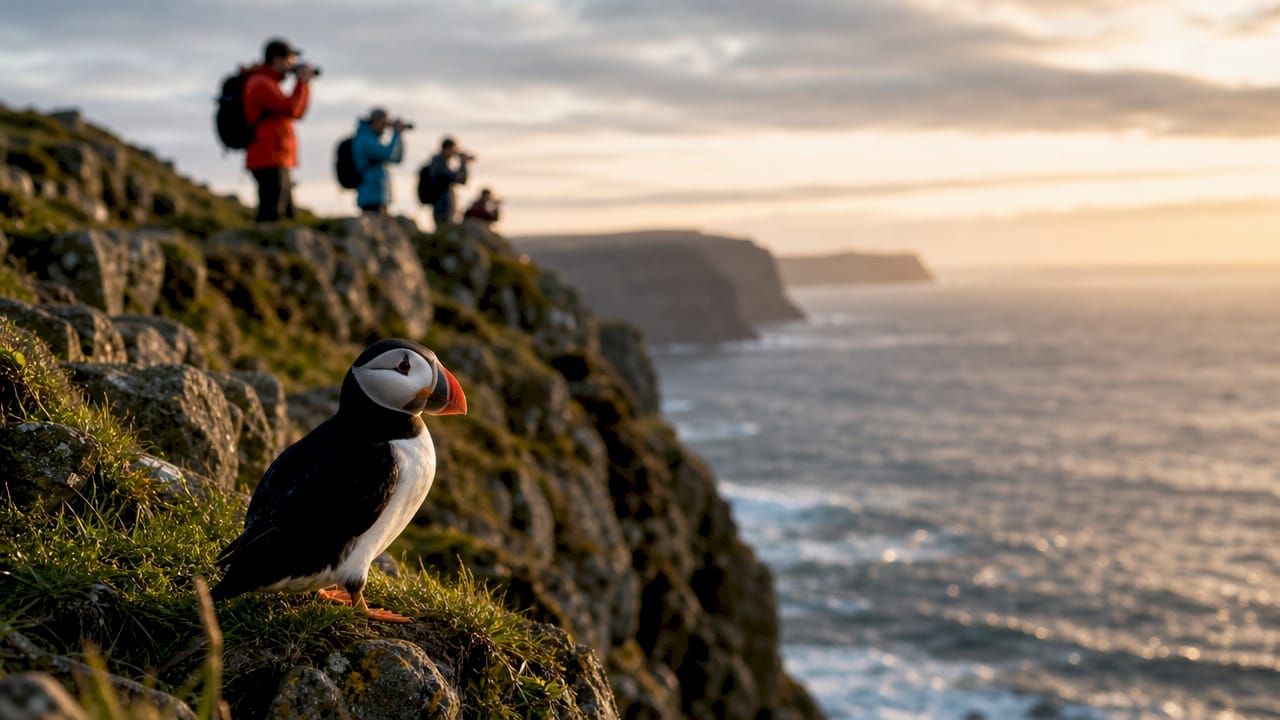
The Westfjords’ Látrabjarg bird cliffs stretch 14 kilometers along Iceland’s westernmost point and host millions of puffins, razorbills, and guillemots from May through August. The birds are so unaccustomed to human presence that they often sit within arm’s reach. No other location in Iceland produces that kind of wildlife encounter at scale.
Fjarðárglúfur deserves more attention than it typically gets on standard itineraries. The canyon is only 2 kilometers long, but its walls rise 100 meters straight up from the Fjarðará river. The rim trail takes about 45 minutes and offers a series of viewpoints that genuinely surprise first-time visitors. Unlike Þórsmörk or Landmannalaugar, no F-road is required to reach it.
Dynkur waterfall in the Icelandic Highlands sits on the Þjórsá river and requires a 4x4 and careful route planning. That access challenge is precisely what keeps it uncrowded. Prepared travelers who make the effort find a powerful waterfall in a raw highland setting with no infrastructure, no gift shop, and no tour buses.
“Hidden gems are often called so because challenging access naturally limits crowds, rewarding prepared travelers with unique experiences that feel genuinely personal rather than packaged.”
For travelers who want to explore Iceland’s countryside without committing to extreme remoteness, the area around Vík and Kirkjubæjarklaustur offers a middle ground. You get dramatic scenery, including Dyrhólaey arch and the Mýrdalsjökull glacier, with paved roads and reliable services nearby.
What adventure activities and cultural experiences exist outside Reykjavik?
The activity menu outside Reykjavik covers terrain that ranges from accessible to genuinely demanding. The South Coast alone offers glacier hiking on Sólheimajökull, canyon rim walks at Fjarðárglúfur, and beach walks along Reynisfjara’s black volcanic sand. Each of these requires different fitness levels and gear, which means the region works for a wide range of travelers.
Key activities and experiences worth planning around:
- Glacier hiking: Guided tours on Sólheimajökull and Falljökull operate year-round. Crampons and helmets are provided, and no prior experience is required for introductory tours.
- Northern Lights viewing: Light pollution in Reykjavik significantly reduces aurora visibility. Rural areas along the South Coast and Ring Road offer dark skies that make the difference between a faint green smear and a full-sky display. One to two nights outside the city is the standard recommendation from aurora specialists.
- Natural hot springs: Landmannalaugar’s geothermal pools are free to use and sit directly beside the hiking trails. Seljavallalaug, Iceland’s oldest swimming pool, is fed by a natural hot spring and costs nothing to enter.
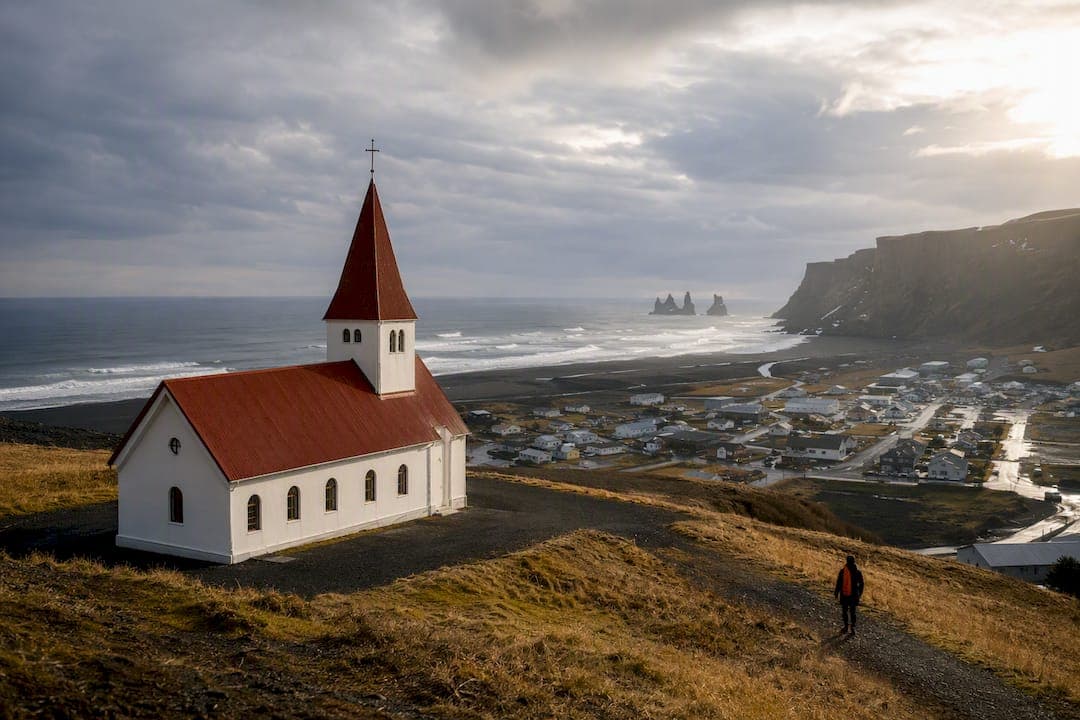
- Village culture in Vík and Ísafjörður: Vík is a small coastal village of roughly 300 people, but it sits at the center of some of Iceland’s most photographed scenery. The local church on the hill above town offers views across Reynisfjara and the Reynisdrangar sea stacks. Ísafjörður in the Westfjords is the region’s largest town and hosts the annual Westfjords Folk Music Festival each summer.
- Farmhouse and hostel stays: Staying in rural accommodations places you inside the landscape rather than adjacent to it. Early morning light on a glacier or a clear night sky away from city lights are experiences that only happen when you sleep outside Reykjavik.
Pro Tip: For Northern Lights viewing, check the Icelandic Meteorological Office aurora forecast at vedur.is the evening before. A forecast of 3 or higher combined with clear skies gives you a strong chance of a visible display from any dark rural location.
Key takeaways
Exploring beyond Reykjavik is the only way to access Iceland’s defining landscapes, from volcanic canyons and glacier tongues to remote bird cliffs and geothermal wilderness that the capital cannot offer.
| Point | Details |
|---|---|
| Reykjavik is a starting point, not the destination | Iceland’s most dramatic landscapes require driving beyond the capital, often 2 to 5 hours. |
| Plan for 7 to 10 days minimum | Ring Road and remote regions like the Westfjords demand more than a short city break. |
| Match your vehicle to your route | F-roads to Landmannalaugar and Eldgjá require a 4x4; a standard car limits your options significantly. |
| Overnight stays unlock deeper exploration | Multi-day stays on the South Coast give you time for walks, detours, and early morning light that day trips cannot. |
| Dark skies require leaving the city | Northern Lights visibility improves dramatically in rural areas with low light pollution. |
The case for slowing down in South Iceland
I’ve driven the Ring Road more times than I can count, and the single biggest mistake I see travelers make is treating Iceland like a checklist. They race from Reykjavik to Jökulsárlón and back in a single day, ticking off waterfalls at 60 kilometers per hour, and then wonder why the trip felt thin.
The places that stay with you are the ones you almost didn’t stop for. A side road to Fjarðárglúfur that adds 20 minutes to your drive. A morning at Landmannalaugar when the clouds lift and the rhyolite mountains turn every shade of orange and green at once. The silence at Eldgjá when you realize you are standing in a canyon formed by the largest lava eruption in human history and there is no one else around.
My honest advice: spend two nights in Reykjavik, then get out. Use the South Coast as your corridor east and give yourself permission to stop when something looks interesting. The South Coast itinerary is not a race. Iceland rewards the traveler who moves slowly and stays curious. The country is small enough to feel manageable and wild enough to surprise you every single day.
— Trygve
Where to stay for your South Iceland adventure
Fox Hostel sits in Hrífunes Nature Park, a beautifully converted traditional Icelandic barn just 35 minutes east of Vík. It places you directly on the South Coast corridor, with Reynisfjara Black Sand Beach and Dyrhólaey within easy reach to the west, and Vatnajökull National Park, Jökulsárlón Glacier Lagoon, and Fjarðárglúfur accessible to the east.

Solo travelers can book a single bed in a dorm, while couples, families, and groups can buy out an entire room for full privacy. The on-site pizzeria, fully equipped communal kitchen, and genuinely dark skies make Fox Hostel a natural base for Northern Lights viewing and Ring Road adventures alike. Book your stay and position yourself at the center of South Iceland’s best experiences, not two hours away from them.
FAQ
Why explore beyond Reykjavik instead of staying in the city?
Reykjavik offers urban culture and convenience, but Iceland’s defining landscapes, including glaciers, volcanic canyons, and remote bird cliffs, exist entirely outside the capital. Staying city-bound means missing the majority of what makes Iceland worth visiting.
How many days do you need to explore beyond Reykjavik properly?
A minimum of 7 to 10 days total allows for two to three days in Reykjavik plus meaningful time on the Ring Road and in remote regions like the Westfjords or Highlands.
Do you need a 4x4 to reach Iceland’s hidden gems?
The paved Ring Road is accessible in a standard car, but reaching places like Landmannalaugar, Eldgjá, and Dynkur waterfall requires a 4x4 due to F-roads and river crossings. Westfjords gravel roads also strongly favor a higher-clearance vehicle.
What are the best hidden gems in Iceland beyond Reykjavik?
Landmannalaugar, Eldgjá, Fjarðárglúfur, Látrabjarg bird cliffs in the Westfjords, and Dynkur waterfall in the Highlands each offer experiences that see a fraction of the visitor traffic of the Golden Circle or South Coast’s main stops.
Is the South Coast worth an overnight stay rather than a day trip?
Yes. Walking distances at South Coast stops alone, including Reynisfjara and Seljalandsfoss, consume 3 to 4 hours of a day trip, leaving little time for the eastern highlights. Overnight stays near Vík or Kirkjubæjarklaustur allow a far more complete experience.
Recommended
- Must-see attractions near Vík: adventure & hidden gems | Fox Hostel – South Iceland
- How to Discover Scenic Spots Near Vík, Iceland | Fox Hostel – South Iceland
- Explora Vík en Islandia: aventura auténtica y asequible | Fox Hostel – South Iceland
- Why Iceland is perfect for nature lovers | Fox Hostel – South Iceland