Find the best Northern Lights spots in Iceland: ultimate guide
Find the best Northern Lights spots in Iceland: ultimate guide
TL;DR:
- Dark skies, clear weather, and high geomagnetic activity are essential for optimal Northern Lights viewing.
- Flexible, multi-night plans with self-drive options improve chances more than fixed guided tours.
- Top viewing locations include Jökulsárlón Lagoon and North Iceland, with weather conditions ultimately determining visibility.
Iceland is one of the few places on Earth where the Northern Lights can stop you cold in your tracks. But here’s what most travel content won’t tell you: not every corner of this island gives you equal odds. The difference between a blurry green smudge on the horizon and a full-sky aurora explosion comes down to three things: where you stand, when you go, and how flexible your plan is. This guide breaks down the best spots for budget travelers who want real results, not just Instagram luck.
Table of Contents
- How to maximize your chances: Aurora basics and what matters most
- Top locations for Northern Lights: From easy access to remote adventure
- Planning the trip: Budget strategies and practical tips for aurora chasers
- How to actually spot the lights: Forecasting, on-the-ground tools, and real odds
- Beyond the map: What most Northern Lights guides never tell you
- Plan your budget-friendly aurora adventure with Fox Hostel
- Frequently asked questions
Key Takeaways
| Point | Details |
|---|---|
| Cloud cover is key | Pick each night’s spot by checking local cloud forecasts, not just solar activity indexes. |
| North offers best odds | Akureyri and Lake Mývatn give the highest Northern Lights frequency with minimal solar activity required. |
| Self-drive means flexibility | Renting a 4x4 and staying flexible will maximize your viewing opportunities—tours can’t pivot to clear skies. |
| Budget bases matter | Stay near South Coast or Golden Circle hostels for affordable lodgings that keep you close to top dark-sky areas. |
How to maximize your chances: Aurora basics and what matters most
Before you pick a location, you need to understand what actually drives a good aurora sighting. The Northern Lights are caused by charged solar particles colliding with Earth’s atmosphere, but for practical planning, what matters is how to read the conditions on any given night.
Three factors control your odds more than anything else:
- Dark skies: Light pollution kills aurora visibility. Even a small town with street lights can wash out a moderate display. Rural Iceland, far from Reykjavik, is where the magic happens.
- Cloud cover: This is the single biggest variable. A Kp 7 storm means nothing if you’re under thick overcast. Cloud cover is more critical than solar activity for real-world viewing odds.
- Kp index: This is the scale (0 to 9) used to measure geomagnetic storm intensity. The higher the number, the more widespread the aurora. Critically, Reykjavik, Vík, and Jökulsárlón need Kp 2 to 3 for a clear sighting, while North Iceland only needs Kp 1.
The Kp threshold difference is huge. It means northern locations see auroras on quieter nights that would be invisible from the south. Check the Icelandic aurora forecast every evening, not just the Kp number, but also the cloud cover map.
Here’s the other big factor: 2026 is a solar maximum year. Solar activity peaks roughly every 11 years, and this cycle’s peak means more frequent and more intense geomagnetic storms. If you’ve been waiting for the right year to chase the lights, this is it. Understanding the full Iceland aurora season helps you pick the right months too, with September through March offering the longest dark windows.
“The best aurora chasers don’t just pick a great location, they watch the cloud map and move. Flexibility is worth more than any single ‘best spot.’”
Pro Tip: Book accommodation that lets you stay multiple nights in a dark-sky zone. A single overnight tour gives you one shot. Two or three nights near a dark corridor means you can wait out a cloudy night and pounce when skies clear. Learn more about booking South Iceland hostels to set yourself up right from the start.
Top locations for Northern Lights: From easy access to remote adventure
Not all aurora spots are created equal. Here’s an honest breakdown of Iceland’s most talked-about locations, matched to different travel styles.
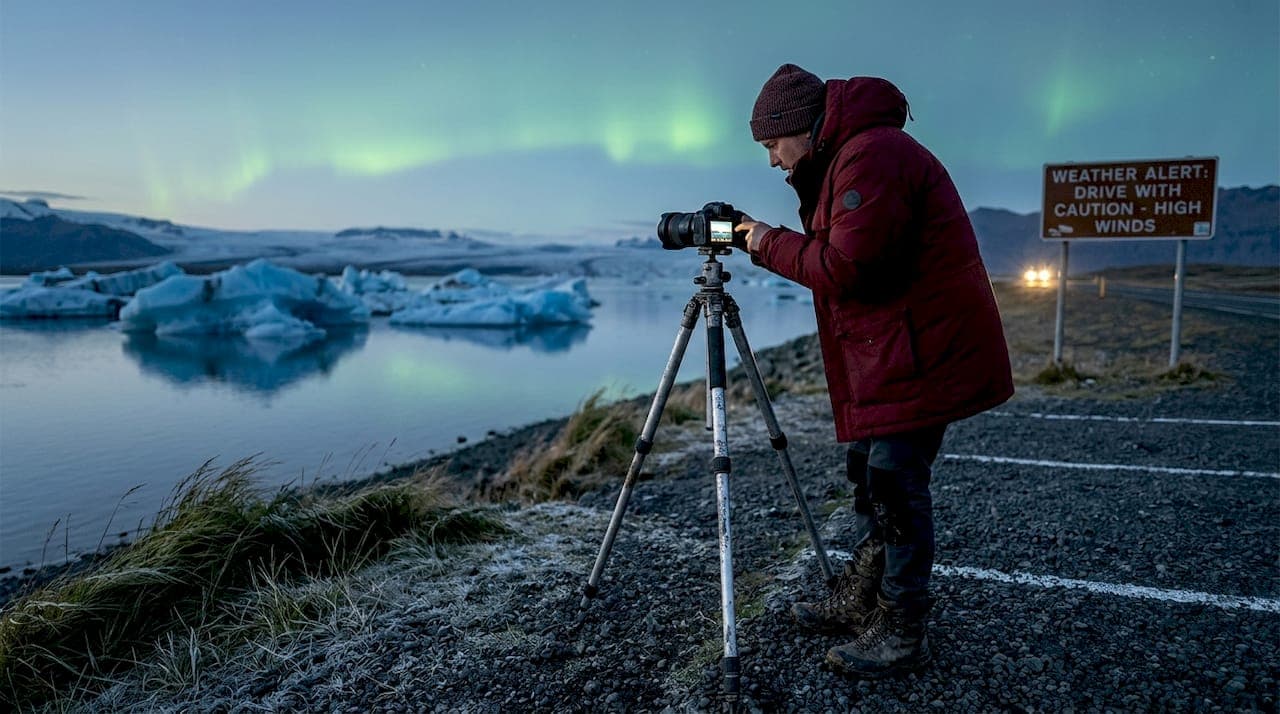
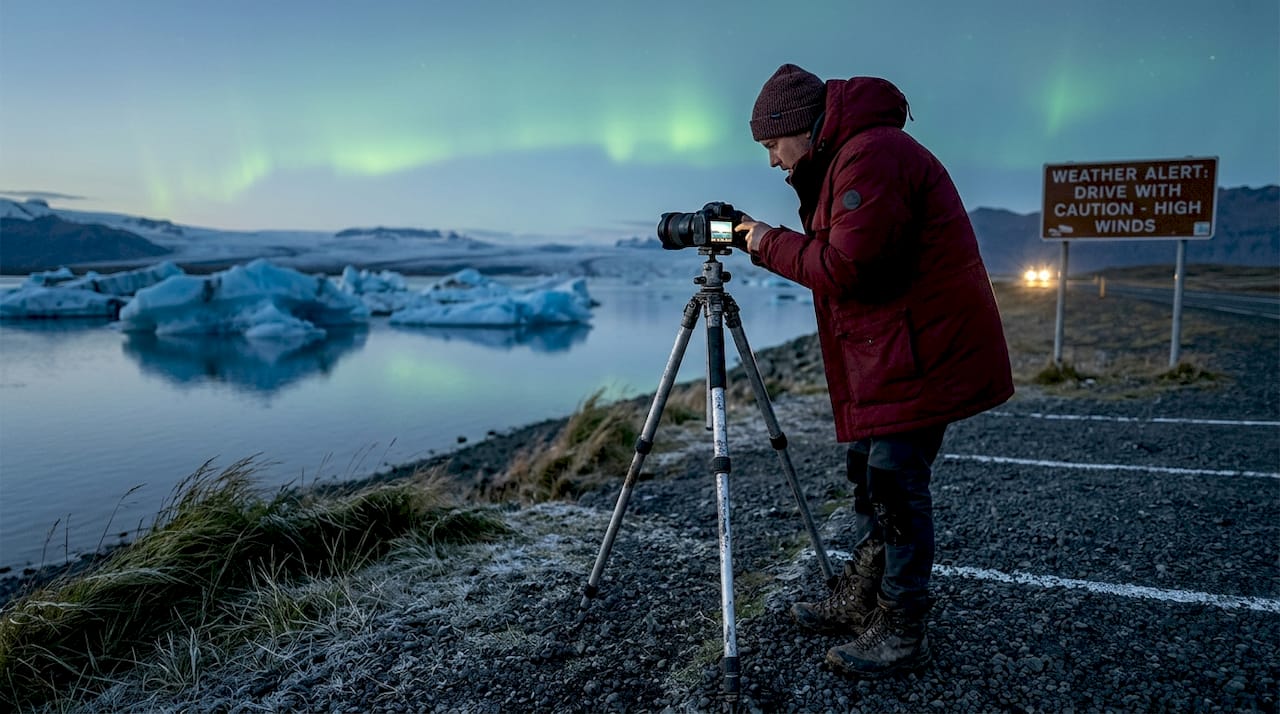
Jökulsárlón Glacier Lagoon is arguably the most photogenic spot in the country. Jökulsárlón is the most frequently cited top spot for Northern Lights viewing because the floating ice reflects the aurora colors, doubling the visual impact. It’s accessible by car on the Ring Road, making it a realistic stop for self-drive travelers. The downside: it’s popular, and during peak season you’ll share the bank with other photographers.
Akureyri and Lake Mývatn in North Iceland offer the highest statistical frequency. Akureyri and Lake Mývatn require only Kp 1 for visibility, compared to Kp 2 to 3 in the south, meaning auroras appear on nights that would be invisible elsewhere. The trade-off is distance. Getting there from Reykjavik takes most of a day, and budget access requires a multi-day self-drive plan.
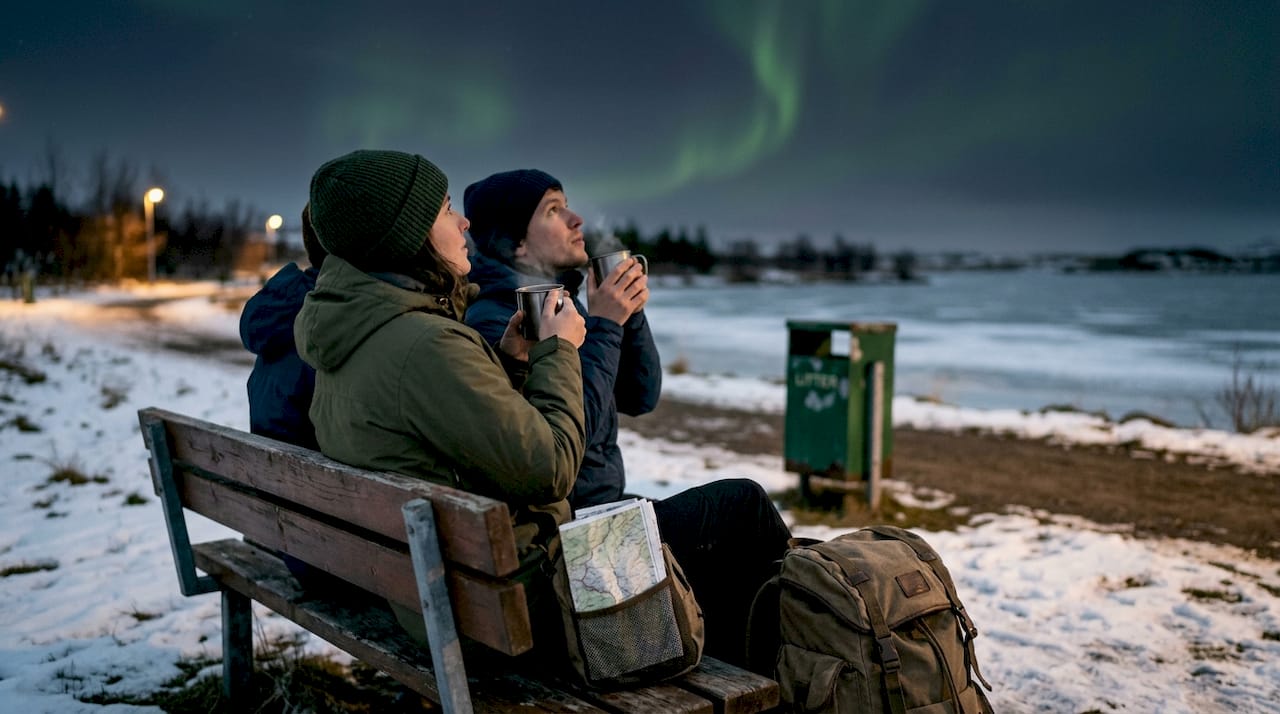
The Westfjords are the dark-sky extreme. Westfjords provide the darkest skies and fewest crowds in Iceland, but winter road conditions make this a serious commitment. Only consider it if you’re an experienced winter driver with a proper 4x4.
The South Coast and Golden Circle hit the sweet spot for most budget travelers. You get genuinely dark skies, easy Ring Road access, and a base that keeps accommodation costs manageable.
Reykjavik: Skip it for aurora chasing. Light pollution is simply too heavy for anything below a strong Kp 4 or 5 event.
| Location | Kp needed | Crowd level | Budget access | Photography potential |
|---|---|---|---|---|
| Jökulsárlón Lagoon | 2 to 3 | High | Moderate | Excellent |
| Akureyri / Mývatn | 1 | Low | Long drive | Very good |
| Westfjords | 1 | Very low | Difficult | Outstanding |
| South Coast | 2 to 3 | Medium | Easy | Very good |
| Reykjavik | 4 to 5 | Very high | Easy | Poor |
Pro Tip: For couples or small groups, look into couples-friendly stays along the South Coast that let you book a private room in a hostel. You get the social atmosphere and dark skies without the hotel price tag. Also check out hostels on South Coast for a full breakdown of your options.
For a detailed cost comparison, the northern lights budget guide is worth bookmarking before you plan.
Planning the trip: Budget strategies and practical tips for aurora chasers
Knowing where to go is only half the equation. Getting there affordably, and staying flexible enough to actually see the lights, takes a bit of strategy.
Car rental vs. guided tour:
Budget self-drive with a 4x4 rental outperforms tours for flexibility, especially when you’re basing near the Golden Circle or South Coast. Tours lock you into one location on one night. A rental lets you chase clear skies across a 100 km radius if needed.
Here’s a rough cost comparison for a 3-night aurora trip:
| Option | Estimated cost (per person) | Flexibility | Aurora odds |
|---|---|---|---|
| Guided tour (3 nights) | $400 to $600 | Low | Moderate |
| Self-drive + hostel dorm | $220 to $350 | High | High |
| Self-drive + private room | $300 to $450 | High | High |
The numbers favor self-drive, especially when you split a rental between two or three people.
How to structure your nights:
- Arrive and check the 3-day cloud forecast immediately.
- Identify your clearest night and plan your farthest drive for that evening.
- Keep nights two and three as backup, adapting based on updated forecasts.
- Always have a secondary dark-sky spot within 30 to 45 minutes of your base.
- Check the aurora viewing guide each afternoon, not just in the morning.
Success rates hit roughly 80% with multi-night dark-sky bases, while single-night tours can’t match that adaptability. Akureyri sees 180 or more aurora-visible nights per season versus 100 or more in the south, but the south wins on cost and access for most travelers.
Pro Tip: Staying in budget hostel rooms near Vík or the South Coast puts you within striking distance of multiple dark-sky zones without burning your budget on accommodation. Read up on budget adventure tips to stretch every dollar further.
How to actually spot the lights: Forecasting, on-the-ground tools, and real odds
You’ve picked your region and sorted your transport. Now comes the part most guides skip: the actual night-by-night process.
Here’s a practical routine that works:
- Check vedur.is by 4 PM. The cloud cover forecast updates regularly and shows cloud density by region. This is your most important daily tool.
- Cross-reference the Kp forecast. A Kp of 3 with clear skies beats a Kp of 6 under clouds every time.
- Identify your clearest zone. If your base has incoming clouds, find the nearest clear corridor on the map and plan a short drive.
- Head out by 10 PM. Aurora activity often peaks between 10 PM and 2 AM, though it can appear any time after dark.
- Give it at least 90 minutes. Displays can be subtle at first, then explode. Patience is the skill most first-timers underestimate.
“Cloud cover is more important than solar activity for real-world viewing odds. A clear Kp 2 night beats a cloudy Kp 6 night every single time.”
Self-drive chasers adapt to clouds better than tours because they can move. That’s the core advantage.
For photography, you don’t need a $3,000 camera. A mirrorless or DSLR with manual mode, a wide-angle lens, and a tripod will do the job. Set your ISO between 800 and 3200, aperture at f/2.8 or wider, and shutter speed between 5 and 15 seconds. Water reflections, like those at Jökulsárlón or smaller roadside ponds, add dramatic depth to any shot.
Pro Tip: Download the “My Aurora Forecast” app as a secondary tool. It sends alerts when Kp rises above your set threshold, so you’re not glued to a browser all evening. Pair it with the aurora season explained guide to understand the full seasonal picture.
Real talk: not every night delivers a curtain of green fire. Some nights you’ll see a faint glow. Some nights nothing. That’s the honest reality. But with three nights, dark skies, and a flexible plan, most travelers come away with at least one moment that genuinely takes their breath away.
Beyond the map: What most Northern Lights guides never tell you
Here’s the thing nobody says out loud: obsessing over “the best place” is actually one of the biggest mistakes aurora chasers make. We’ve seen it repeatedly. Travelers drive four hours to a famous spot, hit cloud cover, and come home disappointed. Meanwhile, someone staying near Vík drove 20 minutes to a clear patch and watched the sky dance for two hours.
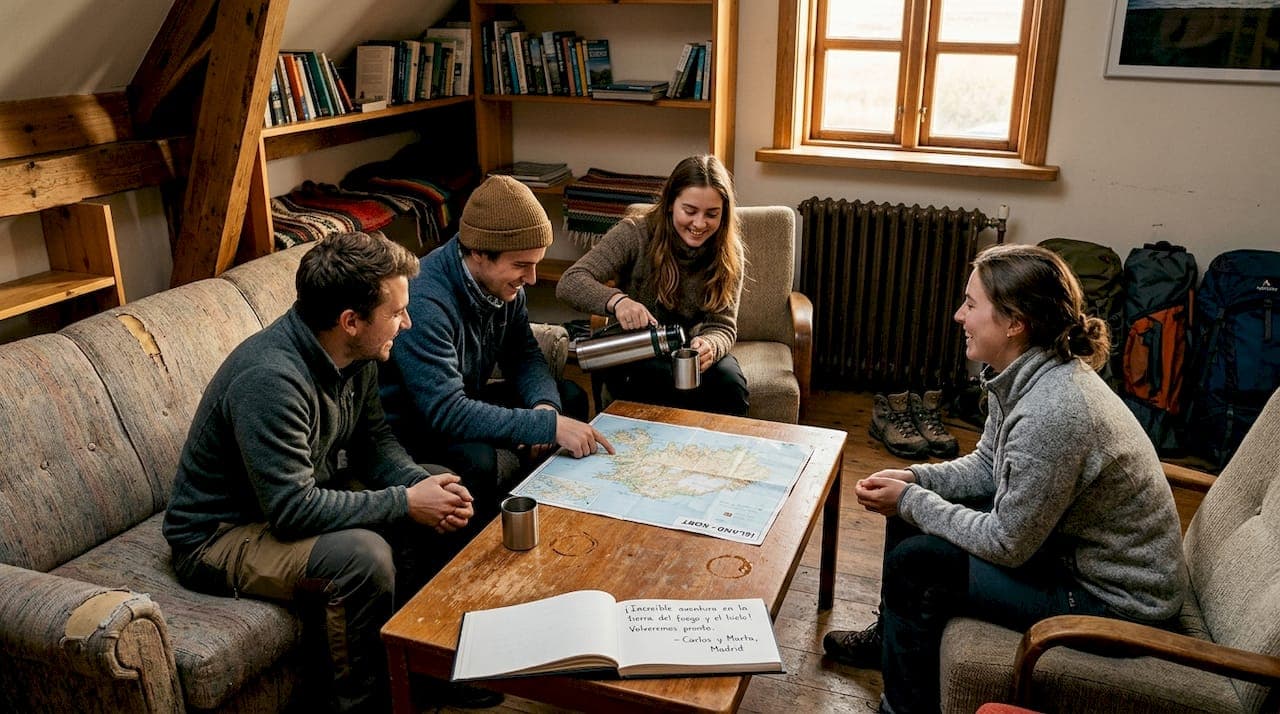
The most memorable aurora stories we hear at Fox Hostel don’t come from people who found the perfect location. They come from travelers who stayed flexible, shared a car with someone they met in the hostel kitchen, and ended up in a random field with a thermos of coffee and a sky full of light.
Budget travelers actually have a structural advantage here. You’re already planning to stay multiple nights, share costs, and adapt. That mindset is exactly what aurora chasing rewards. Avoid the common Iceland travel mistakes that lock you into rigid plans, and you’ll find the lights find you.
Plan your budget-friendly aurora adventure with Fox Hostel
Fox Hostel sits in Hrífunes Nature Park, just 35 minutes east of Vík, deep in South Iceland’s dark-sky corridor. No street lights. No crowds. Just open skies and some of the best aurora conditions on the South Coast, right outside the door.
Whether you’re a solo traveler grabbing a dorm bed or a couple booking a full room for privacy, the setup here is built for flexible, budget-conscious aurora chasers. Browse affordable rooms in South Iceland and lock in your base before the best dates fill up. And if you want more ways to stretch your trip budget, our budget travel tips guide is packed with practical advice from people who know this road well.
Frequently asked questions
What is the absolute best place in Iceland to see the Northern Lights?
Jökulsárlón Lagoon is top for dramatic views, while North Iceland (Akureyri, Lake Mývatn) offers the highest frequency due to a lower Kp threshold. Weather and cloud cover ultimately decide each night.
How many nights should I plan to maximize my odds?
Plan for at least two to three nights in a dark-sky zone. Success rates hit around 80% with multi-night stays, as each extra night lets you adapt to changing cloud cover.
Do I need a special tour or can I drive myself?
A budget self-drive with a 4x4 rental outperforms tours for flexibility, especially when you combine it with real-time aurora and cloud forecasts to pivot quickly.
What weather conditions are best for seeing the lights?
Clear, dark skies with minimal light pollution are essential. Always check local cloud cover first, because cloud cover is more critical than the Kp index for real-world viewing success.
Is 2026 a good year for the Northern Lights in Iceland?
Yes. 2026 is a solar maximum year, which increases both the frequency and intensity of auroral displays across Iceland, making it one of the best years in over a decade to chase the lights.
Recommended
- Northern lights season : comprendre la magie islandaise | Fox Hostel – South Iceland
- Must-see attractions near Vík: adventure & hidden gems | Fox Hostel – South Iceland
- Travel Iceland on a budget: smart tips for affordable adventure | Fox Hostel – South Iceland
- Iceland in May: adventure, nature & affordable stays | Fox Hostel – South Iceland
- Winter Adventures with Aurora Safaris | Guestly Homes