Iceland in May: adventure, nature & affordable stays
Iceland in May: adventure, nature & affordable stays
TL;DR:
- May offers long daylight hours, calm roads, and lower costs before peak summer crowds.
- Road accessibility is excellent on the Ring Road and South Coast, but Highland F-roads remain closed or require 4x4.
- Wildlife viewing and outdoor adventures like puffin and whale watching abound, with fewer tourists and better prices.
May is Iceland’s best-kept secret. While summer crowds pack the Ring Road and prices spike, May hands you 17 to 20 hours of daylight, calmer roads, and rates that haven’t hit their peak yet. Waterfalls are thundering from snowmelt, puffins are returning to their cliffs, and whale watching boats are filling up fast. Whether you’re a solo traveler hunting solitude, a couple craving something unforgettable, or a group ready to split costs and share the experience, Iceland in May delivers more adventure per dollar than any other month. This guide covers what to expect, how to move around safely, what to see, and where to stay without overpaying.
Table of Contents
- What to expect from Iceland’s weather and daylight in May
- Can you get around? Road conditions, driving, and safety in May
- Where and when to see puffins, whales, waterfalls, and the best hikes
- How to book affordable hostels and guesthouses near top sights
- Our take: why adventure travelers should embrace Iceland in May
- Ready to explore? Find your perfect hostel for Iceland in May
- Frequently asked questions
Key Takeaways
| Point | Details |
|---|---|
| Long daylight, few crowds | May offers up to 20 daylight hours, making it perfect for nature adventures before peak crowds arrive. |
| Spring wildlife highlights | Whales and puffins are easy to spot in May, with some of the world’s largest puffin colonies and peak whale watching. |
| Affordable hostels abound | Reykjavik and South Coast hostels are well-rated, budget-friendly, and offer great options for all travelers in May. |
| Smart travel strategies | Stick to major routes, book direct for savings, and pack waterproof layers for Iceland’s unpredictable spring weather. |
What to expect from Iceland’s weather and daylight in May
Before diving into what to see and do, let’s clarify what conditions to expect so you pack and plan like a pro.
May is genuinely the sweet spot of Iceland’s spring. Average temperatures of 3–10°C (37–50°F) keep things cool but manageable, and the country sees only 44–60mm of rainfall, making it the driest spring month on the calendar. That matters when you’re planning outdoor days from sunrise to near-midnight.
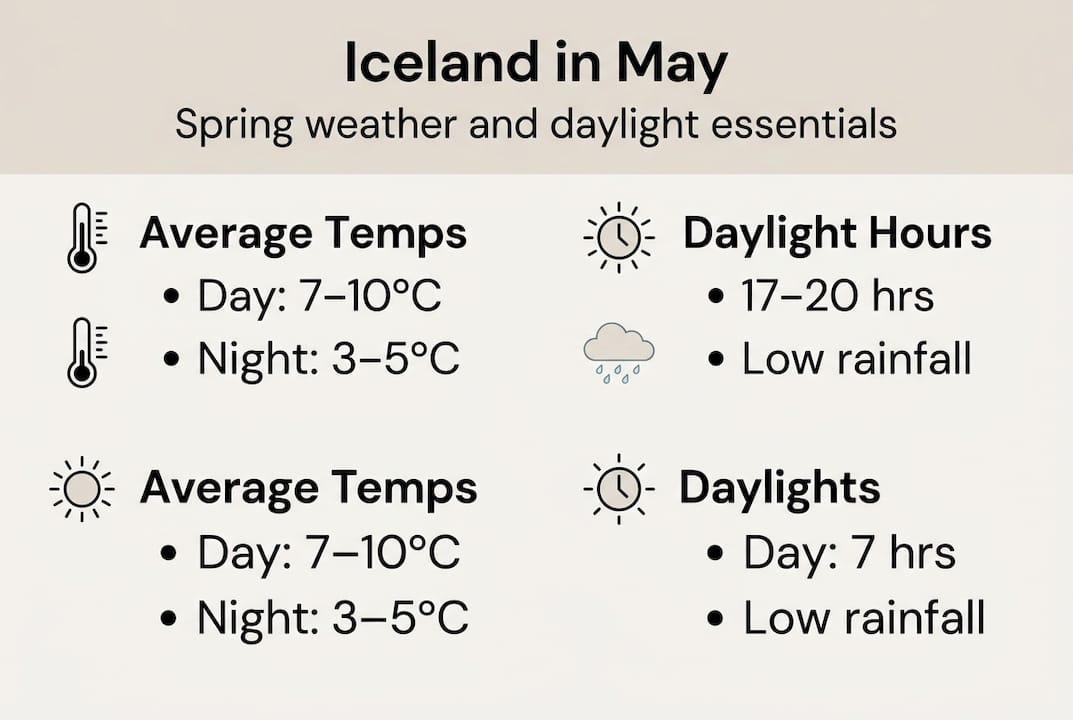
The daylight is the real game-changer. You’re working with 17 to 20 hours of usable light, which means you can squeeze in a morning glacier hike, an afternoon waterfall stop, and still catch golden-hour photography at 10 PM. The tradeoff? You’ll want a good sleep mask, because the sky never fully goes dark.
Weather in Iceland shifts fast. A clear morning can turn into a sideways rain shower by noon, then clear again by 3 PM. That’s not a warning to stay home. It’s a reason to dress in layers and embrace it.
What to pack for May in Iceland:
- Waterproof hiking boots (non-negotiable)
- A windproof, waterproof outer shell jacket
- Moisture-wicking base layers and a mid-layer fleece
- Lightweight gloves and a hat
- A sleep mask for the long evenings
- Sunscreen (UV exposure increases with extended daylight)
- A reusable water bottle (Icelandic tap water is exceptional)
| Condition | May average |
|---|---|
| Daytime temperature | 7–10°C (44–50°F) |
| Nighttime temperature | 3–5°C (37–41°F) |
| Daylight hours | 17–20 hours |
| Monthly rainfall | 44–60mm |
| Crowd level | Low to moderate |
Snowmelt in May supercharges the waterfalls. Skógafoss, Seljalandsfoss, and Svartifoss are all running at their most dramatic. Hiking trails at lower elevations are mostly clear, though you may hit patches of ice or mud near glacier zones. For budget travel tips that factor in seasonal conditions, planning your gear and routes together saves both time and money.
Pro Tip: Pack clothes you can mix and match in layers rather than bulky single-purpose items. Iceland’s weather changes faster than most travelers expect, and a three-layer system handles everything from sunny hikes to cold coastal winds.
Can you get around? Road conditions, driving, and safety in May
With the weather and light in your favor, your next concern is how much ground you can cover and how to do it smartly.
The good news: the Ring Road (Route 1) is fully open in May, and so are most popular South Coast routes. The Golden Circle is accessible and well-maintained. You can drive between Reykjavik, Vík, Jökulsárlón, and Höfn without major restrictions.
The catch: highland F-roads stay closed until late May or later and require 4x4 vehicles with river-crossing capability even when they do open. Attempting an F-road in a standard rental car is not just risky. It voids your insurance and can strand you in genuinely remote terrain.
| Route type | May status | Vehicle needed |
|---|---|---|
| Ring Road (Route 1) | Open | Any rental |
| Golden Circle | Open | Any rental |
| South Coast roads | Open | Any rental |
| F-roads (Highlands) | Mostly closed | 4x4 only |
| Landmannalaugar access | Closed or restricted | 4x4 with river crossing |
Driving safely in May: key rules to follow
- Check real-time Iceland road status every morning before you drive. Conditions change overnight.
- Never drive off marked roads. It’s illegal and causes serious environmental damage.
- Watch for single-lane bridges, which are common on South Coast routes.
- Slow down in wind. Gusts near coastal areas and mountain passes can push vehicles sideways.
- Fill up on gas whenever you see a station. Distances between towns can be long.
For groups, renting a larger vehicle and splitting costs makes the Ring Road extremely affordable. Solo travelers often find that combining a rental car with shuttle services between hubs saves money while keeping flexibility. Staying at South Coast hostels that are centrally located also cuts down on unnecessary driving.
Pro Tip: Download the Vegagerðin app (Iceland’s official road administration tool) alongside road.is. Together they give you real-time closures, weather alerts, and webcam feeds from key mountain passes before you commit to a route.
“The road that looks fine on Google Maps can be a different story in May. Always verify before you go, not after you’ve already turned off the Ring Road.”
Where and when to see puffins, whales, waterfalls, and the best hikes
With transportation sorted, here’s your guide to what not to miss outdoors in Iceland this May.
May marks the return of puffins and the start of whale watching season, making it one of the most wildlife-rich months on the calendar. Northern lights, however, are off the table. The nights are simply too bright. Think of that as a fair trade for everything else you gain.
Where to see puffins in May:
- Látrabjarg (Westfjords): Europe’s largest puffin colony, active from early May
- Vestmannaeyjar (Westman Islands): Accessible by ferry, excellent close-up viewing
- Borgarfjörður Eystri (East Iceland): Smaller crowds, stunning backdrop
- Dyrhólaey (South Coast): Convenient if you’re already near Vík
For photography, a 200–400mm lens gets you close without disturbing nesting birds. Early mornings between 6 and 9 AM offer the best light and the least foot traffic. Check puffin viewing tips before you visit to understand nesting behavior and respectful distances.
Top wildlife and nature highlights in May:
| Experience | Best location | May timing |
|---|---|---|
| Puffin watching | Látrabjarg, Vestmannaeyjar | Early to mid-May |
| Whale watching | Húsavík, Reykjavik harbor | Mid-May onward |
| Waterfall hikes | Skógafoss, Seljalandsfoss | All month (peak flow) |
| Glacier walks | Sólheimajökull, Skaftafell | All month (guided) |
| Wildflower meadows | South Coast, Þórsmörk | Late May |
Whale watching from Húsavík gives you the best odds for humpbacks and minkes, with tour success rates running high in May as feeding activity increases. Reykjavik harbor tours are more convenient but slightly less reliable for sightings.
Hiking in May rewards you with waterfalls at their most powerful and landscapes that feel raw and unfiltered. Staying at nature hostels for hikers close to trailheads means you can start early and avoid the midday rush at popular spots.
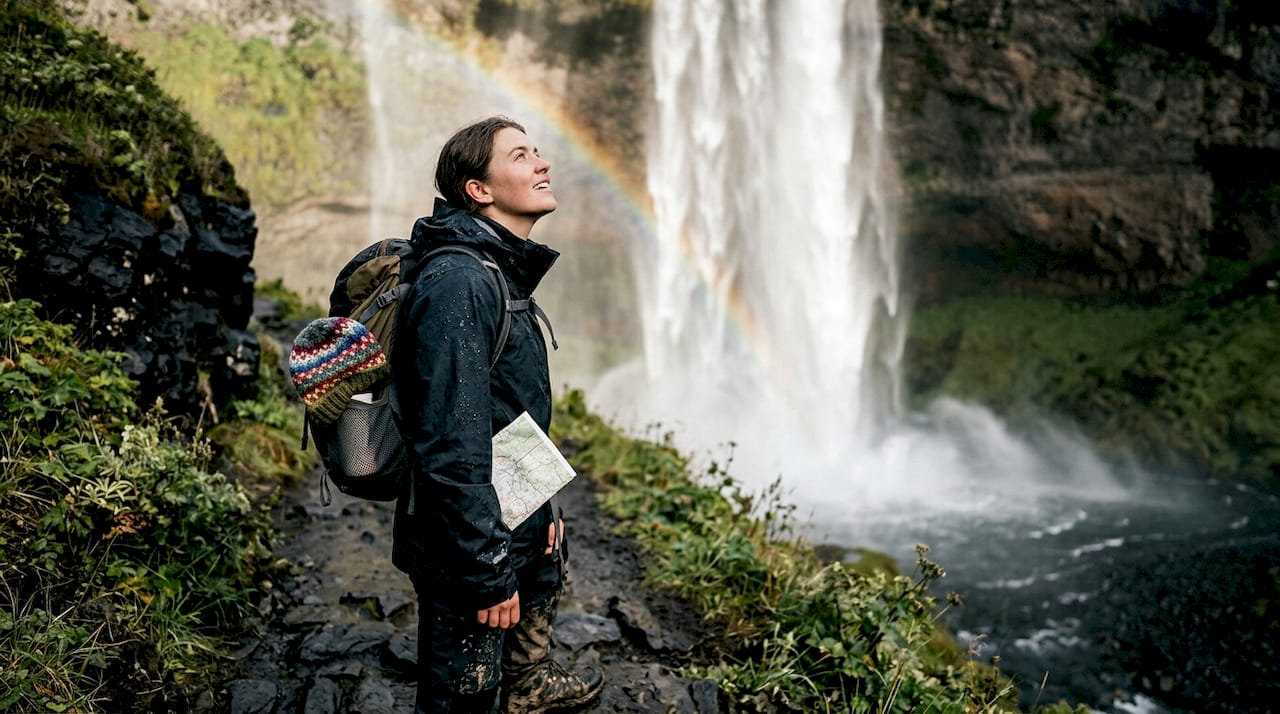
Pro Tip: At Seljalandsfoss, you can walk behind the waterfall. Go before 9 AM in May and you’ll often have the path entirely to yourself, with golden light pouring through the water curtain.
How to book affordable hostels and guesthouses near top sights
Knowing where and when to go is only half the battle. Here’s how to rest easy and save money close to your adventures.
May’s shoulder-season pricing is a real advantage. Hostels like Dalur HI Eco and KEX in Reykjavik are rated 9.1/10 and offer notably lower rates in May compared to July and August. Outside Reykjavik, the savings get even better, especially along the South Coast where options are fewer but quality is high.
Booking strategies that actually work:
- Book directly with the hostel when possible. You often get better rates and more flexibility than through third-party platforms.
- Look for hostels that offer private room buyouts. This is ideal for couples or small groups who want social amenities without sharing a room with strangers.
- Combine your Golden Circle and South Coast itinerary to minimize backtracking and reduce nightly accommodation changes.
- Check cancellation policies carefully. May weather can shift plans, so free cancellation is worth a small premium.
| Traveler type | Best option | Avg. May savings vs. July |
|---|---|---|
| Solo | Dorm bed in hostel | 25–35% lower |
| Couple | Private room buyout | 20–30% lower |
| Group (4–6) | Full dorm room rental | 30–40% lower |
For social hostels in Iceland that bring travelers together around shared kitchens and common spaces, the community aspect adds real value beyond just a bed. If you prefer more control over your space, understanding hostel room options helps you choose between dorm beds and full room bookings. Couples specifically benefit from looking at couple-friendly room types that balance privacy with affordability.
For Golden Circle stays, booking early in May gives you access to guesthouses that fill up quickly even in shoulder season. The South Coast, however, still has availability if you plan two to three weeks out.
Pro Tip: Staying outside Reykjavik cuts your nightly rate significantly and puts you closer to the landscapes you came to see. A hostel near Vík or Kirkjubæjarklaustur saves you an hour of driving each way to the major South Coast attractions.
Our take: why adventure travelers should embrace Iceland in May
Here’s our honest perspective after years of exploring Iceland’s shoulder season.
Most travelers wait for summer because it feels safer. Guaranteed light, warmer temps, and fully open roads. But that safety comes with a cost: buses full of tour groups at Skógafoss, parking lots overflowing at Jökulsárlón, and hostel rates that have doubled since April.
May is genuinely different. The country is waking up, not yet performing for peak season. You’ll find fewer crowds and lower costs without sacrificing the experiences that make Iceland worth the trip. The waterfalls are louder. The puffins are fresher. The roads are quieter.
Yes, the weather is unpredictable. A morning hike can turn into a wet scramble. That’s not a flaw. It’s the point. Iceland in May rewards travelers who stay flexible and lean into the conditions rather than fighting them. The best shots, the most memorable moments, and the unexpected encounters with wildlife happen when you’re not following a rigid plan.
For solo travelers, couples, and groups alike, May offers something summer can’t: room to breathe. Staying at budget-friendly nature hostels away from the capital puts you in the landscape, not just near it. Book direct, stay flexible, and let Iceland surprise you.
Ready to explore? Find your perfect hostel for Iceland in May
Inspired to see Iceland on your terms? Here’s how to make the most of May, starting with where you stay.
Fox Hostel sits in Hrífunes Nature Park, just 35 minutes east of Vík, right in the heart of South Iceland’s most iconic landscapes. It’s a beautifully converted traditional Icelandic barn with a warm, social atmosphere, a fully-equipped communal kitchen, and an on-site pizzeria that makes evenings genuinely enjoyable after a long day on the trail.

Solo travelers can book a single bed in a dorm. Couples and groups can buy out an entire room for full privacy, with all the shared amenities still available. Staff are on hand to help you get the most out of your stay. Booking direct through Fox Hostel gets you the best available rate and the most flexibility for your May adventure.
Frequently asked questions
What is the weather like in Iceland in May?
May brings 17–20 daylight hours and average temperatures of 3–10°C (37–50°F), with the lowest rainfall of any spring month, making it ideal for outdoor exploration.
Can you see northern lights in Iceland in May?
No northern lights are visible in May because the nights stay too bright. Plan your aurora trip for September through March instead.
Are F-roads in Iceland open in May?
Highland F-roads stay closed through most of May and require 4x4 vehicles even when they do open. Stick to the Ring Road and South Coast routes for safe, accessible driving.
Where can I see puffins in Iceland in May?
Puffin watching begins in May at colonies including Látrabjarg, Vestmannaeyjar, and Borgarfjörður Eystri, with Dyrhólaey also accessible from the South Coast.
How do I find affordable accommodation in Iceland in May?
Hostels like Dalur HI Eco and KEX score 9.1/10 and offer lower May pricing. South Coast hostels outside Reykjavik deliver even better value and put you closer to the top attractions.
Recommended
- Travel Iceland on a budget: smart tips for affordable adventure | Fox Hostel – South Iceland
- Discover nature hostels: budget-friendly adventure in Iceland | Fox Hostel – South Iceland
- Top couples room types in Iceland for comfort & adventure | Fox Hostel – South Iceland
- Why choose hostels on Iceland’s South Coast in 2026 | Fox Hostel – South Iceland