Best Time to Visit Vík for Photographers, Families, and Aurora Chasers
Best Time to Visit Vík for Photographers, Families, and Aurora Chasers
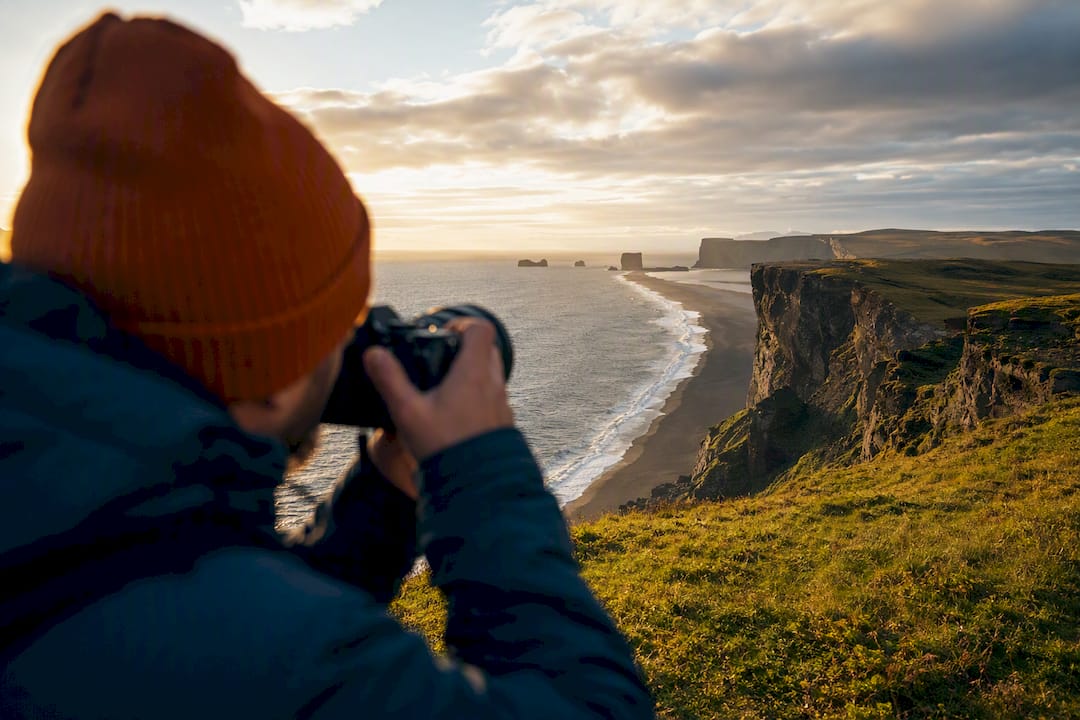
May and September are the best months to visit Vík for most travelers, balancing lighter crowds, better prices, and generally workable weather. If long summer daylight and puffins top your list, aim for June through August. If Northern Lights and ice caves are the draw, plan for late autumn through winter and accept shorter days and more schedule risk.
TL;DR:
- Visiting in May or September offers lower prices, fewer crowds, and still workable weather, making these months ideal for flexible travelers.
- Peak summer (June to August) provides extensive daylight and puffin sightings but comes with fully booked accommodations and higher costs.
- Winter (November to March) reveals the Northern Lights and ice caves but involves shorter days, potential road closures, and unpredictable weather.
- Packing essentials include waterproof gear, sturdy footwear, warm layers, and advance booking for specialized activities like ice cave tours in shoulder and winter months.
- Most activities like puffin viewing are seasonal, requiring careful planning around specific months for the best experience and safety considerations.
Table of Contents
- When Is the Best Time to Visit Vík for Your Trip?
- What’s the Weather Like in Vík, and What Should You Pack?
- What Can You Do in Vík Each Season?
- How Many Days Do You Need in Vík, and How Do You Get There?
- What Safety Rules Should You Know Before You Go?
- What Do Locals Actually Recommend for Timing a Vík Trip?
- Where Should You Stay Near Vík for Easy Access to Everything?
- Where Can You Check Current Conditions Before You Go?
- Sources
When Is the Best Time to Visit Vík for Your Trip?
The right month depends less on the calendar and more on what you’re chasing. Vík rewards different travelers at different times of year, and the tradeoffs are sharp enough that picking the wrong season can mean missing your main reason for coming.
Summer (June through August) is when Vík runs at full capacity. Days stretch past 20 hours of light near the solstice, puffins nest along the cliffs at Dyrhólaey, and every hiking trail and tour operator is open for business. The catch is everyone else knows this too. Parking lots at Reynisfjara fill early, guesthouses book out months ahead, and prices for cars and rooms climb accordingly.
Shoulder season (May, and September through October) threads the needle. Crowds thin out noticeably, prices for cars and lodging drop, and the weather, while more unpredictable than July’s, is still workable for most sightseeing. Shoulder-season travel to Vík consistently gets flagged by travel guides as the sweet spot between summer’s chaos and winter’s darkness, and it lines up with how Fox Hostel sees booking patterns shift year to year.
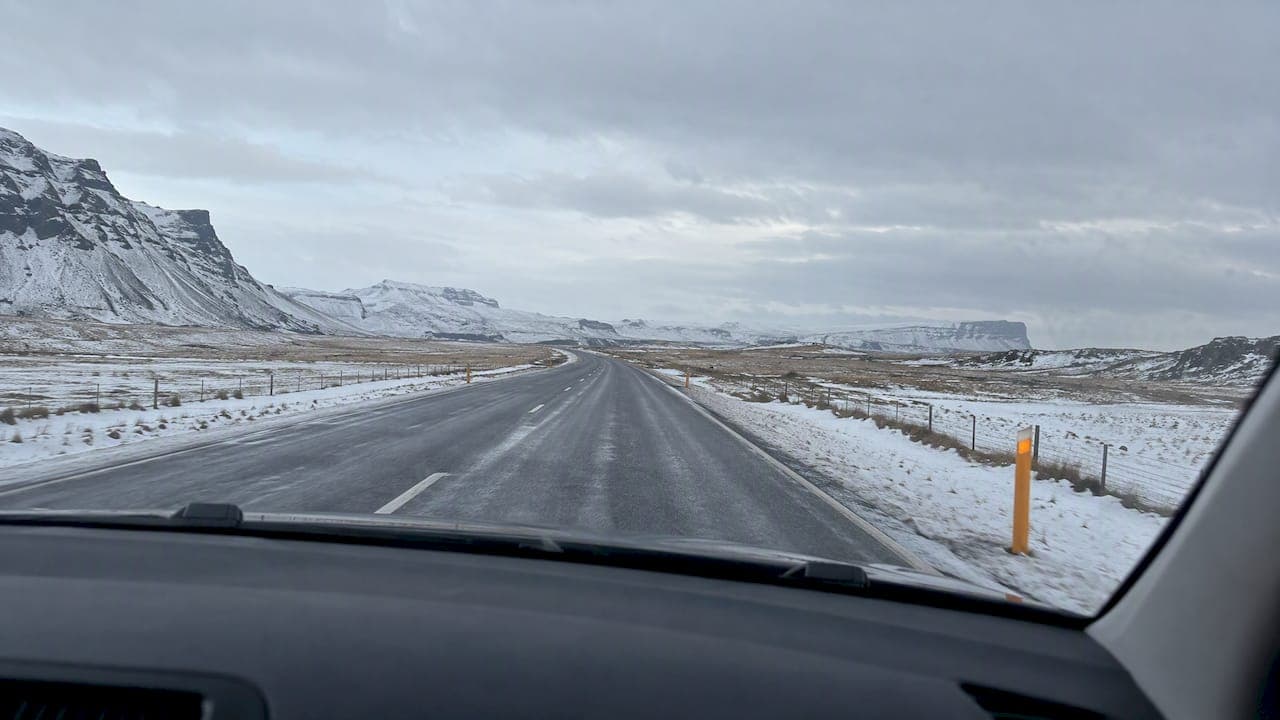
Winter (November through March) flips the priority list entirely. This is Northern Lights territory, and it’s also when ice caves inside glaciers become safely accessible to guided groups. The tradeoff is steep: daylight can shrink to five or six hours in December, and official guidance for Vík notes that road closures and tour cancellations become a real possibility, not a footnote.
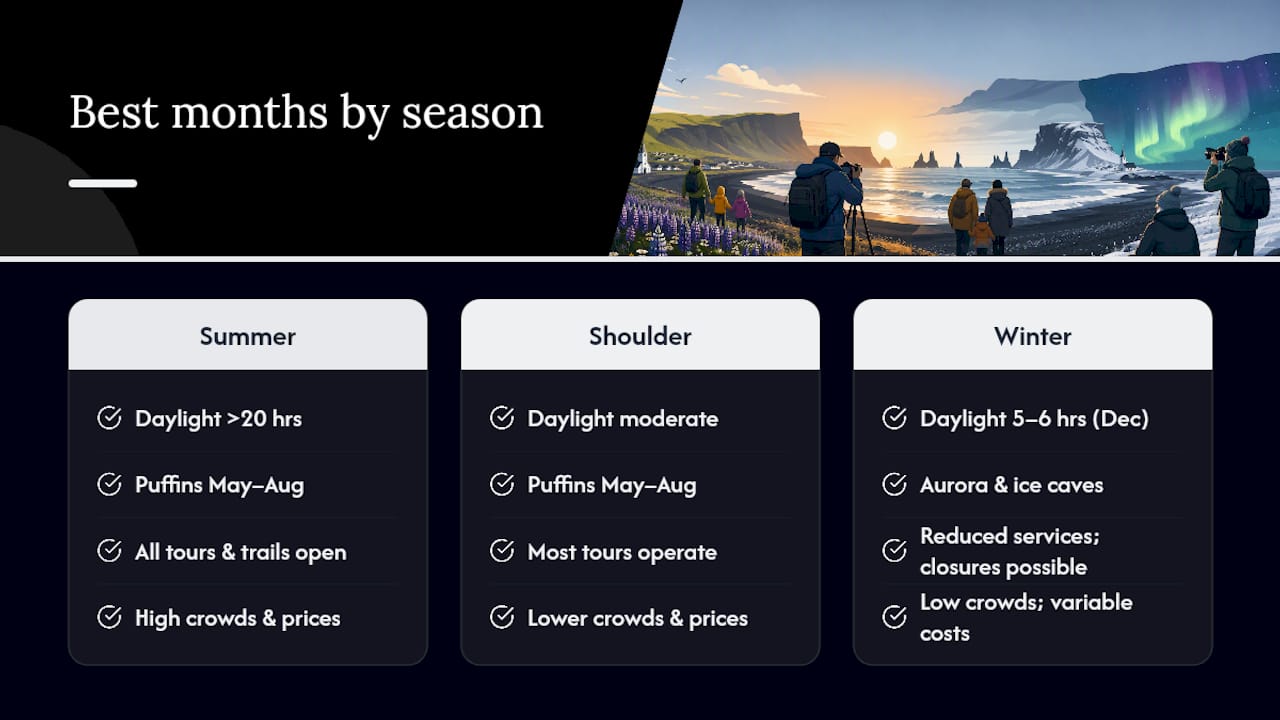
A few month-specific notes worth knowing: July tends to run warmest, puffins are generally visible from May into August, and December is typically the wettest month of the year in Vík.
What’s the Weather Like in Vík, and What Should You Pack?
Vík sits in a tundra climate zone (Köppen ET), with a mean annual temperature hovering around 3.7°C and rainfall spread fairly evenly across the calendar rather than concentrated in one wet season. July runs warmest; December tends to bring the heaviest rain. None of the twelve months qualify as reliably dry, so rain gear isn’t optional at any point in the year.
Daylight swings harder here than the temperature does. June days stretch past 20 hours of usable light, which means you can chase a sunset dinner and still have time for a midnight walk on the beach. December flips that entirely, with daylight often limited to five or six hours, which compresses your sightseeing window and makes early starts non negotiable.
Pack in this order of priority:
- A waterproof, windproof outer shell. Icelandic rain rarely falls straight down.
- Insulating mid layers you can add or shed as temperatures shift through the day.
- Waterproof, sturdy footwear with real ankle support for lava fields and beach rock.
- Warm hat, gloves, and a buff for wind protection at coastal viewpoints.
- Lens cloths and a dry bag for camera gear near Reynisfjara’s spray.
Pro Tip: Book any specialized gear (crampons, glacier harnesses, Super Jeep tours) at least a week ahead in shoulder and winter months. Guide companies run limited departures outside peak summer, and last-minute slots vanish fast.
What Can You Do in Vík Each Season?
Your activity list should drive your calendar, not the other way around. Vík’s biggest draws come and go with the seasons, and showing up in the wrong month means crossing something off your list entirely.
Summer (June to August) is built for puffins and long trails. Dyrhólaey’s puffin colonies are active from roughly May through August, and the extended daylight lets you pack hikes, beach walks, and waterfall stops into a single day without racing the sunset. Nearly every road and trailhead is accessible without special equipment.
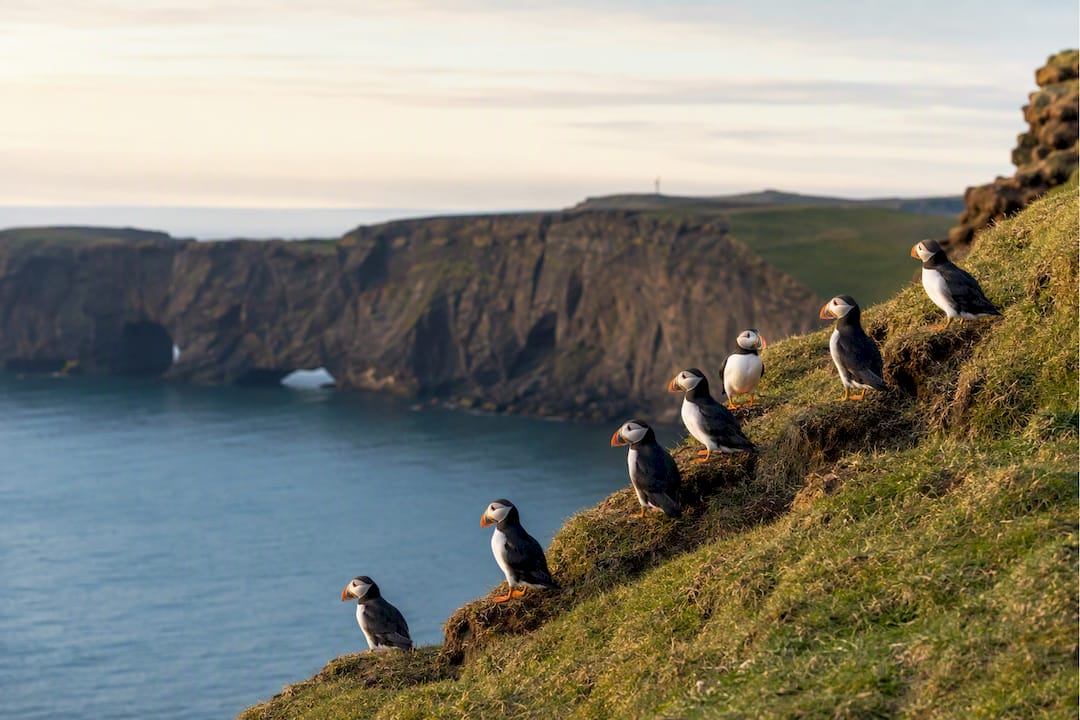
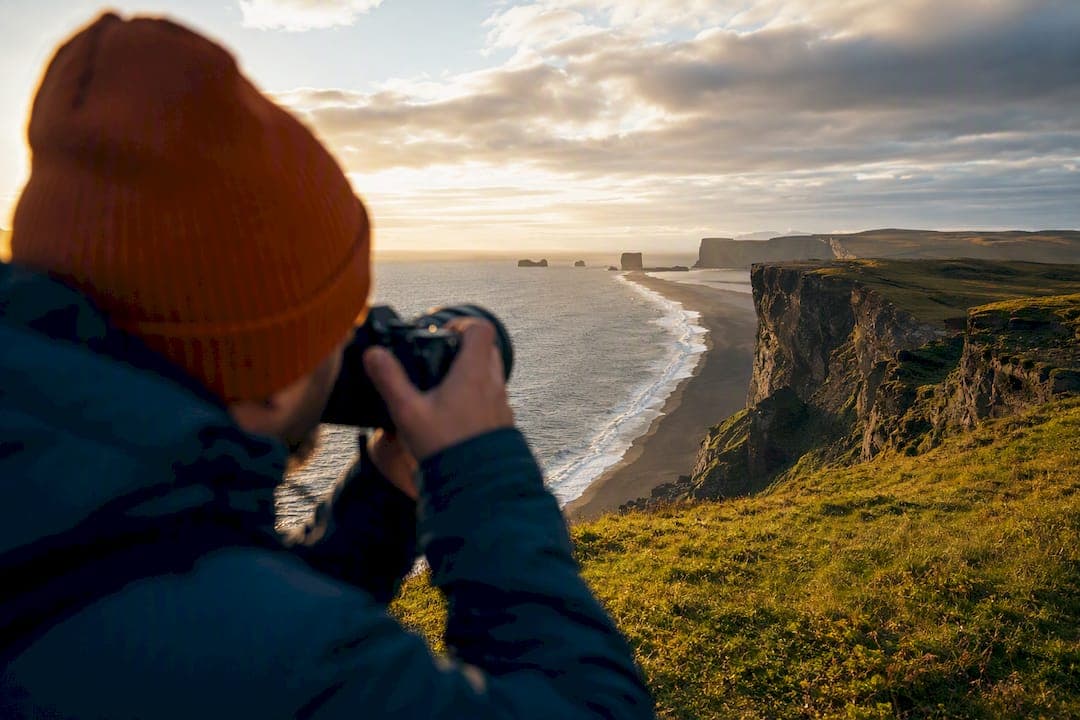
Shoulder season (May, September, October) favors people who want the postcard shot without fifty other people in the frame. Reynisfjara and the nearby waterfalls are noticeably quieter, light angles get more dramatic as the sun sits lower, and most tour operators are still running full schedules.
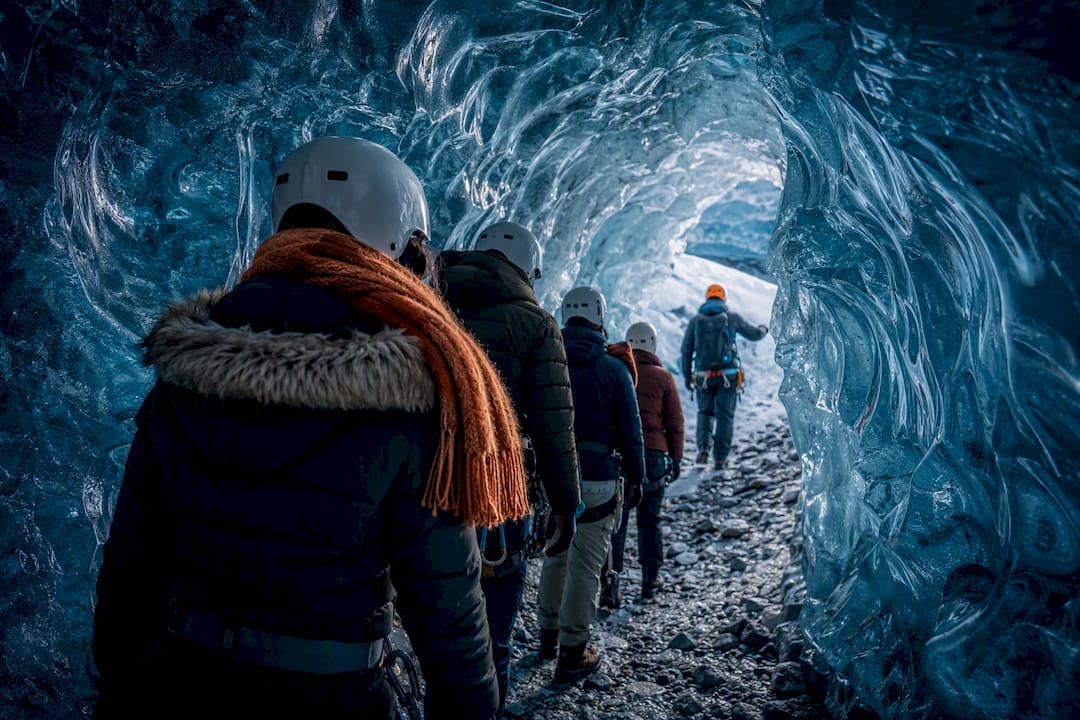
Winter (November to March) is when the Northern Lights and ice caves become the headline. Aurora visibility typically runs from late September into early April, and glacier ice caves open for guided access once conditions stabilize. Build slack into your itinerary. Storms cancel tours with little notice, and rebooking around a fixed flight home is a common headache.
A few things apply across all three windows: puffin sightings, aurora chasing, and ice cave access all depend on conditions you can’t control from home, so treat any single-day plan as a best guess rather than a guarantee. Check with operators directly before locking anything in, and lean on local activity guides for what’s realistically running that week.
How Many Days Do You Need in Vík, and How Do You Get There?
A quick stop at Reynisfjara and the village center takes about half a day. Give yourself 2 to 3 days if you want Vík plus nearby highlights like Dyrhólaey and Fjaðrárgljúfur canyon. Anyone treating Vík as a base for deeper South Coast exploration (Vatnajökull, Jökulsárlón, the Highlands) should plan for 4 or more days.
Getting there and around comes down to a few real options:
- Rental car: the most flexible choice, and a 4x4 is worth the extra cost if you’re driving in winter or heading toward rougher tracks.
- Bus (Strætó): runs from Reykjavík with a travel time around 3 hours 40 minutes, though schedules thin out in winter.
- Guided transfers and day tours: useful if you’d rather skip driving Icelandic roads entirely, especially in low-visibility months.
Book accommodation and any specialized tours (ice caves, glacier walks) at least a few weeks out for summer, and even shoulder season is tightening up as more travelers catch on. Winter travelers should pad their itinerary with a buffer day or two. Storms don’t ask permission, and a single closed road can rearrange your whole week. For a fuller sense of how to sequence stops, a South Coast itinerary guide is worth a look before you lock in dates.
What Safety Rules Should You Know Before You Go?
Reynisfjara’s sneaker waves are the single biggest safety issue near Vík. These waves surge far beyond the visible waterline with no warning, and official advisories are blunt about it: never turn your back to the sea, and keep well clear of the water’s edge no matter how calm it looks.
Road conditions demand the same respect. Check Road and vedur.is before every drive, not just once at the start of your trip. F-roads require proper 4x4 vehicles and often close entirely outside summer.
Ice cave and glacier tours should only happen with certified guides. These operators carry the equipment and local knowledge to read conditions that change fast and without visible warning. Book flexible tours and accommodation when you can. It’s the cheapest insurance you’ll buy on the trip.
What Do Locals Actually Recommend for Timing a Vík Trip?
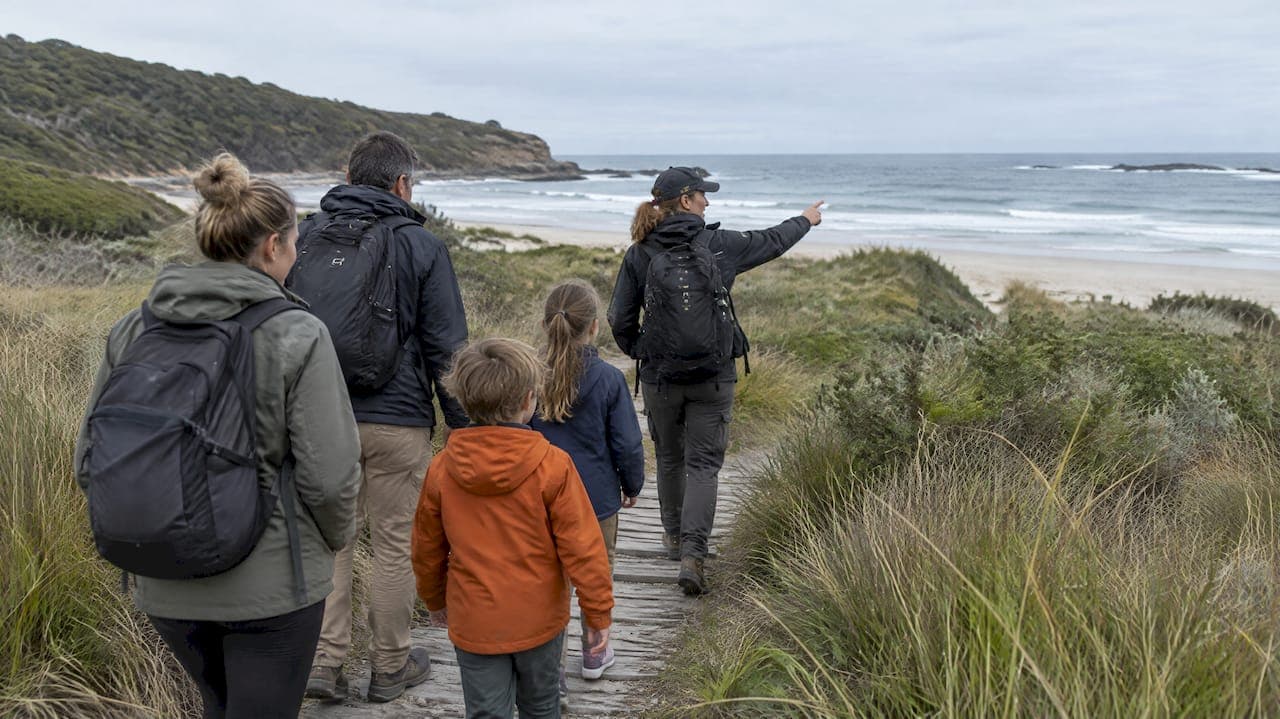
Solo travelers chasing flexibility do best in shoulder season. You get quieter trails and rooms without summer’s price spike. Photographers should lean toward late September through October or February through March, when low sun angles and dark skies both show up on the same trip. Families need summer’s daylight buffer. Kids and long winter darkness don’t mix well on a road trip schedule.
Groups are the exception to the shoulder-season rule. If your whole crew wants ice caves or aurora, winter is worth the shorter days. Staying east of Vík means less light pollution and a shorter drive back after a late aurora chase, which matters more than people expect at 1 a.m. in February.
My honest take: most people overweight summer because it’s the “safe” answer, then wonder why they never saw the sky light up green. Pick your season for the thing you actually want, not the thing that sounds easiest to plan around.
— Siggi
Where Should You Stay Near Vík for Easy Access to Everything?
Accommodation is available in a converted Icelandic barn east of Vík, with flexible booking options suitable for solo travelers or groups — ideal for learning how to enjoy self-catering stays. Guests can book individual beds or entire rooms for privacy. Communal kitchen and on-site dining options provide convenience close to the accommodation.

The location matters more than it sounds. You’re close enough to Reynisfjara and Dyrhólaey for an early start ahead of the tour buses, and far enough from town that the dark skies overhead make aurora watching genuinely good on a clear winter night. Check current rooms and availability for your travel dates, and if you’re coming with a group, look into a full room buyout through the main booking page before your preferred dates fill up.
Where Can You Check Current Conditions Before You Go?
A few sources are worth bookmarking before any Vík trip. Check road.is the morning you plan to drive, and vedur.is for weather and aurora forecasts throughout your stay. The Iceland.org city page for Vík covers official seasonal guidance, while Perlan’s Vík overview is useful for shoulder-season planning specifics. Always confirm road status right before departure, not the night before.