Decode Icelandic hostel terms for budget travel success
Decode Icelandic hostel terms for budget travel success
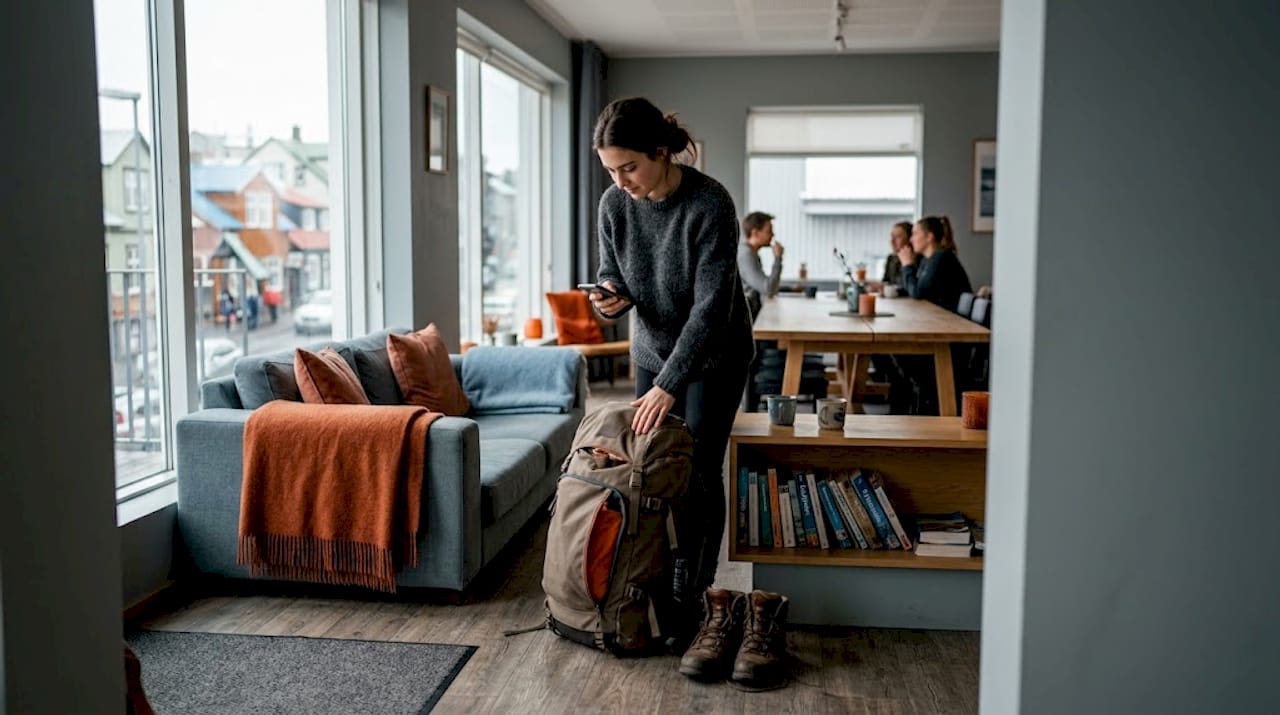
TL;DR:
- Icelandic hostels often use unique terms like gistihús and salur, which impact costs and guest experience.
- Self-check-in and communal kitchens are standard, emphasizing self-sufficiency and social interactions.
- Understanding local terminology helps travelers choose suitable accommodations, from mountain huts to guesthouses.
Walking into your first Icelandic hostel after a long Ring Road drive and staring at words like gistihús, salur, or “sleeping bag accommodation” on the booking page is genuinely disorienting. These aren’t just translation quirks. They signal cost differences, packing requirements, and unwritten rules about how your stay will actually work. Get them wrong, and you’re either overpaying, freezing without linens, or accidentally breaking kitchen etiquette on your first night. Get them right, and you unlock a much cheaper, more comfortable, and far more rewarding trip through one of the world’s most spectacular landscapes.
Table of Contents
- Why hostel terminology matters for Icelandic travel
- Essential Icelandic hostel terms and their meanings
- Budget-saving hostel mechanics: self-check-in and communal living
- Huts, guesthouses, and hostel room types: comparing options
- What most backpackers miss about Icelandic hostel lingo
- Ready to book? Find the right Icelandic hostel for you
- Frequently asked questions
Key Takeaways
| Point | Details |
|---|---|
| Learn Icelandic hostel lingo | Understanding unique terms helps you budget wisely and avoid confusion during your trip. |
| Master self-check-in routines | Most hostels use PIN lockboxes and flexible bed selection, so know the process before arrival. |
| Pick the right accommodation | Compare guesthouses, dorms, and huts to find the best fit for your comfort, adventure, and wallet. |
| Save money with kitchens | Cooking in shared hostel kitchens can reduce your meal costs by up to 70 percent. |
| Respect communal etiquette | Keeping shared spaces clean and following local customs ensures a smooth, sociable hostel stay. |
Why hostel terminology matters for Icelandic travel
Iceland is not like other destinations where hostel culture follows a simple international template. The country’s accommodation scene is a blend of global backpacker conventions and deeply local traditions, and that mix creates vocabulary gaps that catch visitors off guard. A word that looks like “guesthouse” might function entirely differently from what you’d expect in Southeast Asia or Western Europe.
Understanding these terms has real, tangible consequences for your budget and comfort:
- Cost signals: A property labeled gistihús almost always implies a lower nightly rate because it’s self-service. Missing that signal means you might skip a bargain.
- Gear requirements: “Sleeping bag accommodation” isn’t a decorative phrase. It means you arrive without linens. If you don’t have a bag, you’re renting one at extra cost.
- Etiquette cues: Many Icelandic hostels operate on an honor system. Communal kitchens, shared lounges, and self-check-in all depend on guests understanding their responsibilities without being told.
- Cultural references in names: Icelandic hostels blend global terms with local nuances, and property names often evoke natural landmarks or Icelandic heritage. Knowing what a name references helps you understand a property’s identity and location.
“Iceland’s hostel industry operates with minimal hand-holding. There’s no universal glossary, and the emphasis on self-catering and communal etiquette is often assumed rather than explained.”
The cultural context matters beyond just saving money. Icelanders have a strong sense of shared stewardship. Communal spaces are treated with care, and travelers who walk in without understanding that unwritten code can create friction quickly. Check out the full hostel amenities guide to understand exactly what’s included (and what isn’t) before you book.
Essential Icelandic hostel terms and their meanings
Now that you recognize why words matter, here’s a practical breakdown of the key Icelandic hostel terms you’ll encounter before, during, and after booking.
Gistihús is the term you’ll see most often. It translates to “guesthouse” and describes a budget-friendly, self-service property that usually offers shared kitchens, simple private or dorm rooms, and lower price points than hotels. Think of it as a locally run hostel with a domestic feel. Gistihús properties are often family-operated, and check-in is frequently unmanned.
Sleeping bag accommodation is a classification, not a description of luxury. It means the property provides a mattress and a bunk or bed frame, but no linens. You bring your own sleeping bag. This is especially common in highland huts and remote bases. If you’re planning any interior travel, this term will appear constantly.
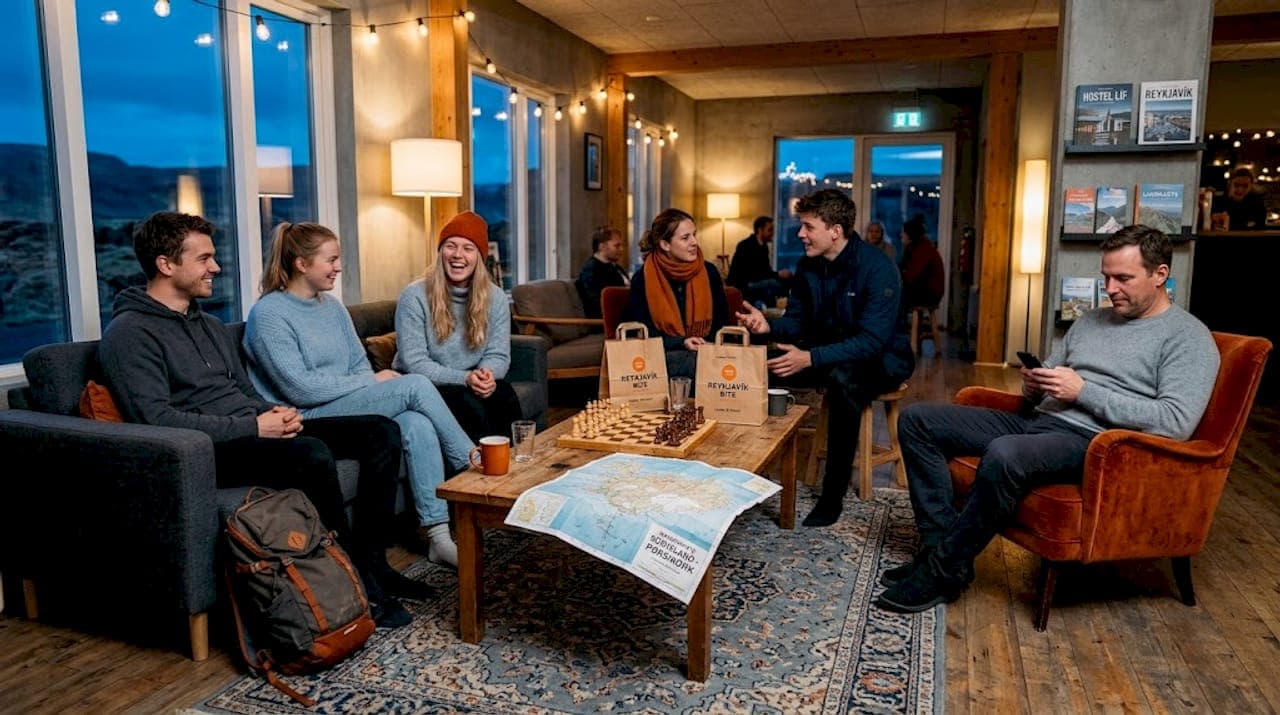
Salur means “hall” in Icelandic and usually refers to a communal common area, dining space, or lounge within a hostel. When a hostel says “salur available,” it’s telling you there’s a shared gathering space, which is a real comfort signal on cold Icelandic evenings.
Tveggja manna herbergi is a mouthful, but it simply means “twin room”, a room set up for two people. Useful to know when you’re filtering room types on booking sites that haven’t translated their listings fully.
Some hostel names carry meaning too. KEX Hostel in Reykjavík takes its name from the Icelandic word for “biscuit,” a nod to the building’s history as a biscuit factory. Lækur Hostel takes its name from the Icelandic word for “stream,” reflecting the natural surroundings. These names aren’t random branding. They tell you something real about the property’s character and location.
Here’s a quick reference table to keep things clear:
| Icelandic term | Literal translation | What it means for travelers |
|---|---|---|
| Gistihús | Guesthouse | Budget, self-service, kitchen access |
| Salur | Hall | Shared common area or lounge |
| Tveggja manna herbergi | Twin room | Room for two with separate beds |
| Sleeping bag accommodation | N/A (English term) | Bring your own sleeping bag, no linens |
| Farfuglaheimili | Traveler’s home | Traditional hostel, often HI-affiliated |
Pro Tip: Before booking any property in Iceland, search the listing for the word “linen” or “bed kit.” If it’s absent and the price seems unusually low, you’re almost certainly looking at sleeping bag accommodation. A quick email to the host can save you a very cold night.
For a deeper look at how these terms translate into actual booking choices, explore your room options in Iceland before committing to a property type. You’ll also want to understand how shared hostel spaces work in practice, and whether a private room makes sense for your trip style and budget.
Budget-saving hostel mechanics: self-check-in and communal living
After mastering terminology, you’ll want to understand how Icelandic hostels function day-to-day. The operational model here is leaner and more trust-based than almost anywhere else in Europe.
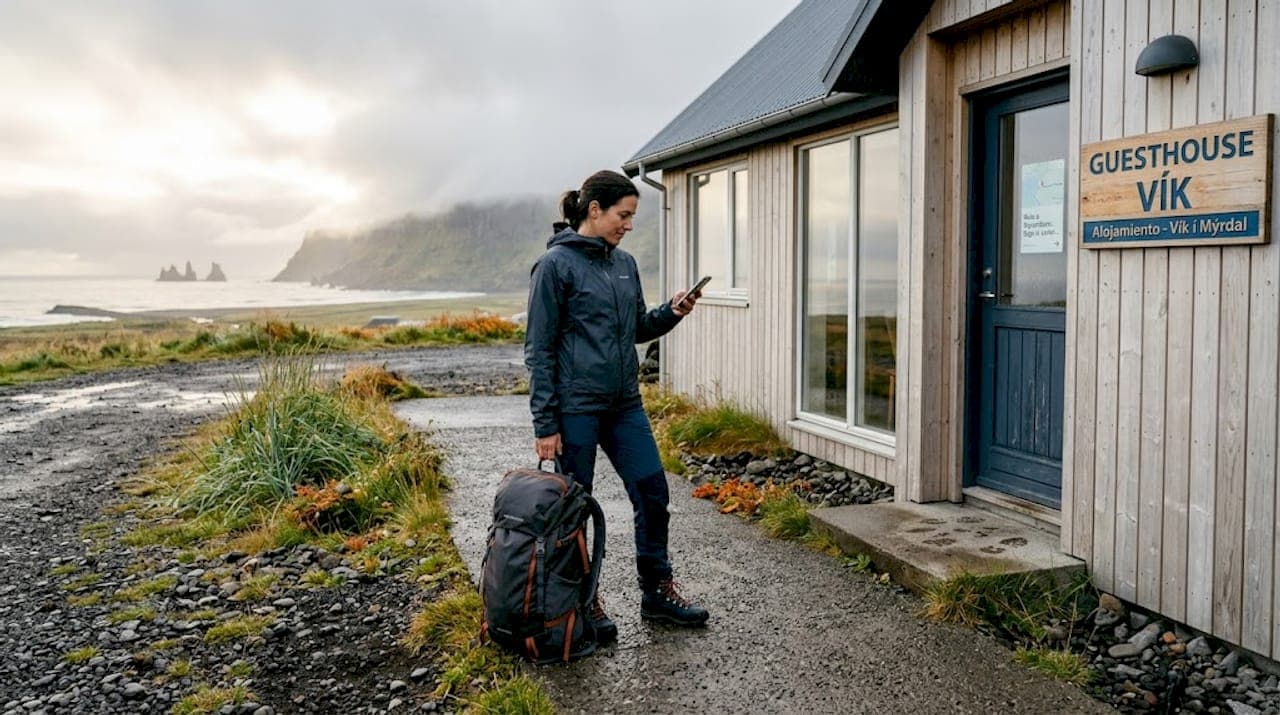
Self-check-in is the standard, not the exception. Most Icelandic hostels, especially those outside Reykjavík, use a PIN code lockbox system. Smart locks with entry codes mean you can arrive at midnight after a long drive from the Highlands and walk straight in without waiting for anyone. Your booking confirmation will include the code, and the door handles the rest. This is genuinely one of the more traveler-friendly systems you’ll encounter anywhere.
Here’s how a typical hostel arrival process looks in Iceland:
- Receive your booking confirmation with a PIN code and arrival instructions.
- Locate the lockbox or smart lock at the entrance (usually labeled clearly).
- Enter your PIN and collect the key or room card.
- Find your room, check the bed list or chalk board for available beds.
- Tag your bed or mattress with your gear to claim your space.
- Register in the guest logbook if provided.
- Familiarize yourself with kitchen rules, posted near the stove or refrigerator.
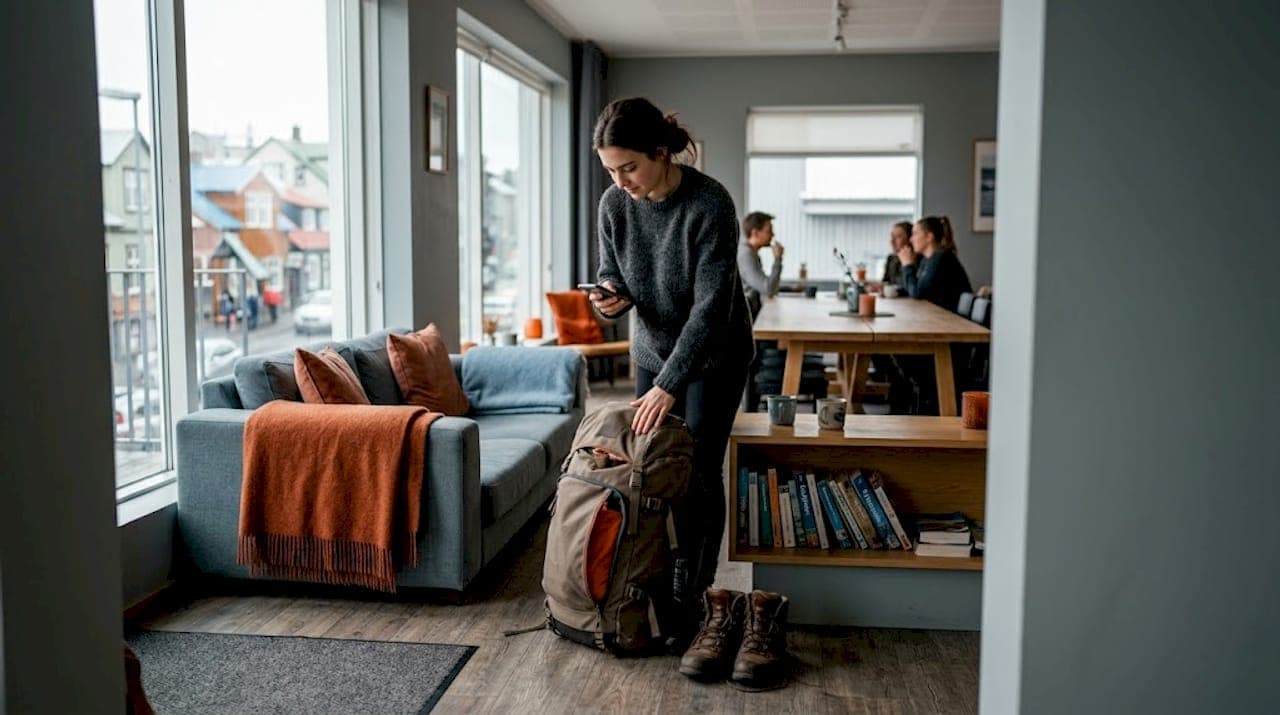
Kitchen access is where you save the most money. Using a shared hostel kitchen instead of restaurants can cut your daily food spend by up to 70%. In a country where a sit-down meal regularly costs $30 to $50, that difference adds up to hundreds of dollars over a two-week trip. Cook simple meals, share ingredients with other travelers when it makes sense, and treat the kitchen like a shared apartment rather than a hotel amenity.
| Expense category | Eating out daily | Self-catering daily | Monthly savings |
|---|---|---|---|
| Breakfast | $15-20 | $3-5 | $360-450 |
| Lunch | $20-30 | $5-8 | $450-660 |
| Dinner | $35-50 | $8-12 | $810-1140 |
| Total | $70-100 | $16-25 | $1620-2250 |
Checkout etiquette at Icelandic hostels is specific. Strip your sheets and leave them folded on the mattress (or in the laundry bin). Be out by 11am in most properties. Clean your dishes the same night you use them. These aren’t optional courtesies. They’re the mechanics that keep costs low for everyone.
Pro Tip: Many Icelandic hostels offer discount codes for extended stays. If you’re staying three or more nights, ask directly or look for a code in your booking confirmation. Codes like GET10 are sometimes embedded in newsletters or regional travel blogs and can shave meaningful amounts off your total bill.
Huts, guesthouses, and hostel room types: comparing options
With hostel mechanics explained, let’s evaluate which accommodation types fit your Iceland adventure and budget. Iceland offers a genuinely wide spectrum, from ultra-basic highland sleeping spots to premium converted barn hostels, and each type uses its own terminology.
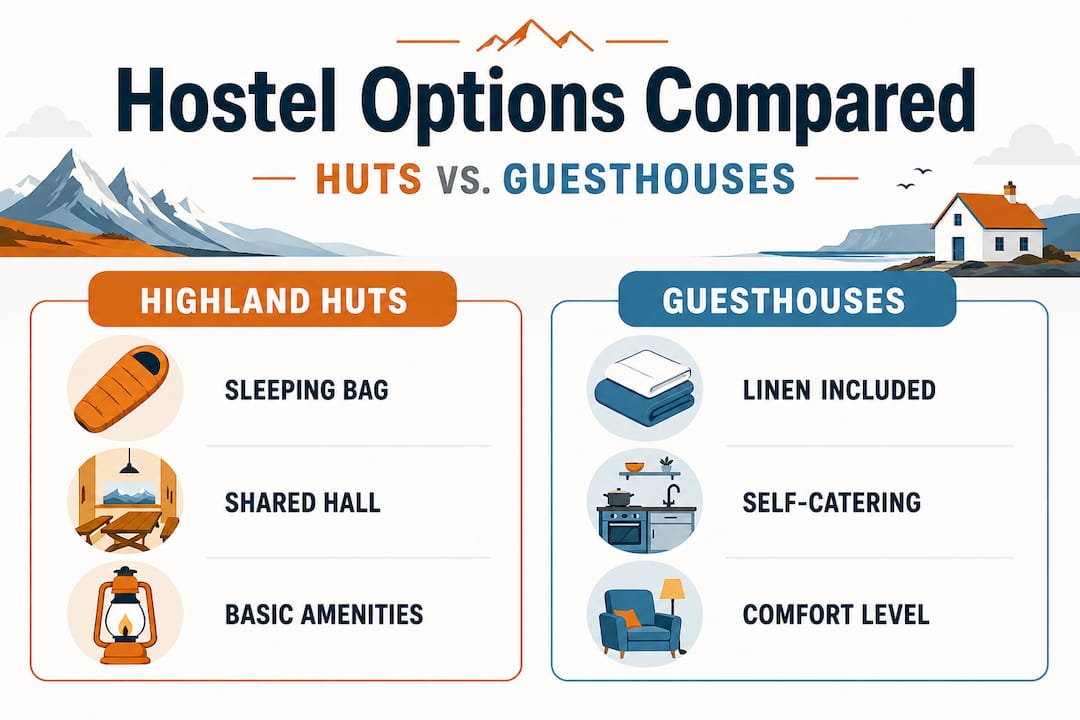
Mountain huts are the most rugged option. They exist primarily in the interior Highlands and are managed largely by Ferðafélag Íslands (the Icelandic Touring Association). These developed huts provide bunk beds and basic cooking facilities, but sleeping bag accommodation is almost always required. Bring a 0°C rated sleeping bag at minimum. Temperatures in the Highlands can drop sharply even in summer, and the huts are not heated to hotel standards.
Guesthouses (gistihús) represent the sweet spot for most budget travelers. They typically cost $100 to $150 per night and almost always include kitchen access. The atmosphere is quieter and more domestic than a standard hostel. Great choice for solo travelers who want calm mornings and cooking flexibility without the full hostel social scene.
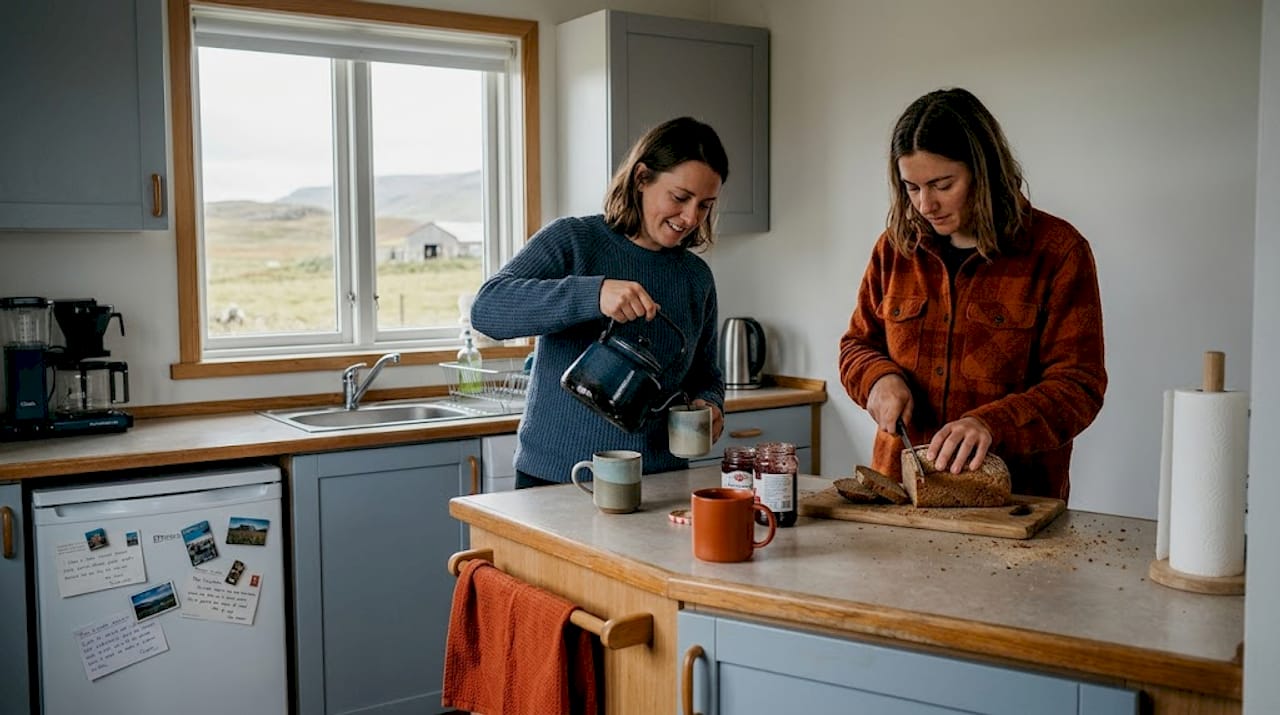
Dorm rooms in dedicated hostels offer the most social experience and the lowest per-night cost. Linens are often included but always confirm before booking. Some older or more remote properties still use sleeping bag accommodation even for dorm beds.
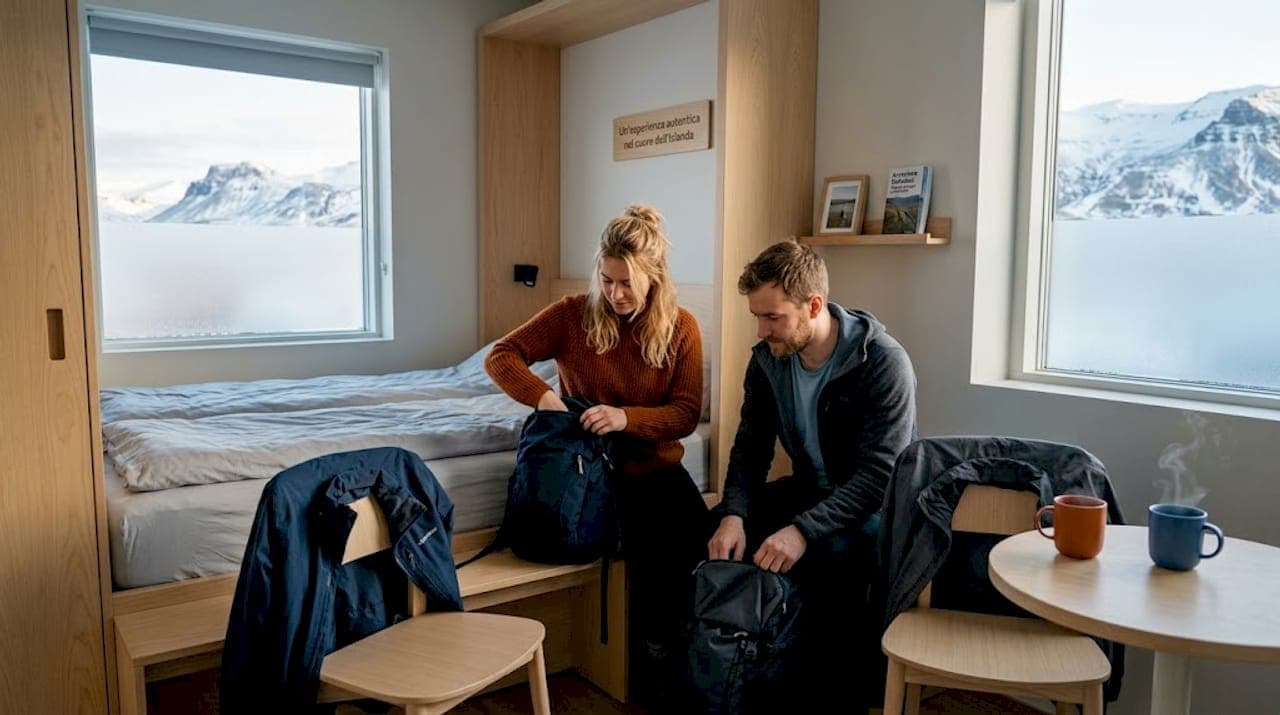
Private and twin rooms in hostels give you a door that closes. You get the kitchen access and social spaces of the hostel format without the shared sleeping situation. The cost is higher, but significantly lower than a hotel equivalent. For couples or travelers who genuinely need solid sleep before early morning drives, this is often worth every extra krona.
| Accommodation type | Sleeping bag needed? | Kitchen access | Social atmosphere | Relative cost |
|---|---|---|---|---|
| Mountain huts | Yes (0°C rated) | Basic cooking only | Low | Very low |
| Gistihús (guesthouse) | Usually no | Full kitchen | Low to moderate | Low to moderate |
| Hostel dorm | Sometimes | Full kitchen | High | Lowest |
| Hostel private/twin room | No | Full kitchen | Moderate | Moderate |
For a broader look at accommodation in more natural settings across Iceland, the nature hostels guide covers options that mix comfort with access to landscapes most travelers only drive past.
What most backpackers miss about Icelandic hostel lingo
Here’s something worth saying directly: knowing the literal meaning of these words is only half the job. Travelers who read a glossary and consider themselves prepared often still hit friction on arrival, because the operational culture behind Icelandic hostels carries its own unwritten language.
The biggest gap we see is the assumption that a hostel will function like a hotel with fewer amenities. It won’t. A gistihús operates on the assumption that you’re a capable, self-sufficient adult who reads the posted instructions, cleans up without being asked, and respects the fact that the next guest needs an equal experience. That’s not a complaint about guests. It’s just an honest description of the system.
The second missed piece is the relationship between early booking and good options. Iceland’s South Coast, in particular, fills up fast during summer. By the time you’re searching for a bed in late June or July, the best-value properties are often full. Understanding that “sleeping bag accommodation” at a mountain hut isn’t your only option only helps you if you’ve booked something better in advance.
Mountain huts also deserve a specific warning for travelers drawn to the Highlands. They are genuinely basic. Not “Instagram rustic” basic. Actually basic. Minimal plumbing, communal sleeping, no guarantees on heating. That’s not a flaw, it’s the point. But arriving without the right gear because you didn’t fully parse “sleeping bag accommodation” is a real problem at altitude, in variable weather.
Knowing the mechanics of social hostels also reveals a genuine travel benefit that most backpackers underuse. The communal kitchen, the salur, the shared arrival experience, these aren’t inconveniences to tolerate. They’re where the best local tips, trip-share arrangements, and genuine connections get made. Some of the most useful South Coast itinerary advice you’ll ever get comes from a fellow traveler you meet over a shared pot of pasta at 9pm.
Ready to book? Find the right Icelandic hostel for you
With a working vocabulary and a clear picture of how Iceland’s hostel ecosystem functions, you’re in a genuinely better position than most travelers who arrive here.
Fox Hostel in South Iceland puts all of this into practice in one place. Set in a converted traditional Icelandic barn in Hrífunes Nature Park, just 35 minutes east of Vík, it’s built around the kind of honest, flexible accommodation that budget travelers actually need. You can browse all rooms and dorms to see individual bed options for solo travelers or full room buyouts for couples and groups who want privacy without paying hotel rates. Linens are included, the communal kitchen is fully equipped, and the dark skies outside are genuinely Northern Lights territory. If you want to understand all your hostel room options before committing, there’s a full breakdown waiting for you. Book smart, pack right, and make the most of South Iceland.
Frequently asked questions
What does ‘gistihús’ mean at Icelandic hostels?
Gistihús refers to a budget self-service guesthouse offering shared kitchens, simple rooms, and nightly rates typically between $100 and $150, often with self-check-in and minimal staff presence.
Do I need to bring my own sleeping bag for hostel stays in Iceland?
Standard hostels in towns usually provide linens, but sleeping bag accommodation is a specific classification, most common in mountain huts and remote highland bases, where guests must supply their own sleeping bag and no linens are provided.
How does self-check-in work at Icelandic hostels?
Most Icelandic hostels send a PIN code in your booking confirmation that opens a smart lock or key box, allowing flexible arrival at any hour. You find your own bed, tag it with your gear, and follow posted checkout instructions.
What does ‘salur’ refer to in Icelandic hostels?
Salur means “hall” in Icelandic and typically describes a communal common room or lounge where guests gather, eat, and socialize within a hostel or guesthouse setting.
Recommended
- Hostel amenities in Iceland: what budget travelers need to know | Fox Hostel – South Iceland
- Private hostel rooms: budget-friendly, social Iceland stay | Fox Hostel – South Iceland
- Shared hostel spaces: affordable adventure & community | Fox Hostel – South Iceland
- What is a self-service hostel? Iceland’s smart budget stay | Fox Hostel – South Iceland