Digital Nomad Lodging: What Remote Workers Need to Know
Digital Nomad Lodging: What Remote Workers Need to Know

TL;DR:
- Digital nomad lodging offers temporary, flexible accommodations with high-speed internet and workspaces for remote workers. Choosing options like coliving, extended stay hotels, or private rentals depends on budget, privacy, and community needs. Reliable internet, a dedicated workspace, and location influence productivity and overall experience on the road.
Digital nomad lodging is temporary, remote-work-friendly accommodation that provides high-speed internet, ergonomic workspaces, and flexible rental terms ranging from one week to six months. The industry term for this category is “nomad-friendly accommodation,” though the phrase digital nomad lodging has become the standard shorthand among remote workers globally. Most nomads average three-week stays per location, which makes rigid twelve-month leases a poor fit for the lifestyle. The right lodging does more than give you a bed. It determines whether you can actually work, connect with others, and maintain a sustainable routine on the road.
What is digital nomad lodging, and what types exist?
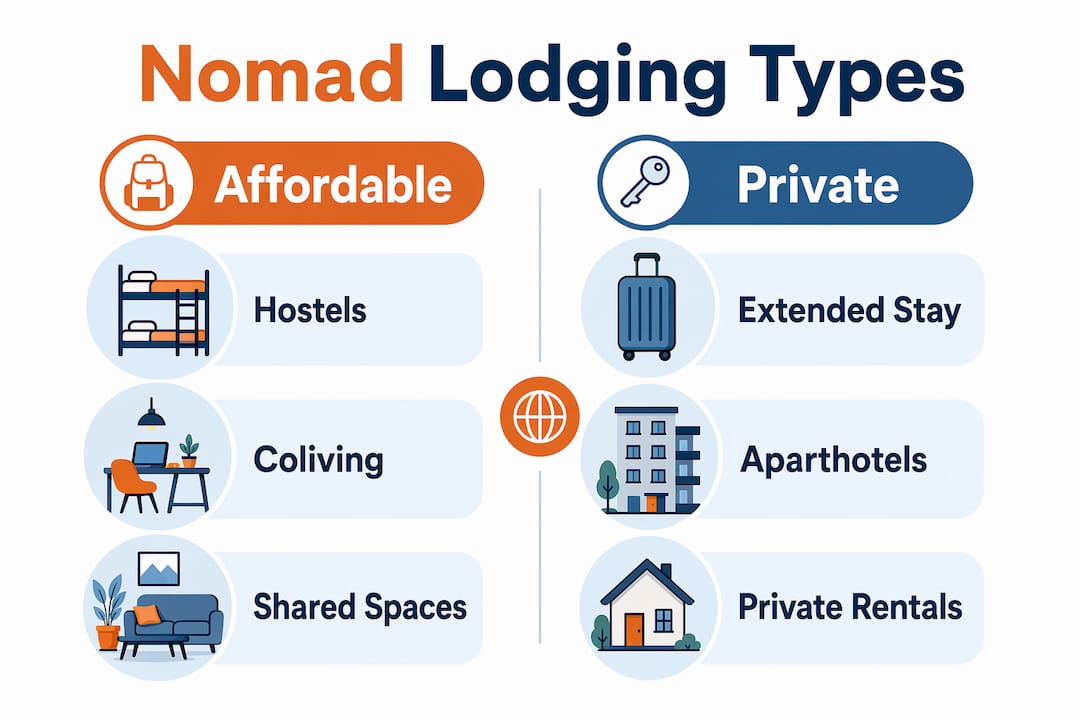
Digital nomad accommodation options fall into three main categories, each with distinct trade-offs between cost, privacy, and community access.

Hostels and coliving spaces sit at the affordable end of the spectrum. Shared dorm beds and communal kitchens keep costs low, while built-in social environments reduce the isolation that derails many remote workers. Coliving spaces combat isolation by providing networking opportunities that are critical to the mental well-being of remote workers. That social infrastructure is not a bonus feature. For many nomads, it is the reason they choose this category over a private apartment.
Extended stay hotels and aparthotels occupy the middle ground. You get a private room, a small kitchen, and hotel-grade services without committing to a long-term lease. These work well for nomads who need privacy for video calls but still want the flexibility of a short booking window.
Private rentals offer the most autonomy. A furnished apartment gives you a dedicated workspace, a full kitchen, and quiet hours you control. The trade-off is cost and isolation. Private rentals in popular nomad hubs like Lisbon and Barcelona run $1,400–$2,500 per month, while comparable options in Chiang Mai cost $500–$1,200 per month. That gap reflects both the cost of living and the strength of local nomad infrastructure.
Emerging models include subscription housing networks and house-sitting arrangements. Subscription platforms let you pay a flat monthly fee for access to furnished rooms across multiple cities. House-sitting eliminates accommodation costs entirely in exchange for caring for a property. Both models suit experienced nomads who have already figured out their workflow and need less hand-holding from their lodging.
| Lodging type | Typical monthly cost | Best for |
|---|---|---|
| Hostel or coliving | $400–$1,200 | Budget travelers, social connection |
| Extended stay hotel | $1,000–$2,000 | Privacy with flexibility |
| Private rental | $1,200–$2,500+ | Autonomy, longer stays |
| Subscription housing | Varies by network | Frequent city-hoppers |
| House-sitting | Free to low cost | Experienced, self-sufficient nomads |
Which key features make lodging suitable for digital nomads?
The single most important feature in any remote worker housing solution is internet reliability, not speed as advertised, but speed as delivered. Basic hotel WiFi is shared among 50+ guests, causing bottlenecks at peak hours. A connection that tests at 100 Mbps at 9:00 AM may drop to 8 Mbps by 2:00 PM when every guest is online simultaneously.
The minimum standard for productive remote work is a stable broadband connection of 50+ Mbps, ideally delivered over fiber rather than shared cable. Countries like Malaysia, Malta, and the Netherlands consistently rank at the top of nomad infrastructure lists because they prioritize fiber coverage and reliable speeds. Internet quality matters more than the price of the room.
Beyond connectivity, productive lodging requires:
- A dedicated workspace with a proper desk, good lighting, and an ergonomic chair
- A quiet zone or private area for video calls without background noise
- Proximity to grocery stores, pharmacies, and public transport
- Access to communal areas for breaks, meals, and social interaction
- Flexible check-in and check-out times that accommodate different time zones
Pro Tip: Before booking, ask the property to run a speed test during peak hours (between 10:00 AM and 3:00 PM local time) and send you a screenshot. Any property unwilling to do this is hiding a problem.
The social aspects of coliving are not just a lifestyle preference. They are a practical tool for combating the professional stagnation that comes from working alone in a private apartment for weeks at a time. Shared kitchens, common rooms, and organized events create the kind of low-friction networking that office workers take for granted.
How do cost and location influence nomad lodging choices?
Location shapes every financial decision a nomad makes. The same quality of lodging costs dramatically different amounts depending on the city, and the cheapest option rarely delivers the best return on your working hours.
Short-term stays cost 20–40% more than equivalent long-term local rentals. That premium buys flexibility and convenience, but it adds up fast over several months. A nomad paying a 30% premium on a $1,500 apartment is spending $450 extra per month purely for the right to leave without penalty.
The role of location in your stay goes beyond price. Infrastructure quality, time zone alignment with clients, and the density of the local nomad community all affect how productive and sustainable a location feels. Southeast Asian cities like Chiang Mai and Bali offer low costs and strong nomad communities. European cities like Lisbon, Tallinn, and Tbilisi offer better time zone overlap with North American and European clients, plus strong digital infrastructure.
The misconception that cheapest lodging is best leads directly to burnout. Experienced nomads pay 20–30% more for lodging that delivers reliable infrastructure and a functional workspace. That extra cost is not a luxury. It is an investment in the ability to actually do the work that funds the lifestyle.
Work-life balance also depends on neighborhood character. A cheap room in a noisy tourist district will cost you sleep and focus. A slightly more expensive room in a quiet residential area near a good coworking space pays for itself in productivity within the first week.
What practical tips help digital nomads find the best lodging?
Finding good temporary living for digital nomads requires a different approach than booking a vacation hotel. The goal is not the most convenient option. It is the most functional one for your specific work setup.
-
Book short, then negotiate long. Start with a one-week booking to test the internet, the neighborhood, and the workspace. If it works, approach the host directly about a monthly rate. Costs drop 30–50% when you negotiate directly with landlords after an initial short stay, bypassing platform fees entirely.
-
Use local channels. Facebook groups for expats and nomads in your target city surface deals that never appear on major booking platforms. Local rental agents and neighborhood notice boards work the same way. The best apartments are often rented before they ever go online.
-
Verify the internet independently. Ask for a speed test screenshot during peak hours. Better yet, visit a nearby coworking space before booking and ask staff which accommodations in the area have reliable fiber connections. Coworking operators know exactly which buildings have good infrastructure.
-
Prioritize fiber over advertised speed. A fiber connection shared among ten guests outperforms a cable connection shared among fifty, even if the cable connection has a higher advertised maximum. Ask specifically whether the building uses fiber or cable.
-
Choose coliving for stays under a month. The built-in community reduces the social friction of arriving somewhere new. Coliving provides professional growth and social balance that private rentals cannot replicate, especially for nomads who work alone all day.
-
Build a routine for stays over two weeks. Experienced nomads recommend grocery store access, quiet neighborhoods, and ergonomic workspaces as the three non-negotiables for longer stays. Routine is what separates sustainable nomad life from exhausting perpetual tourism.
Pro Tip: Pair your lodging search with a reliable mobile data backup. A quality eSIM for remote work gives you a fallback connection when the building WiFi fails, which it will at the worst possible moment.
Key Takeaways
Digital nomad lodging works best when internet reliability, workspace quality, and community access are treated as non-negotiable criteria rather than optional upgrades.
| Point | Details |
|---|---|
| Define your stay length first | Stays under one month favor coliving; stays over two weeks need grocery access and a quiet workspace. |
| Verify internet before booking | Request a speed test screenshot during peak hours; fiber connections outperform shared cable at any advertised speed. |
| Budget for the flexibility premium | Short-term stays cost 20–40% more than local long-term rentals; factor this into monthly budgets. |
| Negotiate locally after arrival | Direct landlord negotiation cuts costs by 30–50% compared to major booking platforms. |
| Community is a productivity tool | Coliving spaces reduce isolation and support professional networking, not just social connection. |
What I’ve learned about choosing nomad lodging the hard way
The biggest mistake I see nomads make is treating lodging as a pure cost decision. They find the cheapest room in a city, book it for a month, and then spend three weeks fighting slow internet, noisy neighbors, and a kitchen they share with twelve strangers who keep different hours. By week two, they are working from a café every day and paying for coffee they do not want just to get a reliable connection.
The math on “cheap” lodging almost never works out. A $600 apartment with unreliable WiFi forces you into coworking spaces at $15–$20 per day. That is $300–$400 per month on top of your rent, plus the time lost commuting and setting up in a new space every morning. A $900 apartment with fiber internet and a proper desk pays for itself within the first week.
What actually works is a two-step process. Arrive somewhere with a short booking, test everything, and then commit locally once you know the neighborhood and the infrastructure hold up. That approach costs slightly more in the first week but saves significant money and frustration over the rest of the stay.
The trend toward subscription housing networks is worth watching. These platforms let you move between furnished rooms in multiple cities on a single monthly fee. The trade-off is less local immersion and more standardized environments. For nomads who prioritize workflow consistency over cultural depth, that is a reasonable exchange. For everyone else, the local negotiation approach still delivers better value and a more authentic experience.
The social dimension of lodging is the most underrated factor in long-term nomad sustainability. Nomads who stay in private apartments for months at a time report higher rates of burnout and loneliness than those who cycle through coliving spaces and social hostels. The work is the same. The environment is not.
— Siggi
Fox Hostel: a practical base for remote workers in Iceland
Remote workers who want to combine productive lodging with one of the world’s most dramatic natural environments should look at what Fox Hostel offers in South Iceland.
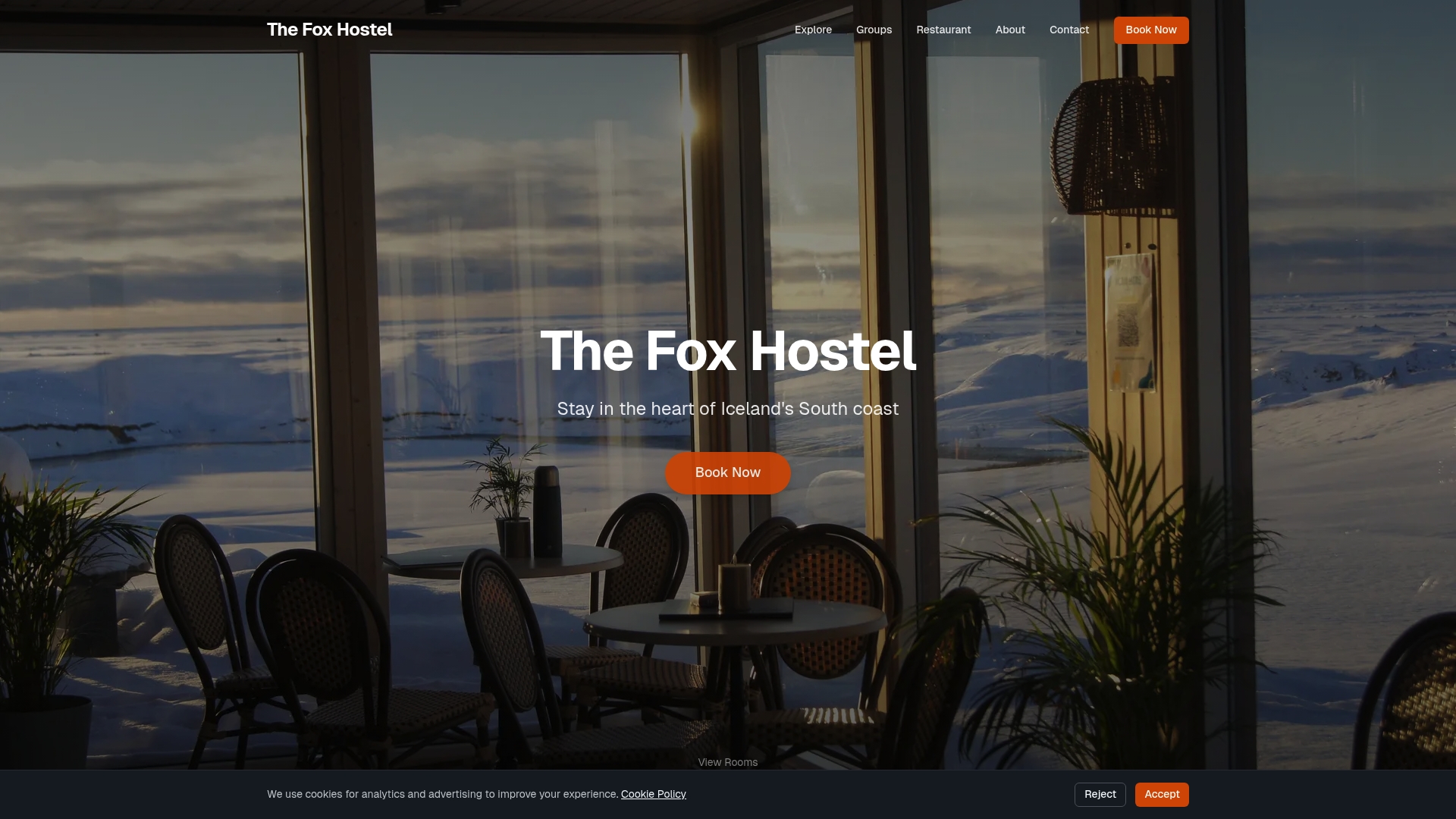
Fox Hostel occupies a converted traditional Icelandic barn in Hrífunes Nature Park, 35 minutes east of Vík. The hostel’s communal kitchen is fully equipped for self-catering, which keeps daily costs low for longer stays. The social atmosphere is genuine, with a mix of road-trippers, adventure travelers, and remote workers who share the space. Solo travelers can book a single bed, while couples or small groups can buy out an entire room for privacy. The location puts Reynisfjara Black Sand Beach, Vatnajökull National Park, and Jökulsárlón Glacier Lagoon within easy day-trip range. For nomads who want a working base that also delivers real Iceland, Fox Hostel is worth a serious look.
FAQ
What is digital nomad lodging?
Digital nomad lodging is temporary accommodation designed for remote workers, offering reliable high-speed internet, ergonomic workspaces, and flexible rental terms from one week to several months.
How much does nomad lodging typically cost per month?
Costs range from $500–$1,200 per month in Southeast Asian cities like Chiang Mai to $1,400–$2,500 per month in European hubs like Lisbon or Barcelona, depending on the lodging type and location.
What internet speed do digital nomads need?
A stable connection of at least 50 Mbps is the standard minimum for productive remote work. Fiber-connected accommodations or nearby coworking spaces are the most reliable options.
Is coliving worth it for digital nomads?
Coliving is worth it for stays under a month or for nomads who work alone all day. The built-in community reduces isolation and supports professional networking in ways private rentals cannot replicate.
How do nomads find cheaper lodging deals?
Nomads reduce costs by 30–50% by booking a short initial stay, then negotiating directly with landlords or using local Facebook groups and rental agents to find deals that never appear on major booking platforms.
Recommended
- Why Choose Shared Spaces: Benefits for Travelers | Fox Hostel – South Iceland
- What Is Communal Lodging? A Traveler’s 2026 Guide | Fox Hostel – South Iceland
- Why Stay Social While Traveling: Real Benefits | Fox Hostel – South Iceland
- Why Choose Affordable Lodging for Better Travel | Fox Hostel – South Iceland