Hostel Bunk Privacy for Travelers: Pack 800g Pod or Book Private Dorm
Hostel Bunk Privacy for Travelers: Pack 800g Pod or Book Private Dorm
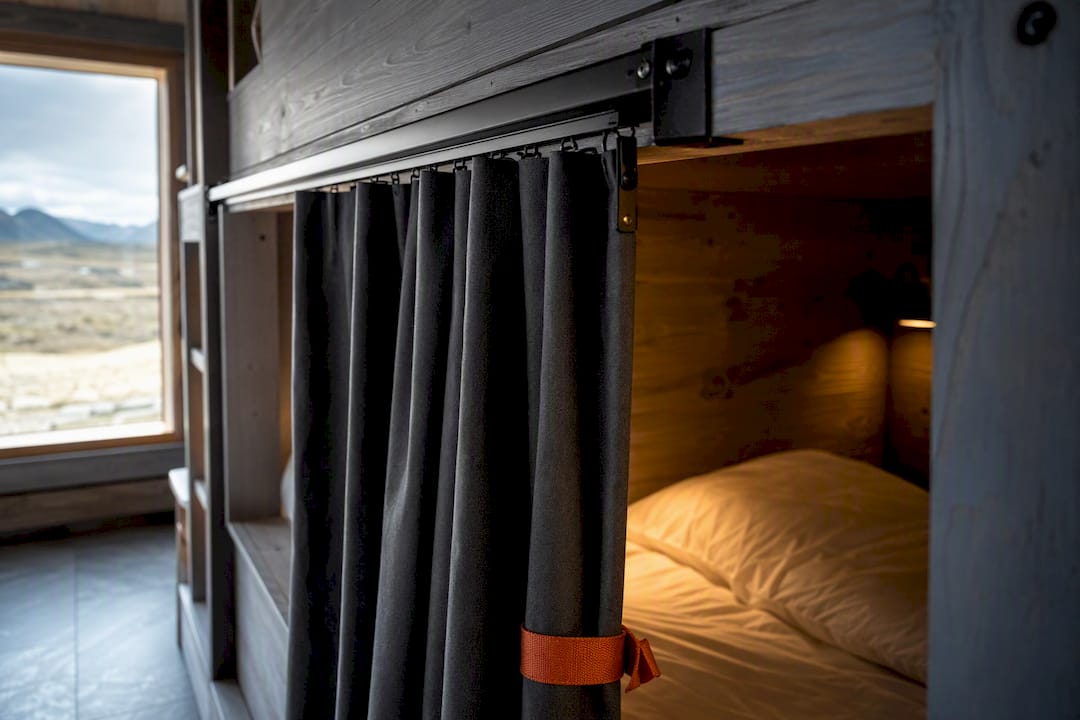
Your fastest, most reliable options are booking a bed with an integrated blackout curtain or sleeping pod, or buying out a private dorm entirely. If neither is available, a portable privacy pod or travel curtain kit closes the gap. Quick fixes like scarves and clip-on panels may help for a single night, but they are usually only temporary solutions.
TL;DR:
- Booking a private dorm or full room buyout provides guaranteed privacy, eliminating the need for DIY solutions or portable pods.
- Hostels feature built-in fire-retardant blackout curtains on contract bunks or enclosed pods with additional amenities like lighting and lockers for better privacy.
- Portable privacy pods are lightweight and effective but add packing weight, and their airflow and hostel policies should be tested and verified beforehand.
- Look for exact terminology like “pod” or “capsule” and specific features such as blackout, individual power outlets, and lockers when selecting hostel accommodations.
- Most hostels prohibit permanent modifications to bunk beds, making room buyouts or built-in pod options the safest choice for long-term or full privacy needs.
Table of Contents
- What Does Hostel Bunk Privacy Actually Mean?
- Should You Pack a Portable Privacy Pod?
- How Do You Choose a Private Bunk or Pod When Booking?
- Quick DIY Fixes for a Night or Two
- Why Fire-Retardant Material and Hostel Rules Matter
- Fox Hostel’s Take: Booking Around the Problem Entirely
- What Most Advice Gets Wrong About Bunk Privacy
- Ready to Book Guaranteed Privacy?
- Sources
- FAQ
What Does Hostel Bunk Privacy Actually Mean?
“Hostel bunk privacy” isn’t standard industry vocabulary. The term hostels and manufacturers actually use is sleeping pod or privacy curtain system, and knowing that distinction helps you search listings correctly. A pod is an enclosed capsule bed; a curtain-equipped bunk is a standard bed frame with fabric panels attached to the frame itself.
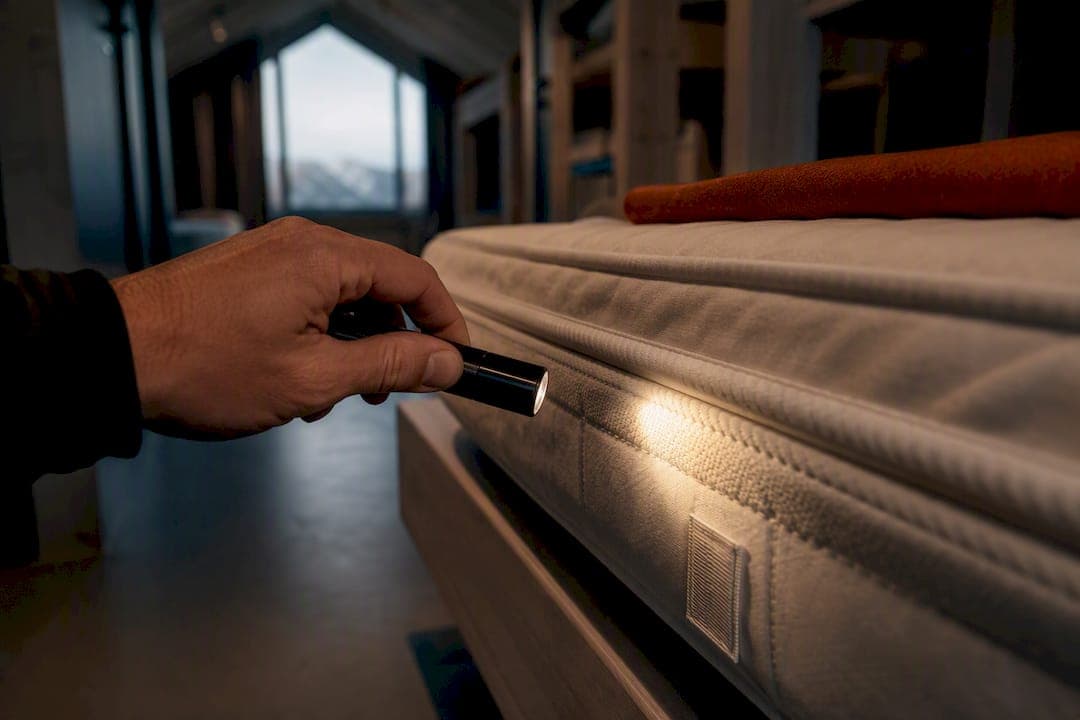
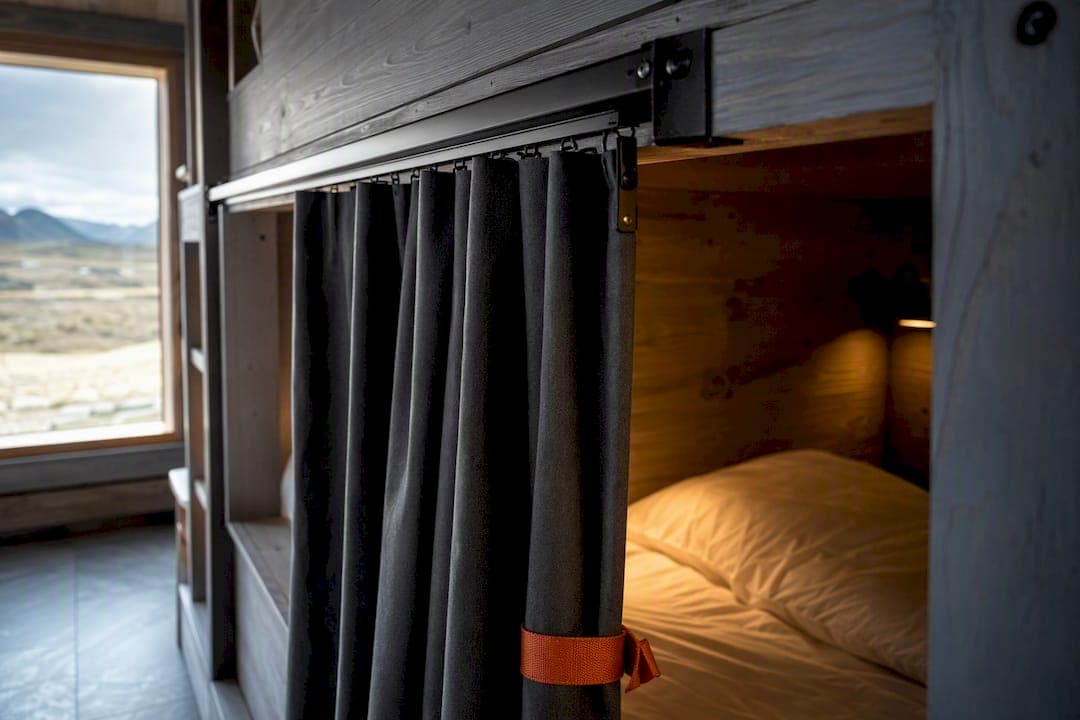
Contract-grade bunks built for hostels often come with front and side curtains fixed directly to the bed frame, made from fire-retardant blackout fabric. These aren’t add-ons guests attach. They’re built into the bed so staff can inspect and clean the space without removing anything permanent.
Pods go a step further. Hostels like Stayokay’s Eindhoven location run pods with blackout curtains, a reading light, USB power outlets, ventilation, and locker access built into or right next to the unit. Some properties, including Hostel du Nord in Duluth, position pods as a middle ground between an open dorm and a full private room. You keep access to shared kitchens and common areas but sleep behind a closed panel.
What to look for in listing photos and descriptions:
- A curtain visibly attached to the bunk frame, not draped loosely over the rail
- Mention of “pod,” “capsule,” or “sleeping pod” rather than just “bunk”
- A visible reading light or power socket inside the sleeping area
- A locker photographed at or near the bunk, not across the room
- Language specifying “blackout” or “privacy curtain” rather than just “curtain”
These features cut down light and noise significantly compared to an open bunk, and having your locker within arm’s reach matters more than people expect. You’re not walking across a dark dorm room at midnight to grab your passport.
Should You Pack a Portable Privacy Pod?
A portable privacy pod is worth packing if you’re hitting multiple hostels on a long trip and can’t guarantee curtain-equipped beds at each stop. These fabric enclosures convert a standard open bunk into a private sleeping space, and products like Bunk Buddy advertise packed weights around 800 grams, a useful benchmark when you’re deciding whether the privacy is worth the extra baggage.
Travel curtain kits work differently. Instead of enclosing the whole bunk, they’re lightweight rods and clips you rig to the existing frame, usually lighter than a full pod but less enclosed.
The trade-offs:
- Guaranteed privacy regardless of what the hostel provides, but added pack weight and bulk
- Setup usually takes a few minutes, which matters if you’re arriving late and want to sleep fast
- Not every hostel allows temporary rigging on frames, so acceptance varies property to property
- Ventilation inside a fully enclosed pod can feel stuffy in warm rooms without a fan
Before buying, check three things: your target hostel’s bunk dimensions (top bunks and bottom bunks often differ in frame width), how the product attaches (clips, straps, or tension rods), and whether the enclosed design allows enough airflow for a full night’s sleep, as discussed in Sleep well, explore more: The benefits of handpicked accommodation on UK & Greece tours.
Pro Tip: Test any portable pod at home for one night before your trip. You’ll find out fast whether the airflow works for you, and it’s a lot easier to troubleshoot in your own bedroom than at 11 p.m. in a dorm three time zones from home.
How Do You Choose a Private Bunk or Pod When Booking?
Book with these priorities, in order, and you’ll avoid the guesswork that leaves people stuck with an open top bunk in a room of eight strangers.
- Scan for pod or capsule language first. Listings that use “pod” or “capsule” instead of generic “bunk” almost always mean an enclosed sleeping unit with the features covered above.
- Check for blackout curtain callouts specifically. A photo showing a curtain isn’t proof it’s a privacy fabric. Listings that spell out “blackout” or “privacy curtain” are describing a different product than a decorative drape.
- Look for individual power and lighting mentioned per bed, not just “outlets available in the room.” Per-bunk power tells you the bed was built for this purpose.
- Message the property directly if the listing is vague. Ask whether the curtain material is fire-retardant, where exactly the locker sits relative to your assigned bunk, and what quiet hours the property enforces.
- Favor a private dorm or full room buyout when you need privacy for more than a night or two, or when you’re traveling with a partner, family, or small group. A shared bunk, however well-equipped, still sits inside a room other guests can enter.
Booking a private dorm outright solves the entire problem before you arrive. You skip the pod hunt and the DIY improvising because there’s no shared bunk to negotiate around in the first place.
Quick DIY Fixes for a Night or Two
When you’re stuck with an open bunk and no pod in sight, these steps buy you privacy without breaking hostel rules or your security deposit.
- Ask staff about curtain policy before rigging anything. Some hostels allow temporary tension rods on the bunk frame; others forbid anything clipped to shared furniture. A thirty second question avoids a fee later.
- Use a tension rod or removable hooks, never adhesive or nails. Tension rods that wedge into the frame’s existing posts leave zero marks and come down in seconds.
- Drape a large scarf, sarong, or packable throw over the open side if a rod isn’t practical. It won’t block all light, but it breaks the sightline from the room, which is most of what people actually want.
- Clip-on blackout panels made for car windows or strollers work surprisingly well clipped to a top bunk’s safety rail.
- Build a personal sleep kit regardless of what else you do: a contoured eye mask, foam earplugs, and a small clip-on directional lamp cover the gaps that curtains can’t.
Pro Tip: Pack the eye mask and earplugs even if you’re booking a pod. Pods cut noise, they don’t eliminate it, and the person two bunks over unzipping a rain jacket at 2 a.m. doesn’t care about your privacy setup.
Why Fire-Retardant Material and Hostel Rules Matter
Fire-retardant fabric isn’t a marketing detail. It’s why properties use manufactured curtain systems instead of letting guests hang whatever they bring. A “blackout” label on a product tells you about light, not about how it burns, and hostels have real liability reasons for controlling what’s rigged to a bunk frame.
That’s also why most properties draw a hard line against permanent fixtures:
- No drilling, adhesive hooks, or anything that alters the bunk frame itself
- Semi-permanent changes (a rod left up for a multi-night stay) usually need written staff approval first
- Curtain support frames on contract bunks are built for quick removal, so operators can inspect and clean fast, which is also why guest-installed permanent versions rarely get approved
When the rules make a DIY setup impractical, a pod or room buyout is the compliant alternative. Some estimates suggest properties are increasingly building pod inventory specifically because temporary guest fixes create liability and upkeep headaches.
Fox Hostel’s Take: Booking Around the Problem Entirely
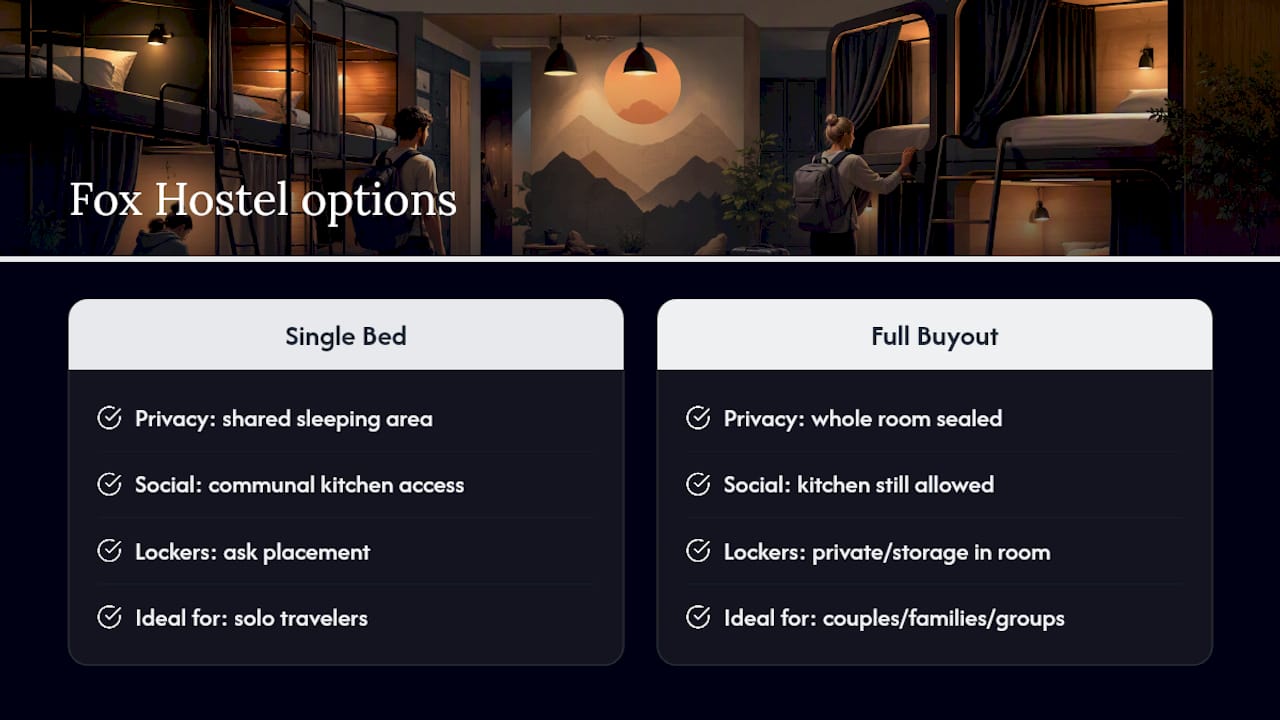
The hostel offers both individual dorm beds and full room buyouts in a converted barn near Vík. If you’re solo and want a straightforward bed, you book one. If you’re traveling as a couple, family, or group and want the whole room sealed off, you buy it out, no negotiating with strangers about curtain rigging or quiet hours.
Guests who care about privacy should ask about the same things covered above: locker placement, whether the room you’re booking is shared or bought out, and access to the communal kitchen if you still want the social side of hostel life without sharing your sleeping space. Fox Hostel’s private dormitory option was built around exactly that split, privacy where you sleep, community everywhere else.
What Most Advice Gets Wrong About Bunk Privacy
Most guides treat curtains, pods, and DIY hacks as interchangeable, as if a scarf over a bunk rail solves the same problem as booking a pod. It doesn’t. A legal analysis of dormitory privacy expectations makes the point plainly: shared spaces carry lower privacy expectations than a rented room, no matter how much fabric you hang up. Temporary covers reduce what people see. They don’t change who has access.
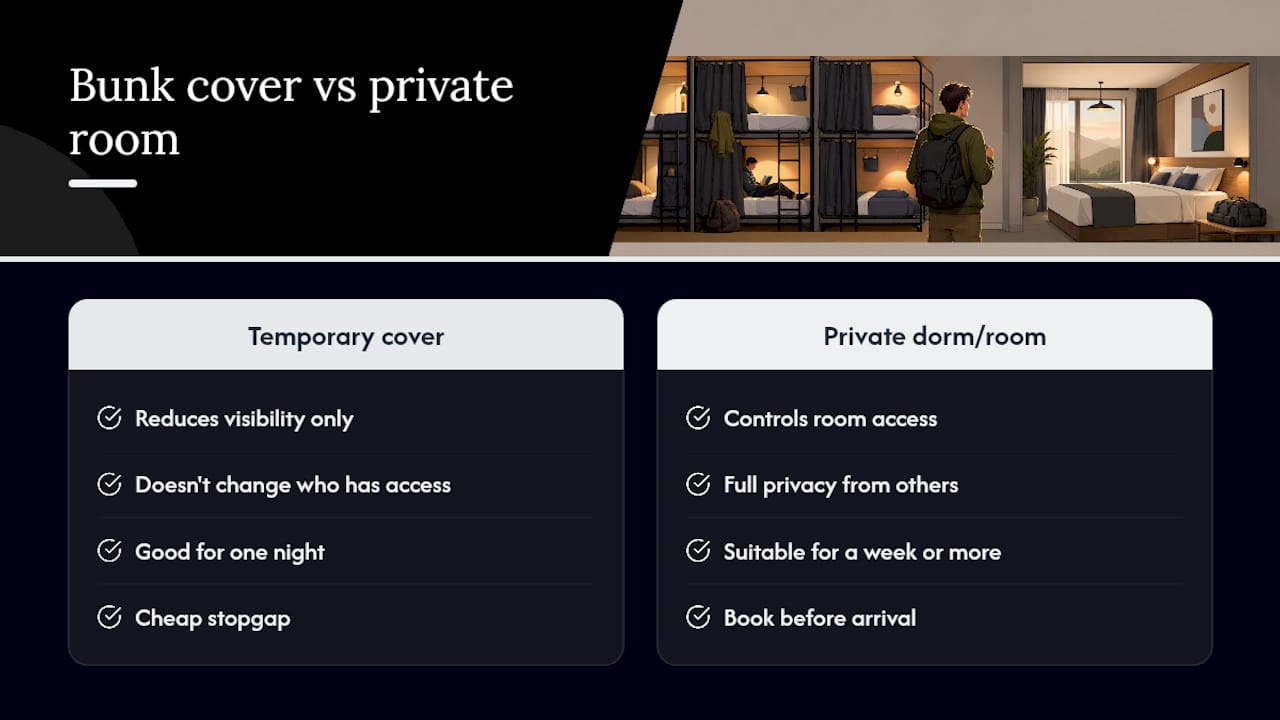
That distinction should drive your decision, not your packing list. If you need privacy for a night while you figure out your next move, a clip-on panel and earplugs get you through. If you need it for a week, or you’re traveling with someone you’d rather not share a curtain rail with, the answer isn’t a better tension rod. It’s a private dorm or a room buyout, booked before you show up rather than negotiated after.
The conventional advice oversells DIY fixes because they’re cheap and make for good listicles. They’re fine as a stopgap. They’re a poor substitute for checking a listing’s pod features or just booking the room outright.
— Siggi
Ready to Book Guaranteed Privacy?
Fox Hostel gives you a way to lock in privacy before you ever unpack a scarf or hunt for a tension rod: book a bed in a shared dorm if you’re traveling solo and want the social side of hostel life, or buy out an entire room if you’re a couple, family, or group who wants the door closed on your own space.
Check the rooms page for individual dorm beds and private-dorm availability, or head to group bookings if you want to reserve a full room for your crew. Both pages show live availability for stays near Vík, with the same communal kitchen and pizzeria access no matter which option you pick. If you have specific requests, locker size, bunk position, quiet hours, message the property directly before you arrive so there’s no surprise at check in. And if you’re already planning your South Iceland itinerary, ask about the partnered rafting adventure while you’re at it.
Sources
For readers who want the technical detail behind curtain materials and pod layouts, Best Bunk Beds documents fire-retardant curtain specs on contract bunks, while Bunk Utrecht and Stayokay Eindhoven show real pod feature sets in operation.
- Hostel Double Bunk Bed with Curtains | Best Bunk Beds
- Personal pods in Eindhoven | Stayokay
- Bunk Buddy® - The world’s 1st hostel privacy pod
- Private sleeping pods in Duluth | Hostel du Nord
- Dormitory privacy and legal expectations (academic analysis)
FAQ
How Do You Make a Bunk Bed Private?
Attach a tension rod or removable clips to hang a curtain, throw, or blackout panel over the open side, always checking hostel policy before rigging anything to the frame. For guaranteed privacy, book a curtain-equipped bunk, a sleeping pod, or a private dorm instead of relying on temporary covers.
What Is the Bunk Bed Rule in Hostels?
Most hostels prohibit permanent alterations to bunk frames, no drilling, no adhesive hooks, no fixed additions, since fixtures need to stay easy to inspect and clean. Semi-permanent setups usually require written staff approval first.
What Is a Privacy Bed Tent for a Hostel?
A privacy bed tent, more commonly called a privacy pod, is a fabric enclosure that converts an open bunk into a private sleeping space; portable versions built for travel often weigh around 800 grams packed. Some hostels also install their own built-in pod-style capsules with the same enclosed design.
Why Are Some Hostels 18+ Only?
Hostels set age minimums largely around alcohol service, dorm-sharing liability, and the social party atmosphere many properties are built around. This is separate from privacy features. An age policy affects who can book, not whether the bunks include curtains or pods.
Does Fox Hostel Offer Private Sleeping Options?
Yes. Fox Hostel offers individual dorm beds for solo travelers along with a full room buyout option for couples, families, or groups who want a private dorm to themselves. Current pricing and availability are listed on the rooms page.