15 to 30 Day Permits: Iceland Drone Rules for South Coast Visitors
15 to 30 Day Permits: Iceland Drone Rules for South Coast Visitors
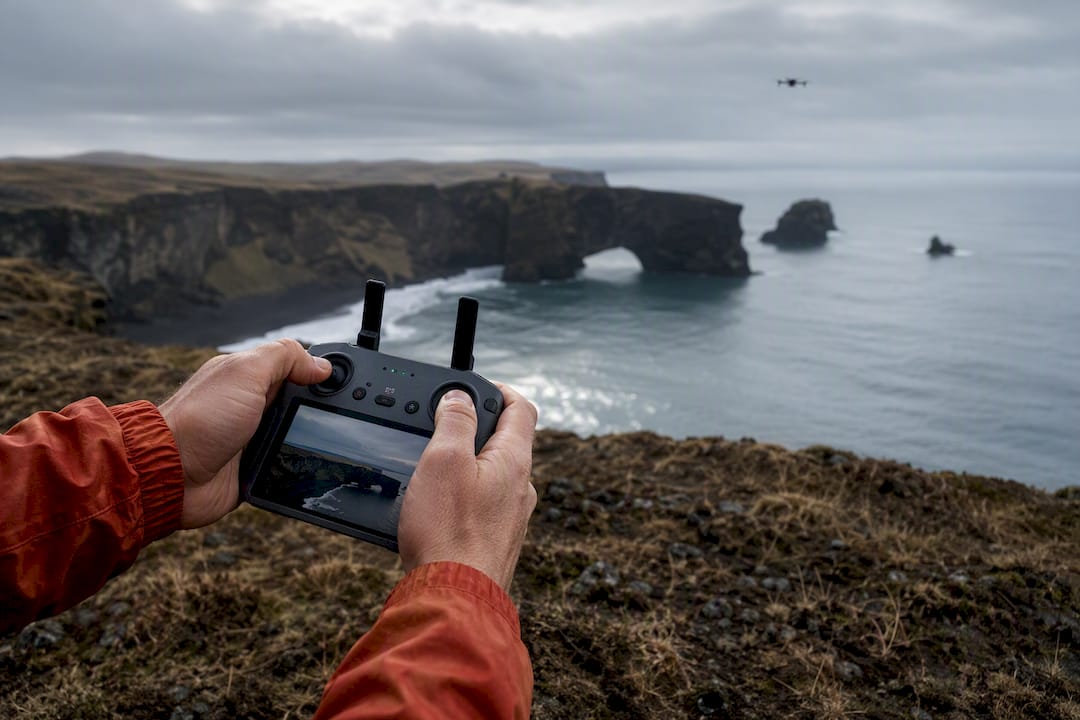
Yes, you can fly a drone in Iceland, but only after you clear three hurdles: register on flydrone.is unless your drone is exempt, pass the competency exam required for any drone over 250 grams, and fly within the Open category limits of a specified altitude, visual line of sight, and no flights over crowds. Iceland enforces these rules through Samgöngustofa, the national aviation authority, alongside the EASA framework and permit requirements from the Nature Conservation Agency for protected land.
TL;DR:
- Most tourist drones in Iceland fall within the Open category, requiring adherence to altitude, line-of-sight, and crowd avoidance rules to stay legal.
- Registration is mandatory for drones over 250 grams or capable of more than 80 joules, and certificates must be downloaded and stored offline before arrival.
- Flying near protected areas, sensitive infrastructure, or beyond 120 meters requires early permit applications that can take 15 to 30 days to process.
- Local weather conditions, especially wind gusts and seasonal bird nesting, heavily influence safe flying windows and require careful planning.
- Violating rules or flying without permits can result in fines, drone confiscation, or future permit restrictions enforced by multiple authorities.
Table of Contents
- One-Page Preflight Checklist for Iceland
- How to Register and Prove Pilot Competency in Iceland
- Which Operational Category Will Your Flight Fall Into?
- The Rules You Must Follow While Airborne
- Where You Cannot Fly Without Permission
- When Insurance Is Mandatory and Who Enforces the Rules
- A Step-by-Step Preflight Planning Workflow
- Fox Hostel’s Practical Tips for Flying Near South Iceland Attractions
- Getting Your Gear and Travel Plans in Sync
- Sources
- FAQ
One-Page Preflight Checklist for Iceland
Print this, screenshot it, or scribble it on a napkin before you leave the hostel. Missing one item here is how a good trip turns into a confiscated drone and a long conversation with a police officer.
- Confirm your operator registration is active and you’re carrying your registration number (it goes on the drone itself, visible and durable).
- Have your A1/A3 exam certificate saved offline, plus your A2 certificate if your drone falls into that subcategory.
- Know your drone’s class marking (C0 through C6) or confirm it qualifies under Iceland’s legacy drone provisions.
- Check whether your flight location needs a Specific category authorization or a protected-area permit, and apply early if so.
- Verify you’re clear of the 120 meter altitude ceiling, staying within visual line of sight, and outside any airport buffer zone.
- Confirm whether night flying rules apply to your plan, including the lighting requirement.
- Check if your operation triggers mandatory liability insurance (A2, Specific/Certified categories, or drones over 20 kg).
Pro Tip: Download the exam certificate and registration confirmation as PDFs before your trip. Iceland’s rural cell coverage is patchy, and a customs officer or ranger asking for proof won’t accept “it’s in my email, let me find signal.”
How to Register and Prove Pilot Competency in Iceland
Every operator flying a drone heavier than 250 grams, or any drone capable of transferring more than 80 joules of kinetic energy, must register before takeoff. This applies whether you’re Icelandic or visiting for four days. International visitors register through flydrone.is, the same national portal Icelandic residents use, and registration typically stays valid for five years once completed.
Here’s the practical sequence for getting compliant before your trip:
- Create an account on flydrone.is using a valid email and, where required, an EU-recognized ID or passport number.
- Complete the A1/A3 online theory exam. This covers airspace basics, privacy obligations, and emergency procedures, and it’s the minimum requirement for most tourist-style flights with lightweight drones.
- Book the A2 exam if your drone or flight plan requires it. Unlike A1/A3, A2 competency requires an in-person practical assessment, not just an online quiz, so you’ll need to schedule this ahead of arrival if your mission demands closer proximity to people.
- Download your certificate immediately after passing, since some testing platforms don’t guarantee long-term account access after the exam window closes.
- Label your drone with your registration number using a permanent, legible marker or printed label, as required under the Open category rules.
Legacy drones purchased before the class marking system took effect get some breathing room. Older drones without a C-class label can often still fly under transitional provisions tied to weight bands, though the exact allowances narrow each year as EASA phases out the grace period.
Minimum age for solo registration is typically 16, but younger flyers aren’t locked out entirely. A supervising adult who holds a valid certificate can take responsibility for a minor’s flight, which is common among families doing casual aerial photography of waterfalls or coastline.
Keep your proof accessible offline. A phone screenshot of your registration confirmation, plus a PDF of your exam certificate saved to your device (not just cloud storage), covers you in the moments when Icelandic rural signal drops to zero and someone in a uniform wants to see paperwork.
Which Operational Category Will Your Flight Fall Into?
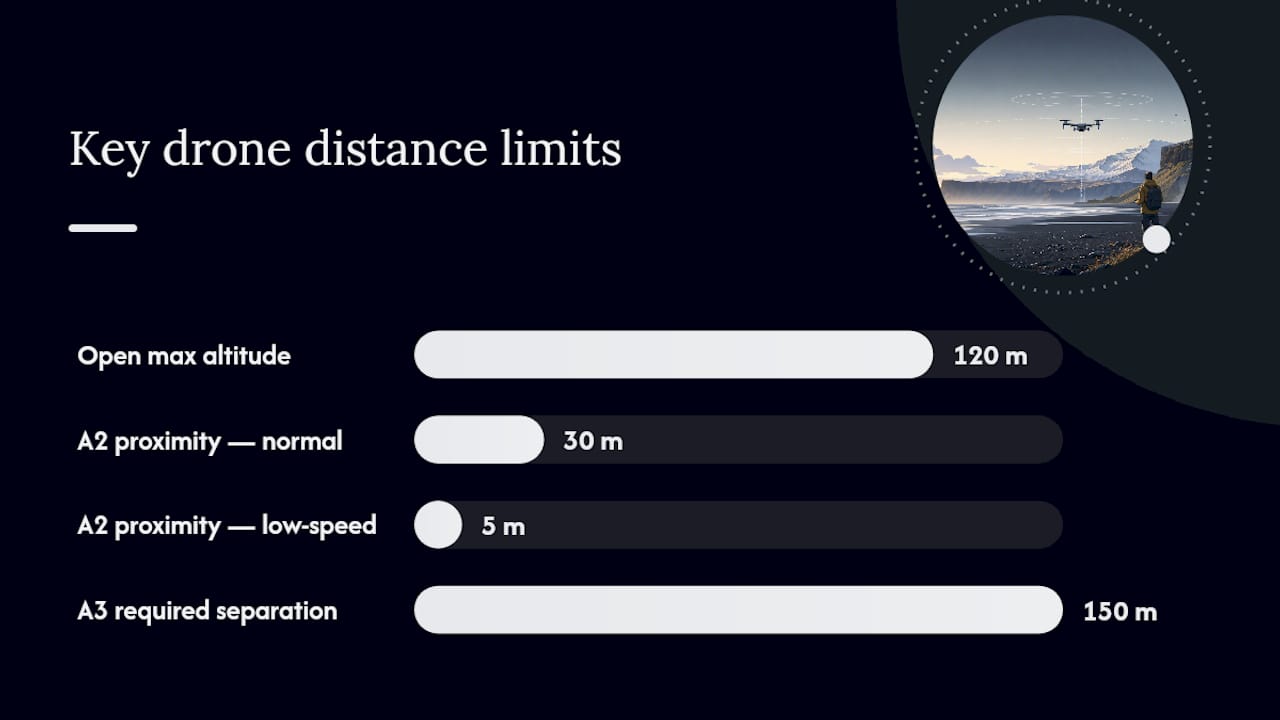
Almost every visitor flying a drone recreationally in Iceland lands in the Open category, the least restrictive of the three EASA-defined tiers. The Open category covers drones under 25 kg flown within visual line of sight, below 120 meters, away from crowds. Most tourists photographing black sand beaches or glacier lagoons never need to leave this tier.
The other two categories matter mostly for commercial or specialized work:
- Specific category applies to operations that exceed Open category limits, such as flying beyond visual line of sight or closer to people than A1/A2/A3 allow. It requires a formal risk assessment and authorization from Samgöngustofa before you fly.
- Certified category covers high-risk operations comparable to manned aviation, essentially irrelevant to almost anyone reading this.
Within Open, your subcategory depends on the drone’s C-class and your certification:
- A1 covers the lightest drones (C0, under 250 g, and some C1 drones) and permits flight over people, though never over assemblies of people.
- A2 allows closer proximity to uninvolved people, down to 30 meters normally or 5 meters in low-speed mode, for C2-class drones with an operator holding the A2 certificate.
- A3 requires staying at least 150 meters from residential, commercial, and recreational areas, and applies to heavier drones (C3, C4) or anyone without A2 certification.
If your drone predates the C-class labeling system, Iceland’s legacy provisions typically slot it into A3 by default, since the safety data behind lighter classifications doesn’t exist for unlabeled hardware.
The Rules You Must Follow While Airborne
Three numbers matter more than anything else in Icelandic airspace: 120 meters, visual line of sight, and zero crowds. Break any of them and you’ve left the Open category’s legal protection, whether you meant to or not.
The 120 meter altitude ceiling applies above the terrain directly below your drone, not above sea level or your takeoff point. Iceland’s landscape makes this trickier than it sounds. Fly toward a cliff face or up a valley slope, and your legal ceiling shifts constantly with the ground beneath you. There’s a narrow exception for flights near tall structures (like inspecting a building or mast), where you can exceed 120 meters if you stay within 15 meters of the structure itself, but that’s a niche case for most visitors.
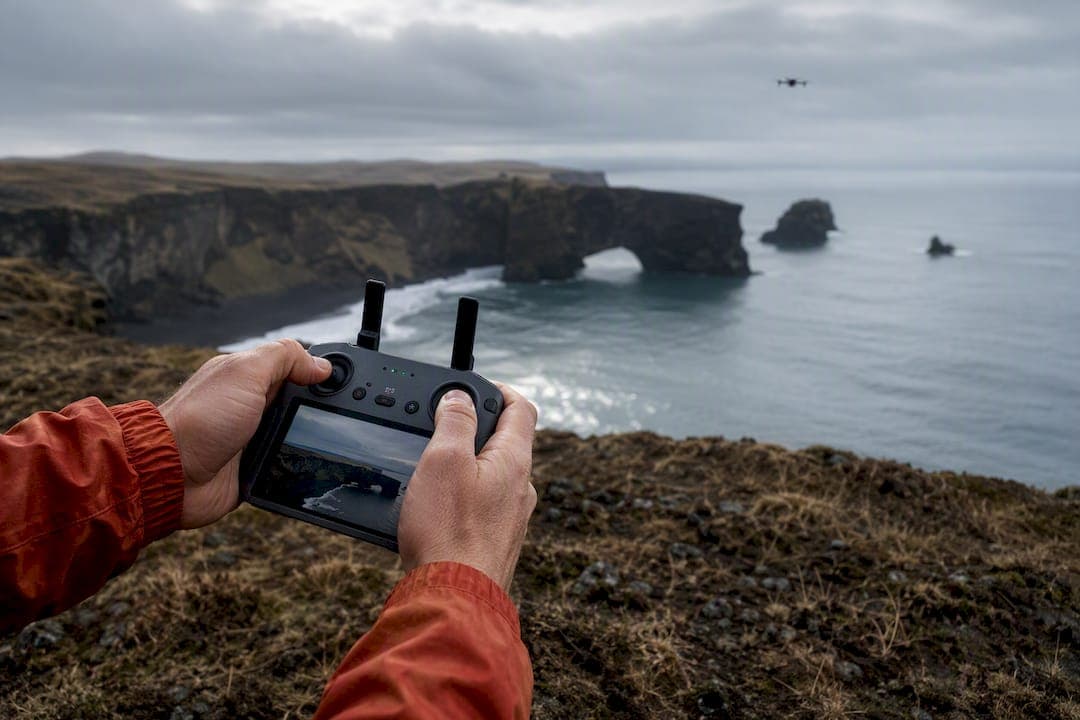
Visual line of sight (VLOS) means you or a designated observer must see the drone with your own eyes, unaided by screens or binoculars beyond brief checks. On misty coastal mornings, a drone can vanish into fog well before it clears the legal altitude limit, which is a real risk around Vík’s black sand coastline and the cliffs near Dyrhólaey.
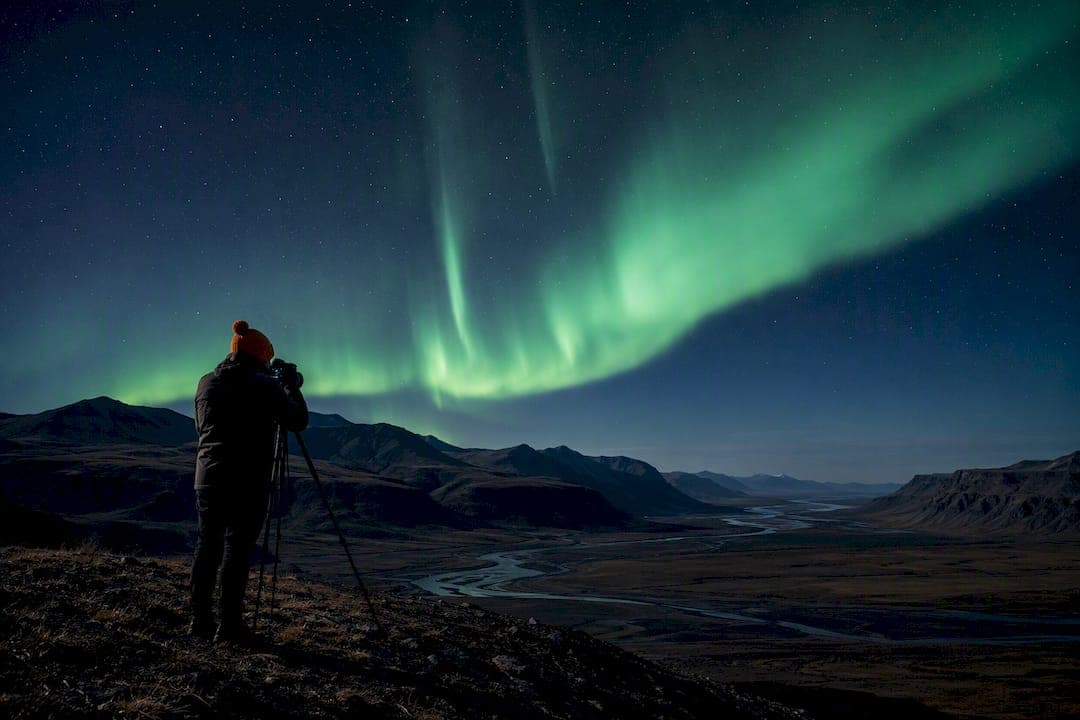
Night flying is legal but comes with a hard requirement: a green flashing light visible from all directions, letting other aircraft and observers identify your drone as unmanned after dark. Given Iceland’s long winter darkness, this rule matters more here than in most of Europe. Add the fact that Northern Lights photographers frequently want exactly this kind of flight, and it’s worth confirming your drone has (or can be fitted with) compliant lighting before you rely on it.
Other hard limits apply across every flight:
- Never fly directly over crowds or gatherings of uninvolved people, regardless of category.
- Never drop or release objects from the drone in flight.
- Never carry dangerous goods, including anything flammable or hazardous.
- Always keep your registration marking visible and legible on the airframe.
Iceland’s weather changes faster than most pilots expect. Wind gusts along the South Coast can jump from calm to unflyable in the time it takes to set up a shot, especially near cliff edges where terrain accelerates airflow. If gusts exceed your drone’s rated wind resistance (often 10 to 12 meters per second for consumer models), land immediately rather than fighting the controls.
Pro Tip: Check the wind forecast at Vedur, Iceland’s official weather service, the morning of your flight, not the night before. Coastal wind patterns shift overnight more often than inland forecasts suggest.
Where You Cannot Fly Without Permission
Regulation 1360/2024 sets a national rule beyond the EASA baseline: no flying within 150 meters of sensitive public infrastructure without explicit permission. That covers power plants, hospitals, prisons, government buildings, and similar sites. Airports and airfields carry their own restricted zones, published through Iceland’s Aeronautical Information Publication and NOTAMs, which Samgöngustofa maintains and updates regularly.
Protected natural areas are a separate and equally important restriction. Many of Iceland’s most photogenic locations, including national parks and nature reserves, require a permit from the Nature Conservation Agency before you fly a drone inside their boundaries.
Here’s how the permit process actually works:
- Identify whether your flight location falls inside a protected area. The Nature Conservation Agency’s site lists covered zones, and many bird cliffs and coastal reserves carry seasonal restrictions on top of the standard permit rule.
- Submit your application with location and date details. Processing typically takes several weeks, so this isn’t something to arrange the morning of your flight.
- Pay the applicable fee. The current tariff sets 41,600 ISK for recreational use covering up to two protected areas, rising to 83,200 ISK for three or more areas or any commercial film use.
- Watch for park-specific exceptions. Þingvellir National Park, for instance, issues its own separate permits in certain cases rather than following the general Nature Conservation Agency process, so confirm directly with park staff if that’s your destination.
Seasonal bird nesting closures hit coastal cliffs particularly hard between roughly May and August, when species like puffins and kittiwakes are most vulnerable to disturbance. A drone buzzing a nesting cliff doesn’t just risk a fine, it risks real harm to birds already under pressure from tourism traffic on the ground.
A 15 to 30 day processing window means most protected-area permits need to be requested well before you land in Iceland, not once you’re standing at the trailhead.
When Insurance Is Mandatory and Who Enforces the Rules
Liability insurance isn’t optional for every flight, but it becomes mandatory once you cross certain thresholds. Operations in the A2 subcategory, anything in the Specific or Certified categories, and any drone with a maximum takeoff mass over 20 kg all require valid liability coverage under Iceland’s implementation of the EASA framework.
Multiple authorities share enforcement power, and each has a different angle on it:
- Samgöngustofa oversees aviation compliance broadly, including registration status and airspace violations.
- Police handle on-the-ground enforcement, including confiscation in serious cases.
- The Icelandic Coast Guard gets involved near sensitive coastal or maritime infrastructure.
- Airport operators manage their own buffer zones and can report violations directly.
- The Nature Conservation Agency enforces protected-area permit rules and can deny future permit applications to repeat violators.
Violations typically result in fines, drone confiscation, or denial of future permits, depending on severity and whether the flight caused actual harm or disruption. The safest approach is straightforward: carry digital and printed proof of registration, certification, and any relevant permits, and produce them without argument if asked. Cooperation tends to end an encounter quickly; resistance rarely does.
A Step-by-Step Preflight Planning Workflow
Building your flight plan in the right order saves you from discovering a dealbreaker after you’ve already booked flights and gear.
- Pin down your exact flight location and cross-check it against official AIP/NOTAM data and the Nature Conservation Agency’s protected-area maps.
- Determine your category and subcategory based on drone weight, C-class, and how close you’ll fly to people or structures.
- Decide whether you need a Specific category authorization or a protected-area permit, and start that application immediately if either applies.
- Complete registration and required exams well before departure, and export your certificates to a device that works offline.
- Apply for protected-area permits with margin. Given the 15 to 30 day processing window, apply the moment your itinerary is fixed, not after you land.
- Check weather and wildlife timing for your specific dates, factoring in nesting season restrictions and Iceland’s often abrupt wind shifts.
- Build in a backup day. Icelandic weather rarely cooperates with a single fixed shooting window.
Pro Tip: If you’re staying in the South Coast area and adjusting flight plans around weather, having reliable connectivity to check forecasts and re-submit permit paperwork matters more than people expect. A guide to staying connected in Iceland can save you from planning blind in areas with weak signal.
Fox Hostel’s Practical Tips for Flying Near South Iceland Attractions
Legal compliance gets you in the air. Local knowledge keeps your trip from being ruined by a crowd of tourists in your shot or a ranger asking you to land. Reynisfjara and Dyrhólaey, both near Vík, draw heavy foot traffic by mid-morning. Early flights, ideally before 9 AM, give you clean footage and fewer people wandering into your no-fly zone around bystanders.
Coastal cliffs in this region host nesting seabirds through the summer, so treat any cliff-face flight near Dyrhólaey with the same caution as a formally protected area, even where signage is sparse. If you’re flying near farmland or private coastline, a quick conversation with the landowner beats an awkward confrontation later. Icelanders are generally approachable about this if you ask directly instead of assuming.
Fox Hostel sits roughly 35 minutes east of Vík in Hrífunes Nature Park, putting you within easy reach of both the black sand coastline and the quieter routes east toward Vatnajökull and Jökulsárlón. Guests staying here get a practical base for early departures, without the crowds that build up around Vík itself later in the day.
None of this replaces the actual permit process. Fox Hostel offers travel guidance and a comfortable place to plan your route, not permit issuance. For anything inside a protected area, apply directly through the Nature Conservation Agency before you arrive.
Getting Your Gear and Travel Plans in Sync
The regulatory side of flying in Iceland is genuinely straightforward once you break it into steps: register, certify, respect the 120 meter and VLOS limits, and apply early for anything touching protected land. Where most visitors trip up isn’t the law itself, it’s timing. They treat the protected-area permit like an afterthought instead of the 15 to 30 day process it actually is, and they underestimate how fast South Coast wind can turn a planned flight into a scrubbed one.
The conventional advice online tends to stop at “check the EASA rules,” as if Iceland’s national layer, especially the 150 meter infrastructure buffer and the seasonal bird cliff closures, were a footnote. It isn’t. Those local additions are exactly where visiting pilots get fined, not the parts of the rulebook they already knew from home.
If there’s one thing to prioritize first, it’s the permit timeline, not the exam. The exam takes an afternoon. A protected-area permit takes weeks, and no amount of last-minute enthusiasm speeds that up.
Basing yourself somewhere central, like Fox Hostel’s rooms near Vík, buys you the flexibility to wait out bad weather without losing your shooting window entirely, which matters more in Iceland than in almost any other drone destination.
— Siggi
Sources
- Drone Regulations - Open Category | Ísland.is
- Umhverfisstofnun | Photography, cinematography and drone flying
- Open category (civil drones) | EASA
FAQ
Do I Need to Register My Drone in Iceland?
Yes, if it weighs more than 250 grams or can transfer more than 80 joules of kinetic energy on impact. Registration happens through flydrone.is and generally stays valid for five years.
Which Country Is Most Drone Friendly?
There’s no single official ranking, but Iceland is frequently cited as approachable because its rules follow the clear EASA Open category framework rather than a separate, confusing national system. The main friction points are protected-area permits and the 150 meter infrastructure buffer under Regulation 1360/2024, not the baseline flying rules themselves.
Can I Fly a Drone Over Reynisfjara or Dyrhólaey?
Recreational flight is generally allowed under Open category rules if you stay within 120 meters, keep visual line of sight, and avoid flying over people. Check current signage and seasonal nesting restrictions before flying near cliff faces, since coastal bird colonies can trigger temporary limits.
How Much Does a Protected-Area Drone Permit Cost in Iceland?
The Nature Conservation Agency charges 41,600 ISK for recreational use covering up to two protected areas, and 83,200 ISK for three or more areas or commercial film use. Processing typically takes 15 to 30 days.
What Happens if I Fly Without the Right Permit?
Consequences range from fines to drone confiscation, and repeat violations can lead to future permit denials. Authorities including Samgöngustofa, police, and the Nature Conservation Agency all have enforcement power depending on where the violation happens.