Icelandic Horse: What Riders and Buyers Need to Know
Icelandic Horse: What Riders and Buyers Need to Know
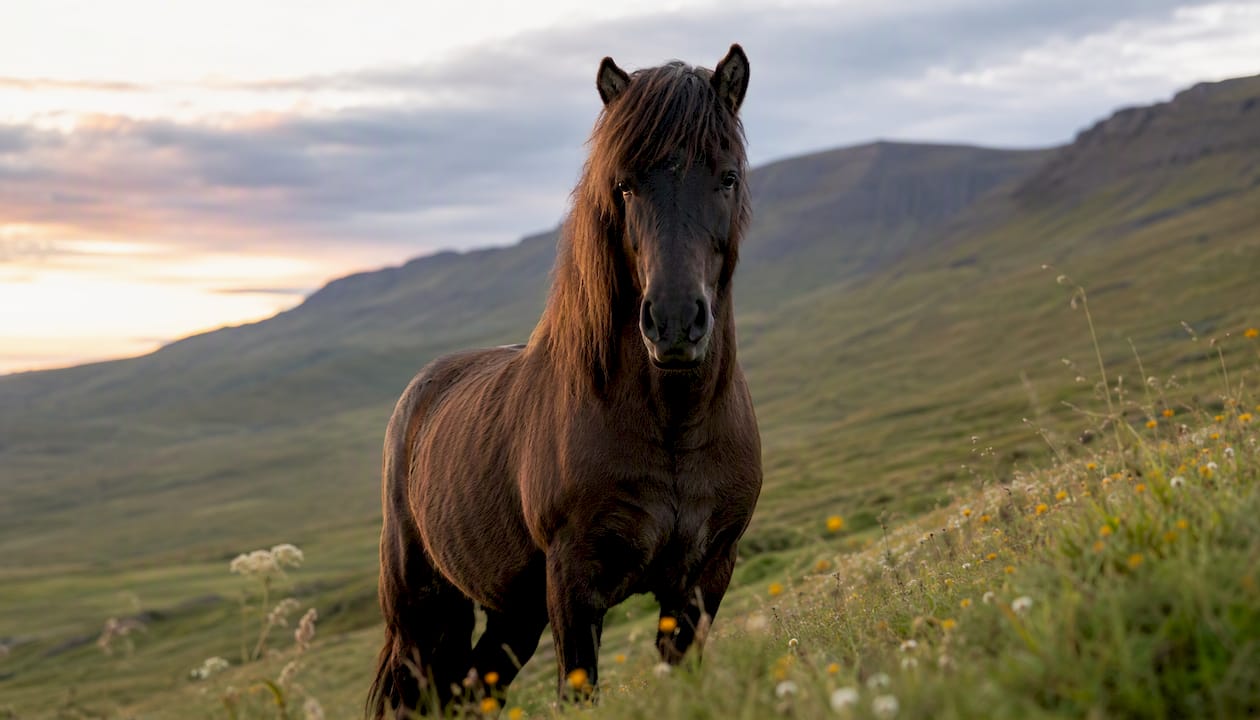
The Icelandic horse is a small, long-lived, five-gaited riding breed prized above all for the tölt, a smooth four-beat ambling gait found in very few breeds worldwide. Descended from horses brought to Iceland by Norse settlers between 874 and 930 CE, the breed has developed in near-total isolation for over 1,000 years, a fact that shapes everything from its disease resistance to its strict biosecurity rules today.
Three things every prospective rider or buyer should know immediately:
- Size and weight: Average height runs 13–14 hands (132–142 cm), with weight typically between 330–380 kg. NordGen notes similar ranges dependent on population measured.
- Lifespan: These horses are exceptionally long-lived. Examples of individuals reaching their 40s and even 50s are documented, with productive working lives well into their 30s.
- Biosecurity rule: Any horse exported from Iceland is permanently barred from returning. Iceland also prohibits the import of non-Icelandic horses and bans used riding gear from being brought into the country.
FEIF (the International Federation of Icelandic Horse Associations) and WorldFengur, the official international studbook, are the two primary registries governing the breed globally.
Key Takeaways
The Icelandic horse is a five-gaited, long-lived breed shaped by over 1,000 years of isolation, and buyers in Ireland should verify WorldFengur registration and gait scores before any purchase.
| Point | Details |
|---|---|
| Five-gait identity | The breed performs walk, trot, canter/gallop, tölt, and flying pace; the smooth tölt is its defining trait. |
| Lifespan and start age | Icelandics commonly live 25–35 years; do not start riding work before age 4 or serious gait training before age 5. |
| Registry verification | Always check WorldFengur for a horse’s unique ID, pedigree depth, and official gait evaluation scores before buying. |
| Biosecurity rule | Exported horses cannot return to Iceland; used tack is prohibited from entering Iceland under any circumstances. |
| Summer eczema risk in Ireland | Icelandics bred outside Iceland are susceptible to midge-triggered sweet itch; plan management before the horse arrives. |
Table of Contents
- What makes the Icelandic horse different from other breeds?
- The five gaits explained: what each one feels like
- How and when Icelandic horses are trained
- The history behind a thousand years of isolation
- How Icelandic horses are registered and evaluated
- What Icelandic horses are used for today
- Caring for an Icelandic horse in Ireland
- Finding and buying an Icelandic horse in Ireland
- What the DMRT3 gene tells us about gait ability
- The Icelandic horse as a cultural symbol
- Why riders keep coming back to Icelandic horses
- Stay close to the horses: Fox Hostel in South Iceland
- Sources
What makes the Icelandic horse different from other breeds?
Despite standing no taller than many ponies, the Icelandic horse is classified as a horse, not a pony, by every major registry and breeding organization. The distinction is functional: the breed carries adult riders across rugged terrain for hours, performs five distinct gaits, and has the bone density and musculature of a working horse. Calling it a pony undersells both its strength and its breeding goals.
Physical build and conformation
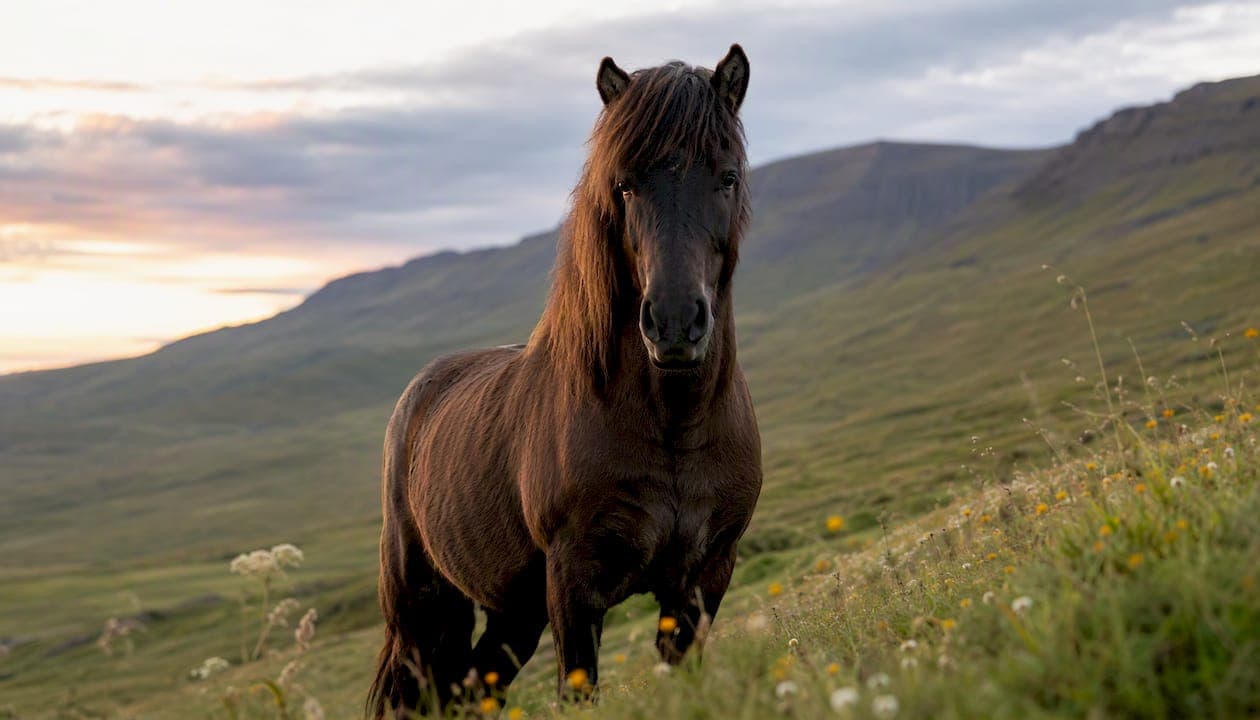
The breed is compact and deep-bodied, with a short, strong back, well-muscled hindquarters, and notably dense bone structure. That density contributes to the breed’s sure-footedness on lava fields and rocky highland trails. The head is broad and expressive, the neck short to medium in length, and the legs are clean with hard hooves that often go unshod in Iceland’s natural terrain.
Coat colors include chestnuts, bays, blacks, grays, palominos, duns, roans, and pintos. The breed is noted for a wide variety of colors without the narrowing often seen in show-focused breeds.
Temperament
Icelandics are consistently described as willing, curious, and low-spook. They tend to be confident in unfamiliar environments, which makes them well-suited to both novice adult riders and experienced trail riders. The breed’s intelligence, shaped by centuries of working alongside humans in Iceland’s isolated farming communities, produces a horse that is cooperative without being dull.
- Average height: 13–14 hands (132–142 cm)
- Weight: 330–400 kg depending on individual and population
- Lifespan: commonly 25–35 years; exceptional individuals documented into their 40s and 50s
- Coat colors: among the widest variety of any breed
- Temperament: willing, curious, low-spook, suitable for a range of rider experience levels
Pro Tip: When evaluating a horse for purchase, run your hands down all four legs and check hoof wall quality. Icelandics with good genetics tend to have hard, well-formed hooves, but horses kept on soft pasture for years may show softening. Ask the seller how long the horse has been on its current management regime.
The five gaits explained: what each one feels like
FEIF recognizes five gaits in the Icelandic horse: walk, trot, canter/gallop, tölt, and flying pace. Most horse breeds perform only three (walk, trot, canter), which is precisely what makes the Icelandic breed so distinctive.
Walk, trot, and canter/gallop
These three are standard. The walk is a four-beat ground-covering gait used for warm-up and cool-down. The trot is a two-beat diagonal gait, bouncy for the rider, used in some competitions and trail work. The canter and gallop are counted as a single gait category in the five-gait system because they share the same three-beat footfall pattern at different speeds.
Tölt
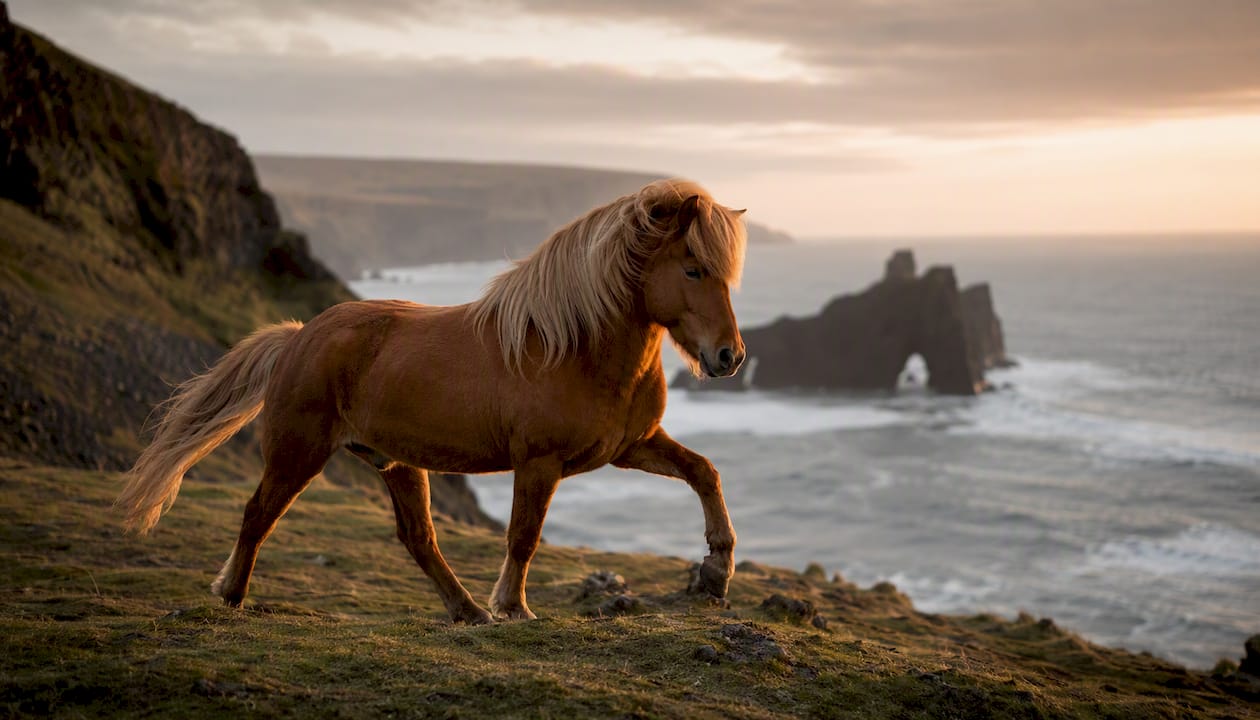
The tölt is the breed’s signature. It is a four-beat lateral gait with no moment of suspension, meaning the horse always has at least one foot on the ground. For the rider, this translates to almost no vertical bounce. You sit still while the horse moves beneath you at speeds ranging from a slow walk pace up to a brisk canter. Riders who have experienced tölt for the first time often describe it as riding an armchair across a field. Over long distances, that smoothness is not a luxury; it is a genuine physical advantage for both horse and rider.
Flying pace
The flying pace is a two-beat lateral gait performed at high speed, sometimes reaching speeds up to around 45 km/h. Both legs on the same side move together, creating a brief moment of suspension. It is primarily used in pacing races and is not comfortable for long-distance riding. Not every Icelandic can perform a clean flying pace; it requires specific genetic predisposition and targeted training.
- Walk: four-beat, relaxed, used for warm-up and recovery
- Trot: two-beat diagonal, moderate bounce, used in competitions and trail work
- Canter/gallop: three-beat, energetic, considered one gait category
- Tölt: four-beat lateral, smooth, no suspension; a defining trait of the breed
- Flying pace: two-beat lateral, high-speed, brief suspension; used mainly in racing
Gait expression varies significantly between individuals. A horse may have a strong tölt but a weak flying pace, or vice versa. Genetics play a major role, but training and the rider’s balance also shape how cleanly each gait is expressed.
Pro Tip: When test-riding a horse, ask to see the tölt at three speeds: slow, medium, and fast. A horse with genuine gait quality should maintain a clear four-beat rhythm at all three. If the rhythm breaks into a trot at speed, the horse’s tölt needs more development or may not be naturally strong.
How and when Icelandic horses are trained
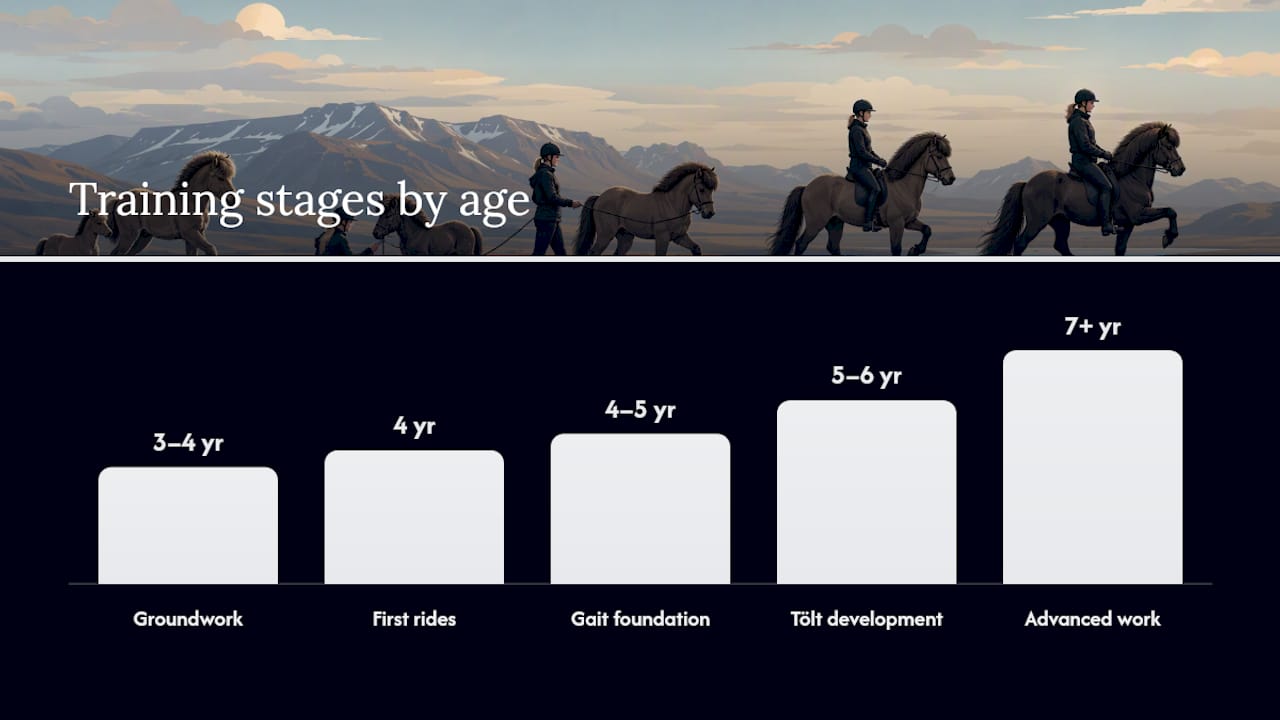
Icelandics develop more slowly than many breeds, and the traditional approach reflects that. Most are not started under saddle until age 4, with serious gait work typically beginning around age 5. Full structural maturity, including bone density and joint development, is generally reached around age 7. Starting too early risks long-term soundness.
Typical training progression
- Groundwork (ages 3–4): Halter training, leading, basic desensitization, and introduction to tack. No rider weight.
- First rides (age 4): Short sessions with a light, experienced rider. Focus on balance and forward movement, not gait refinement.
- Gait foundation (ages 4–5): Establishing a clear walk and trot. Tölt begins to emerge naturally in horses with strong genetic predisposition.
- Tölt development (ages 5–6): Rhythmic work on varied terrain. Transitions between walk and tölt. Rider position and balance become critical here.
- Flying pace introduction (age 6+): Only for horses showing natural aptitude. Requires a skilled trainer and specific conditioning.
- Competition or advanced trail work (age 7+): Once structural maturity is reached, the horse can take on more demanding work consistently.
Tack and rider fit
Icelandic-specific saddles are designed for the breed’s shorter back and wider barrel. A standard English or Western saddle often fits poorly and can cause discomfort or restrict movement. Stirrups are typically set slightly shorter than in English riding to accommodate the breed’s movement. Riders new to tölt often find that a relaxed, upright seat with soft hips makes the gait easier to follow.
Riding tour operators in Iceland, including Íshestar, provide helmets, boots, and warm riding suits. Riders are commonly screened for physical capability at booking. If you plan to ride in Iceland, wear thin base layers under the provided gear so you can adjust to temperature changes during the ride.
Pro Tip: For your first tölt session, focus on your hips rather than your hands. Riders who grip with their legs and stiffen their hips tend to disrupt the horse’s rhythm. Relax the pelvis, follow the movement, and the tölt will come through.
The history behind a thousand years of isolation
Norse settlers brought horses to Iceland during the settlement period, roughly 874 to 930 CE. The animals that survived the voyage were, by necessity, the hardiest and most compact, since longships offered limited space and the crossing was brutal. Once in Iceland, those horses faced volcanic terrain, harsh winters, and scarce forage, conditions that continued the selection pressure for toughness, self-sufficiency, and sure-footedness.
A brief attempt to improve the breed by importing Oriental and other European horses in the 10th century ended badly. The crossbred animals performed poorly in Iceland’s conditions, and the Althing (Iceland’s parliament) banned further horse imports around 982 CE. That ban has held, in various forms, ever since.
Key points in the breed’s historical timeline:
- 874–930 CE: Norse settlers arrive with horses; natural selection begins immediately
- ~982 CE: Althing bans further horse imports after crossbreeding experiment fails
- Medieval period: Horses serve as primary transport, farm labor, and food source
- 19th–20th centuries: First organized exports to Europe and North America begin
- Modern era: Horses of Iceland documents more than 300,000 registered worldwide, with roughly 40% still in Iceland
The isolation that followed the import ban is the single most important factor in the breed’s consistency. No outside genetic material has entered the population for over 1,000 years, which is why Icelandics today look, move, and behave so similarly to one another regardless of where they were bred.
How Icelandic horses are registered and evaluated
The breed’s international governance runs through FEIF, which coordinates national associations across more than 20 countries. WorldFengur, the FEIF-linked international studbook, assigns each registered horse a unique ID and stores pedigree data, breeding evaluations, assessment scores, and ownership history. It is the authoritative source for pedigree verification and the first place any serious buyer should look.
Breeding goals
FEIF breeding goals prioritize gait quality (especially tölt purity and flying pace ability), conformation suited to the breed’s function, fertility, health, and temperament. BLUP (Best Linear Unbiased Prediction) modeling is used to estimate breeding values for traits like gait score and conformation, allowing breeders to make data-informed selection decisions rather than relying solely on visual assessment.
The export/no-return rule
Once an Icelandic horse leaves Iceland, it cannot return. This is not a bureaucratic technicality; it is a biosecurity measure designed to protect Iceland’s disease-naive horse population. The same logic applies to tack: used boots, gloves, and chaps are prohibited from entering Iceland. For breeders managing bloodlines across borders, this means all genetic exchange happens through frozen semen or embryo transfer, not live animal movement.
What buyers should check on WorldFengur:
- Unique horse ID and registration status (confirm the horse is registered, not just claimed to be)
- Pedigree depth: at least three generations of documented ancestry
- Breeding evaluation scores: look for gait scores, conformation ratings, and any noted health flags
- Assessment history: horses evaluated at breed shows carry official scores that reflect gait quality and conformation under standardized conditions
- Ownership transfer records: confirm the seller is the registered owner
What Icelandic horses are used for today
The breed’s combination of tölt, stamina, compact size, and cooperative temperament makes it genuinely versatile. These are not one-trick horses.
- Trekking and trail riding: The tölt’s smoothness over long distances makes Icelandics the preferred choice for multi-day treks across lava fields, river crossings, and highland routes. Iceland horseback riding tours draw thousands of visitors annually, and the breed’s sure-footedness on unpredictable terrain is a key reason operators trust them with riders of varying experience.
- Gait competitions: FEIF-affiliated shows evaluate horses on tölt, trot, pace, and overall conformation. Competition classes range from beginner to elite, and the scoring system rewards both gait purity and rider harmony.
- Pacing races: Flying pace races are a traditional Icelandic sport. Horses are raced in pairs over a straight track, and the fastest clean pace wins. The sport has a dedicated following in Iceland and in some European countries.
- Leisure and family riding: The breed’s low-spook temperament and smooth gaits make it accessible to adult beginners and older riders who find trot-heavy breeds uncomfortable.
- Therapy riding: Several European programs use Icelandics specifically because the tölt’s rhythmic movement provides sensory input that many participants find calming and physically beneficial.
- Light draft and farm work: Historically central to Icelandic farming, the breed retains the strength to carry loads and work in harness, though this use is now rare outside Iceland.
Caring for an Icelandic horse in Ireland
Icelandics are hardy by nature, but “hardy” does not mean low-maintenance. Their care needs are specific, and owners in Ireland face a few considerations that differ from Iceland’s climate.
Daily and weekly care checklist:
- Fresh water and forage (hay or pasture) available at all times; avoid rich grass in spring and fall to reduce laminitis risk
- Daily hoof picks and weekly visual checks for thrush, white line disease, or bruising
- Grooming: brush coat, mane, and tail regularly; the breed’s thick double coat sheds heavily in spring
- Turnout: Icelandics do best with significant daily turnout; stabling for long periods without exercise leads to behavioral issues
- Social contact: the breed is herd-oriented and does poorly in isolation
Climate and housing in Ireland
Ireland’s wet, mild climate is manageable for Icelandics, but the persistent moisture creates hoof and skin challenges. Thrush is common in horses kept on wet ground. A well-drained paddock and regular farrier visits (every 6–8 weeks) are non-negotiable. Blanketing is generally not needed for a horse with a full winter coat, but clipped horses or older individuals may need a light rug in wet, cold conditions.
Summer eczema (also called sweet itch) affects a significant portion of Icelandic horses kept outside Iceland. The condition is triggered by Culicoides midge bites and causes intense itching, hair loss, and skin damage. It does not occur in Iceland because the midges are absent there. In Ireland, management includes fly rugs, insect-repellent products, and keeping horses stabled during peak midge activity at dawn and dusk.
Health and veterinary schedule:
- Annual vaccination review with your vet (requirements vary; confirm current Irish protocols)
- Bi-annual dental checks
- Regular fecal egg counts to guide targeted worming rather than blanket treatment
- Farrier every 6–8 weeks; many Icelandics in Ireland are shod on front feet only
Age milestones:
- Age 3–4: groundwork begins
- Age 4: first rides
- Age 7: full structural maturity; suitable for regular demanding work
- Age 20+: many remain in light work; breeding mares can produce foals into their late teens
Finding and buying an Icelandic horse in Ireland
Icelandics are not as widely available in Ireland as warm bloods or native Irish breeds, but the market has grown steadily. Most horses available in Ireland were bred in Germany, the Netherlands, or Scandinavia, where large breeding populations exist. A smaller number are imported directly from Iceland, subject to the export rules described above.
Availability and sourcing
Dedicated Icelandic horse clubs in Ireland and the UK maintain breeder directories and can point buyers toward reputable sellers. European online platforms list horses with WorldFengur IDs, which allows remote pedigree verification before travel. Prices vary considerably based on age, training level, gait scores, and competition record.
Approximate price bands (descriptive, not guaranteed):
- Young, unstarted horses (ages 3–5, basic registration): Entry-level pricing; suitable for experienced trainers who want to develop the horse themselves
- Started horses with basic tölt (ages 5–8): Mid-range; the most common purchase for recreational riders
- Trained competition horses with strong gait scores: Premium pricing; reflects years of professional development and documented performance
- Older horses (ages 15+) in good health: Often more affordable; suitable for light work and experienced owners who want a reliable partner
Buyer checklist before purchase:
- Verify WorldFengur ID and pedigree depth (minimum three generations)
- Request breeding evaluation scores and any competition assessment records
- Commission a pre-purchase veterinary examination including flexion tests and hoof assessment
- Test-ride the horse at walk, tölt, and trot; request flying pace only if relevant to your intended use
- Ask about summer eczema history if the horse has been kept outside Iceland
Import and quarantine considerations for Ireland
Importing a horse into Ireland from within the EU follows standard EU equine movement rules, including a health certificate and microchip verification. Horses from Iceland (an EEA country but outside the EU customs union) require additional documentation and may be subject to border inspection. Quarantine timelines and specific requirements should be confirmed with the Department of Agriculture, Food and the Marine before arranging transport. Used tack and equipment must not be brought from Iceland under any circumstances per biosecurity rules documented by Íshestar.
Import action checklist:
- Confirm current Irish import requirements with the Department of Agriculture, Food and the Marine
- Arrange an accredited veterinary health certificate in the country of origin
- Verify microchip registration matches WorldFengur records
- Book a border inspection post appointment if required
- Arrange quarantine facilities if mandated by current regulations
What the DMRT3 gene tells us about gait ability
The science behind the Icelandic horse’s extra gaits centers on a single gene mutation. The DMRT3 gene, sometimes called the “gait keeper,” affects the development of spinal interneurons that coordinate limb movement. A specific mutation in this gene disrupts the standard diagonal coordination pattern seen in trotting breeds and allows lateral ambling gaits like the tölt and flying pace to emerge.
NordGen notes that DMRT3 research dominates the scientific literature on Icelandic horses, though researchers have also studied climate response, temperament, coat color genetics, and growth patterns. The gait gene has been identified in other gaited breeds worldwide, confirming it is not unique to Icelandics, but the breed’s isolation and consistent selection for gait quality means the mutation is nearly universal within the population.
Practical implications for buyers and breeders:
- Genetic testing for DMRT3 is available and can confirm whether a horse carries the mutation, but a positive test does not guarantee a clean, rideable tölt
- Training, rider balance, and conformation all interact with genetics to determine actual gait quality
- A horse with strong WorldFengur gait scores from evaluated parents is a more reliable predictor of tölt quality than a genetic test alone
- Breeders using BLUP modeling incorporate gait scores alongside DMRT3 data for more complete selection decisions
The Icelandic horse as a cultural symbol
In Iceland, the horse is not simply a riding animal. For most of the country’s history, it was the primary means of transport, the main source of farm labor, and a critical food reserve. Horses appear throughout the Icelandic sagas, and the relationship between Icelanders and their horses carries a weight that has no direct equivalent in most other horse cultures.
Modern cultural expressions of that bond include:
- Réttir (sheep roundups): Traditionally conducted on horseback, these autumn events still use Icelandic horses to gather sheep from highland pastures. The connection to Icelandic sheep farming is deep; both animals shaped the country’s rural economy for centuries.
- Landsmót: Iceland’s national horse festival, held every two years, draws tens of thousands of visitors and features gait competitions, breeding evaluations, and cultural events centered entirely on the breed.
- International breed shows: FEIF-affiliated competitions across Europe and North America bring Icelandic horse communities together and serve as the breed’s primary international showcase.
- Tourism: Iceland horseback riding is one of the country’s most popular visitor activities. Operators like Íshestar run structured tours ranging from one-hour introductory rides to multi-day highland treks, making the breed accessible to visitors with no prior riding experience.
The breed’s role as a cultural ambassador has grown significantly as Iceland’s tourism sector expanded. For many visitors, a riding experience is their first direct encounter with the country’s rural heritage.
Why riders keep coming back to Icelandic horses
There is a specific moment that most people describe after their first real tölt: the realization that a horse can move this fast while you sit this still. It changes how you think about riding entirely.
The tölt is not just a party trick. Over a long day in the saddle, the absence of bounce means you arrive less tired, less sore, and more willing to go again tomorrow. That is why multi-day trekking on Icelandics has a following that no other breed has managed to replicate for that specific use. The horses’ temperament compounds the effect: they are curious and forward-going without being reactive, which means you spend your energy on the landscape rather than managing the animal beneath you.
The practical note worth adding: if you want to experience this before committing to ownership, Iceland horseback riding tours are the most direct route. Operators provide all gear, and most tours are designed for riders with no prior experience on the breed. For anyone planning a South Iceland trip, pairing a riding excursion with time exploring the region’s other attractions makes for a genuinely full itinerary.
Stay close to the horses: Fox Hostel in South Iceland
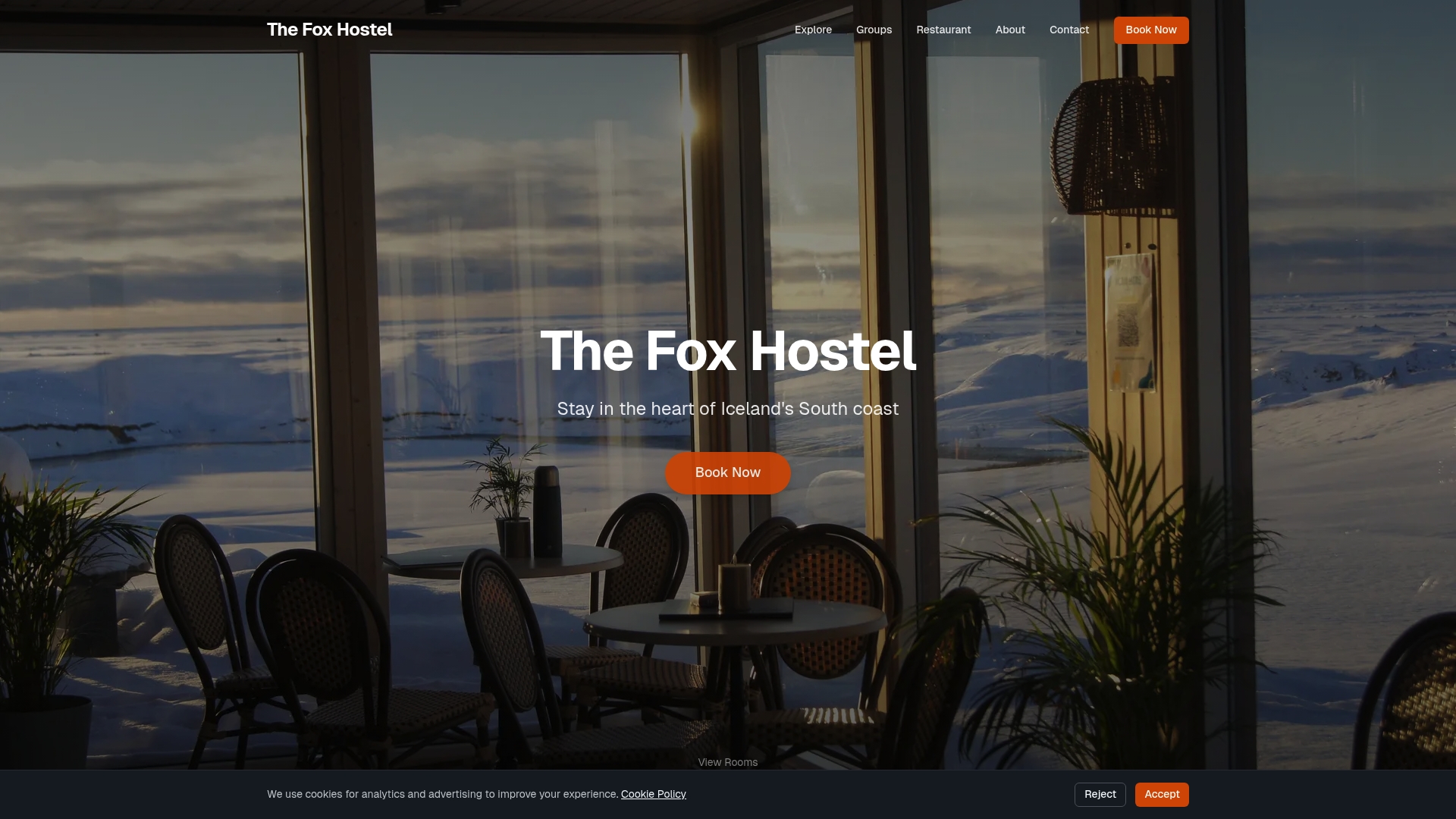
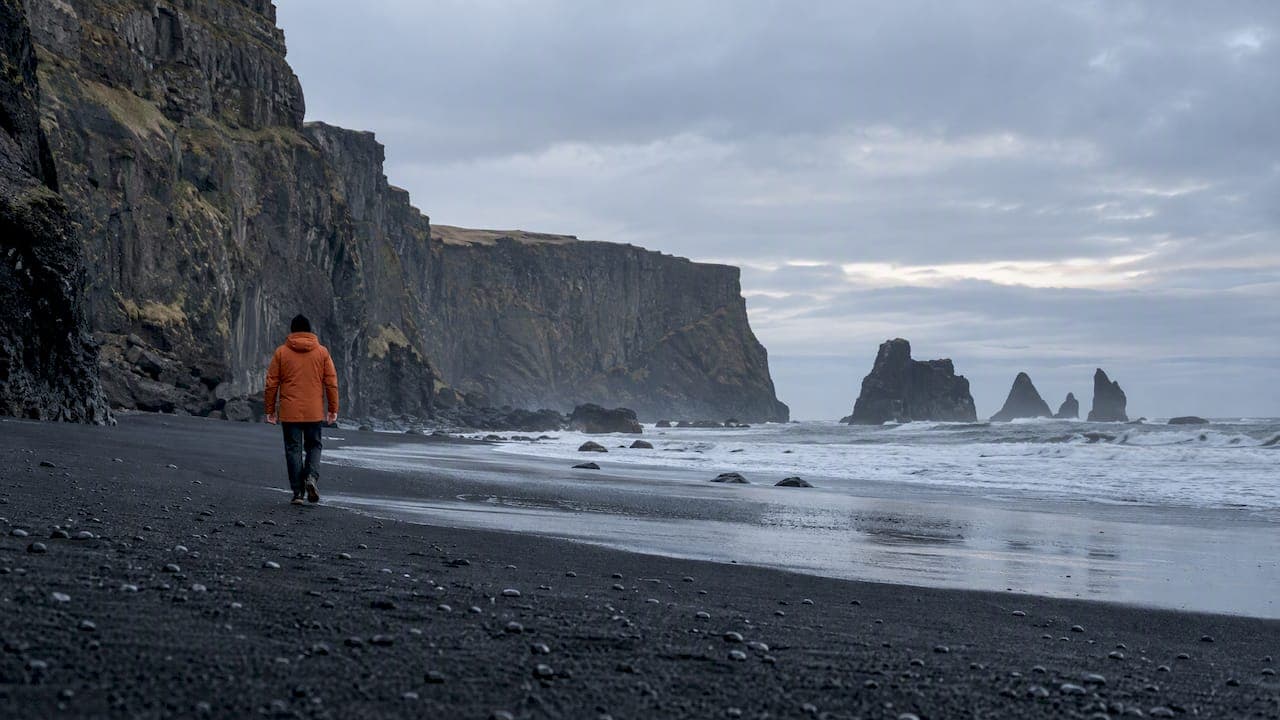
If you are planning a trip to experience Iceland horseback riding firsthand, where you stay shapes how much you can actually do. Fox Hostel sits in Hrífunes Nature Park, 35 minutes east of Vík, in a beautifully converted traditional Icelandic barn. The location puts you within easy reach of South Iceland’s riding centers and major natural attractions, including Reynisfjara Black Sand Beach, Dyrhólaey, and the road east toward Vatnajökull National Park and Jökulsárlón Glacier Lagoon.
Solo travelers can book a single bed in a dorm; couples, families, or small groups can buy out an entire room for complete privacy. The on-site communal kitchen is fully equipped, there is a pizzeria on-site, and the dark skies above Hrífunes are among the best in the region for Northern Lights viewing. Check available rooms and book directly to secure your base for exploring South Iceland.
Sources
- The Icelandic horse | FEIF
- Íshestar
- Icelandic horse - Wikipedia
- Icelandic Horse - NordGen
- The Icelandic horse