Iceland Parking: Apps, Reykjavík Rules & South Coast Tips
Iceland Parking: Apps, Reykjavík Rules & South Coast Tips
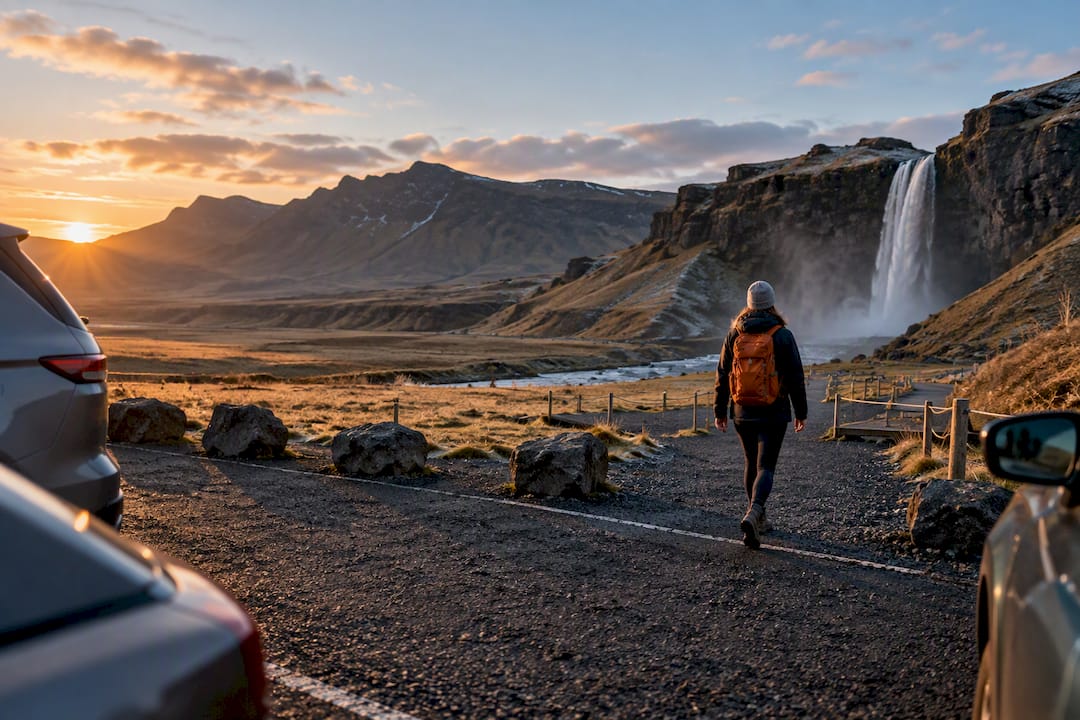
Yes. Assume every major attraction and most of Reykjavík charge for parking, and treat free parking as the exception, not the rule. Before you pick up your rental car, install Parka and EasyPark, note some sites use Checkit, QR codes, or coin kiosks instead. Pay using your rental’s exact plate number, and always screenshot your payment confirmation.
TL;DR:
- Parking fees in Iceland typically range from 500 to 1,200 ISK per visit, with Reykjavík’s street zones charged by the hour and often requiring multiple apps in different regions.
- Payment systems vary by site, including apps like Parka and EasyPark, QR codes, kiosks, and occasional cash payments, making it essential to confirm payment method and screenshot confirmation.
- Vehicle registration, not actual occupancy, determines parking costs at many attractions, so check your rental agreement and vehicle categories, especially for larger vans.
- During peak season, many popular sites fill their lots early, so timing visits for early morning or late afternoon increases chances of parking availability.
- Respect local parking regulations and pay fees to support site maintenance and protect Iceland’s delicate landscapes from damage caused by unregulated roadside parking.
Table of Contents
- Parking Near Attractions in Iceland: How the Payment Systems Actually Work
- What Parking Actually Costs and How the Charges Are Structured
- Region-by-Region Parking Notes for Iceland’s Top Attractions
- Reykjavík Parking Zones, Citations, and How to Fight a Ticket
- Vehicle Categories, Rental Quirks, and Reservation Rules You Need to Know
- A Field Checklist to Avoid Parking Fines in Iceland
- Fox Hostel’s Local Tips for South Coast Parking
- Will You Actually Find a Space? Parking Capacity Near Iceland’s Attractions
- Off-Site Lots and Alternatives When the Main Lot Is Full
- Accessible Parking and Facilities at Iceland’s Attractions
- Why Parking Rules Also Protect Iceland’s Roads and Landscapes
- Siggi’s Take: Parking Rules Aren’t the Enemy of a Good Trip
- Base Yourself Near Vík and Cut Your Daily Parking Stress
- Official Pages to Check Before You Travel
- Sources
- FAQ
Parking Near Attractions in Iceland: How the Payment Systems Actually Work
Iceland never built one national parking system. Instead, individual landowners, national parks, and the city of Reykjavík each run their own setup, which is why you’ll switch between three or four different payment methods in a single day of sightseeing.
Parka is the most widely used app, covering paid lots at dozens of attractions and pay-by-plate zones in several towns. You enter your registration plate, select the location from a list or map, and pay by card. EasyPark works similarly and covers Reykjavík’s on-street parking zones plus a growing number of attraction lots. Checkit is the operator behind Þingvellir National Park’s parking and a handful of other sites; it runs its own app and web portal, separate from Parka and EasyPark.
At sites without an app requirement, you’ll find a payment kiosk at the lot entrance, a QR code on a signpost that opens a mobile payment page, or in a few cases, an attendant collecting cash or card payment directly. Plate recognition cameras handle enforcement at many locations: a camera photographs your plate on entry, and the system checks whether that plate has an active payment on file. Miss the payment window and the plate gets flagged.
Getting the plate number right matters more than people expect. Rental cars often have plates that mix letters and numbers in ways that are easy to mistype, and a single wrong character means the system shows no valid payment, even though you paid. Photograph your plate before you start driving, and copy it character by character when you pay.
A useful cushion: several operators, including sites running through Parka, allow payment up to 24 hours after your visit, though the safer habit is paying on-site the moment you park. Grace periods exist mainly as a backstop for spotty rural signal, not as an invitation to delay.
Here’s what to expect at the point of payment, across the main systems you’ll encounter:
- Parka: app-based, pay-by-plate, covers most attraction lots and several town centers
- EasyPark: app-based, covers Reykjavík street zones and select attraction lots
- Checkit: app or web portal, used at Þingvellir and a few other sites
- QR codes and kiosks: common at smaller or newer paid lots, no app download needed
- Cash or card with an attendant: rare, mostly seasonal at high-traffic South Coast stops
A live count from May 2026 puts the number of paid parking locations around Iceland at roughly 45, and Parka and EasyPark between them cover most, but not all, of those sites. That gap is exactly why carrying more than one app matters. Get to a lot expecting Parka and find a Checkit sign instead, and you’ll waste ten minutes hunting for signal and downloading a second app you didn’t plan on needing.
What Parking Actually Costs and How the Charges Are Structured
Budget somewhere between 500 and 1,200 ISK per car at most paid attractions, with Reykjavík’s on-street zones running by the hour rather than a flat day rate. The exact number depends on the site, the vehicle category, and whether you’re paying for a single stop or a full day of hopping between viewpoints.
Attraction parking tends to follow one of three pricing shapes:
- Flat per-visit fee: a single charge covers the visit regardless of how long you stay, common at smaller waterfall pull-offs
- Block pricing: a set rate covers a fixed window, often eight hours, which suits sites where visitors linger for a hike
- Calendar-day pricing: one payment covers the entire date, letting you leave and return without paying twice
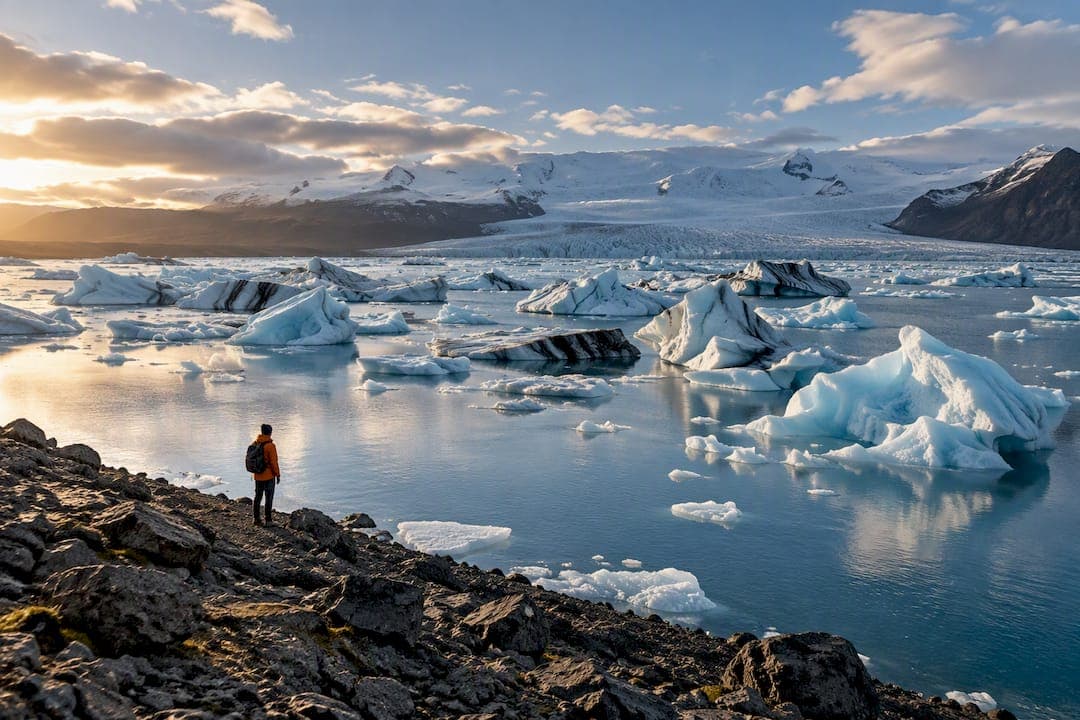
Skaftafell and Jökulsárlón, both inside Vatnajökull National Park’s operating area, currently charge around 1,110 ISK for a standard passenger car, with that fee valid until midnight on the date paid. That calendar-day structure rewards travelers who plan a multi-stop day along the same stretch of road, since you’re not paying per hour or per stop.
Typical fee range across major attractions: roughly 500 to 1,200 ISK per standard car per visit, with Reykjavík street parking billed hourly rather than as a flat rate.
Vehicle size changes the math at some sites. Rentals with seven or more registered seats, including many minivans and larger 4x4s used for Ring Road trips, sometimes land in a higher price category even when only two or three people are traveling. That’s a pricing rule tied to the vehicle’s registration, not its actual occupancy, so a couple in a rented seven-seater van can end up paying more than a couple in a compact sedan parked in the same lot.
Where this gets expensive is stacking. A day that hits Seljalandsfoss, Skógafoss, and Reynisfjara means three separate parking payments, even though the total distance covered is under two hours of driving. Compare that to a calendar-day system like Vatnajökull’s, where one fee covers everything inside that region for the day, and the cost difference for a multi-stop itinerary becomes obvious. Know which pricing model you’re dealing with before you plan a packed sightseeing day, because a string of flat per-visit fees adds up faster than a single block or day rate.
Region-by-Region Parking Notes for Iceland’s Top Attractions
Every region runs its own mix of operators, fee structures, and quirks, so here’s what to expect stop by stop.
-
Þingvellir (Golden Circle). Þingvellir National Park’s parking runs through Checkit, and a single day’s payment covers multiple lots inside the park, including P1, P2, and P5. That means you can pay once at the main lot, drive to a different viewpoint later, and not owe a second fee. It’s one of the more traveler-friendly setups in the country, and worth knowing before you assume every lot needs its own payment.
-
Geysir. Parking here runs through Parka on an eight-hour block rate, plenty for the walk around the geothermal field and a coffee stop at the visitor center. If your Golden Circle day includes a long lunch, keep the block window in mind so you’re not caught paying twice.
-
Gullfoss. The lot at Gullfoss has historically stayed free for standard cars, though signage at the entrance should always take priority over anything you read in advance, since fee structures shift. Check the posted rate on arrival rather than assuming last year’s pricing still applies.
-
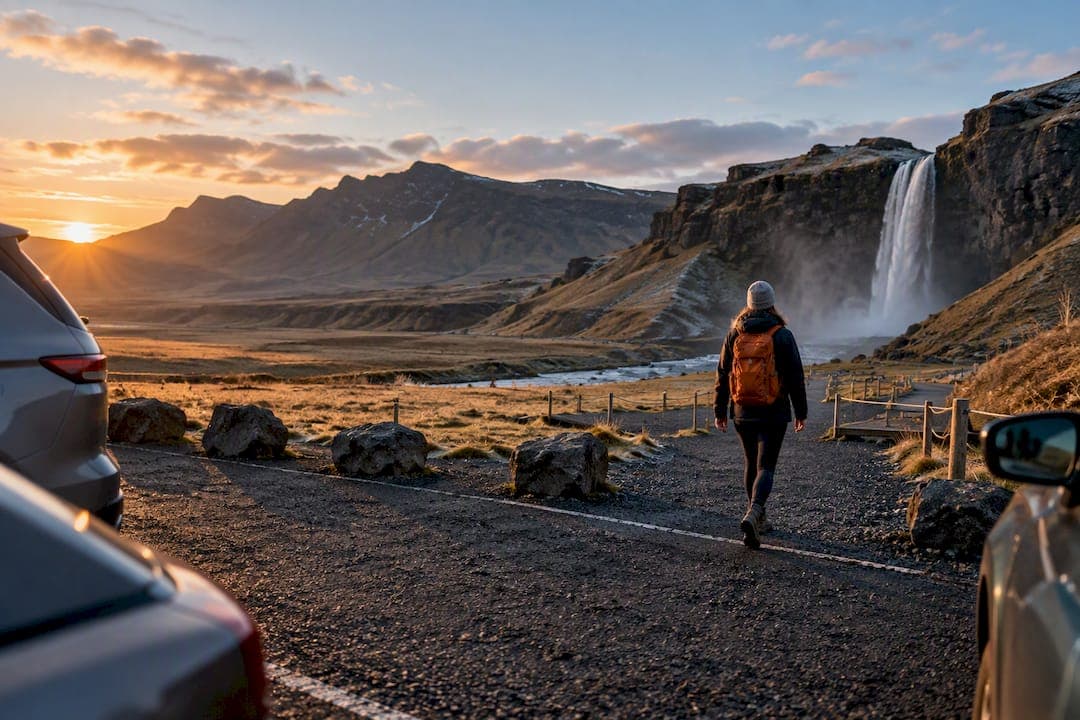
Seljalandsfoss. Expect either a plate-recognition camera system or a site-specific Checkit setup, depending on recent changes to the lot’s operator. This waterfall draws heavy coach traffic, so arrive early or late in the day if you want an easier space and a quieter shot.
-
Skógafoss. Parking runs through Parka in most cases, though the site has changed operators before, so confirm the signage rather than relying on an app default. The lot sits close enough to the falls that a short block rate covers most visits comfortably.
-
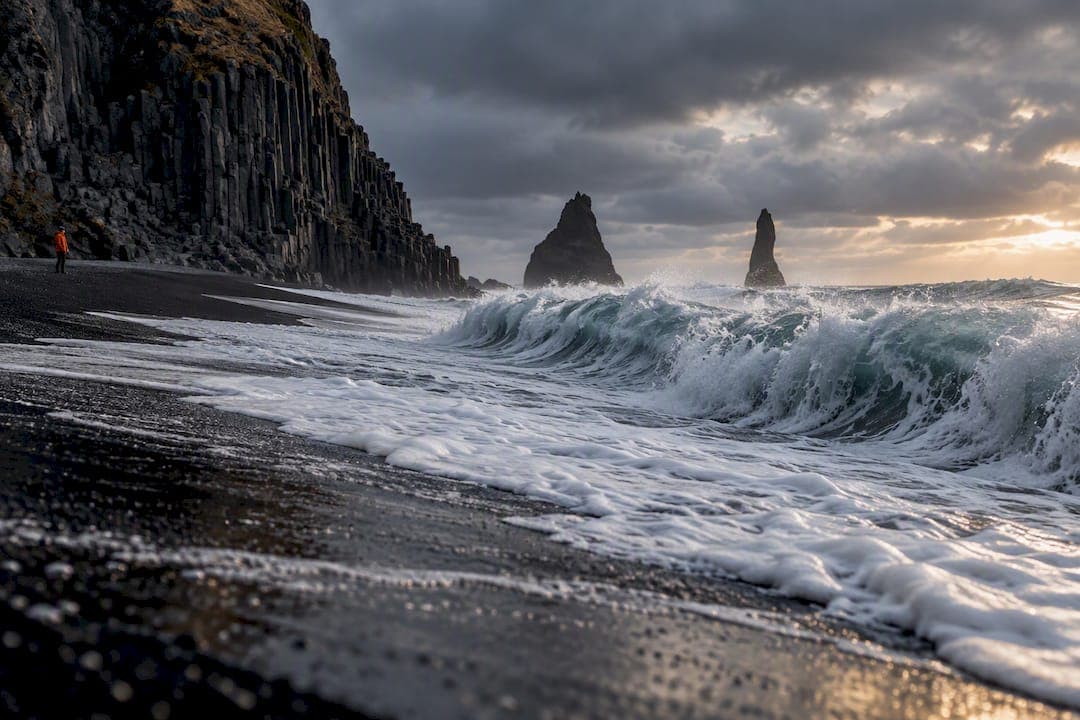
Reynisfjara and Dyrhólaey. Both charge through Parka on timed blocks rather than a flat calendar-day rate. These two sites sit close together on the South Coast, and a lot of visitors don’t realize they’re paying separately at each, so budget for two fees if you’re hitting both in one outing.
-
Skaftafell and Jökulsárlón (Vatnajökull National Park). Both charge the regional rate of roughly 1,110 ISK per standard car, valid until midnight. Visit a second fee-based area in the park on the same date and pay with the same plate, and you can get a 50% discount on that second fee. That’s a meaningful saving if your itinerary covers both Skaftafell and the glacier lagoon in one day, so pay attention to which plate you used for the first payment.
-
Kirkjufell and Snæfellsnes Peninsula. Parking at Kirkjufell and nearby Kirkjufellsfoss runs through operator-specific pages rather than a single national app, and rates have occasionally spiked during peak summer weekends when the operator adjusts pricing to manage crowding. Check the operator’s own page shortly before your visit rather than trusting a screenshot from an earlier trip.
-
Westfjords and smaller sites. Parka and Checkit adoption is thinner out here, and several remote pull-offs and trailheads remain free simply because no operator has set up a fee system yet. Seasonal closures are more common too, particularly on gravel access roads that wash out in spring, so build flexibility into any Westfjords leg of your trip.
-
Landmannalaugar and the Highlands. This one works differently from everything above: access itself, not just parking, requires planning around road conditions and, at peak summer dates, a reservation and service fee for using the site’s facilities. Treat this as a special case covered in more detail further down, not a simple pay-and-park stop.
If you’re routing a Golden Circle day and want the timing right for Þingvellir and Geysir without wasting a block-rate window, a Golden Circle day trip guide lays out a sensible order of stops.
Reykjavík Parking Zones, Citations, and How to Fight a Ticket
Reykjavík’s downtown parking runs on a zone system, and rates depend on which zone you’re in, with the busiest central zones costing more per hour than the outer ones. Most zones stop charging in the evening and overnight, and resume the next morning, though exact hours vary by zone, so check the signage or the official Reykjavík parking pages for the current map before you leave your car overnight.
The city draws a clear line between two types of charges, and mixing them up is a common tourist mistake:
- Extra parking tariff: charged when you park in a paid zone without paying, calculated as a penalty on top of the missed parking fee
- Parking violation charge: a separate citation for rule violations like parking in a restricted or disabled space, starting at 10,000 ISK and increasing if left unpaid
Reykjavík treats both as administrative charges rather than criminal fines, which matters because it means the process runs through a payment and review system, not a court appearance. That’s a meaningful distinction for tourists worried a parking mistake might follow them home in some more serious way. It generally won’t, but ignoring the charge still costs money.
Unpaid citations escalate on a schedule: fees increase by 50% after 14 days, and again after 28 days if the charge still hasn’t been paid.
If you think a citation was issued in error, you can request a review through the Reykjavík City Parking Fund. Submit your case with any evidence you have, screenshots of your app payment, photos of the signage, whatever supports your side. One catch worth knowing: the charge keeps accruing while your review is pending, so a slow review process doesn’t pause the clock. If the review goes in your favor, the fee gets canceled through Iceland’s island.is system. Pay promptly if you’re not planning to contest, and file the review quickly if you are.
Vehicle Categories, Rental Quirks, and Reservation Rules You Need to Know
Your car’s registered seat count can push you into a different price bracket, and this catches a lot of travelers off guard. Some operators charge based on how many seats a vehicle is registered for, not how many people are actually inside it, so a rented seven-seat van carrying two people can land in the higher-priced category reserved for larger vehicles. Check your rental agreement and the pricing tiers posted at each attraction before you assume the standard car rate applies.
Landmannalaugar and several other Highland sites run on different rules entirely. During peak summer months, access to some of these areas requires a reservation in advance, along with a service fee that covers the facilities on site, restrooms, staff, and basic maintenance in a location that gets heavy seasonal use with minimal permanent infrastructure. This isn’t the same as a standard parking fee, and skipping the reservation step can mean turning back at the access point.
A short checklist for handling these special cases:
- Check your rental contract for the vehicle’s registered seat count before you rely on a “standard car” price assumption
- Look up reservation requirements for Highland sites, especially Landmannalaugar, well before your travel dates in June through August
- Confirm which plate and vehicle category you’re paying under every time you use an app, since a mismatch can invalidate the payment
- Keep a photo of your rental agreement’s vehicle details on your phone in case an operator asks for confirmation
A Field Checklist to Avoid Parking Fines in Iceland
Get these basics right before you leave the rental counter and most of the friction disappears.
- Install both Parka and EasyPark before your trip starts, and know that Checkit covers Þingvellir and a few other sites
- Screenshot every payment confirmation the moment you pay, don’t rely on the app’s history if you lose signal later
- Enter your rental’s exact plate number every time, double check it against a photo of the actual plate
- Confirm the location selected in the app matches the lot you’re actually parked in before you finalize payment
- Carry a backup payment method since some kiosks and QR pages don’t accept every card type
And if you ever need to appeal a charge, a screenshot showing the timestamp, location, and plate number is far more persuasive than a verbal explanation. Save every one, even at the free sites, since operators occasionally add fees mid-season.*
Fox Hostel’s Local Tips for South Coast Parking
Reynisfjara and Dyrhólaey get hit hardest by tour coaches between mid-morning and early afternoon. Arrive before 9 AM or after 5 PM and you’ll find easier spaces and far fewer people in your photos. Visitors near Vík often park once at their accommodation and plan day routes east toward Vatnajökull or west toward Reynisfjara, rather than backtracking. If you’re out after dark chasing the Northern Lights, park fully off the roadway and give other vehicles room. For groups, we help sequence stops so you’re not fighting parking crowds at the same site as every coach on the Ring Road.
Will You Actually Find a Space? Parking Capacity Near Iceland’s Attractions
Capacity is the part most guides skip, and it’s often the real problem, not the fee. Reynisfjara, Skógafoss, and Seljalandsfoss all have lots that fill completely by mid-morning during the summer high season, regardless of whether you’re willing to pay. Once a lot is full, some sites don’t offer a clear overflow area, and cars end up parked along the roadside, which is both risky and often against posted rules.
Þingvellir’s multi-lot system helps here in a practical way: if P1 is full, you can often find space in P2 or P5 without paying a second fee, since one daily payment covers all of them. Smaller sites without that flexibility, like the pull-offs along the South Coast, don’t have that safety valve. Skaftafell and Jökulsárlón see similar seasonal strain, with lot capacity stretched thin in July and August, particularly around midday.
The practical fix is timing, not luck. Early morning arrivals, before 9 AM, and late afternoon visits after most tour groups have moved on, consistently offer better odds of finding a space at every major South Coast and Golden Circle stop. Shoulder season, September through early May, cuts crowding dramatically almost everywhere except a handful of Northern Lights hotspots.
Off-Site Lots and Alternatives When the Main Lot Is Full
When the primary lot at a popular site is full, options narrow fast because Iceland hasn’t built out a network of park-and-ride shuttles the way larger cities have. A few sites, mainly around Reykjavík’s busiest downtown streets, do offer larger off-site lots slightly farther from the main attraction, with a short walk covering the difference.
For attractions outside the capital, the more realistic alternative is simply timing your visit around the crowd rather than hunting for a secondary lot that usually doesn’t exist. Some tour operators run their own bus parking separate from the general lot, which occasionally frees up a few car spaces in the main area during peak coach hours. Reykjavík’s public bus network, Strætó, can also cut down on the need to drive and park downtown at all if your itinerary keeps you in the city center for a day.
The honest takeaway: Iceland’s attraction parking wasn’t designed with heavy overflow in mind, so the best “alternative” is usually adjusting when you arrive, not finding a different place to park.
Accessible Parking and Facilities at Iceland’s Attractions
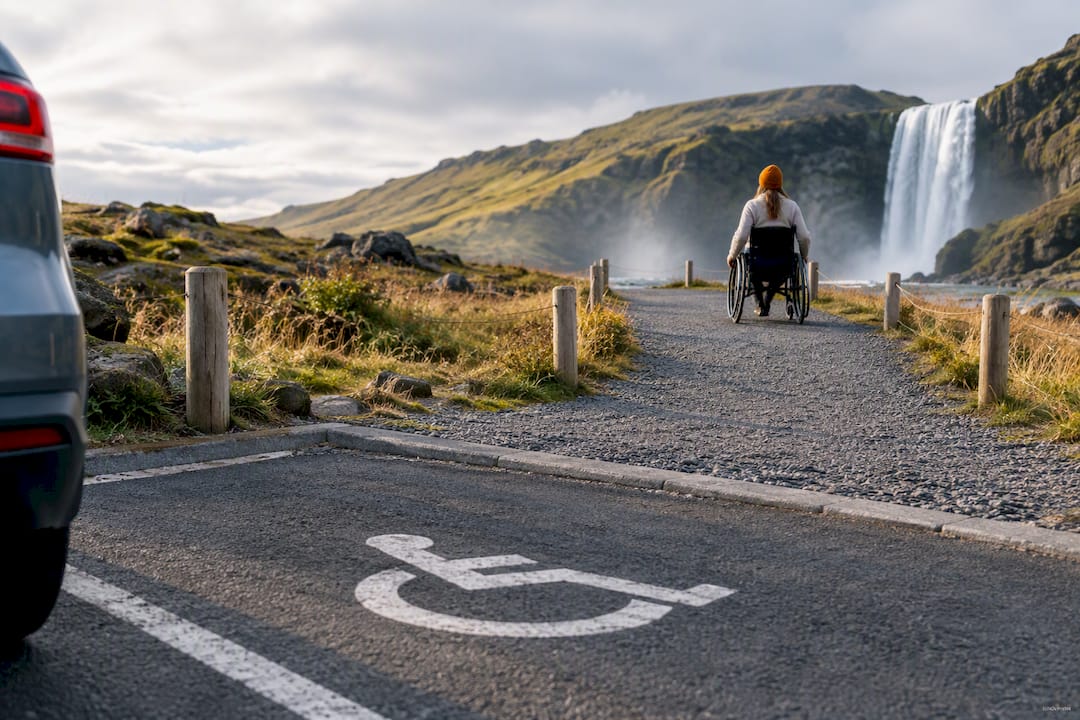
Most major paid attractions, including Þingvellir, Skaftafell, and the larger South Coast waterfalls, mark reserved accessible spaces closer to the main paths and visitor facilities. These spaces are typically free of the standard parking fee, though rules can vary by site, so check the signage at the payment point rather than assuming.
Smaller or newer paid lots, particularly at some Snæfellsnes and Westfjords sites, may not have dedicated accessible spaces at all, since infrastructure at these locations has developed more slowly than at the headline attractions. If accessible parking is essential to your trip, it’s worth checking a site’s own visitor information page before you go, rather than relying on general assumptions about what a “national park” or “major waterfall” will provide.
Terrain matters as much as the parking space itself in Iceland. Several attractions, including parts of Skógafoss and sections of Skaftafell, involve gravel or uneven paths between the lot and the main viewpoint, which can affect accessibility regardless of how close the reserved parking is. Planning around this reality, rather than the parking fee alone, makes for a smoother visit.
Why Parking Rules Also Protect Iceland’s Roads and Landscapes
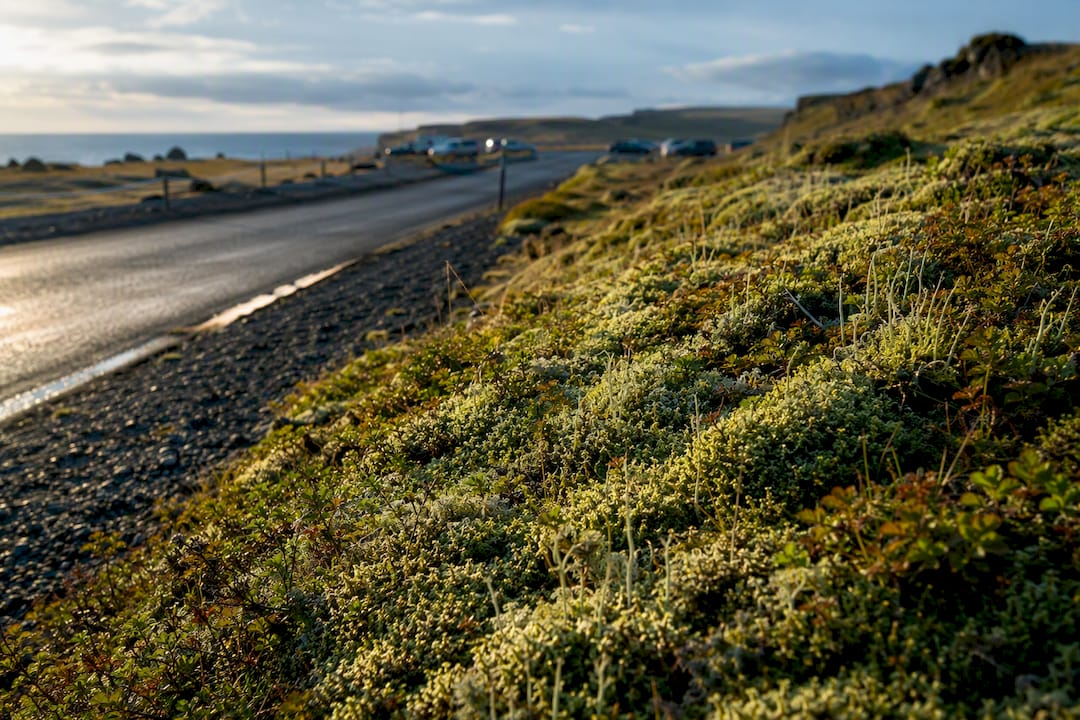
Unregulated parking has real consequences beyond an inconvenienced tourist. Roadside parking at overflow times damages fragile vegetation along the shoulders of routes like the Ring Road, and it creates genuine traffic hazards on narrow two-lane roads where a poorly parked car can block sightlines for oncoming traffic. Iceland’s landscapes recover slowly. Moss and low vegetation crushed by tires can take years to grow back, which is part of why so many attractions have moved toward managed, paid lots instead of open fields.
The fee systems themselves fund maintenance that keeps sites open at all: path repairs, restroom facilities, and staff at high-traffic locations like Skaftafell and Reynisfjara. That revenue loop is part of why more sites have added paid parking in recent years rather than fewer, and it’s a trade most visitors accept once they understand where the money goes.
Congestion at popular stops also has a knock-on effect on local traffic. When Reynisfjara’s lot overflows onto the shoulder of the access road, it can back up traffic on the main coastal route for those simply passing through. Respecting posted capacity and choosing off-peak times isn’t just about avoiding a fine. It keeps the roads usable for everyone, tourists and residents alike.
Siggi’s Take: Parking Rules Aren’t the Enemy of a Good Trip
I get why paid parking feels like friction on a trip you’ve saved years for. But every fee funds a bathroom, a path repair, or a ranger keeping an eye on a fragile site. Skip the payment or park on the shoulder, and you’re not beating the system, you’re pushing the cost onto the next visitor and the land itself. Follow the rules and the sites stay open, the trails stay intact, and locals stay welcoming rather than defensive. If you stay on the South Coast, you can get help planning your route so parking never becomes the thing you remember about a day that should’ve been about waterfalls and glaciers.
— Siggi
Base Yourself Near Vík and Cut Your Daily Parking Stress
Here’s the thing about a Ring Road trip built around day drives from Reykjavík: every stop means finding, paying for, and worrying about a new parking lot, often during the exact hours those lots are most crowded. Located east of Vík, some accommodations allow guests to start their South Coast days closer to Reynisfjara, Dyrhólaey, and routes east toward Vatnajökull, helping to arrive at lots before the coach traffic peaks rather than fighting through it from further out.

Solo travelers can book a single bed in our shared dormitories, while couples, families, or groups can book out a private dormitory for full privacy, without giving up the social kitchen and pizzeria that make the barn feel like more than just a place to sleep. Larger groups traveling together can look into our group booking options to coordinate a whole trip’s logistics, parking timing included, under one roof. If you want help sequencing which attractions to hit first based on crowd patterns and paid parking availability, you can check availability and dates for your South Coast stretch to build an effective route.
Official Pages to Check Before You Travel
Fees and operator rules shift, so confirm details close to your travel dates rather than trusting last year’s numbers:
- Reykjavík parking citations and zone information
- Þingvellir National Park parking service
- Vatnajökull National Park’s Skaftafell and Jökulsárlón visitor pages for current regional rates
- Individual Parka and Checkit operator pages for site-specific instructions
Sources
- Parking citations | RPS | Reykjavik
- Thingvellir National Park — Parking service
- Iceland Attraction Parking Fees: Full 2026 Guide | ICR
- Parking in Iceland: Your Guide to Paying, Parking & Avoiding Fines
FAQ
Is There Free Street Parking in Iceland?
Some free parking still exists, mostly in residential areas outside Reykjavík’s paid zones and at a handful of remote pull-offs without an operator system in place. Most attraction lots and central Reykjavík streets now charge, so treat free parking as something to confirm on arrival rather than assume.
Where Should I Park When Visiting Reykjavík?
Reykjavík runs a zone-based system where rates depend on which downtown zone you’re in, with most zones free overnight and charging during the day. Use EasyPark or check the official zone map before you park, since paying the wrong zone rate or missing the payment window is what triggers the extra tariff.
Do I Need to Pay for Parking at Gullfoss Waterfall?
Gullfoss’s main lot has historically stayed free for standard passenger cars, though fee structures at Icelandic attractions change without much notice. Check the posted signage at the lot entrance when you arrive rather than relying on outdated information.
How Much Does It Cost to Park at Kirkjufell Mountain?
Kirkjufell’s parking runs through an operator-specific system rather than a fixed national rate, and prices have occasionally risen during peak summer weekends. Check the current rate posted at the lot or on the operator’s own page shortly before your visit, since Snæfellsnes rates shift more often than at the major national park sites.
What Happens if I Get a Parking Citation in Reykjavík?
Reykjavík issues two types of charges: an extra tariff for unpaid parking, and a separate violation charge that starts at 10,000 ISK for rule violations like parking in a restricted space. Unpaid citations increase by 50% after 14 days and again after 28 days, so pay promptly or request a review through the Reykjavík City Parking Fund if you believe the charge was issued in error.
Does Fox Hostel Help Guests Plan Around Parking and Crowds?
Yes. Guests staying near Vík may receive local guidance on the best arrival windows for Reynisfjara and Dyrhólaey and suggestions on routing South Coast days to avoid peak coach traffic at the busiest lots. Current room availability and rates are listed directly on the Fox Hostel booking page.