Renting Campervan versus Hostel in Iceland: 2026 Guide
Renting Campervan versus Hostel in Iceland: 2026 Guide
TL;DR:
- Renting a campervan in Iceland offers flexibility but involves high costs from rental fees, campsite charges, and insurance. Hostels provide a cheaper, safer, and more social option, especially during winter or short trips. Your choice depends on trip length, weather, and your comfort with driving and chores.
Renting a campervan versus hostel accommodation in Iceland is the single most consequential decision a budget traveler makes before landing in Reykjavik. A campervan combines transport and lodging into one vehicle, giving you the freedom to stop wherever Iceland’s landscape demands it. A hostel gives you a fixed base, a warm bed, and a room full of people who just hiked the same glacier you did. Budget travelers in 2026 spend $110–$130 per day on either model when self-catering from Bónus or Krónan, Iceland’s two main budget supermarket chains. The right choice depends on your season, your route, and your tolerance for daily chores.
What are the real costs of renting a campervan versus hostel in Iceland?
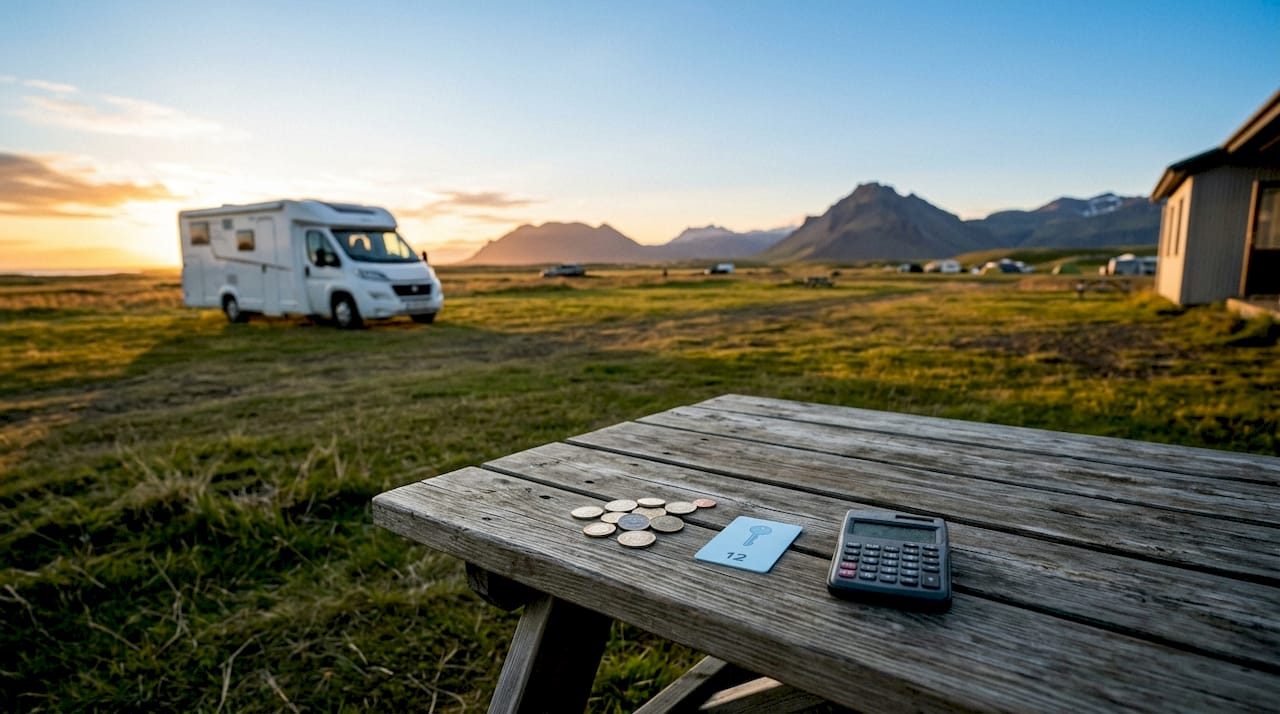
The cost gap between these two options is smaller than most travelers expect. Campervan rentals run $120–$325 per day, while hostel beds cost $58–$130 per night depending on season and room type. Those numbers look comparable until you add the mandatory extras that come with a campervan.
Campsite fees run $15–$25 per person per night, and mandatory insurance adds another $20–$50 daily. That convenience tax is real and catches first-time campervan renters off guard. A hostel traveler renting a small car pays for fuel and the rental separately, but avoids campsite fees entirely.
Pro Tip: Shop at Bónus for groceries. Both campervan travelers and hostel guests can cut food costs significantly by cooking their own meals rather than eating at restaurants.
| Cost Category | Campervan (daily estimate) | Hostel + Car (daily estimate) |
|---|---|---|
| Accommodation | $120–$325 (van rental) | $58–$130 (bed) |
| Campsite fees | $15–$25 per person | None |
| Insurance | $20–$50 | Included in car rental |
| Fuel | $30–$50 | $25–$40 |
| Food (self-catering) | $20–$35 | $20–$35 |
Food costs stay roughly equal for both models when you cook your own meals. The campervan’s built-in kitchen is convenient, but hostel communal kitchen access delivers the same result without the vehicle overhead. For a solo traveler on a tight budget, the hostel plus rental car model often comes out cheaper once campsite fees and insurance stack up.
How does Iceland’s weather affect the campervan versus hostel decision?
Season is the most underrated factor in this decision. Iceland’s weather does not just affect comfort. It affects safety, campsite availability, and the basic feasibility of sleeping in a van.
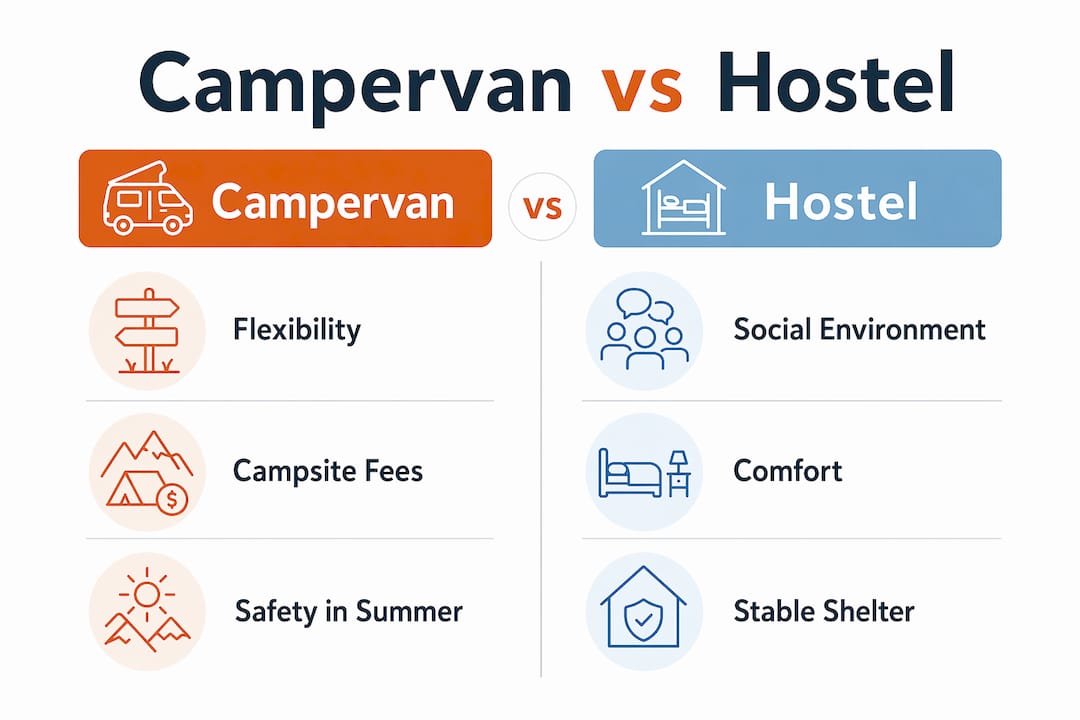
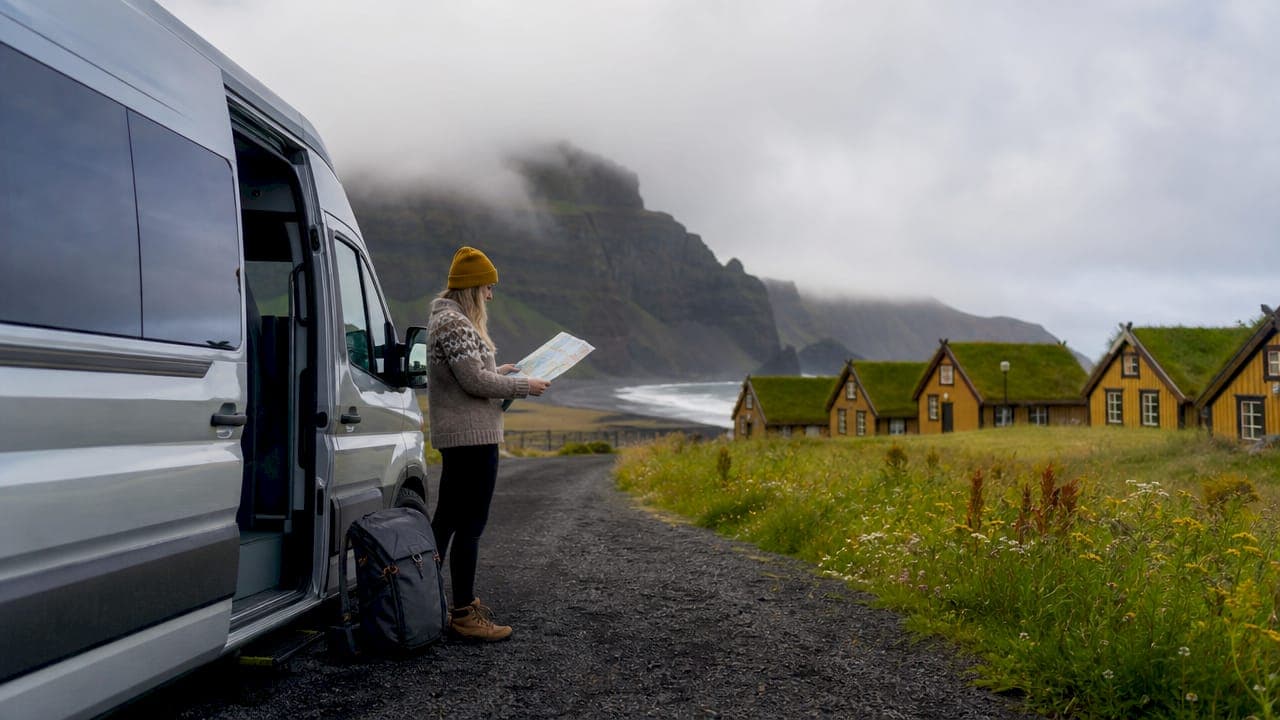
Summer months, roughly june through august, favor campervans strongly. Campsites are open, temperatures are mild, and the midnight sun means you can drive and explore at any hour. The trade-off is that campsites fill fast in peak summer, requiring advance booking and reducing the spontaneity that makes campervans appealing in the first place.
Winter is a different story entirely. Temperatures drop to between -5 and 5°C from october through april, and storms arrive without warning. Hostels are the safer, more comfortable choice during these months, offering reliable heating, indoor bathrooms, and a stable base when roads close. A campervan in a January storm on the South Coast is not an adventure. It is a liability.
Key seasonal considerations for each option:
- Summer (june–august): Campervans thrive. Campsites are open, weather is cooperative, and the Ring Road is fully accessible.
- Shoulder season (may, september): Campervans work but require flexibility. Some campsites close early or open late. Hostels offer more predictable access.
- Winter (october–april): Hostels win decisively. Wild camping is legally restricted year-round, and strong crosswinds make large campervans difficult to handle safely on exposed roads.
- Price fluctuations: Both campervan rentals and hostel rates drop significantly outside peak summer, making off-season hostel stays especially good value.
Wild camping is illegal in Iceland regardless of season. Every campervan traveler must use designated campsites, which removes the “park anywhere” fantasy that many travelers arrive with.
What are the lifestyle differences between campervans and hostels?
The lifestyle gap between these two options is wider than the cost gap. A campervan gives you freedom and takes something in return: your time and energy.
Campervan travelers perform hotel-like chores every single day. Cooking, washing dishes, making the bed, packing gear, and finding a campsite before dark all become daily tasks. That is not a complaint. For many travelers, the self-sufficiency is the point. But it is a real time cost that hostel stays eliminate entirely.
Pro Tip: If you are traveling solo and value meeting people, hostels have a structural advantage. The social connections you make in a hostel common room are genuinely hard to replicate from a campervan.
Hostels act as community hubs where travelers share tips, coordinate day trips, and sometimes split costs on activities. That social layer has real practical value, not just emotional value. Learning from someone who drove the Highlands yesterday is worth more than any travel blog.
Campervan pros and cons:
- Full itinerary flexibility. You go where you want, when you want.
- Combined transport and lodging reduces the number of bookings to manage.
- Immersive nature access. Wake up next to a waterfall if the campsite allows it.
- Daily chores add up. Cooking, cleaning, and setup take real time each day.
- Cramped quarters with multiple adults and large luggage make comfort a challenge.
Hostel pros and cons:
- Social atmosphere. Meeting other travelers is built into the experience.
- No daily setup. Check in once and use the space as a base.
- Amenities like shared kitchens and group rooms reduce cost per person for groups.
- Fixed location limits spontaneous route changes.
- Shared dorm rooms mean less privacy than a campervan’s enclosed sleeping space.
How does your itinerary type determine the better choice?
Campervans suit long-distance Ring Road trips. Hostels are better for 3–4 day South Coast or Golden Circle itineraries. That single insight should drive most travelers’ decisions before they even look at prices.
A full Ring Road circuit covers roughly 1,332 kilometers and takes 7–14 days to do properly. A campervan earns its cost on a trip that long because you eliminate the daily task of booking new accommodation in each town. The vehicle becomes your moving base camp.
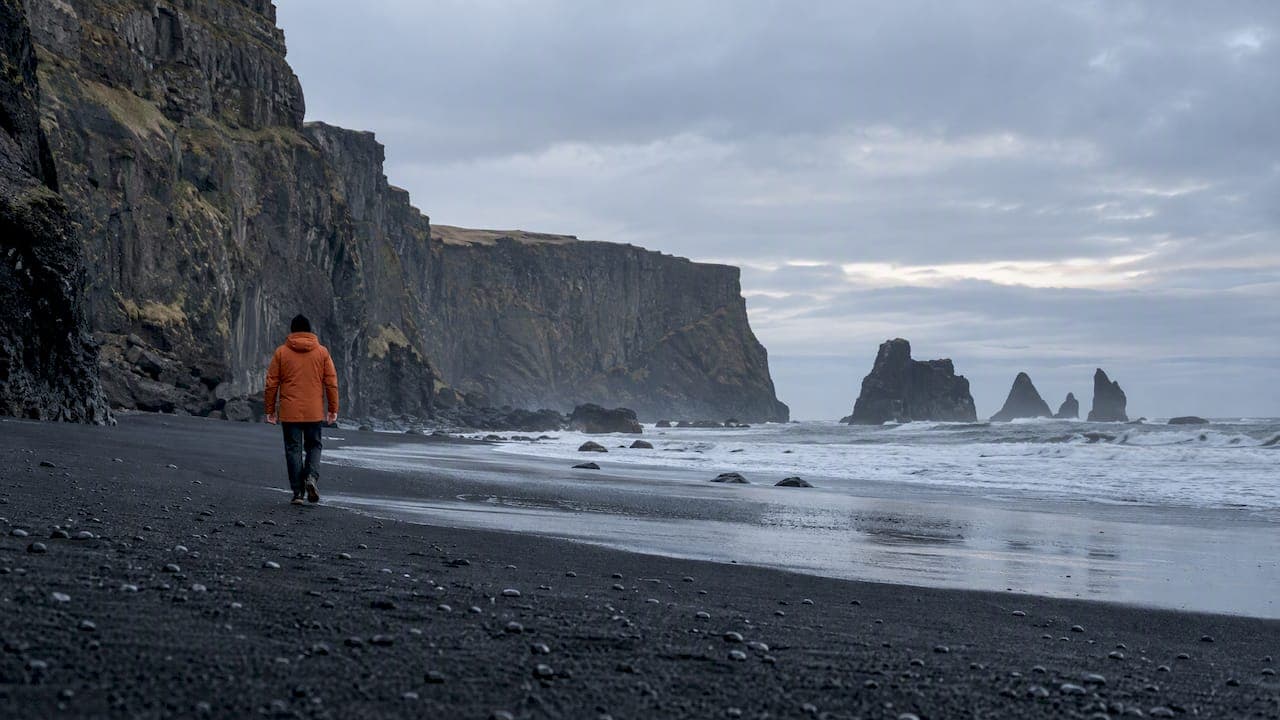
Shorter trips work better with a hostel and a rental car. You pick a region, book a bed, and day-trip from a fixed base. The South Coast itinerary from a hostel near Vík puts Reynisfjara Black Sand Beach, Dyrhólaey, Skógafoss, and Seljalandsfoss all within a single day’s drive. No campsite booking required.
| Trip Type | Best Option | Reason |
|---|---|---|
| Full Ring Road (7–14 days) | Campervan | Route flexibility, combined transport and lodging |
| South Coast focus (3–5 days) | Hostel + rental car | Fixed base, lower overhead, easier logistics |
| Highland access (F-roads) | 4x4 campervan only | Standard campervans and cars cannot legally use F-roads |
| Group of 4+ travelers | Hostel room buyout | Campervans feel cramped; group rooms cut cost per person |
| Solo winter traveler | Hostel | Safety, warmth, and social connection outweigh flexibility |
Group size matters more than most travelers realize. Campervans feel cramped with multiple adults and large suitcases, making a hostel room buyout the more comfortable and often cheaper option for groups of four or more. Foxhostel, for example, lets groups book an entire dorm room for complete privacy while still accessing shared amenities. That model captures the best of both worlds for group travel in Iceland.
Inexperienced drivers benefit from car rental plus hostel stays for lower risk. A large campervan in Iceland’s crosswinds requires genuine vehicle handling confidence. If you have never driven a van-sized vehicle on narrow mountain roads in gusting wind, a smaller rental car is the safer starting point.
Key Takeaways
Hostels win on comfort and social value; campervans win on flexibility for long routes, but mandatory fees and daily chores make them costlier and more demanding than most travelers anticipate.
| Point | Details |
|---|---|
| Daily budget is similar | Both models cost $110–$130 per day when self-catering from budget supermarkets. |
| Campervans carry hidden costs | Campsite fees ($15–$25) and insurance ($20–$50) add substantially to the base rental rate. |
| Season drives the decision | Summer favors campervans; winter storms and cold make hostels the safer, smarter choice. |
| Trip length is the clearest guide | Full Ring Road trips favor campervans; short regional trips work better with a hostel and rental car. |
| Groups save more in hostels | Room buyouts at hostels beat cramped campervan interiors for parties of four or more. |
Why I think most travelers get this choice backwards
by Trygve
Most travelers I talk to assume the campervan is the adventurous, budget-forward choice and the hostel is the safe, boring fallback. I think that framing is exactly wrong.
The campervan is the high-maintenance option. You are managing a vehicle, a kitchen, a campsite reservation, and a sleeping arrangement simultaneously, every single day. That is not freedom. That is logistics. The travelers who genuinely love campervans are the ones who find that daily self-sufficiency satisfying, not just tolerable.
The hostel, by contrast, gives you the mental space to actually experience Iceland. You check in, drop your bag, and your only job is to decide where to go. For a solo budget traveler, the social dimension is not a minor perk. It is often the best part of the trip. I have seen people coordinate entire Highland day trips with strangers they met at breakfast. That does not happen in a campervan.
My honest advice: if your trip is longer than ten days and you are comfortable driving a large vehicle in unpredictable weather, rent the campervan. If you are doing a focused South Coast or Golden Circle trip, or traveling in any month outside june through august, book a hostel. The budget travel tips that actually move the needle are about matching your accommodation to your trip style, not chasing the option that sounds more exciting in a travel forum.
— Trygve
Foxhostel: a strong base for South Iceland exploration
Foxhostel sits in Hrífunes Nature Park, 35 minutes east of Vík, in a converted traditional Icelandic barn. It puts Reynisfjara Black Sand Beach, Dyrhólaey, Jökulsárlón Glacier Lagoon, and Vatnajökull National Park all within day-trip range from a single base.
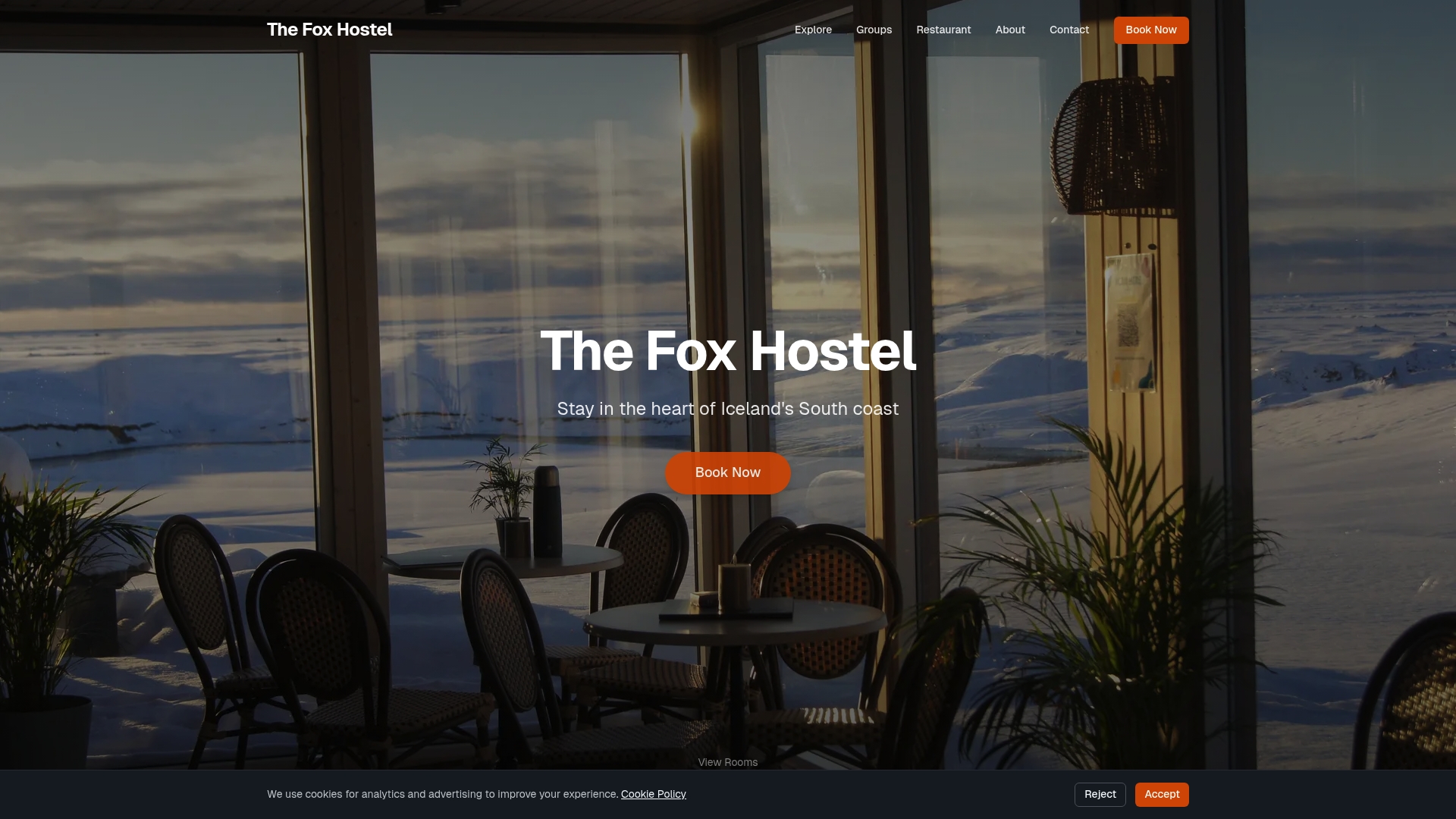
Solo travelers can book individual dorm beds. Couples and groups can buy out an entire room for full privacy. The on-site communal kitchen, pizzeria, and dark skies for Northern Lights viewing make it a practical and genuinely enjoyable place to stay. For budget travelers who want comfort, community, and a well-placed South Iceland base, Foxhostel delivers without the overhead of a campervan rental. Check availability and book directly at foxhostel.is.
FAQ
What is cheaper: a campervan or a hostel in Iceland?
Both options average $110–$130 per day when self-catering, but campervans carry mandatory extras including campsite fees of $15–$25 per person and insurance of $20–$50 daily, making the hostel plus rental car model cheaper for most solo and short-trip travelers.
Is a campervan worth it for a short Iceland trip?
A campervan is best suited for full Ring Road trips of seven days or more. For 3–5 day South Coast or Golden Circle trips, a hostel with a rental car is more cost-efficient and less logistically demanding.
Can you sleep anywhere in a campervan in Iceland?
No. Wild camping is legally restricted in Iceland year-round. Campervan travelers must use designated campsites, which require booking in advance during peak summer when sites fill quickly.
Are hostels in Iceland good for solo travelers?
Hostels are the strongest option for solo budget travelers. They provide social environments where travelers share tips, coordinate activities, and sometimes split costs, benefits that campervans cannot replicate.
Which option is better for Iceland in winter?
Hostels are the clear choice from october through april. Winter temperatures of -5 to 5°C, frequent storms, and difficult driving conditions make campervans unsuitable for most travelers during these months.