Save 112 Before You Park: Reynisfjara Safety for Visitors
Save 112 Before You Park: Reynisfjara Safety for Visitors
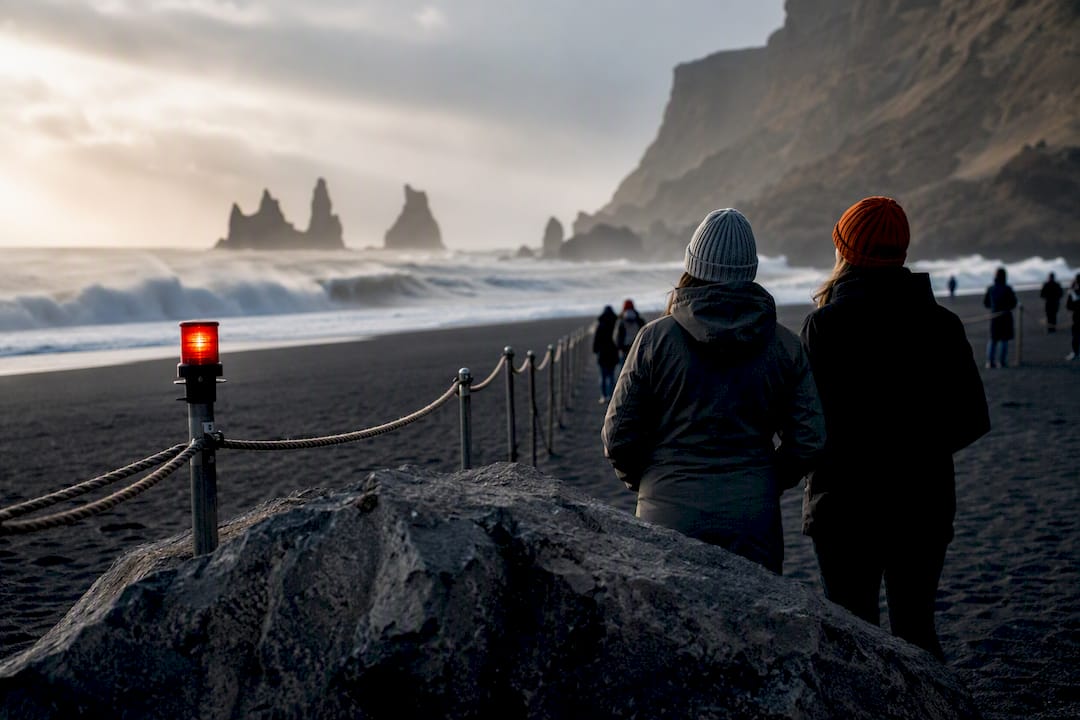
Reynisfjara is spectacular and genuinely dangerous, and the two facts are not in tension. Treat it as a viewpoint, not a beach: keep your distance from the waterline, obey the warning lights and barriers on-site, and never turn your back on the sea. Save 112 in your phone before you park, since closures and gate restrictions can change with little notice.
TL;DR:
- Sneaker waves can travel 20 to 30 meters past the shoreline, often without warning and far beyond most visitors’ expected safety distance.
- The beach uses a color-coded hazard system where red indicates closures, and the emergency changeover involves activation of the red warning lights, which now occur sooner than before.
- Visitors must stay well back from the waterline at all times, especially when swell height or tide increases, and avoid entering caves or climbing basalt columns during high risk.
- Always verify real-time conditions through SafeTravel, Icelandic Meteorological Office, and road updates before visiting, as warnings and closures can change rapidly.
- In emergency rescues, call 112 immediately, avoid entering the water unless trained, and use staged rescue equipment to prevent additional injuries.
Table of Contents
- Why Is Reynisfjara Beach So Dangerous?
- How Does the Warning Light System Work?
- What Should You Do (and Never Do) at Reynisfjara?
- What Should You Check Before Leaving for Reynisfjara?
- What Should You Do in a Water Emergency?
- What About Rockfall, Caves, and the Basalt Columns?
- Fox Hostel’s Local Take on Visiting Reynisfjara
- Stay Near Reynisfjara Without the Rush
- Where to Verify Reynisfjara Conditions Yourself
- Sources
Why Is Reynisfjara Beach So Dangerous?
The danger comes down to physics, not bad luck. Reynisfjara faces the open North Atlantic with no continental shelf to slow incoming swell, so wave energy that would normally dissipate offshore arrives at full force. That geometry produces sneaker waves, unpredictable surges that can follow a string of calm, ordinary waves with no visible warning.
A sneaker wave can travel 20 to 30 meters past the normal wet sand line, according to guides that track the beach’s incident history. That’s often twice the distance a casual visitor assumes is safe. Someone standing well back from the surf, filming or taking photos, can suddenly find water at their knees with no time to react.
- Sneaker waves form from swell patterns far offshore, so there’s no local sign they’re coming.
- The steep, rocky seabed near shore concentrates wave force instead of spreading it out.
- A calm minute does not mean a safe minute. Wave sets can shift within seconds.
Since 2007, Reynisfjara has been tied to multiple fatalities and at least a dozen serious rescues, according to aggregated incident reports. That track record is exactly why Icelandic authorities keep tightening the rules rather than loosening them.
How Does the Warning Light System Work?
Arrive at Reynisfjara and the first thing to check isn’t the view. It’s the light.
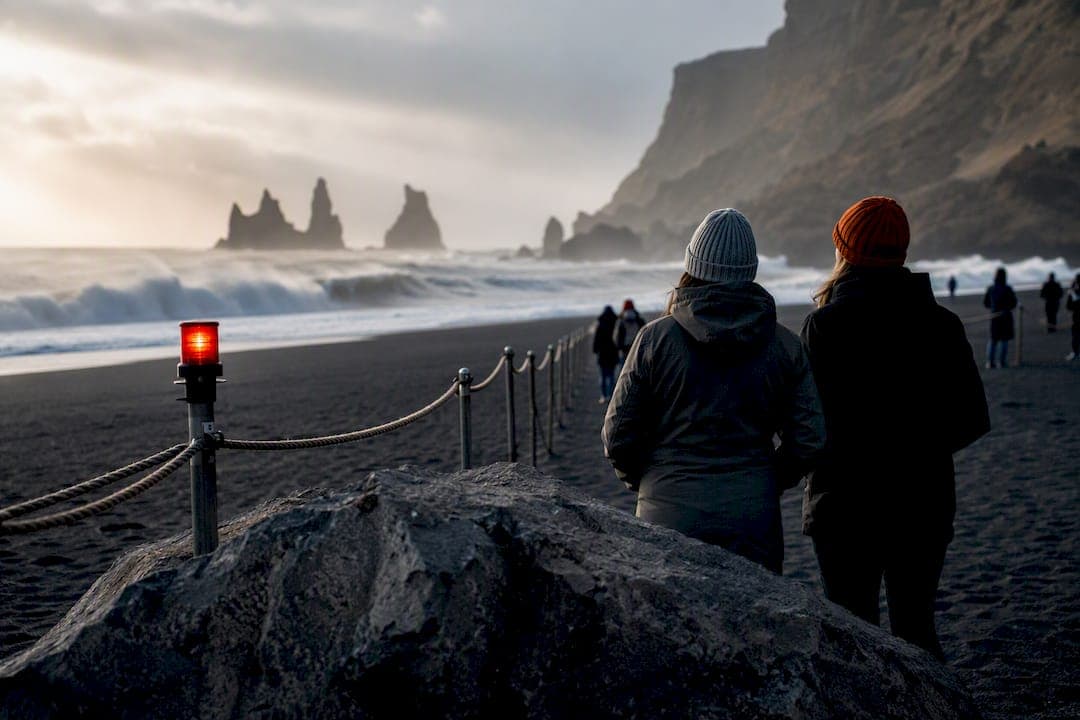
The beach uses a color-coded system tied to a hazard index that factors in swell height, tide, and wind. Green generally signals lower risk with normal caution still required, yellow means increased hazard and a need to stay further back, and red means the beach or specific zones are closed to visitors entirely.
- Green: Conditions are relatively calm; standard distance rules still apply.
- Yellow: Wave activity is picking up; move well back from the wet sand and watch children closely.
- Red: Access to marked zones is closed. Do not cross ropes or barriers, regardless of how the water looks from a distance.
Staff and signage mark the boundaries, often reinforced with rope barriers near the viewing platform and cave entrance. Authorities adjusted the hazard index in 2025 so the red light activates sooner than it used to, following a string of incidents, and there are plans for a physical closure gate at the site. That means older travel blogs and photos showing an open, accessible beach may no longer reflect current conditions. Trust today’s lights, not last year’s Instagram post.
What Should You Do (and Never Do) at Reynisfjara?
Once you’re on the sand, a handful of rules cover almost every real risk.
- Stay a safe distance from the waterline at all times, and increase that distance when swell or tide looks elevated.
- Assign one person in your group as a “watcher” whose only job is scanning the ocean, especially when someone else is taking photos.
- Keep children within arm’s reach; a sneaker wave gives adults only a second or two to react.
- Agree on a meeting point before splitting up, since cell signal near the cliffs can be patchy.
- Never enter the cave when tide or wave activity is elevated, and heed any rope or sign closing it.
- Never swim, wade, or climb the basalt columns near active surf, no matter how still the water looks.
Pro Tip: If you’re photographing the sea stacks, set your watcher on a fixed reference point, like the wet sand edge, and have them count wave run-up for a couple of minutes before anyone moves closer. A quiet stretch doesn’t mean the next set will be quiet too.
What Should You Check Before Leaving for Reynisfjara?
Good Reynisfjara trips start before you leave your room, not when you step onto the sand.
Check the Icelandic Meteorological Office for swell height and wind forecasts, and check road.is for any closures on the route in. Then check SafeTravel’s black beach status page for active warnings, since conditions can shift between the time you check at breakfast and the time you arrive.
- Waterproof outer layer and sturdy, closed-toe boots (the black sand hides slick rock)
- Fully charged phone with 112 saved and offline maps downloaded
- Camera strap or a dedicated “watcher” if you’re shooting photos or video
- Spare gloves, water, and a snack, since Icelandic weather turns fast
Early morning tends to bring smaller crowds and calmer light for photos, though it doesn’t guarantee calmer seas. Avoid visiting during storm warnings or high wind advisories altogether, and build slack into your itinerary. If the lights turn red or staff close a section, that’s not a minor inconvenience to argue with. It’s the system working as intended.
Pro Tip: Check SafeTravel again once you’re in the parking lot. Conditions at Reynisfjara can change in the time it takes to drive from Vík.
What Should You Do in a Water Emergency?
If someone is swept into the water, speed and clear thinking matter more than bravery.
- Call 112 immediately and give your exact location, the person’s last known position, and how long ago they went in.
- Do not enter the water yourself unless you are trained in water rescue and certain it’s safe. Multiple-casualty incidents at Reynisfjara have often started with a bystander trying to help.
- Look for a rescue belt or throw line staged near the viewing area and use it only if you can do so without entering the surf.
- Cold-water immersion causes hypothermia and loss of muscle control within minutes in Icelandic coastal water, so every second before rescuers arrive counts.
Leave technical water rescues to Iceland’s search and rescue teams. Their training and equipment exist precisely because untrained rescue attempts tend to add victims rather than save the first one.
What About Rockfall, Caves, and the Basalt Columns?
The hexagonal basalt columns are the beach’s most photographed feature, and also one of its overlooked hazards. Loose rock sits above the columns and along the cliff face, and it sheds without warning, especially after rain, freeze-thaw cycles, or wind erosion. Standing directly beneath the columns for a photo puts you under that rockfall zone.
The sea cave nearby carries a second, related risk. At low tide it can look like safe, dry ground for exploring. At high tide or during elevated swell, waves can surge into the cave mouth with no easy escape route, trapping anyone inside against the rock. Guides and on-site signage are consistent on this point: avoid the cave entrance unless conditions clearly permit it and staff or signage haven’t restricted access.
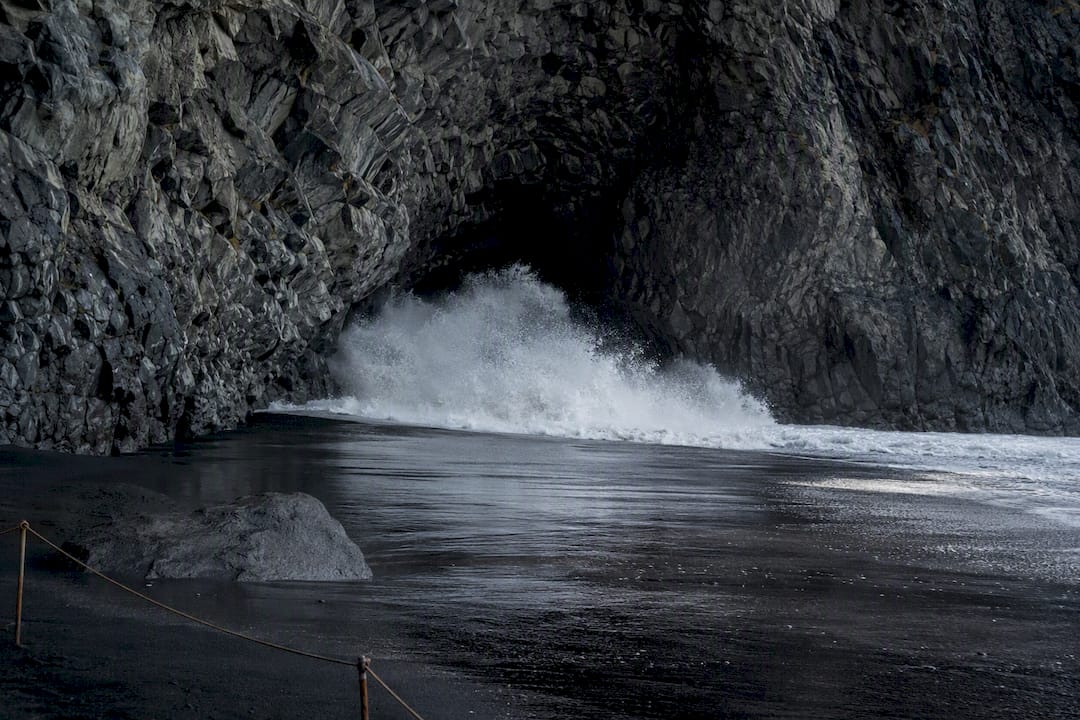
Recent erosion along this stretch of coast has also led to temporary closures of sections near the columns and cave, sometimes with little advance notice. A path that was open on a previous trip, or in a video you watched before booking your flights, may be roped off entirely by the time you arrive. Basalt columns and cave hazards get closed under the same red-light protocol that governs the rest of the beach, so the same rule applies here as everywhere else at Reynisfjara: check the current signage, not your memory of the last visit or someone else’s photos.
Fox Hostel’s Local Take on Visiting Reynisfjara
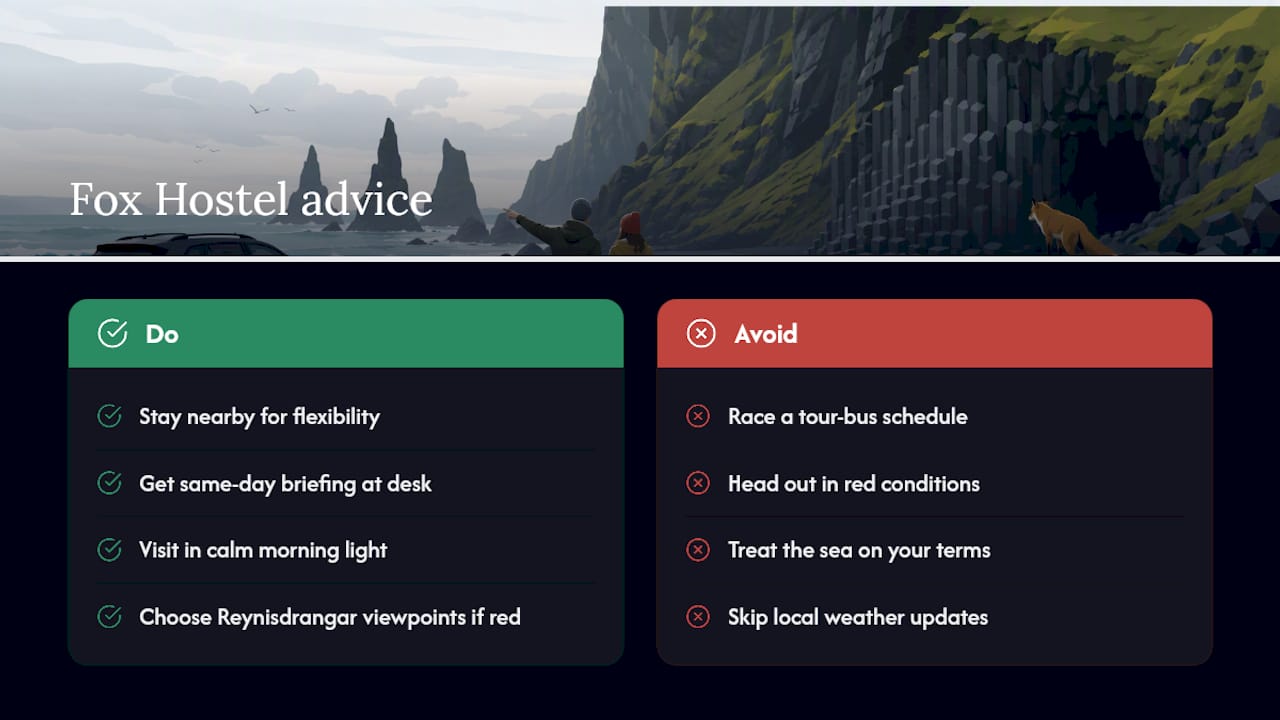
We tell our guests to treat Reynisfjara as a viewpoint you visit on the ocean’s terms, not yours. Staying nearby means you’re not racing a tour bus schedule, so our front desk gives same-day briefings based on current lights and forecast before anyone heads out.
When conditions turn red, we point guests toward nearby Reynisdrangar viewpoints that offer a safer angle on the same sea stacks, or other stops along the South Coast that don’t carry the same risk. Early access from a base this close also means you can catch calmer morning light without the rush.
— Siggi
Stay Near Reynisfjara Without the Rush
Most Reynisfjara incidents share one thing in common: visitors rushing to fit the beach into a tight day trip, arriving whenever the tour bus allows instead of when conditions are actually calm. Staying close by removes that pressure entirely. Fox Hostel sits about 35 minutes east of Vík in a converted barn in Hrífunes Nature Park, giving you time to check vedur.is, road.is, and SafeTravel over breakfast instead of from a moving car.

Solo travelers can book a single bed in our dorms, while couples, families, and small groups can buy out an entire room for privacy, all with the same communal kitchen and on-site pizzeria waiting when you get back. That flexibility, paired with a shorter drive to Reynisfjara than most South Coast bases offer, means you can wait out a red light instead of forcing the visit. Check current availability at Fox Hostel and plan a Reynisfjara visit on the beach’s schedule, not your itinerary’s.
Where to Verify Reynisfjara Conditions Yourself
Before you go, check SafeTravel’s black beach status, vedur.is for swell and wind, and road.is for route access. Each reflects real-time conditions, unlike guidebook photos or old social posts. On-site signage and staff instructions always take priority over anything you read in advance, this article included.
Sources
- Reynisfjara Beach Guide | The Icelandic Guide
- Danger - Reynisfjara Beach Website
- Red warning light to activate sooner at Reynisfjara Black Beach - Iceland Monitor
- Reynisfjara Black Sand Beach: How to Visit Safely