48 Hour Road Trip Meals for Families That Keep Coolers Cold
48 Hour Road Trip Meals for Families That Keep Coolers Cold

For a low-stress road trip, bring a mix of chilled make-ahead mains, one-hand lunches, and protein-and-fiber snacks, then treat your cooler like a thermal battery instead of an afterthought. Overnight oats jars, a jar salad, and a bag of mixed nuts cover breakfast, lunch, and the between-meal slump without a single dish. The one rule that protects all of it: perishable food cannot sit between 40°F and 140°F, the USDA’s official Danger Zone, for more than two hours.
TL;DR:
- Cooler organization is crucial, with layered packing from raw and frozen foods on the bottom to snacks on top, and using two coolers optimizes temperature retention.
- Perishable food must stay below 40°F or above 140°F, and the two-hour rule applies unless the cooler is pre-chilled, regularly topped with ice packs, and kept in the shade.
- Freezing meals ahead of time not only preserves food safety but also acts as an extra cooling element, especially when using shallow, labeled containers.
- Shelf-stable foods like canned meats, dried fruits, nuts, and vacuum-sealed meals fill gaps when the cooler runs low, with soft cheeses and fresh produce being more vulnerable to heat.
- Hydration should focus on carrying ample water in reusable bottles, with electrolyte packets for hot days, and pairing caffeine with water to avoid dehydration during long drives.
Table of Contents
- Road Trip Meals for Every Time of Day
- What the Cooler “Danger Zone” Actually Means
- Batch-Prep Recipes That Do Double Duty as Ice Packs
- The Gear List: Coolers, Containers, and Cleanup
- A 48-Hour Menu and Five Recipes You Can Actually Use
- Keeping the Meals Actually Balanced, Not Just Convenient
- Planning Around Allergies and Dietary Restrictions
- Food That Doesn’t Need Refrigeration at All
- Staying Hydrated Without Living on Gas Station Soda
- What Actually Changes When You Cook for a Road Trip Instead of a Kitchen
- Sources
- FAQ
Road Trip Meals for Every Time of Day
Good road trip meals share three traits: they travel flat, they don’t need a fork, and nobody has to dig through a cooler to find them. Group your food by mealtime before you pack, not after, and the whole trip runs smoother.
Breakfasts that need zero morning effort:
- Overnight oats in mason jars, made the night before with milk, oats, and fruit
- Yogurt parfait kits layered in cups, granola packed separately so it stays crunchy
- Hard-boiled eggs, left unpeeled until you’re ready to eat them (the shell keeps them fresher longer)
- Bagel and cream cheese kits, with the spread in a small container to prevent sogginess
Lunches you can eat one-handed at 65 mph (as a passenger, never the driver):
- Turkey or rotisserie chicken “shield” sandwiches, where a slice of cheese or lettuce acts as a barrier between bread and wet ingredients
- Hummus and veggie wraps, tightly rolled in parchment paper
- Jar salads, dressing on the bottom, greens on top, so nothing wilts until you shake it
- Grain bowls with quinoa or rice, roasted vegetables, and a protein, eaten cold or barely warm
Dinners that don’t need a stove: Pasta or grain salads hold up for two days in a cold cooler. Cold roast chicken, sliced ahead of time, works as a main or gets torn into a wrap. A charcuterie-style plate, hard cheese, cured meats, crackers, and grapes, feels like an actual meal even when you’re eating it off the tailgate. If your route includes overnight stops with a kitchen, a car oven or a hostel’s communal kitchen turns a fully-prepped casserole into a hot dinner without any cooking from scratch.
Snacks that actually hold you over: Nuts and seeds, single-serve hummus cups with cut veggies, beef jerky, and whole fruit like apples and oranges all travel well. Nutritionists point to protein, fiber, and healthy fat as the combination that prevents the sugar crash a bag of candy guarantees an hour later. Low-sugar granola bars fill the gap when you need something shelf-stable in the door pocket.
Pro Tip: Pre-portion condiments into small containers before you leave. A single value pack of mustard packets in the glove box saves you from opening the cooler every time someone wants a sandwich.
What the Cooler “Danger Zone” Actually Means
Bacteria multiply fastest between 40°F and 140°F, doubling roughly every 20 minutes in that range. Perishable food can sit in the Danger Zone for no more than two hours, or one hour if it’s above 90°F outside. A cooler sitting in a hot trunk all afternoon can cross that threshold faster than most people assume.
The two-hour rule, in practice: once your cooler stops holding food below 40°F, the clock starts. You can’t tell by smell or taste whether something has gone bad in that window, so the only safe move is to discard it rather than gamble.
Packing the cooler right buys you hours of safety margin:
- Pre-chill everything the night before, including the cooler itself, so it starts cold instead of warming your food up
- Freeze water bottles to use as reusable ice that becomes drinking water later, a trick USDA specifically recommends
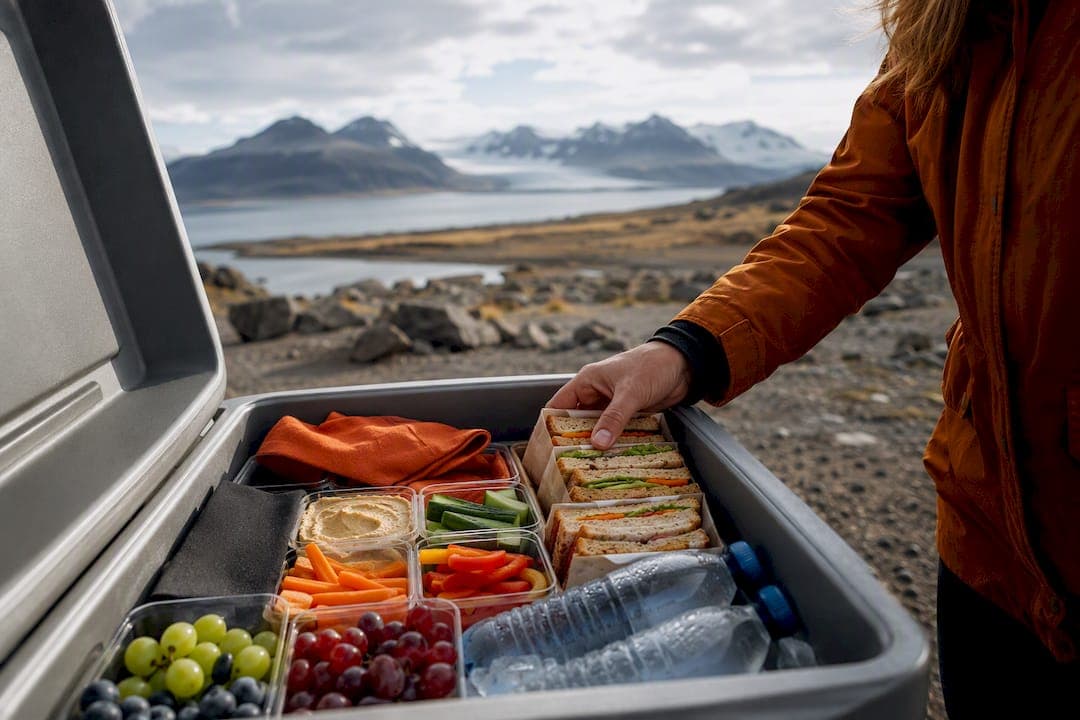
- Layer by density and use, raw or frozen items on the bottom, meals and dairy in the middle, snacks on top where you’ll reach for them most
- Run two coolers if you can, a small one for drinks and snacks that gets opened constantly, and a deep one for meals that stays shut
That second cooler matters more than it sounds. Every time you open a cooler, warm air rushes in and cold air spills out, and a dedicated snack cooler means your meal cooler barely gets touched between stops. Add a cheap appliance thermometer inside the meal cooler so you’re not guessing, and follow Foodsafety of extra ice packs whenever the forecast tops 90°F.
Batch-Prep Recipes That Do Double Duty as Ice Packs
Freezing your road trip meals ahead of time solves two problems at once: it keeps the food safe longer, and the frozen blocks act as extra cold mass in your cooler.
- Pick meals that freeze and thaw well. Beef or lentil stew, bolognese sauce, grain salads without delicate greens, and breakfast burritos all hold their texture after a freeze and reheat.
- Freeze in shallow, flat containers, not deep ones. A thin block of frozen chili chills faster, thaws more evenly, and stacks better than a tall deli container.
- Prep about a week ahead, then move meals from the fridge to the freezer the night before you leave, so they’re solid but not iron blocks by morning.
- Label everything with the meal and the day you plan to eat it. Pack the first day’s meals near the top of the cooler and push later-trip meals toward the bottom, where they’ll thaw slowly and keep cooling everything around them.
- Reheat gently at a stop with a kitchen, or eat cold if the recipe holds up that way, grain salads and bean dishes usually do.
Budget swaps make this cheaper without making it worse. Canned beans instead of dried ones you’d have to soak, bulk rice or oats bought in a five-pound bag, and whatever produce is actually in season all cut the grocery bill while keeping the freezer stocked. A budget-conscious approach to Iceland travel applies just as well to a cooler as it does to a lodging plan.
Pro Tip: Freeze few water bottles flat before your trip. They double as ice packs on day one and become cold drinking water by day two, once the ice has melted.

The Gear List: Coolers, Containers, and Cleanup
You don’t need an elaborate setup, but a few specific items prevent almost every common road trip food failure.
- Cooler: hard-sided coolers hold temperature longer for multi-day trips; soft-sided coolers are fine for a single day of snacks and drinks. For a family of four, aim for at least a 40-quart hard cooler for meals plus a smaller soft one for drinks.
- Cold source: reusable gel packs outperform loose ice because they don’t leave everything sitting in melted water, though frozen water bottles work as a free backup.
- Containers: wide-mouth jars for salads and overnight oats, small leakproof pots for condiments and dressing, and stackable rectangular containers that won’t tip over on a turn.
- Sanitation: hand sanitizer, a pack of wipes, a roll of trash bags, and a quick-dry towel keep the car from turning into a disaster zone.
- Extras: a small folding cutting board, reusable napkins, a compact utensil kit, and an appliance thermometer for the meal cooler.
Keep the beverage cooler separate from the food cooler if you can manage it. It gets opened constantly, and separating drinks reduces how often the food cooler loses its cold air.
A 48-Hour Menu and Five Recipes You Can Actually Use
Planning meals in two-day blocks, rather than grabbing random snacks as you go, keeps both your budget and your cooler under control. Roadtrippers’ cooler-friendly approach treats the cooler like a battery you’re managing, not a black hole you’re hoping stays cold.
Day 1: Breakfast is overnight oats jars. Lunch is turkey shield sandwiches with apple slices. Dinner is chilled rotisserie chicken with a pasta salad side. Snacks throughout: mixed nuts, whole fruit, hummus cups.
Day 2: Breakfast is yogurt parfaits. Lunch is a jar salad with grilled chicken. Dinner is a charcuterie plate with crackers and grapes. Snacks: jerky, granola bars, cut veggies from the first day only, since whole fruit tolerates the second day far better than cut fruit does.
- Overnight oats jar: oats, milk, chia seeds, honey, and berries in a mason jar. Packs flat, holds two days refrigerated, eat straight from the jar.
- Greek jar salad: dressing on the bottom, cucumber and tomato next, feta and olives on top, greens last. Shake before eating; holds a full day in a cold cooler.
- Hummus veggie wrap: hummus spread edge to edge on a tortilla, then carrots, cucumber, and spinach, rolled tight in parchment. Best eaten within a few hours of assembly.
- Pasta and veggie grain salad: cooked pasta or farro, roasted vegetables, a vinaigrette (not creamy dressing), holds two full days and doesn’t need reheating.
- Chilled rotisserie chicken plate: sliced chicken, hard cheese, crackers, and grapes. Zero prep beyond slicing, and it works cold straight through the trip.
For kid-friendly versions, swap hummus for sunflower seed butter and cut the veggies smaller. For a budget version, dried beans cooked in bulk at home replace the rotisserie chicken as the protein.
Keeping the Meals Actually Balanced, Not Just Convenient
A cooler full of chips and string cheese gets you through a day, but it won’t keep energy steady over a long drive. Aim for a protein source, a fiber source, and some healthy fat at every meal and most snacks, the same combination nutritionists recommend for road trip snacking specifically because it prevents the blood sugar spike and crash that comes from carb-only eating.
Fried gas station food and candy are easy, but they leave drivers groggy at exactly the wrong moment. Swapping just one gas station stop per day for a packed meal or a fruit-and-nut snack makes a real difference over a multi-day trip. Vegetables are usually the first thing to get skipped on the road, so pack them pre-cut and visible, a bag of baby carrots sitting on top of the cooler gets eaten; one buried at the bottom doesn’t.
Hydration ties into this more than people expect. Dehydration alone causes fatigue that feels a lot like tiredness from driving too long, and it’s easy to confuse the two at hour six of a trip. If you’re traveling with kids, keep portions smaller and more frequent, four small meals and two snack breaks tend to work better than three big meals that leave everyone cranky waiting for the next stop.
Planning Around Allergies and Dietary Restrictions
Road trips make allergy management harder because you lose control over ingredients the moment you stop relying on your own kitchen. The fix is front-loading the prep work: pack allergen-safe meals from home for the whole trip rather than hoping every gas station has a safe option.
Label containers clearly if you’re traveling with someone who has a food allergy, especially in a group where coolers get shared. A simple piece of tape with “no nuts” or “dairy free” on a container prevents a mix-up when everyone’s grabbing food at a rest stop. Pack a separate small container of safe snacks that never gets mixed in with the shared cooler, so there’s always a guaranteed-safe option even if everything else runs out.

For gluten-free travelers, grain salads swap easily to rice or quinoa bases, and jar salads work as-is since they’re naturally gluten-free. Vegan travelers do well with hummus wraps, bean-based grain bowls, and nut butter snacks, and planning vegan meals for travel in Iceland follows the same batch-prep logic as any other road trip diet: cook once, portion ahead, pack cold. Keep an EpiPen or other emergency medication in the front of the car, not buried in luggage, if anyone in the group has a severe allergy.
Food That Doesn’t Need Refrigeration at All
Not every road trip meal needs a cooler. Shelf-stable food fills the gaps between cold meals and cuts down on how often you’re opening the cooler in the first place.
Canned tuna or chicken pouches, nut butter packets, crackers, dried fruit, and trail mix all sit safely in a bag at room temperature for the entire trip. Hard cheeses like cheddar or gouda last longer without refrigeration than soft cheeses do, and cured meats like salami hold up better than sliced deli turkey. Whole fruit, apples, oranges, bananas, survives heat and bumping around far better than anything pre-cut.
Vacuum-sealed and freeze-dried meals, the kind built for camping, are worth having as backups for a day when the cooler runs low or you get stuck somewhere without a stop. Bread, peanut butter, and jam technically don’t require cooling either, making them a reliable fallback lunch on a day when nothing else is easy to grab. The tradeoff with shelf-stable food is nutrition density. It leans heavy on processed and salty options, so treat it as a supplement to your cooler meals, not a replacement for them.
Staying Hydrated Without Living on Gas Station Soda
Water should be the default drink in the car, and the easiest way to make that happen is volume: pack more water than you think you’ll need, in a large jug or a case of bottles, so nobody has to ration it. A reusable bottle per person, refilled at stops, cuts down on plastic waste and cost compared to buying drinks along the way.

Electrolyte packets or tablets are worth throwing in the glove box for hot-weather trips or long driving stretches, especially if you’re sweating in a car without working air conditioning. Coconut water works as a natural alternative if you’d rather not use powdered electrolytes.
Coffee and soda both have a place, but they dehydrate faster than they energize, and relying on caffeine to power through drowsy driving is a bad trade. If you need caffeine, pair it with water rather than instead of it. Keeping drinks in the separate beverage cooler mentioned earlier means the food cooler doesn’t take the hit every time someone wants a cold soda, which keeps your meals safer for longer.
What Actually Changes When You Cook for a Road Trip Instead of a Kitchen
Communal kitchens change how people think about road trip food, because you watch strangers solve the same packing problems every single night. At Fox Hostel’s shared kitchen in Hrífunes, guests prepping for the next leg of the Ring Road tend to gravitate toward the same short list: jar salads, pre-cooked grains, and anything that reheats without a pan. It’s not a coincidence. Food that survives a hostel kitchen at 7 AM survives a car at noon.
The shortcut most travelers miss isn’t a recipe, it’s timing. Cook the night before you leave a base, not the morning of, so the food has time to chill fully before it goes in a cooler. A fixed travel base with kitchen access makes that one night of prep far less rushed than trying to cook in a hurry before checkout.
— Siggi
Sources
- Danger zone: 40 °F to 140 °F | FSIS/USDA
- Check your steps! Chill: How to pack a cooler to prevent food poisoning | USDA
- Foodsafety
- Road Trip Food That Actually Works: Cooler-Friendly Meals for 48 Hours | Roadtrippers
- The 8 Healthiest Gas Station Snacks for Your Summer Road Trip, According to Nutritionists | Food Network
FAQ
What Is the 3-3-3 Rule for a Road Trip?
The 3-3-3 rule is a driving pacing guideline: stop every 3 hours and arrive by 3 PM to leave time to settle in. It’s not a food rule directly, but those built-in stops are exactly when you’d swap the beverage cooler for water or grab something from the snack cooler without opening the main one.
What Food Is Good for a Long Road Trip?
The best road trip meals are cooler-friendly and low-mess: jar salads, wraps with a fat barrier against sogginess, cold rotisserie chicken, and grain-based dishes that don’t need reheating. Snacks built around protein, fiber, and healthy fat, like nuts, hummus cups, and jerky, keep energy steadier than chips or candy.
What To Bring on a 10 Hour Road Trip?
Bring a fully packed cooler with pre-chilled meals layered by day, a separate drink cooler, plenty of water, and shelf-stable backups like nut butter and crackers. Remember that perishable food is only safe out of proper cooling for two hours, or one hour above 90°F, so plan meal timing around your stops.
What Are Some Good Food Ideas for a Long Drive?
Overnight oats jars, hummus veggie wraps, and grain salads all travel well and don’t require utensils beyond a spoon. For snacks, whole fruit, single-serve hummus cups, and mixed nuts hold up better over multiple days than cut produce or anything dairy-based left unrefrigerated.