Sneaker Waves in Iceland: Stay 20–30 Meters Back at Reynisfjara
Sneaker Waves in Iceland: Stay 20–30 Meters Back at Reynisfjara
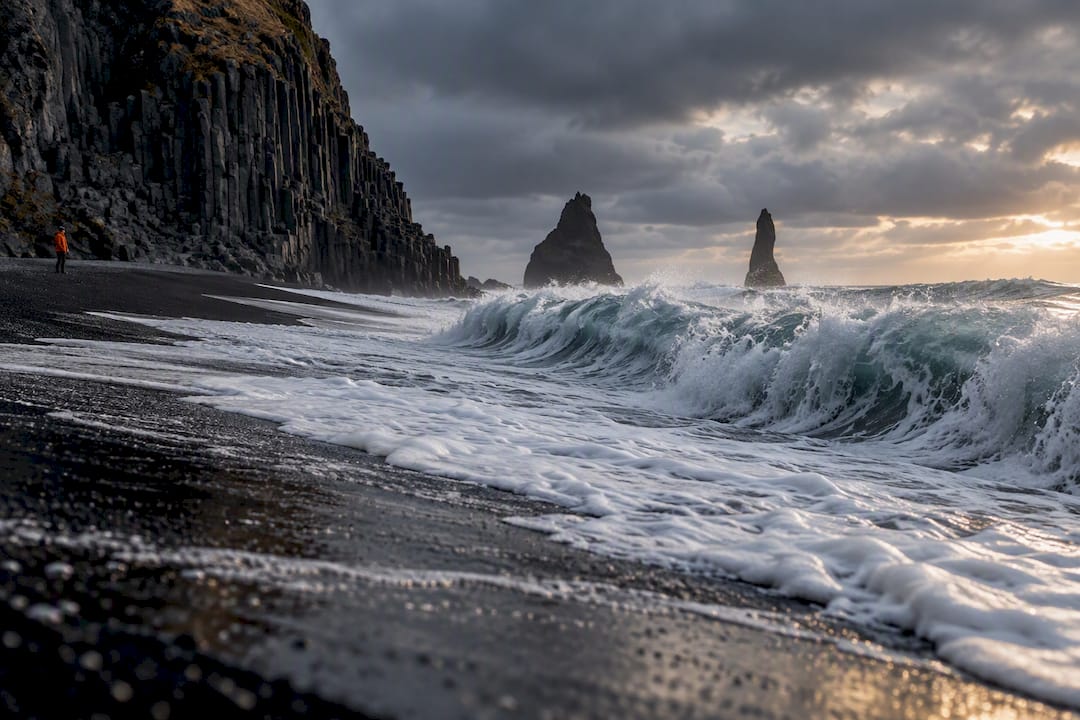
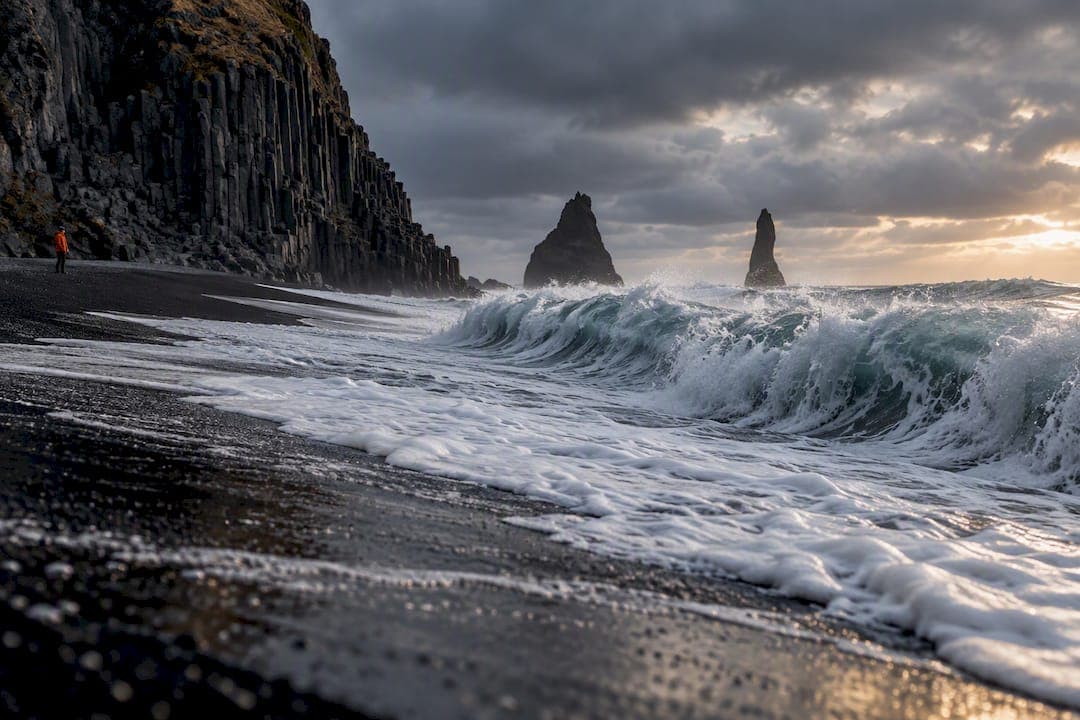
Sneaker waves are unpredictable, powerful surges that hit Iceland’s black sand beaches without warning, and Reynisfjara is the country’s deadliest example. The single rule that matters: never step onto the sand when the red warning light is on or the barriers are up. Watch from the marked viewing area, keep your distance from the water at all times, and treat every calm moment as temporary.
TL;DR:
- Sneaker waves at Reynisfjara can appear with no warning after calm periods, often within 10 to 20 minutes of inactivity, making it impossible to predict them visually.
- Waves contain significant energy due to Iceland’s open Atlantic fetch and steep seabed, which allows large surges to travel much farther inland than typical beaches.
- Visitors often ignore warning lights and barriers, with distraction and group behavior increasing the risk of getting caught by a sneaker wave.
- Staying behind the red warning lights and barriers is essential, as calm sea conditions do not guarantee safety, especially if visitors turn their backs to the ocean or are distracted.
- If caught by a wave, dropping low, floating on your back, shedding heavy gear, and angling toward shore are key survival tactics, but calling emergency services is crucial in rescues.
Table of Contents
- What Are Sneaker Waves, and Why Do They Catch People Off Guard?
- Why Reynisfjara and Other Black-Sand Beaches Are So Dangerous
- Safety Rules Every Visitor Should Follow at Reynisfjara
- What to Do if a Sneaker Wave Hits You
- Where to Watch Safely, and What Else to See Nearby
- Local Tips for Visiting Reynisfjara From Nearby
- Why the Standard Sneaker Wave Warnings Don’t Go Far Enough
- Where to Stay Near Reynisfjara Without Rushing the Visit
- Where to Check Conditions Before You Go
- Sources
- FAQ
What Are Sneaker Waves, and Why Do They Catch People Off Guard?
A sneaker wave is a larger, faster surge that arrives without the visual buildup of a normal breaking wave, often reaching several times farther up the beach than the waves before it. Ordinary surf gives you a rhythm to read. Sneaker waves break that rhythm on purpose, arriving after what looks like a lull.
That is the trap. Waves at Reynisfjara can stay small and predictable for ten or twenty minutes, then send a surge racing up the sand with no extra warning. Watching the water for a pattern will not save you, because the safest practice is to stay behind marked zones regardless of how calm the sea looks.
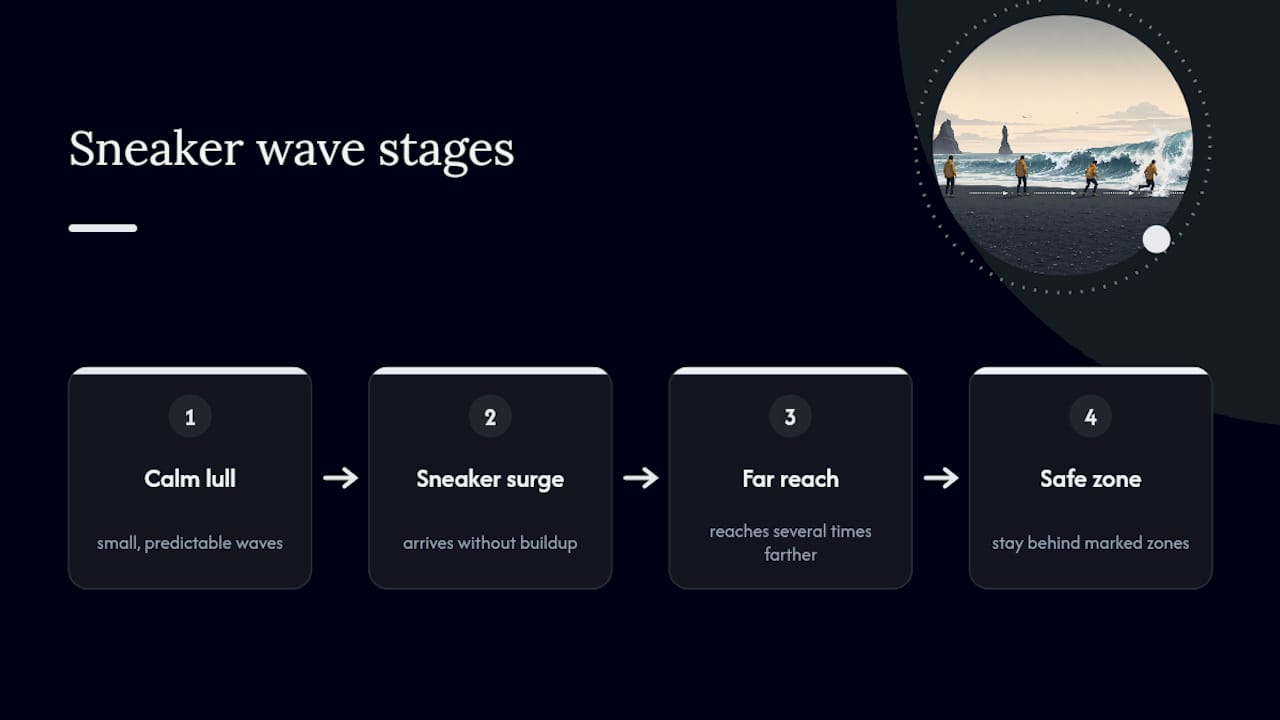
The danger compounds once you are in the water. Powerful backwash drags loose sand and rock along with it, undertow pulls swimmers off their feet, and the North Atlantic is cold enough to induce hypothermia within minutes. Strength and swimming ability matter less here than most people assume. Getting knocked down is often just the beginning of the problem.
Why Reynisfjara and Other Black-Sand Beaches Are So Dangerous
Reynisfjara sits fully exposed to the open North Atlantic, with thousands of miles of uninterrupted ocean feeding energy into every swell that reaches the shore. Combine that fetch with a steep nearshore seabed, and you get waves that keep their force instead of losing it gradually, letting large surges build and travel much farther inland than at typical beaches.
The incident history here is not hypothetical. A string of tourist deaths and near misses over the past decade led Icelandic authorities to install warning lights and physical barriers at the main access points. Those additions were reactive, not preventive. They exist because people kept walking past the point of safety.
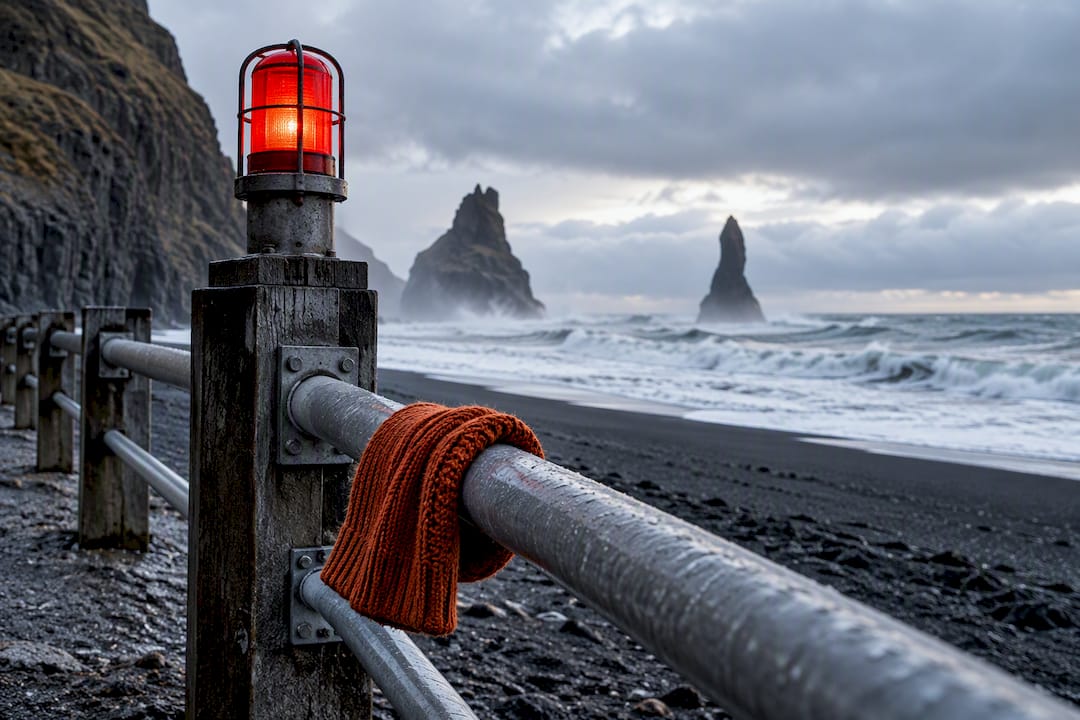
Behavior explains most of what goes wrong. Visitors get distracted photographing the basalt columns and sea stacks, and turning away from the ocean to frame a shot is consistently flagged as the single most dangerous habit at Reynisfjara. Others treat the surf like a game, running toward the waterline and back, a habit local guides say has proven fatal more than once. As recently as September 2025, tourists were photographed ignoring the active red warning light and stepping past the barrier at Reynisfjara, prompting fresh calls from officials to take the system seriously.
Safety Rules Every Visitor Should Follow at Reynisfjara
The warning-light system at Reynisfjara is not a suggestion. Red means the beach is closed to sand access and you must stay behind the barrier, full stop. Yellow means caution and heightened awareness. Green means conditions are calmer, though “calmer” never means risk free on this coastline.
A few habits separate a good visit from a dangerous one:
- Keep at least 20 to 30 meters between yourself and the waterline as a baseline, and increase that distance in windy or high-swell conditions, per official recommendations.
- Never turn your back on the ocean, even for a photo. Assign one person in your group to watch the water while others look at cameras or phones.
- Supervise children closely and keep them well back from wet sand, since a sneaker wave can knock over an adult, let alone a small child.
- Do not climb on rocks or cliffs near the surf line. Wet basalt is slippery, and a wave can hit while you are trying to regain footing.
- Check Safetravel before you leave your accommodation, since the beach may be closed to sand access entirely during hazardous conditions, leaving only the viewpoint open.
Pro Tip: If you are ever unsure whether conditions are safe enough to walk on the sand, they are not. The observation platform gives you the same view of the sea stacks and columns without the risk, and no photo is worth testing the water’s patience.
What to Do if a Sneaker Wave Hits You
Getting caught by a sneaker wave is a fast-moving emergency, and the first few seconds matter more than anything you do afterward.
- Drop and dig in. If a wave is already breaking over you, get low rather than staying upright. Dig your hands and feet into the sand to resist the pull of the backwash.
- Float instead of fighting. If you are swept off your feet, try to float on your back and keep your face and airway clear of the water rather than thrashing against the current.
- Shed weight where possible. Heavy boots, backpacks, or soaked jackets act like anchors. If you can safely remove or loosen them, do it.
- Angle toward shore, not against the current. Conserve energy by working with the water’s movement instead of swimming straight against it.
- If you are a bystander, call 112 immediately. Do not enter the water yourself unless you are trained for a surf rescue. Throw a rope or flotation device if one is nearby, and keep your eyes fixed on the exact spot the person was last seen.
- Report the last-seen location precisely. Noting the exact time and spot someone disappeared, along with any distinctive clothing or gear, meaningfully speeds up a shoreline rescue.
Cold water and soaked clothing turn a bad situation into a life-threatening one fast, since waterlogged gear can weigh a swimmer down almost like wearing concrete, cutting short the window rescuers have to act.
Where to Watch Safely, and What Else to See Nearby
The car park and the raised viewing area near the entrance give you a clear line of sight to the basalt columns, the sea stacks, and the crashing surf, all without setting foot on the dangerous sand. That vantage point is where the best photos come from anyway, since it captures the full scale of the cliffs behind the beach.
A few practical notes for timing your visit:
- Arrive early morning to avoid tour bus crowds, when there’s more room to stay well back from the water and less social pressure to edge closer for a shot.
- Winter swells hit harder and more often than summer ones, so budget extra caution and extra distance between November and March.
- Skip the beach entirely if conditions look rough and head instead to the Dyrhólaey viewpoint a short drive away, which offers sweeping views of the same coastline and the Reynisdrangar sea stacks from solid, elevated ground.
For a fuller breakdown of how to plan the visit around safety rather than around the sand, our guide to visiting Reynisfjara walks through the layout and timing in more detail.
Local Tips for Visiting Reynisfjara From Nearby
Staying close to Vík changes how you experience Reynisfjara. A short drive means you can arrive right at sunrise, when the light is best and the parking lot is nearly empty, instead of racing a tour bus schedule that pressures rushed decisions near the water.
Pack layers that block wind and spray, since the coastline is exposed even on dry days, and secure your camera strap around your neck or wrist so a gust or a startled step doesn’t send it toward the surf. Assign one person in your group to keep eyes on the ocean the entire time others are shooting photos. For more on structuring a South Coast day around safe timing, see our Vík itinerary guide and our Reynisfjara safety primer.
Why the Standard Sneaker Wave Warnings Don’t Go Far Enough
Most safety advice about Reynisfjara stops at “stay behind the barrier,” which is correct but incomplete. The deeper issue is that visitors treat the warning-light system as a suggestion rather than a hard boundary, largely because nothing about a calm sea looks dangerous in the moment. That gap between how the ocean looks and how it behaves is where nearly every serious incident originates.
The conventional advice also underweights group dynamics. A person traveling alone is usually cautious. A person in a group photographing sea stacks, laughing, backing toward the waterline for a better angle, stops watching the water because everyone else seems relaxed too. That is the exact moment a sneaker wave arrives.
If you take one thing from this guide, it should not be the survival steps, useful as they are. It should be the discipline to treat every red light and every barrier as absolute, and to assign someone in your group the boring job of watching the ocean instead of the camera. That single habit prevents far more injuries than knowing how to float after the fact.
— Siggi
Where to Stay Near Reynisfjara Without Rushing the Visit
A big share of Reynisfjara’s close calls happen because people are on tight day-trip schedules, arriving late morning with a tour bus crowd and limited time to be careful. There are accommodations located about 35 minutes east of Vík in Hrífunes Nature Park, close enough to reach Reynisfjara at sunrise, watch from the viewpoint in near-empty conditions, and avoid pressure to cut safety margins for the sake of a schedule.

Rooms are dorm-style, but solo travelers book an individual bed while couples, families, or small groups can buy out an entire room for full privacy at the same property. After an early beach visit, the communal kitchen and on-site pizzeria give you a place to warm up and refuel before the next leg toward Vatnajökull or the Highlands. If you are traveling with a group planning several South Coast stops, check group booking options for flexible arrangements, or browse available rooms to lock in an early start near Reynisfjara.
Where to Check Conditions Before You Go
Check Safetravel for active beach closures, the Icelandic Met Office for wave and weather forecasts, and road.is for road conditions before heading to the South Coast.
Sources
- Reynisfjara Beach Guide | The Icelandic Guide
- Reynisfjara black sand beach safety | Visit50
- Tourists ignore red warning light at Reynisfjara Black Beach - Iceland Monitor
- Black Beach Safety - Safetravel
FAQ
How Often Do Sneaker Waves Happen at Reynisfjara?
There’s no fixed schedule. Sneaker waves can occur after just 10 to 20 minutes of calm surf, which is exactly why watching the water’s rhythm isn’t a reliable safety strategy on its own.
Can You See a Sneaker Wave Coming?
Rarely, and not reliably enough to act on. Sneaker waves often arrive on seemingly calm, sunny days with little visual buildup, which is why staying behind barriers matters more than trying to spot one.
How Do You Survive a Sneaker Wave?
Drop low and dig into the sand rather than standing upright against the force. If swept into the water, float instead of fighting the current, shed heavy gear, and angle yourself toward shore while a bystander calls 112.
Where Do Sneaker Waves Happen in Iceland?
Reynisfjara is the best-known site because of its exposure to the open North Atlantic and steep nearshore seabed, but similar surges can occur at other exposed black sand beaches along Iceland’s South Coast. Always check Safetravel for site-specific alerts before visiting any coastal viewpoint.
Is It Safe to Stay Near Reynisfjara?
Yes. Staying near Vík, including at a property like Fox Hostel, puts you close enough for an early, uncrowded visit to the safe viewpoint without affecting your risk at the beach itself, since the hazard comes from conditions at the shoreline, not from where you sleep.