Hostel Storage Lockers: The Solo Traveler's Guide
Hostel Storage Lockers: The Solo Traveler’s Guide
TL;DR:
- Most hostels provide lockers or monitored luggage rooms, but size, cost, and availability vary, so confirming details beforehand is essential. Travelers should bring a combination padlock, keep IDs and valuables on themselves, and verify locker size and security features during the booking process. Layering security by combining physical lockers, personal precautions, and social oversight helps keep belongings safe.
Yes — most hostels offer lockers or a monitored luggage room, but size, cost, and availability vary enough that a quick check before you book can save real headaches on arrival. Storage lockers for solo travelers at hostels are standard at larger properties worldwide, yet smaller or rural hostels sometimes skip them entirely, especially in low-theft regions.
Before you book, confirm two things:
- Does the hostel have lockers large enough for your bag (not just a small valuables box)?
- Is reception staffed when you arrive and depart, or is there a secure self-service option?
TL;DR — three things to do right now:
- Bring your own padlock (combination style, not keyed).
- Keep your passport and cards on your person, not in any bag.
- Message the hostel before arrival to confirm locker size and storage hours.
Table of Contents
- How common are hostel lockers, and where will you find them?
- What locker sizes actually fit your bag
- Are hostel lockers actually safe?
- Should you bring your own lock, and which type works best?
- What goes in the locker, and what stays on you?
- Fees, time limits, and hostel policies worth confirming
- What to do when a hostel has no lockers
- Step-by-step safety routine for using hostel lockers
- Hostel security checklist to use when booking
- Key Takeaways
- What seasoned solo travelers actually do differently
- Fox Hostel takes luggage security seriously — here’s what that looks like
- Useful sources and where to check next
How common are hostel lockers, and where will you find them?
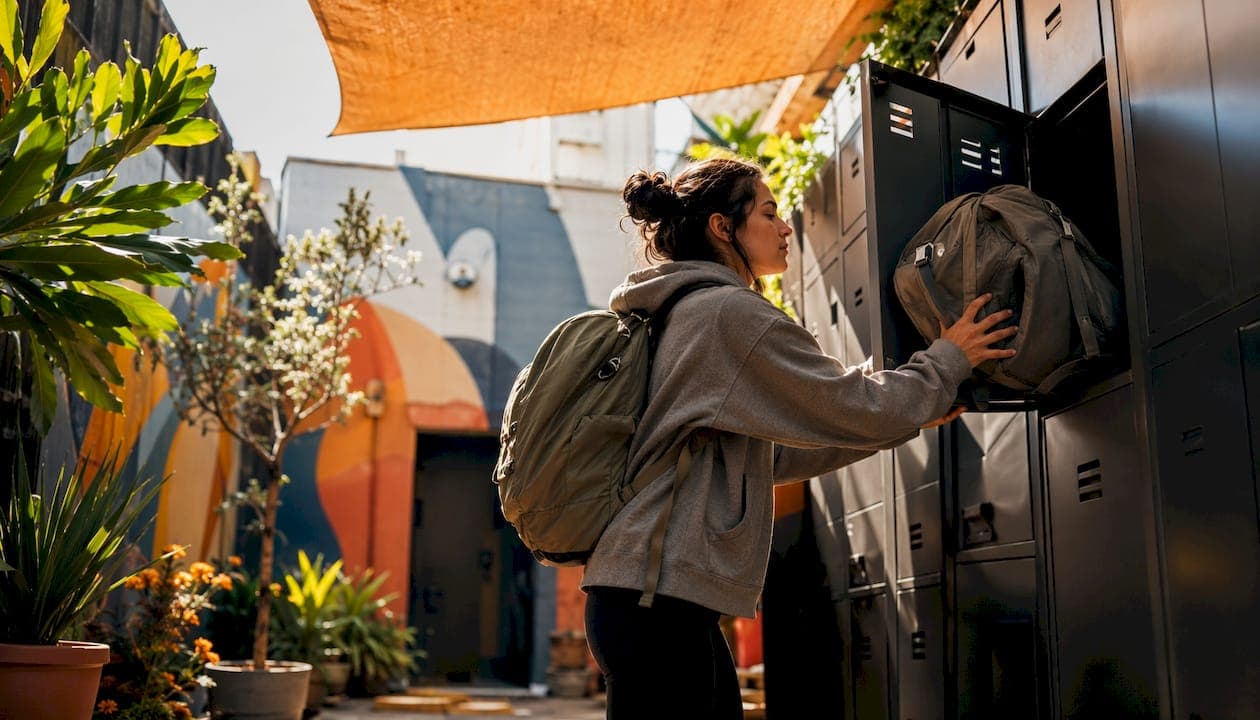
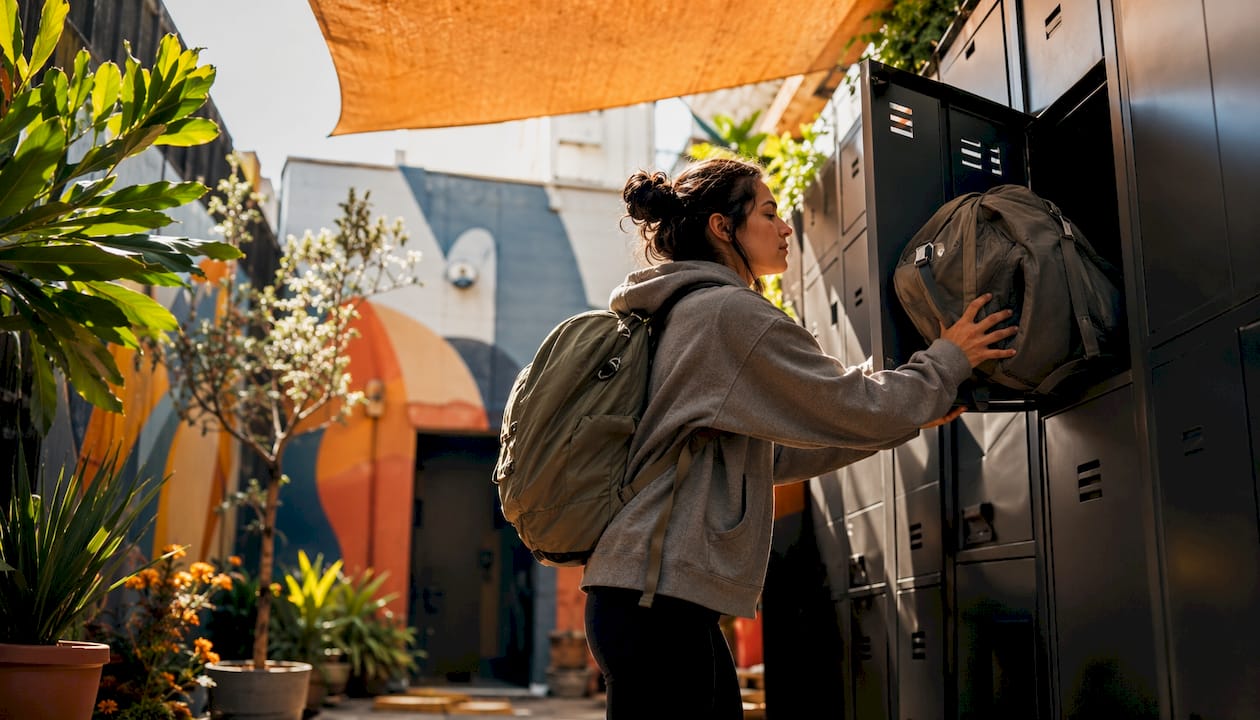
Secure luggage storage is offered by most hostels, either through in-room lockers or a designated luggage room monitored by staff or CCTV. Storage is generally included in the booking price, though some properties charge a small fee for bags held before check-in or after check-out.
Locker placement falls into a few common patterns:
- Under-bed lockers built into bunk frames — the most common setup in modern dorms.
- Wall-mounted lockers in the dorm room itself, often with a hasp for your own padlock.
- Common-area lockers near reception, accessible any time the lobby is open.
- Separate luggage rooms behind the front desk, staffed or CCTV-monitored.
Larger or networked hostels often provide luggage storage before check-in and after check-out, and some run 24-hour front desks that add a real layer of oversight. Smaller independent properties are less consistent. In parts of Japan and South Korea, where theft rates are very low, some hostels skip lockers altogether — not a red flag, just a regional norm worth knowing.
Pro Tip: Filter for “lockers” on any booking platform before shortlisting properties. If the filter exists but the listing photo shows only a small valuables box, message the hostel and ask for a photo of the actual locker.
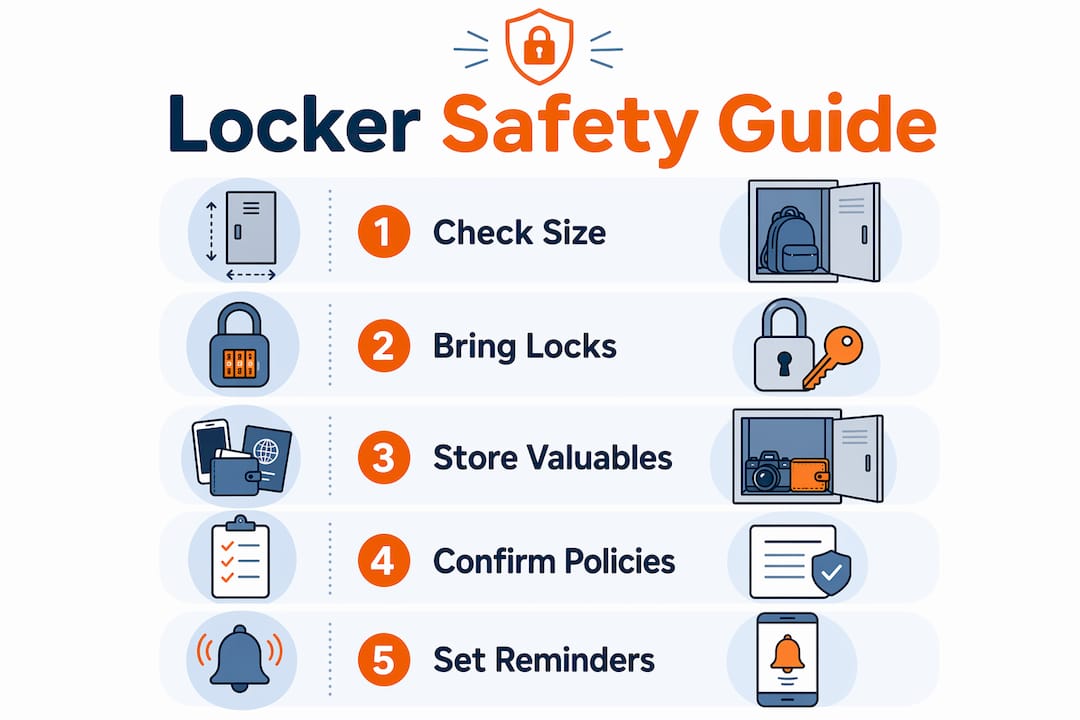
What locker sizes actually fit your bag
Hostel lockers fall into three practical categories: small valuables lockers, medium lockers for daypacks, and large wardrobe-style lockers for full backpacks or suitcases. The table below maps each to real bag sizes.
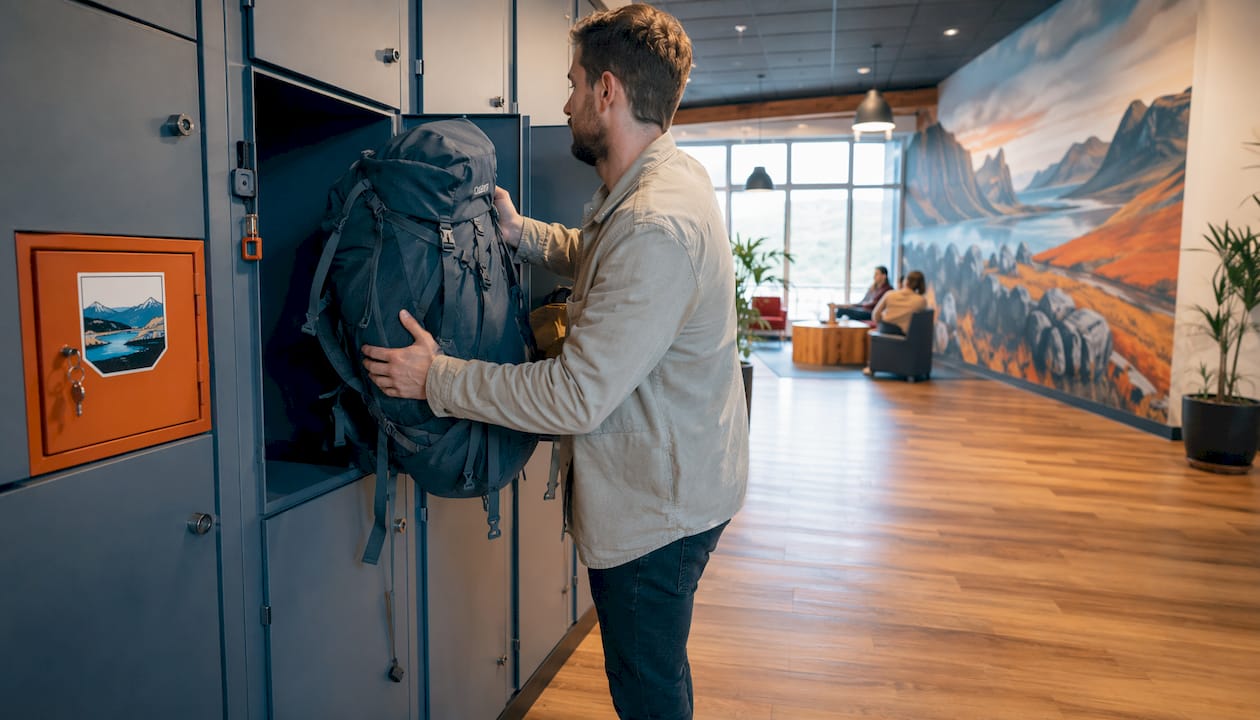
| Locker Size | Typical Dimensions | What Fits |
|---|---|---|
| Small (valuables) | Roughly shoebox size | Passport, wallet, phone, small laptop bag |
| Medium (daypack) | Roughly 30 L capacity | Day pack, small camera bag, soft duffel |
| Large (wardrobe) | Roughly 65 L capacity | Full travel backpack, carry-on suitcase |
A few things to know before you arrive:
- Under-bed lockers are often medium-sized at best. A 65 L backpack usually will not fit.
- If you travel with oversized gear or specialty equipment, contact the hostel before arrival to confirm a large locker or luggage room is available.
- Some hostels have large lockers only in certain dorm rooms — ask to be assigned to one when booking.
- When in doubt, ask the hostel for a photo of the locker interior with a bag inside for scale.
Are hostel lockers actually safe?
The honest answer: they are reasonably safe when you use them correctly, but no locker is theft-proof. The security features worth looking for when booking include:
- CCTV covering the dorm or luggage room.
- Key-card access to the dorm floor, so only registered guests can enter.
- Staffed 24-hour reception that limits who gets past the lobby.
- Verified guest reviews that specifically mention lockers or security — not just a star rating.
Travelers consistently report that visible lockers and monitored spaces are the clearest signal that a hostel takes guest safety seriously. Properties with 24-hour reception or an active social atmosphere also tend to offer better informal oversight beyond physical locks — other guests notice things.
The limitations are real, though. Staff typically hold master keys or override codes for emergencies. Shared dorm spaces mean strangers cycle through the same room. A cheap padlock on a flimsy hasp can be defeated quickly. Layering security (your own lock plus keeping valuables on you) matters more than trusting any single feature.
Trust signals to check when booking: 24-hour reception, key-card dorm access, CCTV mentioned in the listing or reviews, and at least a handful of recent verified reviews that reference security or lockers by name.
Should you bring your own lock, and which type works best?
Yes — bring your own. Most hostels expect guests to supply their own padlock, and while some sell or rent them at the front desk, relying on that is a gamble. Here are the main options:
- Combination padlock: The default recommendation. No key to lose, easy to reset, and works on almost every locker hasp. A mid-weight brass or hardened-steel body is worth the extra few dollars.
- Keyed padlock: Slightly more pick-resistant at the high end, but losing the key mid-trip is a real problem. Only worth it if you carry the key on a lanyard around your neck.
- TSA-compatible lock: Useful if you also lock checked luggage on flights. Not the most secure option for a hostel locker, but fine as a secondary lock.
- Cable lock: Thin cables can be cut, so don’t rely on one alone. As a secondary layer — looping through a bag’s zipper pulls and anchoring to a fixed point — it adds friction that deters opportunistic theft.
Pro Tip: Pack one solid combination padlock and one short cable lock. The padlock goes on the locker hasp; the cable threads through your bag’s zipper pulls inside the locker. Two layers, minimal weight, and you never need to hunt for a key.
What goes in the locker, and what stays on you?
This is where most first-time hostel guests make mistakes. The split is simple: anything you cannot replace quickly or that identifies you stays on your person.
Lock these in the locker:
- Extra clothing and shoes.
- Backup electronics (spare charger, e-reader, second camera).
- Non-essential toiletries and bulkier items you won’t need during the day.
- A flash drive with digital copies of your passport and travel insurance.
Keep these on you at all times:
- Passport and any other government-issued ID.
- Cash, debit cards, and credit cards (split between two locations if possible).
- Prescription medication.
- Phone and earbuds.
- A small on-person pouch worn under clothing for cards and emergency cash.
A practical split for your phone: carry it with you, but keep a backup copy of your passport photo on a flash drive in the locker. If your phone is stolen, you still have document copies. If the locker is compromised, you still have your phone and ID.
For a full pre-trip packing breakdown, the solo hostel stay preparation guide at Fox Hostel covers what to bring and what to leave home.
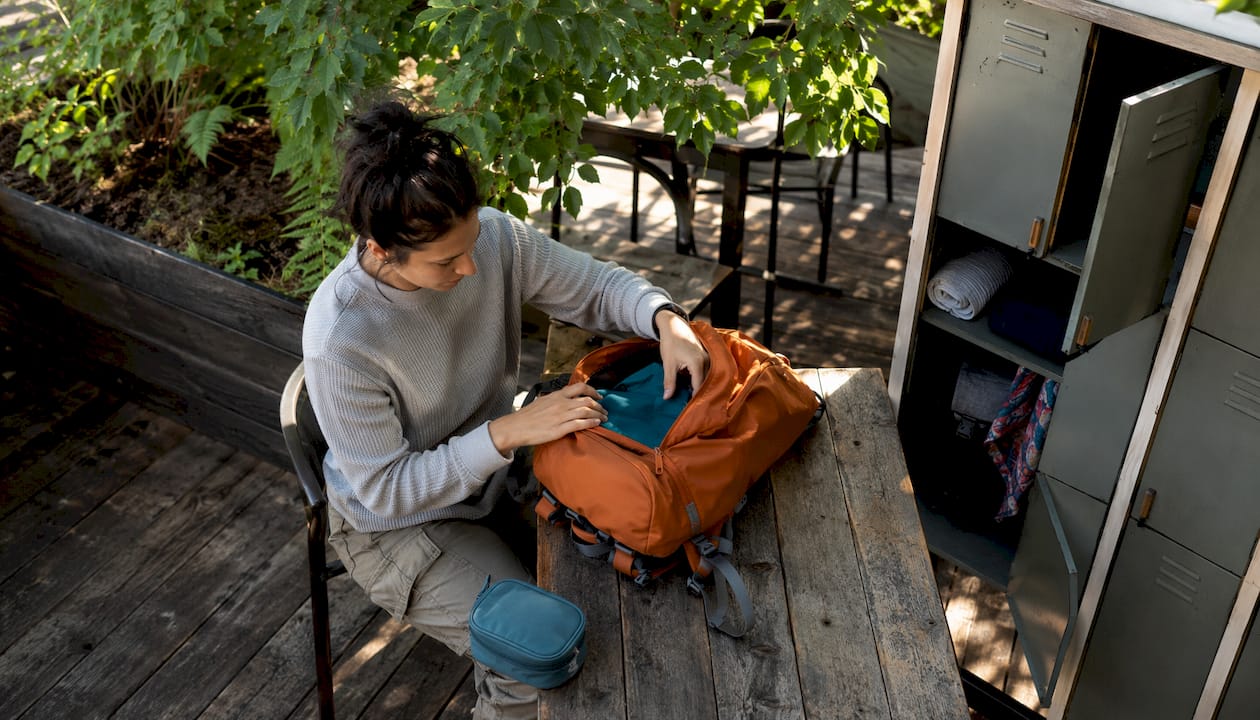
Fees, time limits, and hostel policies worth confirming
Storage policies vary more than most travelers expect. Common points that can affect your plans:
- Free for staying guests: Standard at most hostels. Lockers included in the room rate.
- Early drop or late hold fees: A small charge (often a few dollars) for storing bags before check-in time or after check-out. Not universal, but common enough to ask about.
- Maximum storage duration: Some hostels limit luggage holds to a few hours after check-out. Others will hold bags for a full day.
- Liability limits: Most hostels post a disclaimer that they are not responsible for items left in lockers. This is standard, but it means your travel insurance — not the hostel — is your real safety net for high-value items.
When you arrive, ask the front desk three direct questions: Is locker use included in my booking? Where exactly are the bags stored (behind the desk or in a public area)? Do you issue a receipt or luggage tag? If you’re arriving outside normal hours, get a staff contact number before you leave the desk.
Pro Tip: Screenshot or write down the hostel’s direct phone number before you check out. If you need to retrieve bags after hours or report a problem, a booking platform message thread is too slow.
What to do when a hostel has no lockers
No lockers doesn’t have to mean no security. Your fallback options, roughly in order of convenience:
- Reception safe: Most front desks will hold small valuables (passport, extra cash) in a safe behind the desk. Ask for a signed receipt.
- Paid left-luggage at train or bus stations: Reliable in most US cities and major international hubs. Rates and hours vary; check the station’s website before you go.
- Airport left-luggage: More expensive but available around the clock at most international airports. Good for long layovers or early arrivals.
- Third-party luggage storage services: Apps and services connect travelers with verified storage locations (shops, hotels, lockers) near transit hubs. Check that the provider offers insurance coverage and has recent verified reviews before leaving bags.
- Downsize to a daypack: If you’re only staying one or two nights and the hostel has no storage at all, consider whether everything you need for the day fits in a small pack you carry with you.
When deciding between a paid storage option and switching accommodation entirely, weigh cost against duration. A few hours of paid storage is cheap. Paying for a full day repeatedly adds up faster than upgrading to a hostel that includes lockers.
Step-by-step safety routine for using hostel lockers
A short routine at each stage of your stay cuts risk significantly.
- At check-in: Ask reception to confirm locker size and location. Inspect the locker before putting anything in it — check the hasp, the door seal, and whether the lock mechanism works smoothly.
- Before leaving your bag: Take a photo of the locker number and its location in the room. If the hostel issues a luggage tag or receipt, keep it in your wallet.
- Secure your bag: Apply your combination padlock to the hasp. Thread your cable lock through the bag’s zipper pulls inside the locker for a second layer.
- During your stay: Keep your on-person pouch with cards and ID on you whenever you leave the dorm. Avoid mentioning specific valuables to people you’ve just met. Log the front desk number in your phone.
- At check-out: Remove everything from the locker before handing in your key card. Double-check the back corners — small items hide there. If you stored bags at reception, verify the items against any receipt before you leave the building.
- If something seems off: Report suspicious locker access to staff immediately. Most hostels have CCTV that covers storage areas, and a prompt report gives staff the best chance of reviewing footage.
Pro Tip: Set a phone alarm labeled “check locker” for 30 minutes before your scheduled check-out. It sounds obvious, but a surprising number of items get left behind when guests are rushing for a bus.
Hostel security checklist to use when booking
Use this before you confirm any reservation.
Green (book with confidence):
- Lockers listed in amenities AND confirmed large enough for your bag.
- 24-hour reception or secure self-service key-card access.
- Recent verified reviews (within the last six months) that mention lockers or security by name.
Amber (book with a follow-up message):
- Lockers listed but size unspecified.
- Reception hours limited (e.g., closes at midnight).
- Reviews mention lockers but are more than a year old.
Red (find an alternative or plan a workaround):
- No lockers listed and no monitored luggage room.
- No staffed reception and no CCTV mentioned.
- Reviews flag theft or missing items.
| Check | What to look for | Where to find it |
|---|---|---|
| Locker availability | Listed under amenities; filter on booking platform | Listing page, amenities filter |
| Locker size | Large enough for your specific bag | Message the hostel directly |
| Reception hours | 24-hour or secure after-hours access | Listing or hostel FAQ |
| Key-card access | Dorm entry restricted to registered guests | Listing description or reviews |
| Verified reviews | Recent mentions of lockers, security, or safety | Review section, sort by “most recent” |
Sample message to send before booking: Booking platform security filters and verified guest reviews are your two most reliable pre-booking tools. Use both.
Key Takeaways
Most hostels provide lockers or a monitored luggage room, but a solo traveler who confirms locker size, brings a combination padlock, and keeps ID and cards on their person will always be better protected than one who assumes the hostel has it covered.
| Point | Details |
|---|---|
| Confirm before you book | Message the hostel to verify locker size fits your bag and that reception is staffed on arrival. |
| Bring your own lock | A combination padlock is the standard; add a cable lock as a second layer inside the locker. |
| Split your valuables | Passport and cards stay on you; backup copies and non-essentials go in the locker. |
| Use the booking checklist | Green = lockers + 24-hour reception + recent positive reviews; amber = follow up; red = find alternatives. |
| Fox Hostel | Offers dorm-style rooms with storage options and a staffed property in South Iceland — check room types before booking. |
What seasoned solo travelers actually do differently
The biggest beginner mistake is treating the locker as a vault. It is not. It is a deterrent, and a good one when used correctly, but the travelers who rarely have problems combine the locker with two or three other habits.
First, they never leave their passport in a bag, checked or otherwise. The passport goes in a flat travel wallet worn under a shirt or tucked into a front-zip pocket. Second, they photograph the locker number the moment they close it. Not because they expect to forget, but because after three hostels in five days, they sometimes do. Third, they split cash across two locations: most in the locker, a day’s worth in a pocket. Losing one does not mean losing both.
The other thing experienced solo travelers notice: socially active hostels create informal oversight that purely physical security cannot replicate. When guests gather in a common kitchen or lounge, strangers notice unfamiliar faces in the dorm. That social layer is real, and it is one reason hostels designed specifically for solo travelers tend to feel safer than large anonymous party properties.
Fox Hostel’s dorm setup and communal spaces reflect exactly that logic. The dorm room guide explains how the shared-space layout works in practice, which is worth reading before your first hostel stay in Iceland.
Fox Hostel takes luggage security seriously — here’s what that looks like
Choosing a hostel that treats storage as a real amenity rather than an afterthought changes the experience. Fox Hostel, set in a converted Icelandic barn in Hrífunes Nature Park near Vík, offers dorm-style rooms with storage options, a staffed property, and a clear booking process that lets you confirm room and locker details before you arrive.
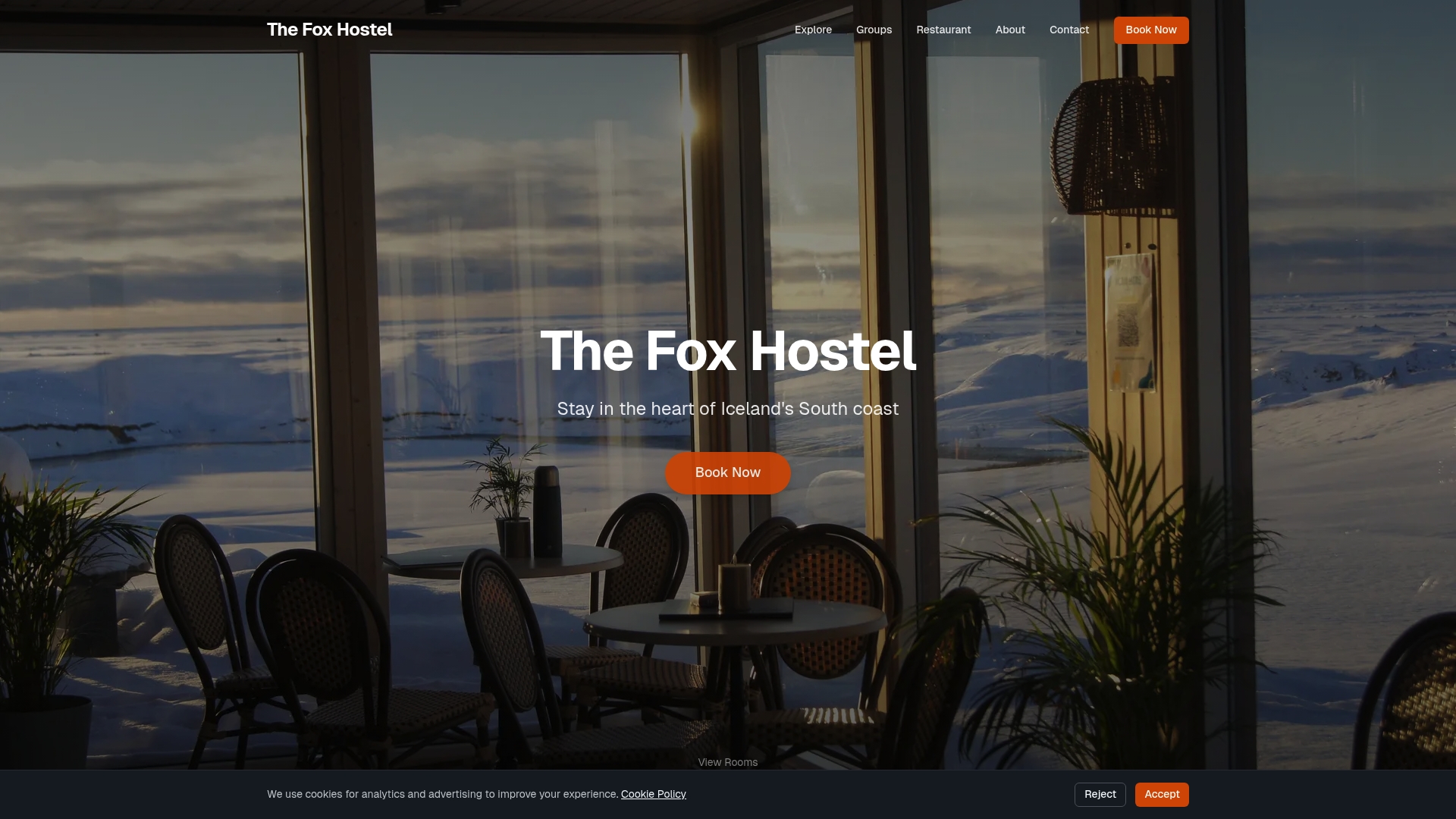
The property sits midway between Vík and Kirkjubæjarklaustur on the South Coast, which means you can store your gear, head out to Reynisfjara Black Sand Beach or Dyrhólaey, and return without worrying about your bags. The communal kitchen and on-site pizzeria mean you are not rushing back to a locked building at a fixed hour. For solo travelers who want to know exactly what they are getting before they book, the rooms and dorms page lists current options and availability. Check it, confirm your locker needs directly with the team, and book the bed that fits your trip.
Useful sources and where to check next
- HI USA — New to Hostels FAQ: Covers in-room locker policy, front desk hours, and what to expect at larger networked hostels. Good baseline for US-based travelers.
- Hostelworld — Ultimate Guide to Hostel Safety: Covers locker types, key-card access, and how to evaluate security features when browsing listings.
- Hostelz — Do Hostels Have Lockers?: Practical breakdown of locker availability by region, lock recommendations, and what to do when lockers are absent.
- Stasher — Can You Leave Luggage in Hostels?: Explains storage pricing norms, when fees apply, and third-party luggage storage as a fallback.
- Travel Dudes — Ultimate Guide to Staying at a Hostel: Covers booking platform filters, verified review strategy, and general hostel etiquette for first-timers.
- Fox Hostel — Room Types for Solo Travelers: Details on dorm configurations and storage at Fox Hostel specifically.
- Fox Hostel — Rooms & Dorms: Direct booking page to confirm current room availability and contact the property about locker specifics.
When scanning any listing, use the amenities filter for “lockers” or “luggage storage,” then cross-check with verified reviews sorted by most recent. If the listing is ambiguous, a single direct message to the hostel before booking takes two minutes and eliminates most surprises on arrival.