Iceland Solo Itinerary Two Weeks: Ring Road or South Coast
Iceland Solo Itinerary Two Weeks: Ring Road or South Coast
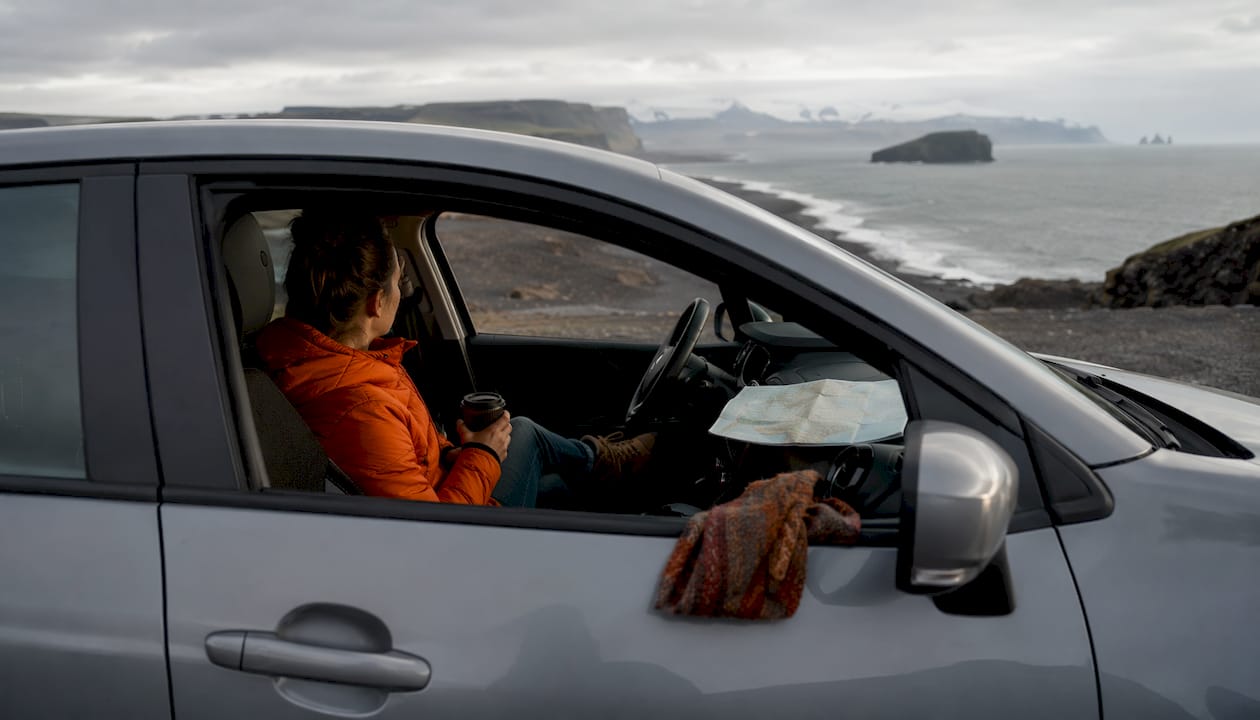
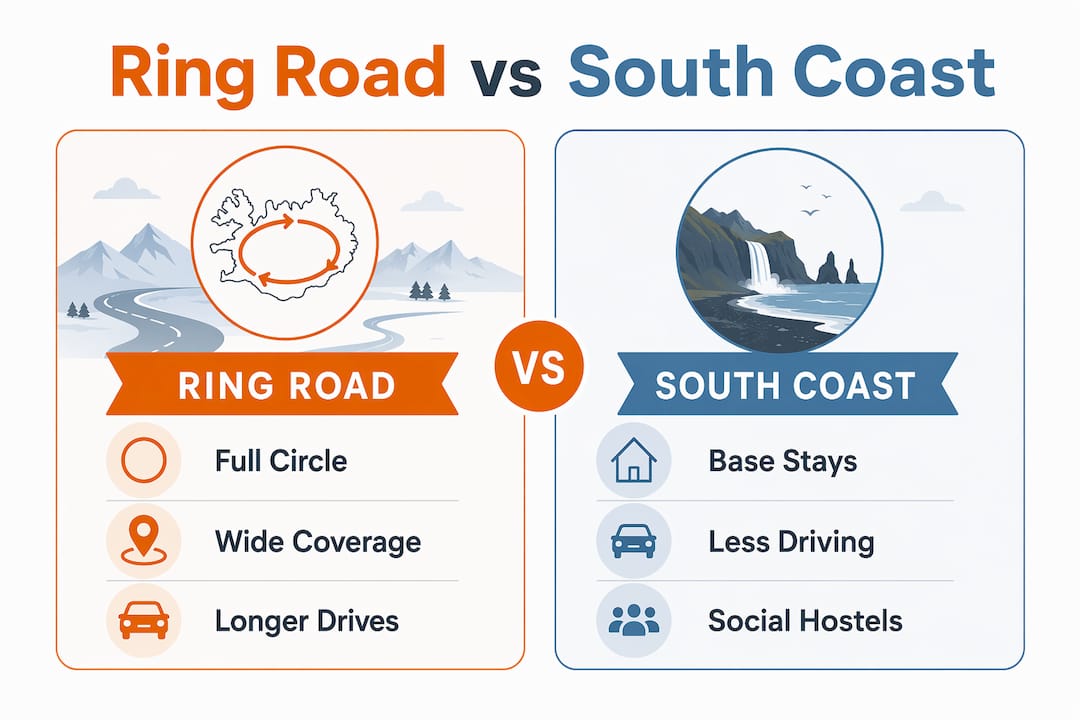
For a solo traveler with 14 days, the strongest plan is a clockwise self-drive of Route 1 (the Ring Road) starting and ending in Reykjavik. It covers the full island, keeps daily driving manageable, and puts every major highlight within reach. If you’d rather move slower, stay social, and skip the long eastern driving legs, a South Coast base centered on Vík (with Fox Hostel as your anchor) is a genuinely better fit. Before you leave Reykjavik on either plan, register your itinerary at safetravel.is and check vedur.is every morning for road and weather alerts.
Table of Contents
- What does a two-week Iceland solo itinerary look like day by day?
- Is a South Coast base a better option for solo travelers?
- What do solo drivers need to know before hitting the road?
- Where should solo travelers sleep in Iceland?
- Which activities should you pre-book, and how far out?
- When is the best time for a two-week solo trip to Iceland?
- What should you pack and how do you stay safe solo?
- What does two weeks in Iceland actually cost?
- Daily driving distances for the 14-day Ring Road plan
- How do you customize the plan for your travel style?
- Key Takeaways
- The thing most solo Iceland itineraries get wrong
- Fox Hostel: your South Coast base for a two-week solo trip
- Useful sources for planning and staying safe
What does a two-week Iceland solo itinerary look like day by day?
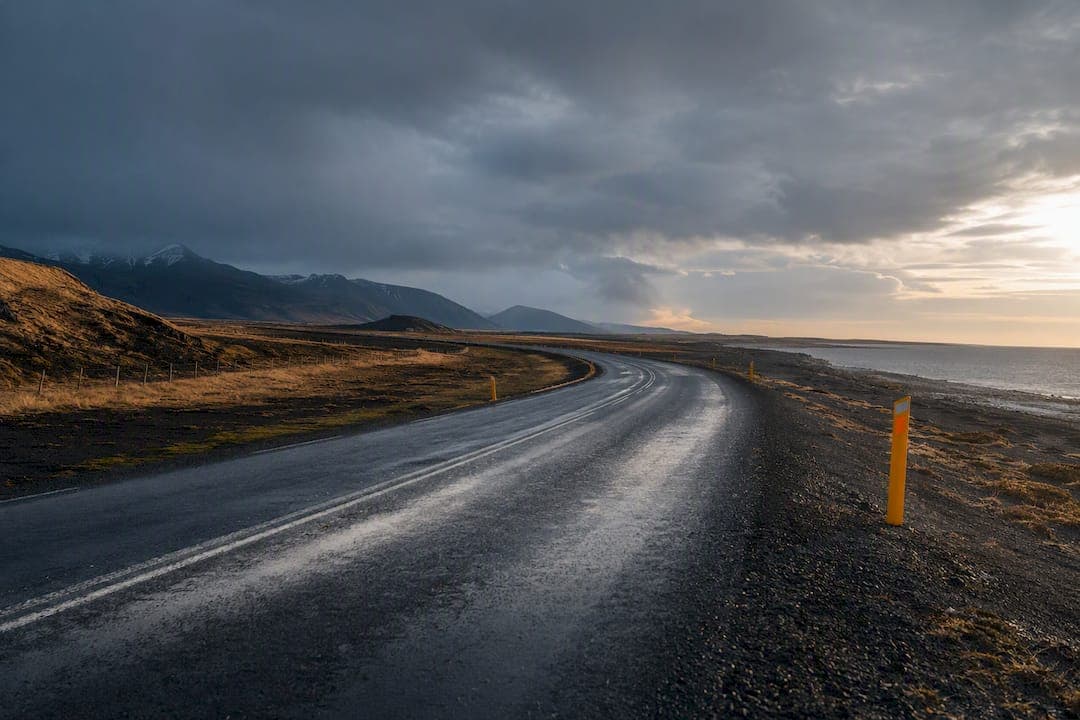
The Ring Road runs roughly 1,332 km around the island. Fourteen days gives you a relaxed circuit with room for side trips, rest days, and the occasional wrong turn that turns into a highlight. The plan below runs clockwise, which saves the South Coast’s greatest hits for the final stretch when you’re most comfortable driving Icelandic roads.
-
Day 1: Reykjavik arrival. Fly into Keflavik (KEF), pick up your rental, and stop at the Blue Lagoon on the way into the city. Driving: ~50 km / 45 min. Explore Hallgrímskirkja, Harpa Concert Hall, and the old harbor. Book dinner; rest early.
-
Day 2: Reykjavik to Snæfellsnes Peninsula. ~180 km / 2.5 hrs. Drive north on Route 54 to the Snæfellsnes Peninsula, often called “Iceland in miniature.” Stops: Kirkjufell mountain, Arnarstapi sea cliffs, Djúpalónssandur black pebble beach, and Snæfellsjökull glacier. Stay overnight near Stykkishólmur.
-
Day 3: Snæfellsnes to Akureyri. ~330 km / 4 hrs. A longer driving day. Stop at Gerðuberg basalt columns and Hvammstangi seal colony en route. Arrive in Akureyri, Iceland’s second city, in the early evening. Walk the botanical garden and grab dinner on Hafnarstræti.
-
Day 4: Akureyri and Goðafoss. ~80 km / 1 hr. A short, easy day. Goðafoss waterfall is 45 minutes east of Akureyri and genuinely worth the detour. Return to Akureyri for whale-watching in Eyjafjörður Bay. Pre-book whale watching at least 2–3 weeks out in summer.
-
Day 5: Akureyri to Mývatn. ~100 km / 1.5 hrs. Mývatn is one of the most geologically dense areas on earth. Stops: Dimmuborgir lava formations, Hverfjall crater rim walk, Námaskarð sulfur fields, Mývatn Nature Baths (a quieter alternative to the Blue Lagoon). Stay two nights here.
-
Day 6: Full day at Mývatn and Dettifoss. ~100 km round trip / 2 hrs driving. Detour north to Dettifoss, Europe’s most powerful waterfall. On the way back, walk the Leirhnjúkur lava field. This is a photography day; plan for 8–10 hours out.
-
Day 7: Mývatn to Egilsstaðir (East Iceland). ~260 km / 3.5 hrs. The East Fjords begin here. Egilsstaðir is quiet and underrated. Stop at Hengifoss waterfall (a 2.5 km hike each way) and drive a stretch of the fjord road for dramatic coastal scenery. Reindeer sightings are common in this region.
-
Day 8: Egilsstaðir to Höfn. ~260 km / 3.5–4 hrs. One of the most scenic driving days on the whole circuit. The road hugs fjord after fjord before opening onto the flat glacial plains near Höfn. Stop at Stokksnes peninsula for views of Vestrahorn mountain. Höfn is famous for langoustine; splurge on dinner here.
-
Day 9: Höfn to Jökulsárlón and Skaftafell. ~130 km / 1.5 hrs. Jökulsárlón Glacier Lagoon is the trip’s visual peak. Icebergs calve directly into the lagoon, then drift to Diamond Beach 200 meters away. Book a boat tour on the lagoon in advance (amphibious or zodiac). Skaftafell in Vatnajökull National Park offers a short glacier-tongue walk. Stay near Skaftafell.
-
Day 10: Glacier hike day. Stay near Skaftafell. A certified guided glacier hike on Falljökull or Svínafellsjökull takes 3–4 hours and requires crampons and a guide. Book 8–12 weeks ahead in summer. This is a non-negotiable pre-book.
-
Day 11: Skaftafell to Vík area. ~200 km / 2.5 hrs. Drive west along the South Coast. Stops: Fjaðrárgljúfur canyon (a 100-meter-deep slot canyon accessible via a short walk), Kirkjubæjarklaustur village, and the Eldhraun lava field. Arrive in the Vík area by late afternoon. Stay 2 nights.
-
Day 12: Vík and South Coast highlights. Zero driving required. Reynisfjara Black Sand Beach, Dyrhólaey arch and lighthouse, and Skógafoss waterfall (with the option to hike the trail above it) are all within 30 minutes of Vík. This is the best rest-and-explore day of the trip.
-
Day 13: Seljalandsfoss and the Golden Circle. ~200 km / 2.5 hrs. Drive west to Seljalandsfoss (you can walk behind the falls) and Þórsmörk valley if conditions allow. Then loop north onto the Golden Circle: Geysir hot spring area and Gullfoss waterfall. Stay near the Golden Circle or push back toward Reykjavik.
-
Day 14: Golden Circle to Reykjavik and departure. ~100 km / 1.5 hrs. Þingvellir National Park (where the North American and Eurasian tectonic plates meet) is the final stop before returning the car and catching your flight. Allow 3 hours before departure for car return and airport transit.
Summer pre-booking is critical for glacier hikes, ice cave tours, and remote accommodations. Days 9–10 and Day 4 are the three highest-demand booking windows.
Is a South Coast base a better option for solo travelers?
For many solo travelers, moving every single night for two weeks is exhausting. A South Coast base, with Vík as your hub, cuts that fatigue significantly. The South Coast lets you reach black sand beaches, glaciers, and lagoons on shorter day trips compared with full Ring Road moves, and staying in one place for 3–4 nights at a time makes it far easier to meet people.
A workable two-week rhythm from a Vík base looks like this:
- Days 1–3: Reykjavik and Golden Circle. Arrive, explore the capital, and do the Golden Circle (Þingvellir, Geysir, Gullfoss) as a day trip or overnight. Organized day tours from Reykjavik cover the Golden Circle without requiring a rental car.
- Days 4–9: South Coast base (Vík area). Check in for at least 4–5 consecutive nights. Day trips cover Reynisfjara, Dyrhólaey, Skógafoss, Seljalandsfoss, Fjaðrárgljúfur canyon, and Jökulsárlón Glacier Lagoon (a long but doable day trip east).
- Days 10–12: Glacier and lagoon focus. Use your base to book a guided glacier hike at Skaftafell and a boat tour at Jökulsárlón. These are manageable as day trips from the Vík area.
- Days 13–14: Snæfellsnes or return to Reykjavik. Drive the Snæfellsnes Peninsula as a day trip or overnight before flying home.
The social advantage is real. Staying 4–5 consecutive nights at the same hostel means you see the same faces at breakfast, in the communal kitchen, and on the trail. That’s how solo travel companions actually form. Fox Hostel, located 35 minutes east of Vík in Hrífunes Nature Park, is built for exactly this rhythm: flexible individual bed bookings, a communal kitchen, and an on-site pizzeria that naturally pulls people together in the evenings. Check out social hostel experiences on the South Coast for a sense of what that looks like in practice.
What do solo drivers need to know before hitting the road?
Car type and rental basics
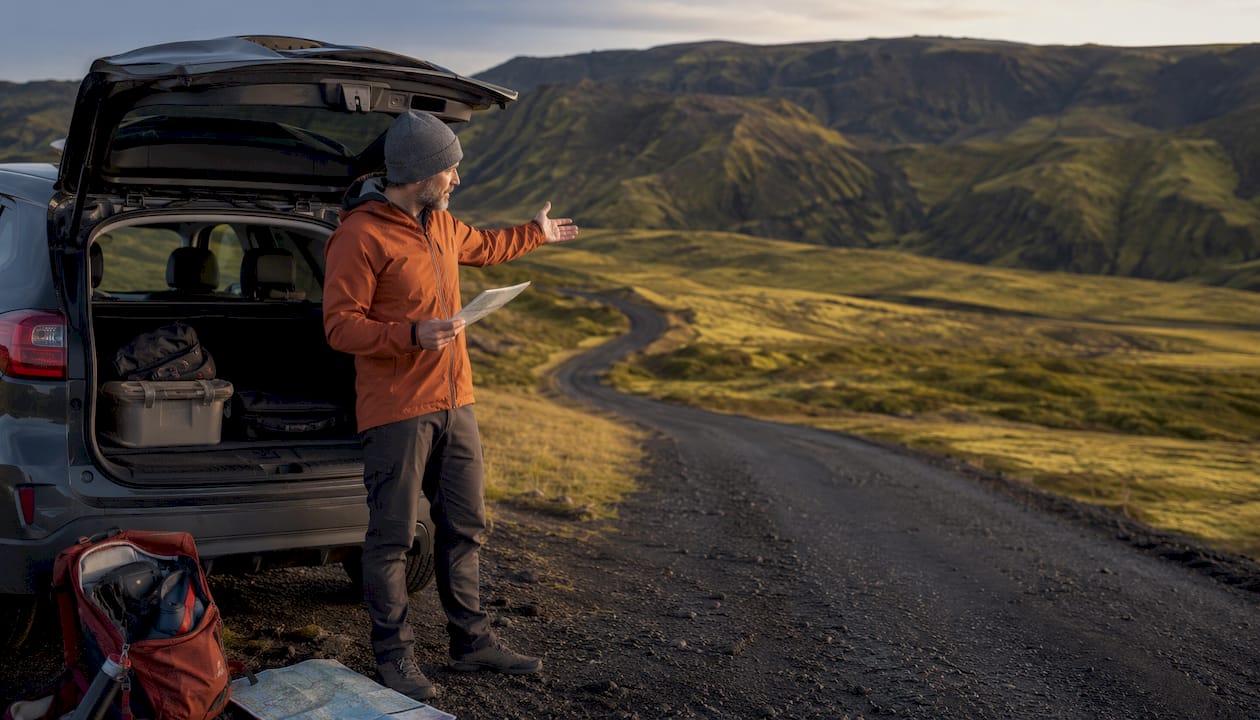
For summer Ring Road travel on sealed roads, a standard 2WD compact is fine. Add a 4×4 if you plan any F-road detours (Landmannalaugar, Þórsmörk) or travel in shoulder season when mountain roads can be icy. Campervans work well for budget travelers who want to skip nightly check-ins, but they’re harder to park in Reykjavik and slower on long driving days.
Always take Collision Damage Waiver (CDW) insurance. Add gravel protection (SAAP) and sand/ash protection (SAAP+) if you’re driving near black sand beaches or volcanic areas. The excess on basic rental coverage can run into hundreds of dollars; the add-on coverage costs far less.
Apps and road checks
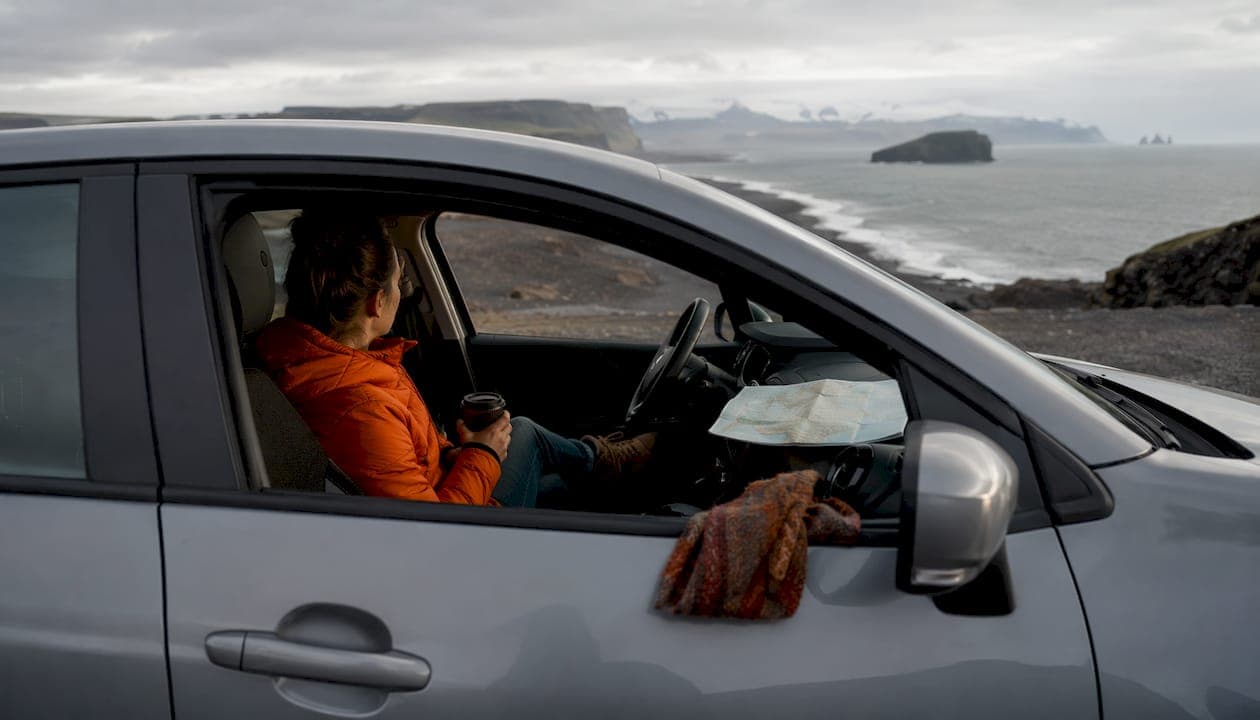
Check road.is for closures and vedur.is for weather before every driving day. Download the 112 Iceland app before you leave Reykjavik; it shares your GPS location with emergency services with one tap. Register remote driving days at safetravel.is so Search and Rescue teams know your plan if you don’t check in.
Pro Tip: Download offline maps (Maps.me or Google Maps offline) and GPX tracks for any planned hikes before you leave cell coverage. Signal drops out in the East Fjords and Highland approaches.
For non-drivers
Organized day tours cover every major attraction on the Ring Road. Reykjavik Excursions and similar operators run Golden Circle, South Coast, and Jökulsárlón excursions that remove the driving burden entirely. The trade-off is flexibility: you’re on the tour’s schedule, not your own. For a two-week trip, a hybrid approach works well: rent a car for the South Coast and East Fjords, and use day tours for the Golden Circle and Snæfellsnes.
Where should solo travelers sleep in Iceland?
Lodging types compared
Hostels are the clear first choice for solo travelers who want to meet people and keep costs down. Guesthouses offer more privacy but fewer social opportunities. Private B&B rooms work well for one or two nights in Reykjavik or Akureyri but get expensive over 14 days. Campervans and campsites are the most budget-friendly option in summer but require more planning and gear.
What to look for in a hostel for a two-week solo trip:
- Private lockers for valuables and passport storage
- Communal kitchen to cut food costs on long driving days
- Social programming (communal dinners, group hikes, organized activities)
- Flexible bed bookings so you can reserve a single bed without paying for a full room
- Luggage storage for day-trip days when you don’t want everything in the car
Hostel amenities matter more on a two-week trip than on a short city break. A well-equipped kitchen alone can save you $15–$25 per day compared with eating out for every meal.
Fox Hostel South Coast spotlight
Fox Hostel sits in Hrífunes Nature Park, 35 minutes east of Vík, in a converted traditional Icelandic barn. For solo travelers on the South Coast plan, it checks every practical box: individual bed bookings in dorm-style rooms, a large communal kitchen, an on-site pizzeria, and genuinely dark skies for Northern Lights viewing. Its location puts Reynisfjara Black Sand Beach and Dyrhólaey within easy reach to the west, and Vatnajökull National Park and Jökulsárlón Glacier Lagoon accessible to the east. Groups or couples can buy out an entire room for privacy while still using all the communal spaces.
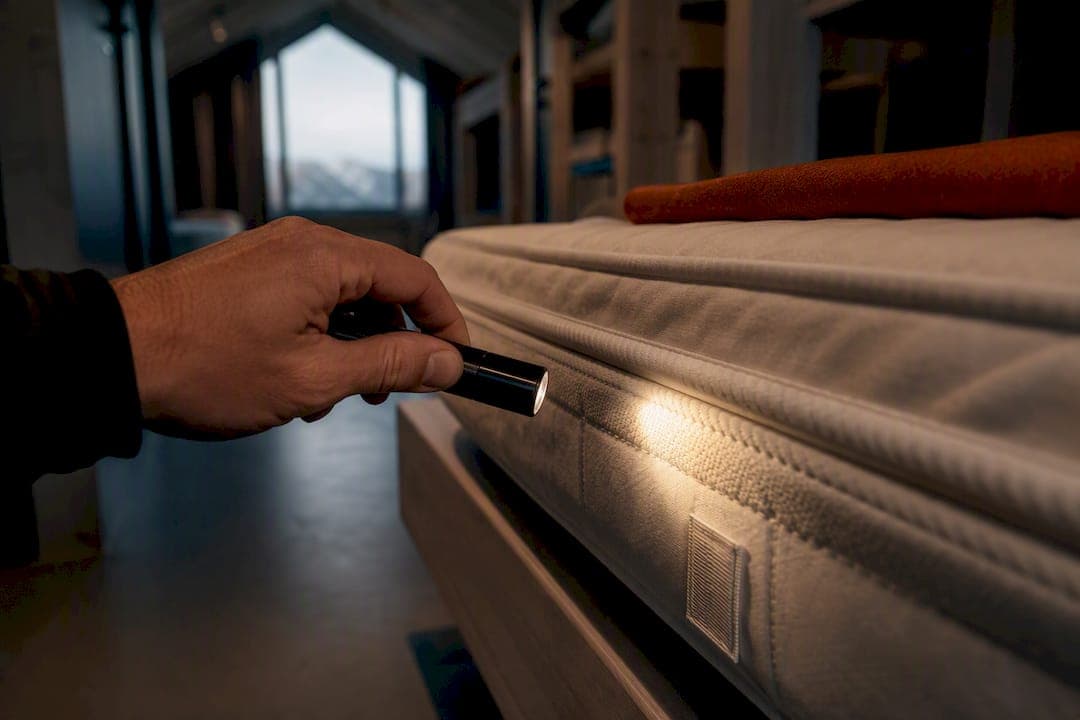
Hostel safety basics worth repeating: lock valuables in the provided lockers, respect quiet hours after 10 PM, and ask hostel staff about group activities before booking external tours. Staff at well-run hostels often know which local guides are worth the money and which aren’t.
Which activities should you pre-book, and how far out?
Iceland’s best experiences sell out fast in summer. Here’s how to prioritize:
Book 8–12 weeks out (summer, June–August):
- Certified glacier hikes (Skaftafell / Falljökull / Svínafellsjökull): 3–4 hours, roughly $80–$120 per person
- Crystal ice cave tours (October–March only): $100–$150 per person; these sell out within days of opening
- Boat tours at Jökulsárlón (amphibious or zodiac): $50–$80 per person
- Blue Lagoon or Sky Lagoon: both require advance booking; Blue Lagoon runs $60–$100+ depending on package
Book 2–4 weeks out (shoulder season, May and September–October):
- Whale watching from Akureyri or Húsavík: $70–$100 per person
- Glacier snowmobile tours: $150–$200 per person
- Guided Landmannalaugar day trips: $100–$130 per person
Can often be last-minute (off-peak, November–April):
- Golden Circle day tours from Reykjavik
- South Coast day tours (weather permitting)
- Northern Lights jeep tours (availability varies with aurora activity)
Small-group tours (8–12 people) are worth the small price premium for solo travelers. You get a better guide-to-guest ratio, more flexibility on pace, and a much higher chance of actually talking to other travelers. Large coach tours move fast and make conversation harder.
When is the best time for a two-week solo trip to Iceland?
Season choice shapes everything: daylight, road access, crowd levels, and what activities are even possible.
- Summer (June–August): The midnight sun gives you full Ring Road access and open F-roads. Crowds peak in July. Prices are highest. Best for first-timers who want maximum flexibility and the full Ring Road circuit.
- Shoulder season (May, September–October): Fewer tourists, lower prices, and aurora chances begin in September. May still has some F-road closures. October can bring early snow on mountain passes. Best for photographers and travelers who want the Ring Road without peak-season crowds.
- Winter (November–March): Northern Lights are the draw, but daylight drops to 4–5 hours in December. Many F-roads close entirely. The Ring Road itself stays open but requires winter driving experience and a 4×4. Not recommended for first-time Iceland drivers.
On Northern Lights realism: Aurora sightings require three things: darkness, clear skies, and solar activity. September through March gives you the darkness. Clear skies in Iceland are never guaranteed. Plan for 2–3 nights with good aurora potential over a two-week trip, and treat any sighting as a bonus rather than a certainty. Fox Hostel’s location in Hrífunes Nature Park, away from light pollution, gives you a genuine advantage on clear nights. The best Northern Lights spots in Iceland guide covers exactly where to position yourself for the best odds.
What should you pack and how do you stay safe solo?
Gear and clothing
Iceland’s weather changes fast. The layering system is non-negotiable:
- Base layer: moisture-wicking thermal top and leggings
- Mid layer: fleece or down jacket
- Outer layer: waterproof and windproof shell jacket and pants
- Footwear: waterproof hiking boots with ankle support; add microspike crampons for winter glacier access
- Extras: reusable water bottle (tap water is excellent everywhere), power bank, headlamp, and a dry bag for camera gear near waterfalls
Documents and connectivity
Carry your passport plus a digital copy stored separately. For connectivity, a local SIM from Síminn or Nova covers most of the Ring Road, though signal drops in the East Fjords. An eSIM (Airalo or similar) is a convenient alternative if your phone supports it. Download offline maps before leaving Reykjavik.
Solo safety habits
Register every remote driving day at safetravel.is. Check vedur.is and road.is each morning before driving. Leave your daily itinerary with someone at home who can raise an alert if you go quiet. Use the 112 Iceland app in any emergency.
Pro Tip: Pack your waterproof shell in your day bag, not your checked luggage. Iceland’s weather can go from sunny to horizontal rain in 20 minutes, and being caught without it on a glacier or black sand beach is genuinely miserable. Build a 30-minute buffer into every driving day for weather delays.
What does two weeks in Iceland actually cost?
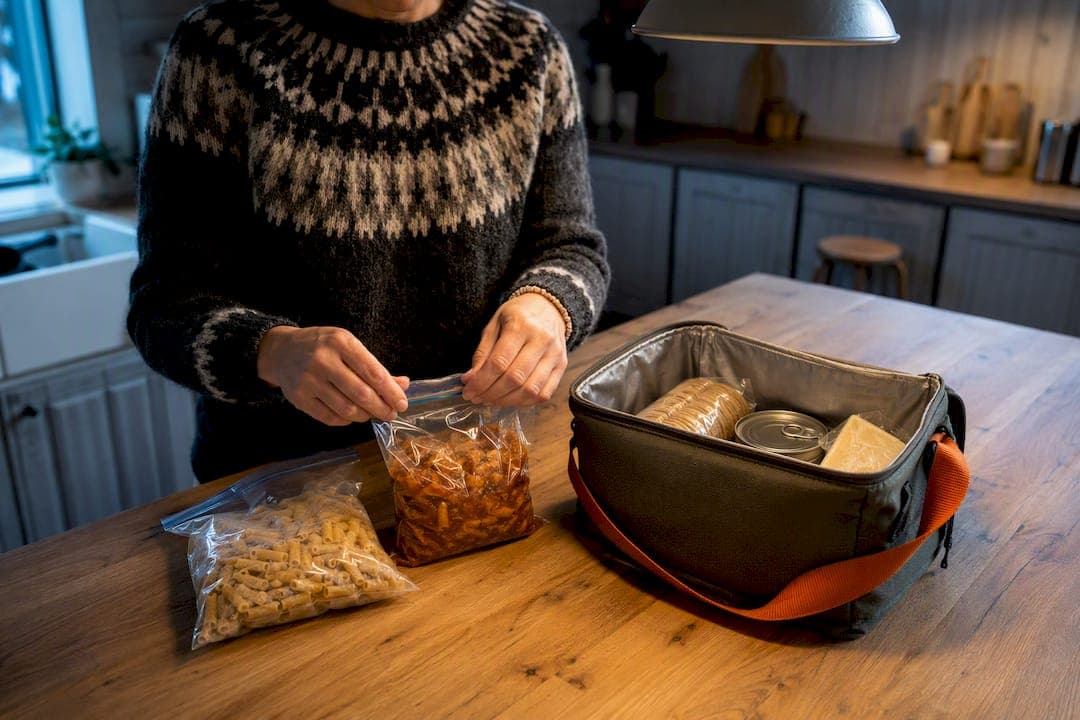
Iceland is expensive, but manageable with the right habits. The biggest lever is food: eating out for every meal can easily add $60–$80 per day. Stocking up at Bónus or Krónan for road-trip lunches and using hostel kitchens for dinners cuts that number dramatically.
Sample daily budget (per person)
| Category | Backpacker (per day) | Mid-Range (per day) |
|---|---|---|
| Accommodation | $30–$50 (hostel dorm) | $80–$130 (guesthouse/private) |
| Car rental + fuel | $50–$70 (shared or small 2WD) | $80–$120 (4×4 solo) |
| Food | $20–$35 (grocery + one meal out) | $50–$80 (mix of restaurants) |
| Activities | $20–$30 (average daily spread) | $50–$100 (guided tours) |
| Daily total | $120–$170 | — |
These are ballpark ranges. Guided glacier hikes and ice cave tours are one-time costs that spike specific days. Shoulder season travel (May or September) typically brings accommodation and rental prices down by 15–25% compared with peak July.
Cost-saving tactics that actually work:
- Buy groceries at Bónus (the yellow pig logo) for lunches and snacks every driving day
- Use hostel communal kitchens for at least one meal per day
- Prioritize one or two paid guided experiences rather than booking every available tour
- Book car rental and accommodation early; last-minute prices in summer are punishing
Daily driving distances for the 14-day Ring Road plan
Route 1 totals roughly 1,332 km. The table below uses realistic driving hours, not optimistic GPS estimates. Drivers should allow extra time for photo stops, fuel, and weather delays on exposed coastal and mountain roads.
| Day | Route | Approx km / miles | Approx driving hours |
|---|---|---|---|
| 1 | Keflavik → Reykjavik (via Blue Lagoon) | ~50 km | 1 hr |
| 2 | Reykjavik → Snæfellsnes Peninsula | 180 km / 112 mi | 2.5 hrs |
| 3 | Snæfellsnes → Akureyri | ~330 km | 4 hrs |
| 4 | Akureyri → Goðafoss → Akureyri | 80 km / 50 mi | 1.5 hrs |
| 5 | Akureyri → Mývatn | ~100 km | 1.5 hrs |
| 6 | Mývatn → Dettifoss → Mývatn | ~100 km | 2 hrs |
| 7 | Mývatn → Egilsstaðir | ~260 km | 3.5 hrs |
| 8 | Egilsstaðir → Höfn | ~260 km | 4 hrs |
| 9 | Höfn → Jökulsárlón → Skaftafell | ~130 km | 2 hrs |
| 10 | Skaftafell (glacier hike day, minimal driving) | 20 km / 12 mi | 30 min |
| 11 | Skaftafell → Vík area | ~200 km | 2.5 hrs |
| 12 | Vík area (day trips, no long driving) | — | 1 hr |
| 13 | Vík → Seljalandsfoss → Golden Circle | ~200 km | 3 hrs |
| 14 | Golden Circle → Þingvellir → Reykjavik | ~100 km | 1.5 hrs |
Pro Tip: Days 3 and 8 are the two longest driving legs. Schedule them for days when you feel fresh, not after a late night at a hostel. If Day 3 feels like too much, split it by staying overnight near Hvammstangi and finishing the drive to Akureyri the next morning.
How do you customize the plan for your travel style?
The 14-day Ring Road above is a solid default, but it’s not the only way to run two weeks in Iceland.
When to add the Westfjords: Add 3–4 days and expect higher driving difficulty on gravel roads. The Westfjords are spectacular and genuinely remote, with puffin colonies at Látrabjarg and dramatic fjord scenery. Only add them if you’re comfortable with long, slow gravel driving and have a 4×4.
When to drop the East Fjords: Cutting Egilsstaðir saves 2–3 travel days. Drive directly from Mývatn to Höfn in one long day (roughly 5–6 hours with stops). You lose the fjord scenery but gain time on the South Coast, which most travelers rate as the trip’s highlight anyway.
Swaps for specific interests:
- Replace the two long eastern driving days with an extended stay near Jökulsárlón and add a second glacier activity (snowmobile or ice climbing).
- Convert Day 6 (Dettifoss loop) into a rest day in Mývatn if you’re feeling the pace.
- Swap the Snæfellsnes overnight for a day trip from Reykjavik if you want to start the Ring Road proper on Day 2.
For limited mobility or safety concerns: The South Coast base plan described earlier is the right call. Shorter daily drives, familiar roads, and a fixed base reduce both physical fatigue and the risk of getting caught out in bad weather on an unfamiliar road. Preparing for a solo hostel stay covers what to expect logistically when you’re based in one place for multiple nights.
Key Takeaways
A clockwise Ring Road self-drive is the best two-week Iceland solo itinerary for maximum coverage, but a South Coast base from Vík cuts daily driving and improves social opportunities for travelers who prefer a slower pace.
| Point | Details |
|---|---|
| Register before driving remote | Log every remote driving day at safetravel.is so Search and Rescue knows your plan. |
| Check conditions every morning | Use vedur.is for weather and road.is for closures before each driving day. |
| Pre-book glacier and cave tours | Book glacier hikes and ice cave tours 8–12 weeks ahead in summer; they sell out fast. |
| South Coast base cuts fatigue | Staying 4–5 nights near Vík reduces nightly moves and makes it easier to meet other travelers. |
| Fox Hostel as your South Coast anchor | Fox Hostel near Vík offers flexible bed bookings, a communal kitchen, and dark skies for Northern Lights viewing. |
The thing most solo Iceland itineraries get wrong
Most two-week Iceland itineraries are written as if every traveler has the same risk tolerance, the same driving confidence, and the same appetite for solitude. They don’t. The Ring Road plan is genuinely excellent, but it asks you to drive 3–4 hours on unfamiliar roads, check into a new place every night, and navigate weather that can turn a scenic coastal road into a white-knuckle experience, all while managing your own logistics with no one to share the load.
What those itineraries underplay is the cumulative fatigue. By Day 8 or 9, the East Fjords driving can feel less like adventure and more like obligation. That’s when solo travelers make bad decisions: pushing through a road closure, skipping the safety registration, or driving tired because the next accommodation is already paid for.
The South Coast base option isn’t a compromise. For a significant portion of solo travelers, it’s the smarter plan. You get the same headline attractions (Jökulsárlón, Reynisfjara, Skógafoss, Dyrhólaey) as day trips from a fixed point, you sleep in the same bed for 4–5 nights, and you actually have time to talk to people. Hostels that build communal dinners and group outings into the stay materially increase the chance you’ll find a day-trip companion, which changes the whole character of the trip.
My honest advice: decide which version of Iceland you actually want before you book. If you want to say you drove the whole Ring Road, do the Ring Road. If you want to feel like you were actually in Iceland rather than passing through it, consider slowing down on the South Coast.
Fox Hostel: your South Coast base for a two-week solo trip
The South Coast plan only works if your base is worth coming back to. Fox Hostel, set in a converted Icelandic barn in Hrífunes Nature Park, is 35 minutes east of Vík and positioned exactly where you need it: close enough to Reynisfjara and Dyrhólaey for a morning run, far enough from the crowds for a genuinely quiet night.
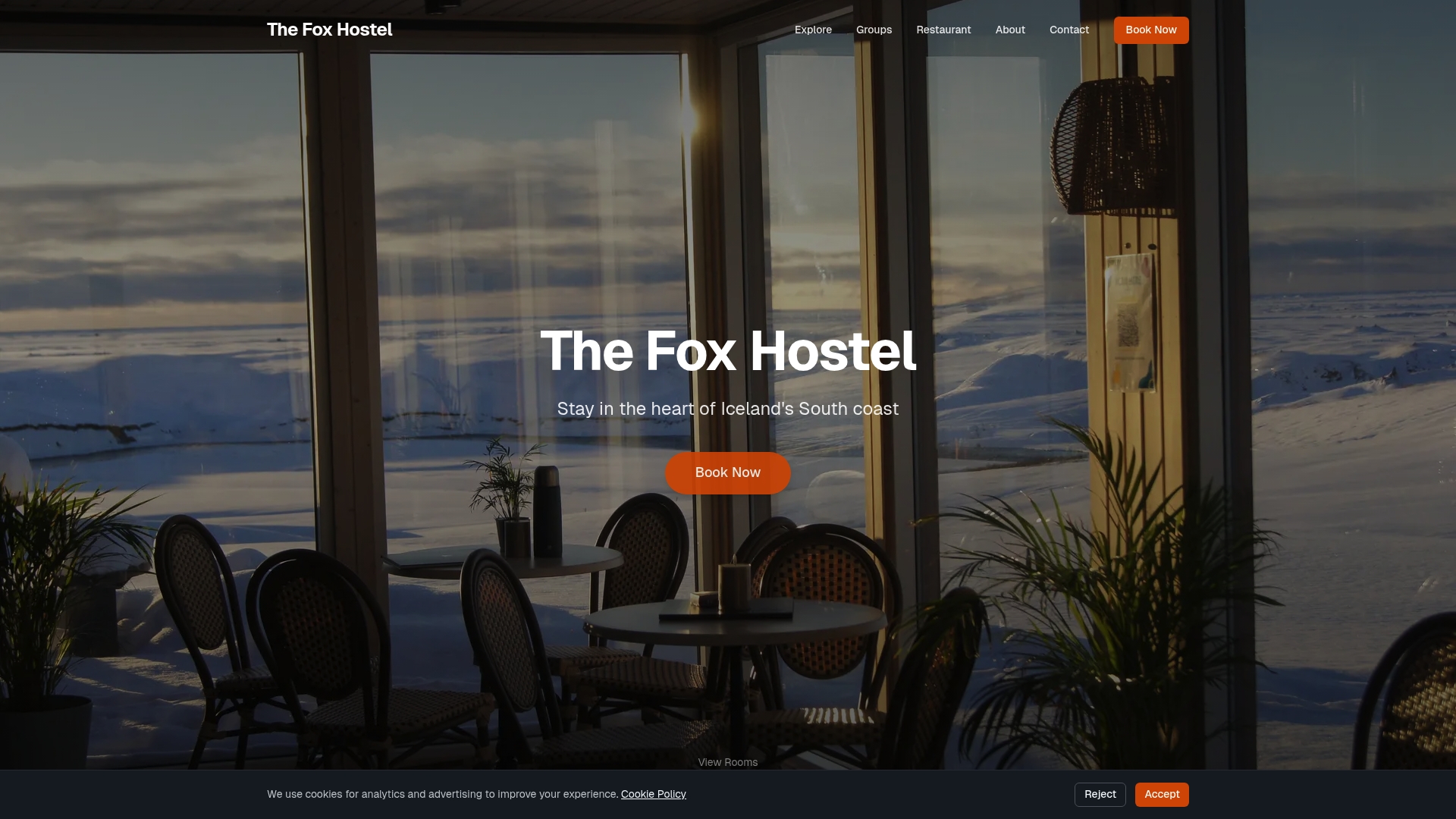
For solo travelers, the practical setup matters. Individual bed bookings mean you pay for a bed, not a room. The communal kitchen handles breakfast and dinner without the daily restaurant bill. The on-site pizzeria is there for the nights you don’t want to cook. And the dark skies over Hrífunes Nature Park give you a real shot at Northern Lights from the property itself, no jeep tour required. Fox Hostel also offers a partnered rafting experience and local activity guides for travelers who want more than just a place to sleep.
If you’re planning 4–5 nights on the South Coast as part of your two-week plan, check room availability and book your bed early. Summer fills fast, and the flexibility to book a single bed (or buy out a room for a group) makes Fox Hostel one of the more practical options on this stretch of Route 1.
Useful sources for planning and staying safe
- safetravel.is: Register your itinerary here before any remote driving day. If you fail to check in, it triggers Search and Rescue protocols automatically.
- vedur.is: Iceland’s official weather service. Check it every morning; conditions change faster than any app forecast can track.
- road.is: Real-time road conditions and closures across Iceland. Essential before driving mountain passes or coastal roads in shoulder season.
- 112 Iceland app: Download before leaving Reykjavik. One tap sends your GPS location to emergency services.
- Bónus: Iceland’s most affordable supermarket chain (look for the yellow pig logo). Stock up here for road-trip lunches and hostel kitchen supplies to keep daily food costs manageable.
Recommended
- How to Plan a South Coast Itinerary in Iceland | Fox Hostel – South Iceland
- Ejemplos de rutas en la costa sur de Islandia | Fox Hostel – South Iceland
- What Is the South Coast of Iceland? A Travel Guide | Fox Hostel – South Iceland
- How to Visit South Coast Waterfalls in Iceland | Fox Hostel – South Iceland