Avoid 8–9 Hours of Driving: 2-Day South Coast Itinerary for Iceland
Avoid 8–9 Hours of Driving: 2-Day South Coast Itinerary for Iceland
Do this: Day 1, drive from Reykjavík or Selfoss past the waterfalls to Reynisfjara, then sleep in Vík. Day 2, either push east to Jökulsárlón and Diamond Beach for a long, full day, or slow down with a relaxed loop around Vík. Book any glacier hike or lagoon boat tour with a licensed guide ahead of time, such as a small-group guided excursion like the Private Arctic Fjord Expedition & Hidden Gems, and expect several hours of driving each day, so build in buffer for Iceland’s fast-changing weather.
TL;DR:
- Starting early in the day helps avoid parking congestion at popular waterfalls like Seljalandsfoss and Skógafoss, especially in summer months.
- It is safer to stay well behind the safety line at Reynisfjara beach, and visiting in the afternoon reduces crowds and improves lighting conditions.
- Driving from Reykjavík to Jökulsárlón and back typically involves 8 to 9 hours of travel over 645 to 725 kilometers, excluding stops and detours.
- Booking guided glacier hikes and lagoon boat tours weeks in advance is essential, particularly during peak season from May to September.
- Staying overnight in Vík provides logistical advantages, including proximity to key sights, fuel availability, and early access to popular spots.
Table of Contents
- South Coast Itinerary 2 Days: Day 1 From Reykjavík to Vík
- South Coast Itinerary 2 Days: Day 2 Options From Vík
- Where To Stay: Why Vík Works As Your Base
- Planning and Safety Essentials for the Drive
- Three Ways To Adjust This Route
- What Hosting South Coast Travelers Taught Us
- The Real Trade-Off Nobody Puts in Writing
- Book Your South Coast Base at Fox Hostel
- Sources
South Coast Itinerary 2 Days: Day 1 From Reykjavík to Vík
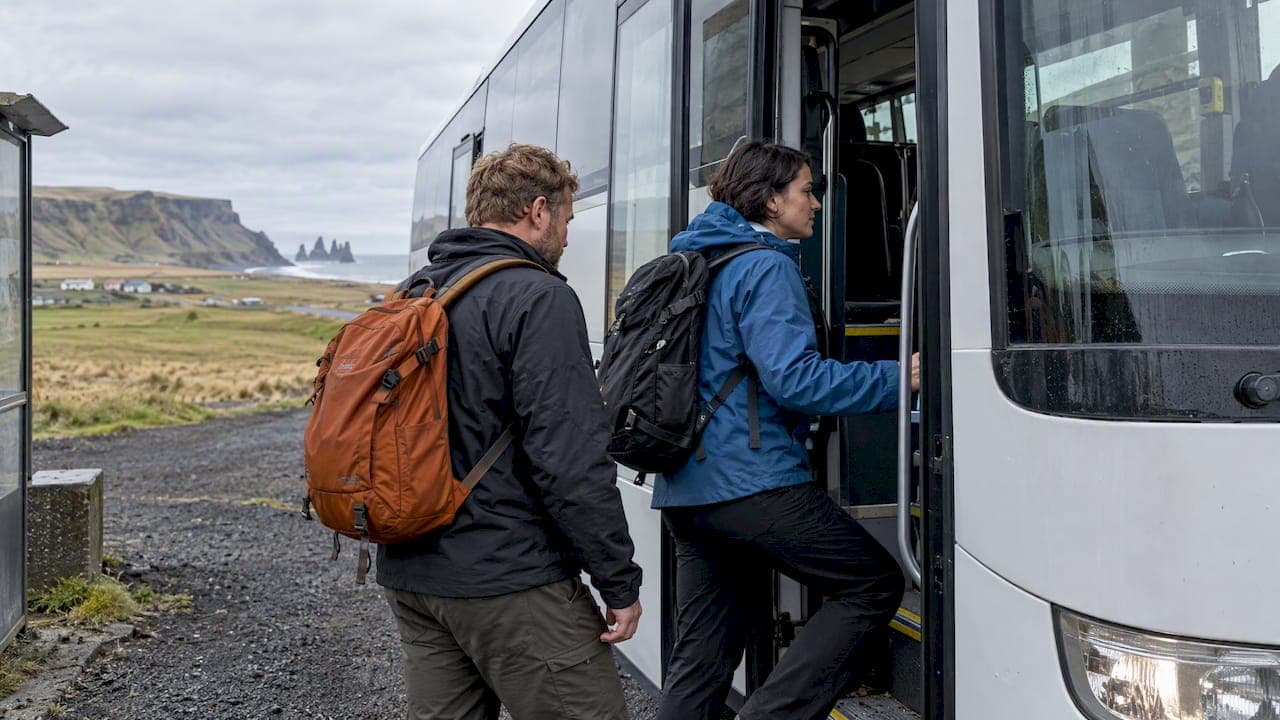
Leave Reykjavík or Selfoss by 7:30 or 8:00 AM. Tour guides who run this route constantly point to early starts as the single biggest factor in avoiding parking congestion at the big-name stops, and by mid-morning in July the lots at Seljalandsfoss and Skógafoss fill up fast. Getting ahead of the crowds also buys you time for the detours that make this drive worth doing.
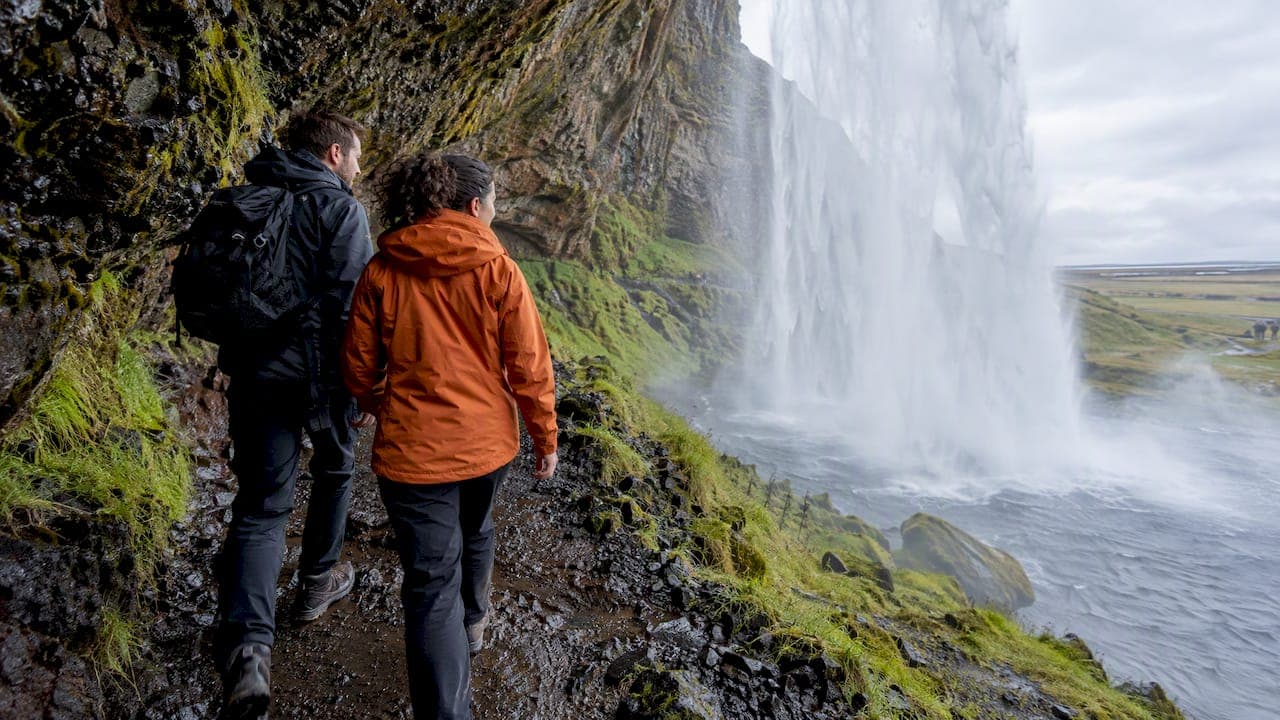
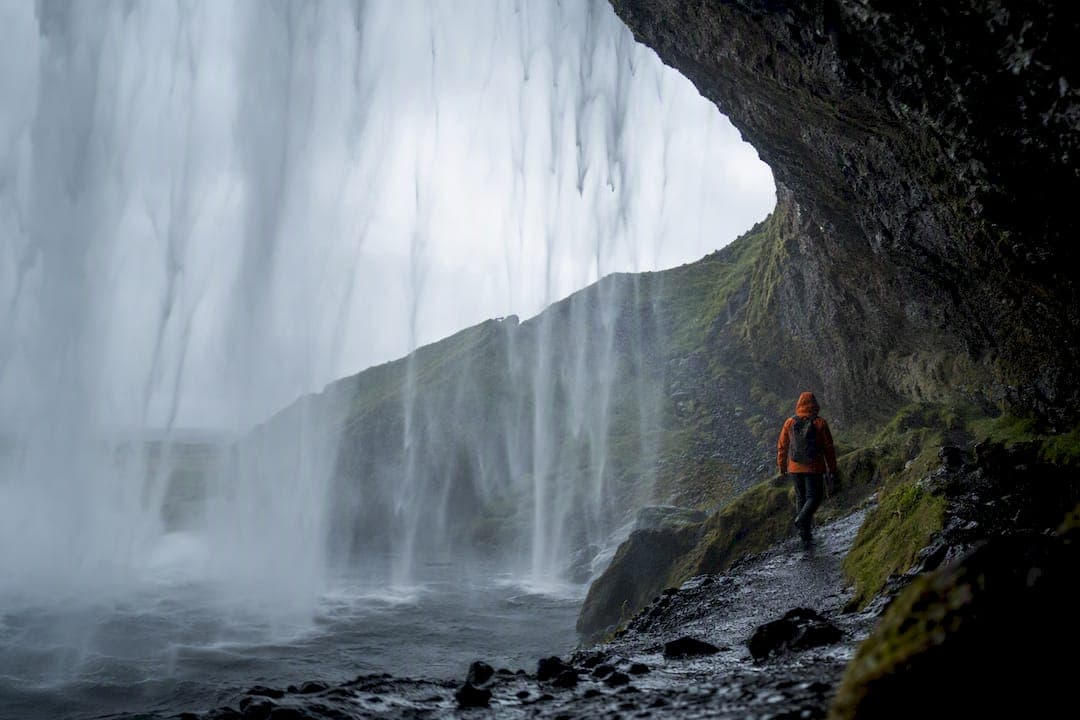
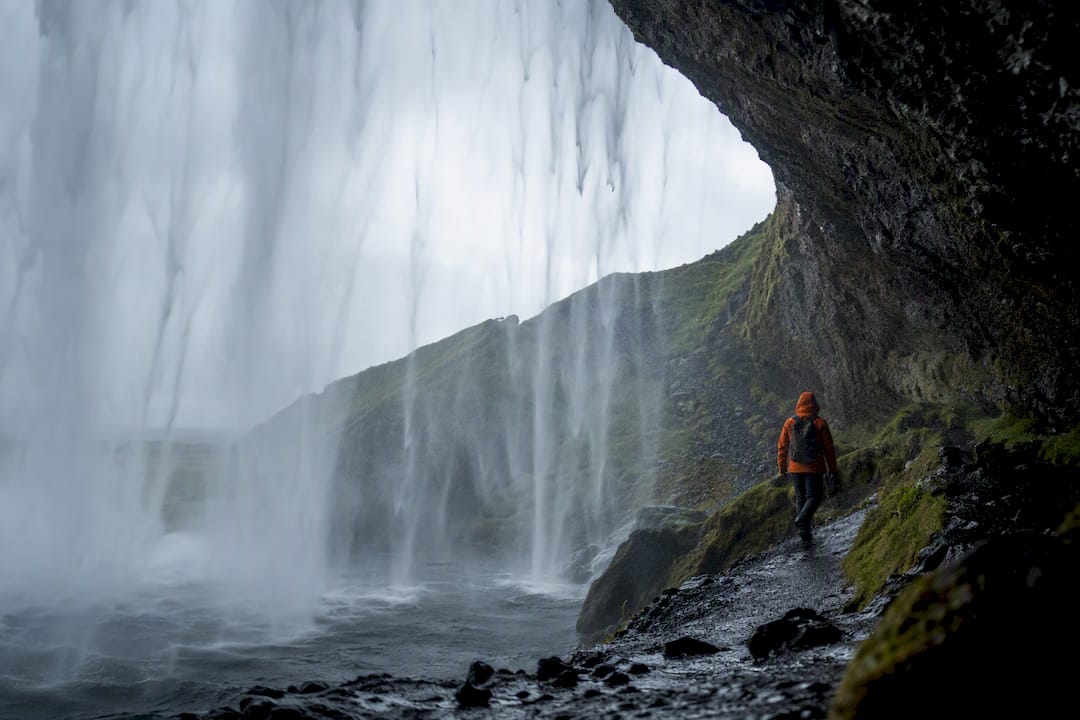
Seljalandsfoss is your first major stop, roughly an hour and a half from Reykjavík depending on traffic through Selfoss. The waterfall drops 60 meters over an old sea cliff, and a path lets you walk behind the curtain of water, though you will get wet, so a rain jacket earns its keep here. If you have an extra 20 minutes, walk the gravel trail north to Gljúfrabúi, a smaller falls tucked inside a canyon that most tour buses skip entirely.
Skógafoss sits about 25 minutes further east. It is wider and more dramatic than Seljalandsfoss, and a steep staircase (over 400 steps) climbs to a viewpoint above the falls. Skip the stairs if you are short on time; the view from the base is already one of the best photo stops on the entire coast.
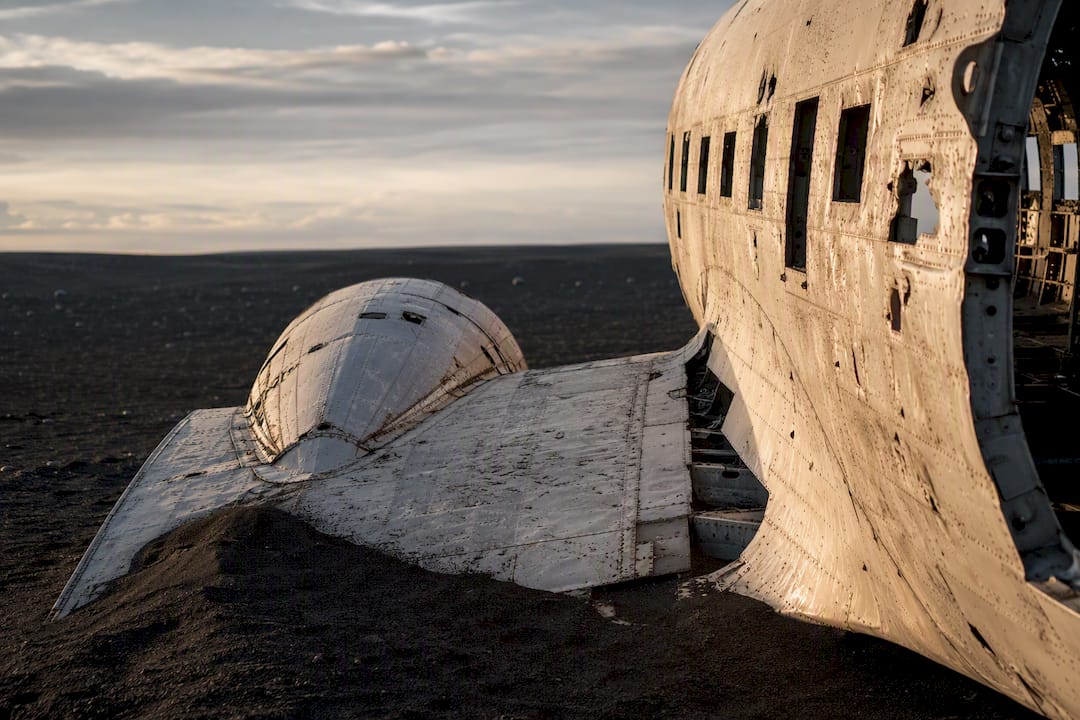
This is also where you decide whether to detour for the Sólheimasandur plane wreck, the rusted DC-3 fuselage sitting on black sand near the coast. Reaching it on foot is a 4 to 6 kilometer round trip walk across a flat, featureless plain, which eats an hour or more. A paid shuttle cuts that down to about 20 minutes each way. It is a striking, slightly eerie photo, but it is genuinely optional. Skip it if your day already feels tight.
Next comes Dyrhólaey, a dramatic promontory with an arch you can see from the cliffside viewpoint and, from May through August, nesting puffins along the grassy slopes. The road up can be closed in bad weather or during nesting restrictions, so check conditions before committing the detour.
From there, Reynisfjara Black Sand Beach is the payoff. The basalt columns and sea stacks here are genuinely world-class, but the beach has a serious reputation for sneaker waves that have injured and killed visitors who got too close to the water. Stay well back from the shoreline, never turn your back on the ocean, and treat any posted warning signs as absolute.
- Stay behind the marked safety line, even if the tide looks calm.
- Visit mid-afternoon rather than midday for softer light and thinner crowds.
- Watch the surf for a full minute before deciding where is safe to stand; wave patterns are irregular, not rhythmic.
- Keep kids and pets within arm’s reach the entire time.
By early evening you should be rolling into Vík, Iceland’s southernmost village and your overnight base. Fill your tank here (or earlier in Skógafoss) since Vík is one of the last reliable fuel stops before the long stretch east, and grab groceries or dinner while the town’s few restaurants aren’t packed.
Pro Tip: Fill your gas tank in Vík the night before Day 2, not the morning of. Gas stations here can queue up early with other road-trippers doing the exact same drive you are.
South Coast Itinerary 2 Days: Day 2 Options From Vík
Your second day splits into two honest options, and which one you pick should depend on how much driving you actually want to do, not how ambitious your itinerary looks on paper.
The long push to Jökulsárlón
This route covers Skaftafell, Fjallsárlón, and Jökulsárlón Glacier Lagoon with Diamond Beach across the road. It is the classic “go big” South Coast day, and it delivers, but it also means a lot of time behind the wheel.
- Vík to Skaftafell: roughly 1 hour 45 minutes to 2 hours.
- Skaftafell to Jökulsárlón: another 45 minutes to an hour, with Fjallsárlón along the way.
- Total driving for the day, there and back to Vík: 5 to 6 hours, not counting stops.
At Skaftafell, the short detour to Svartifoss waterfall is worth the roughly 45 minute round-trip hike; the basalt columns behind the falls look almost architectural. At Jökulsárlón, icebergs calve off Breiðamerkurjökull glacier and drift out toward the ocean, and Diamond Beach across the road is where chunks of that ice wash up on black sand, glinting like glass.
If you want to get onto the ice itself or out on the water among the icebergs, that requires a licensed guide, full stop. Glacier hikes cross crevasse fields and unstable terrain that looks stable from a distance, and lagoon boat tours navigate around floating ice that shifts constantly, which is exactly why qualified, professional guides run these operations rather than letting visitors wander out alone. Book these several weeks ahead during the May through September peak season, since slots fill fast and meeting points are usually a short drive from the main parking areas, not right at the lagoon itself.
The distance adds up. A realistic Selfoss to Jökulsárlón round trip runs roughly 645 to 725 kilometers total, with about 8 to 9 hours of driving alone across the full two days. That number does not include stops, meals, or the hour you will inevitably lose taking photos at Diamond Beach.
The relaxed Vík-area day
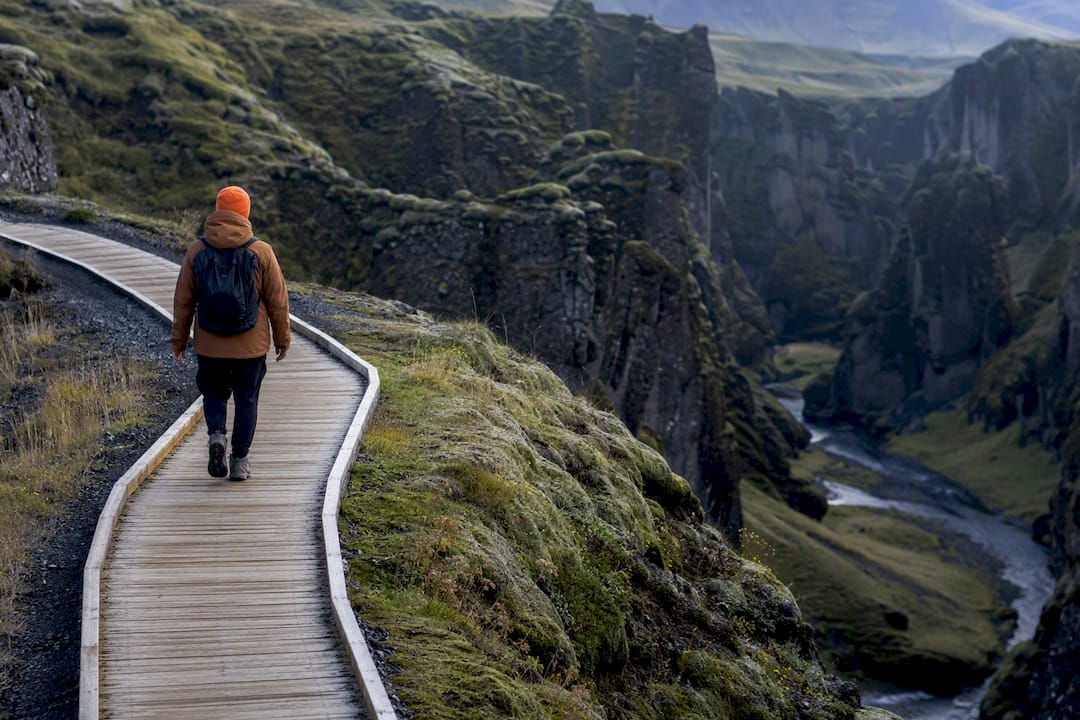
If that math sounds exhausting, stay closer to base. Fjaðrárgljúfur canyon, about 45 minutes east of Vík, has a boardwalk trail along mossy, serpentine cliffs that feels almost otherworldly and takes under an hour to walk. A viewpoint of Sólheimajökull glacier tongue is another option nearby if you want a glacier view without the guided-hike commitment. Round it out with a soak at a local pool, a slower second visit to Reynisfjara in different light, or simply sleeping in.
This version gets you back to Reykjavík by early evening with far less fatigue, which matters more than people expect on a trip where every day already starts before 8:00 AM.
Where To Stay: Why Vík Works As Your Base
Vík earns its spot as the default overnight stop because it sits at the hinge point of the whole route. It has fuel, groceries, a handful of restaurants, and it puts you within 20 minutes of both Reynisfjara and Dyrhólaey, meaning you can hit those two stops fresh in the morning light rather than tired at the end of a long Day 1 drive. Staying here instead of continuing further east also means you are not backtracking against your own route the next morning.
There are two situations where a different base makes more sense:
- If you are continuing further east beyond a two-day trip, staying nearer Jökulsárlón sets up sunrise photography without the long return drive.
- If your Day 2 is the relaxed Vík loop and you want to end your trip closer to the airport, basing in Selfoss on night one and skipping Vík entirely can work, though you lose easy access to Reynisfjara at ideal light.
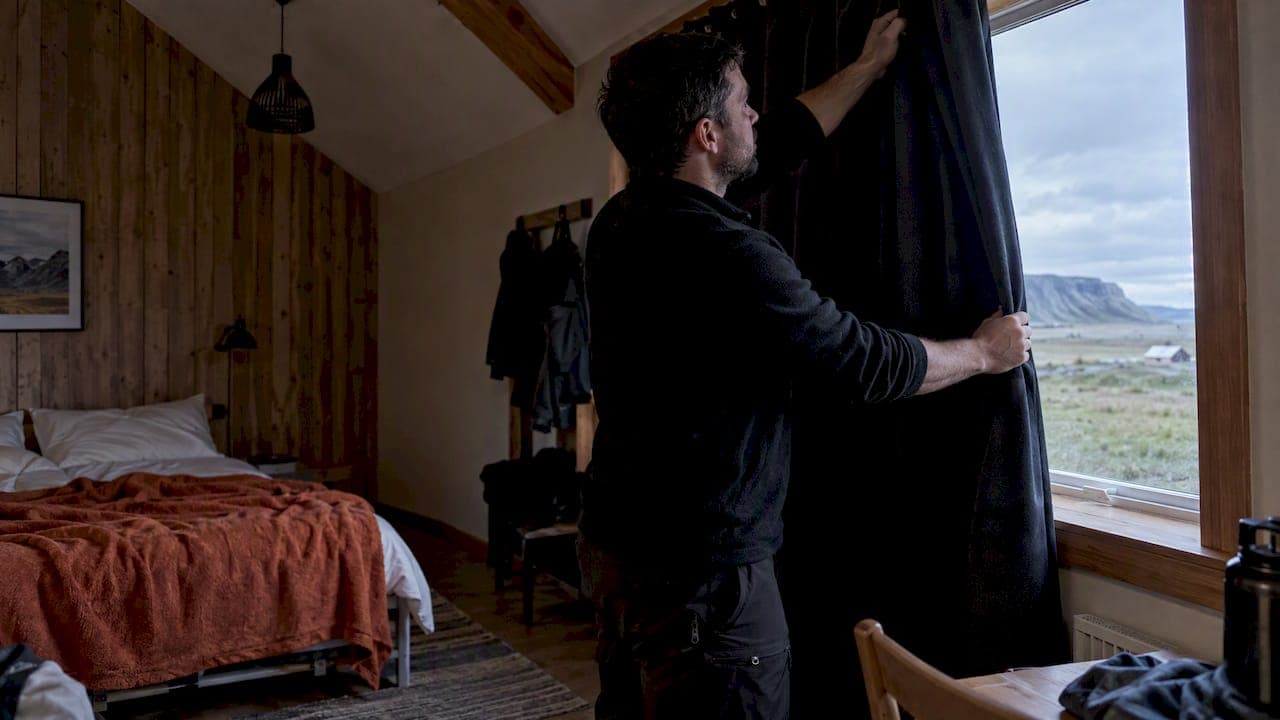
During peak season, from June through August, rooms in and around Vík book out weeks in advance, so reserve your stay early rather than assuming you’ll find something the week before. Fox Hostel sits about 35 minutes east of Vík in Hrífunes Nature Park, close enough to make it a practical base for cutting driving time on this exact route while still giving you a quieter setting than the village itself.
Planning and Safety Essentials for the Drive
Distance is the real constraint on this trip, not enthusiasm. A Selfoss to Jökulsárlón round trip runs roughly 645 to 725 kilometers with 8 to 9 hours of driving spread across both days, and the relaxed Vík loop cuts that closer to 400 kilometers total. Either way, budget more time than Google Maps suggests, since single-lane bridges, gravel shoulders, and photo stops all slow you down.
- Book guided activities early. Glacier hikes and lagoon boat tours need a licensed operator, and popular time slots during peak season disappear weeks ahead.
- Rent a standard 2WD car and stay off F-roads. The Ring Road and its main detours are paved and manageable in a regular rental; F-roads into the highlands are a different vehicle class entirely.
- Track fuel stations, not just distance. Stations thin out east of Vík, so top off before you leave and again before pushing toward Jökulsárlón.
- Adjust for winter daylight. From November through February, daylight can run under 5 hours, which usually means cutting Jökulsárlón entirely and sticking to the Vík loop.
- Watch the forecast daily, not once. Iceland’s weather can shift within hours, and staying flexible with your schedule is the difference between a smooth trip and a stressful one.
Pro Tip: Keep a mental “Plan B” that never crosses east of Vík. If wind or rain closes Dyrhólaey or makes the Jökulsárlón stretch miserable, you can still fill a full day without ever leaving the western half of the route.
Pack layers regardless of season, a proper rain shell, and sturdy waterproof shoes. At Reynisfjara, stay off the wet sand near the waterline. Near any glacier, never step past marked boundaries without a guide, since surface ice can hide crevasses that are invisible until you’re standing over one.
Three Ways To Adjust This Route
Not every traveler needs the same version of this trip. A few quick variants:
- Family-friendly: Cut the plane wreck detour, add extra snack and bathroom breaks, and keep the whole two days within the Reykjavík to Vík corridor rather than pushing to Jökulsárlón.
- Photography-first: Start even earlier for empty-lot shots at Skógafoss, and prioritize Diamond Beach at sunset or blue hour when the ice catches warmer light.
- Winter-safe: Skip the Jökulsárlón stretch unless you have real experience driving in ice and snow, and default to the Reykjavík to Vík return loop instead.
Each variant keeps the same bones. Only the pacing and the eastern boundary change.
What Hosting South Coast Travelers Taught Us
Guests who’ve stayed with us before their South Coast push tend to make the same small adjustments once they’ve done the drive: skip the crowded midday window at Reynisfjara, eat dinner in Vík before 7:00 PM to beat the tour-bus rush, and park facing east if they’re hoping to catch sunrise over Hrífunes.
The travelers who enjoy this route most aren’t the ones who cram in every stop. They’re the ones who picked one long day and one easy day, and actually got to look up from the map.
Fox Hostel sits in a converted barn in Hrífunes Nature Park, roughly 35 minutes east of Vík, offering flexible accommodation options.
The Real Trade-Off Nobody Puts in Writing
Most South Coast itineraries sell you on doing everything, and that is where they fail travelers. The honest version of this trip has a ceiling: two days gives you either the western waterfalls plus Reynisfjara done well, or that plus a rushed eastward dash to Jökulsárlón that leaves you exhausted and short on real time at any single stop.
The conventional advice treats the long Day 2 push as the default, the “real” version of the trip, and frames the relaxed Vík loop as a consolation prize. That gets it backward. If you’re driving 8 or 9 hours over two days chasing icebergs, you should choose that deliberately, not because a blog told you the itinerary isn’t complete without it.
What actually matters is picking your overnight base with intention. A base close to Vík buys you flexibility either direction, without the wasted backtracking that ruins a tight schedule. Prioritize sleep and a short drive to your first stop over squeezing in one more waterfall. The travelers who regret this trip almost never regret skipping something. They regret being too tired to enjoy what they didn’t skip.
— Siggi
Book Your South Coast Base at Fox Hostel
There is a practical stop for this exact route about 35 minutes east of Vík, positioned so you’re set up for both Reynisfjara and Dyrhólaey on Day 1 and already pointed east if you’re pushing on to Jökulsárlón the next morning.

It suits solo road-trippers who want a bed and a social kitchen without paying for a private room they don’t need, and also works for groups who prefer booking entire rooms together. The communal kitchen and on-site pizzeria mean you’re not hunting for dinner options after a long driving day, and the dark-sky setting in Hrífunes Nature Park gives you a real shot at the Northern Lights on clear nights outside summer. Check available rooms and dates directly, or head to the Fox Hostel booking page to lock in your South Coast base before peak season fills up.
Sources
- How to Spend 48 Hours on Iceland’s South Coast | The Perfect 2-Day Itinerary
- South Coast Iceland 2-Day Itinerary | IcelandicTravelTips
- A Couple Days Travel — Iceland’s South Coast guidance