How to Sleep During the Midnight Sun in Iceland
How to Sleep During the Midnight Sun in Iceland

You sleep during the midnight sun by controlling light, not temperature. Make your room as dark as you can, keep a fixed bedtime, get bright light in the morning, and avoid bright light and screens in the hours before bed. Most people adjust within two or three nights. This guide covers what is actually happening in Iceland in summer, what works, what to pack, and how to plan your days so you are not wrecked by day five.
TL;DR
- Iceland has near-constant daylight in summer, not a literal 24-hour sun (except on the island of Grímsey), but it is bright enough to confuse your body clock.
- Darkness is the fix. Confirm blackout curtains when you book, and pack an eye mask as a backup.
- Keep a fixed sleep and wake time, get bright light in the morning, and keep your evenings dim.
- Shift your sightseeing to early morning or late evening, and leave room for a nap.
- In a shared room, add silicone earplugs. Light is only half the problem.
Table of Contents
- What the midnight sun really looks like in Iceland
- Why bright nights wreck your sleep
- Step by step: a plan that works
- What to pack
- Plan your days around the light
- Arriving tired
- Perspective: sleeping well in a barn on the South Coast
- Stay near Vík and make the evenings easy
- Common mistakes
- FAQ
- Sources
What the midnight sun really looks like in Iceland
True midnight sun, with the sun fully above the horizon all day, happens only north of the Arctic Circle. In Iceland that is essentially Grímsey. Everywhere else you get something subtler: about 21 hours of daylight and roughly 3 hours of twilight around the June 21 solstice. In Reykjavík the sun dips below the horizon for only a short window around midnight, setting around 12:04 AM and rising around 2:58 AM near the solstice, per the same source.

That “night” is not dark. It is a long, glowing dusk that rolls into dawn. Business Insider’s reporter notes the sun does not fully set between May and August, with June the peak. If you want exact dates and an evening plan, our guide to planning a midnight sun evening in Iceland covers that side of it.
Compare that with northern Norway, where the sun stays up for weeks. Tromsø, for example, sees the sun through the night for 64 days a year. If you have read Norwegian advice online, the principles carry over, but Iceland’s dim “night” is slightly easier on the body than a sun that never leaves the sky.
Why bright nights wreck your sleep
Your body keeps time with light. A review of light’s effects on circadian rhythms, sleep and mood describes daylight as the strongest signal that sets the human clock, and notes that light at night, especially blue light, suppresses melatonin and delays the sleep phase. Even low levels count. The same research flags that effects begin at a few lux, which is dimmer than most people expect.
Sleep scientist Erla Björnsdóttir, quoted by Business Insider, explains the trap: without dark cues, your internal clock makes you feel more alert than you really are. That is why travelers say they feel fine at 1 AM and fall apart at 3 PM the next day.
Two more points matter:
- Temperature is not the main culprit. The body clock reads daylight as “stay awake.” Cooling the room will not override that. Blocking the light will.
- Daylight is not your enemy. The same research that warns about light at night shows that bright light during the day stabilizes your rhythm and builds the sleep pressure that helps you sleep later. The goal is bright days and dark nights.
Step by step: a plan that works
1. Fix your room before anything else
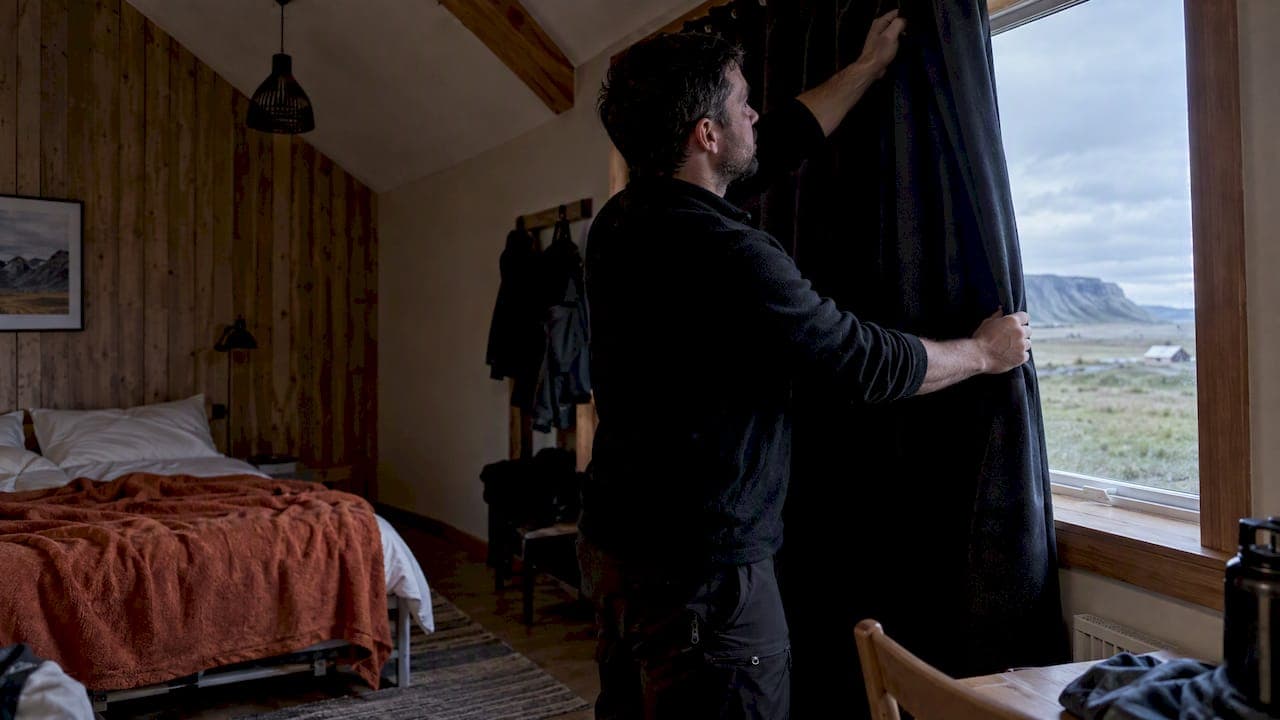
The most useful action costs nothing: ask. The Icelandic Guide lists blackout curtains first among sleep tips, and the advice is to confirm them when you book. Quality varies. If a curtain leaves a gap at the edge or the window faces north, where the low summer sun swings around late at night, a Curtain Test write-up on Iceland stays suggests a portable eye mask is the most reliable failsafe. It also says farm stays often rest better than city hotels.
Before you reserve any bed, ask three things:
- Are there full blackout curtains or blinds on the windows of my room?
- Which way does the window face?
- Is there a quiet common area where late risers can stay up without waking the room?
2. Set a fixed sleep and wake time
Pick a bedtime and wake time and keep them even when it feels absurd. In High Arctic research, avoiding light exposure between 10 PM and 2 AM was identified as a key protective behavior against summer sleep deficits. Treat that window as your dim-light window. Expect two to three nights before it starts to feel natural.
3. Dim the last two hours
Stop bright light about two hours before bed. That means no overhead lights at full blast, and no long scrolling in bed. A systematic review of light exposure and circadian rhythm found that short evening exposure to blue light, such as a phone screen, cuts melatonin quickly. Melatonin tends to recover within about 15 minutes of the light going away, so a quick check of a message is a smaller problem than an hour of video. Still, if you are struggling, put the phone down.
4. Use sunglasses like a tool
Bright evening light reaches you through your eyes, even when you are not tired. Björnsdóttir’s advice, again via Business Insider, is to treat your eyes as gatekeepers for your energy and to wear sunglasses and use blackout strategies even before you feel sleepy. Put sunglasses on for the late-evening drive or walk, then go straight to a dark room.

5. Get bright light in the morning
Do not hide from the sun all day. Get outside soon after you wake. Morning light anchors your clock and makes the evening dim more effective. This is the part that people who “just wear a mask” often miss.
6. Be careful with melatonin
Some travelers use it. The systematic review the research draws on says timing matters: low doses (0.5 to 1 mg) taken consistently about 30 minutes before your planned bedtime, not randomly, are what help shift the clock in the first nights. Whether it is right for you is a question for your doctor or pharmacist, especially if you take other medication, have a health condition or are pregnant. Dosing rules and availability also differ by country, so check before you fly.
What to pack
| Item | Why it helps | Notes |
|---|---|---|
| Contoured eye mask | Backup when curtains leak | Pick one that does not press on your eyelids |
| Silicone earplugs | Daytime-style noise continues late | Essential in shared rooms |
| Sunglasses | Cut light input in the evening | Wear for late drives and walks |
| Small clip or binder clips | Close curtain gaps | Cheap and light |
| Phone with night mode | Reduces blue light | Still best to put it away |
On noise: The Icelandic Guide points out that people in hostels or camping hear “daytime” activity well into the night, since the environment stays social even when it is technically night. Silicone earplugs address that directly.
Plan your days around the light
The midnight sun rewards a slower, flexible pace. Travelers who try to keep a normal schedule on top of a shifted sleep cycle burn out, according to the Curtain Test piece. Let the light work for you instead.
Here is a sample day built for the South Coast, where long drives between waterfalls, black sand beaches and glaciers can eat your energy:
| Time | Plan |
|---|---|
| 7:00 AM | Wake, get outside, breakfast |
| 8:00 to 9:30 AM | First stop while it is quiet |
| 10:00 AM to 4:00 PM | Slow part: lunch, a nap, a short hike or a rest day activity |
| 6:00 to 8:00 PM | Main sight, softer light |
| 8:00 to 10:00 PM | Dinner, wind down, sunglasses on for any late outing |
| 10:30 PM | Dark room, mask and earplugs, bedtime |
The logic comes from advice to avoid the busiest sites between 10 AM and 4 PM and visit them before 9 AM or after 8 PM. That also gives you a buffer to wait out a rain squall without losing the light. For route ideas, see our two-day South Coast itinerary, which avoids long driving days, or the broader guide on how to plan a South Coast itinerary.
One caution: because the light never fades, it is easy to say yes to one more stop at 11 PM. Do it on one night, not every night. Sleep debt compounds, and the drive back is the risk. Do not drive when you are drowsy.
Arriving tired
Many North American travelers land in Keflavík in the early morning after an overnight flight. That first day sets the tone. Skip the long nap, get outside in the light, and go to bed at a local evening hour. If you are weighing overnight flights, these tips for booking a red-eye flight are useful for planning how you will arrive and adjust.
Perspective: sleeping well in a barn on the South Coast
We run a hostel in a converted barn near Vík, and the question “will I sleep?” comes up every summer. Our honest view is that sleep in June is mostly about preparation, not luck. The guests who do best treat darkness as part of the itinerary. They ask about their room before booking, bring a mask and earplugs, and keep their evenings calm.
We also think a hostel is a good place to do this, if you choose the right room. In a shared dorm, other people keep different hours, so earplugs are not optional. If you are a light sleeper, a private dorm or a group room keeps the schedule in your control. We offer both. Our dorm guide explains how they work. Our shared spaces make it easy to meet people in the evening, so you can stay social without staying up all night. A late dinner and a quiet wind-down beat a 2 AM drive every time.
If you have specific needs about light, noise or room position, write to us before you book and we will tell you what we can and cannot offer.
— Siggi
Stay near Vík and make the evenings easy
At Fox Hostel you can book shared or private dormitory beds near Vík, or reserve whole rooms through our group bookings. Breakfast is on site, and in the evening you can eat at Hrífunes Pizzeria without driving anywhere, which makes a dim, calm evening much easier to keep. Need an active day to build real tiredness? Ask about our rafting adventure.
Common mistakes
- Waiting until you are tired. The sun tricks you into feeling alert. Go by the clock, not by feel.
- Skipping sunglasses at 10 PM. Evening light still hits the same clock.
- Trying to push through. Experts quoted by Business Insider say not to power through exhaustion. Adjust the plan instead.
- Relying on a mask alone in a loud room. Light and noise are separate problems.
- Booking without asking. Curtains vary a great deal between properties.
FAQ
Can you sleep during the midnight sun?
Yes, most people can, with some preparation. Block the light in your room, keep a regular bedtime and avoid bright light and screens for about two hours before bed. Most travelers feel settled after two to three nights.
Is there true midnight sun in Iceland?
Not on the mainland. Iceland has near-constant daylight in summer, with about 21 hours of daylight and about 3 hours of twilight around the June solstice, according to the Norwegian encyclopedia Store norske leksikon. Grímsey is the exception, because the Arctic Circle passes through it.
Do Icelandic hotels and hostels have blackout curtains?
Many do, but quality varies, so confirm when you book. If there is a gap or the window faces north, bring an eye mask as a backup. Ask the property directly about the specific room.
Is sunlight good or bad for sleep?
Both, depending on timing. Bright light in the morning and daytime helps stabilize your body clock, while light at night suppresses melatonin and delays sleep. The aim is bright days and dark nights.
Should I take melatonin?
Some travelers do, at low doses taken at a consistent time before bed, according to published research. Ask your doctor or pharmacist first, particularly if you take other medication or have a medical condition.
Sources
- Effects of light on human circadian rhythms, sleep and mood (PMC)
- Systematic review of light exposure impact on human circadian rhythm (PubMed)
- Sleep deficits in the High Arctic summer and melatonin as a countermeasure (PubMed)
- midnattssol, Store norske leksikon
- What It’s Like to Visit Iceland During Summer’s Midnight Sun, Business Insider
- Midnight Sun Iceland, The Icelandic Guide
- The Curtain Test in Iceland, Amorielli