Car-Free South Coast of Iceland: How to Do It Right
Car-Free South Coast of Iceland: How to Do It Right

You can see Iceland’s South Coast without a car, but not by hopping on and off a bus. The public bus connects towns, guided day tours reach the waterfalls and beaches, and the smartest plan is to pick one base near Vík and make every outing from there. Here is how that works in practice, what it costs, and where car-free trips go wrong.
TL;DR
- Public Route 52 runs from Mjódd in Reykjavík to Vík on only four days a week: Tuesday, Thursday, Friday and Sunday.
- The bus is a town-to-town service, not a sightseeing shuttle. It does not stop at Seljalandsfoss, so plan other transport for the big sights.
- Pick one base, such as a hostel near Vík, and use guided tours and local activities for day trips instead of hauling luggage between towns.
- Check safetravel.is or call 1777 every day, especially in winter, when wind and storms can cancel buses.
Table of Contents
- What “car-free” really means on the South Coast
- Route 52: what the public bus does and does not do
- Seeing the sights: guided tours do the heavy lifting
- Why one base beats a town-hopping plan
- Winter changes everything
- Our view: stay where dinner is down the hall
- Staying at Fox Hostel without a car
- Mistakes that sink car-free South Coast trips
- FAQ
- Sources
What “car-free” really means on the South Coast
In the US, “car-free” usually means a walkable city with a good transit map. Iceland’s South Coast is the opposite: a long ribbon of Ring Road with villages, farms and waterfalls spread far apart. Nothing here is a short stroll from anything else.
That does not make a car-free trip impossible. It changes the question. Instead of “how do I get between every sight?”, ask “where do I sleep so that the sights come to me?” Visit South Iceland’s own travel advice points the same way: choose a central base and do day trips from it, rather than trying to move your luggage from town to town on an infrequent bus.
Three things make up a car-free South Coast trip:
- Getting from Reykjavík to the region (the bus or a tour).
- Seeing the headline sights (tours, mostly).
- Having a bed, a meal and some company at the end of the day, without needing a vehicle to find any of them.
The third one is the part most guides skip, and it decides whether the trip feels easy or stressful.
Route 52: what the public bus does and does not do
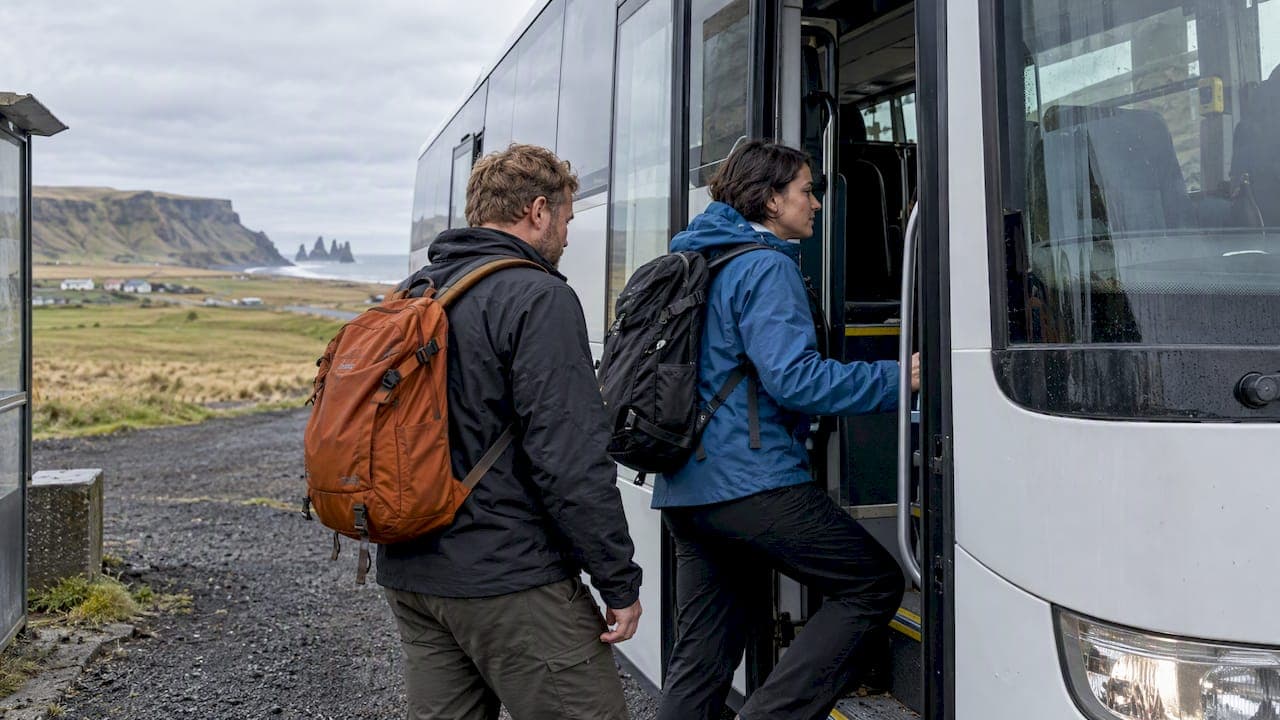
The long-distance rural bus from Mjódd in Reykjavík to Vík and on to Höfn is Route 52. Since 1 January 2026 the countryside network has been restructured, and Route 52 operates only four days a week: Tuesdays, Thursdays, Fridays and Sundays. There is no service on Mondays, Wednesdays or Saturdays. Older blog posts that describe daily buses or different route numbers are out of date and can cost you a missed connection.
What it costs
The operator’s 2026 fare table lists an adult single from Mjódd to Vík at 8,400 ISK. The reduced fare for children, youths, elderly and disabled passengers is 4,200 ISK. Fares can change, so confirm on the day you book your trip.
How you pay
The city-focused Klapp app does not work for countryside buses. According to one travel guide, you pay onboard by card or cash, or use a countryside bus card. Do not rely on an app meant for the capital region.
The big misunderstanding
Many visitors assume the bus works like a hop-on, hop-off tour. It does not. Route 52 does not stop at Seljalandsfoss, and walking from a roadside stop to the waterfall can be unsafe, particularly in winter, because of road traffic and a lack of pedestrian paths. Always verify the exact stop before you count on it for a particular attraction.
The Icelandic Road and Coastal Administration describes the system the same way: it is designed to connect towns, not to shuttle tourists. Its advice is to combine public buses for getting between regions with guided tours for the sights themselves.
Seeing the sights: guided tours do the heavy lifting
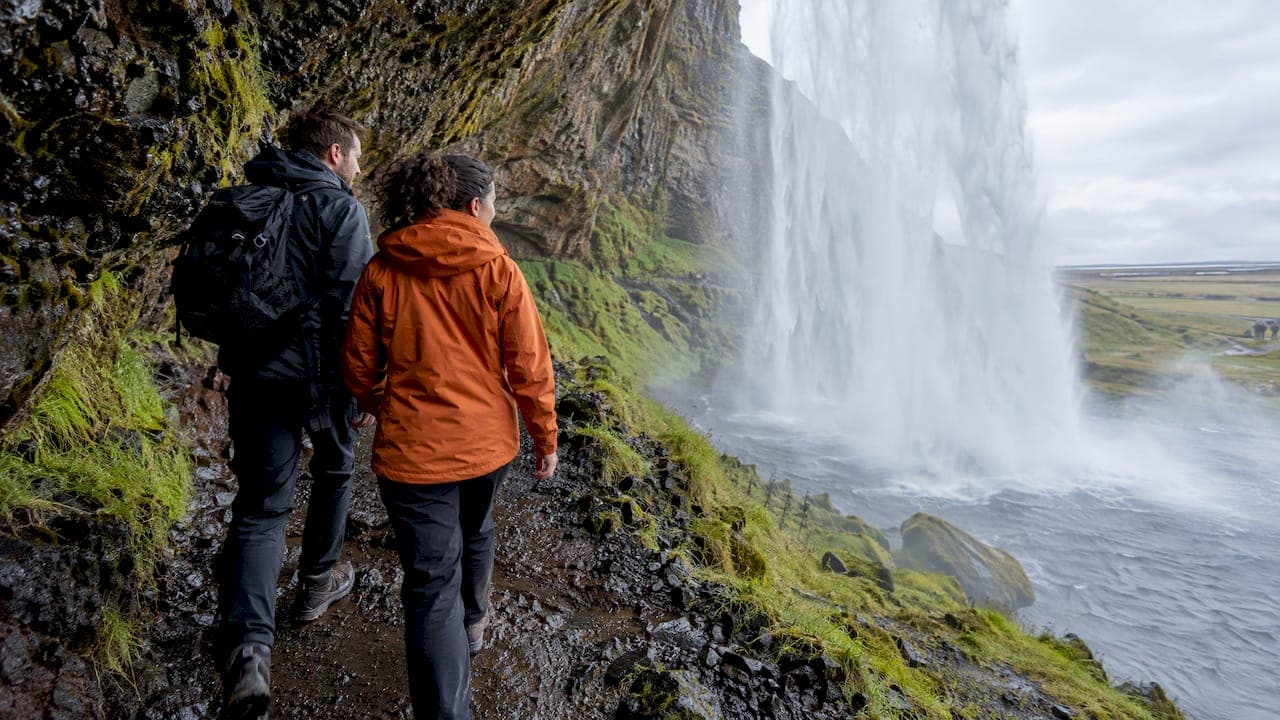
Seljalandsfoss, Skógafoss and Reynisfjara are the three names on almost every South Coast list, and they are spread along the road between Reykjavík and Vík. Without a car, the most dependable way to see several of them in one day is a guided day tour. Visit South Iceland lists coach tours to the major highlights and quieter stops, and these typically leave from central Reykjavík or the main bus terminal.
A day tour has a clear trade-off:
| Option | Strength | Weakness |
|---|---|---|
| Public Route 52 | Cheapest way to reach Vík | Four days a week, no sightseeing stops |
| Guided day tour from Reykjavík | Several big sights in one day, no logistics | Fixed timing, a long day on the coach, back in Reykjavík at night |
| One base near Vík plus local tours | Slower pace, no luggage shuffling, flexible days | You commit to one area for a few nights |
The first two are how most car-free visitors begin. The third is how they end up enjoying themselves.
Why one base beats a town-hopping plan
Try to picture the alternative. You take the bus on a Tuesday, carrying a pack, to a guesthouse in one town. The next bus in your direction is Thursday. Between them you have no way to reach a waterfall except by paying for a tour or hoping the weather lets you walk a shoulder-less road. Every move between lodgings eats a travel day.
Now flip it. You ride Route 52 once, settle in near Vík, and spend two or three days on day trips and activities. Visit South Iceland’s advice is built on this idea: a stable hub for local adventure experiences and tours. Vík is the largest settlement for a long stretch of the coast, and it has 740 residents as of the start of 2026, which tells you how thin the services are everywhere else. If you want a feel for how that plays out, our own 2 to 3 days in Vík itinerary and our guide to why a base near Vík cuts driving time walk through it, and the logic applies even more strongly when you have no car at all.

A sample car-free plan
This is a shape, not a fixed timetable. Check current bus days and tour departures before you commit.
- Day 1 (a bus day): Take Route 52 from Mjódd to Vík. Check in, eat, and sleep.
- Day 2: Book a guided South Coast day tour that includes your sightseeing stops, or an activity in the area. Return to your base in the evening.
- Day 3: A slow day. Explore on foot what is safely reachable from where you stay, or book an activity such as river rafting.
- Day 4 (a bus day): Ride Route 52 back to Reykjavík.
Because the bus runs on Tuesday, Thursday, Friday and Sunday, your arrival and departure days need to land on those days. Work backwards from your flight, not forwards from your wish list. For a longer outline, see our 2-day South Coast itinerary and the guide on how to plan a South Coast itinerary.
Winter changes everything
If you travel between autumn and spring, build in slack. ICE-SAR, the Icelandic Association for Search and Rescue, stresses that car-free visitors need to check road and weather alerts daily through safetravel.is or by phoning 1777. Strong winds and storms can cancel bus services abruptly, and they can make even short walking paths dangerous.
Practical consequences:
- Leave a spare day before any flight home. A cancelled bus on a Sunday means the next one is Tuesday.
- Do not plan to walk along the Ring Road to a sight. Choose a tour or stay in an area where your accommodation and food are on site.
- Daylight is short, so book activities for the middle of the day.
A dedicated overview of the South Coast in winter without a car covers the bus-versus-tour decision in more detail, and our own winter safety checklist covers daylight and conditions.
Our view: stay where dinner is down the hall
We run a hostel in a converted barn near Vík, so we see car-free guests arrive every week, and the ones who enjoy it most share a habit: they stop trying to cover ground. They treat the South Coast as a place to settle into.
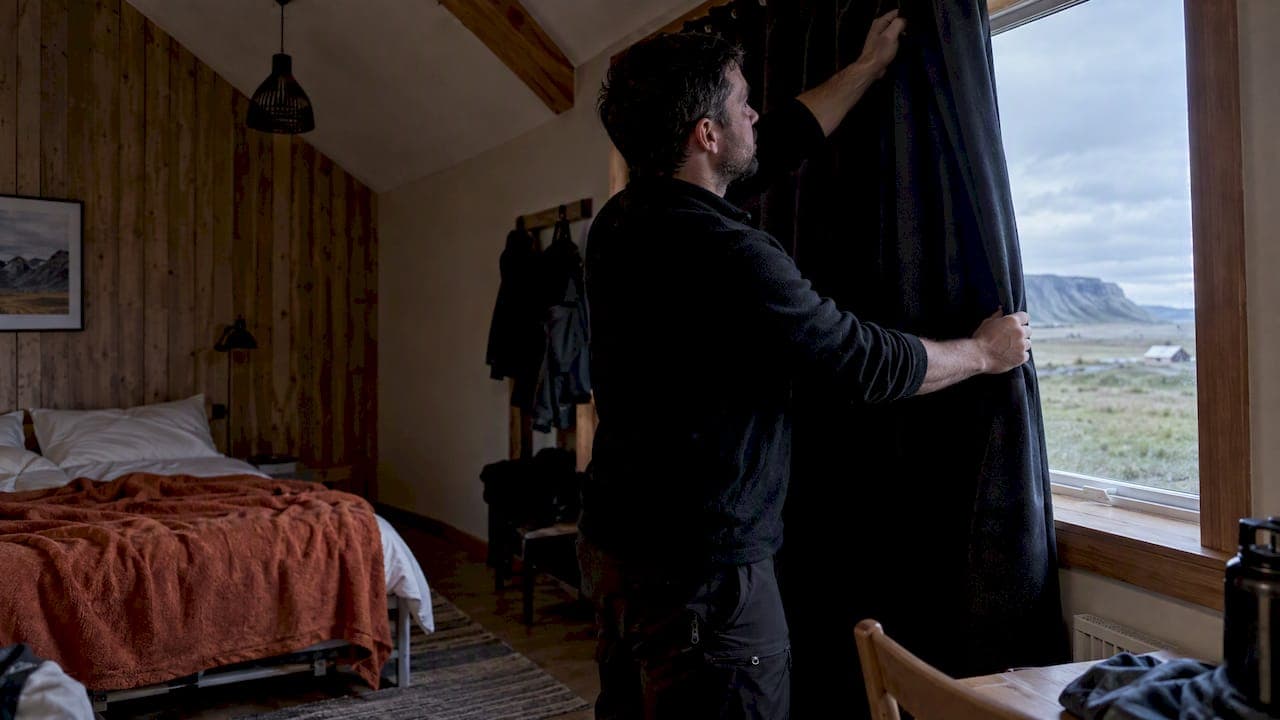
That is why we built the stay around not needing a vehicle once you arrive. Breakfast is served at the hostel. In the evening there is Hrífunes Pizzeria on site, so after a day on a tour you do not have to work out how to get to dinner. The shared spaces are where people compare notes on the day, swap tour tips and find someone to split plans with. Solo travelers tell us that is what they remember, more than the room.
Our honest advice for a car-free trip:
- Give yourself at least two nights. One night is mostly spent on the bus.
- Book the bus days first, then everything else around them.
- Ask before you arrive how to reach us from your bus stop, and confirm that stop with the operator. Do not assume a pin on a map is walkable.
- Pick food and bed in the same place so that bad weather ruins one plan, not all of them.
— Siggi
Staying at Fox Hostel without a car
If you want a base near Vík, our rooms come as shared dormitories or private dormitories. You can book a single bed as a solo traveler or take a whole room as a couple or small group. Larger parties can look at our group bookings page, and our write-up on dormitory rooms explains what to expect if you have never shared a room.

On a rest day, we also offer rafting through a partner, which gives you an activity that does not depend on you having wheels. Browse the rest of our guides on the scenic spots near Vík before you go, and start at foxhostel.is to book.
Mistakes that sink car-free South Coast trips
Trusting an old guide. The network changed on 1 January 2026. Anything that describes a daily bus is outdated.
Moving every night. Each move costs a travel day and exposes you to the four-day bus schedule. Stay put.
Counting on the bus for waterfalls. It will not drop you at Seljalandsfoss. Use tours.
Skipping the weather check. Look at safetravel.is every morning. Wind can end a plan before you leave your bed.
Leaving no buffer. If your flight leaves on a Wednesday, you cannot take the bus that morning. Plan to reach Reykjavík the day before.
Packing as if for a road trip. You carry everything. Bring less than you think, and pack for wind and rain in layers.
FAQ
Is there a bus from Reykjavík to Vík every day?
No. Route 52 runs on Tuesdays, Thursdays, Fridays and Sundays only, according to Strætó’s route change announcement. Check the current timetable before you buy flights or book beds.
How much is the bus from Reykjavík to Vík?
The 2026 adult single fare from Mjódd to Vík is 8,400 ISK, and the reduced fare is 4,200 ISK. Pay onboard by card or cash, since the Klapp app is not valid on countryside buses.
Can I see Seljalandsfoss and Skógafoss without a car?
Yes, but a guided day tour is the more dependable route. Route 52 is a town-to-town service and does not stop at Seljalandsfoss, and walking from a roadside stop can be unsafe. Tours bring you directly to the sights.
Is a car-free trip to the South Coast realistic in winter?
It can be, with flexibility. Wind and storms can cancel buses and make paths dangerous, so check safetravel.is or call 1777 daily, keep a spare day at the end, and stay somewhere with food on site.
Sources
- Changed route system in the countryside, Strætó
- South Iceland routes 51, 52 and 53 fares, Strætó (PDF)
- Getting to South Iceland, Visit South Iceland
- Bus tours, Visit South Iceland
- SafeTravel, ICE-SAR
- Public transportation options, Icelandic Road and Coastal Administration
- Reykjavík to Vík by Bus: Route 52, ICENAVI
- Iceland’s South Coast in Winter Without a Car, ICENAVI
- Traveling to Vik from Reykjavik, Why Go Iceland