What Is a Communal Kitchen? Benefits and Etiquette
What Is a Communal Kitchen? Benefits and Etiquette

TL;DR:
- A communal kitchen is a shared space for residents to cook, socialize, and build community. Proper layout, management, and social programming turn it into a contact point that fosters connection and reduces food waste. Its success depends on intentional design, clear rules, and active community engagement.
A communal kitchen is a shared cooking space where multiple residents prepare meals, socialize, and build community together. Found in hostels, co-living apartments, student housing, and community centers, these spaces do far more than store pots and pans. Design experts recommend a minimum of 20 square meters for any functional shared kitchen. That number reflects a core truth: a communal kitchen only works when it gives people room to move, cook, and connect at the same time.
What is a communal kitchen and how does it work?
A communal kitchen is defined as any cooking area shared by two or more residents who are not part of the same household. The term covers everything from a basic shared flat kitchen to a fully programmed community cooking space serving dozens of people. The shared cooking space model exists on a spectrum, and understanding where a specific kitchen falls on that spectrum shapes every decision about design, rules, and programming.
The core function is practical: residents share appliances, storage, and prep surfaces to reduce individual costs and resource use. The deeper function is social. Research shows that communal kitchens operate as “connection infrastructure,” spaces where social bonds form through the simple act of cooking side by side. That social dimension is what separates a communal kitchen from a merely shared one.
Communal kitchens appear across a wide range of settings. Hostels use them to give travelers a budget-friendly way to self-cater. Co-living buildings use them to anchor community life. Grassroots neighborhood kitchens use them to address food insecurity and isolation. Each context shapes the rules, the equipment, and the culture of the space.
How is a communal kitchen designed for effective shared use?
Layout determines whether a shared kitchen thrives or creates daily friction. Physical layout impacts experience more than high-end equipment. Separating the fridge, stove, and sink so they are not immediately adjacent prevents traffic jams during busy hours and reduces accidental collisions. Good spacing is the single most cost-effective design decision a communal kitchen can make.
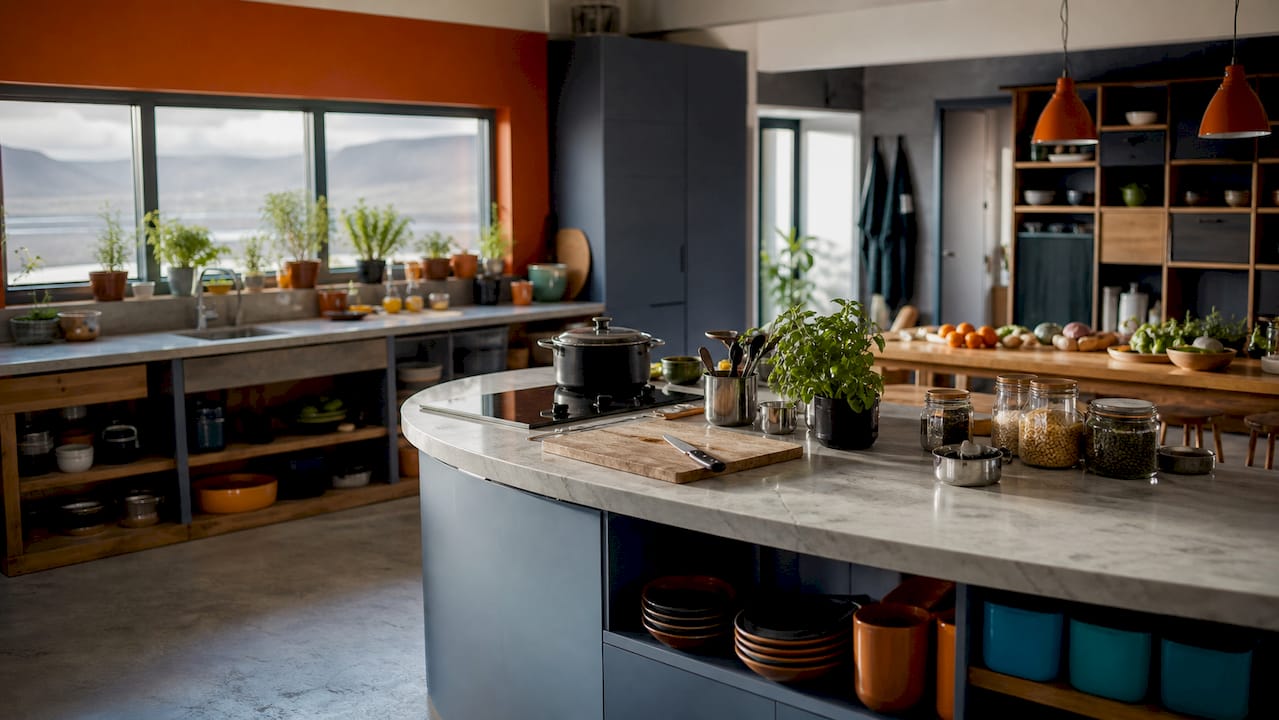
The table below compares the most common communal kitchen layouts and their practical trade-offs.
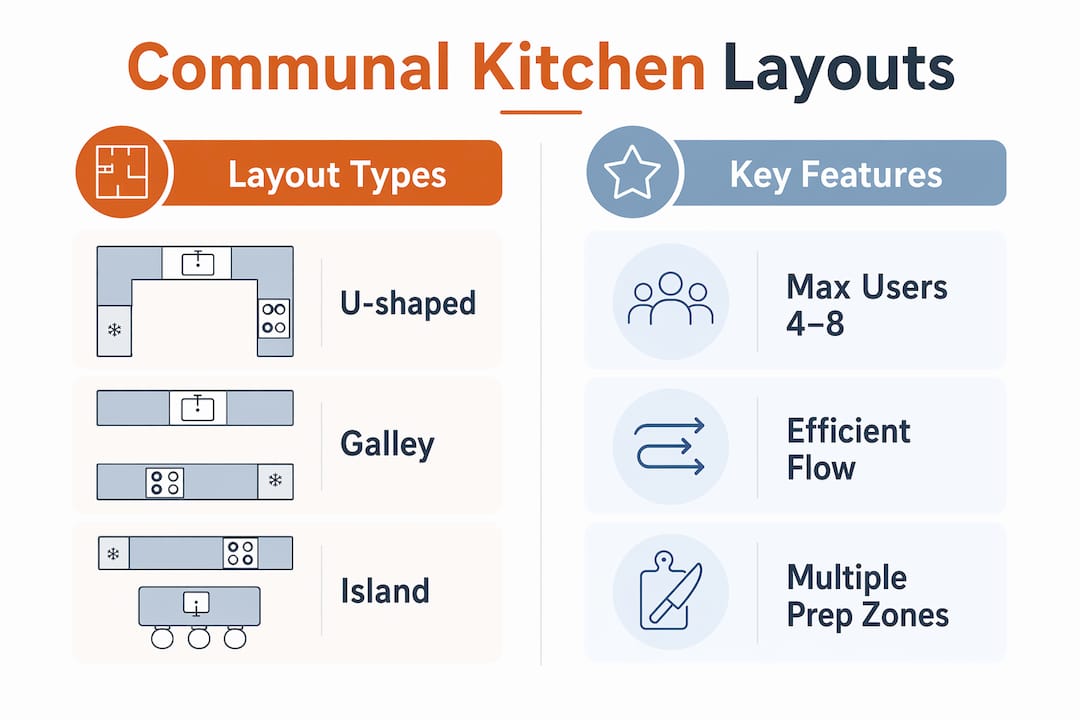
| Layout | Best for | Key advantage | Main limitation |
|---|---|---|---|
| U-shaped | 4–8 users | Maximum counter space, clear flow | Requires larger room footprint |
| L-shaped | 2–4 users | Efficient corner use, easy conversation | Limited prep surface for groups |
| Galley | Narrow spaces | Compact, cost-effective | Single traffic lane causes congestion |
| Island-centered | Large groups | Central prep hub encourages collaboration | Needs at least 30 square meters |
Storage design matters as much as layout. Designated labeled zones for each resident prevent the “who took my olive oil” conflict that quietly poisons shared living. Durable, commercial-grade appliances outlast residential models in high-use environments. A single quality induction cooktop with four zones serves more users than two cheap two-burner units that break within months.
Pro Tip: Install a whiteboard or shared digital calendar near the kitchen entrance so residents can claim cooking slots during peak hours. This one habit eliminates most scheduling conflicts before they start.
Surface area is the most underrated design factor. Multiple people cooking simultaneously need independent prep zones. A kitchen with 20 square meters of floor space but only one meter of counter space will still feel cramped and chaotic. Prioritize linear counter length over decorative features when planning or evaluating a shared cooking space.
What are the social and environmental benefits of communal kitchens?
Communal kitchens reduce household food waste at a measurable scale. Community kitchens in Leicestershire reduced participants’ household food waste by 33% over just 6–8 weeks. That reduction came primarily from social interaction and hands-on cooking education, not from any formal waste-reduction program. Cooking together changes purchasing habits and portion awareness in ways that solo cooking rarely does.
The environmental case is reinforced by the scale of the problem. Household food waste exceeds 30 million tonnes annually across the EU. Shared cooking spaces address this directly by enabling bulk buying, collective meal planning, and the natural redistribution of surplus ingredients among residents.
The social benefits are equally concrete. Here is how they break down:
Social benefits:
- Reduces loneliness and isolation through regular, low-pressure interaction
- Creates a sense of belonging and mutual aid among residents
- Builds cross-cultural connections through shared recipes and food traditions
- Provides a natural setting for conflict resolution and community norm-setting
- Supports couples and families by creating shared rituals around food preparation
Environmental benefits:
- Cuts individual food waste through collective cooking and shared purchasing
- Reduces energy use by consolidating appliance use across residents
- Lowers packaging waste through bulk buying and shared storage
- Decreases the carbon footprint of individual meal preparation
The Chandanki village model in Gujarat, India, illustrates the social power of this concept at scale. The communal kitchen there charges approximately ₹2,000 monthly per participant, sustaining paid cooks and a social infrastructure that has measurably reduced loneliness across the village. The fee model proves that communal kitchens can be financially self-sustaining while delivering genuine community value.
Grassroots community kitchens across European cities go further, functioning as social infrastructures that blur the line between public and private, building solidarity through collective care. These spaces resist social atomization by repositioning cooking as a neighborhood activity rather than a private chore. That reframing is the communal kitchen’s most underappreciated benefit.
How do people successfully live and interact in communal kitchens?
Communal kitchen etiquette is not about rigid rules. It is about creating predictable, fair conditions so that everyone can use the space comfortably. Successful communal kitchens use organized cleaning rotations and designated storage to prevent clutter and maintain harmony. Without active management, even well-designed kitchens deteriorate into conflict zones within weeks.
Here are the practical habits that keep shared cooking spaces working well:
- Establish a cleaning rotation on day one. Post it visibly. Assign specific tasks (stovetop, sink, floor) rather than vague “clean up after yourself” instructions. Vague rules create unequal labor.
- Label all personal storage clearly. Use a shelf, drawer, or cabinet section per resident. Shared staples like salt, oil, and spices work best when purchased communally and tracked on a shared list.
- Set peak-hour cooking slots. Mornings and evenings create natural bottlenecks. A simple sign-up system prevents four people from trying to use the stove simultaneously.
- Host a monthly communal meal. Potlucks and group cooking sessions build the social trust that makes daily etiquette easier to maintain. Intentional programming like this is what separates thriving communal kitchens from merely functional ones.
- Address issues within 24 hours. A dish left in the sink overnight is a minor inconvenience. The same dish left for three days becomes a grievance. Fast, direct communication prevents small problems from becoming community conflicts.
Pro Tip: Designate one shelf in the fridge as a “free food” zone for surplus ingredients. Residents leave what they won’t use and take what they need. This single habit cuts food waste and sparks more conversation than almost any other communal practice.
The role of communal kitchens for couples deserves specific mention. Couples sharing a kitchen with other residents benefit from agreeing on their own internal division of tasks before engaging with communal norms. A couple that presents a unified, considerate approach to shared space earns goodwill quickly and integrates into the community more smoothly than individuals who negotiate everything in public.
What kinds of communal kitchens exist and how do they differ?
Communal kitchens vary widely by context, scale, and purpose. The table below summarizes the main types and their defining characteristics.
| Type | Typical setting | Primary goal | Key features |
|---|---|---|---|
| Residential shared kitchen | Co-living flats, student housing | Daily convenience, cost sharing | Personal storage zones, house rules |
| Hostel kitchen | Budget travel accommodation | Self-catering, social connection | High-turnover design, durable appliances |
| Community kitchen | Neighborhood centers, NGOs | Food security, skills training | Programmed events, open access |
| Workplace kitchen | Offices, co-working spaces | Employee well-being, informal connection | Catering-grade equipment, break culture |
| Institutional kitchen | Schools, care homes | Nutrition, supervised cooking | Regulated hygiene, professional oversight |
Hostel kitchens occupy a unique position in this spectrum. They serve travelers who stay for days rather than months, which means the social dynamic resets constantly. This high-turnover environment demands design and operation that prioritizes ease of use and quick orientation for new arrivals. Clear labeling, intuitive layout, and posted house rules replace the gradual norm-building that residential communal kitchens rely on.
Community kitchens in settings like Leicestershire focus on programming as much as cooking. Cooking classes, nutrition workshops, and group meal preparation sessions turn the kitchen into an educational and therapeutic space. The benefits for travelers in hostel settings follow a similar logic: the kitchen becomes the social center of the building, not just a place to boil water. For teams staying in serviced accommodation, a well-equipped communal kitchen reduces catering costs and creates informal bonding time that formal team-building activities rarely achieve.
Key Takeaways
A communal kitchen is most effective when it is designed for flow, managed with clear rules, and programmed with intentional social activities that build community beyond the act of cooking.
| Point | Details |
|---|---|
| Minimum size matters | Design experts recommend at least 20 square meters for comfortable simultaneous use. |
| Layout beats equipment | Separating fridge, stove, and sink prevents congestion and improves daily experience. |
| Social impact is primary | Participants consistently report connection and belonging as the top benefit, ahead of cost savings. |
| Active management is non-negotiable | Cleaning rotations and labeled storage prevent the conflicts that end communal arrangements. |
| Programming amplifies value | Potlucks and cooking events turn a functional kitchen into a genuine community hub. |
The kitchen is the real common room
I have spent time in communal living spaces across different countries, and the pattern is consistent: the kitchen tells you everything about the health of a community. A clean, well-organized shared kitchen with a few handwritten notes on the fridge and evidence of a recent group meal signals a community that has figured out how to live together. A chaotic one with unlabeled containers and passive-aggressive sticky notes signals the opposite.
What surprises most people is how quickly a communal kitchen shapes behavior. Within a week of moving into a shared space, residents unconsciously adopt the kitchen’s existing culture. That means the first residents to establish norms carry disproportionate influence. If you are setting up a communal kitchen from scratch, invest the first week in building the culture, not just the furniture.
The social connections formed in shared kitchens are not a side effect of communal living. They are the point. The 33% food waste reduction in Leicestershire happened because people talked while they cooked, not because of any formal intervention. The Chandanki village model works because the kitchen gives people a daily reason to show up for each other.
The future of communal kitchens is not in minimalist co-living startups or Instagram-ready design. It is in communities that treat the kitchen as infrastructure for human connection and manage it accordingly. Function and social programming are not competing priorities. The best communal kitchens prove they are the same thing.
— Siggi
Fox Hostel’s communal kitchen: where travelers connect
Fox Hostel in South Iceland built its communal kitchen to be the social heart of the property. Set inside a converted Icelandic barn in Hrífunes Nature Park, the fully equipped shared cooking space gives travelers a place to cook, share meals, and meet people from around the world after a day on the South Coast.
Whether you are a solo traveler watching your budget or a couple wanting a private room with access to a great shared space, Fox Hostel’s rooms and dorms are designed around community. The kitchen is large, well-stocked, and built for real use, not just appearances. Staying at Fox Hostel puts you 35 minutes from Reynisfjara Black Sand Beach with a proper kitchen, good company, and dark skies overhead.
FAQ
What is the communal kitchen meaning in shared living?
A communal kitchen is a shared cooking area used by multiple residents who are not part of the same household. It serves both practical and social functions, providing a space to prepare food and build community connections.
How much space does a communal kitchen need?
Design experts recommend a minimum of 20 square meters for a functional communal kitchen. That floor area allows multiple residents to cook simultaneously without congestion.
What should I expect in a communal kitchen at a hostel?
Expect a fully equipped shared cooking space with labeled storage zones, posted house rules, and a mix of travelers using the kitchen at different times. Hostel communal kitchens are designed for high turnover, so layouts are intuitive and rules are clearly posted.
What are the main communal kitchen benefits?
The primary benefits are social connection, reduced food costs, and lower household food waste. Research from Leicestershire found a 33% reduction in food waste among community kitchen participants over 6–8 weeks.
What is the basic communal kitchen etiquette?
Clean up immediately after cooking, respect labeled personal storage, and follow any posted cleaning rotation. Addressing issues directly and quickly prevents small frictions from becoming lasting conflicts.
Recommended
- Hostel Küche Nutzen Anleitung: Kochen Im Gemeinschaftsraum | Fox Hostel – South Iceland
- What Is a Self-Catering Kitchen? A Traveler’s Guide | Fox Hostel – South Iceland
- Vorteile einer Gemeinschaftsküche im Hostel nutzen | Fox Hostel – South Iceland
- What Is Communal Lodging? A Traveler’s 2026 Guide | Fox Hostel – South Iceland