What is a hostel? Affordable, social stays explained
What is a hostel? Affordable, social stays explained
TL;DR:
- Modern hostels are social, affordable spaces with shared accommodations and communal amenities.
- They offer significant cost savings and community experience compared to hotels.
- Ideal for diverse travelers exploring South Iceland’s iconic natural attractions.
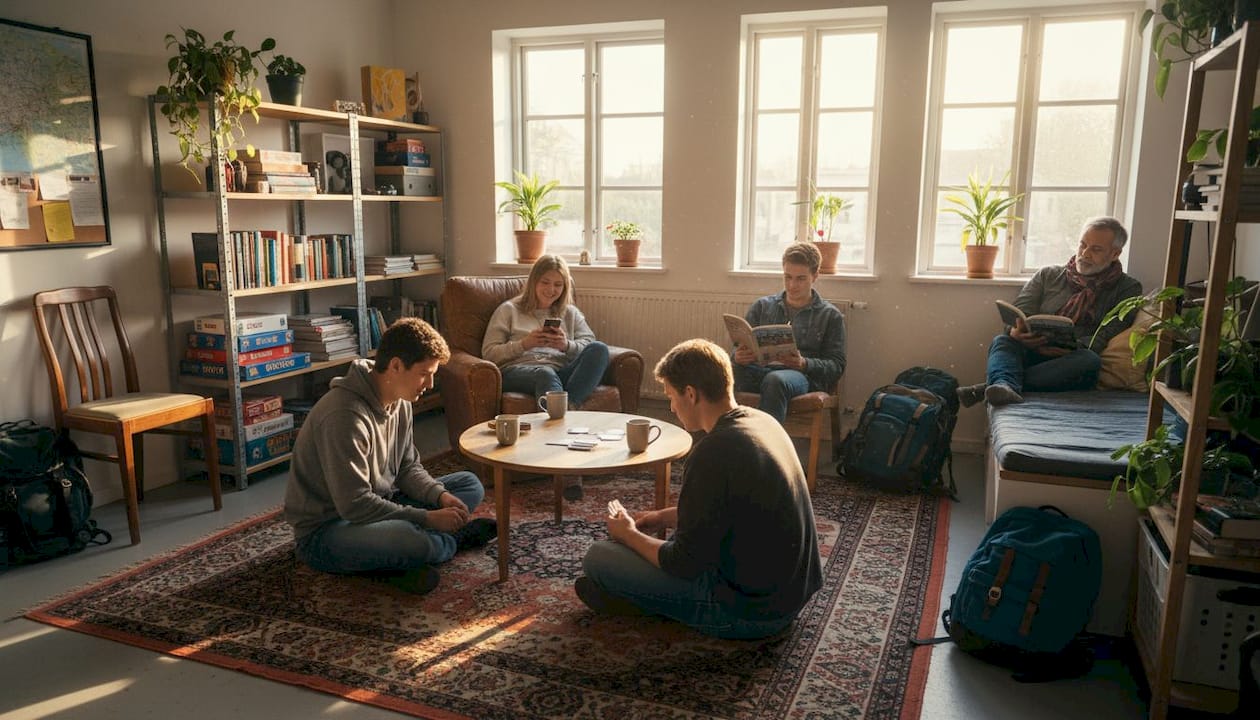
Most people picture a hostel as a bare room crammed with bunk beds, a shared bathroom down the hall, and a lock on nothing. That image is decades out of date. Today’s hostels are intentionally designed social spaces that happen to cost a fraction of what a hotel charges, and for travelers exploring South Iceland’s dramatic coastlines, glaciers, and black sand beaches, they can be the single best lodging decision you make. This guide breaks down exactly what a hostel is, how it differs from a hotel, who stays in one, and why South Iceland is one of the best places on earth to experience hostel travel at its finest.
Table of Contents
- What is a hostel? Core features and how they work
- Hostel vs. hotel: Key differences that impact your travel
- Who stays in hostels? Myths, realities, and the social side
- Why stay in a hostel in South Iceland?
- Why hostels are the smartest travel hack for exploring Iceland
- Ready to book your hostel adventure in South Iceland?
- Frequently asked questions
Key Takeaways
| Point | Details |
|---|---|
| Hostels Explained | Hostels are budget accommodations offering shared dorms, communal facilities, and a social atmosphere. |
| Hostel vs. Hotel | Hostels usually cost far less than hotels and prioritize community over luxury and privacy. |
| Ideal for Social Travelers | Staying in a hostel makes it easy to meet new people and share authentic adventures, especially in South Iceland. |
| Flexible Options | Many hostels offer private rooms as well as dorms, suiting a wide variety of travelers. |
What is a hostel? Core features and how they work
A hostel is a type of budget-friendly accommodation that sells beds rather than entire rooms. That single distinction changes everything about the experience. Instead of booking a private room for yourself, you book a spot in a shared dorm that might hold anywhere from 4 to 12 other travelers. You share the space, the bathrooms, and usually a communal kitchen and lounge. The price drops dramatically because the cost of the property is split across many more guests per night.
Hostels originated in early 20th-century Europe as a way to make travel accessible to young people with limited money. The concept spread worldwide and has since evolved into a diverse hospitality category that ranges from bare-bones budget stops to beautifully designed social hubs with on-site restaurants, organized events, and stunning locations.
Here is what you will typically find inside a modern hostel:
- Dorm rooms with 4 to 12 beds, often bunk-style, with individual reading lights and power outlets
- Communal kitchens fully stocked with cookware, so you can prepare your own meals and save money
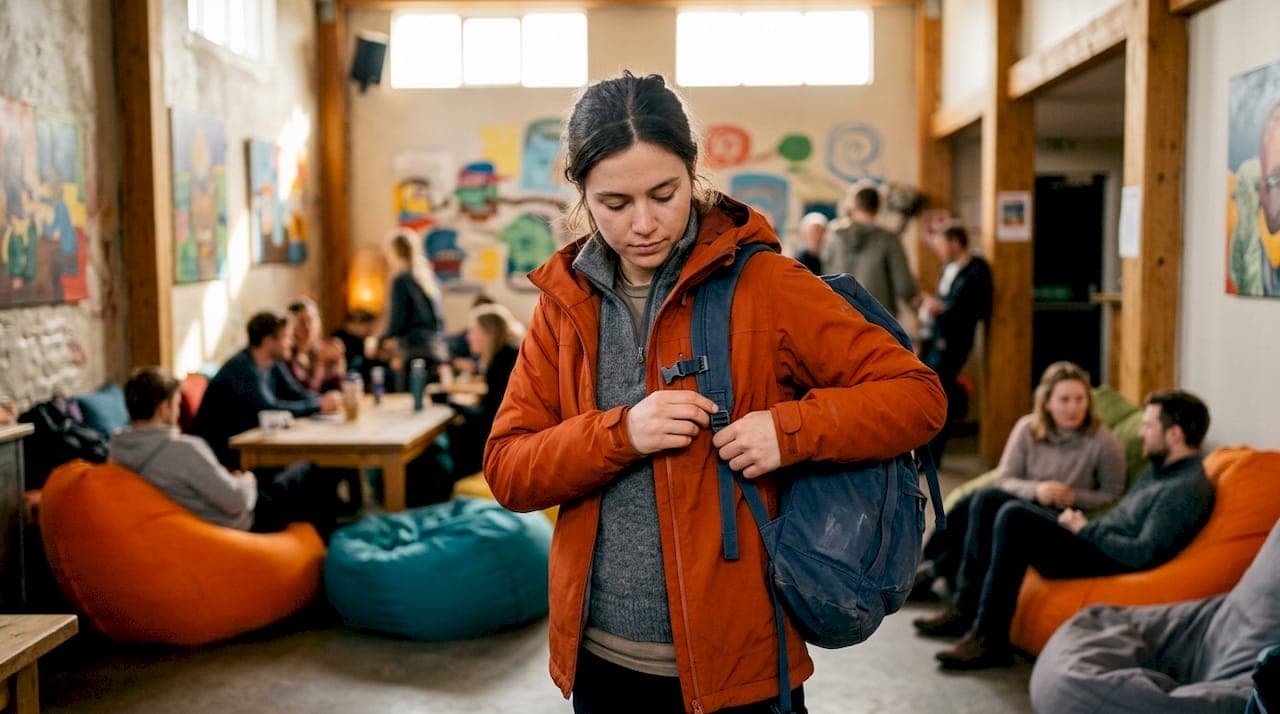
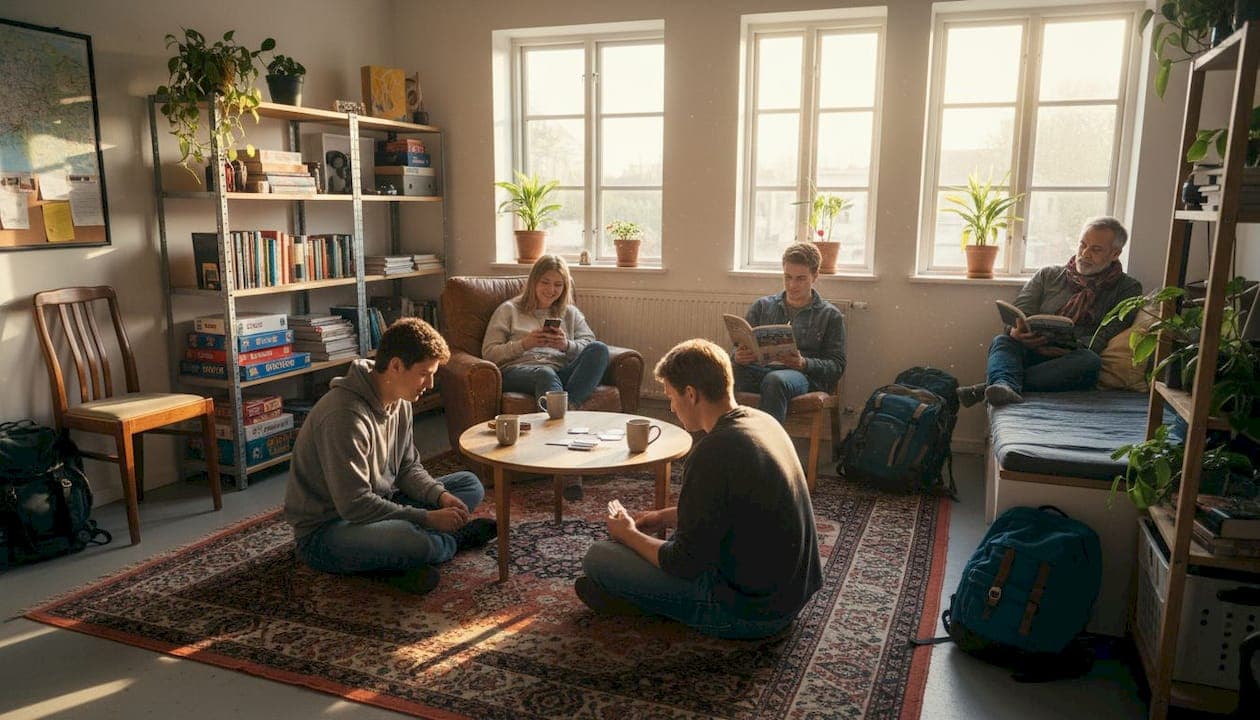
- Shared lounges designed for meeting other travelers, planning routes, and swapping local tips
- Lockers or secure storage for your valuables
- Common bathrooms that are usually kept to a high standard in quality hostels
- Social programming like group hikes, movie nights, or communal dinners
As hostel FAQs make clear, hostels differ from hotels by offering shared dorms with 3 to 12 or more beds, per-bed pricing, communal facilities, and a social atmosphere that hotels simply do not replicate.
The biggest misconception? That hostels are only for young backpackers or that privacy is impossible. Neither is true. Many hostels let you book an entire dorm room for your group, giving you all the social infrastructure with none of the strangers. Shared hostel spaces are also increasingly well-designed, making the communal experience genuinely enjoyable rather than something to endure.
“A hostel is not just a place to sleep. It is a place where your trip actually begins.”
Pro Tip: If noise is a concern, look for hostels that offer smaller dorm options (4 to 6 beds). Fewer bunkmates almost always means a quieter night and a better morning.
For a deeper look at what to expect from hostel amenities in Iceland, it helps to research specific properties before you book rather than assuming all hostels are the same.
Hostel vs. hotel: Key differences that impact your travel
With a clear idea of what a hostel is, it helps to see exactly how hostels compare side-by-side with hotels.
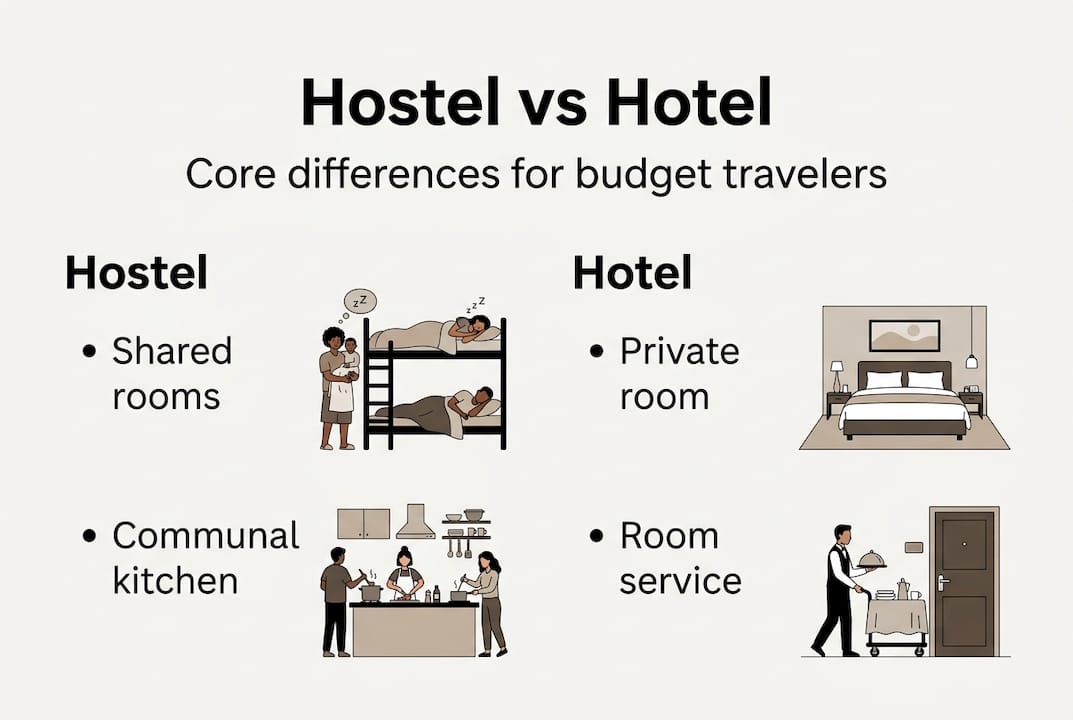
| Feature | Hostel | Hotel |
|---|---|---|
| Price per night | $20 to $60 per bed | $150 to $400+ per room |
| Room type | Shared dorm or private room | Private room, en-suite bath |
| Kitchen access | Communal, self-service | Room service or restaurant |
| Social atmosphere | High, by design | Low, by design |
| Laundry | Shared machines, coin-operated | In-room or laundry service |
| Flexibility | Book a bed or a whole room | Book a full room only |
As hostel vs. hotel differences highlight, hostels are often one-tenth the price of hotels and emphasize communal spaces over private services. In Iceland, where hotel rates in popular areas can easily exceed $300 per night, that gap is not just noticeable. It is the difference between a one-week trip and a two-week trip.
Here are the main reasons South Iceland travelers choose hostels over hotels:
- Budget stretch — Saving $150 to $250 per night means more money for glacier tours, whale watching, or simply eating well.
- Built-in community — You arrive alone and leave with a group. Hotels do not offer that.
- Local knowledge — Fellow guests and hostel staff are often the best source of real-time travel tips.
- Flexibility — Options for types of hostel rooms mean you are not locked into a one-size-fits-all booking.
- Self-catering — Cooking your own breakfast saves $15 to $25 every single morning.
That said, a hotel makes more sense if you need guaranteed quiet, require accessible facilities, or are traveling for business with specific needs. There is no shame in knowing what you need.
Pro Tip: Couples and small groups should check whether a hostel offers room buyout options. Booking a full dorm for two people often costs less than a hotel double room while giving you the run of a private space.
For travelers who want privacy without the hotel price tag, private hostel rooms offer a strong middle ground worth exploring.
Who stays in hostels? Myths, realities, and the social side
This mix of features makes hostels appealing to many travelers, so who actually chooses hostels, and why?
The short answer: almost everyone. The long answer is more interesting.
| Guest type | Why they choose hostels |
|---|---|
| Solo travelers | Community, safety in numbers, lower cost |
| Backpackers | Maximum budget flexibility, social connections |
| Couples | Room buyout options, shared adventures |
| Friend groups | Cost-effective group lodging, communal spaces |
| Digital nomads | Reliable Wi-Fi, kitchen access, social energy |
| Families | Affordable group rooms, kid-friendly common areas |
The stereotype that hostels are only for 20-year-old backpackers on a gap year is simply wrong. Travelers in their 30s, 40s, and beyond regularly choose hostels because the value proposition is undeniable and the social atmosphere is genuinely energizing.
Here is what the social side of hostel life actually looks like in practice:
- Swapping route tips over breakfast in the communal kitchen
- Forming an impromptu group for a glacier hike because someone posted a sign on the bulletin board
- Getting a restaurant recommendation from a guest who arrived two days before you
- Splitting the cost of a rental car with someone heading the same direction
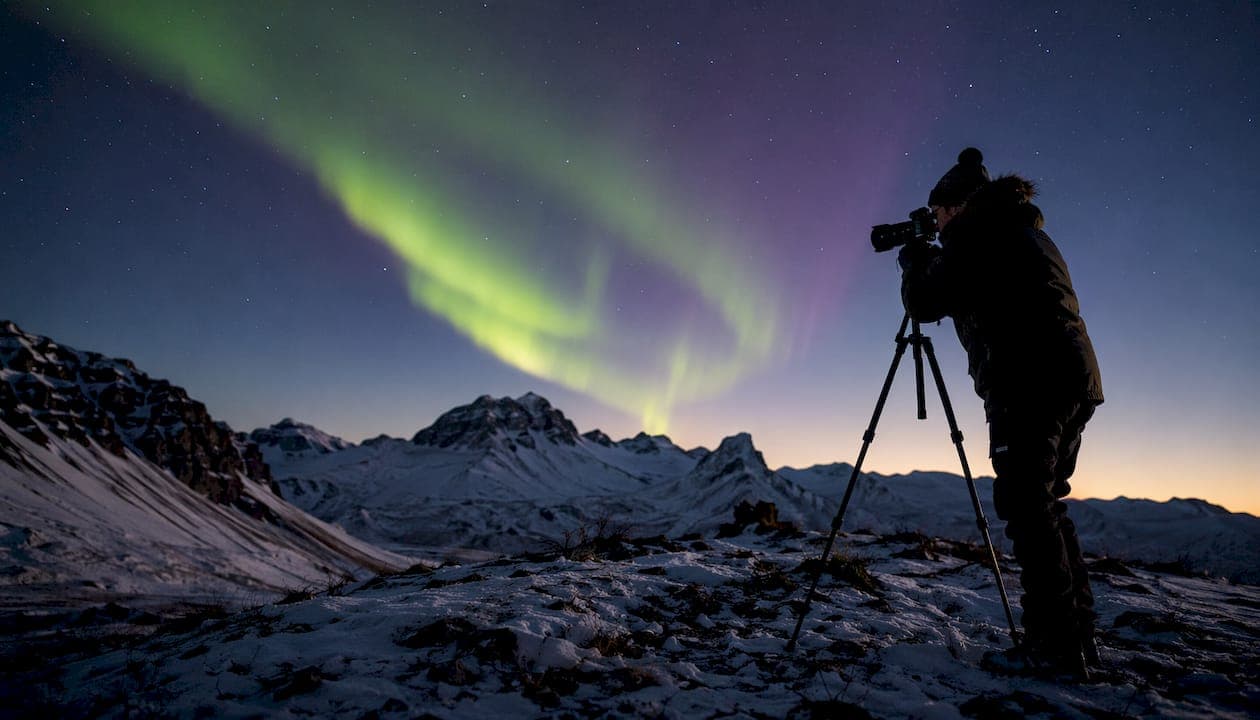
- Watching the Northern Lights from the hostel yard with people you met two hours ago
As hostel guest communities show, hostels create a social atmosphere and attract a community of travelers, making them ideal for solo explorers in particular.
“The best travel stories almost never start with ‘I was alone in my hotel room.’ They start in a hostel kitchen.”
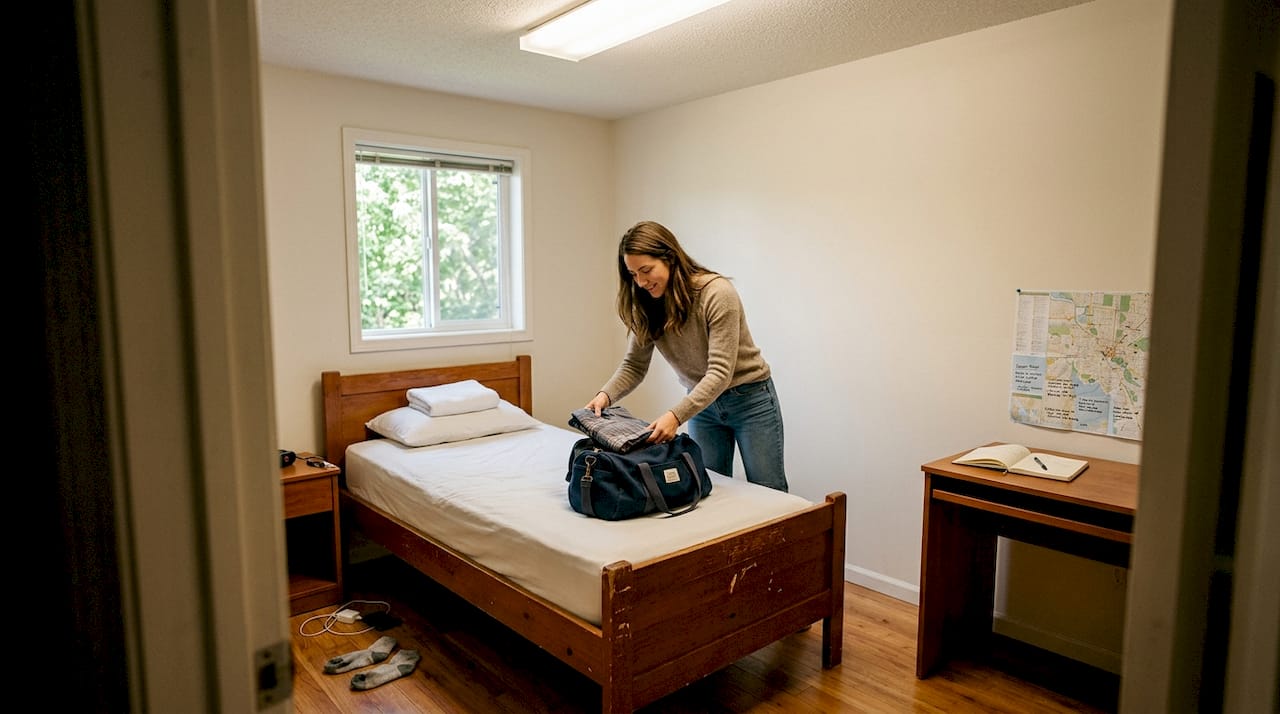
Safety is a real concern for many first-timers, especially solo women travelers. Quality hostels address this with secure keycard entry, individual lockers, well-lit common areas, and staff who are genuinely present. For tips on meeting other travelers in Iceland specifically, the hostel common area is almost always your best starting point.
The myth that hostels are chaotic party venues is also worth busting. Many hostels, especially those in nature-focused destinations, attract quiet, early-rising adventure travelers who are in bed by 10 p.m. because they have a 6 a.m. glacier tour booked. Social hostels in Iceland tend to reflect the landscape: calm, curious, and genuinely welcoming.
Why stay in a hostel in South Iceland?
Understanding who thrives in hostels sets the stage. Let’s look at why South Iceland’s hostels are particularly rewarding for travelers.
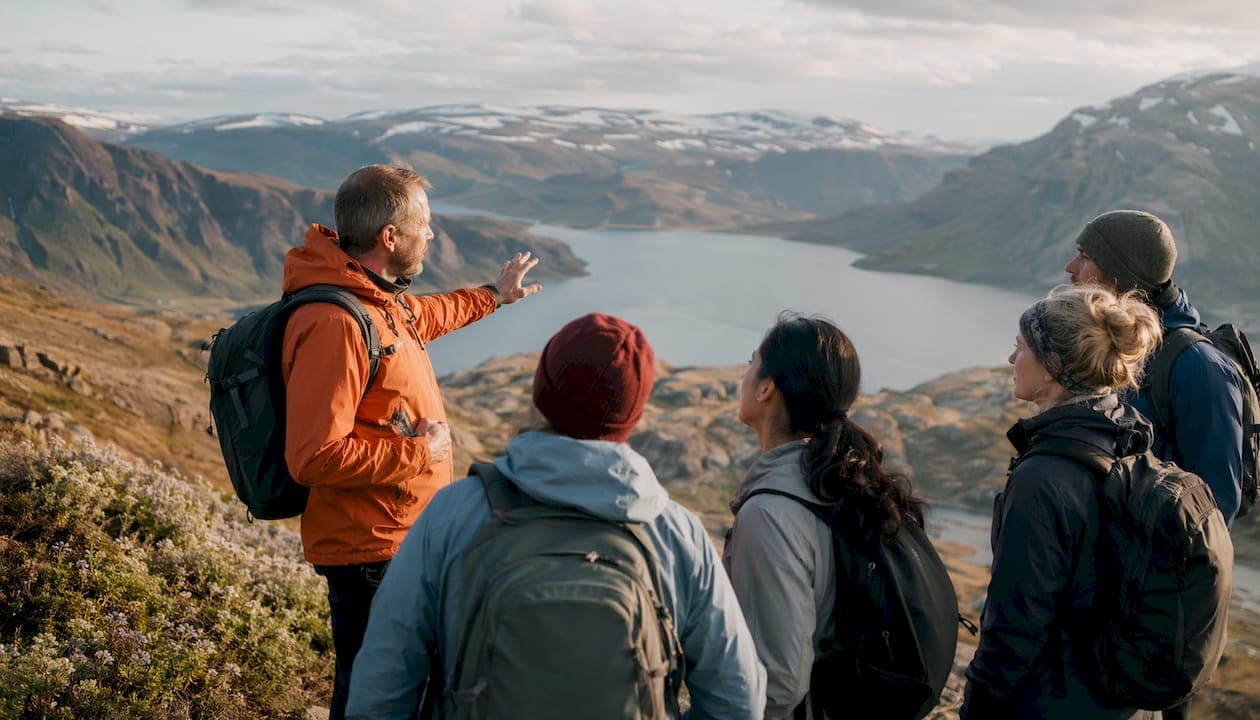
South Iceland is one of the most scenically dense regions on earth. Within a two-hour drive, you can visit Reynisfjara Black Sand Beach, Seljalandsfoss waterfall, Skógafoss, Dyrhólaey, Jökulsárlón Glacier Lagoon, and the edge of Vatnajökull National Park. That kind of itinerary demands a base that is affordable, flexible, and strategically located. Hostels check every box.
Here is why hostels are the smart choice for this region:
- Location advantage — Many South Iceland hostels sit directly on or near the Ring Road, cutting drive times to major attractions
- Budget savings — Traveling Iceland on a budget is genuinely possible when accommodation costs drop by 60 to 80 percent
- Communal kitchens — Iceland’s grocery stores are well-stocked and far cheaper than restaurants, making self-catering a real money-saver
- Shared transportation — Hostel guests regularly coordinate car rentals and day trips, splitting costs that would otherwise be prohibitive
- Local intel — Staff and fellow guests often know about conditions at specific sites (road closures, tide times at Reynisfjara, aurora forecasts) before any app does
Imagine a group of four travelers gathered around a kitchen table at 8 p.m., spreading out a map of the Highlands. One guest just returned from Landmannalaugar and has photos, trail notes, and a strong opinion about which F-road is passable. That conversation, completely free and completely unplanned, is worth more than any guided tour brochure. As benefits of South Iceland hostels confirm, hostels provide affordable access to nature and cultural experiences that budget-conscious travelers simply cannot replicate elsewhere.
Pro Tip: Arrive at your South Iceland hostel before dinner. The communal kitchen fills up in the early evening and that is when the best conversations and spontaneous group plans happen. Show up, cook something, and let the trip plan itself.
For a practical overview of the workflow for hostel guests in Iceland, including check-in norms and kitchen etiquette, a little preparation goes a long way.
Why hostels are the smartest travel hack for exploring Iceland
With these practical reasons laid out, here is an honest look at what makes hostels the most overlooked asset for budget travelers.
Most travelers underestimate how much the social environment shapes a trip. You can book the most remote, expensive lodge in Iceland and still feel like you missed something. That something is usually human connection. The serendipitous moment when a stranger in a hostel kitchen tells you about a hidden hot spring that does not appear on any map. The group that forms over shared pasta and ends up carpooling to a glacier the next morning. These things do not happen in hotel corridors.
There is a contrarian truth here worth stating plainly: spending more on accommodation often means experiencing less of a destination. Isolation is comfortable, but it is not memorable. The travelers who come back from Iceland with the best stories almost always stayed somewhere communal. Nature hostels in Iceland place you inside the landscape and inside a community at the same time, and that combination is genuinely hard to beat.
Try a hostel. Even once. The worst case is a decent night’s sleep at a great price. The best case is a trip you will talk about for years.
Ready to book your hostel adventure in South Iceland?
If you are ready to turn newfound knowledge into memories, here is how to get started with your ideal South Iceland hostel stay.
Fox Hostel sits inside Hrífunes Nature Park, just 35 minutes east of Vík, in a beautifully converted traditional Icelandic barn. Whether you are a solo traveler looking for a bed in a friendly dorm or a couple wanting to buy out a full room for privacy, we have flexible options built around how real travelers actually travel.
See available rooms and check real-time availability for your dates. If you are traveling with a group, our group booking guide walks you through room buyout options step by step. And if you are still planning your South Iceland itinerary, our affordable Iceland travel tips will help you stretch every dollar further. The Ring Road is waiting.
Frequently asked questions
Do hostels have private rooms, or only dorms?
Many hostels offer both options, and as hostel FAQs confirm, shared dorms and private rooms are both common, so you can match your choice to your comfort level and budget.
Are hostels safe for solo travelers?
Most quality hostels use secure entry systems, individual lockers, and well-monitored common areas. As hostel communities show, the social atmosphere itself adds a layer of safety that solo travelers in hotels rarely experience.
What should I pack for a hostel stay?
Bring a padlock for your locker, a quick-dry towel, earplugs for light sleepers, and flip-flops for communal showers. As hostel packing guides note, packing for shared living makes the communal experience significantly more comfortable.
How do hostel prices compare to hotels in Iceland?
The gap is significant. Per-bed hostel pricing can run as low as one-tenth of hotel rates, and in South Iceland where hotel rooms regularly exceed $200 per night, that difference funds multiple extra days of travel.
Recommended
- Shared hostel spaces: affordable adventure & community | Fox Hostel – South Iceland
- Private hostel rooms: budget-friendly, social Iceland stay | Fox Hostel – South Iceland
- Social hostels in Iceland: connect, explore, and save | Fox Hostel – South Iceland
- Why choose hostels on Iceland’s South Coast in 2026 | Fox Hostel – South Iceland
- Why backpackers prefer hostels for Greece trips