
What Is Self-Catering Accommodation? A Traveler's Guide
What Is Self-Catering Accommodation? A Traveler’s Guide

TL;DR:
- Self-catering accommodation allows travelers to stay in fully equipped rentals and prepare their own meals for increased independence and cost savings. It caters to families, groups, and long-term travelers seeking space, privacy, and flexibility, often at lower rates than hotels. The key to a successful stay involves verifying kitchen equipment, understanding check-in procedures, and choosing a property that matches your group’s needs.
Self-catering accommodation is a lodging model where you stay in a fully equipped rental property and prepare your own meals using an on-site kitchen. The industry term covers everything from holiday cottages and apartments to cabins and villas where autonomy and privacy are the primary draws. Unlike a hotel, no one brings you breakfast or turns down your bed. You control your schedule, your food budget, and your daily routine. For travelers who want flexibility without the overhead of full-service hospitality, this model has become the default choice.
What is self-catering accommodation and how does it work?
Self-catering accommodation is defined as any rental property where guests take full responsibility for their own meals and daily upkeep. The property provides the kitchen, appliances, and living space. You bring the groceries and the plan.
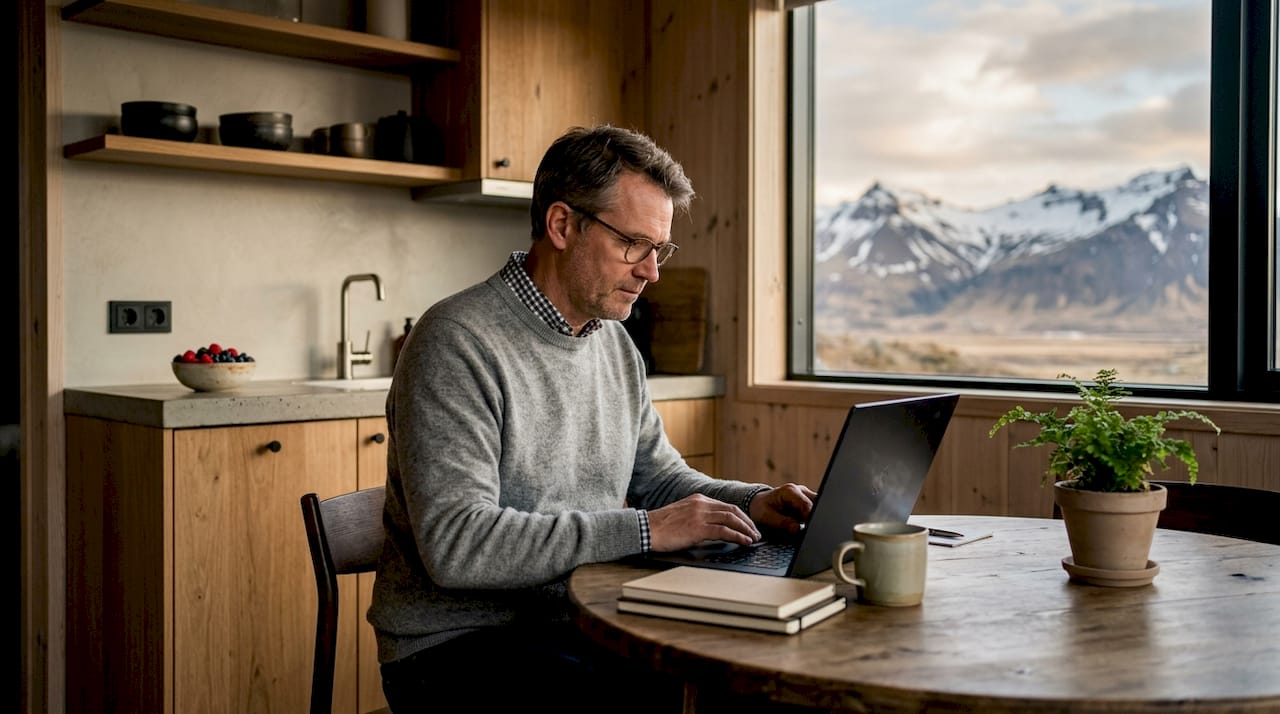
The model sits under the broader category of self-service lodging, which includes hostels with communal kitchens, serviced apartments, and vacation rentals listed on platforms like Airbnb and Vrbo. What unites them is the absence of mandatory meal service. You are not paying for a chef or a dining room. You are paying for space and independence.
Workation bookings are rising fast, with 57% of property managers reporting increased demand from remote workers and 43% seeing guests extend their stays. That trend reflects a shift in how people travel. Longer stays require the ability to cook, do laundry, and live normally. Self-catering properties make that possible in a way hotels simply cannot.
What types of self-catering properties exist?
Self-catering options span a wide range of property styles, each suited to a different traveler profile.
- Holiday cottages work best for couples and small families who want a quiet, residential feel. Sykes Holiday Cottages, one of the UK’s largest cottage rental platforms, lists properties with full kitchens, gardens, and multiple bedrooms as standard.
- Apartments and city flats suit solo travelers and business travelers who need a central base with cooking facilities. They are compact, practical, and usually well-located near markets.
- Cabins and rural retreats attract adventure travelers and nature enthusiasts. These properties often sit near hiking trails, national parks, or coastlines.
- Villas serve larger groups and families. They typically include multiple bedrooms, outdoor space, and higher-end kitchen setups.
Families and groups choose self-catering for the space and practical routines it supports, while couples and friends value the ability to close the door on the outside world entirely. That distinction matters when you are choosing between a two-bedroom apartment and a six-bedroom villa.
| Property Type | Best For | Key Advantage |
|---|---|---|
| Holiday cottage | Couples, small families | Quiet, residential atmosphere |
| City apartment | Solo travelers, remote workers | Central location, compact living |
| Cabin or rural retreat | Adventure travelers, nature lovers | Proximity to outdoor activities |
| Villa | Large groups, families | Space, privacy, group cooking |
| Hostel with communal kitchen | Budget travelers, social travelers | Low cost, shared facilities |
Self-catering vs hotel: what actually differs?
The self-catering vs hotel comparison comes down to three things: service, space, and cost structure.
Hotels provide daily housekeeping, on-site dining, and front-desk staff around the clock. You pay for that infrastructure whether you use it or not. A self-catering property strips all of that away and passes the savings to you in the form of lower nightly rates and more living space per dollar spent.
Modern travelers increasingly value managing their own space and schedule without constant staff presence. The hospitality industry calls this the shift toward invisible service. You get the property, the keys, and the freedom. The host stays out of your way.
| Feature | Self-Catering | Hotel |
|---|---|---|
| Meal preparation | Guest cooks in on-site kitchen | Restaurant or room service provided |
| Housekeeping | Guest responsibility at checkout | Daily service included |
| Privacy | High, full property access | Limited to one room |
| Space | Multiple rooms, living areas | Single room standard |
| Cost per night | Lower for equivalent space | Higher due to service overhead |
| Staff presence | Minimal or remote only | On-site 24/7 |
The cost gap widens significantly for groups. A four-bedroom villa for eight people will almost always cost less per person than eight individual hotel rooms. For a self-service hostel with a communal kitchen, the savings are even more pronounced.
What are the benefits and downsides of self-catering?
The benefits of self-catering go beyond saving money on restaurant meals, though that alone is significant.
The real advantages:
- Budget control. You shop at local markets and cook what you want. Self-catering holidays are especially cost-effective for groups and families who would otherwise spend heavily on restaurant dining.
- Schedule freedom. You eat when you want, leave when you want, and return when you want. No breakfast cutoff times. No mandatory checkout meals.
- Cultural immersion. Shopping at a local market in Iceland, Italy, or Japan forces you to engage with the place in a way a hotel buffet never does. Cooking from local ingredients is one of the most direct ways to connect with a destination’s food culture. SwappaHome’s research on local stay benefits confirms that immersive experiences are a primary driver for travelers choosing self-catering over traditional lodging.
- Space and privacy. You get a living room, a kitchen, and often outdoor space. That matters on a two-week trip.
The honest downsides:
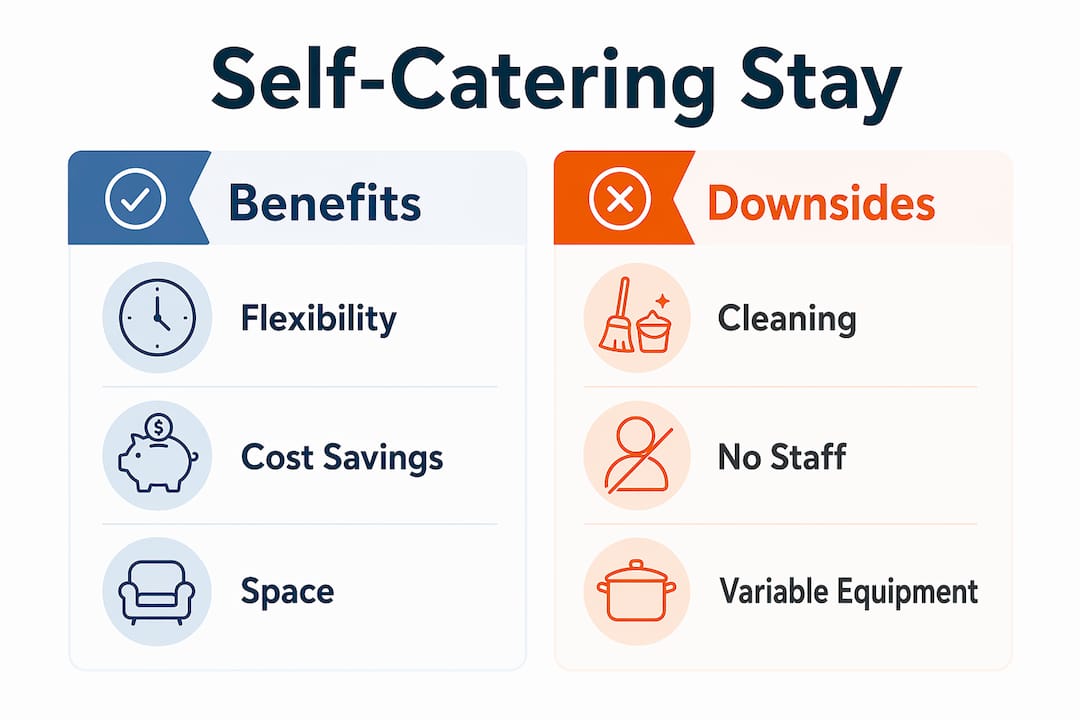
- Guests handle cleaning tasks like trash removal and dishwashing before checkout. That is labor hotels absorb invisibly.
- Kitchen equipment varies by property. Budget rentals may lack a coffee grinder, a sharp knife, or a baking sheet. Higher-end properties often include specialty tools, but you cannot count on it.
- Grocery shopping takes time. On a short city break, that time cost can outweigh the savings.
- No on-site staff means you handle problems independently or through remote communication.
Pro Tip: Pack a small kit with your non-negotiables: a good knife, your preferred coffee setup, and any spices you cook with regularly. Most self-catering kitchens cover the basics, but these small items make a real difference on a longer stay.
How to choose the best self-catering accommodation
Choosing the right self-catering property requires more than checking the price and the photos. Follow this process before you book.
- Audit the kitchen equipment list. Look for a full-size stove, oven, refrigerator, and basic cookware. If the listing does not specify, message the host directly and ask for a photo of the kitchen.
- Match the size to your group. A solo traveler does not need a four-bedroom villa. A family of five in a studio apartment will be miserable by day three. Calculate square footage per person, not just bedroom count.
- Read reviews for host responsiveness. Check-in logistics and host communication are the most common friction points in self-catering stays. Look for reviews that mention how quickly the host responded to issues.
- Understand the cleaning policy. Some properties charge a cleaning fee but still expect you to strip beds, run the dishwasher, and take out trash. Know what you are responsible for before you arrive.
- Check proximity to grocery stores and markets. A beautiful cabin 40 minutes from the nearest supermarket sounds romantic until you run out of coffee on day one.
- Verify the check-in method. Automated lockbox systems are standard in self-catering rentals. Confirm the process in writing before your arrival day, especially if you are arriving late at night.
For couples planning an extended stay, room amenities for couples matter as much as kitchen specs. Think about what makes a space livable for multiple days, not just one night.
Pro Tip: Before booking, send the host one specific question: “What items are NOT available in the kitchen?” A host who answers quickly and honestly is a host who will respond when something goes wrong during your stay.
Key takeaways
Self-catering accommodation gives travelers full control over meals, schedules, and living space, making it the most cost-effective and flexible lodging model for groups, families, and longer stays.
| Point | Details |
|---|---|
| Core definition | Self-catering means you cook your own meals in a fully equipped rental kitchen. |
| Best traveler fit | Families, groups, remote workers, and long-stay travelers get the most value. |
| Cost advantage | Cooking from local markets cuts food costs significantly versus hotel dining. |
| Key downside | Guests handle cleaning and logistics that hotels manage invisibly. |
| Booking priority | Verify kitchen equipment, host responsiveness, and check-in method before confirming. |
Why self-catering changed how i travel
I spent years defaulting to hotels because the routine felt safe. Breakfast was handled. The room was cleaned. Someone was always at the desk. Then I took a two-week road trip through South Iceland and stayed almost entirely in self-catering properties, including communal kitchen setups at rural hostels. That trip rewired my thinking completely.
The autonomy is not just convenient. It is genuinely freeing. You stop organizing your day around restaurant hours and start organizing it around what you actually want to do. On the South Coast, that meant leaving for Reynisfjara Black Sand Beach at 6 a.m. with a packed breakfast, no checkout pressure, and no one asking if I wanted more coffee.
The cultural immersion angle is real, too. Shopping at a small grocery store in Vík, figuring out what local ingredients to cook with, and eating dinner while watching the Northern Lights from a kitchen window is a travel memory that no hotel breakfast can replicate.
The one thing I would tell every first-time self-catering traveler: do not underestimate the check-in process. Remote access systems are standard now, but they fail occasionally. Confirm your lockbox code or key pickup details the day before arrival, not the morning of. That single habit has saved me from real stress more than once.
— Trygve
Plan your self-catering stay at Foxhostel in south iceland
If you want the benefits of self-catering without sacrificing social atmosphere or location, Foxhostel delivers both. Set in a converted Icelandic barn in Hrífunes Nature Park, just 35 minutes east of Vík, Foxhostel offers a massive, fully equipped communal kitchen where guests cook, share meals, and connect with fellow travelers.
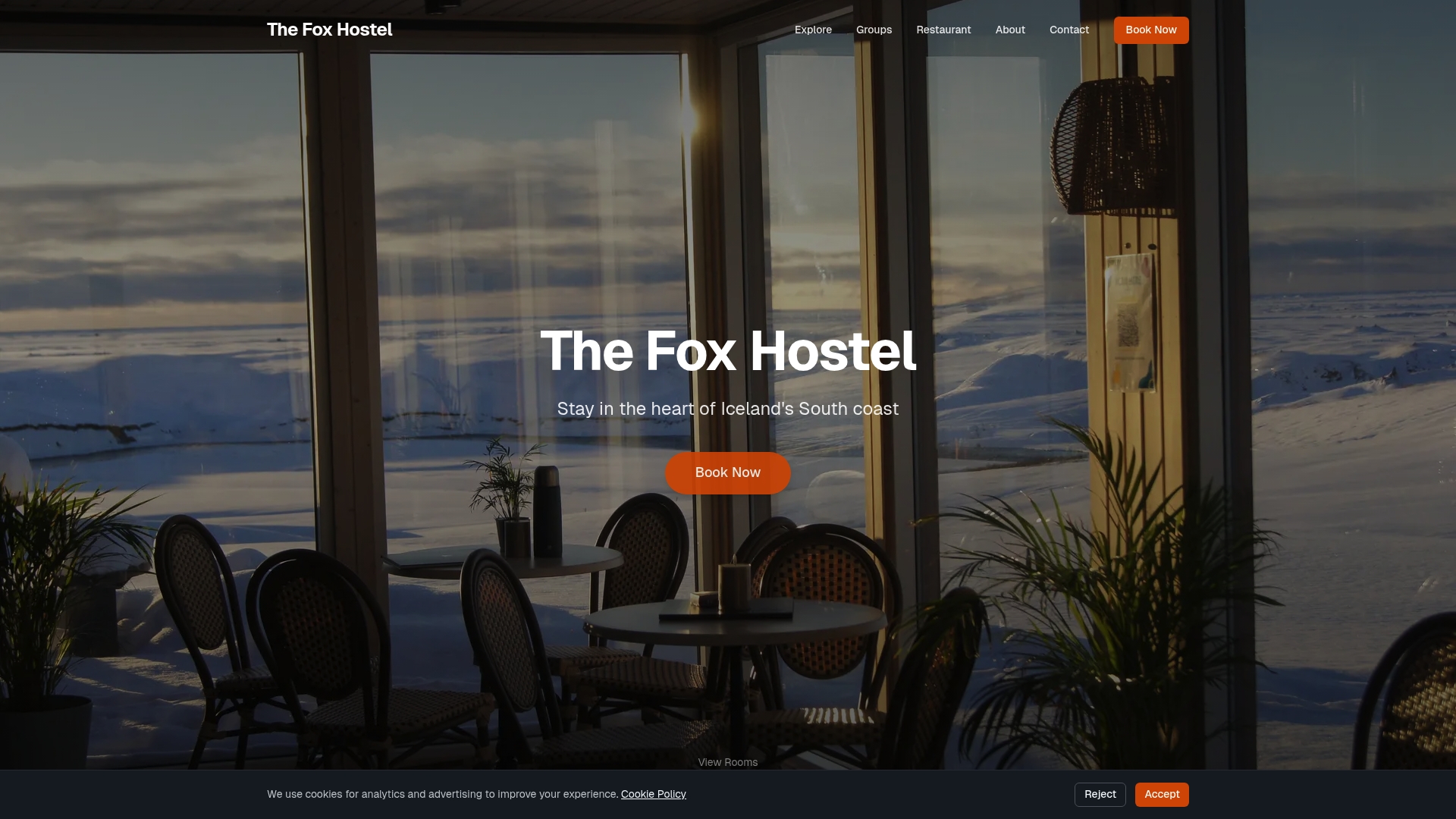
Solo travelers can book a single bed in a dorm. Couples, families, and groups can buy out an entire room for complete privacy. The on-site pizzeria covers the nights you do not want to cook. Jökulsárlón Glacier Lagoon, Vatnajökull National Park, and Reynisfjara Black Sand Beach are all within easy reach. Explore accommodations at Foxhostel and find the setup that fits your travel style and budget.
FAQ
What does self-catering accommodation include?
Self-catering accommodation includes a fully equipped kitchen, living space, and sleeping areas where guests prepare their own meals. Standard appliances typically cover a stove, oven, refrigerator, and basic cookware, though equipment quality varies by property.
Is self-catering cheaper than staying in a hotel?
Self-catering is generally cheaper than hotels, especially for groups and longer stays. Cooking from local markets eliminates restaurant costs, and nightly rates are lower because you are not paying for service infrastructure.
What are the main downsides of self-catering accommodation?
The primary downsides are guest responsibility for cleaning, variable kitchen equipment, and no on-site staff for immediate support. Guests typically handle trash removal, dishwashing, and basic tidying before checkout.
Who is self-catering accommodation best suited for?
Self-catering works best for families, groups, remote workers, and travelers on extended trips. Couples and friends also favor it for the privacy and space it provides over a standard hotel room.
How do i check in to a self-catering property without staff?
Most self-catering rentals use automated lockbox systems or digital key codes for check-in. Confirm your access method and code directly with the host at least 24 hours before arrival to avoid delays.
Recommended
- What Is Eco-Friendly Accommodation: A Traveler’s Guide | Fox Hostel – South Iceland
- Room Types for Solo Travelers: 2026 Lodging Guide | Fox Hostel – South Iceland
- The Role of Budget Accommodation for Adventure Travelers | Fox Hostel – South Iceland
- Alojamiento para roadtrips: guía completa 2026 | Fox Hostel – South Iceland


