What Is Sustainable Travel in Iceland: 2026 Guide
What Is Sustainable Travel in Iceland: 2026 Guide
TL;DR:
- Iceland receives nearly two million visitors annually, exerting pressure on its fragile landscape. Strict laws prohibit off-road driving and unauthorized camping, emphasizing conservation and low-impact travel. Responsible tourism involves supporting local businesses, practicing slow travel, and choosing eco-certified accommodations to preserve Iceland’s natural beauty for future generations.
Iceland draws nearly two million visitors a year to a country of roughly 370,000 people. That pressure lands almost entirely on a landscape built from lava fields, glacial rivers, and moss that can take centuries to recover from a single footstep. Understanding what is sustainable travel in Iceland goes far beyond the bumper sticker advice you have heard before. It covers legal obligations, ethical choices, transport decisions, and a genuine shift in how you show up as a traveler. This guide gives you the full picture.
Table of Contents
- Key takeaways
- What Iceland’s laws say about sustainable tourism
- Practical habits that make a real difference
- Eco-experiences worth seeking out
- Transport and lodging: making the eco-conscious call
- My honest take on traveling Iceland responsibly
- Stay sustainably at Fox Hostel in South Iceland
- FAQ
Key takeaways
| Point | Details |
|---|---|
| Legal rules are non-negotiable | Off-road driving carries fines up to 500,000 ISK and causes irreversible ecosystem damage. |
| Slow travel cuts your footprint | Staying 3 to 5 days in one area reduces emissions and deepens your connection to the place. |
| Certification signals real commitment | Seek eco-certified tours and accommodations that use geothermal or hydroelectric power. |
| Support local to protect culture | Buying from family-run businesses and local artisans distributes tourism revenue equitably. |
| Know your camping rights | Iceland’s Almannaréttur does not permit camping or vehicle parking outside designated sites. |
What Iceland’s laws say about sustainable tourism
If there is one thing travelers consistently underestimate, it is how seriously Iceland enforces its environmental protections. The Nature Conservation Act (60/2013) makes off-road driving illegal across the entire country, not just inside national parks. Fines range from 50,000 to 500,000 ISK for a first offense, and if the damage is extensive enough, you can be billed for the full cost of land restoration.
The ecological reason behind the law is stark. Iceland has already lost half of its original vegetation to erosion, and the remaining moss and soil layers are extraordinarily slow to recover. One tire pass can leave a scar that persists for decades. Two common mistakes make this worse:
- Following existing tire tracks. Many travelers assume that if someone else drove there, it must be legal or at least harmless. It is neither. Moss can take centuries to regrow, and each new vehicle widens the damage.
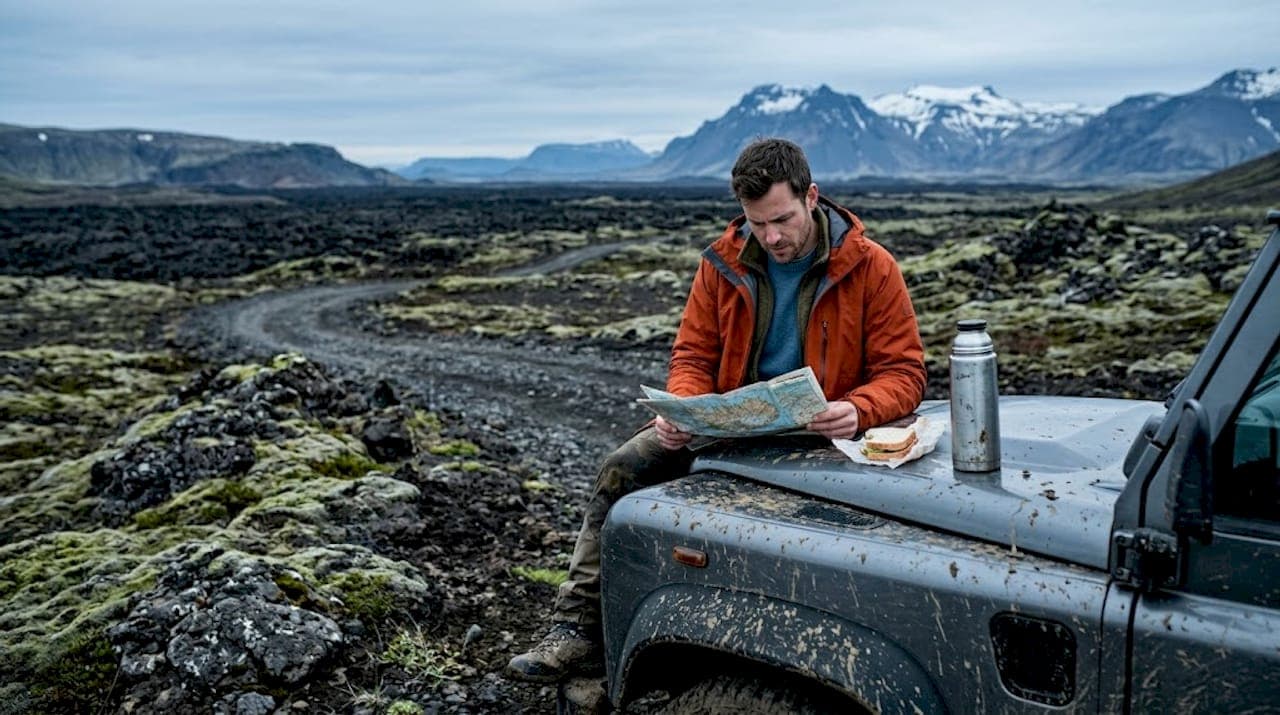
- Driving on sand flats. What looks like a firm, harmless surface often conceals fragile soil layers underneath. The damage spreads far beyond the tire tracks themselves.
Iceland’s right to roam, known as Almannaréttur, is frequently misunderstood. It allows you to walk across open land, but overnight stays outside designated campsites are prohibited and landowners can refuse permission for vehicle parking. Camping at a random roadside pull-off, even if it looks empty and unused, violates the law. Always use designated campsites with proper sanitary facilities.
Pro Tip: Download the Íslandsstofa Environment Agency map before your trip. It marks all legal campsites, parking areas, and restricted zones so you never have to guess.
Practical habits that make a real difference
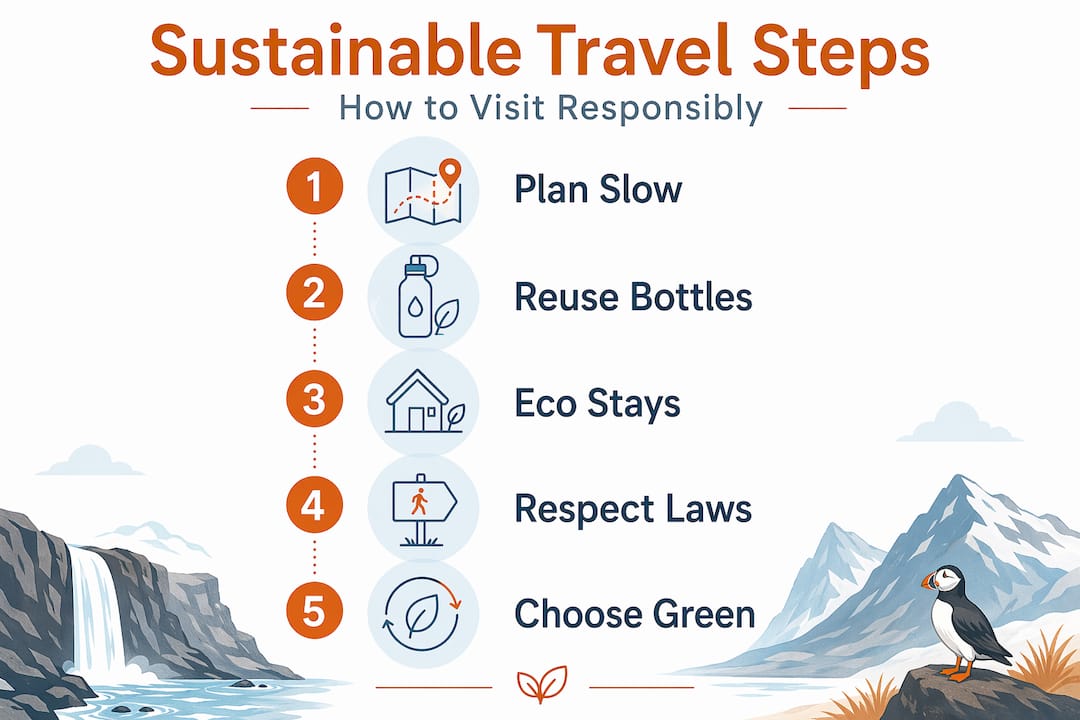
Sustainable tourism in Iceland is not one big dramatic gesture. It is a collection of small, consistent choices that add up fast when multiplied across thousands of visitors.
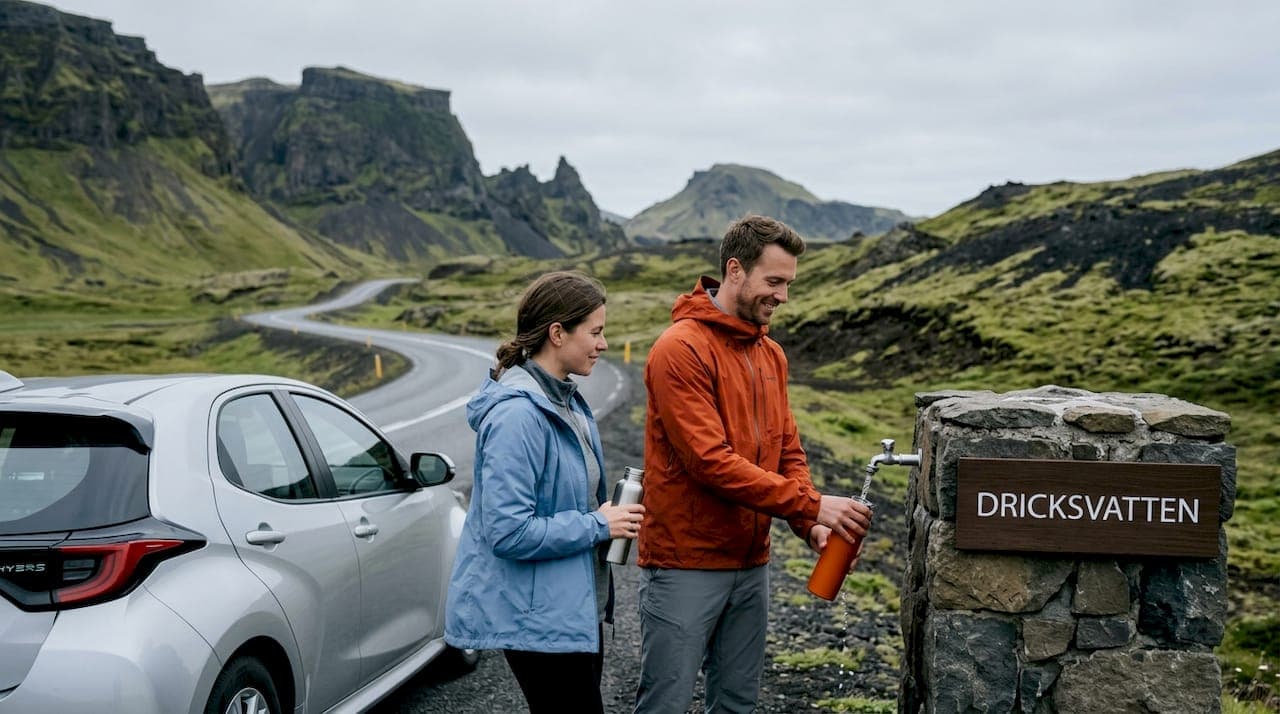
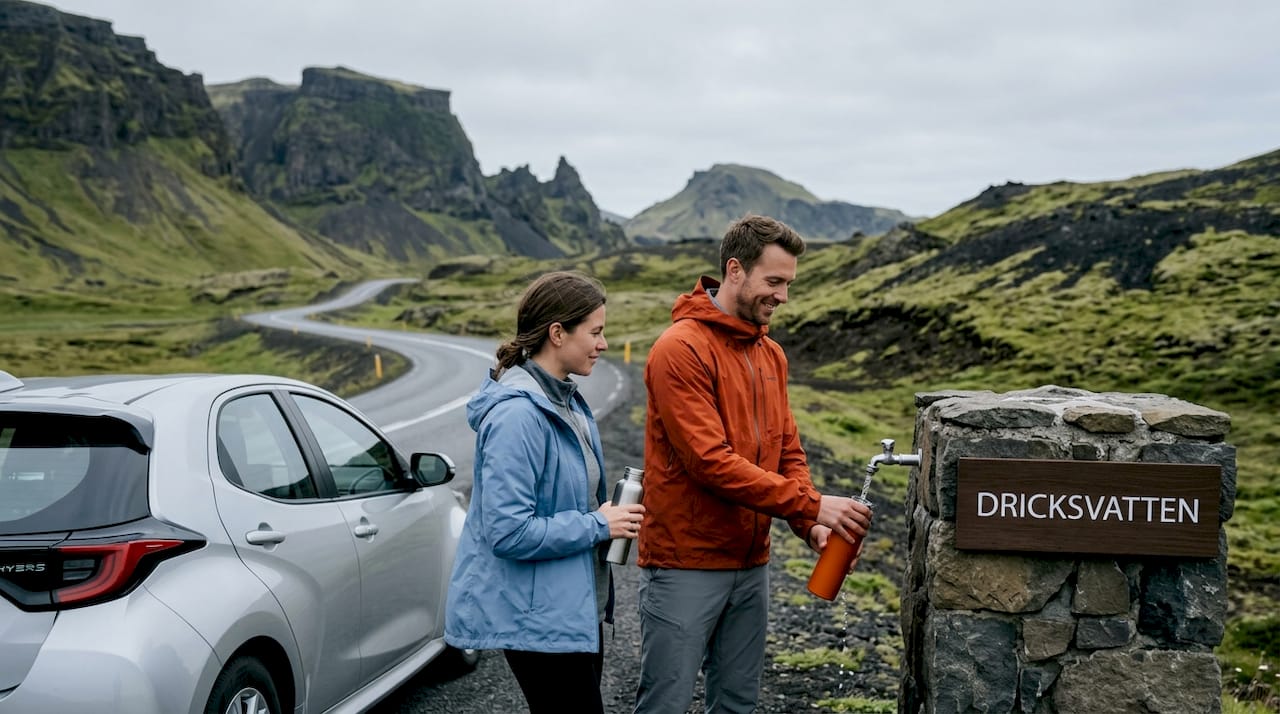
Start with what you carry. Icelandic tap water ranks among the cleanest in the world, so a reusable bottle eliminates the need for single-use plastic entirely. Many local cafes even offer discounts for reusable cups. Pack a reusable bag and a set of containers for takeaway food, and you cut your plastic footprint to near zero.
Food choices matter more than most travelers realize. Buying seasonal, locally grown produce at farm stands or cooperatives keeps your carbon footprint lower than purchasing imported goods at a supermarket. Iceland’s greenhouse agriculture, powered by geothermal energy, produces tomatoes, cucumbers, and herbs year-round with a minimal environmental cost.
Here is where responsible travel practices in Iceland extend into how you spend money:
- Book with tour operators certified by Vakinn, Iceland’s official quality and environmental certification system.
- Choose family-run guesthouses and small local restaurants over chain operations. Small businesses distribute tourism revenue more equitably and often invest directly in local conservation.
- Keep a respectful distance from wildlife. Disturbing nesting seabirds at Látrabjarg or seals along the south coast is not just inconsiderate. It disrupts breeding cycles.
- Practice strict pack-in, pack-out waste management. Iceland’s interior, the Highlands, has almost no waste facilities.
Pro Tip: Slow travel in Iceland means planning one or two activities per day rather than rushing between five attractions. You see more, stress less, and leave a smaller mark on every place you visit.
Staying 3 to 5 days in one area rather than chasing every landmark on a tight loop dramatically reduces your cumulative emissions and gives you space to connect with local communities in a way that a one-night stop never allows.
Eco-experiences worth seeking out
Iceland offers some of the most genuine sustainable travel experiences on earth, and the best ones tend to be the least crowded.
Sólheimar Ecovillage stands as the clearest example. Founded in 1930 and located about an hour east of Reykjavík, Sólheimar operates on thermal and solar energy, runs productive greenhouses and forestry projects, and centers its entire community around social inclusion and environmental stewardship. Visitors can buy organic produce and handmade goods directly from residents. It is sustainability not as a marketing label but as a way of life, and it enriches the traveler experience in ways that a tour bus stop at a waterfall simply cannot.
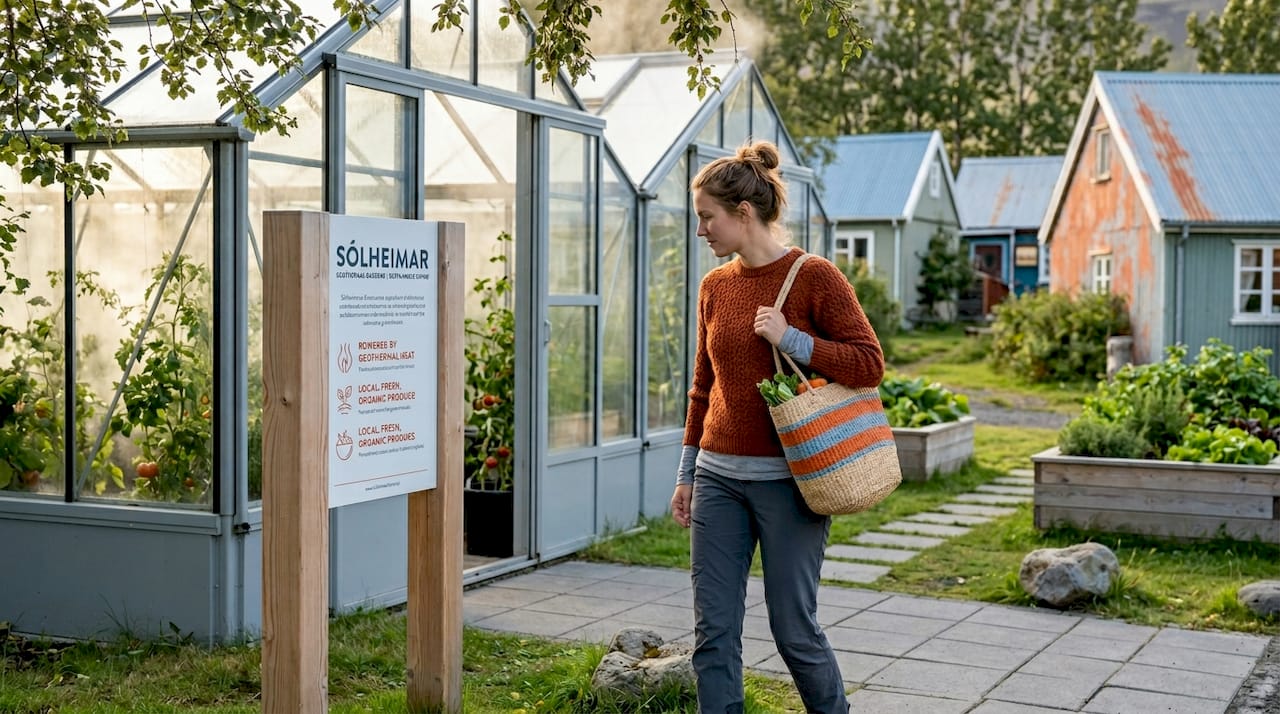
Beyond Sólheimar, Iceland’s renewable energy infrastructure is itself a draw. Geothermal and hydropower educational tours let you see firsthand how the country generates nearly 100% of its electricity from renewables. That context changes how you think about every hot shower and every plug-in charge.
| Experience | Type | Environmental benefit |
|---|---|---|
| Sólheimar Ecovillage | Cultural and agri-tourism | Supports a closed-loop sustainable community |
| Geothermal energy tours | Educational | Demonstrates renewable infrastructure in action |
| Marked trail hiking | Nature-based recreation | Protects fragile vegetation through channeled foot traffic |
| Certified wildlife watching | Wildlife tourism | Limits disturbance to nesting and feeding animals |
| Shoulder season travel | General travel timing | Reduces crowding at sensitive sites, supports year-round economies |
Traveling in April, May, September, or October instead of July delivers a double benefit. Popular sites like Reynisfjara Black Sand Beach and Skógafoss see far fewer visitors, meaning less ecological stress on the land and a genuinely better experience for you.
Transport and lodging: making the eco-conscious call
How you get around Iceland shapes your impact more than almost any other single decision. Here is how the main options compare:
Public transport and group tours carry the lowest per-person carbon footprint. Strætó, Iceland’s bus network, covers the Ring Road and many major attractions. Joining a small-group tour with a certified operator adds educational value. The trade-off is flexibility. You follow someone else’s schedule.
Electric and hybrid car rentals offer the balance most travelers are looking for. You keep your independence, dramatically cut emissions compared to a standard petrol vehicle, and the expanding network of fast chargers along Route 1 makes an EV road trip genuinely practical in 2026. Reducing individual car use on sensitive routes limits both emissions and traffic pressure on fragile access roads.
Standard car rental remains the most common choice, and it is not inherently incompatible with responsible travel. The difference comes down to what you do with the vehicle. Stay on marked roads. Do not idle in parking areas. Carpool when you can.
For lodging, eco-certified accommodations that use geothermal or hydroelectric power, implement water-saving systems, and recycle waste represent the gold standard. Look for the Vakinn or Nordic Swan Ecomark certification when booking. If you want practical guidance on planning a lower-impact stay without breaking your budget, the Foxhostel journal on budget travel in Iceland covers strategies that align well with sustainable choices.
Hostels and guesthouses that encourage longer stays also deserve recognition. When you stay four nights instead of one, you reduce the per-night carbon cost of your trip, spend more money locally, and interact with a place rather than just passing through it. Reading up on social hostels in Iceland can help you understand how that model works in practice.
My honest take on traveling Iceland responsibly
I have watched how eco-friendly travel Iceland conversation tends to circle around the same two points: don’t drive off-road, and carry a reusable bottle. Both matter. But treating those as the finish line misses most of what sustainable tourism in Iceland actually requires.
What I have seen in practice is that the most damaging tourist behaviors are rarely malicious. They are hurried. Someone rushes from Seljalandsfoss to Skógafoss to Vík in a single morning, stops for a photo at each, and leaves without having genuinely engaged with any of it. That pace pushes people toward shortcuts, creates congestion at fragile sites, and contributes nothing to local communities.
The travelers who do this right tend to share one habit: they plan for depth, not coverage. They stay somewhere long enough to ask the guesthouse owner where locals actually eat. They take the less-photographed trail that the ranger at the visitor center mentions quietly. They come back to the same viewpoint at different light.
Iceland’s nature is extraordinary precisely because it has not been entirely consumed by tourism yet. Keeping it that way is not a burden. It is what makes the trip worth taking in the first place. Compliance with the law is the floor, not the ceiling. What you are really aiming for is stewardship.
— Trygve
Stay sustainably at Fox Hostel in South Iceland

Fox Hostel sits inside Hrífunes Nature Park, a beautifully converted traditional Icelandic barn just 35 minutes east of Vík. It is built for travelers who want to slow down, reduce their footprint, and actually experience South Iceland rather than sprint through it. The location puts you within easy reach of Reynisfjara Black Sand Beach and Dyrhólaey while sitting far enough from the crowds for dark skies and genuine quiet. Fox Hostel’s communal setup encourages the kind of shared planning and carpooling that naturally cuts per-person impact. Solo travelers can book a single bed; groups can buy out a full room for privacy. Whether you are spending a week exploring the South Coast or using it as a launchpad east toward Vatnajökull and Jökulsárlón, book your stay at Fox Hostel and start your Iceland trip the right way.
FAQ
What does sustainable travel in Iceland mean?
Sustainable travel in Iceland means following legal protections for the environment, choosing low-impact transport and certified accommodations, supporting local economies, and engaging with nature and culture in ways that preserve both for future visitors.
Is off-road driving ever allowed in Iceland?
No. Off-road driving is illegal throughout Iceland under the Nature Conservation Act (60/2013). Fines start at 50,000 ISK and can exceed 500,000 ISK for significant damage, regardless of whether tire tracks already exist.
Can I camp anywhere in Iceland?
No. Iceland’s Almannaréttur does not allow camping or vehicle parking outside designated sites without landowner permission. Overnight stays in unauthorized locations are prohibited and can result in fines.
What is the most eco-friendly way to get around Iceland?
Public transport and certified small-group tours carry the lowest carbon footprint per person. Electric or hybrid car rentals are the best option if you need travel flexibility, especially with Iceland’s expanding fast-charger network along Route 1.
When is the best time to visit Iceland sustainably?
Shoulder seasons, specifically April to May and September to October, are ideal. Popular natural sites face less pressure, local businesses benefit from more distributed visitor traffic, and your experience at each location is likely to be richer with fewer crowds.
Recommended
- Tourisme durable en Islande : préparez 2026 | Fox Hostel – South Iceland
- Viaggio in Islanda 2026: trend e consigli per esperienze autentiche | Fox Hostel – South Iceland
- Impacto del turismo sostenible en Islandia: guía para viajeros responsables | Fox Hostel – South Iceland
- Iceland educational travel: learn, explore, and thrive | Fox Hostel – South Iceland