What Is the South Coast of Iceland? A Travel Guide
What Is the South Coast of Iceland? A Travel Guide
TL;DR:
- The South Coast of Iceland is a 300-kilometer stretch filled with waterfalls, glaciers, beaches, and volcanic terrain, offering diverse natural wonders. Exploring over multiple days allows travelers to experience its contrasts fully and avoid crowds while engaging with geology and Icelandic sagas. Activities like renting a car, guided tours, and river rafting deepen the immersive experience, especially at hidden spots like Hólmsá River, away from busy sites.
Iceland’s South Coast is defined as the stretch of coastline running over 300 kilometers from the Reykjavik capital area eastward to Vatnajökull National Park, encompassing some of the country’s most dramatic natural scenery. This region packs Seljalandsfoss waterfall, Reynisfjara Black Sand Beach, Sólheimajökull glacier, and Jökulsárlón Glacier Lagoon into a single corridor that rewards travelers willing to slow down and explore it properly. Whether you’re planning a single long day or a multi-day road trip, understanding what the South Coast actually contains, and how to move through it, makes the difference between a rushed drive and a genuinely memorable experience.
What is the South Coast of Iceland?
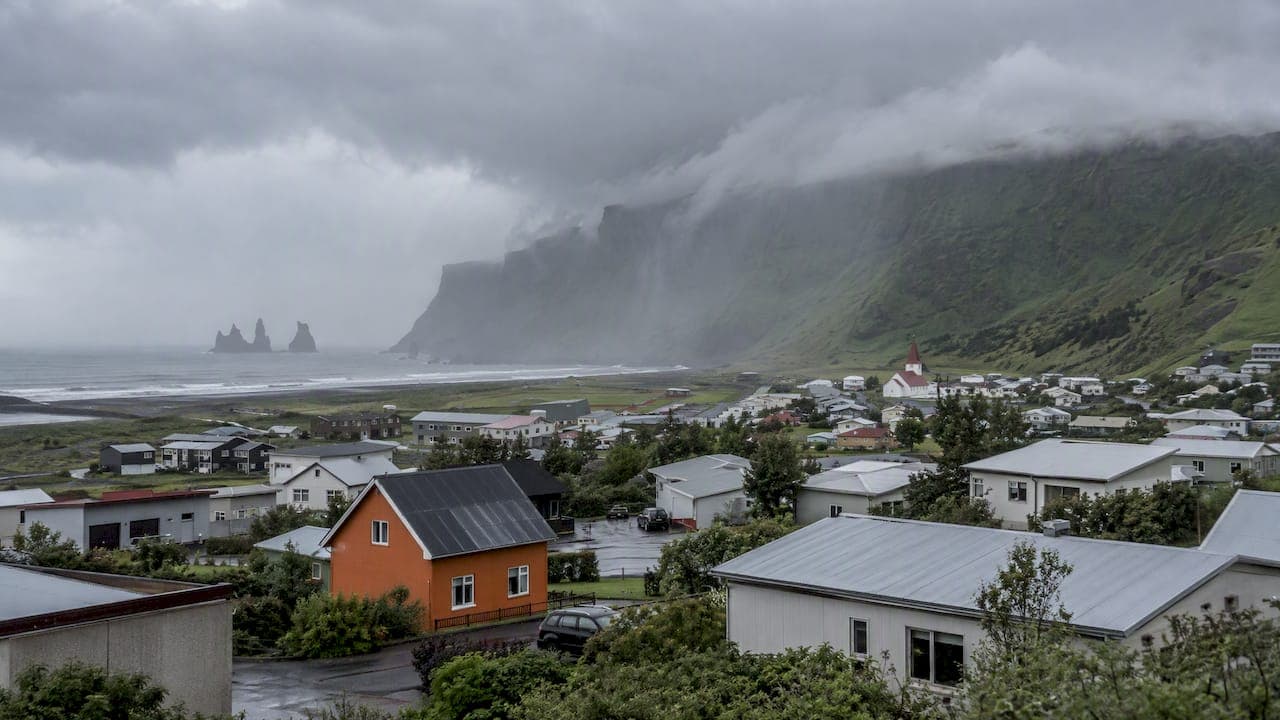
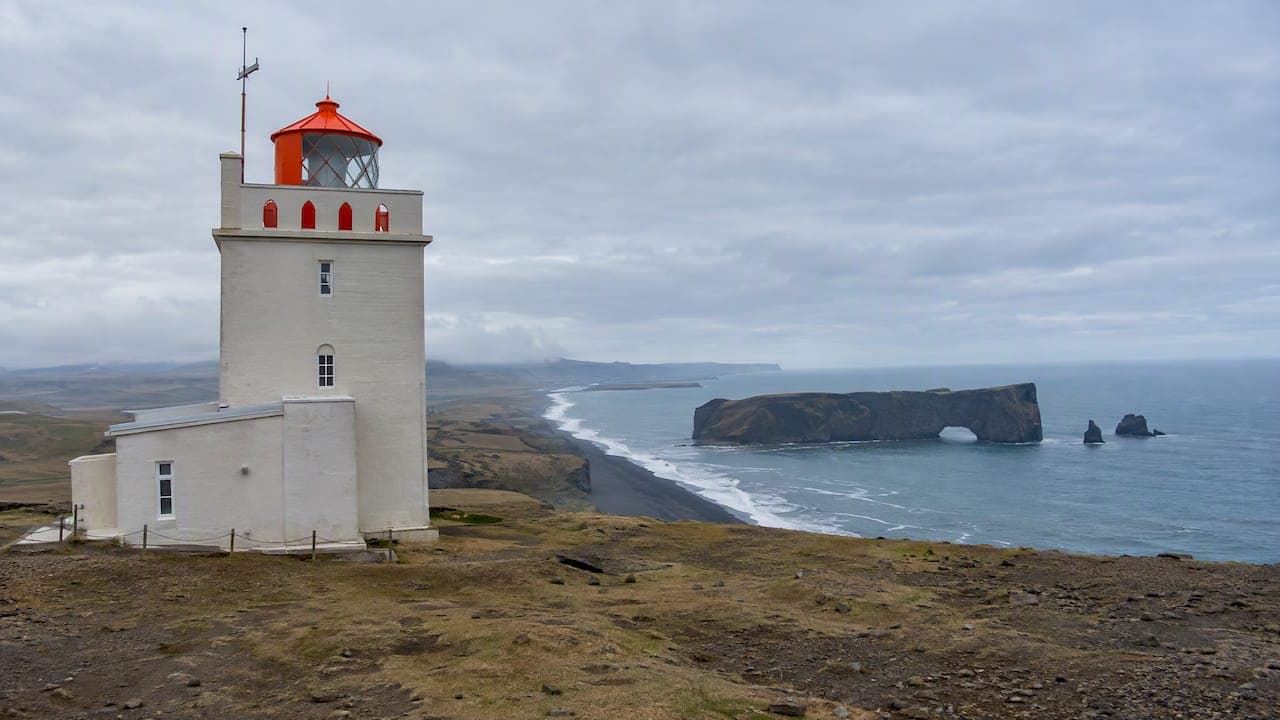
The South Coast of Iceland is the country’s most visited travel corridor, stretching along the Ring Road from the outskirts of Reykjavik to the glacial plains of the southeast. The 300-kilometer stretch connects a chain of waterfalls, glaciers, volcanic beaches, and small villages that together represent Iceland’s most concentrated collection of natural landmarks. Seljalandsfoss, Skógafoss, Vík village, Dyrhólaey, and Jökulsárlón Glacier Lagoon all sit along this single route.
What makes this region genuinely unusual is the density of contrast. Within a two-hour drive from Reykjavik, you move from green farmland to black volcanic beaches to the edge of Europe’s largest glacier, Vatnajökull. No other region in Iceland delivers that range in such a short distance. The road trip from Reykjavik to Seljalandsfoss alone takes about two hours, making it accessible even for travelers with limited time.
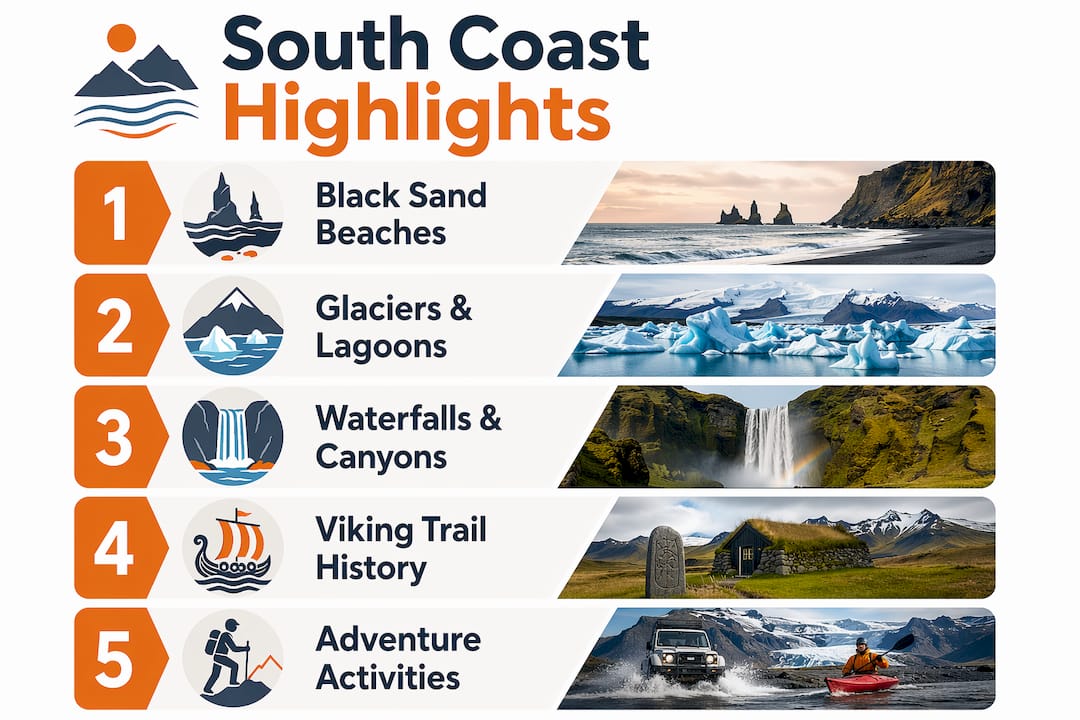
The South Coast is also sometimes called the “Viking Trail,” a label that reflects how glaciers, volcanism, and sagas intersect here. Local guides use this framing to explain how the landscape shaped Icelandic history, not just its geology. That cultural layer is easy to miss if you’re moving too fast.
What are the main attractions on the South Coast?
The South Coast’s signature landmarks divide naturally into waterfalls, beaches, glaciers, and volcanic terrain. Each category offers something distinct, and skipping any one of them leaves a gap in the full picture.
Waterfalls
- Seljalandsfoss drops 60 meters and has a path behind the curtain of water, giving you a view most waterfalls don’t allow. Arrive early to avoid the crowds.
- Skógafoss is wider and more powerful, with a staircase to the top that rewards the climb with views across the coastal plain.
- Gljúfrabúi sits hidden inside a canyon just north of Seljalandsfoss. Most visitors walk past it. Stepping through the narrow rock entrance to find a waterfall inside a cave is one of the South Coast’s best surprises.
Beaches and volcanic terrain
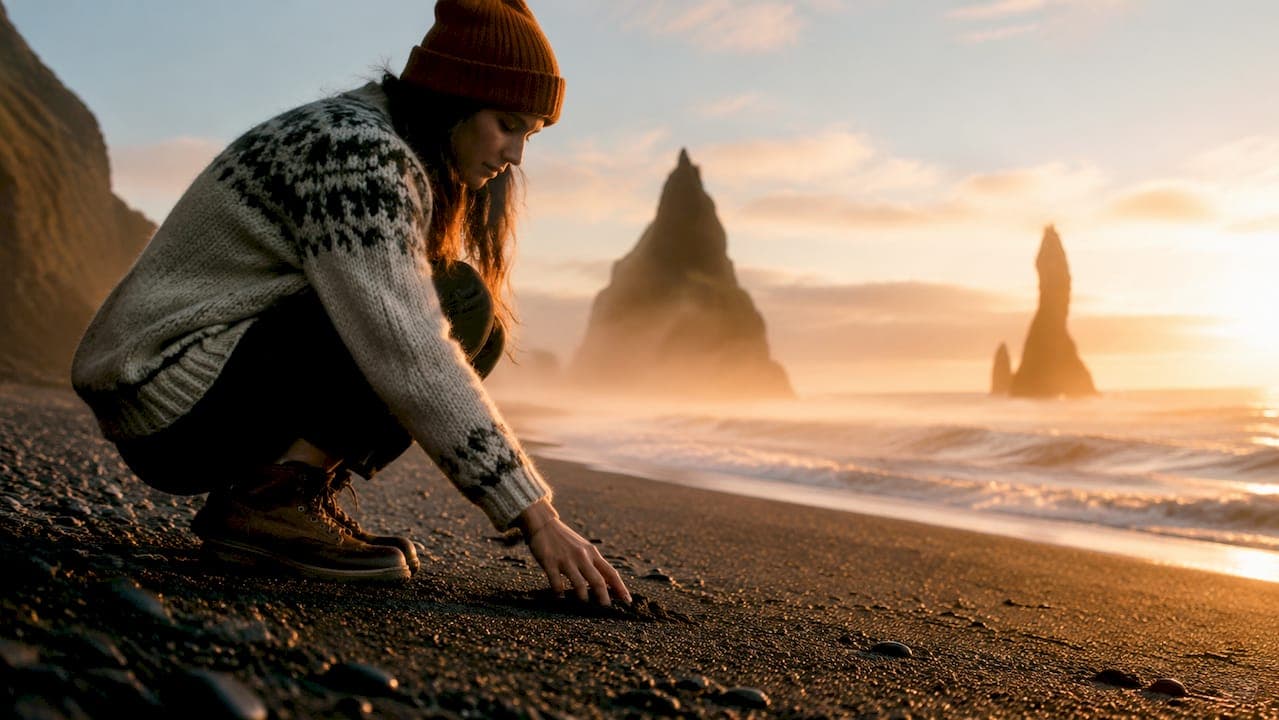
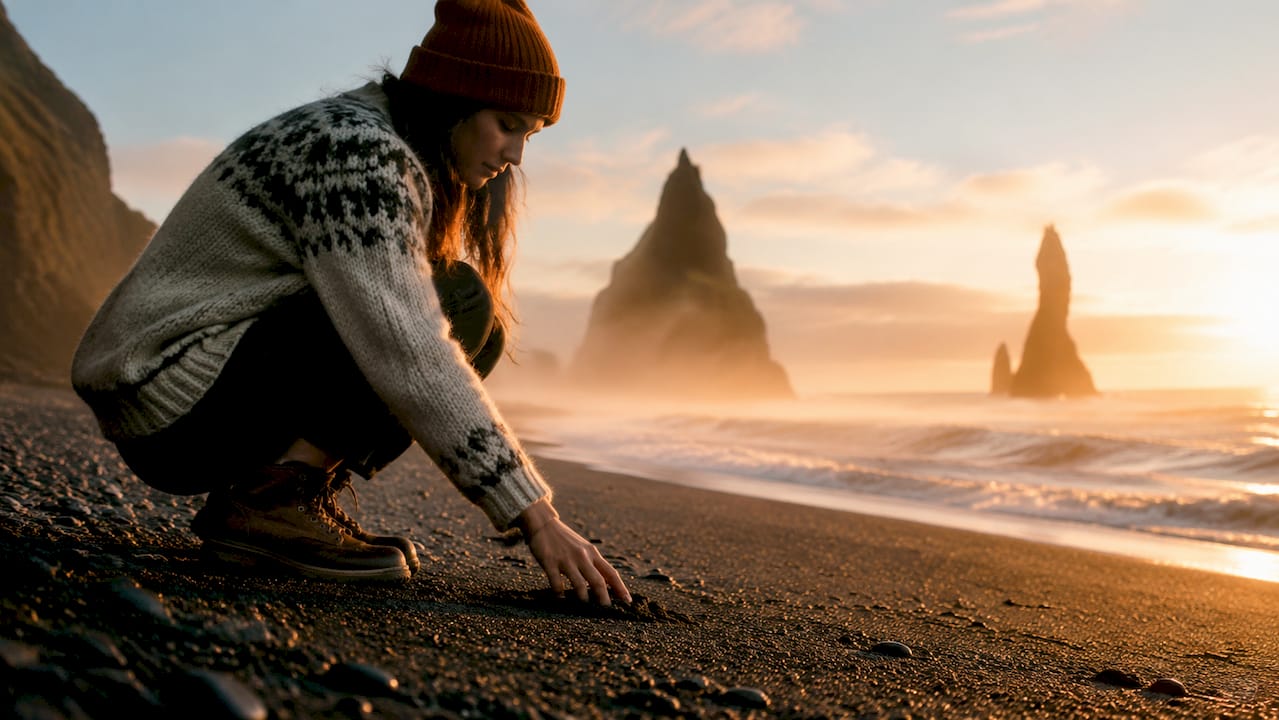
Reynisfjara Black Sand Beach near Vík is the region’s most photographed site. The basalt column formations at Reynisdrangar rise from the ocean like stacked hexagonal pillars, and the black sand itself is the result of lava cooling rapidly in seawater. The waves here are genuinely dangerous. Sneaker waves have injured visitors who stood too close to the waterline.
Glaciers and lagoons
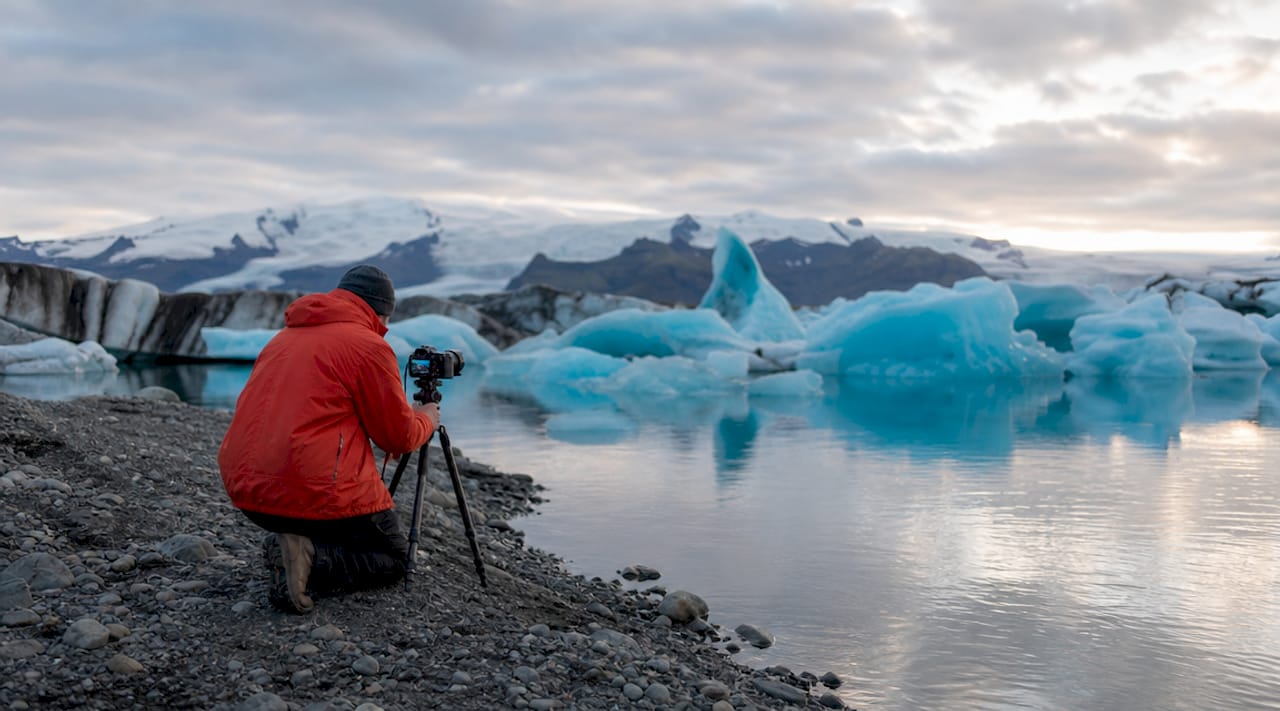
Sólheimajökull is an outlet glacier of Mýrdalsjökull and one of the most accessible glacier tongues in Iceland. Glacial movement and volcanic activity have shaped its surface into a fractured landscape of crevasses and ice ridges that changes visibly year to year. Jökulsárlón Glacier Lagoon sits further east, where icebergs calve from Breiðamerkurjökull and drift slowly toward the Atlantic. The adjacent Diamond Beach, where ice chunks wash ashore on black sand, is one of Iceland’s most striking visual contrasts.
Pro Tip: Gljúfrabúi waterfall requires wading through a shallow stream to enter the canyon. Wear waterproof boots or accept wet feet. It is worth it either way.
How can travelers explore the South Coast?
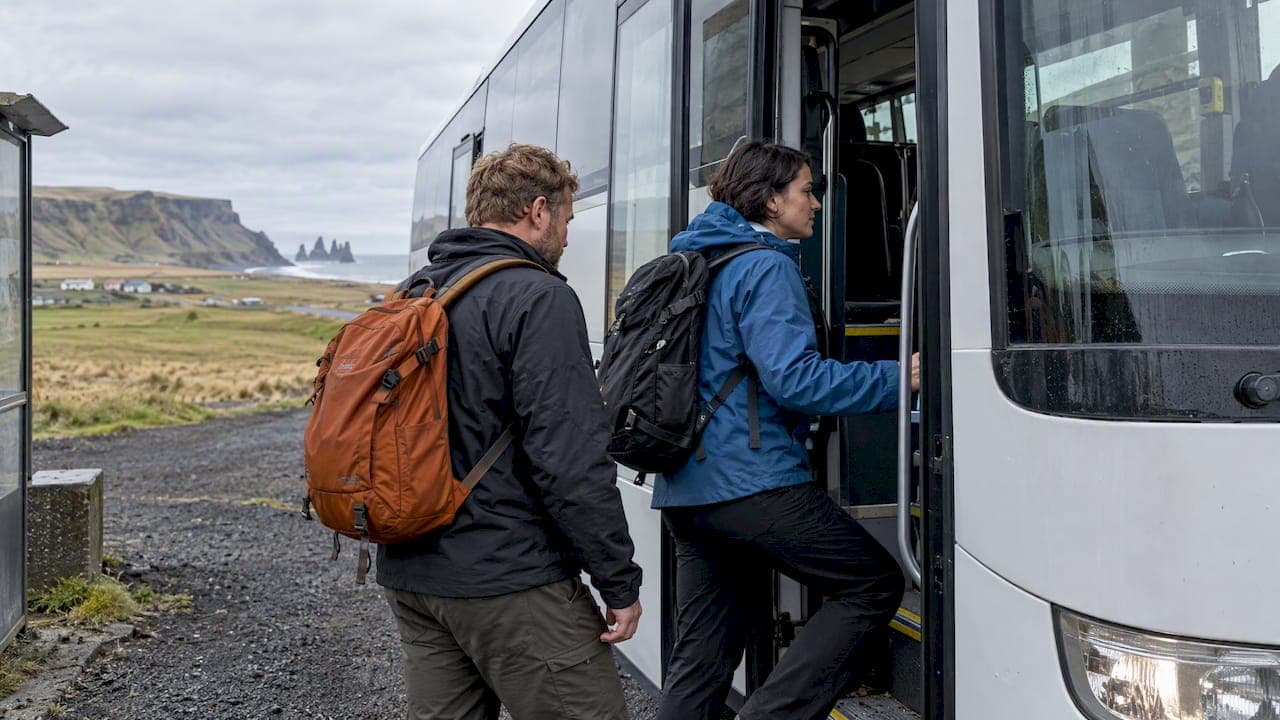
Three main options exist for moving through the South Coast: renting a car, joining a guided tour, or combining both across multiple days.
-
Car rental gives you full schedule control and is the best choice if you want to linger at specific sites. The Ring Road (Route 1) connects every major attraction, and the drive itself is scenic. Parking at major sites costs around 800 ISK (approximately $6) per location, so budget for multiple stops.
-
Small-group day tours from Reykjavik typically run about 10 hours with round-trip transport in minivans. These tours cover volcanic beaches and outlet glaciers like Sólheimajökull and work well for travelers who prefer not to drive on unfamiliar roads. The trade-off is fixed timing at each stop.
-
Multi-day self-drive itineraries are what experienced travelers consistently recommend. A one-day round trip to Jökulsárlón covers roughly 750 kilometers, which leaves very little time at any individual site. Splitting the trip into two or three days, staying near Vík or Hrífunes, changes the experience entirely.
Practical logistics matter more on the South Coast than most travelers expect. Toilet facilities become limited past Vík, so plan restroom stops in the village. The South Coast weather is highly changeable and frequently wet. Waterproof outer layers and hiking boots with ankle support are not optional. Paths near waterfalls are muddy and slippery even in summer.
Pro Tip: If you’re planning a South Coast itinerary that includes both Seljalandsfoss and Jökulsárlón, build in at least two nights. One night near Vík and one night further east gives you morning light at the glacier lagoon, which is when the colors are best.
What unique experiences does the South Coast offer beyond the main sites?
The South Coast’s most memorable moments often happen away from the sites that appear on every travel poster. Local guides emphasize that professional tours do more than transport you between landmarks. They provide geological and folkloric context that transforms what you’re seeing. Reynisfjara’s basalt columns, for example, are not just visually striking. They are the result of lava cooling at a specific rate, and the hexagonal shape is a mathematical consequence of that process. That detail changes how you look at them.
“The South Coast is not a checklist. It’s a conversation between fire, ice, and water that has been going on for millions of years. The travelers who understand that leave with something the others don’t.” — local guide perspective shared on South Coast tours
The Viking Trail framing that guides use on the South Coast connects the physical landscape to Icelandic sagas and settlement history. The black sand plains east of Vík were impassable for centuries, shaping where communities formed and how people moved across the island. That history is visible in the landscape if someone points it out.
For travelers who want to avoid crowds entirely, the quieter spots reward early starts. Arriving at Seljalandsfoss before 8 a.m. or after 7 p.m. in summer means the parking lot is nearly empty. The same applies to Reynisfjara. The South Coast’s dense attraction spacing means a well-planned itinerary separates a great trip from an exhausting one. You can read more about structuring your days without overcrowding at the Foxhostel South Coast guide.
What makes Hólmsá River rafting a standout South Coast activity?
Hólmsá River rafting is one of the South Coast’s least-known and most rewarding experiences, set in a remote section of South Iceland far from the main tourist corridor. The moment you arrive at the river, the contrast with the busy parking lots at Seljalandsfoss or Reynisfjara is immediate. There are no crowds, no noise beyond the water, and no commercial infrastructure. Just the river, the basalt columns lining its banks, and the sound of your paddle entering the current.
The 7-kilometer route features Class III rapids suitable for kids, beginners, and families, which means real whitewater excitement without requiring prior experience. Class III is the threshold where rafting becomes genuinely thrilling. You get splashed, you work as a team, and you feel the river’s energy. It stays well within the range that certified guides can manage safely for first-timers.
The basalt column formations along the riverbanks are the same geological feature you see at Reynisfjara, but here they frame a moving water experience rather than a static viewpoint. That combination of volcanic geology and active adventure is rare anywhere in the world.
- The river covers 7 kilometers of varied terrain with natural scenery throughout
- Class III rapids provide real excitement while remaining accessible to children and beginners
- Certified guides handle all logistics, equipment, and safety briefings
- The remote location means no crowds and genuine quiet between rapids
- The basalt column rock formations along the banks add a geological dimension to the experience
Pro Tip: Hólmsá rafting works well as an afternoon activity after a morning at Reynisfjara or Dyrhólaey. The drive from Vík is short, and the contrast between the black sand beach and the river canyon makes for a genuinely varied day.
Key takeaways
The South Coast of Iceland rewards travelers who plan carefully, move slowly, and look beyond the most photographed sites.
| Point | Details |
|---|---|
| Geographic scope | The South Coast spans over 300 km from Reykjavik eastward, connecting waterfalls, glaciers, beaches, and volcanic terrain. |
| Multi-day planning | A one-day round trip to Jökulsárlón covers 750 km, leaving too little time at sites. Two to three days is the minimum for a real experience. |
| Hidden gems | Gljúfrabúi waterfall and Hólmsá River rafting offer world-class experiences with a fraction of the crowds at main sites. |
| Practical logistics | Parking costs around 800 ISK per site, facilities are limited past Vík, and waterproof gear is required year-round. |
| Guided tours add depth | Local guides connect geology and Icelandic saga history in ways that transform what you see at every stop. |
Why the South Coast changed how I think about Iceland travel
I’ve watched a lot of travelers treat the South Coast as a single long day from Reykjavik, ticking off waterfalls and beaches before driving back in the dark. I understand the impulse. The sites are close together on the map, and the road is easy. But that approach consistently produces the same result: people who saw everything and experienced nothing.
The South Coast’s real value is not in the landmarks themselves. It’s in the time between them. The light on the black sand at 6 a.m. The silence at Gljúfrabúi when the last tour bus has left. The moment on the Hólmsá River when you stop paddling and just listen. Those moments require slack in the schedule, and slack requires staying close to the region rather than commuting from Reykjavik.
I also think the rafting at Hólmsá is genuinely underrated in a way that most “hidden gem” recommendations are not. It’s not hidden because it’s obscure or difficult to reach. It’s hidden because the South Coast’s marketing machine focuses on the photogenic and the famous. The river offers something different: a physical, immersive experience in a landscape that most visitors only see through a car window.
My honest advice is to treat the South Coast as a destination in itself, not a day trip. Stay in the region. Eat locally. Talk to your guides. The geology and the sagas are inseparable here, and understanding one helps you see the other.
— Trygve
Where to stay for the best South Coast access

Foxhostel sits in Hrífunes Nature Park, 35 minutes east of Vík, placing you at the geographic center of the South Coast’s best attractions. From here, Reynisfjara Black Sand Beach, Seljalandsfoss, and Dyrhólaey are all within easy reach in the morning before the crowds arrive. Jökulsárlón Glacier Lagoon and Vatnajökull National Park are a straightforward day trip east. Foxhostel offers dorm beds for solo travelers and full room buyouts for couples, families, and groups who want privacy without paying hotel prices. The on-site pizzeria, communal kitchen, and dark skies for Northern Lights viewing make it a base worth returning to after a long day on the road. Book your stay and get local tips from staff who know the South Coast in every season.
FAQ
What is the South Coast of Iceland?
The South Coast of Iceland is a 300-kilometer coastal corridor stretching from the Reykjavik area to Vatnajökull National Park, featuring landmarks including Seljalandsfoss, Reynisfjara Black Sand Beach, Sólheimajökull glacier, and Jökulsárlón Glacier Lagoon.
How long does it take to explore the South Coast?
A single day covers the basics but leaves very little time at each site. Most experienced travelers recommend two to three days, with overnight stays near Vík or further east to reach Jökulsárlón without a 750-kilometer round trip in one day.
What is a South Coast tour from Reykjavik like?
Small-group guided South Coast tours typically run about 10 hours with round-trip transport from Reykjavik, covering volcanic beaches, waterfalls, and outlet glaciers like Sólheimajökull in a single day.
What are the best beaches on the South Coast?
Reynisfjara near Vík is the most famous, known for its black sand, basalt columns, and dramatic sea stacks. Diamond Beach near Jökulsárlón, where glacier ice washes onto black sand, is equally striking and far less crowded.
Is Hólmsá River rafting suitable for beginners?
Yes. Hólmsá River features Class III rapids that provide genuine whitewater excitement while remaining safe for children, beginners, and first-time rafters. Certified guides handle all equipment and safety logistics throughout the 7-kilometer route.
Recommended
- How to Plan a South Coast Itinerary in Iceland | Fox Hostel – South Iceland
- Ejemplos de rutas en la costa sur de Islandia | Fox Hostel – South Iceland
- Come esplorare il sud dell’Islanda: guida pratica | Fox Hostel – South Iceland
- Checklist de viaje por la costa sur de Islandia | Fox Hostel – South Iceland