Your Workflow for Iceland Adventure Planning
Your Workflow for Iceland Adventure Planning

TL;DR:
- A structured workflow is essential for safe and efficient Iceland exploration amidst unpredictable conditions and remote landscapes. Proper preparation includes downloading safety apps, securing accommodations early, and daily checking road and weather updates to adapt plans accordingly. Focusing on flexible frameworks rather than rigid itineraries enhances the travel experience and minimizes stress in Iceland’s challenging environment.
Iceland has a talent for overwhelming even experienced travelers. Between unpredictable weather, remote roads, volcanic hazards, and an ever-growing list of must-see attractions, planning an Iceland trip without a structured workflow almost guarantees stress, wasted time, or worse. A clear workflow for Iceland adventure planning turns that chaos into a logical sequence: you prepare correctly, build a realistic itinerary, execute daily safety checks, and stay flexible enough to adapt when the country throws something unexpected at you. This guide walks you through every stage of that process.
Table of Contents
- Key takeaways
- Workflow for Iceland adventure planning: the essential prep steps
- Building your Iceland travel itinerary step by step
- Safety and logistics workflow while on the ground
- Accommodation booking workflow for Iceland
- Common Iceland planning mistakes and how to avoid them
- My honest take on Iceland planning
- Plan your South Coast adventure from the right base
- FAQ
Key takeaways
| Point | Details |
|---|---|
| Start with safety apps | Download the 112 Iceland app and register your route on safetravel.is before any remote driving. |
| Plan 7 to 10 days minimum | The Ring Road covers roughly 1,332 km, and rushing it means missing the best side trips. |
| Check road.is every morning | Road conditions can change from green to red within hours, so daily checks are non-negotiable. |
| Book accommodations early | Peak season fills up fast; securing your South Coast base first protects the rest of your itinerary. |
| Wild camping is illegal | Fines start at 50,000 ISK, so always use designated sites or hostel accommodation. |
Workflow for Iceland adventure planning: the essential prep steps
Before you open a single map or search for flights, you need to take care of a few items that most Iceland travelers skip until the last minute and then regret.
Download the right apps first. The 112 Iceland app lets you send a one-tap GPS emergency alert to search and rescue teams. Registration on safetravel.is takes about two minutes and means rescue teams know exactly where to look if you miss a scheduled check-in. These are not optional extras. They are the foundation of every safe Iceland adventure.
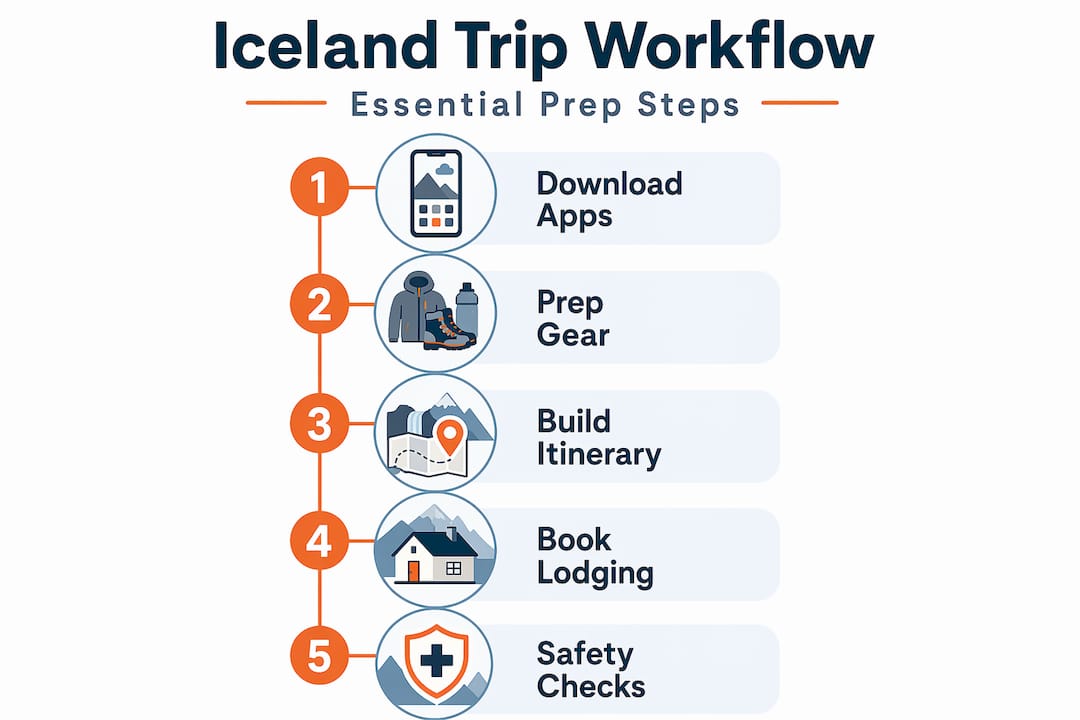
Sort your legal obligations. Wild camping in vehicles has been illegal since 2015, with fines running from 10,000 to 50,000 ISK per violation and the real possibility of impoundment for repeat offenses. F-roads, the highland gravel tracks marked with an “F,” are restricted to four-wheel-drive vehicles and closed entirely until summer conditions permit. Driving on them outside those conditions carries penalties and puts lives at risk.
Your core Iceland trip checklist before departure should include:
- Valid passport and travel insurance that covers adventure activities and medical evacuation
- International driving license if required by your home country
- Downloaded offline maps (Google Maps or Maps.me work well) with emergency service locations cached
- Printed or digital copies of your safetravel.is registration
- Clothing layers built for rapid weather changes: waterproof shell, mid-layer fleece, thermal base, and waterproof footwear
Pro Tip: Pack your rain gear in the top of your bag, not the bottom. Iceland’s weather shifts in minutes, and you will need it accessible constantly.
For trip length, plan for 7 to 10 days to cover the Ring Road at a reasonable pace. If you want to add the Snæfellsnes Peninsula or dip into the Westfjords, budget 10 to 12 days. Shorter trips force compromises you will regret.
Building your Iceland travel itinerary step by step
With your prep sorted, you can start constructing your actual itinerary for Iceland exploration. The key is working from a map outward, not from a wish list inward.
-
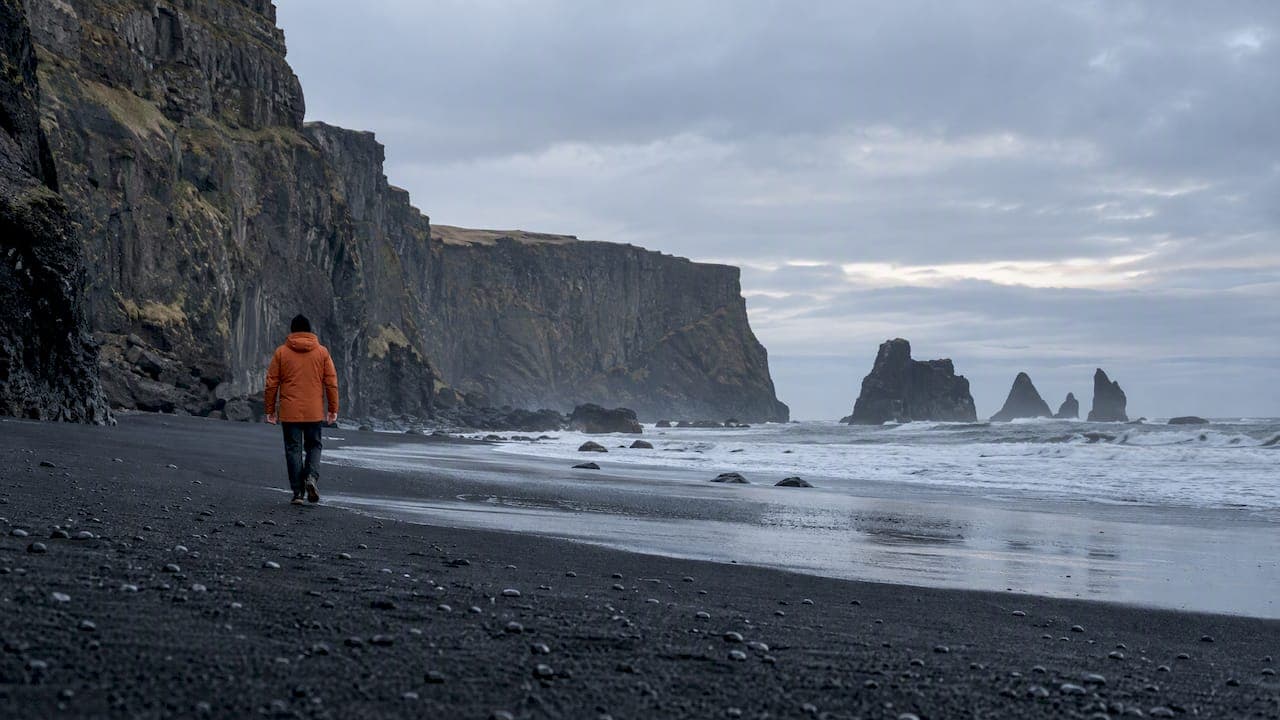
Plot your anchor points. Mark the stops you absolutely cannot miss: Jökulsárlón Glacier Lagoon, Reynisfjara Black Sand Beach, Skaftafell, the Golden Circle. These become fixed nodes on your map around which everything else organizes.
-
Calculate realistic daily driving distances. Iceland’s Ring Road looks manageable on paper, but gravel stretches, road works, and stops for waterfalls add significant time. A 200 km day can easily become a six-hour driving day once you factor in stops. Build chunks of no more than 200 to 250 km per day with meaningful stops.
-
Factor in daylight hours. Daylight ranges from 4 to 5 hours in winter to over 20 hours during summer, which completely changes what you can accomplish in a single day. A summer Iceland travel itinerary can run activities from 6 a.m. to 10 p.m. without a headlamp. A February itinerary needs to concentrate driving and outdoor activities into a narrow window around midday.
-
Build your daily safety check into the schedule. Every morning starts the same way: open road.is, check vedur.is for weather, and confirm your plan is still viable. Only then do you pack the car and leave. This takes five minutes and has saved countless trips.
-
Assign accommodation nodes first. Lock in where you sleep before you finalize what you see each day. This backward method prevents the common mistake of designing a beautiful day only to find there is no accommodation within 80 km of where it ends.
Here is a quick comparison of how itinerary structure changes by season:
| Factor | Summer (June to August) | Winter (November to February) |
|---|---|---|
| Usable daylight | 18 to 22 hours | 4 to 6 hours |
| F-road access | Open (most routes) | Closed |
| Northern Lights | Not visible | High probability |
| Crowd levels | Peak: book early | Low: more availability |
| Activity pacing | Spread throughout day | Compress to midday window |
Pro Tip: Aligning your itinerary to daylight hours is the single biggest determinant of whether your adventure feels spacious or rushed. It is not about how many stops you plan. It is about when you schedule them.
Side trips worth building in if your schedule allows: the Snæfellsnes Peninsula adds roughly one to two days and rewards you with glacier views and dramatic lava fields. The Westfjords require a minimum of two days and suit experienced Iceland travelers who want something genuinely remote.

Safety and logistics workflow while on the ground
Your adventure travel workflow does not stop once the trip starts. The daily execution phase has its own non-negotiable routine.
Every morning, before anything else, check these three sources:
- road.is: Iceland’s official real-time road condition map. A route marked green in the morning can turn red by midday, so refresh it every single day without exception.
- vedur.is: The Icelandic Met Office. Check wind speeds, precipitation, and any yellow, orange, or red weather warnings active in your region.
- safetravel.is: Update your travel plan if your route changes from what you registered the night before.
Red road closures in Iceland are enforced with physical barriers and carry legal penalties. There is no gray area: a red closure means stop. Icelandic road safety experts treat these not as inconveniences but as lifesaving infrastructure, and travelers who ignore them create search-and-rescue emergencies that endanger other people.
“The mountain will still be there tomorrow. The closure exists because the road will not be safe today. Adjust your plan and come back.” This is the mindset every Iceland traveler needs to carry with them.
One often-overlooked preparation: expert travelers cache hospital, police, and rescue locations offline before entering remote regions. Mobile data in Iceland’s interior and some coastal stretches is unreliable or nonexistent. Having those locations saved offline is the difference between a manageable emergency and a catastrophic one.
Keep the 112 app open and charged. If something goes wrong, whether it is a vehicle breakdown in a remote area or a sudden injury on a hike, one tap sends your GPS coordinates to emergency services. No signal needed for the GPS function to work.
Accommodation booking workflow for Iceland
Your accommodation choices are not just about comfort. They shape the entire structure of your itinerary and how much you enjoy each day.
The practical booking workflow looks like this:
- Start with peak anchor locations. The South Coast, the Golden Circle, and Akureyri fill up months in advance in summer. Book early to secure availability and better rates. Leaving these to chance is the fastest route to an expensive last-minute fix.
- Work outward from anchors. Once the busiest stops are locked in, fill the intermediate nights with hostels, guesthouses, or self-catering cottages positioned near your next day’s driving start point.
- Prioritize locations with communal kitchens. Food in Iceland is expensive. Accommodations with shared kitchen facilities cut your daily costs significantly and, as a bonus, tend to attract the most interesting fellow travelers.
- Check room-buyout options for groups or couples. Dorm-style hostels often allow full-room bookings for couples or families who want privacy without paying hotel prices. This is worth asking about at every booking step.
When thinking about hostels on the South Coast, location relative to attractions matters more than amenities alone. A hostel positioned between Vík and Kirkjubæjarklaustur gives you easy access to both Reynisfjara and Vatnajökull National Park without backtracking. That kind of geographic efficiency is worth factoring into your booking workflow just as much as price and facilities.
Common Iceland planning mistakes and how to avoid them
Most Iceland trip problems are foreseeable. Here are the ones that show up most often and how to prevent each one.
-
Underestimating driving distances. Iceland’s roads look short on a map and feel long in person. Narrow lanes, gravel surfaces, and mandatory slow zones around construction or wildlife all add time. Always add 30% to your estimated drive time.
-
Ignoring yellow weather warnings. Travelers often respond to red warnings and dismiss yellow ones. A yellow wind warning in Iceland can generate 90 km/h gusts that make driving genuinely dangerous. Yellow means watch carefully and adjust if it escalates.
-
Attempting F-roads in a two-wheel-drive rental. Rental agreements void your insurance the moment you take a standard car off-road. The financial exposure is significant, and the safety risk is worse.
-
Skipping the safetravel.is registration. It takes two minutes. If something happens to you in a remote area, that registration is how rescue teams find you. It is the highest-value two minutes of your entire trip preparation.
-
Not having a backup accommodation plan. Weather closures can trap you in a location for a day or more. Always know the closest alternative accommodation to each stop, and check their availability before you depart each morning.
Pro Tip: Build one genuinely free day into every week-long Iceland itinerary. Not a recovery day and not a buffer. A day where you have no plan and can chase whatever the morning reveals. Iceland’s best moments often happen in that space.
My honest take on Iceland planning
I have watched travelers arrive in Iceland with extraordinary itineraries printed out and laminated, and I have watched those same itineraries become irrelevant by day two. Not because the planning was bad. Because Iceland does not negotiate.
What I have learned from years of watching people navigate this country is that the most successful travelers are not the ones with the most detailed plans. They are the ones with the best frameworks. They check the road conditions every morning without feeling like they are doing homework. They have already thought through what they do if their planned route closes. They have booked accommodations that give them flexibility to push further or stop earlier.
The daily safety workflow is not a chore. Once it becomes habit, it takes five minutes and genuinely changes how you feel about the trip. Instead of anxiety about what might go wrong, you have confidence that you are operating with the best available information. That psychological shift is underrated.
My honest advice: spend more time choosing where you sleep than you spend choosing what you see. The activities tend to take care of themselves once you are in the right place at the right time. The accommodation is what determines how rested, warm, and social you feel when the next day starts. Get that right and the rest follows.
— Trygve
Plan your South Coast adventure from the right base

If your Iceland travel itinerary includes the South Coast, which it should, where you sleep between Vík and Kirkjubæjarklaustur directly affects how much of it you actually see. Foxhostel sits 35 minutes east of Vík inside Hrífunes Nature Park, positioned perfectly as a Ring Road base camp for day trips to Reynisfjara, Dyrhólaey, Jökulsárlón Glacier Lagoon, and Vatnajökull National Park. Solo travelers can book a single bed. Couples and groups can buy out an entire room for privacy at hostel prices. Add a massive communal kitchen, an on-site pizzeria, and skies dark enough for Northern Lights viewing, and you have a base that supports every part of your adventure workflow. Check availability and book your stay before peak season fills the best nights.
FAQ
What apps are essential for Iceland adventure safety?
Download the 112 Iceland app for one-tap GPS emergency alerts and register your itinerary on safetravel.is before any remote driving. Both are free and take under five minutes to set up.
How many days do I need to plan an Iceland Ring Road trip?
Plan for 7 to 10 days at minimum to cover the 1,332 km route. Budget 10 to 12 days if you want to include side trips like the Snæfellsnes Peninsula.
Is wild camping legal in Iceland?
No. Wild camping in vehicles has been illegal since 2015, with fines up to 50,000 ISK per violation. Always use designated campgrounds or hostel accommodation.
How often should I check road conditions in Iceland?
Check road.is every morning before departure. Conditions can shift from open to closed within hours, and red closures are enforced with physical barriers and legal penalties.
What is the best base for exploring Iceland’s South Coast?
A hostel or guesthouse positioned between Vík and Kirkjubæjarklaustur puts you within reach of Reynisfjara, Vatnajökull, and Jökulsárlón without backtracking. Foxhostel in Hrífunes Nature Park is one of the best-positioned options on the entire South Coast route.
Recommended
- Group accommodation booking workflow for Iceland adventure groups | Fox Hostel – South Iceland
- What Is a Travel Base? Smart Planning for Iceland Adventures | Fox Hostel – South Iceland
- Step-by-step hostel check-in guide for South Iceland travelers | Fox Hostel – South Iceland
- Hostel-Übernachtung in Island: Workflow für Reisende | Fox Hostel – South Iceland