565 km² Eldhraun Lava Field: How to Visit Without Damaging the Moss
565 km² Eldhraun Lava Field: How to Visit Without Damaging the Moss
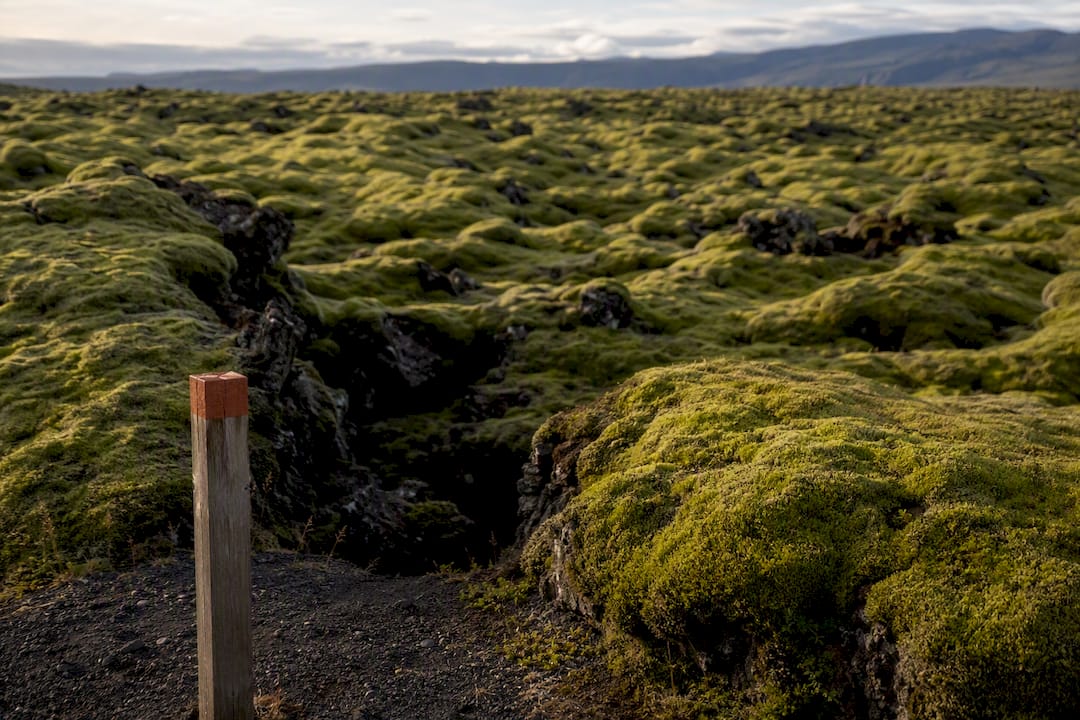
Eldhraun is the world’s largest lava field created by a single volcanic eruption, a roughly 565-square-kilometer blanket of moss-covered rock stretching along Iceland’s Ring Road between Vík and Kirkjubæjarklaustur. It’s an easy, scenic pull-off stop for anyone driving the South Coast. The one rule that matters most: admire the moss, never walk on it.
TL;DR:
- Visiting Eldhraun requires staying on the marked path to prevent long-term moss damage, as footprints can scar the moss for decades.
- The lava field covers 565 square kilometers from the 1783-1784 Laki eruption, which caused widespread famine and weather disruptions in Europe.
- The moss covering Eldhraun is slow-growing woolly fringe moss that signifies two and a half centuries of ecological succession on the volcanic rock.
- Arriving early or late in the day offers better lighting and fewer crowds, especially in windy, unpredictable weather conditions.
- The site has minimal infrastructure; visitors should bring sturdy shoes, windproof layers, and plan their 15-45 minute stop carefully on Route 1.
Table of Contents
- What Are the Key Facts About the Eldhraun Lava Field?
- How Did the Eldhraun Lava Field Form?
- Why Is the Moss at Eldhraun So Important?
- What Should You Know Before Visiting Eldhraun?
- How Does Eldhraun Fit Into a South Coast Itinerary?
- How Can You Visit Eldhraun Responsibly?
- What Local Tips Help You Get the Most Out of Eldhraun?
- Why This Stop Deserves More Than a Drive-By Glance
- Make Eldhraun Part of an Easy South Coast Base
- Where to Learn More About Eldhraun
- Sources
What Are the Key Facts About the Eldhraun Lava Field?
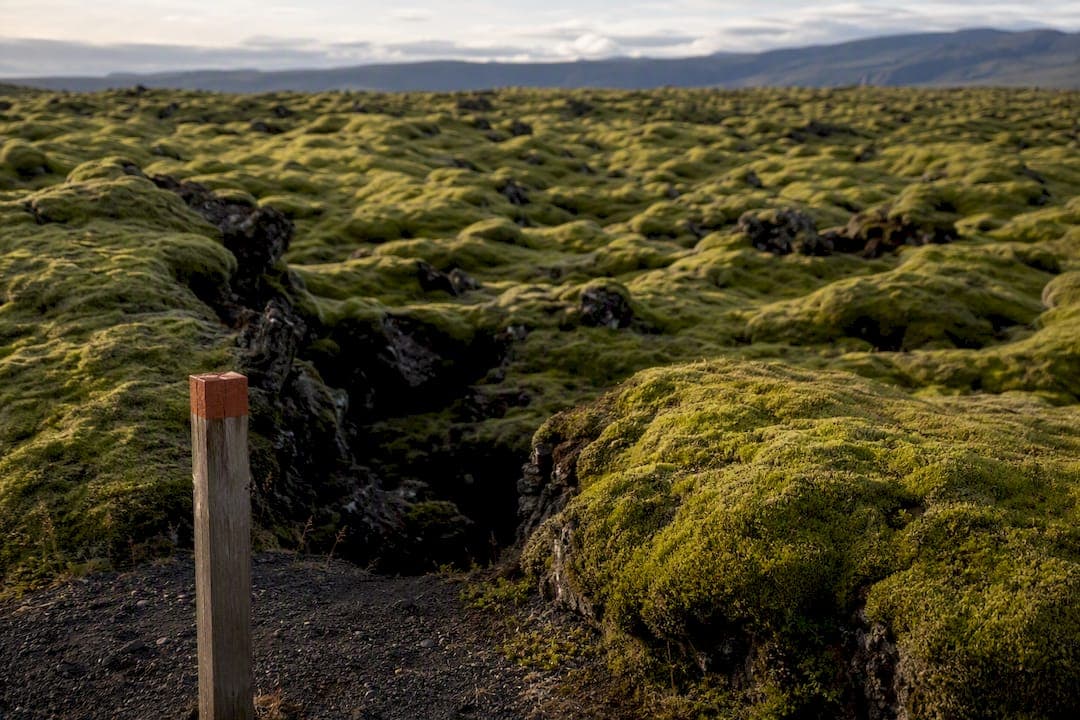
That 565 square kilometer footprint makes Eldhraun bigger than many small countries’ entire land area, and you’re seeing just one lava flow from one eruption event. Standing at the edge of it, the scale is genuinely disorienting. The field spreads across the lowlands south of Vatnajökull, and from the Ring Road it looks less like rock and more like an endless green quilt thrown over the landscape.
Here’s what you need to know before you pull off the road:
- Location: Along Route 1, roughly between Vík and Kirkjubæjarklaustur, with pull-offs and a parking area giving direct access to a short walking path.
- Size: Approximately 565 km², the largest lava field from a single eruption on Earth.
- Typical visit time: 15 to 45 minutes for the roadside stop; longer if you’re combining it with a short walk.
- Facilities: Minimal to none at most pull-offs. Do not expect toilets, cafés, or signage-heavy infrastructure.
- Best season: Accessible year-round, though winter ice can make the pull-off area slippery and daylight hours shorter.
There’s no ticket booth, no visitor center at the roadside stop itself, and that’s part of the appeal. You’re not being managed through an attraction. You’re just stopping at the edge of something enormous.
How Did the Eldhraun Lava Field Form?
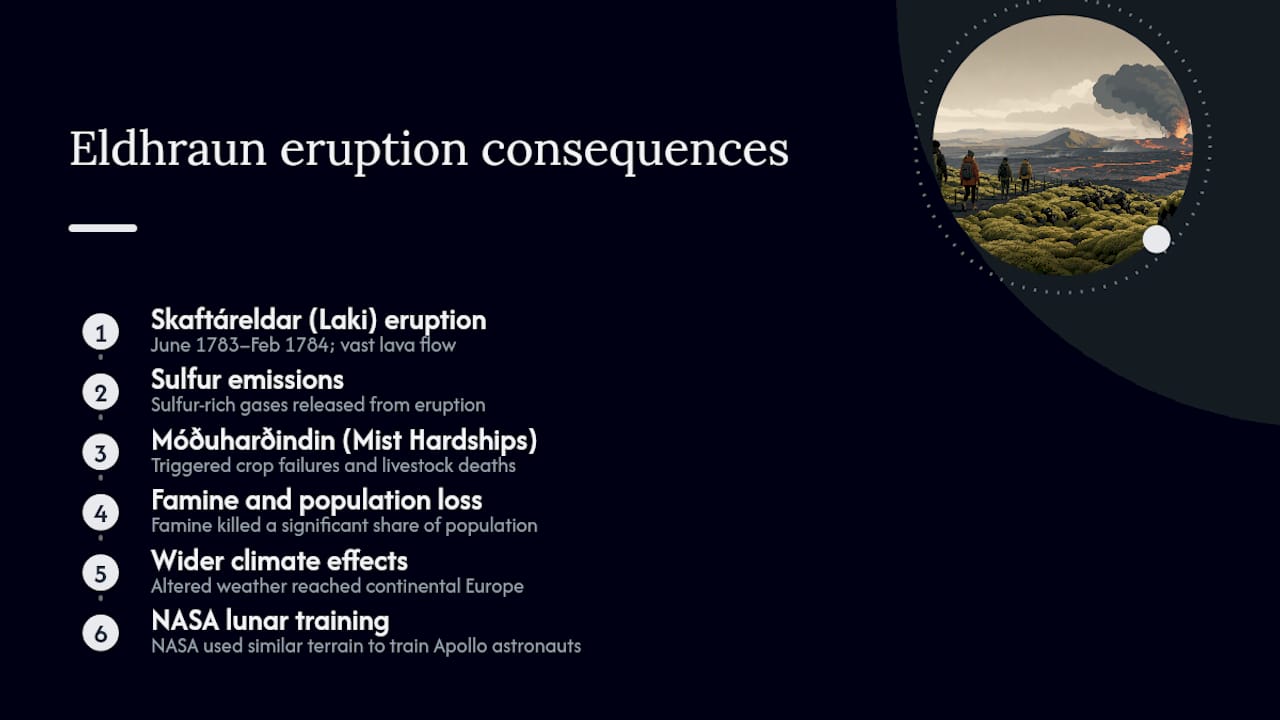
Eldhraun exists because of one of the most destructive volcanic events in recorded Icelandic history. The Skaftáreldar eruption, commonly called the Laki eruption, tore open the earth from June 1783 to February 1784, feeding lava through the Lakagígar fissure system, a crater row stretching more than 27 kilometers across the highlands north of the field.
By the Numbers: The Lakagígar crater row runs over 27 kilometers long. The eruption it fed lasted eight months and produced enough lava to bury an area of roughly 565 square kilometers.
Lava poured south from the fissure, following the natural drainage of the Skaftá and Hverfisfljót river valleys, and eventually spread out across the lowlands to form the flow field you see today. Walk the marked path and you’ll notice two distinct lava textures: smoother, ropey pāhoehoe sections and the jagged, rubble-strewn ʻaʻā that dominates most of the field. Pressure ridges buckle up in places where the cooling crust folded over still-moving lava underneath, and small collapsed lava tubes hint at where molten rock once drained beneath a hardened surface.
The eruption’s consequences went far beyond the lava itself. Sulfur-rich gases released during the eruption triggered Móðuharðindin, the “Mist Hardships,” a period of crop failure, livestock death, and famine that killed a significant share of Iceland’s population and altered weather patterns as far away as continental Europe. There’s also a stranger historical footnote worth knowing: NASA used Iceland’s volcanic terrain, including landscapes like this one, to train Apollo astronauts because the rock formations resembled what they expected to find on the lunar surface.
Why Is the Moss at Eldhraun So Important?
The green carpet covering Eldhraun isn’t grass or lichen in the way most visitors assume. It’s Racomitrium lanuginosum, commonly called woolly fringe moss, and it has spent roughly two and a half centuries slowly colonizing bare volcanic rock. This is what ecologists call primary succession: life establishing itself from essentially nothing, one thin layer at a time, on a surface that started as sterile black rock.
That moss cushion can look thick and springy, almost bouncy underfoot, which is exactly why people are tempted to walk on it for photos. Resist that urge. A single footprint or tire track can scar the moss for decades, sometimes longer, because the growing conditions here (thin soil, harsh wind, short growing seasons) mean recovery happens at a fraction of the pace you’d see almost anywhere else in the world.
- Racomitrium lanuginosum forms a continuous mat over most of the accessible lava.
- Damage from footprints or vehicles can take decades to regrow.
- The moss layer shelters small invertebrates and helps retain moisture that supports sparse vegetation nearby.
- Sheep graze parts of the surrounding lowlands in summer, but the lava field itself sees minimal grazing pressure.
Pro Tip: Bring a zoom lens instead of stepping off the path for a close-up. The moss photographs beautifully from a few feet away, and you get the same shot without leaving a mark that outlasts your trip by fifty years.
What Should You Know Before Visiting Eldhraun?
Getting there is straightforward if you’re already driving Route 1. The main pull-off sits along the Ring Road between Vík and Kirkjubæjarklaustur, with a gravel parking area large enough for a handful of cars and tour buses during peak season. There’s no dedicated visitor center, so watch for the roadside signage rather than a GPS pin promising a formal entrance.
- Park at the marked pull-off. Space is limited, so arrive early or late in the day during summer to avoid squeezing in beside a tour bus.
- Follow the short walking loop, sometimes referred to locally as Gönguleið um Eldhraun, a compact path that winds a short distance into the field over uneven lava rock.
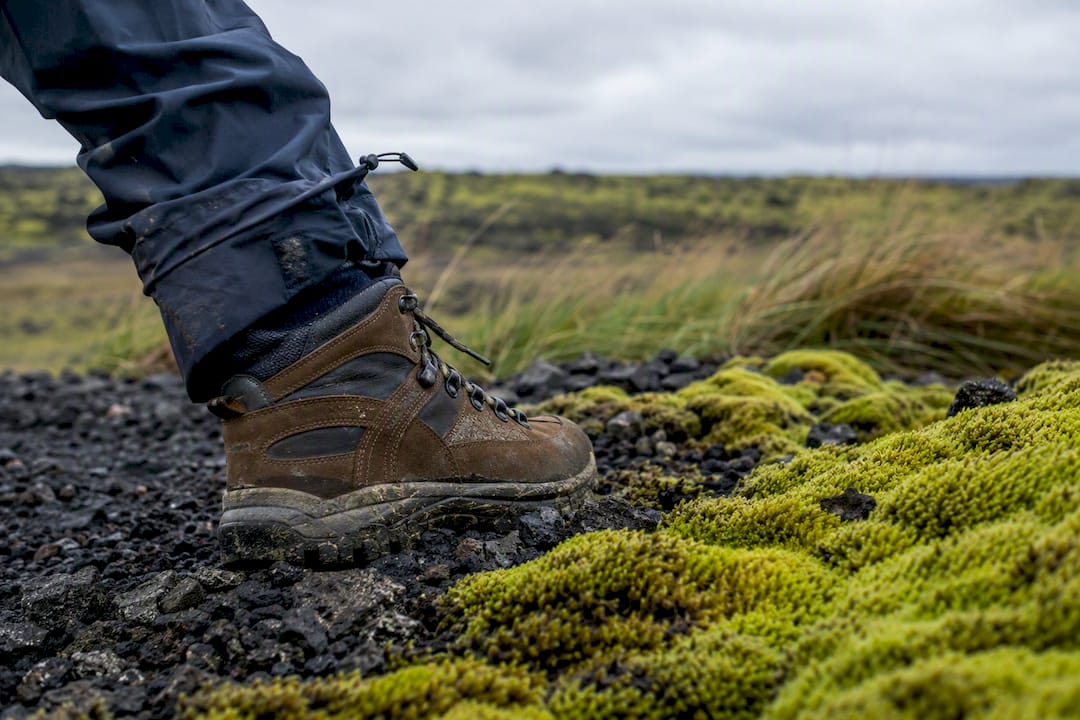
- Wear sturdy, closed-toe shoes. The surface is rocky and uneven, and there’s no boardwalk or paved surface to smooth things out.
- Budget 15 to 45 minutes unless you’re planning a longer photography session or combining the stop with a picnic break.
- Check the weather before you go. Wind on this stretch of the South Coast can be relentless, and low cloud can flatten the visual drama of the lava field considerably.
There’s no accessibility infrastructure here. If mobility is a concern, you can still view the field from the pull-off and parking area, but the walking loop itself involves loose, uneven rock that isn’t wheelchair or stroller friendly. Some travelers prefer joining a guided volcano tour that bundles Eldhraun with other South Coast geology stops, which takes the driving and navigation decisions off your plate entirely, particularly useful on a long touring day when you’d rather look out the window than watch the road.
How Does Eldhraun Fit Into a South Coast Itinerary?
Eldhraun works best as a chapter, not the whole story. Pair it with Fjaðrárgljúfur canyon or a stroll through Kirkjubæjarklaustur for a satisfying 15 to 45 minute add-on that barely disrupts your driving schedule.
If you’re pushing further east, Eldhraun slots naturally into a longer day that includes Skaftafell’s hiking trails and the icebergs drifting through Jökulsárlón, though you’ll want to start early since that combination eats up most of a full day of driving and stops.
- Short add-on: Eldhraun plus Fjaðrárgljúfur or Kirkjubæjarklaustur, under an hour total.
- Full day east: Eldhraun, Skaftafell, and Jökulsárlón, best started before mid-morning.
- Overnight strategy: basing yourself near Vík or Kirkjubæjarklaustur cuts your morning drive time and gets you to the pull-off before tour buses arrive.
Staying close by rather than day-tripping from Reykjavík also means you can time your visit for softer light and thinner crowds, which matters more here than at almost any other South Coast stop given how photogenic the moss looks in low-angle sun.
How Can You Visit Eldhraun Responsibly?
The rules here aren’t bureaucratic red tape. They’re the difference between this landscape looking the same in twenty years or looking trampled and scarred. Conservation guidance for the area is consistent and simple to follow.
- Stay on the marked path and parking areas at all times.
- Never walk, sit, or stand on the moss, even for a photo.
- No off-road driving and no camping anywhere on the lava field.
- Photograph from the path using a zoom lens rather than approaching for a close-up.
- Watch footing near the pull-off in winter, when ice can make the gravel surface treacherous.
Pro Tip: If you see someone walking out onto the moss for a photo, a polite word usually works better than a glare. Most visitors genuinely don’t realize how slow this landscape heals.
If you witness serious damage, like vehicle tracks cutting through the moss, Vatnajökull National Park’s contact channels are the right place to flag it, since parts of the wider Lakagígar region fall under park protection.
What Local Tips Help You Get the Most Out of Eldhraun?
Siggi, who’s guided plenty of guests through this stretch of the South Coast from Fox Hostel, points to early morning as the sweet spot: the light rakes low across the moss, and the tour buses haven’t caught up yet. Late golden hour works almost as well, with fewer crowds and a warmer glow on the green.
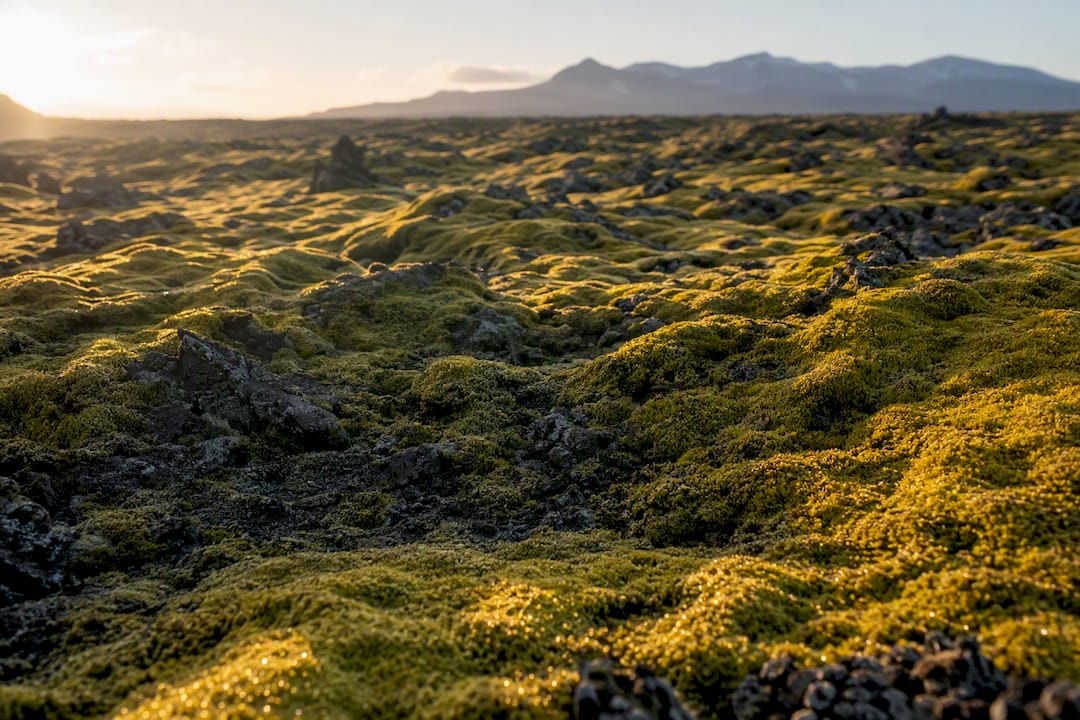
Pack for wind regardless of season, since this open stretch of lowland catches gusts that can make a five-minute photo stop feel like a battle. Sturdy shoes, a windproof layer, and water are enough for a short stop. Guests who overnight nearby tend to catch both the early light and a quieter, unhurried version of the field that midday drivers miss entirely.
Why This Stop Deserves More Than a Drive-By Glance
Most road-trip guides treat Eldhraun as a five-minute photo op wedged between bigger names like Reynisfjara and Jökulsárlón, and that undersells it badly. This is a place where you can trace an entire chain of cause and effect: a fissure eruption, a lava flow, a famine that reshaped Iceland’s population, and then two and a half centuries of moss quietly reclaiming the wreckage. Few roadside stops anywhere pack that much geological and human history into a fifteen-minute walk.
Where conventional advice falls short is treating the moss as scenery rather than as the actual story. The lava is old news, geologically speaking. The moss is the living, ongoing event, and it’s fragile in a way that isn’t obvious until you know how slowly it grows back. If you take one thing from this guide, let it be this: budget your visit around respecting that fragility, not around getting the perfect shot. The two aren’t mutually exclusive, but only one of them should come first.
— Siggi
Make Eldhraun Part of an Easy South Coast Base
Eldhraun sits almost exactly between Vík and Kirkjubæjarklaustur, and Fox Hostel occupies that same midpoint, tucked into a converted barn in Hrífunes Nature Park just 35 minutes east of Vík. That positioning matters more than it sounds: instead of driving from Reykjavík or even from Vík itself, you’re already halfway to the pull-off before breakfast, which means first light on the moss and a head start on the longer eastbound run toward Skaftafell and Jökulsárlón.

Solo travelers can book a single bed, while couples, families, or small groups can take over an entire room for privacy, all inside a hostel built around a massive communal kitchen and an on-site pizzeria for refueling after a day of lava fields and glacier lagoons. Check availability and book your room at Fox Hostel before your South Coast dates fill up.
Where to Learn More About Eldhraun
For deeper reading, Vatnajökull National Park’s Lakagígar pages cover the eruption and current protections, while regional road and weather updates help you time a safe visit.
Sources
- Lakagígar - Vatnajökull National Park
- Eldhraun Lava Field | World’s Largest, Blanketed in Moss
- Eldhraun Lava Field Guide | Skaftáreldar, Laki & South Coast
- Visiting Eldhraun Lava Field