South Coast Black Sand Beaches: Check Safetravel Lights Before You Go
South Coast Black Sand Beaches: Check Safetravel Lights Before You Go

Reynisfjara, just outside Vík, stands as the South Coast’s most recognizable black sand beach, famous for its basalt columns and towering sea stacks. Along the same driving route, you will also pass Dyrhólaey and the Sólheimasandur plane wreck plain, two more black sand landmarks worth building into your itinerary.
TL;DR:
- Check Safetravel’s current beach conditions before departure; yellow signals moderate hazard, orange requires staying well back, and red closes the shoreline.
- At Reynisfjara, never turn your back on the ocean, keep away from the water’s edge, and watch for rockfalls near the cliffs.
- The Sólheimasandur wreck requires a 45–60 minute walk each way across open sand, so allow at least 1.5–2 hours round trip.
- Visit Reynisfjara early in the morning or near sunset for softer light and fewer crowds, then use midday for Dyrhólaey and Vík.
- Choose a guided South Coast tour if time or transport is limited; many combine Reynisfjara, Dyrhólaey, and Sólheimasandur in one day.
Table of Contents
- 1. Notable Black Sand Beaches Along the South Coast
- 2. Safety Risks and the Safetravel Light System
- 3. Getting There: Parking, Walking Distances, and Access
- 4. Photography Tips and Safe Walks
- 5. A Local’s Take on Planning Your Day Near Vík
- 6. Folklore and History Behind the Black Sand Coast
- 7. Guided Tours and Activities Along the Coast
- 8. Protecting the Coastline: How to Minimize Your Impact
- 9. Wildlife You Might Spot Along the Shore
- 10. How the Black Sand Formed
- 11. Why the Danger Is Worth Respecting, Not Avoiding
- Stay Near Vík for Easier Access to Reynisfjara
- FAQ
- Sources
1. Notable Black Sand Beaches Along the South Coast
Each stop along this stretch of coastline offers something different, from dramatic rock formations to a rusting plane fuselage sitting alone on a sand plain. Knowing what to expect before you arrive helps you decide how much time to budget at each one.
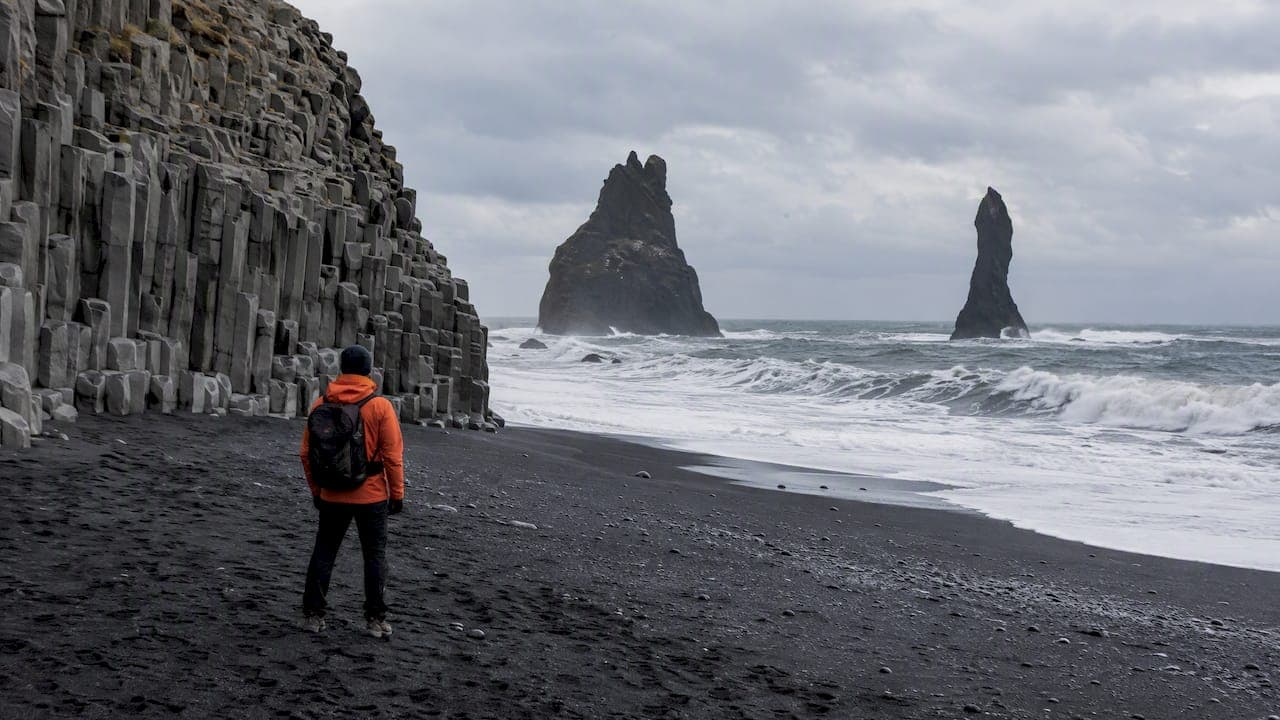
Reynisfjara is the headline stop. The beach is lined with hexagonal basalt columns that rise from the cliffside like stacked honeycomb, and just offshore stand the Reynisdrangar sea stacks, jagged basalt pillars that local folklore ties to trolls caught by sunlight. Most visitors view the columns and stacks from the main parking area and shoreline, though how close you can get to the water depends on current conditions and posted warnings.
Sólheimasandur holds the wreck of a US Navy DC-3 that crash-landed on the black sand plain in 1973. Reaching it requires a walk across flat, open sand, since vehicle access to the wreck itself is no longer permitted.

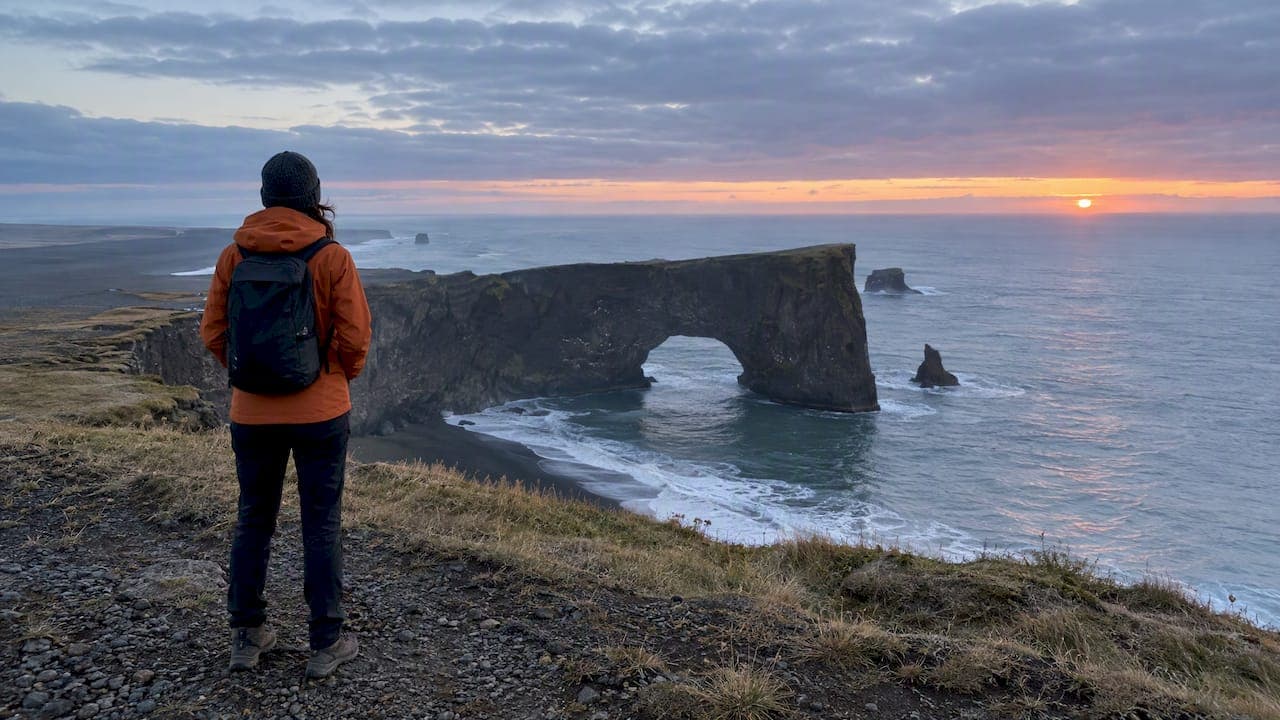
Dyrhólaey offers a clifftop viewpoint rather than a beach walk. From the top, you get a panoramic view of the black shoreline below, a natural sea arch large enough for small boats to pass through in calm weather, and, depending on the season, nesting seabirds along the cliff face.
A few smaller black sand stretches also appear along the route:
- Kirkjufjara, just west of Reynisfjara, offers a quieter shoreline view with similar basalt scenery and fewer crowds.
- Vík’s town beach sits within walking distance of the village and makes an easy, low-effort stop if you are short on time.
- Various pullouts along Route 1 near Vík give quick glimpses of the black coastline for travelers who only have a few minutes to spare.
2. Safety Risks and the Safetravel Light System
The single biggest danger at Reynisfjara is the sneaker wave: a surge that can rush much further up the beach than the waves before it, even when the surf looks calm. These waves can occur without warning during otherwise ordinary conditions, which is why the standard advice is simple and non-negotiable: never turn your back on the ocean, and keep well back from the water’s edge at all times.
Safetravel’s posted light system gives you a clear, at-a-glance read on current risk at the beach. Yellow signals moderate hazard, orange means considerable hazard and requires staying well away from the sea, and red means severe hazard, with the shoreline closed entirely and visitors restricted to designated viewing areas.
Before you go, build these habits into your visit:
- Check Safetravel’s Black Beach Safety page for current conditions before you leave your accommodation.
- Watch for posted warning lights and signage at the entrance and obey them without exception.
- Keep children within arm’s reach and never approach the water to get a closer photo.
- Treat any closure announced by local safety officers as final, since access can be restricted on short notice.
Rockfalls from the cliffs above the beach add a second hazard, which is part of why staying back from both the cliff face and the shoreline matters just as much as watching the waves.
3. Getting There: Parking, Walking Distances, and Access
Planning the logistics ahead of time saves you from wasted driving and helps you judge how much daylight you will actually have.
- Reynisfjara has a marked parking area with a short walk to the main viewpoint and shoreline; how far onto the beach you can go depends on the day’s safety light.
- Dyrhólaey has its own parking area near the clifftop viewpoint, with the panoramic view reachable in a few minutes on foot from the lot.
- Sólheimasandur’s DC-3 wreck sits roughly 45 to 60 minutes’ walk one way across the sand plain from the main parking area, so budget at least 1.5 to 2 hours round trip.
- Guided tours handle parking, timing and route-finding for you, which makes them a practical option if you are short on time or visiting in low light.
- Winter visits come with far shorter daylight hours, and safety officers can close beach access at short notice, so build a buffer into your schedule rather than arriving right at closing light.
4. Photography Tips and Safe Walks
The light around sunrise and sunset flatters black sand more than midday sun does, since low-angle light brings out texture in the basalt columns and adds contrast between the dark sand and the pale sea foam. Overcast days soften shadows and can actually help even out the exposure between sky and shoreline.
- Frame the Reynisdrangar sea stacks and basalt columns from the designated viewpoints rather than walking toward the water for a tighter shot.
- Wear sturdy, waterproof footwear, since the sand holds water and the rocks near the columns can be slick.
- Stay back from cliff edges at Dyrhólaey, where loose ground and wind gusts are common.
- Pack out everything you bring in, and avoid walking on vegetation along the dunes.
Pro Tip: Scout your shot from a safe distance first, then move closer only if the safety light and posted signage allow it.
5. A Local’s Take on Planning Your Day Near Vík
Most travelers get the best light and the fewest crowds by visiting Reynisfjara early in the morning or in the last hour before sunset, then filling the middle of the day with Dyrhólaey and a stop in Vík itself. Pack a portable charger and a warm layer regardless of season, since wind off the water cuts through fast and phone reception can drop in spots along the coast. We cover more of this planning in our itinerary guide for Vík and our local safety notes on sneaker waves.
— Siggi
6. Folklore and History Behind the Black Sand Coast
The Reynisdrangar sea stacks carry one of Iceland’s best-known folk tales: two trolls dragging a three-masted ship toward shore were caught by the rising sun and turned to the basalt pillars that still stand offshore today. The story reflects a broader pattern in Icelandic folklore, where dramatic coastal rock formations are frequently explained as petrified giants or trolls caught outdoors after dark.
Vík itself grew as a small fishing and trading settlement, and its proximity to Reynisfjara has long shaped local life, from fishing routines to the warnings passed down about the unpredictable surf. The Sólheimasandur wreck adds a more recent layer of history: the plane went down in 1973, and the slow decay of its fuselage on the open sand has made it a quiet, man-made landmark on an otherwise untouched black plain. Together, these sites give the coastline a layered identity that mixes centuries-old legend with twentieth-century history, all set against the same dramatic black sand backdrop.
7. Guided Tours and Activities Along the Coast
Guided tours covering Reynisfjara, Dyrhólaey and Sólheimasandur are a practical choice if you want local commentary on the geology and folklore without having to navigate parking and timing yourself. Many tours bundle these three stops into a single South Coast day trip, which suits travelers working with limited time or no rental car.
For those looking to add an adventure element to their South Coast stay, river rafting is a popular complement to a day spent at the black sand beaches. We help arrange a partnered rafting adventure for guests who want to pair the coastal sightseeing with something more active. Independent travelers who prefer their own pace can still benefit from a planned route, which we outline in our guide to planning a South Coast itinerary.
If you are also weighing travel logistics for a longer trip that connects through other regions, resources like this guide to stopover planning can help you think through multi-leg itineraries beyond Iceland itself.
8. Protecting the Coastline: How to Minimize Your Impact
The black sand beaches along this coast sit within protected or environmentally sensitive areas, and the volume of visitors they see each year makes individual habits matter more than they might elsewhere. Staying on marked paths protects the dune vegetation that holds the coastline together, and packing out any trash keeps the beach from accumulating litter that wildlife can mistake for food.
Avoid removing rocks, sand or shells as souvenirs, since the slow erosion that shapes these formations depends on the material staying in place. Drone use is restricted in parts of this area, so check local signage before flying one. Giving nesting birds a wide berth, especially around Dyrhólaey during breeding season, protects both the birds and the experience for everyone visiting after you.

9. Wildlife You Might Spot Along the Shore
Dyrhólaey’s cliffs host nesting seabirds for part of the year, including puffins, which draw their own share of visitors separate from the geology. Seals are occasionally spotted resting on rocks or swimming just offshore along this stretch of coastline, particularly in calmer weather.
The black sand beaches themselves see less wildlife directly on the sand, since the surf and currents here are too rough for casual feeding or breeding, but the cliffs and calmer coves nearby make up for it. Binoculars are worth packing if birdwatching is part of your interest, since the best viewing distance from the cliffs at Dyrhólaey is often too far for a clear look with the naked eye.
10. How the Black Sand Formed
The black color comes from basalt, a volcanic rock that cools and fractures into small dark grains as it’s worn down by waves and weather over time. Iceland’s south coast sits on a landscape shaped by repeated volcanic activity, and the basalt columns at Reynisfjara formed as lava cooled slowly enough to crack into the hexagonal pillars you see today.
The Reynisdrangar sea stacks are remnants of the same basalt formations, left standing after softer surrounding rock eroded away over a long stretch of geological time. Sólheimasandur’s flat black plain has a different origin: it’s an outwash plain built from glacial sediment and volcanic ash, carried down from the highlands and spread across the coast by meltwater and past eruptions. The result is a coastline where sharp columns, isolated stacks and flat sand plains sit within a short drive of each other, each shaped by a different geological process.
11. Why the Danger Is Worth Respecting, Not Avoiding
Reynisfjara earns its reputation as one of the South Coast’s most photographed spots, and that reputation is well deserved: the columns, the stacks, the sheer scale of the Atlantic hitting black sand all make for scenery you don’t find many other places. None of that is a reason to treat the water casually. The same waves that make the scene dramatic are the ones that catch people off guard, so let the posted lights and your own common sense decide how close you get.
— Siggi
Stay Near Vík for Easier Access to Reynisfjara
Staying close to Vík puts you minutes from Reynisfjara for both the early morning and late evening light windows, without the long drive back that cuts a day trip short. 
Our converted barn hostel gives you a comfortable base for exactly this kind of South Coast visit, with:
- Breakfast on site before an early start toward the beach.
- Dinner at our on-site Hrífunes Pizzeria after a full day outdoors.
- Shared dormitories or private dormitories depending on how much privacy you want.
- Group Bookings for larger parties planning the same South Coast route together.
Check room availability or look into group bookings if you’re planning this trip with others.
FAQ
Which beach in California has black sand?
Pfeiffer Beach, near Big Sur, is the best-known black sand beach in California, with its purple-black sand coloring coming from manganese garnet deposits washed down from the surrounding cliffs. It draws visitors mainly for sunset photography through a natural rock arch just offshore.
What beach in Oregon has black sand?
Several beaches along the Oregon coast, including stretches near Yachats and Lincoln City, show patches of dark sand formed from eroded basalt and volcanic rock, similar in origin to Iceland’s black sand coastline. The coloring tends to be most visible after storms wash fresh sediment ashore.
Where can I find a beach with black sand?
Black sand beaches form wherever volcanic rock, usually basalt, erodes into fine dark grains along a coastline, which is why they appear in volcanically active regions worldwide. Iceland’s south coast, Hawaii, and parts of the Pacific coast of the United States all have notable examples.
Where are some black sand beaches located in the US?
In the United States, black sand beaches appear mainly in Hawaii, including Punaluʻu Beach on the Big Island, along with scattered patches on the Oregon and California coasts where volcanic rock has eroded over time. Each formed through the same basic process of basalt breaking down into fine dark sediment.