Why choose offbeat Iceland for unforgettable adventure
Why choose offbeat Iceland for unforgettable adventure
TL;DR:
- Most of Iceland’s visitors experience overcrowded sites that damage fragile ecosystems and erode local culture.
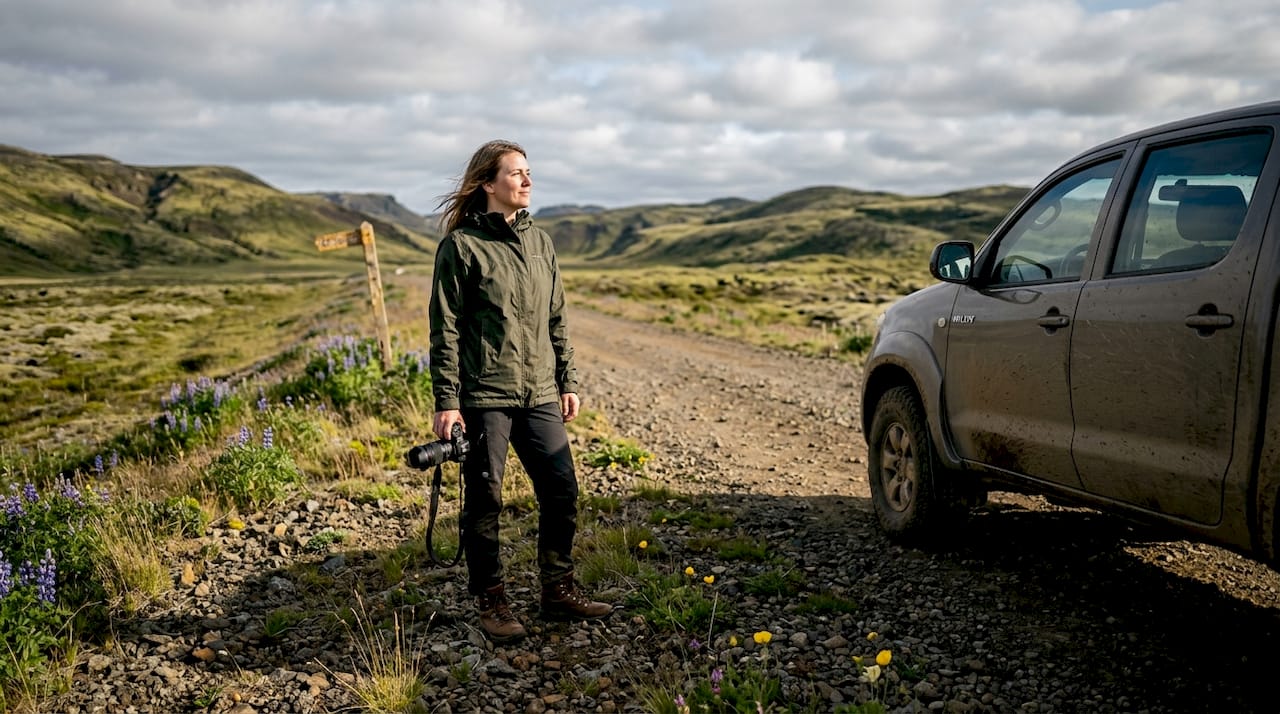
- Venturing offbeat and rural areas offers solitude, authentic connections, unique photography, and less environmental impact.
- Preparation, responsible travel, and local knowledge are essential for safe, sustainable, and rewarding off-the-beaten-path adventures.
Iceland draws over two million visitors a year, yet most of them stand in the same three lines, stare at the same waterfalls, and fight for parking at the same black sand beaches. The Golden Circle, Geysir, and Reynisfjara are genuinely spectacular, but the version of Iceland most travelers experience is filtered through tour bus windows and selfie sticks. The real country, the one that makes people quit their jobs and move here, lives somewhere quieter. This guide breaks down why skipping the standard route is worth it, what you’ll actually gain, how to prepare, and why it matters far beyond your own Instagram feed.
Table of Contents
- Why the usual Iceland highlights are overcrowded
- Unique rewards: What offbeat places offer to travelers
- What to plan for: Challenges and prep for offbeat adventures
- The bigger picture: Sustainable travel and local impact
- Our perspective: What most travelers miss about offbeat Iceland
- Stay smart: Your adventure base for exploring offbeat Iceland
- Frequently asked questions
Key Takeaways
| Point | Details |
|---|---|
| Crowd-free adventure | Offbeat Iceland guarantees more solitude and unique experiences than mainstream tourist routes. |
| Travel responsibly | Visiting lesser-known places helps preserve fragile ecosystems and supports rural communities. |
| Plan and prepare | Offbeat routes require more careful planning, from 4WD vehicles to emergency supplies. |
| Authentic connections | Immersing in lesser-visited spots offers genuine encounters with Icelandic culture and nature. |
Why the usual Iceland highlights are overcrowded
The numbers are hard to ignore. Iceland’s population sits around 370,000 people, but tour buses arrive every 8 minutes in summer at major sites, with roughly 1.5 million visitors passing through annually, causing measurable damage to moss and local ecology. Icelandic moss grows just 1 millimeter per year. One footstep off a marked trail can erase decades of growth. That’s not an exaggeration; it’s a documented ecological reality.
The Golden Circle alone handles a staggering volume of foot traffic every single day. Geysir erupts on cue, but the viewing area around it has been compacted, roped off, and reshaped by constant human presence. Gullfoss is breathtaking, no argument there, but you’re sharing the moment with hundreds of strangers, tour groups, and the hum of diesel engines idling in the parking lot.
“The land remembers every footprint. Iceland’s volcanic soil and fragile vegetation cannot absorb the pace of modern mass tourism without visible and lasting consequences.”
Here’s a quick look at how the most visited sites compare in terms of pressure and ecological risk:
| Site | Annual visitors | Ecological sensitivity | Crowd density (peak) |
|---|---|---|---|
| Geysir | ~1.5 million | Very high | Extreme |
| Gullfoss | ~1.3 million | High | Very high |
| Reynisfjara | ~800,000 | High | High |
| Fjaðrárgljúfur canyon | ~300,000 | Very high | Moderate |
| Remote Highland sites | Under 50,000 | Moderate | Low |
The cultural cost runs deeper than ecology. When a place becomes a checkbox, it loses its power. Locals in popular towns describe a creeping sense of alienation as their villages transform into service hubs for tourists who rarely stay more than an hour. People who discover Iceland through meeting travelers in Iceland and genuine connection report a completely different relationship with the country.
The most damaging misconception is that the “must-see” sites are the best Iceland has to offer. They’re the most marketed. That’s not the same thing.
- Parking lots expand annually to meet demand, eating into natural buffer zones
- Signage and fencing multiply to manage crowds, reducing the wilderness feel
- Wildlife near popular sites becomes habituated or displaced by noise and activity
- Local prices spike in tourist zones, pricing out Icelanders themselves
Unique rewards: What offbeat places offer to travelers
Here’s the quiet truth: the Iceland you dreamed about before you booked your flight is still out there. It’s just not on the standard tour route. When you leave the main road, even briefly, everything shifts. The silence becomes physical. You notice the color of lichen on lava rock. A ptarmigan walks across your path without flinching.
Authentic rural stays across the South Coast consistently report that guests who venture off the typical path describe their experiences as transformational rather than merely enjoyable. That gap matters. Surveys of niche adventure travelers show that 45% prioritize unique stories over convenience when planning their trips. They’re not optimizing for comfort; they’re optimizing for memory.
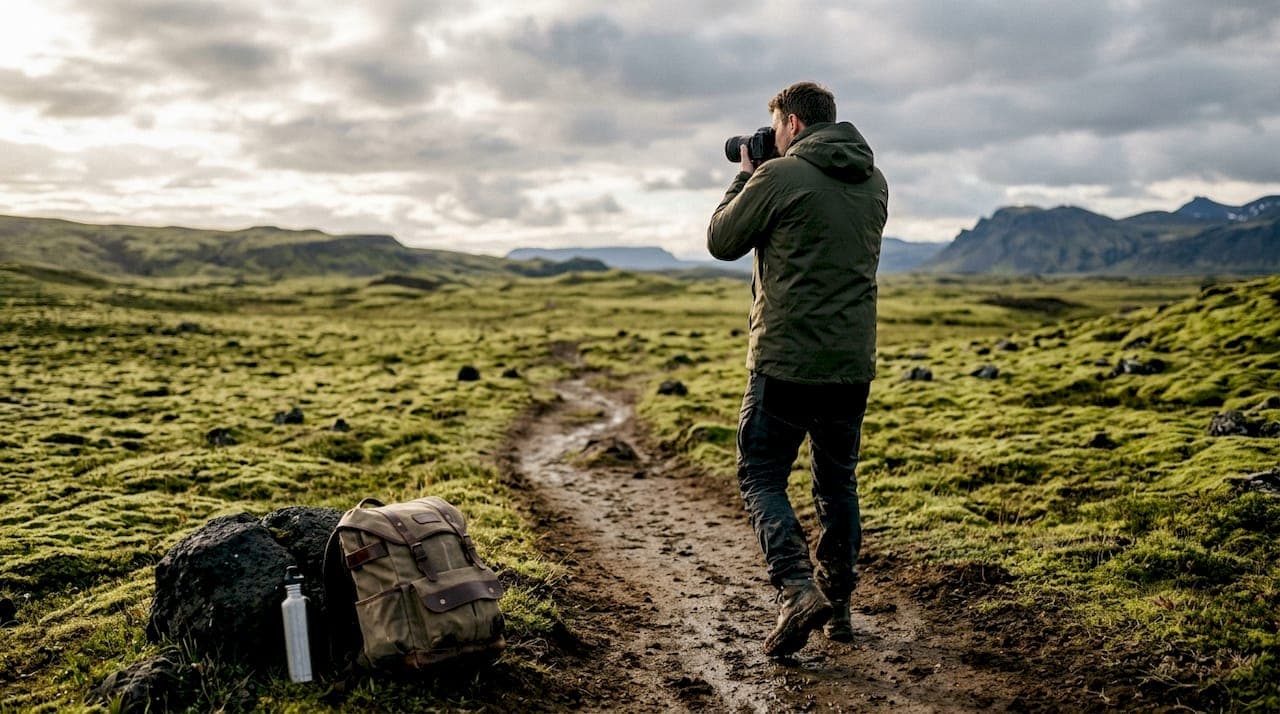
The photography opportunities alone are worth the detour. Iconic sites are stunning in images precisely because great photographers found compositions before they became crowded. Those same compositions now have 300 tourists standing in them. Offbeat locations still offer untouched foregrounds, uninterrupted horizons, and light that hasn’t been photographed from every angle yet.
Pro Tip: When shooting in remote Iceland, go at local golden hour, which runs extremely long in summer (sometimes three to four hours of warm light). Bring a polarizing filter for lava fields and river shots, and shoot toward the shadow, not the sun, to pull out texture in volcanic rock.
Here’s a side-by-side of what the two paths actually look like:
| Experience factor | Main tourist route | Offbeat path |
|—|—|—|
| Solitude | Rare | Common |
| Wildlife encounters | Habituated animals | Wild behavior |
| Photography originality | Low | High |
| Cultural connection | Shallow | Deeper |
| Personal sense of discovery | Minimal | Strong |
| Environmental impact | High | Spread thin |
Venturing toward hidden gems near Vík gives travelers the rare combination of easy access and genuine discovery. The area around Vík has coastline, canyon, and lava fields that most visitors drive past without stopping.
- Arctic foxes spotted in areas with low foot traffic
- Waterfalls with zero viewing platforms or guardrails
- Geothermal pools with room for exactly your group
- Fishing villages where locals are genuinely glad you stopped
What to plan for: Challenges and prep for offbeat adventures
Let’s be honest about what offbeat travel in Iceland actually requires. It’s not hard, but it demands respect. The country will not accommodate carelessness, and remote areas often require 4WD vehicles, careful weather planning, and tolerance for fewer facilities and higher uncertainty.
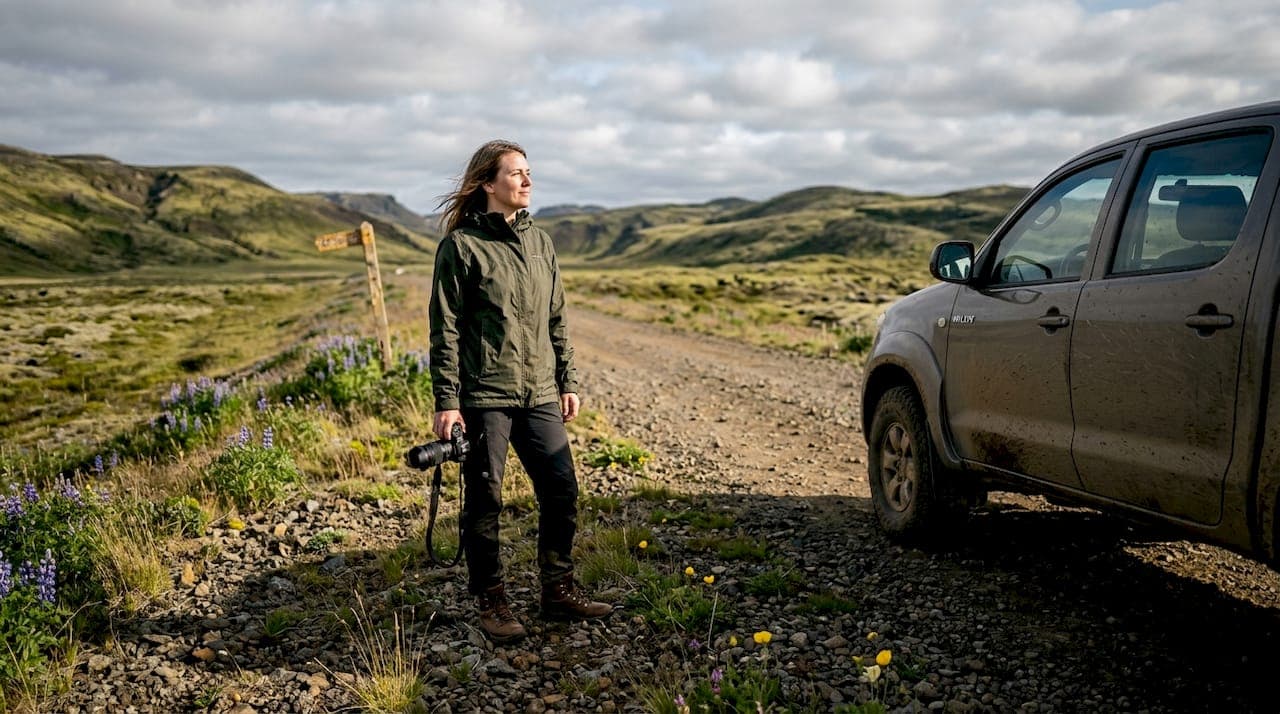
Iceland’s F-roads are only legally accessible in a 4WD, and attempting them in a standard rental car voids your insurance instantly. River crossings, loose gravel, and sudden weather changes are real factors, not travel blog hyperbole. The weather in the south can shift from sunshine to near-whiteout in 40 minutes.
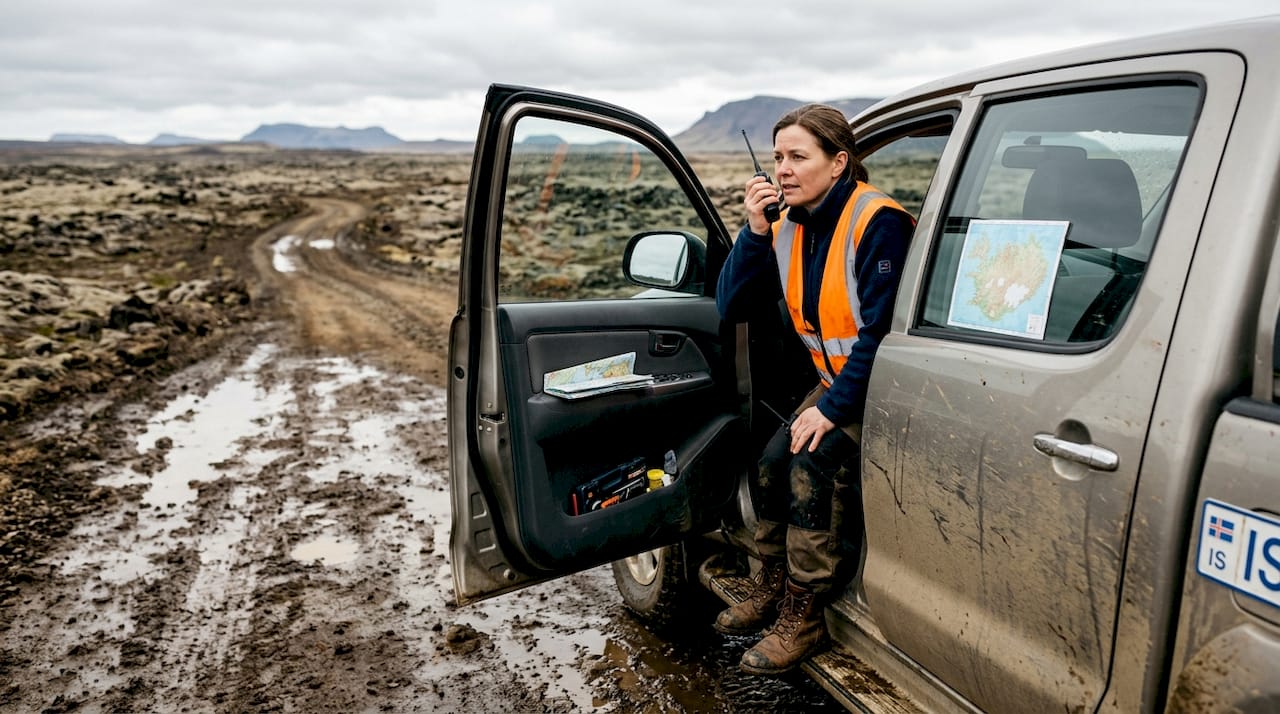
Services thin out dramatically once you leave Ring Road corridors. Fuel stations may be 80 kilometers apart. Grocery stores in small villages sometimes keep limited hours. Cell service drops in valleys and behind ridge lines. These are not dealbreakers; they’re the conditions you plan around.
Here’s a practical prep checklist before any offbeat Iceland route:
- Rent a certified 4WD vehicle and confirm your insurance covers F-roads
- Download offline maps using Maps.me or Gaia GPS before you lose cell signal
- Check road conditions daily at road.is (Vegagerðin’s official road authority site)
- Carry at least two days of emergency food and water per person
- Pack layers for every season: waterproof outer shell, mid-layer fleece, thermal base
- Bring a portable power bank and a headlamp with spare batteries
- File a travel plan with safetravel.is if heading into truly remote terrain
- Tell someone your route and expected return time
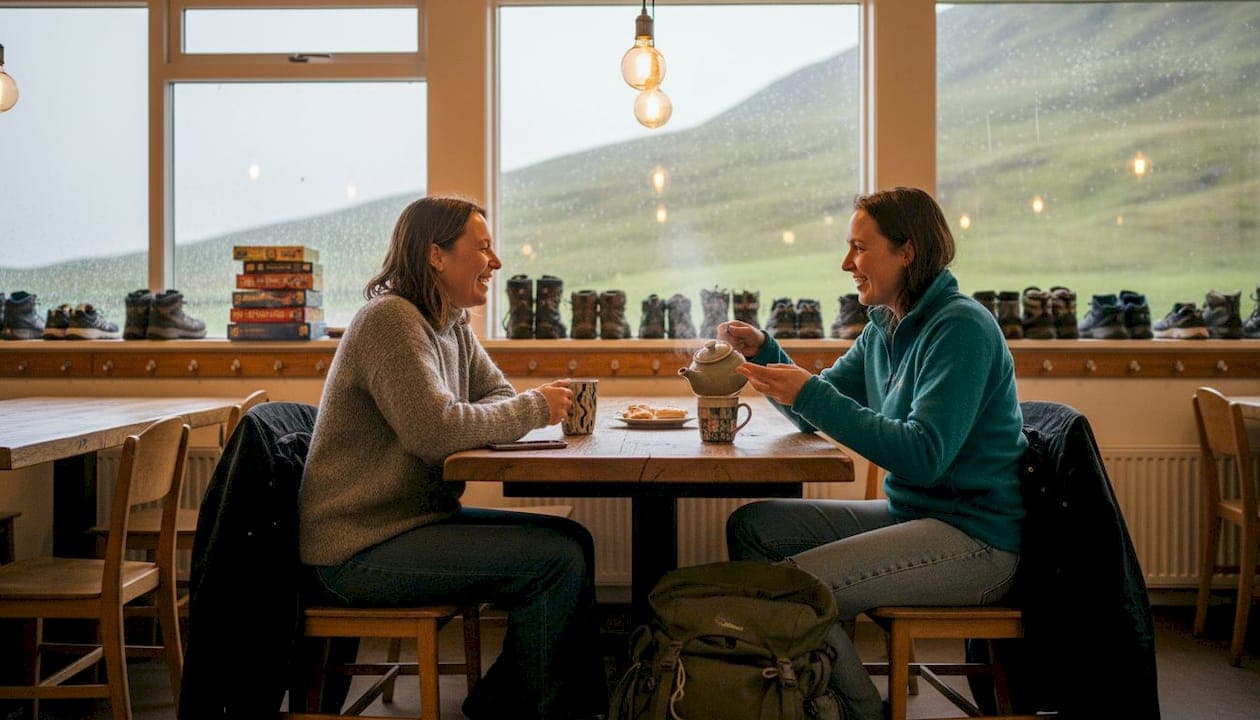
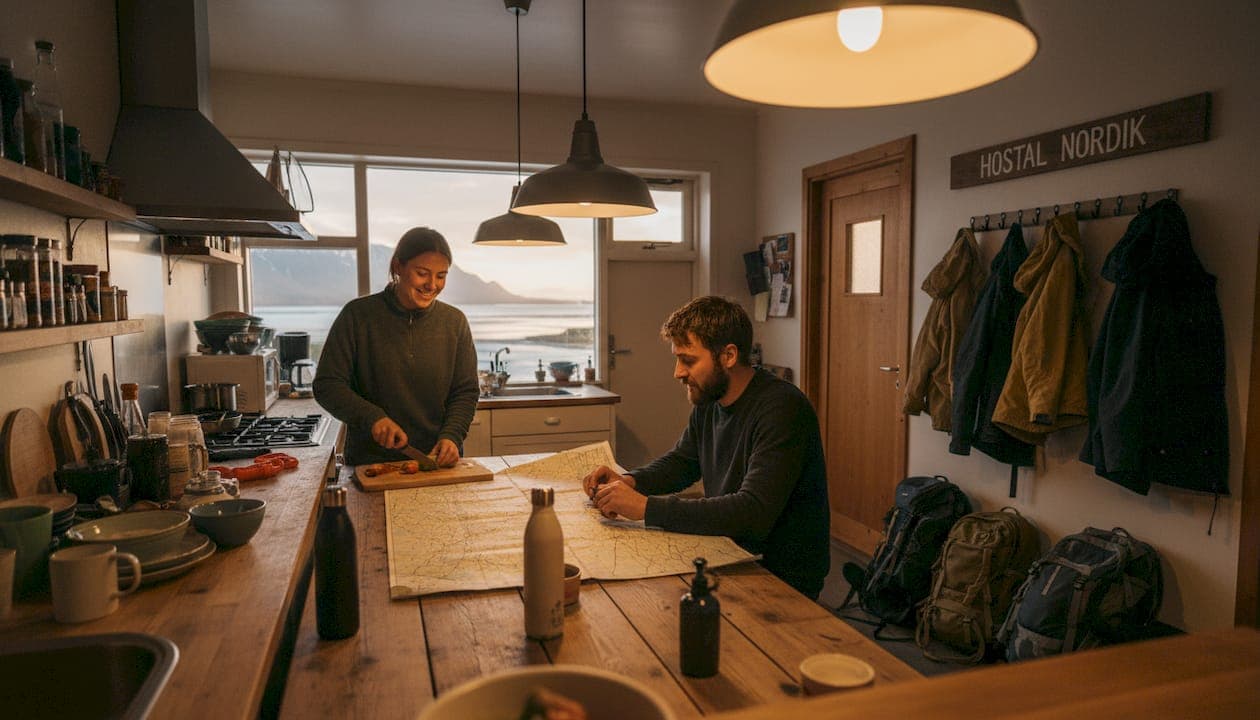
Pro Tip: Local hostel staff are often the best source of real-time route intelligence. They hear from travelers who came through yesterday, which means they know which roads have fresh washouts or which viewpoints are worth the detour this week. This local knowledge is genuinely hard to replicate with apps.
For travelers watching costs, reading up on Iceland budget travel tips before booking can make a significant difference. Knowing what a self-service hostel offers versus a staffed guesthouse also shapes how you plan resupply stops on longer routes.
The bigger picture: Sustainable travel and local impact
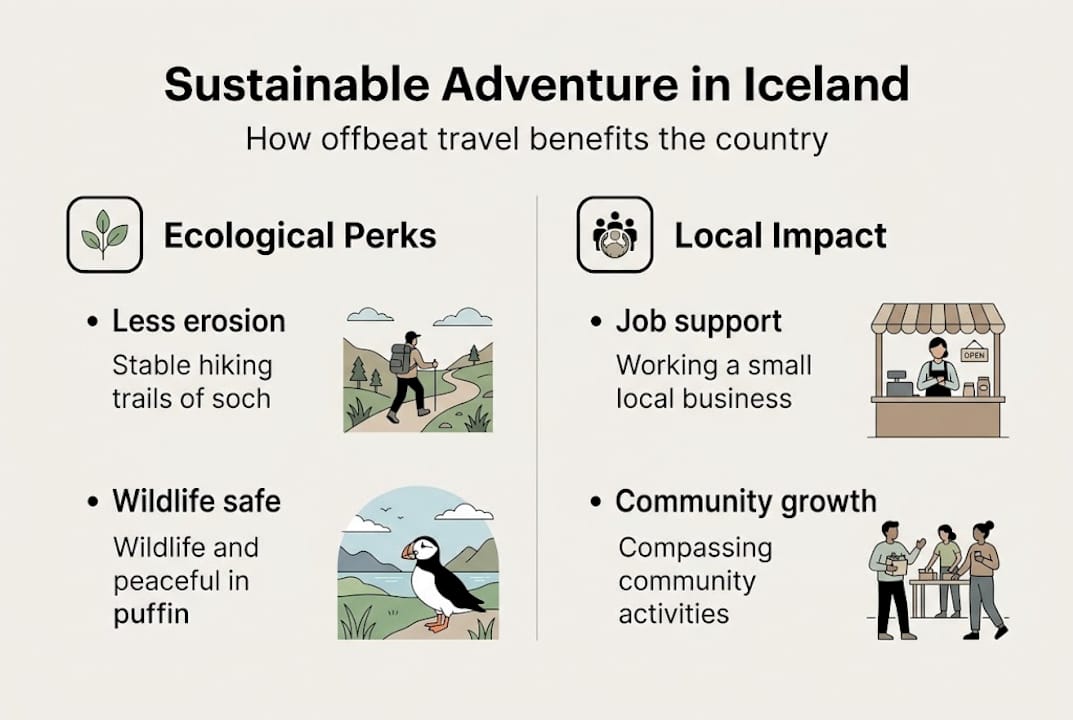
When you choose a small village over a tourist hub, your money behaves differently. It goes to the family running the guesthouse, the farmer selling lamb at the roadside stand, the local guide who knows every bird call in the valley. This is the economic logic behind sustainable travel, and Iceland’s government takes it seriously.
Iceland is now tracking visitors at 40 sites nationwide, installing counters to monitor flow and plan intervention before damage becomes irreversible. That’s a significant commitment, and it signals that the country understands the pressure its most beloved landscapes are under.
“Distributing tourism across lesser-visited regions doesn’t just protect ecosystems; it rebuilds the economic dignity of communities that tourism often passes by entirely.”
Offbeat travel spreads the financial benefit outward and reduces the environmental load on fragile hotspots. When fewer people crowd into a single canyon or waterfall area, recovery time improves and natural behavior resumes. Birds nest closer to trails. Plants recolonize compacted soil. The place heals.
There are concrete ways you can contribute right now:
- Stay in locally owned accommodation rather than international chain properties
- Eat at village restaurants over tourist-zone cafés
- Buy provisions from local farms and markets when routes allow
- Leave no trace with extra intention: pack out everything, stay on marked paths
- Support nature hostels in Iceland that operate with low environmental footprints
- Share route information with fellow travelers to spread foot traffic evenly
The Icelandic government’s monitoring efforts only work if travelers choose to respond to them. Counter data means nothing if visitors keep flooding the same ten sites. Your itinerary is a vote for which version of Iceland survives.
Our perspective: What most travelers miss about offbeat Iceland
Most travelers arrive in Iceland with a list. They move through it efficiently, photograph each item, and leave satisfied. We’d argue they also leave a little hollow, because checklists don’t produce wonder. Uncertainty does.
The moments that stay with you from Iceland are never the ones you planned. They’re the unexpected fog rolling across a lava field at midnight, the silence inside a narrow gorge where you can hear your own heartbeat, the sheep that blocks the road for 10 full minutes and refuses to care about your schedule. These moments require space, and space requires leaving the crowd behind.
Experiencing rural Iceland on its own terms means accepting that the road might be longer, the facility might be a single tap and a dry toilet, and the reward might be a view no one else saw that day. That’s not a downgrade. That’s the whole point.
Intentional travel isn’t about suffering for bragging rights. It’s about showing up somewhere with genuine curiosity instead of a camera queue. Iceland rewards that posture more than almost any destination on earth.
Stay smart: Your adventure base for exploring offbeat Iceland
Planning an offbeat Iceland route means choosing where you sleep with as much care as where you explore. The right base changes everything.

Fox Hostel sits in Hrífunes Nature Park, 35 minutes east of Vík, converting a traditional Icelandic barn into a premium, community-driven space that genuinely suits this kind of travel. Dark skies for Northern Lights, a fully equipped communal kitchen, an on-site pizzeria, and staff who know the region well make it a real launchpad rather than just a bed. Solo travelers can book a single bunk, while groups can take over a full room for privacy. Browse affordable rural stays and review the full range of hostel room options to find what fits your crew and your budget.
Frequently asked questions
Are offbeat destinations in Iceland safe for solo travelers?
Yes, offbeat destinations are generally safe, but preparation is everything. Solo travelers should carry extra gear, file travel plans, and plan for facility gaps that are common in remote areas.
What’s the best way to reach hidden gems in Iceland?
A certified 4WD rental and a daily check of road conditions at road.is are essential, since 4WD and road planning are non-negotiable for most remote routes where public transit simply doesn’t reach.
Does traveling off the beaten path help Icelandic communities?
Absolutely. Choosing lesser-visited areas distributes economic benefits to rural communities and reduces ecological pressure on the country’s most strained natural sites.
Will I miss famous sights by focusing on offbeat places?
Not necessarily. Most travelers combine one or two iconic stops with a primarily offbeat itinerary, which gives you a balanced experience without surrendering the unique rewards of going your own way.
Recommended
- Must-see attractions near Vík: adventure & hidden gems | Fox Hostel – South Iceland
- Top couples room types in Iceland for comfort & adventure | Fox Hostel – South Iceland
- Explora Vík en Islandia: aventura auténtica y asequible | Fox Hostel – South Iceland
- Experience real Iceland: why rural stays offer more for less | Fox Hostel – South Iceland
- Top 15 Unforgettable Things to Do on the Isle of Skye - Skye Highlands Tours