What Are Icelandic Glaciers? Facts, Types, and Features
What Are Icelandic Glaciers? Facts, Types, and Features
TL;DR:
- Iceland’s glaciers cover about 10% of the land area and are shaped by volcanic heat and Arctic climate. They are rapidly melting, losing approximately 15 billion tonnes of ice in 2024-2025, due to warmer temperatures, less snowfall, and subglacial volcanic activity. These dynamic ice systems significantly influence Iceland’s landscape, ecology, tourism, and climate monitoring efforts.
Icelandic glaciers are large, slow-moving bodies of ice formed from centuries of compressed snow, and they currently cover about 10% of Iceland’s land area across roughly 269 named glaciers. The three dominant ice masses are Vatnajökull, Langjökull, and Mýrdalsjökull, each shaping the country’s terrain in ways that no other geological force can match. What makes Iceland’s glaciers unlike those found anywhere else on Earth is the collision of two opposing forces: Arctic climate from above and volcanic heat from below. That tension produces glaciers that advance, retreat, flood, and collapse on timescales that geologists elsewhere rarely witness.
What are Icelandic glaciers and how do they form?
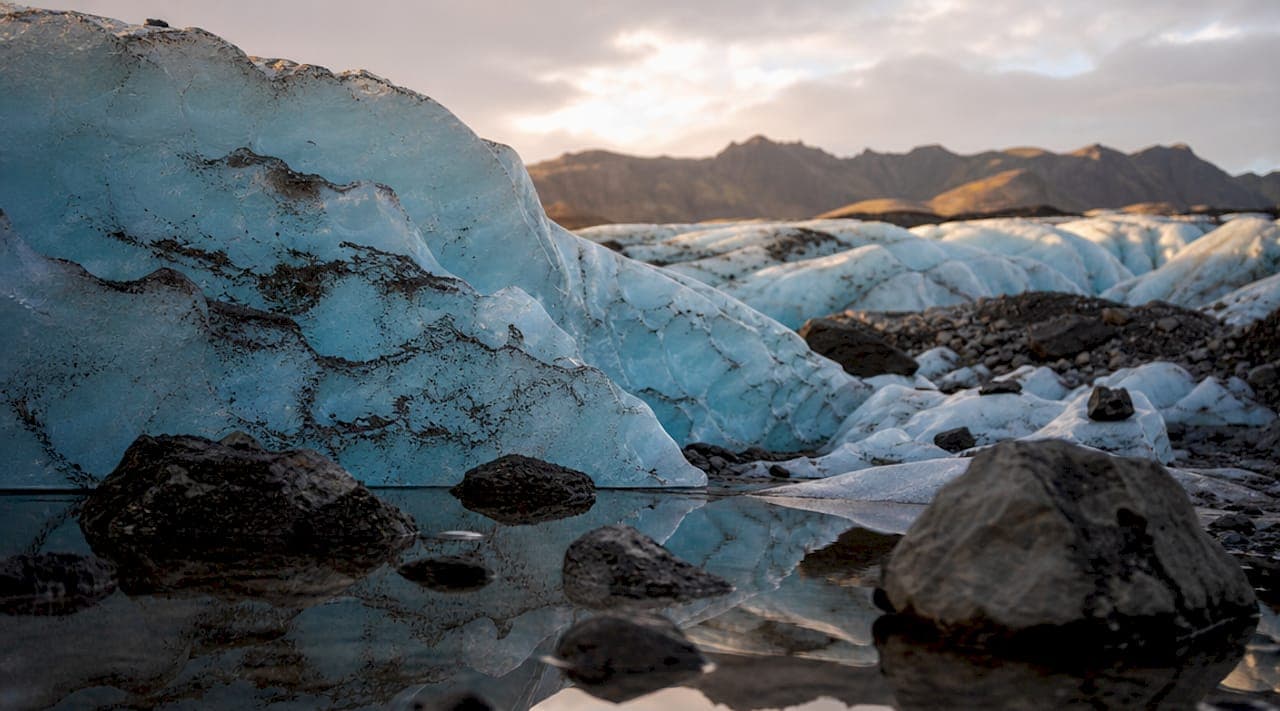
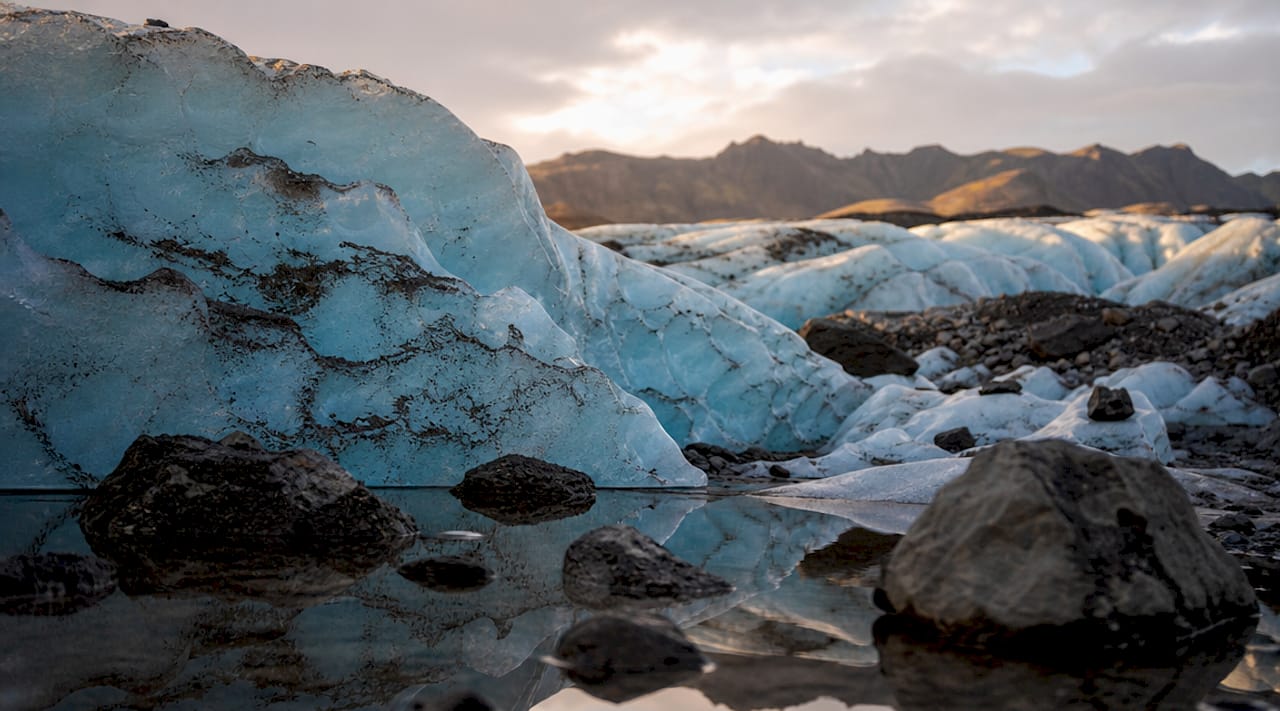
Glacier formation begins with a simple imbalance: more snow falls each winter than melts each summer. Over decades, that accumulated snow compresses under its own weight into a dense, granular material called firn. With continued pressure over centuries, firn transforms into true glacial ice, a substance so dense that air bubbles are almost entirely expelled. This is the same compression process that creates blue ice, the vivid color visible in Iceland’s ice caves and crevasse walls.
Iceland’s glaciers carry an extra layer of complexity that most glaciers worldwide do not. Several major ice caps sit directly over active volcanic systems. Vatnajökull, for example, covers both Grímsvötn and Bárðarbunga, two of Iceland’s most active volcanoes. Geothermal heat beneath these glaciers drives subglacial melting from the bottom up, adding a second source of ice loss that operates entirely independently of surface air temperatures. When a subglacial eruption occurs, the resulting meltwater can burst through the glacier in a catastrophic flood called a jökulhlaup, reshaping the landscape in hours.
- Snow accumulates faster than it melts, building up annual layers
- Pressure converts snow to firn, then firn to dense glacial ice
- Air is expelled during compression, producing the characteristic blue color
- Volcanic heat from below accelerates melting independent of climate
Pro Tip: If you want to see the most vivid blue ice, visit an ice cave inside Vatnajökull between November and March. Summer meltwater makes cave ceilings unstable, so winter access is both safer and more visually dramatic.
What types of glaciers exist in Iceland?
Iceland hosts several distinct glacier types, each with different scales, behaviors, and ecological roles. Understanding the differences helps explain why Vatnajökull behaves so differently from a small alpine glacier clinging to a mountain ridge in the Westfjords.
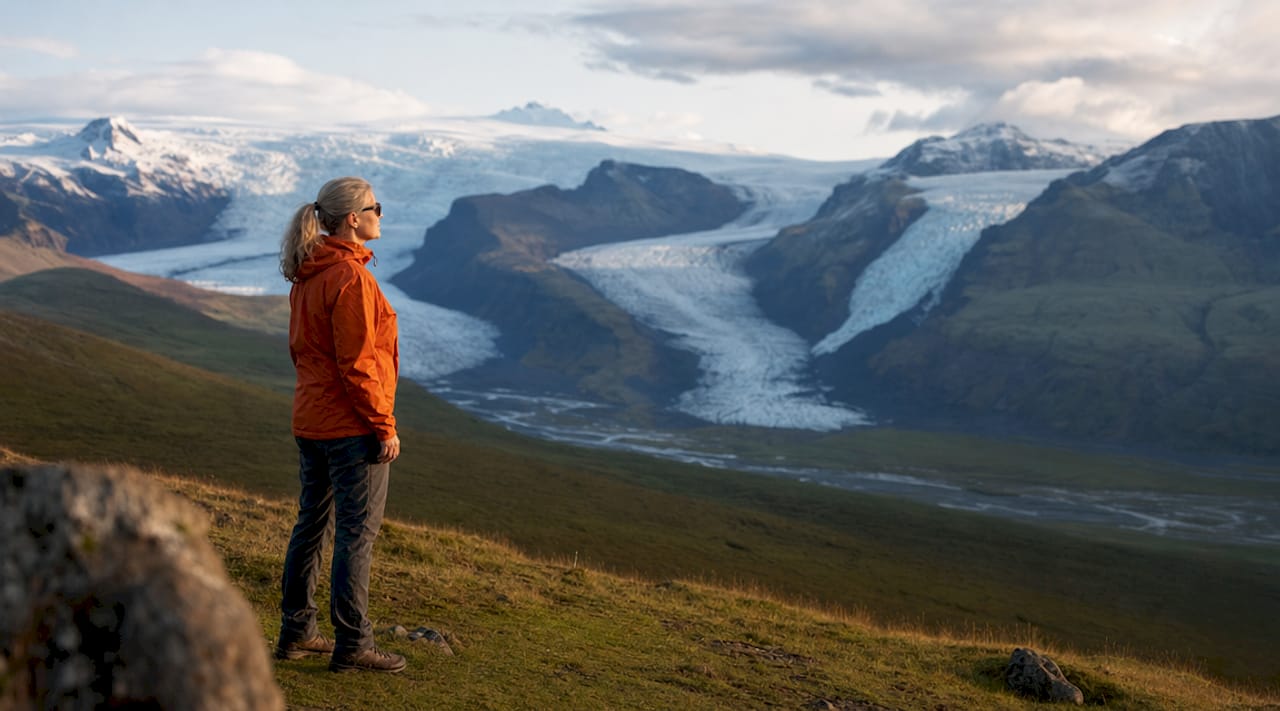
Ice caps are the dominant form. Vatnajökull covers approximately 7,900 square kilometers, making it Europe’s second largest ice cap by volume. Langjökull, the second largest in Iceland, spans roughly 900 square kilometers. These are not simply thick sheets of ice. They are elevated domes that generate their own weather patterns and feed multiple outlet glaciers flowing outward in every direction.

Outlet glaciers are the tongues of ice that extend from ice caps down into valleys. Skaftafellsjökull and Svínafellsjökull are two well-known outlet glaciers flowing from Vatnajökull. They move faster than the parent ice cap because the terrain channels and accelerates ice flow, producing the dramatic crevassed surfaces that glacier hikers walk across on guided tours.
Mountain glaciers are smaller, independent ice masses that form on high peaks without a parent ice cap feeding them. These are the most vulnerable to warming temperatures because they lack the mass reserves that large ice caps carry.
| Glacier type | Example | Key characteristic |
|---|---|---|
| Ice cap | Vatnajökull, Langjökull | Dome-shaped, feeds multiple outlet glaciers |
| Outlet glacier | Skaftafellsjökull, Svínafellsjökull | Flows from ice cap into valleys, highly crevassed |
| Mountain glacier | Snæfellsjökull | Independent ice mass on volcanic peak |
| Caldera glacier | Öræfajökull | Sits within a volcanic crater, geothermally active |
How are Icelandic glaciers changing and why?
The numbers from the 2024 to 2025 glacial year are stark. Icelandic glaciers lost approximately 15 billion tonnes of ice, with Vatnajökull alone shedding nearly 11 billion tonnes. That single-year figure represents a return to the aggressive retreat rates last seen in the late 1990s and early 2000s, ending a slower melting period that ran from roughly 2012 to 2020.
“The rapid glacier decline cycle starting in 2024-2025 matches aggressive retreat patterns previously seen in the late 1990s and early 2000s, ending a period of slower melting.” — Iceland Review
Three factors drove that acceleration. A record-breaking warm spring pushed surface melt earlier and harder than seasonal averages. Reduced winter snowfall meant glaciers entered the melt season with smaller reserves. And subglacial volcanic melting continued beneath Vatnajökull regardless of surface conditions, compounding the loss from below. The result is a glacier system under pressure from two directions simultaneously.
The ecological consequences extend well beyond the ice itself. Glacial meltwater feeds Iceland’s rivers, sustains wetland habitats, and carries sediment that builds the black sand plains of the South Coast. As glaciers shrink, river flow patterns shift, sediment supply changes, and the landscapes that travelers recognize today will look measurably different within decades.
- Record warm spring temperatures accelerated surface melt in 2024
- Reduced winter snowfall lowered ice reserves entering the melt season
- Subglacial volcanic heat added a second, climate-independent melt source
- Downstream river systems and sediment plains face long-term alteration
What are the key natural features of Icelandic glaciers?
Glaciers are not static. Icelandic glaciers move continuously, driven by two mechanisms: internal deformation, where ice crystals slide past each other under pressure, and basal sliding, where the glacier moves across its bedrock floor on a thin film of meltwater. That movement creates the surface features that make glacier hiking so visually striking.
Crevasses form where the glacier accelerates or bends, stretching the ice until it fractures. They can be hidden under thin snow bridges, which is why unguided glacier walking is genuinely dangerous. Ice caves form when meltwater carves tunnels through the glacier base. The walls of these tunnels display the most intensely blue ice found anywhere in Iceland, because the ice there has been compressed for the longest time and contains the fewest air bubbles. Not all glacier ice is ancient. Much of Iceland’s glacial ice formed after the last glacial maximum, meaning the deep blue color reflects compression level, not necessarily age.
Pro Tip: Glacier surface conditions can change within a single day. Always book tours with certified local guides who receive daily condition reports. No photograph is worth crossing a snow bridge without knowing what is underneath.
The Jökulsárlón glacier lagoon, where icebergs calve from Breiðamerkurjökull into a tidal lake, is one of the most direct ways to observe glacier dynamics without setting foot on the ice. Watching a block of blue ice the size of a car break free and float toward the Atlantic Ocean makes the scale of these systems immediately real.
Why do Icelandic glaciers matter to the environment and tourism?
Glaciers are Iceland’s most powerful geological agents. They carved the fjords, ground down the volcanic highlands, and deposited the outwash plains that now form the flat, black terrain of the South Coast. Glaciers shape Iceland’s landscape through erosion, deposition, and the dramatic floods that periodically rewrite river courses overnight.
For tourism, glaciers are Iceland’s single most visited natural feature category. Glacier hiking on Sólheimajökull, snowmobile tours on Langjökull, and ice cave visits inside Vatnajökull collectively draw hundreds of thousands of visitors annually. Glacier tourism supports Iceland’s economy while simultaneously raising public awareness of climate change in a way that no graph or report can replicate. Standing on a glacier and seeing the retreat markers from ten years ago is a more effective climate communication tool than most media campaigns.
| Glacier contribution | Impact on Iceland |
|---|---|
| Landscape erosion | Created fjords, valleys, and outwash plains |
| Freshwater supply | Feeds rivers and wetland ecosystems |
| Volcanic interaction | Triggers jökulhlaups that reshape terrain |
| Tourism economy | Supports guided tours, snowmobile operators, and ice cave access |
| Climate indicator | Provides measurable data on temperature and precipitation trends |
Glaciers also function as Iceland’s most sensitive climate instruments. Scientists measure mass balance, retreat rates, and ice thickness annually, producing data that feeds directly into global climate models. The 2024 to 2025 mass loss figures were not just a local story. They were a data point in a global record.
Key takeaways
Icelandic glaciers are dynamic ice systems shaped by both climate and volcanic heat, covering 10% of Iceland’s land and losing mass at accelerating rates that mirror the aggressive retreat seen in the late 1990s.
| Point | Details |
|---|---|
| Glacier coverage | Glaciers cover about 10% of Iceland, down from 11% in 2008, across 269 named glaciers. |
| Formation process | Snow compresses into firn, then glacial ice over centuries, expelling air and creating blue ice. |
| Volcanic influence | Subglacial volcanoes like Grímsvötn melt glaciers from below, independent of surface temperatures. |
| Recent mass loss | Iceland lost approximately 15 billion tonnes of ice in the 2024 to 2025 glacial year. |
| Tourism and ecology | Glaciers drive Iceland’s tourism economy and serve as measurable indicators of climate change. |
Why Iceland’s glaciers deserve more than a photograph
I have spent enough time around Iceland’s South Coast to say this plainly: most visitors underestimate what they are looking at. They see a wall of white or blue ice, take the photo, and move on. What they miss is that the glacier in front of them is moving right now, at this moment, grinding rock into powder and carrying it toward the sea.
The fire-and-ice dynamic is not a tourism slogan. It is a real geological condition that makes Iceland’s glaciers unlike anything in the Alps or Patagonia. When Grímsvötn erupts beneath Vatnajökull, the meltwater does not trickle out. It builds pressure until the ice dam fails and releases a flood that can carry boulders the size of houses. I find that fact more compelling than any landscape photo.
What concerns me about the current trajectory is the speed of change. The 2024 to 2025 mass loss data is not an anomaly. It is a return to a pattern that scientists already documented once before, and it arrived faster than many models predicted. Visitors who come to Iceland in the next decade will see glaciers that are measurably smaller than what exists today. That is not speculation. The retreat markers are already in the ground.
If you are planning to visit, go with a certified guide, stay off unmarked ice, and take a moment to actually look at what you are standing on. These are not permanent fixtures. They are living systems in the middle of a transformation that will define Iceland’s geography for centuries.
— Trygve
Plan your glacier visit from Fox Hostel
Fox Hostel sits in Hrífunes Nature Park, 35 minutes east of Vík and perfectly positioned for day trips to Vatnajökull National Park, Jökulsárlón Glacier Lagoon, and the outlet glaciers of the South Coast. If you want to wake up close to the ice without paying city hotel prices, this is the base that makes sense.
The hostel connects guests with local guided glacier tours and provides the kind of practical South Coast knowledge that saves you a wasted day. Solo travelers can book a single bed, while groups can reserve a full room for privacy. Check availability and book your stay at Fox Hostel to put Iceland’s glaciers within reach from day one of your trip. For first-time visitors planning glacier excursions, Iceland travel tips from local operators are worth reading before you go.
FAQ
What are Icelandic glaciers made of?
Icelandic glaciers are made of compressed snow that has transformed into dense glacial ice over centuries, with air bubbles expelled during compression to produce the characteristic blue color visible in ice caves and crevasse walls.
How many glaciers does Iceland have?
Iceland has approximately 269 named glaciers, with the three largest being Vatnajökull, Langjökull, and Mýrdalsjökull, collectively covering about 10% of the country’s total land area.
Why are Icelandic glaciers melting so fast?
Iceland’s glaciers are losing mass due to record warm spring temperatures, reduced winter snowfall, and subglacial volcanic heat beneath ice caps like Vatnajökull. In the 2024 to 2025 glacial year, Iceland lost approximately 15 billion tonnes of ice total.
Is it safe to walk on Icelandic glaciers?
Walking on Icelandic glaciers without a certified guide is dangerous because surface conditions change daily and hidden crevasses can be covered by thin snow bridges. All glacier hikes should be booked through licensed local operators.
What is the largest glacier in Iceland?
Vatnajökull is Iceland’s largest glacier and Europe’s second largest ice cap by volume, covering approximately 7,900 square kilometers and sitting over multiple active volcanic systems including Grímsvötn and Bárðarbunga.
Recommended
- Qué son los fiordos islandeses: guía completa | Fox Hostel – South Iceland
- Why Iceland is perfect for nature lovers | Fox Hostel – South Iceland
- Iceland educational travel: learn, explore, and thrive | Fox Hostel – South Iceland
- Comprendre les fjords islandais : guide pour aventuriers | Fox Hostel – South Iceland