What is a self-service hostel? Iceland's smart budget stay
What is a self-service hostel? Iceland’s smart budget stay
TL;DR:
- Self-service hostels in Iceland offer a flexible, cost-effective alternative to traditional accommodations by enabling guests to manage check-in, bed selection, and checkout independently through smart locks and shared facilities. This model maximizes traveler freedom, reduces costs, and encourages community interaction without the need for on-site staff. It is especially suited for adventurous visitors who value independence, timing flexibility, and eco-conscious travel experiences.
Most travelers picture a hostel as a place where you’re herded into a room, assigned a bunk by a bored front-desk worker, and told to be quiet by 10pm. That image is outdated, and nowhere is it more wrong than in Iceland. A self-service hostel is specifically designed to flip that script by building guest independence directly into the experience, from keypad entry and bed selection to shared cooking and flexible checkout. If you’re planning a South Coast road trip or Ring Road adventure, understanding how these hostels work could save you serious money and give you a level of freedom you won’t find in most traditional accommodations.
Table of Contents
- What defines a self-service hostel?
- How does it actually work? Step-by-step experience
- Pros, cons, and key considerations for Iceland travelers
- Where do self-service hostels fit into Iceland’s travel landscape?
- The real advantage: Why self-service hostels are redefining Icelandic adventure travel
- Experience Iceland’s self-service hostel evolution with Fox Hostel
- Frequently asked questions
Key Takeaways
| Point | Details |
|---|---|
| Full guest autonomy | Self-service hostels empower you to manage check-in, bedding, and meals at your own pace. |
| Major cost savings | Lower staffing and self-catering kitchens mean budget rates for independent travelers. |
| Maximum flexibility | Arrive, settle in, and leave on your schedule thanks to 24/7 remote access systems. |
| Strong for Iceland travel | Perfect for exploring the South Coast with a mix of nature, adventure, and budget-friendly living. |
| Community focus | Shared spaces and DIY living create organic social opportunities and immersive local experiences. |
What defines a self-service hostel?
The core idea is simple: you handle the basics yourself, and in exchange, the hostel passes those savings straight back to you. But the details matter, and they set self-service hostels apart from both traditional hostels and budget hotels in meaningful ways.
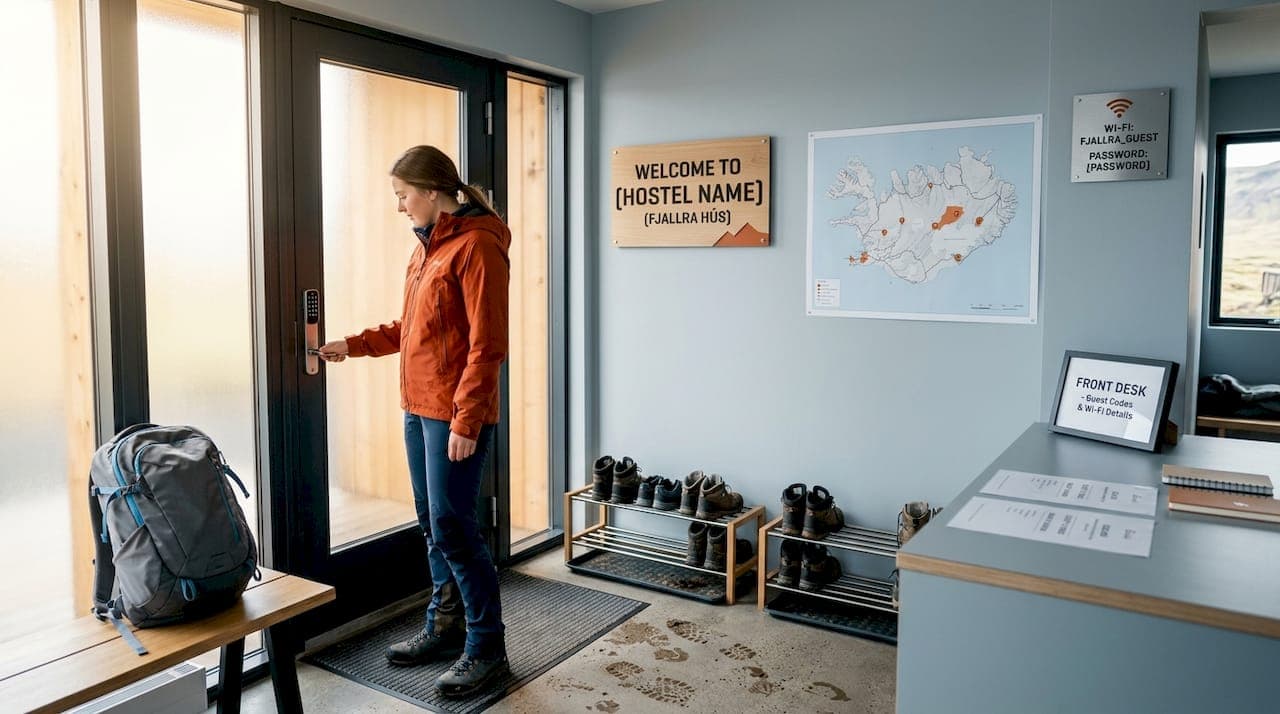
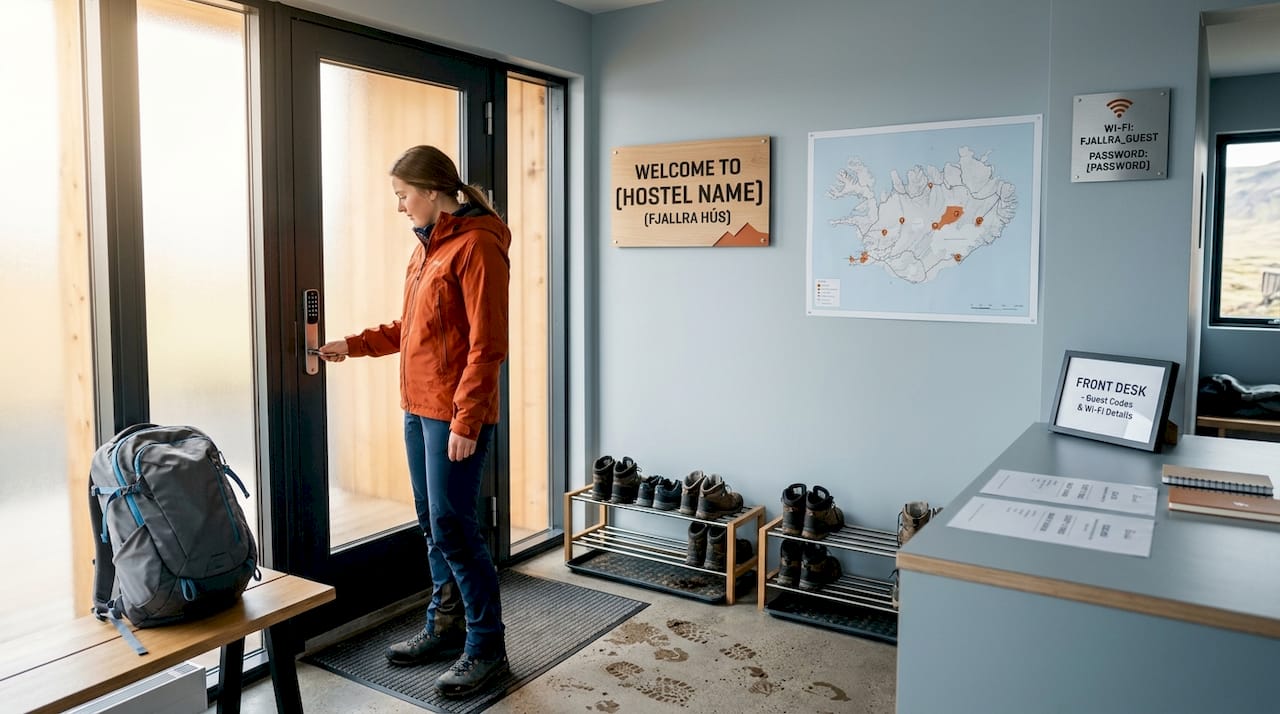
When you book a self-service hostel, you typically receive your access code by email before you arrive. That code opens a smart lock on the main door and sometimes your dorm room, too. There’s no front desk to check in at, no waiting around for a staff member to show up with keys. You walk in, find the board or display showing available beds, pick the one that suits you, and mark it with the tag or label provided. The bed is now yours for the night.
From there, you’re largely in charge. Common areas like the kitchen, lounge, and bathrooms are shared and fully functional, stocked with what you need for basic cooking and daily comfort. At checkout, usually before 11am, you strip your own bed sheet and leave it in the designated spot. That’s it. No tipping, no front-desk chat, no waiting for someone to process your departure.
Compare that to a standard hotel, where daily housekeeping, a staffed reception, and bundled services push prices up significantly. The minimal staff model isn’t a downgrade. It’s a deliberate trade of unnecessary services for lower prices and maximum flexibility. For independent travelers who are out exploring waterfalls and glaciers from sunrise to sunset, paying for a concierge they’ll never use makes zero sense.
Here’s a quick side-by-side to put it in context:
| Feature | Self-service hostel | Traditional hostel | Budget hotel |
|---|---|---|---|
| Check-in | Smart lock code, anytime | Staffed reception, set hours | Staffed reception, set hours |
| Bed selection | Choose your own | Assigned by staff | Assigned room |
| Kitchen access | Full self-service kitchen | Often available | Rarely included |
| Checkout | Strip sheets, leave by 11am | Hand in key at desk | Formal checkout required |
| Price point | Lowest | Low to mid | Mid to high |
| Flexibility | Maximum | Moderate | Minimal |
Some of the standout hostel amenities in Iceland you’ll encounter in self-service setups include communal cooking facilities, shared lounges, laundry machines, and common areas designed to encourage casual interaction among guests. If you’re curious about the range of sleeping setups available, it’s worth exploring types of hostel rooms before you book so you know exactly what you’re walking into.
Key features at a glance:
- Smart lock entry with code sent before arrival, no waiting required
- Open bed selection in shared dorms, you mark your own spot
- Self-serve communal kitchen for cooking your own meals
- Minimal on-site staff, with email or phone support for urgent issues
- DIY checkout involving linen removal and basic tidying
- Lower nightly rates reflecting reduced operating costs
How does it actually work? Step-by-step experience
Understanding the concept is useful, but what does a real stay at an Icelandic self-service hostel actually feel like? The answer is surprisingly smooth once you’ve done it once.
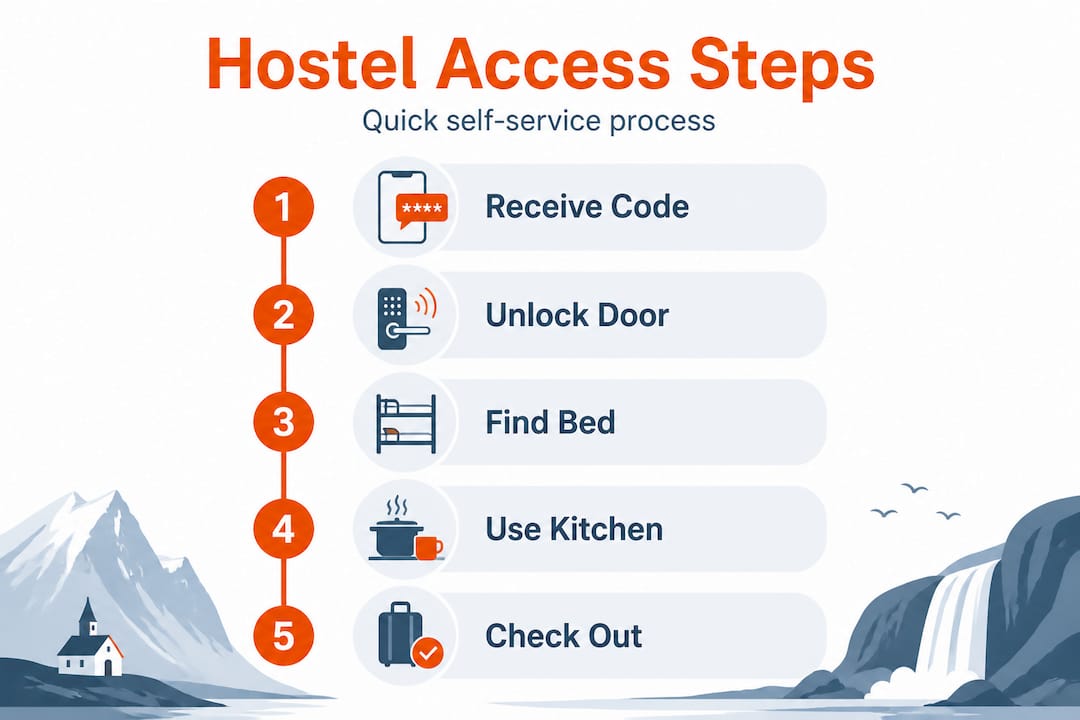
- Book online. You select your bed or room type and complete payment. An automated confirmation email arrives with your door code, arrival instructions, and house rules.
- Arrive on your schedule. Because the smart lock works 24/7, you’re not racing to beat a 9pm check-in cutoff. Roll in after a late ferry, an epic hike, or a Northern Lights chase at 2am.
- Let yourself in. Type the code, hear the click, and walk in. No queues, no small talk with a tired receptionist if you’re exhausted from the road.
- Choose your bed. Find an unmarked bed in your dorm, tag it with the label or marker provided, and unpack. Your space is set.
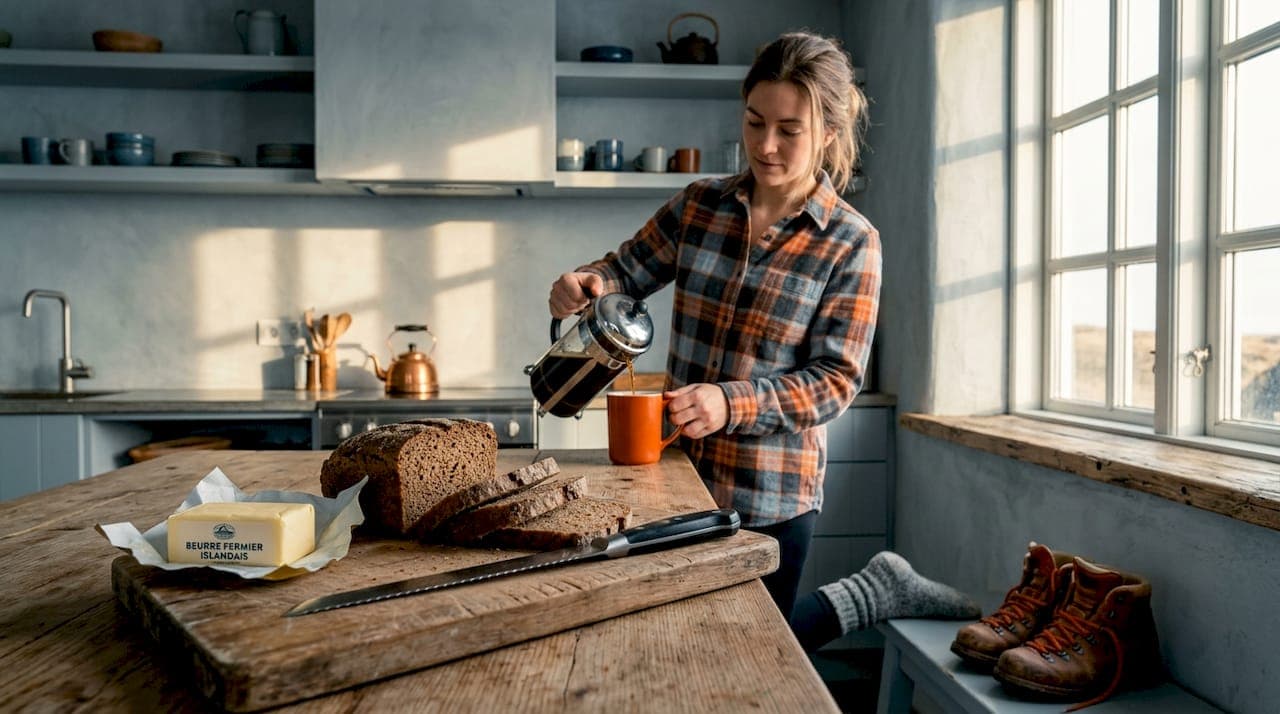
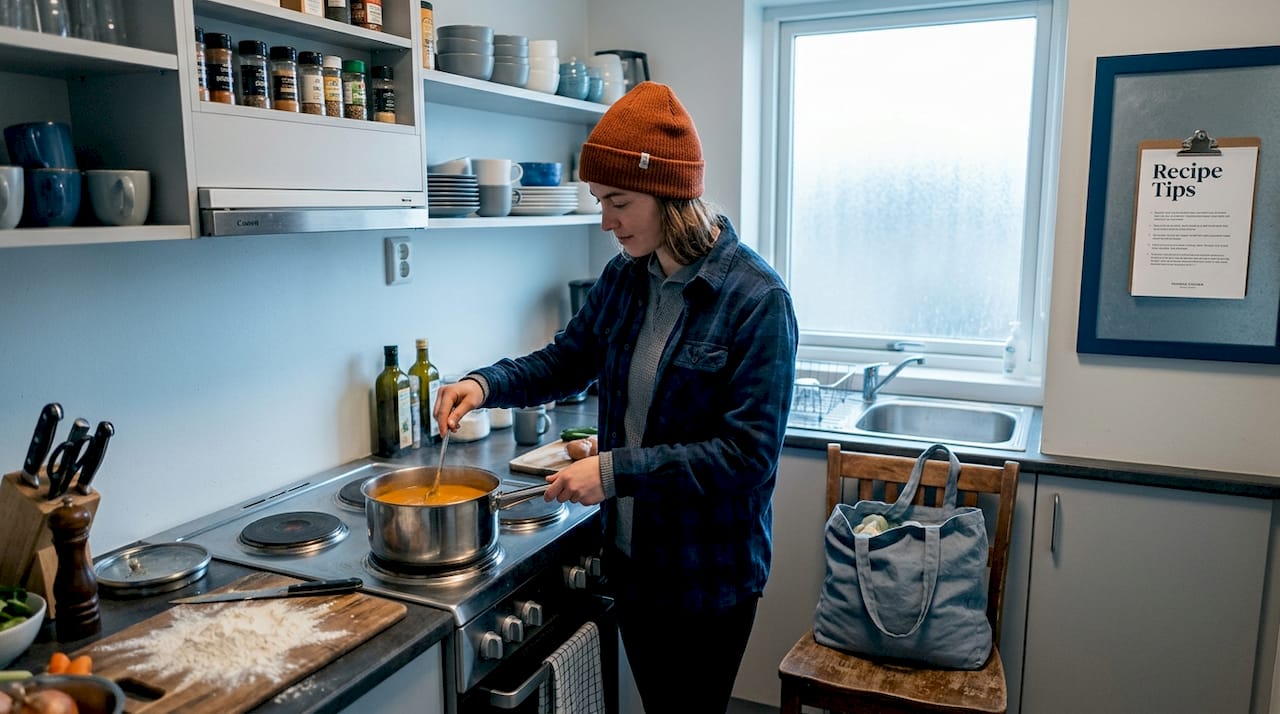
- Use the kitchen and common areas. Cook your own pasta, brew coffee at 6am before a glacier hike, or share a meal with other travelers in the communal space. This is often the most memorable part of the stay.
- Check out yourself. Before 11am, pull the sheet off your mattress, drop it in the laundry pile, and leave. That’s the full process.
One important thing to know: wrong code entry can lock the keypad for one to two minutes, so enter carefully. Towels and laundry services may carry an additional fee, and beds without a tag may be treated as available by other guests, so marking your spot matters. Emergency phone support exists for genuine issues, but it’s not a substitute for a front desk.
Pro Tip: Screenshot your access code and hostel address before you leave home. Iceland’s rural South Coast can have patchy mobile coverage, and having that info offline saves a stressful moment at the door.
For guests who love cooking on the road, using hostel kitchens effectively is genuinely one of the best ways to cut Iceland travel costs without sacrificing good food. Iceland’s supermarkets carry excellent ingredients, and cooking a proper dinner after a long day of outdoor exploration feels incredibly satisfying.
Pros, cons, and key considerations for Iceland travelers
Now that you know how the experience flows, let’s be honest about what you gain and what you trade away.
The real advantages:
- Cost savings are significant. Lower operating costs mean lower nightly rates. When you add self-catered meals on top, the difference compared to eating out in Iceland every day can be hundreds of dollars over a week-long trip.
- Total schedule freedom. Iceland’s South Coast doesn’t run on a 9-to-5 timetable. Glaciers, waterfalls, and the Northern Lights demand flexible hours. A smart lock that works at 3am is not a luxury here, it’s a practical necessity.
- Community without pressure. The shared kitchen and lounge naturally bring travelers together, but nobody is forcing you to socialize. You move at your own pace.
- Local-style living. Shopping at Krónan in Vík and cooking your own lamb stew is genuinely closer to how Icelanders live than ordering the lamb shank at a tourist restaurant every night.
The honest trade-offs:
- Less on-site support means you need to be organized. Lose your code, arrive confused, or need a recommendation at midnight and you’re largely on your own.
- Extras like towels and laundry may cost more than you expect if you haven’t read the house rules.
- Communal spaces require shared courtesy. Noise, mess, and kitchen etiquette are your responsibility and everyone else’s.
“The freedom of a self-service hostel is real, but it rewards prepared travelers. Come with your code saved, your arrival time confirmed, and a rough plan for your first meal—and the experience is genuinely seamless.”
Iceland’s own examples show how well the model works in practice. Lækur Hostel in Reykjavik uses self check-in and open bed selection, while Selfoss Hostel on the South Coast features a large communal kitchen and convenient self check-in, making it a solid base for Golden Circle and South Coast exploration. Selfoss Hostel carries an 8.6 out of 10 rating from over 100 reviews, with guests frequently highlighting value and kitchen savings. The self-service format clearly resonates with the type of traveler drawn to Iceland.
For a deeper look at how shared areas enhance the experience, the guide on shared hostel spaces is worth reading before you book. And if your group needs more privacy, understanding private hostel rooms in Iceland can help you find the right balance between cost and comfort.
Where do self-service hostels fit into Iceland’s travel landscape?
Iceland’s tourism has grown dramatically over the past decade, and the accommodation market has adapted fast. The self-service hostel model is now spreading beyond its European urban origins in cities like Vienna and Warsaw to serve remote, adventure-focused destinations. In Iceland specifically, 24/7 smart access has become almost a requirement given the country’s geography and visitor behavior.
Think about what a South Coast itinerary actually looks like. You might be chasing the midnight sun in June, finishing a glacier walk at 9pm, or driving back from Jökulsárlón Glacier Lagoon well after dark. A self-service hostel doesn’t punish you for that schedule. It fits it perfectly.
Here’s how some of Iceland’s top self-service style hostels compare:
| Hostel | Location | Rating | Key feature |
|---|---|---|---|
| Selfoss Hostel | South Coast | 8.6/10 | Large kitchen, flexible check-in |
| Lækur Hostel | Reykjavik | Self-check available | Open bed selection, urban access |
| Fox Hostel | Hrífunes Nature Park | Premium dorms | Barn setting, on-site pizzeria |
The rise of nature hostels in Iceland reflects exactly this shift. Travelers want to be close to the land, not locked into a hotel schedule. Self-service models support that instinct structurally. And for anyone specifically targeting the South Coast, hostels along that stretch are increasingly designed to serve the needs of people exploring Reynisfjara, Skógafoss, and Vatnajökull National Park on flexible timelines.
The appeal goes beyond convenience. There is an environmental angle, too. Lower energy use from reduced staffing, guest-managed kitchens that cut food waste, and a culture of shared resources all make self-service hostels a more conscious travel choice. For eco-aware travelers, that matters. The guide to hostels on Iceland’s South Coast covers why this stretch of road is so perfectly suited to the hostel format.
The real advantage: Why self-service hostels are redefining Icelandic adventure travel
Here’s a perspective most travel articles skip: the value of a self-service hostel isn’t primarily financial, even though the savings are real. The deeper value is what you become when you travel without a handler.
Traditional hospitality is built around the assumption that you need managing. Someone to greet you, assign your space, call a taxi, recommend the restaurant they have a deal with. That’s fine in a city break context, but it actively gets in the way of the kind of travel Iceland demands. When you’re navigating the Ring Road, reading weather windows, and deciding at 7am whether to chase a glacier or a waterfall, you need judgment and flexibility, not a concierge.
Self-service hostels train that muscle. You arrive on your own terms, set up your own space, cook your own food, and leave when you’re ready. These are small acts, but they add up to a fundamentally different relationship with your trip. You’re not a guest being processed. You’re a traveler living in a place for a few days.
The social side of this is underrated, too. When you’re not being funneled through a packaged experience, the connections you make in a communal kitchen or lounge feel more genuine. Swapping route tips with a Norwegian cyclist over scrambled eggs at 6am is a real travel memory. Sitting in a hotel restaurant eating a set-menu dinner surrounded by strangers who never speak is not.
For solo travelers especially, social hostels in Iceland built on the self-service model hit a rare sweet spot: full independence plus genuine community. You’re never lonely if you don’t want to be, and never crowded if you need space. That balance is hard to find, and Iceland’s evolving hostel scene is getting increasingly good at delivering it.
Experience Iceland’s self-service hostel evolution with Fox Hostel
If this article has convinced you that a self-service hostel is the right call for your South Coast trip, Fox Hostel is worth a serious look.
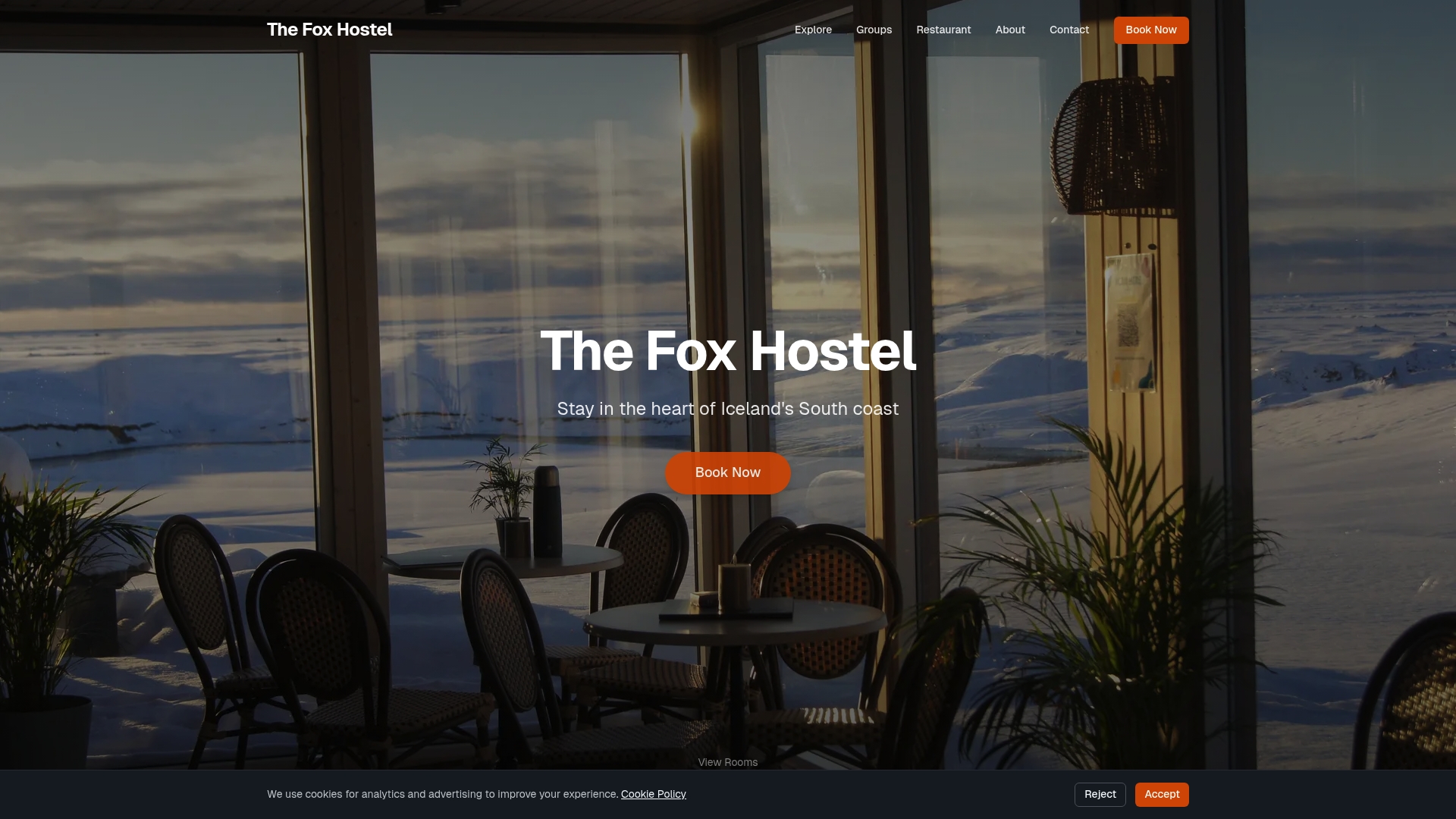
Set inside a beautifully converted traditional Icelandic barn in Hrífunes Nature Park, Fox Hostel in South Iceland sits just 35 minutes east of Vík, putting you close enough to Reynisfjara Black Sand Beach and Dyrhólaey for easy day trips while keeping you away from the crowds. The communal kitchen is massive and fully equipped, the on-site pizzeria takes care of the nights you don’t want to cook, and the dark skies overhead are genuinely extraordinary for Northern Lights viewing. Solo travelers can book a single bed; couples and groups can buy out an entire dorm room for total privacy. See rooms and dorms and find the setup that fits your crew and your budget.
Frequently asked questions
Do self-service hostels have staff on-site?
Typically, staff are minimal or entirely remote, available by phone or email for urgent issues only. Day-to-day operations like check-in and bed selection are fully self-managed.
What happens if I lose my code or have check-in trouble?
Most hostels provide emergency phone assistance and can resend access codes quickly. Note that entering a wrong code may lock the keypad for a minute or two, so save your code somewhere accessible offline before you travel.
Are self-service hostels safe for solo travelers?
Yes, security is strong. Smart locks, code-only entry, and the ability to choose your own bed all contribute to a safe, trust-based environment. Guest reviews consistently praise the privacy and security features, including lockable personal storage in many dorms.
Can I cook my own meals in a self-service hostel?
Absolutely. A shared kitchen for self-cooked meals is one of the defining features of the self-service hostel model, and in Iceland, where restaurant prices are high, it’s one of the most practical reasons to choose this type of accommodation.
Recommended
- What is a self-service hostel? Iceland’s smart budget stay | Fox Hostel – South Iceland
- Private hostel rooms: budget-friendly, social Iceland stay | Fox Hostel – South Iceland
- Decode Icelandic hostel terms for budget travel success | Fox Hostel – South Iceland
- Types of hostel room options: find the best stay in Iceland | Fox Hostel – South Iceland