What Is Eco-Friendly Accommodation: A Traveler's Guide
What Is Eco-Friendly Accommodation: A Traveler’s Guide

TL;DR:
- Eco-friendly accommodation minimizes environmental impact through energy efficiency, water conservation, and community involvement. Verified certifications and infrastructure built around sustainability principles distinguish authentic properties from greenwashing efforts. The best eco-friendly stays integrate luxury, social responsibility, and low-impact design without sacrificing guest comfort.
Eco-friendly accommodation is lodging designed to minimize its environmental footprint through energy efficiency, water conservation, waste reduction, and social responsibility. The industry term for this category is sustainable lodging, and it covers everything from small eco-lodges in Costa Rica to converted barns in Iceland. Unlike a standard hotel that treats sustainability as a marketing checkbox, a genuine eco-friendly property rebuilds its operations around low-impact principles. This guide explains what those principles look like in practice, how to tell real from fake, and what to expect from the best green travel accommodations available today.
What is eco-friendly accommodation, really?
Eco-friendly accommodation is any lodging that systematically reduces its negative impact on the natural environment. That definition sounds simple, but the execution spans architecture, energy systems, water management, supply chains, and community relationships.
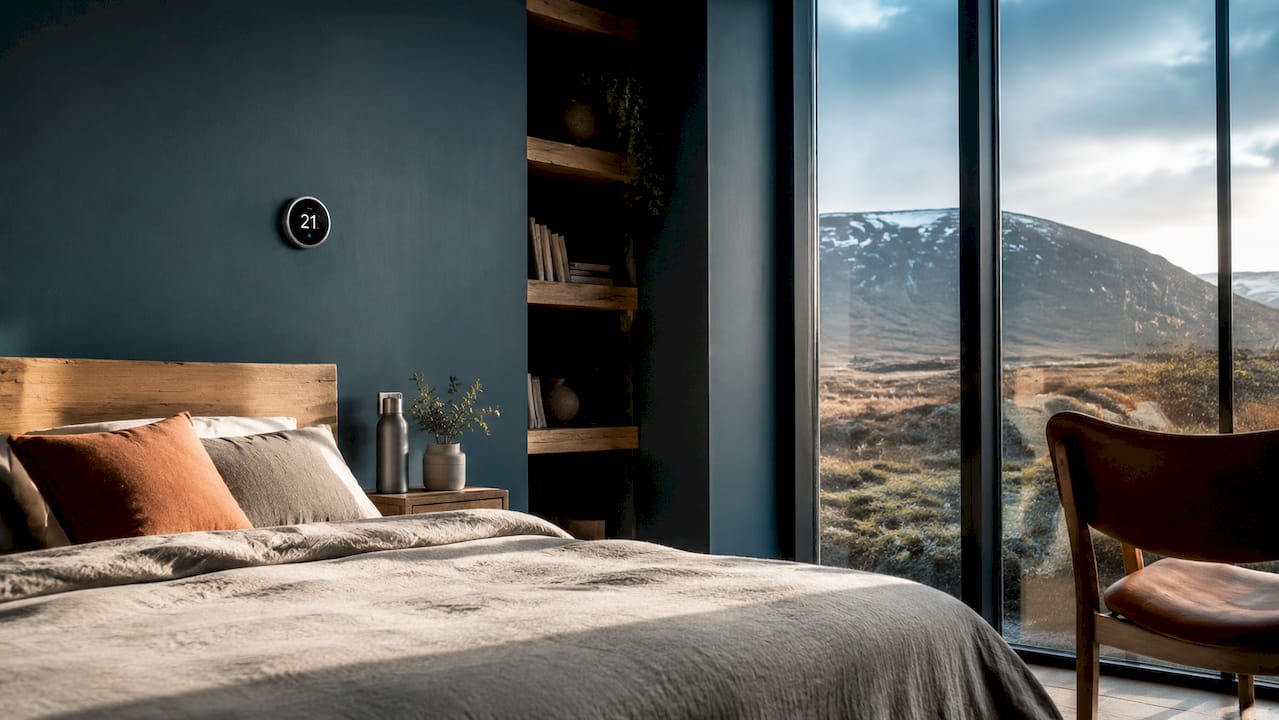
The most visible features are energy-related. LED lighting, smart thermostats, and motion sensors are standard in properties that take energy seriously. These technologies cut waste without affecting guest comfort. Solar panels and geothermal heating go further, replacing fossil-fuel energy entirely.
Water conservation is equally central. Rainwater harvesting, low-flow toilets, and biodegradable toiletries are common features in eco-friendly hotels. These systems reduce both consumption and chemical runoff into local water systems.
The less visible but equally important layer is building design. Passive design techniques like strategic window placement for natural light and cross-ventilation cut heating and cooling loads before any mechanical system switches on. Most guests never notice this. It works precisely because it is invisible.
Social sustainability rounds out the picture. Eco-friendly properties typically prioritize local hiring, source food from nearby farms, and avoid single-use plastics throughout the guest experience. Certifications like LEED, Green Key, and EarthCheck provide independent verification that these claims hold up under audit.
Pro Tip: When evaluating a property’s eco credentials, ask specifically about its energy source. A hotel with solar panels and a geothermal heat pump is making a structural commitment. A hotel that just offers towel reuse is not.
How does eco-friendly differ from sustainable lodging?
The terms eco-friendly and sustainable are often used interchangeably, but they describe different scopes of responsibility. Understanding the difference helps you choose accommodations that match your values.
| Term | Primary Focus | Scope | Example Commitment |
|---|---|---|---|
| Eco-friendly hotel | Environmental impact | Energy, water, waste | Solar power, rainwater harvesting |
| Sustainable lodging | Environmental + social + economic | All of the above plus community | Local hiring, fair wages, cultural preservation |
| Eco-lodge | Nature immersion + low impact | Small-scale, remote settings | Off-grid power, wildlife protection |
| Eco-resort | Luxury + environmental design | Large-scale, amenity-rich | Permaculture gardens, wellness programs |
| Green hotel | Operational efficiency | Retrofitted existing buildings | LED upgrades, recycling programs |
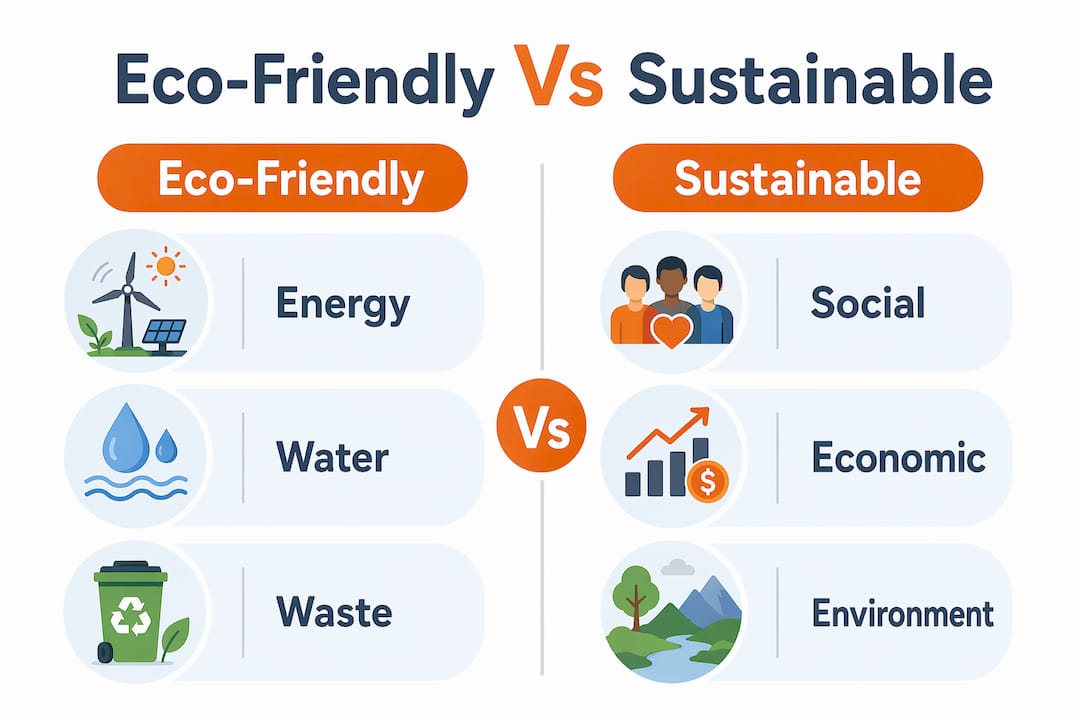
Eco-friendly focuses on environmental impact; sustainable lodging includes broader social and economic responsibility such as local job creation and cultural preservation. A property can be eco-friendly without being fully sustainable if it ignores the community around it. The best properties pursue both.
Eco-lodges and eco-resorts sit at opposite ends of the scale spectrum. An eco-lodge is typically small, remote, and deeply integrated with its natural surroundings. An eco-resort offers more amenities but applies the same low-impact principles at larger scale. Luxury and sustainability are no longer mutually exclusive. Properties like EcoLirios in Costa Rica combine high-end design, wellness amenities, and gourmet organic dining without compromising their environmental commitments.
A conventional hotel, by contrast, typically optimizes for cost and convenience. It uses grid electricity, imports food from distant suppliers, and treats waste management as a compliance issue rather than a design principle. The gap between a conventional hotel and a certified eco-property is not cosmetic. It is structural.
How to identify authentic eco-friendly accommodations
Greenwashing is widespread in hospitality. A property that places a recycling bin in your room and calls itself eco-friendly is not the same as one that has rebuilt its energy and water systems from the ground up. Third-party certifications prevent greenwashing by requiring independent audits rather than self-reporting. That distinction matters enormously.
Here is a practical checklist for evaluating any property before you book:
- Check for recognized certifications. Look for Green Key, LEED, EarthCheck, or Rainforest Alliance. These require documented evidence and third-party review.
- Ask about energy sources. Does the property use renewable energy? Can staff explain how and what percentage of power it covers?
- Ask about water management. Does the property harvest rainwater or recycle greywater? Are low-flow fixtures installed throughout?
- Look at the food sourcing. Does the menu feature local and seasonal ingredients? Does the property grow any of its own food?
- Assess staff knowledge. Frontline staff at genuine eco-properties can answer basic sustainability questions. Vague or scripted answers are a red flag.
- Read the fine print on marketing claims. Phrases like “we care about the environment” with no specifics are a warning sign. Specific numbers and named systems are credible.
Pro Tip: Search for your property on the Green Key or EarthCheck databases directly. If it is not listed, the certification claim may be unverified.
Greenwashing often hides behind minor gestures. A hotel that eliminates plastic straws but runs gas-powered heating at full capacity all winter has not made a meaningful commitment. Beware of eco gestures that mask carbon-intensive operations. The test is whether sustainability is built into the property’s infrastructure or just layered on top as marketing.
For a broader look at how these choices connect to travel planning in Iceland specifically, the sustainable travel in Iceland guide from Foxhostel covers the full picture.
Real-world examples that show these principles in action
Abstract principles become clear when you see them applied. Two properties stand out as benchmarks for what genuine eco-friendly accommodation looks like.
Arima Hotel & Spa in Spain is built to the Passivhaus standard. Properties built to Passivhaus standard reduce energy consumption by up to 70% compared to conventional hotels using geothermal and aerothermal systems. That 70% reduction is not achieved through guest sacrifice. It comes from the building itself, which is designed to retain heat in winter and stay cool in summer without mechanical intervention.
Maasai ecoLodge in Kenya takes social sustainability as seriously as environmental performance. 100% local hiring at fair wages is the standard there, alongside renewable energy and community development projects. The lodge treats the surrounding Maasai community as a partner, not a backdrop.
Both properties demonstrate a principle worth understanding: the best eco-friendly stays are not defined by what they remove from the guest experience. They are defined by what they add. Arima guests get a beautifully designed spa hotel with a dramatically lower carbon footprint. Maasai ecoLodge guests get an authentic cultural experience that directly funds local livelihoods.
Circular economy practices take this further. Properties that source food from on-site permaculture gardens eliminate long supply chain emissions entirely. The food is fresher, the carbon cost is near zero, and the guest experience is genuinely distinctive. This is what regenerative travel looks like in practice: not just minimizing harm, but actively restoring ecosystems and communities.
For a deeper look at how eco-friendly vacationing integrates luxury and wellness, the hospitality industry has moved well beyond token gestures.
Key takeaways
Eco-friendly accommodation reduces environmental impact through structural design, renewable energy, water conservation, and community investment, not surface-level gestures.
| Point | Details |
|---|---|
| Definition is structural | Genuine eco-friendly lodging rebuilds operations around low-impact systems, not just adds recycling bins. |
| Certifications are the filter | Green Key, LEED, and EarthCheck require independent audits and are the most reliable proof of eco claims. |
| Eco-friendly vs. sustainable | Eco-friendly targets environmental impact; sustainable lodging adds social and economic responsibility. |
| Greenwashing is common | Minor gestures like towel reuse do not equal eco-friendly status; look for specific systems and third-party verification. |
| Luxury and sustainability coexist | Properties like Arima Hotel & Spa and Maasai ecoLodge prove comfort and low-impact design are fully compatible. |
Why eco-friendly stays changed how i travel
By Trygve
The first time I stayed at a property that was genuinely built around sustainability, I expected to feel virtuous and slightly uncomfortable. What I actually felt was surprised. The room was warmer, quieter, and better lit than most conventional hotels I had stayed in. The food was better because it came from nearby. The staff knew the land around the property because they lived on it.
That experience shifted something in how I evaluate accommodation. I stopped treating eco-friendly as a category of sacrifice and started treating it as a quality signal. A property that has invested in Passivhaus design or geothermal energy has thought harder about the guest experience than one that just bought cheaper furniture.
The misconception I encounter most often is that eco-friendly means rustic. It does not. Arima Hotel & Spa is a spa hotel. Maasai ecoLodge offers guided wildlife experiences. The conversion of a traditional Icelandic barn into a modern hostel like Foxhostel in Hrífunes Nature Park is another example: the structure honors the landscape, the location keeps you away from crowds, and the experience is richer for it.
What I would tell any traveler is this: the properties that take sustainability seriously tend to take everything seriously. That correlation is not accidental. It reflects a management philosophy that shows up in every detail of the stay.
— Trygve
Stay eco-friendly on iceland’s south coast at Foxhostel
Foxhostel sits inside Hrífunes Nature Park, 35 minutes east of Vík, in a beautifully converted traditional Icelandic barn. The location keeps you close to Reynisfjara Black Sand Beach and Dyrhólaey while putting you well outside the tourist crowds. The property is positioned midway between Vík and Kirkjubæjarklaustur, making it a natural base for day trips to Vatnajökull National Park and Jökulsárlón Glacier Lagoon.

The hostel features dorm-style rooms with flexible booking: solo travelers book individual beds, while couples, families, and groups can buy out an entire room for privacy. The communal kitchen, on-site pizzeria, and dark skies for Northern Lights viewing make it a place worth staying, not just sleeping. If you are planning a South Coast itinerary around low-impact, community-connected travel, book your stay at Foxhostel and use the nature park as your base.
FAQ
What is eco-friendly accommodation?
Eco-friendly accommodation is lodging that minimizes its environmental impact through energy efficiency, water conservation, waste reduction, and sustainable materials. The best properties also support local communities through hiring and sourcing practices.
How do i know if a hotel is genuinely eco-friendly?
Look for third-party certifications like Green Key, LEED, or EarthCheck, which require independent audits. Properties that only make vague claims without specific systems or verified credentials are likely greenwashing.
What is the difference between an eco-lodge and a green hotel?
An eco-lodge is typically small-scale and located in a natural setting, designed for minimal environmental disruption. A green hotel is usually a larger, retrofitted property that has improved its operational efficiency through technology upgrades.
Does eco-friendly accommodation cost more?
Not necessarily. Hostels, guesthouses, and smaller lodges with strong eco credentials can be very affordable. The price depends on the property type and location, not the sustainability commitment.
What certifications should i look for when choosing eco-friendly hotels?
Green Key, LEED, EarthCheck, and Rainforest Alliance are the most recognized certifications in sustainable hospitality. Each requires documented evidence and independent review, making them reliable indicators of genuine eco-friendly status.
Recommended
- What Is Sustainable Travel in Iceland: 2026 Guide | Fox Hostel – South Iceland
- Strutture eco-friendly in Islanda: guida pratica | Fox Hostel – South Iceland
- Le rôle du confort en hébergement économique | Fox Hostel – South Iceland
- Nachhaltige Unterkünfte in Island: Tipps für bewusste Reisende | Fox Hostel – South Iceland