Where to Stay in South Iceland: Best Road-Trip Bases
Where to Stay in South Iceland: Best Road-Trip Bases
TL;DR:
- Vík is the most popular base for exploring the South Coast, offering excellent access to major sights.
- Choosing your base depends on your priorities, such as glacier tours, golden circle trips, or Northern Lights viewing, with options from Vík to Höfn.
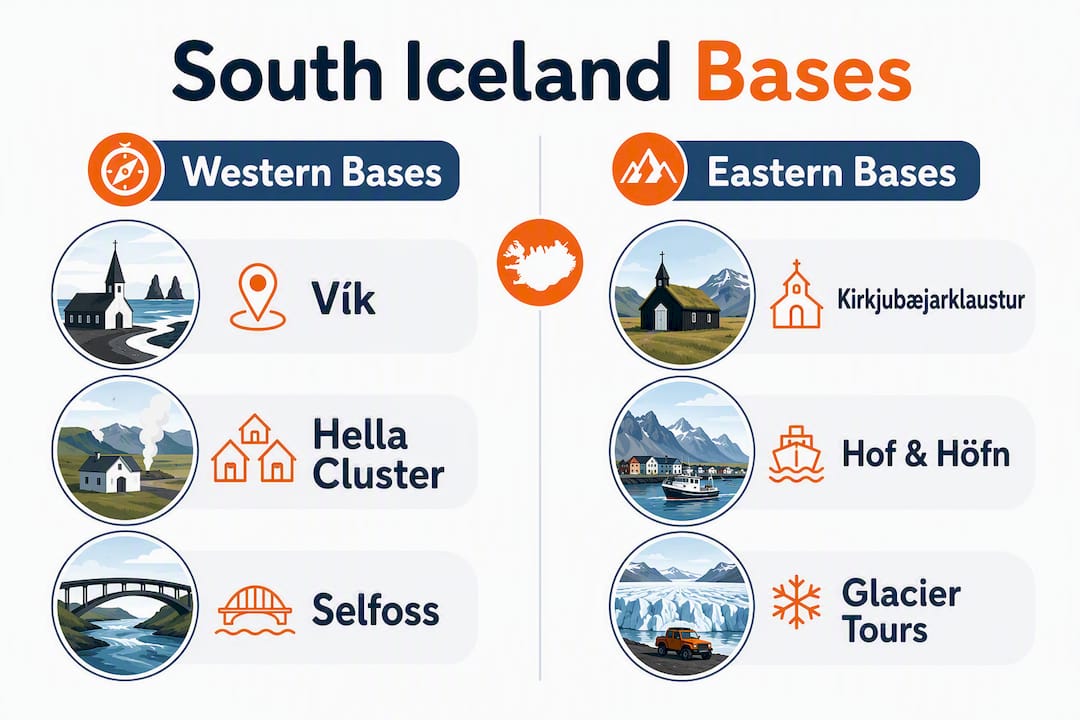
For most South Coast road-trippers, Vík is the central hub, Hella or Hvolsvöllur is the smart western connector, Kirkjubæjarklaustur is the quiet midpoint, and Hof or Höfn is the only sensible base if Jökulsárlón is your priority. Reykjavík works as a gateway for the first or last night, but it’s too far west to use as a daily base for South Coast sights.
Here’s the quick-pick breakdown:
- Vík — Best for photographers, first-timers, and anyone prioritizing Reynisfjara Black Sand Beach and Dyrhólaey. Central, walkable, and close to the most dramatic coastal scenery.
- Hella / Hvolsvöllur / Selfoss — Best for travelers splitting time between the Golden Circle and the South Coast, or arriving from Keflavik Airport. Selfoss is roughly 90 minutes from the airport; Hella puts you within striking distance of Seljalandsfoss and Skógafoss.
- Kirkjubæjarklaustur — Best for travelers who want one quiet base to day-trip in both directions. Hotel Klaustur describes it as nearly equidistant between Seljalandsfoss in the west and Jökulsárlón in the east, which is accurate.
- Hof / Höfn — Best for glacier-focused travelers. If your itinerary includes ice cave tours, Diamond Beach, or sunrise at the lagoon, staying east of Skaftafell saves you 90 minutes of driving each way.
- Reykjavík — Gateway only. Use it for your arrival night or departure night, not as a base for daily South Coast driving.
Self-drive vs. guided tours: Self-drivers get the most from a well-chosen base because they can pivot based on weather. Guided tour travelers can stay anywhere along the route since transport is handled, but a central base like Vík or Kirkjubæjarklaustur still minimizes pickup logistics.
Table of Contents
- Which South Iceland town should you stay in?
- How many nights should you spend on the South Coast?
- What type of accommodation fits your South Coast trip?
- Booking tips, costs, and driving advice that actually matter
- Is Jökulsárlón your priority? Here’s where to stay
- Why Fox Hostel is worth considering near Vík
- Key Takeaways
- The South Coast base decision most travelers get wrong
- Fox Hostel: a practical base for your South Coast road trip
- Useful resources for planning your South Iceland trip
Which South Iceland town should you stay in?
The South Coast stretches roughly from Selfoss in the west to Höfn in the east, covering about 250 miles of Route 1. Each base covers a different slice of that range.
Vík
Vík is the most visited village on the South Coast, and for good reason. Reynisfjara Black Sand Beach is a 10-minute drive west. Dyrhólaey arch is about 15 minutes. Skógafoss is roughly 30 minutes west, and Seljalandsfoss adds another 15 minutes beyond that. You can realistically hit all four in a single long day from Vík without feeling rushed.
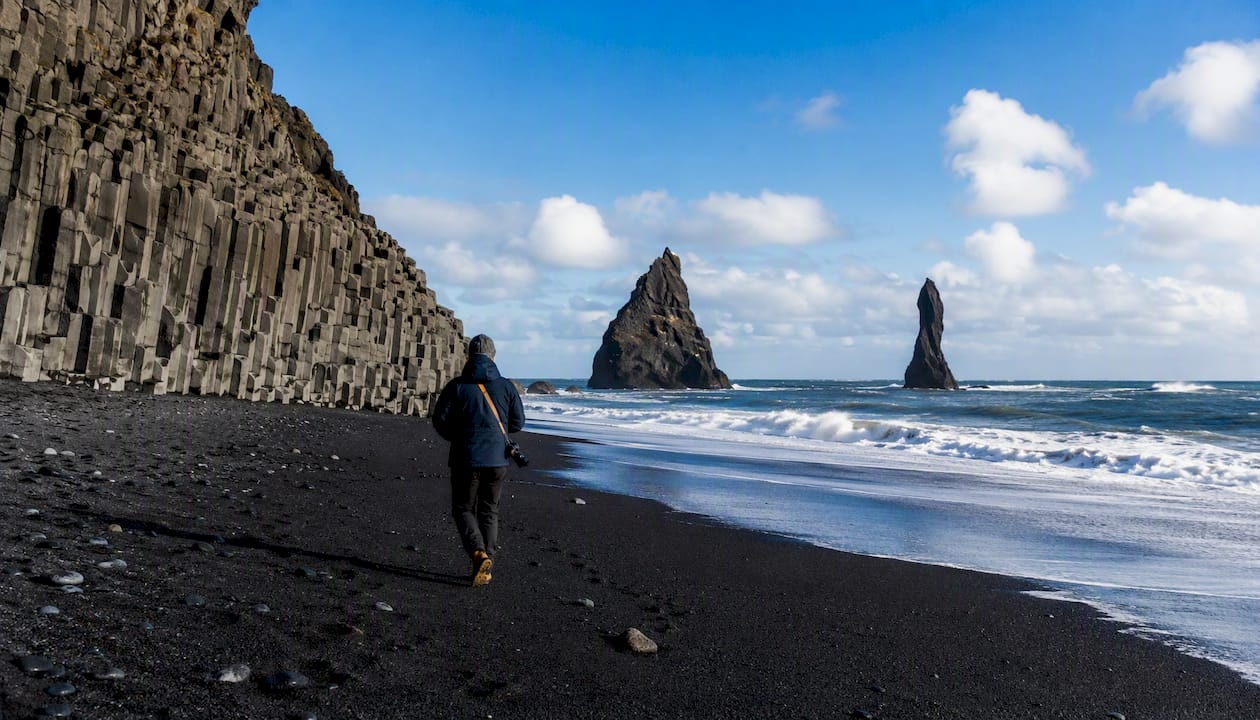
The town has a handful of restaurants, a grocery store, a gas station, and a tourist information center. It’s small (around 600 residents), so don’t expect nightlife, but you won’t go hungry or run out of fuel. The main downside: it’s the most crowded stop on the South Coast, and accommodation books out fast in summer.
Pros: Unbeatable access to western South Coast highlights; walkable village; good dining options for the area. Cons: Highest demand and prices in summer; light pollution from the village reduces Northern Lights viewing; limited accommodation variety.
Hella, Hvolsvöllur, and Selfoss
These three towns form a loose cluster in the western South Coast, each within about 20 minutes of each other. Selfoss (population around 8,000) is the largest town in the region and the most practical for families or travelers who want supermarkets, pharmacies, and a bank. Hella and Hvolsvöllur are smaller but sit closer to the main South Coast sights.
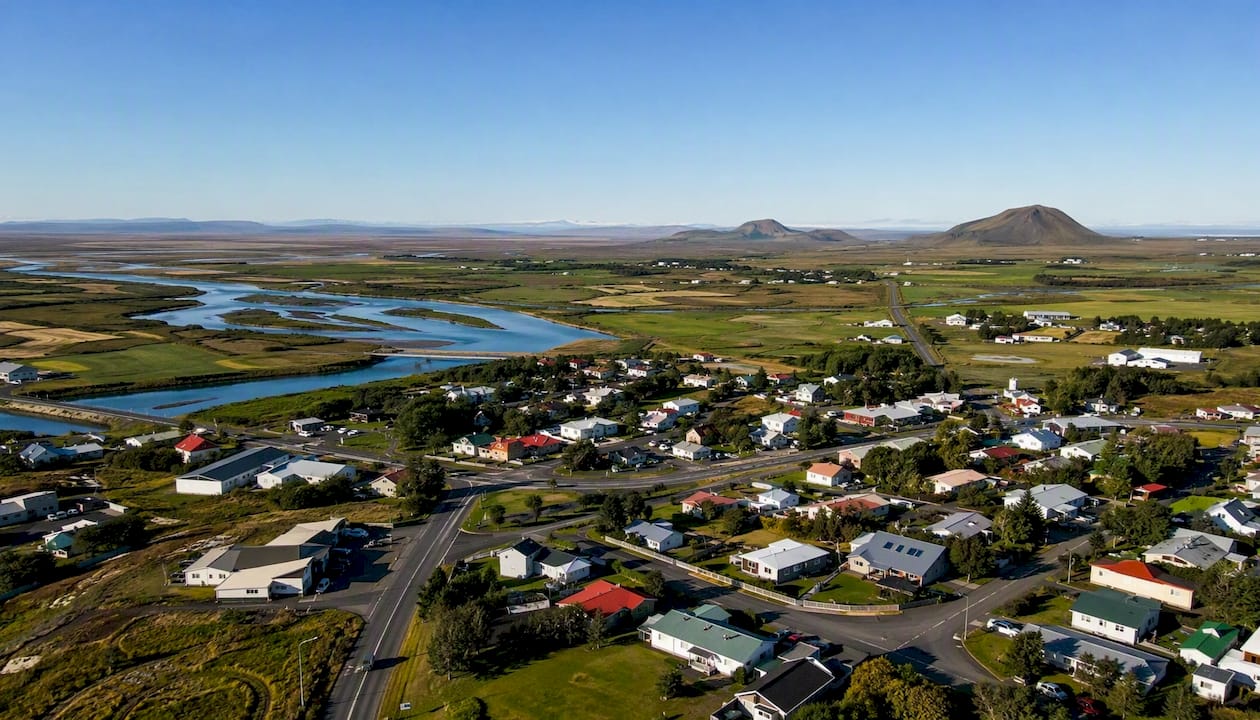
From Hella, Seljalandsfoss is about 30 minutes east and Skógafoss is roughly 45 minutes. Vík is about 90 minutes. The Golden Circle (Geysir, Gullfoss, Þingvellir) is accessible as a day trip from any of the three towns. Landhotel, located just 10 minutes off Route 1 near Hella, lists Seljalandsfoss at 55 km and Skógafoss at 75 km from its property.
Pros: Best access to both the Golden Circle and western South Coast; largest town services; good for families. Cons: Too far west for Jökulsárlón as a day trip; less dramatic scenery immediately around the towns.
Kirkjubæjarklaustur
“Klaustur” (as locals call it) sits about halfway between Vík and Höfn, roughly 75 miles east of Vík. It’s a small village, but it has a fuel station, a supermarket, a bank, and a post office. The surrounding area falls within Katla UNESCO Geopark, near the Vatnajökull National Park Visitor Center.
The strategic value here is real: you can day-trip west to Skógafoss and Reynisfjara, or east to Skaftafell and Jökulsárlón, without either being an unreasonable drive. Klaustur is also known for having some of the best weather on the South Coast, which matters when you’re planning around photography windows. Countryside stays near Klaustur tend to sit away from light pollution, making Northern Lights viewing noticeably better than in Vík.
Pros: True midpoint base; good weather reputation; quiet nights; strong Northern Lights potential. Cons: Very small village; fewer restaurant options than Vík or Selfoss; limited accommodation variety.
Hof and Höfn
Hof is less a town than a cluster of farms and a few hotels near the eastern edge of Vatnajökull National Park. Höfn is a proper fishing town about 50 miles further east, with restaurants, a supermarket, and a harbor. Both serve the same purpose: putting you close to Jökulsárlón Glacier Lagoon, Diamond Beach, and the glacier tour departure points.
Most glacier tours depart from the Jökulsárlón parking lot. If your tour starts at 8 AM and you’re staying in Vík, you’re looking at a 2.5-hour drive before the tour even begins. Staying near Hof cuts that to under 30 minutes.
Pros: Only practical base for early-morning glacier tours; dramatic landscape; fewer crowds than Vík. Cons: Very remote; limited dining; Hof itself has almost no services.
| Base | Best for | Drive to Vík-area sights | Drive to Jökulsárlón | Services |
|---|---|---|---|---|
| Vík | First-timers, photographers | 10–30 min | ~2.5 hrs | Good |
| Hella / Selfoss | Golden Circle + South Coast | 45–90 min | ~3.5 hrs | Excellent |
| Kirkjubæjarklaustur | Midpoint road-trippers | ~75 min | ~90 min | Basic |
| Hof / Höfn | Glacier-focused travelers | ~2.5 hrs | 15–30 min | Minimal / Good |
| Reykjavík | Gateway only | 2.5–3 hrs | ~5 hrs | Full city |
How many nights should you spend on the South Coast?
Planning guides generally recommend 4–5 days to cover the South Coast highlights comfortably, especially if you’re also including the Golden Circle. Shorter trips force hard choices about what to skip.
A useful rule of thumb: plan 1–2 nights per base if you’re moving, or 3+ nights at a single base if you want to photograph multiple light conditions and do day trips without rushing.
3-day itinerary
- Night 1–2: Vík or Fox Hostel (near Vík) — Arrive, settle in, and spend two full days covering Reynisfjara, Dyrhólaey, Skógafoss, and Seljalandsfoss. The drive from Reykjavík to Vík takes about 2.5 hours, so plan to arrive by early afternoon on day one.
- Night 3: Kirkjubæjarklaustur — Drive east on day three, stopping at Eldhraun lava field and Fjaðrárgljúfur canyon en route. Sleep in Klaustur and get an early start for Skaftafell or Jökulsárlón the next morning before heading back.
This is a tight three days. You’ll see the highlights but won’t have time to linger.
5-day itinerary
- Night 1: Hella or Selfoss — Arrive from Keflavik, recover, and do a short Golden Circle loop or visit Seljalandsfoss.
- Night 2–3: Vík or Fox Hostel — Two full days for the western South Coast. Skógafoss, Reynisfjara, Dyrhólaey, and a second morning for photography or a hike up Skógar trail.
- Night 4: Kirkjubæjarklaustur — Drive east, stop at Eldhraun and Fjaðrárgljúfur.
- Night 5: Hof or near Jökulsárlón — Full day at the glacier lagoon, Diamond Beach, and a glacier walk. Return west the next day or continue the Ring Road.
Five days is the sweet spot for most travelers. You’re not rushing, and you get at least one sunrise or sunset at the lagoon.
7-day itinerary
Add two extra nights: one more in the Vík area (great for a second attempt at Northern Lights or a hike) and one in Höfn for a proper seafood dinner and a morning kayak on the lagoon. A South Coast itinerary with seven days also leaves room for the Westman Islands as a day trip from Hella.
Single-base vs. moving: Photographers and Aurora hunters often do better staying in one well-positioned base for 3–4 nights and day-tripping rather than packing and checking in every day. Each hotel hop costs you roughly 30–45 minutes of productive time, and you lose the ability to stay out late and sleep in without a checkout deadline.
What type of accommodation fits your South Coast trip?
The range of accommodation options on the South Coast covers boutique hotels, countryside guesthouses, farm stays, cottages, mountain lodges, hostels, and campsites. Most camping sites are open May through September only.
Hotels and boutique hotels
The most predictable option. You get an ensuite room, breakfast in many cases, and consistent service. The trade-off is cost: South Coast hotels in summer run significantly higher than hostels or guesthouses. They’re the right call for travelers who want privacy and don’t need a kitchen.
Guesthouses and farm stays
Farm stays are one of the genuinely distinctive South Iceland experiences. You’re often on a working farm with Icelandic horses nearby, a communal lounge, and a kitchen. They tend to sit 10–30 minutes off Route 1, which means quieter nights and better Northern Lights conditions than town-center options. The benefits of countryside accommodation go beyond scenery: less noise, less light pollution, and often a more personal host relationship.
Hostels
Hostels on the South Coast have evolved well past the bare-bones model. The best ones offer private room buyouts for couples or groups, fully equipped communal kitchens, gear storage for hikers and cyclists, and social spaces that make it easy to meet other travelers. For budget-conscious adventure travelers, a well-run hostel often beats a mid-range hotel on both cost and practical amenities.
Cottages and cabins
Self-catering cottages work well for families or groups of four or more. You get full kitchen access, more space, and genuine privacy. The downside is that they’re often booked far in advance in summer and tend to be scattered across the countryside, so you need to plan your grocery stops carefully.
Campsites
Camping is the cheapest option and puts you closest to the landscape. Most South Coast campsites open in May and close in September. Winter camping is possible but requires serious gear and experience with Icelandic weather. Campsites in Vík, Kirkjubæjarklaustur, and near Skaftafell are the most established.
Amenities checklist to compare before booking:
- Kitchen access (communal or private)
- Gear storage for hiking, cycling, or diving equipment
- EV charging (increasingly available at hotels and some guesthouses)
- On-site dining or a pizzeria
- Group room buyout option
- Northern Lights alert service or dark-sky location
- Accessibility features (step-free access, adapted bathrooms)
Accessibility note: Town-center hotels in Selfoss and Vík generally offer the most accessible options, with paved parking and step-free entrances. Farm stays and countryside guesthouses vary widely. If mobility is a consideration, confirm directly with the property before booking.
Public transportation: South Iceland has limited bus service. The Strætó bus network connects Reykjavík to Selfoss and Vík, but frequency is low and connections east of Vík are sparse. Non-drivers should plan carefully or consider a guided tour, since most South Coast sights are not walkable from any town.
Booking tips, costs, and driving advice that actually matter
When to book and what to expect on price
Summer (June through August) is peak season. Accommodation fills up weeks or months in advance, especially in Vík and near Jökulsárlón. Book at least 2–3 months ahead for summer travel, and look for properties with free cancellation so you can adjust if your itinerary shifts.
Shoulder season (May and September) offers better availability, lower prices, and the possibility of Northern Lights in September. Winter (October through March) is the best window for Aurora hunting, but road conditions require more planning and some rural properties reduce their hours or close entirely.
Price ranges vary widely by property type and season. Hostels and guesthouses generally run lower than hotels, with significant variation between summer peak and winter off-season rates. Always check whether breakfast is included, since South Iceland restaurants are sparse enough that a hotel breakfast has real practical value.
Driving tips and road safety
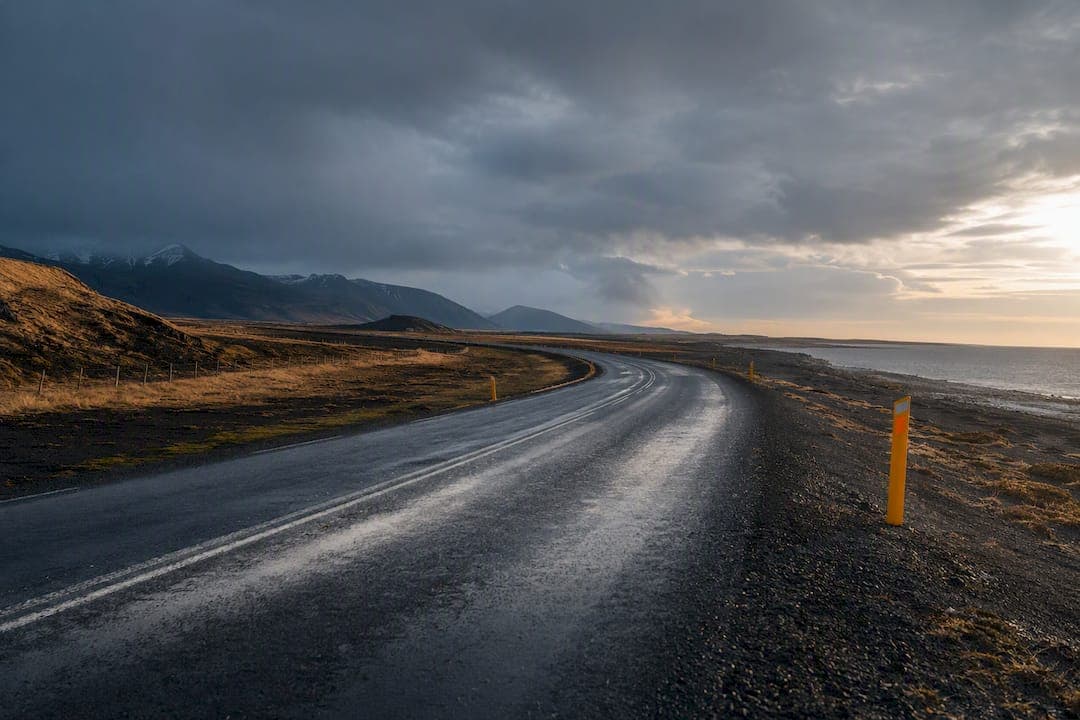
Iceland’s weather changes fast, and the South Coast has distinct microclimates. Conditions in Vík can be dramatically different from those 40 minutes east near Kirkjubæjarklaustur. Before any long drive, check road.is for live road conditions and closures, and vedur.is for weather forecasts. Both are free and updated frequently.
- F-roads (highland roads) require a 4WD vehicle and are typically closed October through May.
- Wind warnings near Vík and the black sand beaches are common; high-profile vehicles can be restricted.
- Winter driving on Route 1 is generally manageable with a proper rental car, but ice and snow are real factors from November through March.
- Always fill your tank when you pass a gas station in rural areas. Stations east of Vík are spaced far apart.
Pro Tip: Check road.is the evening before any long drive, not just the morning of. Conditions can change overnight, and an early check gives you time to reroute or delay your start.
Choosing a central base reduces the risk that a single bad weather day ruins your whole itinerary. If you’re based in Kirkjubæjarklaustur and the road east is closed, you can pivot west to Reynisfjara or Skógafoss instead of losing the day entirely.
Is Jökulsárlón your priority? Here’s where to stay
If Jökulsárlón Glacier Lagoon, Diamond Beach, or a glacier walk on Vatnajökull is the centerpiece of your trip, base east of Skaftafell. The drive from Vík to Jökulsárlón takes roughly 2.5 hours each way. From Kirkjubæjarklaustur, it’s about 90 minutes. From Hof, you’re looking at under 30 minutes.
That math matters most for dawn and dusk visits. The lagoon at sunrise or sunset is a completely different experience from a midday visit, and the icebergs catch light in a way that photographers specifically plan around. If you’re staying in Vík and want a sunrise shot at the lagoon, you’re waking up before 3 AM in summer.
Decision rule of thumb: If your itinerary includes any of the following, base east of Skaftafell for at least one night:
- An early-morning or late-evening glacier tour
- A sunrise or sunset photography session at the lagoon or Diamond Beach
- Multiple visits to the lagoon (worth it if you have the time)
- Ice cave tours, which typically depart from the lagoon parking lot
A single overnight near Hof or Höfn saves you roughly 5 hours of driving compared to doing it as a day trip from Vík. That’s time you can spend on the ice instead of behind the wheel.
Pro Tip: Check sunrise and sunset times for your travel dates on vedur.is before committing to a base. In June, sunrise is before 3 AM and sunset is after midnight. In October, you get a more manageable 7 AM–7 PM window. Your base decision should reflect when the light actually happens.
Travel guides recommend at least one night near both Vík and Jökulsárlón for most road trips, and that’s solid advice. The two ends of the South Coast are different enough in character and access that trying to cover both from one base means you’re always driving too far.
Why Fox Hostel is worth considering near Vík
Fox Hostel sits in Hrífunes Nature Park, about 35 minutes east of Vík along Route 1. It’s a converted traditional Icelandic barn, which sounds like a marketing line until you actually see the building. The location puts you midway between Vík and Kirkjubæjarklaustur, which is genuinely useful for road-trippers who want to cover both the western South Coast sights and push east toward Skaftafell without a massive daily drive.
The practical amenities are well-matched to what South Coast travelers actually need:
- Group room buyout: Solo travelers book individual beds; couples, families, or groups can buy out an entire room for privacy. This is uncommon in Icelandic hostels and removes the main objection most travelers have to dorm-style accommodation.
- Communal kitchen: Fully equipped, which matters when you’re on a budget and restaurant options thin out east of Vík.
- On-site pizzeria: A real convenience after a long day on the road when you don’t want to drive into town.
- Dark-sky location: Countryside setting away from town light pollution, with wide open skies for Northern Lights viewing.
- Proximity to Reynisfjara and Dyrhólaey: Both are within 35–40 minutes, close enough for an early morning run before the tour buses arrive.
Fox Hostel fits best for solo adventurers, budget-conscious road-trippers, small groups doing a group hostel booking, and photographers who want dark skies without sacrificing access to the South Coast’s main attractions. The adventure activities near Vík are also accessible as day trips, including partnered rafting experiences.
Key Takeaways
Match your base to where you’ll spend dawn and dusk, and you’ll cut daily driving time significantly while seeing the South Coast at its best.
| Point | Details |
|---|---|
| Base selection rule | Choose your base based on your priority sights and when you plan to visit them (dawn, dusk, or midday). |
| Night count | Plan 4–5 days for the full South Coast; at least one night near Vík and one near Jökulsárlón covers the range. |
| Jökulsárlón priority | Base east of Skaftafell (Hof or Höfn) if glacier tours or lagoon photography are your main goals. |
| Driving safety | Check road.is and vedur.is before every long drive; South Coast microclimates change conditions fast. |
| Fox Hostel | A countryside base 35 minutes east of Vík with group buyout rooms, a communal kitchen, and dark-sky Northern Lights access. |
The South Coast base decision most travelers get wrong
Most people pick their base by looking at a map and choosing the town closest to the most attractions. That logic works on paper, but it misses the thing that actually determines whether a South Coast trip feels rushed or relaxed: when you want to be at each place, not just where.
The South Coast’s light is the whole point. Reynisfjara at 7 AM, before the tour buses, is a different beach than Reynisfjara at noon. Jökulsárlón at sunset in September is worth a dedicated overnight. If you plan your bases around the light windows you actually care about, the driving takes care of itself.
The other thing travelers underestimate is how much weather variability affects the plan. A base in Kirkjubæjarklaustur gives you genuine flexibility: if the road east is closed, you go west. If the sky clears at 11 PM, you’re already in dark-sky territory. Town-center bases in Vík are convenient, but the light pollution and crowd noise work against the two things most people come to Iceland for.
My honest advice: resist the urge to move hotels every night. Pick two bases (one near Vík, one near Jökulsárlón or Klaustur), stay at least two nights at each, and use the saved check-in time for an extra hour at the waterfall.
One practical note for non-drivers: the Strætó bus network reaches Selfoss and Vík, but east of Vík, public transport is essentially nonexistent. If you’re not renting a car, a guided tour is the only realistic way to reach Skaftafell, Jökulsárlón, or the glacier tour departure points. Plan accordingly before you book a remote countryside property.
Fox Hostel: a practical base for your South Coast road trip
Staying near Vík doesn’t have to mean paying hotel prices or sharing a bathroom with twelve strangers. Fox Hostel offers a genuine middle ground: a converted Icelandic barn in Hrífunes Nature Park, 35 minutes east of Vík, with individual bed bookings for solo travelers and full room buyout options for groups who want privacy without the hotel price tag. The on-site pizzeria and communal kitchen mean you’re not dependent on driving into town after a long day. Dark skies and wide-open countryside make it one of the better spots on the South Coast for Northern Lights viewing. Partnered rafting experiences are also available for travelers who want more than waterfalls and beaches.
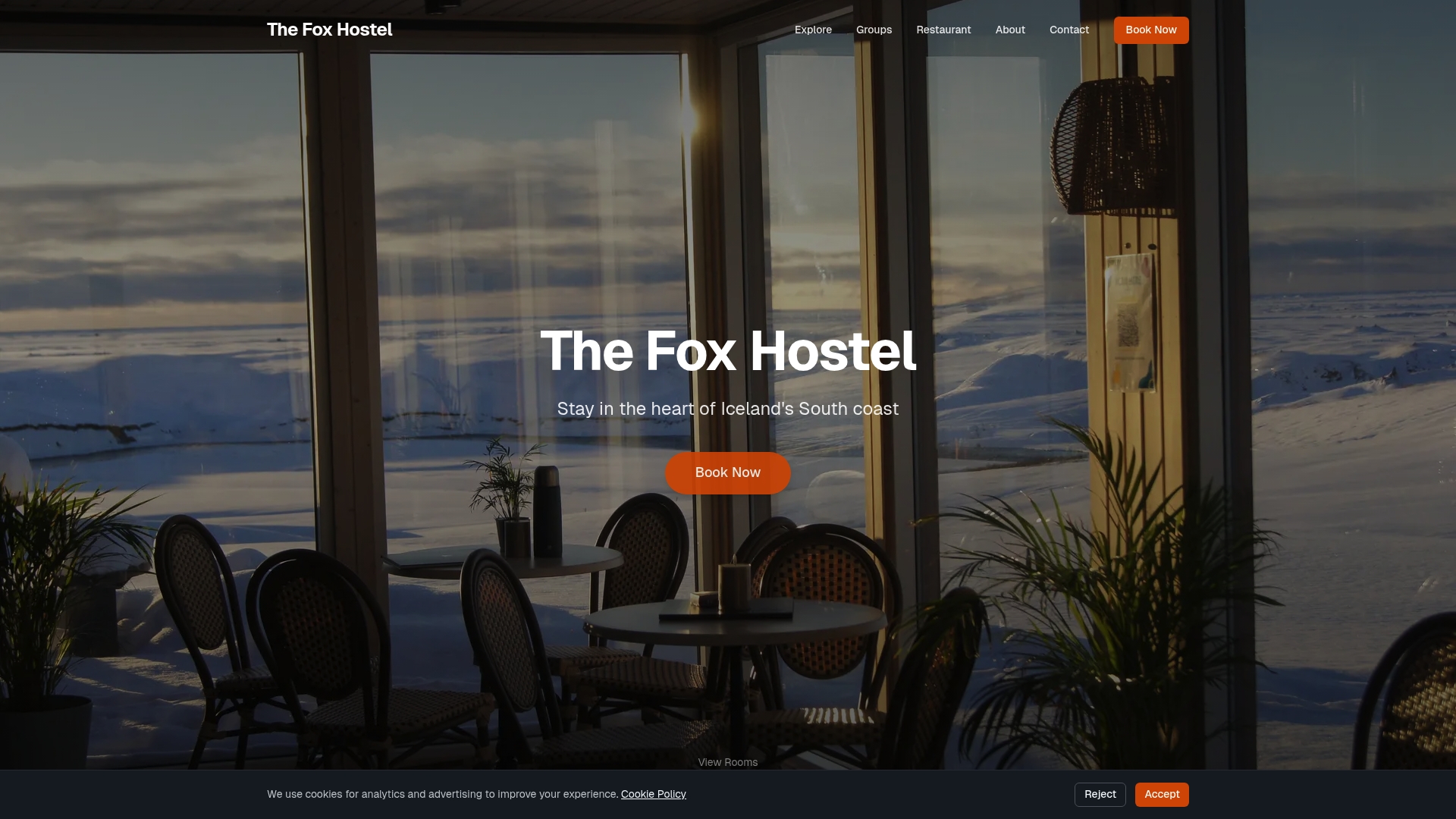
Check availability and book directly at foxhostel.is — the booking process is straightforward, and the team can answer questions about room buyouts, group sizes, and what’s open nearby during your travel dates.
Useful resources for planning your South Iceland trip
Before you finalize any base or booking, these are the tools and pages worth bookmarking:
Official planning resources:
- road.is — Live road conditions, closures, and F-road status across Iceland. Check this before every long drive, especially in winter.
- vedur.is — Iceland’s official weather service. Use it for multi-day forecasts and wind warnings near coastal areas like Vík and Reynisfjara.
- Visit South Iceland — Official regional tourism site with accommodation listings, seasonal notes, and area guides.
Fox Hostel planning pages:
- South Coast travel guide — Overview of the region’s main sights and geography, useful for building your first itinerary draft.
- How to plan a South Coast itinerary — Practical night-by-night guidance for structuring a road trip around the South Coast’s main bases.
- Rural stays in Iceland — Why countryside accommodation often delivers more value than town-center options, with specific notes on Northern Lights access.
Always check road.is and vedur.is in real time before long drives. Conditions on the South Coast change faster than most travelers expect, and a five-minute check the night before can save you hours of delay or a genuinely dangerous situation on the road.