Why Book Countryside Accommodation for Your Next Trip
Why Book Countryside Accommodation for Your Next Trip
TL;DR:
- Countryside accommodation offers rural lodging that immerses travelers in natural landscapes and authentic local culture. It provides mental health benefits, reduces stress, and enhances sleep by removing urban mental demands and sensory overload. Modern rural stays deliver comforts comparable to resorts and serve as flexible bases for exploring multiple destinations, supporting local communities.
Countryside accommodation is defined as rural lodging that places travelers directly inside natural landscapes, away from city noise, crowds, and the predictable rhythms of urban tourism. Booking a countryside stay means choosing peace, nature immersion, and authentic local culture over the standard hotel experience. Places like Hrífunes Nature Park in South Iceland, where Foxhostel operates inside a converted traditional Icelandic barn, show exactly what rural lodging can deliver: real quiet, real skies, and real connection to a place. This article breaks down why travelers consistently rate countryside getaways as more restorative, more memorable, and more worth their time.
Why book countryside accommodation for your mental health?
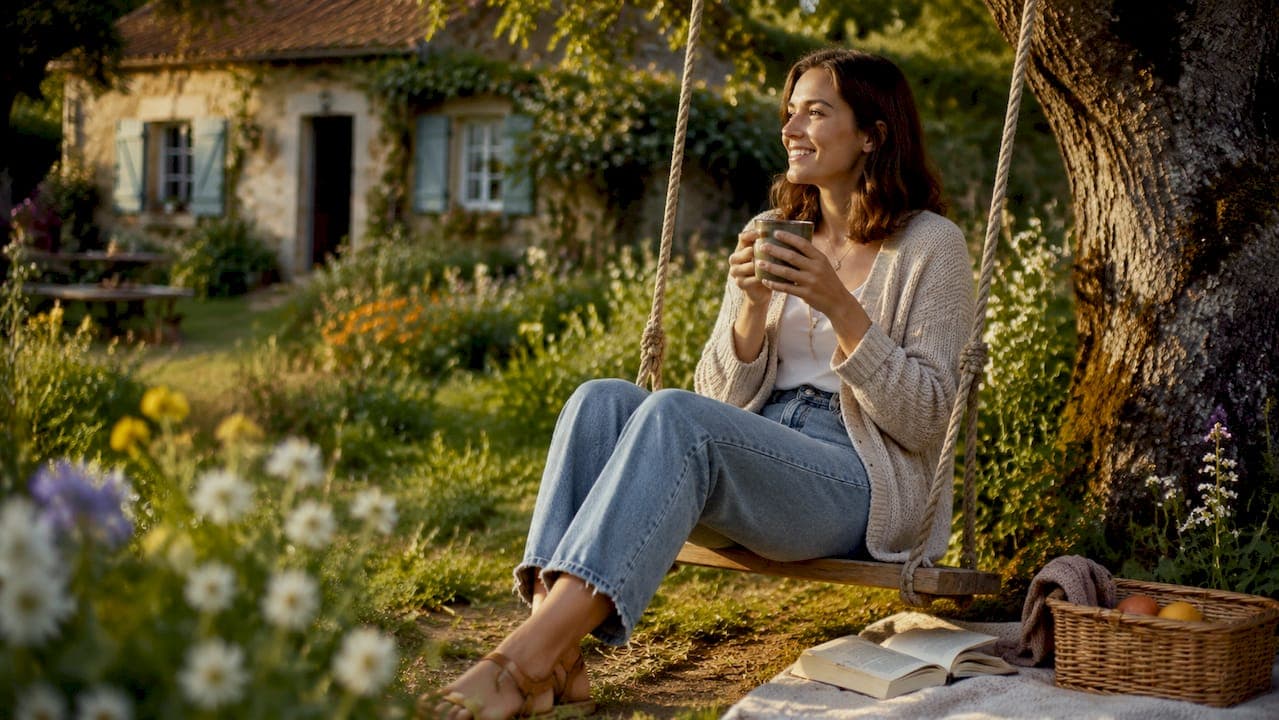
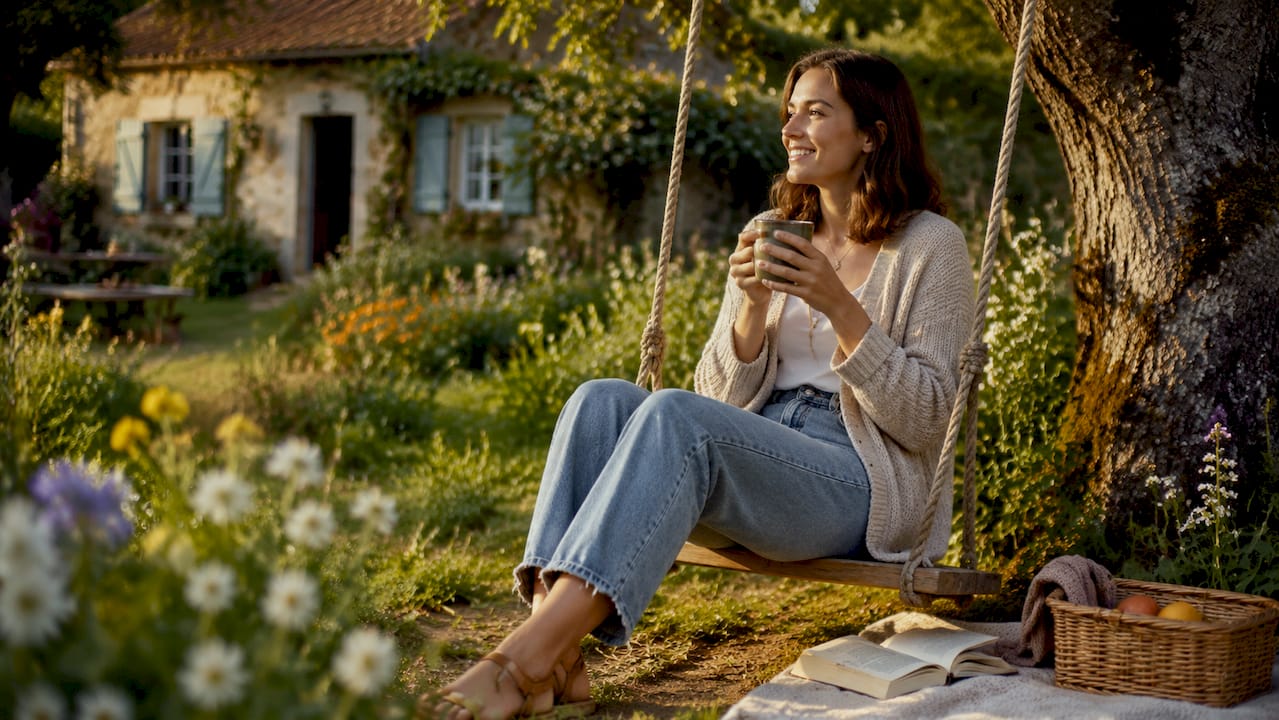
Rural stays reduce stress in ways that city hotels simply cannot replicate. Spending just 20 minutes in green spaces measurably lowers stress hormone levels. That means even a short walk outside your countryside lodging delivers a biological reset that no hotel gym or rooftop pool can match.
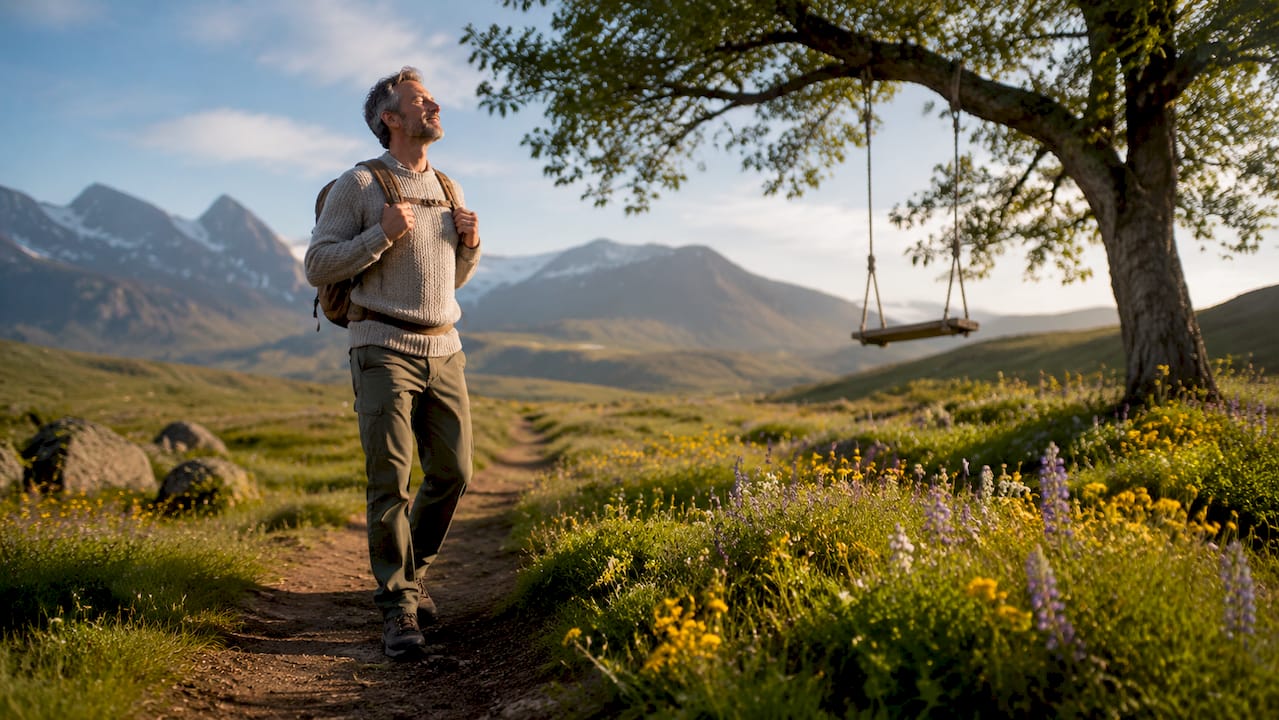
The benefits go deeper than a single walk. Countryside accommodation reduces travel-related cognitive load, which translates directly into better sleep quality and lower anxiety. Cognitive load is the mental effort required to process your environment. Cities are full of it: traffic, crowds, notifications, decisions. Rural settings strip most of that away.
Travel psychologists point to this removal of demands as the core mechanism. Countryside stays work best by removing mental demands rather than adding activities. That is a counterintuitive insight worth sitting with. The goal is not to fill your days with more things to do. The goal is to stop doing so much.
Mood stability also improves during rural stays. Travelers report feeling calmer and more present within the first 24 hours of arriving at a countryside property. For anyone carrying work stress or digital fatigue into a trip, the advantages of rural accommodation show up fast and stay for days after returning home.
What makes countryside lodging culturally richer than city hotels?
Farm stays and rural properties offer hands-on experiences that no urban hotel can provide. Farm stays enable activities like feeding animals, harvesting crops, and learning food production firsthand. These are not tourist performances. They are real participation in the rhythms of rural life, and they create a depth of memory that a city sightseeing tour rarely matches.
The food connection alone sets countryside lodging apart. When you source ingredients from the land around your accommodation, or eat at a table where the cook knows every local producer, the meal becomes part of the experience. This is agritourism at its most practical: the place you sleep and the culture you absorb are the same thing.
Here is what a culturally rich countryside stay typically offers that a city hotel does not:
- Participatory farm activities like animal care, gardening, or bread baking with local hosts
- Direct access to local food systems, including farm-to-table meals and market visits
- Unscripted interaction with residents who live and work in the landscape you are visiting
- Slower daily rhythms that encourage observation over consumption
- Traditions and crafts specific to the region, from weaving to cheese making to fishing
Immersive countryside stays require embracing a slower pace and participating in local rhythms, which is fundamentally different from typical tourist behavior. That difference is the point. You are not observing a place from a distance. You are briefly living inside it.
Pro Tip: When choosing countryside lodging, look specifically for properties that list interactive experiences in their descriptions, not just scenic views. A hostel or farm stay that mentions communal kitchens, on-site food, or guided local activities will deliver far more cultural depth than one that simply advertises a rural location.
How does sensory contrast make rural stays more restorative?
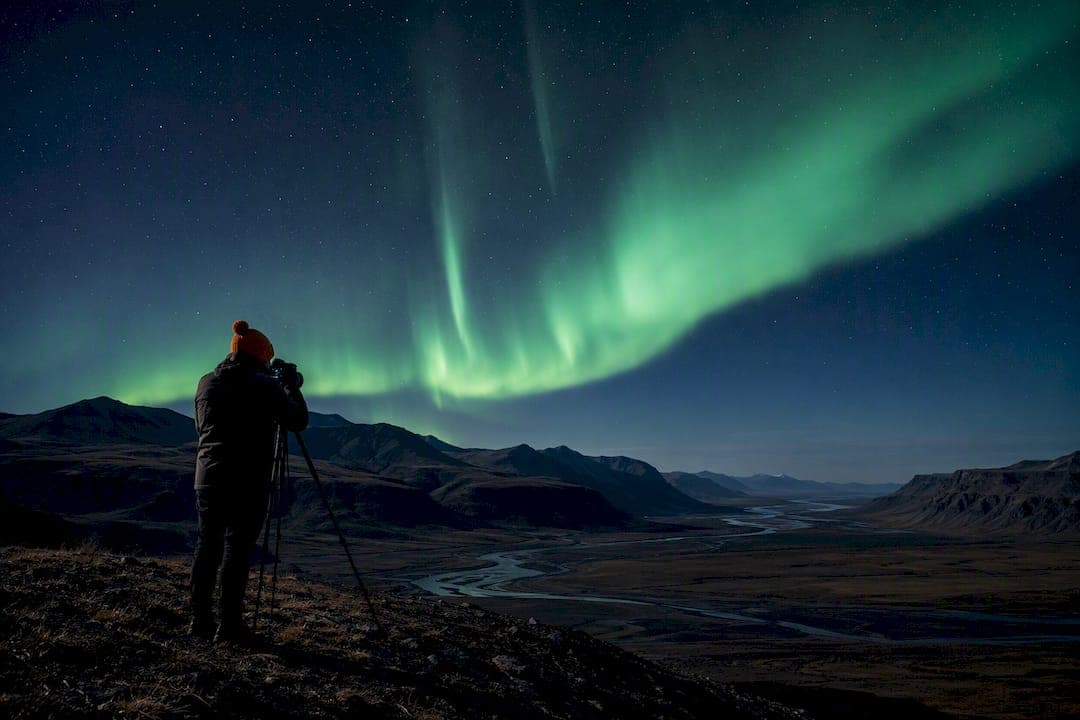
Sensory contrast is the deliberate shift from high-stimulation urban environments to quieter, darker, and more natural settings. For travelers coming from cities, this contrast is not just pleasant. It is physiologically necessary for genuine rest. Dark skies have a significant effect on tranquility and are one of the most sought-after features in countryside accommodations. Light pollution is so pervasive in cities that many travelers have not seen a full night sky in years.
Matching your accommodation to your actual sensory needs deepens the restorative effect. Travel psychologist Dr. Charlotte Russell notes that sensory contrast is crucial for urban travelers to achieve genuine relaxation. A property that offers natural quiet, minimal artificial light, and open landscape does more for recovery than any spa treatment.
Here is how sensory contrast works across four key dimensions during a countryside stay:
- Sound. Natural ambient noise, wind, water, and birdsong replace traffic and construction. The nervous system responds to this shift within hours.
- Light. Absence of artificial light at night restores natural sleep cycles. Dark-sky properties like those in Hrífunes Nature Park offer Northern Lights viewing as a direct benefit of this policy.
- Pace. Fewer decisions and no urban schedule pressure simplify daily life. This reduction in decision fatigue is one of the clearest countryside vacation advantages.
- Space. Open landscapes reduce the physical compression of city living. Having visual distance around you lowers baseline tension in ways that are hard to quantify but easy to feel.
Unplugging from digital life during countryside escapes is increasingly recognized as a psychological necessity, not a luxury. The countryside setting makes that unplugging feel natural rather than forced.
Practical reasons to choose rural accommodation: amenities, flexibility, and local impact
A common misconception is that countryside lodging means sacrificing comfort. Modern countryside accommodations frequently provide amenities rivaling those of luxury resorts, including spas, play areas, and fully equipped kitchens. Foxhostel, for example, offers a massive communal kitchen and an on-site pizzeria inside a converted Icelandic barn in Hrífunes Nature Park. The setting is rural. The comfort is not compromised.
Flexibility is another practical advantage that urban hotels rarely offer. Countryside properties tend to sit at the center of multiple day-trip routes rather than at a single city destination. Foxhostel sits midway between Vík and Kirkjubæjarklaustur on Iceland’s South Coast, giving guests direct access to Reynisfjara Black Sand Beach, Dyrhólaey, Vatnajökull National Park, and Jökulsárlón Glacier Lagoon without backtracking. That location advantage turns a single booking into a multi-destination base.
Countryside tourism also supports local economies by preserving landscapes, crafts, and rural employment. Every night you spend at a rural property keeps money inside a community that depends on it. That is a countryside getaway perk that city hotels cannot offer.
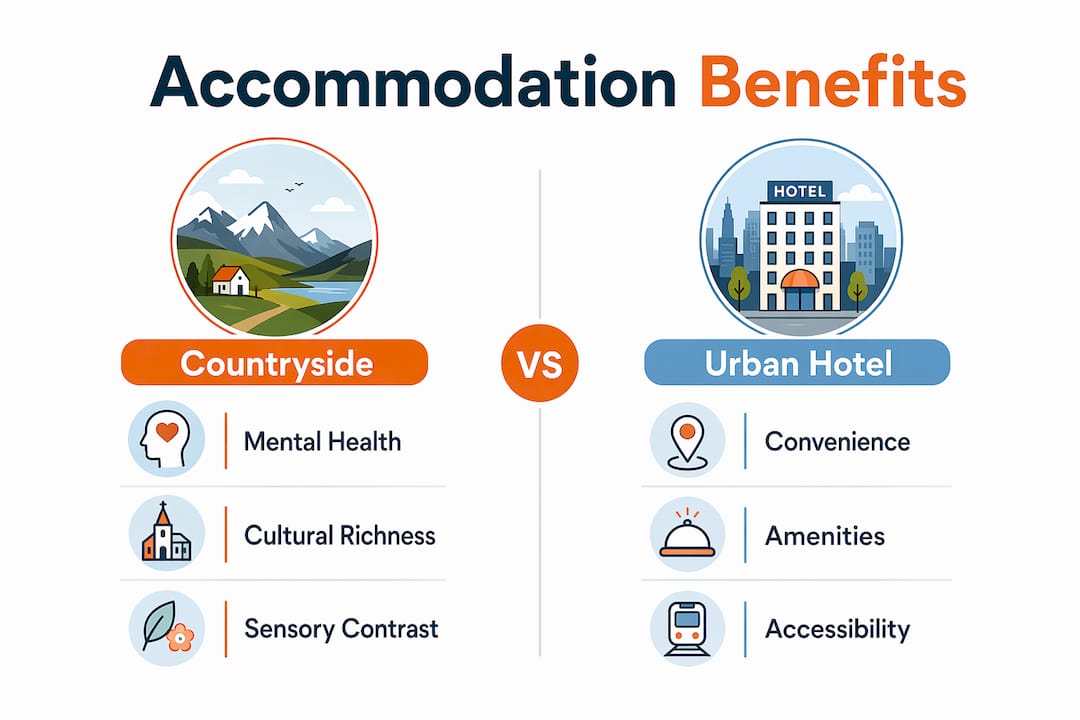
| Feature | Countryside accommodation | Urban hotel |
|---|---|---|
| Natural quiet | Consistent, especially at night | Rare, requires soundproofing |
| Dark skies | Available at rural properties | Not available in cities |
| Local food access | Direct, often on-site | Indirect, restaurant-dependent |
| Flexibility as a base | High, central to multiple routes | Low, tied to one city |
| Community economic impact | Direct support for rural areas | Distributed across urban economy |
| Space and outdoor access | Immediate, surrounding property | Limited to parks or day trips |
Pro Tip: Book 1–3 months ahead for most countryside trips. During peak seasons, booking 3–6 months ahead significantly improves your chances of securing the specific room type or private buyout option you want.
Key takeaways
Countryside accommodation delivers mental, cultural, sensory, and practical benefits that urban hotels cannot replicate, making it the stronger choice for travelers who want genuine rest and authentic experience.
| Point | Details |
|---|---|
| Mental health benefits are real | Just 20 minutes in green spaces lowers stress hormones, and rural stays improve sleep quality. |
| Cultural depth requires participation | Farm stays and rural lodging offer hands-on local experiences that city hotels structurally cannot provide. |
| Sensory contrast drives recovery | Dark skies, natural quiet, and reduced decision pressure are the core mechanisms behind rural restoration. |
| Modern amenities are available | Countryside properties like Foxhostel offer communal kitchens, on-site dining, and flexible room options. |
| Location flexibility multiplies value | A well-placed rural property serves as a base for multiple destinations, stretching your trip further. |
Why I keep coming back to countryside stays
I have stayed in city hotels that cost three times more and delivered a fraction of the actual rest. The pattern is consistent. The more stimulation a property surrounds you with, the harder it is to actually decompress. Countryside accommodation works because it removes the noise before you even ask it to.
What surprised me most, the first time I stayed somewhere genuinely rural, was how quickly my thinking changed. By the second morning, I was noticing things I normally filter out: the quality of light at dawn, the sound of wind moving through open land, the way a meal tastes when you are not eating it in a hurry. That shift does not happen in a city hotel, no matter how good the mattress is.
The cultural interactions are the other thing I underestimated. Talking to someone who actually lives and works in the landscape you are visiting is a completely different experience from a guided tour. It is unscripted, sometimes awkward, and far more memorable. Foxhostel’s communal kitchen at Hrífunes Nature Park is a good example of a space designed to make that kind of interaction happen naturally. You are not forced into it. It just occurs.
My honest advice: match your accommodation to what you actually need from a trip, not to what looks impressive on a booking platform. If you need rest, choose quiet. If you want to understand a place, choose somewhere that puts you inside it rather than adjacent to it. Countryside lodging, done right, does both at once.
— Trygve
Stay, eat, and explore at Hrífunes Nature Park with Foxhostel
Foxhostel sits inside Hrífunes Nature Park, 35 minutes east of Vík, in a converted traditional Icelandic barn that combines rural atmosphere with genuine comfort. Solo travelers can book individual beds, while couples, families, and groups can buy out an entire room for full privacy. The on-site pizzeria and communal kitchen make it easy to stay, eat, and explore without leaving the property between adventures.
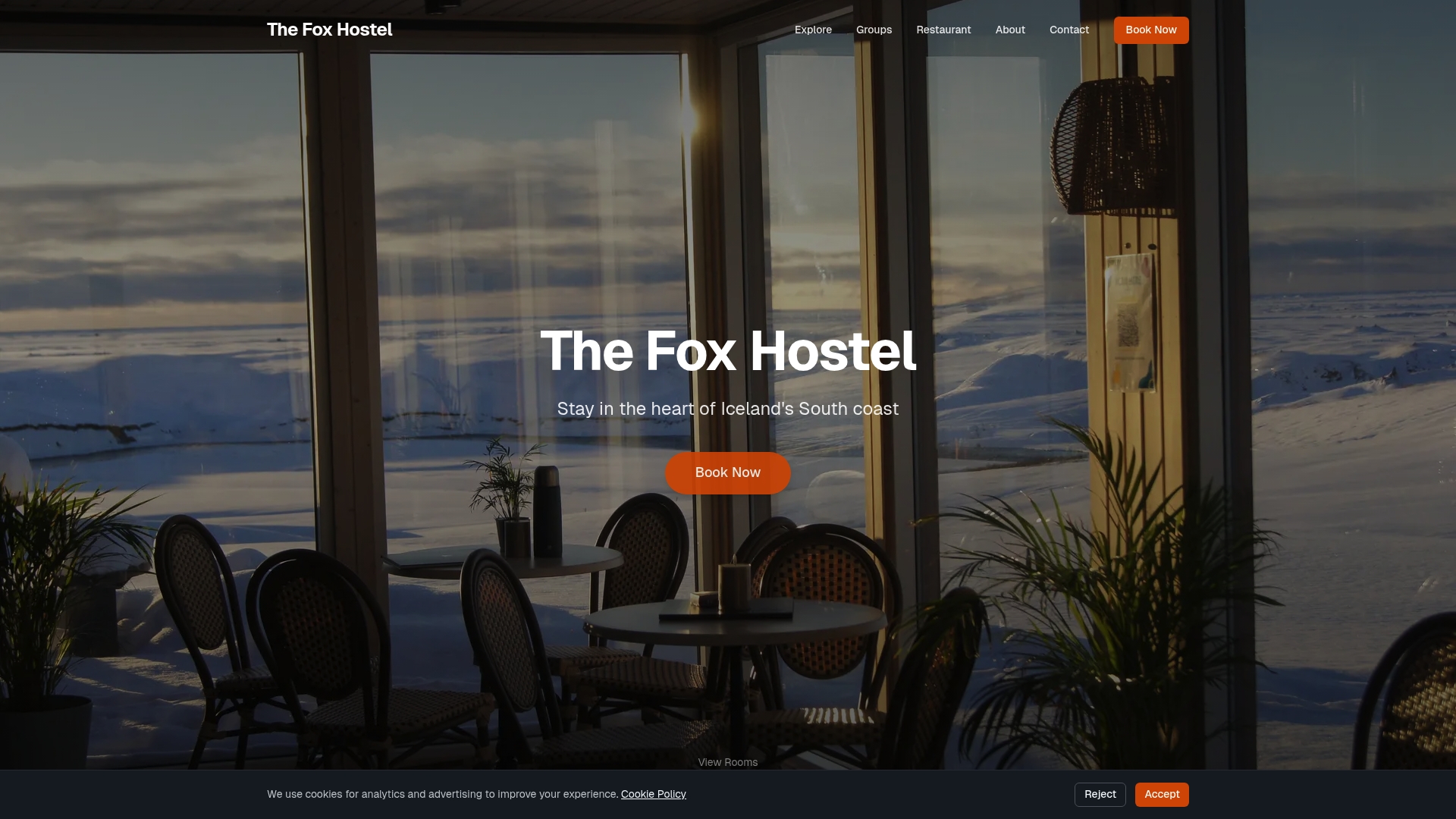
From Foxhostel, you have direct access to adventure activities near Vík, Reynisfjara Black Sand Beach, Dyrhólaey, and day trips east to Vatnajökull National Park and Jökulsárlón Glacier Lagoon. Dark skies above the park make Northern Lights viewing a realistic part of any stay. If you are looking for rural Iceland accommodation that combines nature immersion with flexibility and comfort, Foxhostel is the base your South Coast itinerary needs.
FAQ
What are the main benefits of a countryside stay?
Countryside stays reduce stress hormones, improve sleep quality, and offer authentic cultural experiences that urban hotels cannot provide. The combination of natural quiet, dark skies, and slower pace delivers genuine rest within the first 24 hours.
How far in advance should I book countryside accommodation?
Book 1–3 months ahead for most rural trips, and 3–6 months ahead during peak travel seasons. Popular countryside properties with limited rooms or private buyout options fill up faster than standard city hotels.
Is countryside lodging comfortable enough for modern travelers?
Modern rural accommodations frequently offer amenities comparable to resort-level properties, including fully equipped kitchens, on-site dining, and flexible room configurations. Foxhostel in Hrífunes Nature Park is a strong example of a countryside hostel that delivers comfort without sacrificing its rural character.
Why stay in rural areas instead of a city near the attractions?
Rural accommodation places you closer to the natural landscapes you are visiting and reduces the commute to outdoor attractions. It also provides sensory contrast, quieter nights, and a base that often sits at the center of multiple destinations rather than one.
Does booking countryside accommodation support local communities?
Countryside tourism directly supports rural economies by funding local employment, preserving landscapes, and sustaining regional crafts and traditions. Staying at a rural property keeps your travel spending inside communities that depend on it.
Recommended
- Experience real Iceland: why rural stays offer more for less | Fox Hostel – South Iceland
- Alojamiento para roadtrips: guía completa 2026 | Fox Hostel – South Iceland
- The Role of Location in Accommodation and Your Stay | Fox Hostel – South Iceland
- Vivez une expérience immersive à la campagne islandaise | Fox Hostel – South Iceland